Susanne S. Renner is an Honorary Professor of Biology at Washington University in St. Louis, where she pursues integrative research that merges plant systematics, phylogenetics, ecology, and evolutionary biology. Her work explores the deep-time evolution of plants and their interactions with animals, especially mutualisms involving ants, bees, moths, and hummingbirds. Research Interests Plant systematics and molecular phylogenetics Evolution of plant–animal mutualisms (ants, bees, moths, hummingbirds) Biogeography and long-distance dispersal Plant sexual systems and sex-chromosome evolution Domestication genomics of crops such as watermelon, cucurbits, and walnuts Phenological responses to climate change History of biological collecting and biodiversity informatics Her recent publications (2023–2025) reveal a strong emphasis on genomics-enabled insights into crop domestication, the genomic architecture of plant sex chromosomes, co-evolutionary dynamics between plants and insects, and the application of AI and large-scale databases to biodiversity research. These studies collectively advance understanding of how plants adapt, diversify, and interact with their biotic environments across evolutionary timescales. Scientific Awards & Honors No specific awards are listed in the provided material. Advising & Grants While the text does not enumerate current students or funded projects, her extensive publication record with numerous international collaborators suggests active mentoring and sustained grant support. Laboratories & Teams She is associated with the Department of Biology at Washington University in St. Louis, but no dedicated laboratory name is provided in the supplied text.
Rusty Stott serves as a Clinical Assistant Professor in the Department of Animal, Dairy, and Veterinary Sciences at Utah State University's College of Agriculture and Applied Sciences. His teaching portfolio includes core courses in animal handling, large animal theriogenology, and veterinary parasitology, reflecting his expertise in clinical veterinary education and livestock reproduction. His educational background comprises a Doctor of Veterinary Medicine from Kansas State University (2001), a Bachelor of Science in Animal Science with Pre-Veterinary emphasis from Brigham Young University (1997), and board certification in Theriogenology from the American College of Theriogenologists (2024). He maintains active licensure as a Utah veterinarian and controlled substance provider since 2005. Dr. Stott's research centers on assisted reproductive technologies, particularly somatic cell nuclear transfer in cattle, sheep, and goats, with significant contributions to embryo development, cloning efficiency, and transgenic animal models. His work extends to applied areas including dairy nutrition, parasite management, and orthopedic biomechanics in ruminants, demonstrating translational impact across veterinary medicine and animal production systems. His publication record shows consistent output in high-impact journals like Theriogenology and Reproduction, Fertility and Development , with recent emphasis on cytokine-mediated embryo development (2023-2024) and long-term collaborations in transgenic livestock models. The research portfolio bridges fundamental reproductive biology with practical agricultural applications. He has received exceptional recognition for teaching excellence, including ten major awards such as CAAS Faculty Mentor of the Year (2019), multiple WIMU Regional Program Teaching Awards (2015-2018), and repeated honors as Undergraduate Faculty Advisor of the Year (2010, 2014). As a dedicated mentor, Dr. Stott has guided numerous undergraduate students in animal science, evidenced by his departmental and college-level advising awards. His extension work as a Clinical Veterinarian supports ongoing practical applications of his research. Collaborative projects with Dr. Irina Polejaeva's laboratory and the WIMU Veterinary Program highlight his integration within regional research networks focused on advancing veterinary education and biotechnology.
Marcos Gridi-Papp is a Professor in the Department of Biological Sciences at University of the Pacific, specializing in the study of acoustic communication systems in animals. His research investigates the interplay between hearing, vocal anatomy, and communication behavior, with a focus on frogs and crickets. He also teaches courses related to biological sciences and advises biology and pre-dental majors. PhD in Integrative Biology, University of Texas, Austin (2003) MS in Ecology, State University of Campinas, Brazil (1997) BS in Biological Sciences, State University of Campinas, Brazil (1994) Gridi-Papp's research explores how anatomical structures influence vocal performance and auditory sensitivity. His lab investigates: Laryngeal morphology and vocal control in túngara frogs Auditory tuning mechanisms and ultrasound sensitivity Environmental impacts on communication strategies Physiological and behavioral adaptations in vocal systems Signal complexity evolution and middle ear mechanics Eustachian tube control and acoustic reflexes Recent research trends focus on: Bioacoustic adaptations in amphibians Behavioral responses to environmental changes Anatomical constraints on vocalization Acoustic signal optimization Frequency modulation mechanisms Multi-component call structures His lab offers research opportunities in anatomy, electrophysiology, animal behavior, and computational methods, supporting students with credit hours and technical training.
Dr. Robert Pralat is a Researcher in the Department of Public Health and Primary Care at the University of Cambridge, affiliated with Sidney Sussex College. His work bridges medical sociology, reproductive health, and LGBTQ+ studies, focusing on how cultural changes and medical advancements shape family-making decisions among marginalized groups. BSc in Psychology, University of Leeds MA in Gender Studies, University of Leeds PhD in Sociology, University of Cambridge Research interests include: Reproductive decision-making among LGBTQ+ individuals and people living with HIV Moral judgments in public healthcare funding Intersection of sexual desire and medical intervention demand His publications (2010–2025) span topics like: HIV and parenthood Queer family dynamics End-of-life care policy Male reproductive health Pleasure-based HIV prevention Awards: Leverhulme Trust Early Career Fellowship (2018) British HIV Association Research Award (2014) Teaching roles: MPhil in Health, Medicine and Society (medical sociology subject manager) Human, Social and Political Science Tripos (sociology of gender and health) Medical Sciences Tripos (social context of health/illness) MPhil in Population Health Sciences Key affiliations: THIS Institute (Healthcare Improvement Research) Reproductive Sociology Research Group (ReproSoc) Sidney Sussex College British HIV Association
Dr Katherine Appleford is a Senior Lecturer in Consumer Behaviour at the Business School for the Creative Industries, University for the Creative Arts (UCA), where she teaches undergraduate and postgraduate courses. Previously, she taught Sociology at Kingston University London and Cultural and Historical Studies at the London College of Fashion. Joined UCA in 2022 BSA Convenor for Sociology of the Arts Member of European Sociological Association (ESA) Editorial Board Member of Palgrave Sociology of the Arts Series Her research integrates Sociology, Cultural Studies, Human Geography, and Fashion Theory to explore intersections of fashion, consumption, gender, race, and class. Key interests include social identity construction through fashion, class distinctions in women's fashion practices, and the impact of celebrity and social media on body image standards. Recent work critically analyzes body positivity in fashion marketing. Her publications include six peer-reviewed articles/book reviews (2014–2020) and a 2021 monograph on class and fashion. Research supervision topics include non-binary identity and housing stigma. Awards include grants from Creative Works London (2014) and Kingston University London (2015, 2021). She serves as an External Examiner at the University of East London (2021–present). 2014 Creative Works London – Researcher in Residence Award (£5000) 2015 Social Enterprise Fund, Kingston University London (£2430) 2021 Research Development Allowance, Kingston University London (£1000) 2021 QR Funding, Kingston University London (£2116.80) Dr Appleford supervises PhD students Ellie Mumford (AHRC TECHNE-funded) and Robert Lastman. Her work addresses critical themes in fashion sociology, with methodological focus on qualitative analysis of consumer practices, media representation, and spatial dynamics.
Kana Banno is a PhD Research Fellow at the Department of Biological Sciences Ålesund, Faculty of Natural Sciences at the Norwegian University of Science and Technology (NTNU). Her research focuses on salmon aquaculture, with particular emphasis on fish behavior and welfare in commercial sea cages. She utilizes advanced technologies including underwater cameras, ROVs, echosounders, and sonars for aquaculture monitoring. Banno earned her PhD in Biology from NTNU in 2025, following an MSc in Biology with a focus on aquaculture and genetics from UiT The Arctic University of Norway in 2019. Her educational background includes: PhD in Biology, NTNU (2025) MSc in Biology (Aquaculture & Genetics), UiT The Arctic University of Norway (2019) Banno's research interests center around understanding fish behavior as an indicator of welfare and health in aquaculture settings. She investigates how environmental factors affect the distribution and behavior of Atlantic salmon in commercial sea cages. Her work bridges biology and engineering through the integration of technology for monitoring purposes. She has particular expertise in using computer vision and artificial intelligence to identify growth-stunted salmon and monitor wild fish interactions around aquaculture sites. Her research contributes to developing more sustainable and welfare-conscious aquaculture practices. Analysis of her publication record reveals a strong focus on technological applications in aquaculture monitoring, with particular emphasis on computer vision, sonar technology, and multi-sensor integration. Her work spans both practical applications for the aquaculture industry and fundamental research on fish behavior. The publications show a progression from molecular genetics (her master's work on salmon lice) to more applied technological solutions for monitoring fish welfare in commercial settings. Her notable achievements include: Featured in 'Women in aquaculture' series by The Fish Site (2021) Research on AI for wild fish monitoring highlighted by Norwegian SciTech News (2021) Banno teaches BIA3003 Introduction to scientific method (2024 Autumn) and has been actively involved in the InnoSEA project (Innovations for Sustainable sEabased Aquaculture). Her fieldwork involves regular visits to salmon farms approximately 1.5 hours from her base, where she monitors salmon behavior using underwater cameras and remotely operated vehicles. She collaborates extensively with researchers from multiple countries including Argentina, China, Germany, Japan, and Norway. She maintains strong connections with the aquaculture industry, having previously worked at FRD Japan, a land-based RAS facility producing rainbow trout, where she gained practical experience in fish farming operations before transitioning to research.
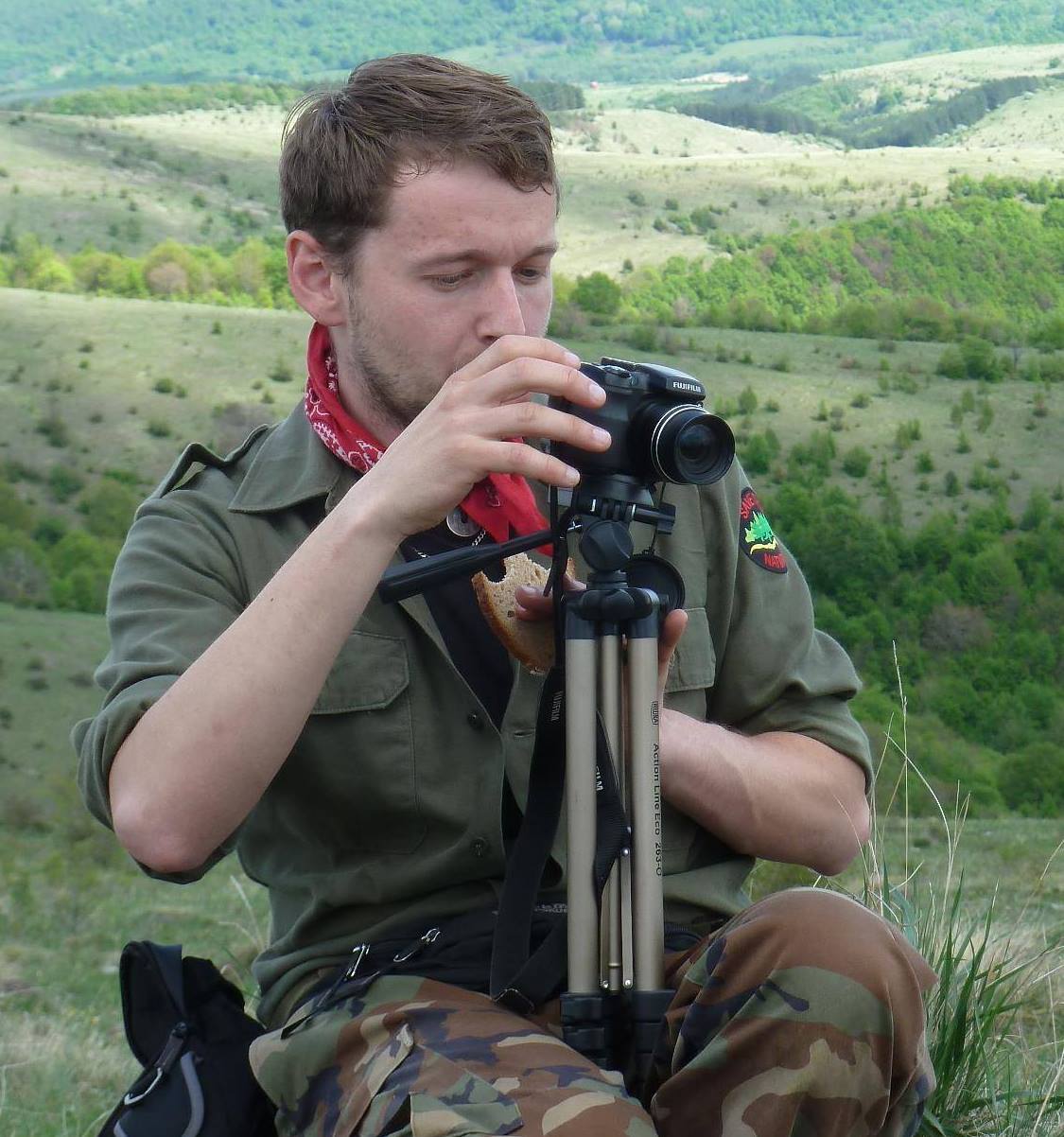
Dr. Marcus Fritze is a researcher in Applied Zoology and Nature Conservation at the University of Greifswald, with a dual affiliation since 2023 at the Competence Center for Bat Conservation Saxony-Anhalt within the South Harz Karst Landscape Biosphere Reserve. His work bridges scientific research with practical conservation applications, focusing specifically on bat ecology and conservation. Dr. Fritze's research spans multiple critical areas in bat conservation. He investigates population trends and demographic parameters through BfN-funded projects 'Threatened Data for Threatened Species' and BATTREND. A major output from these initiatives is BATLAS, an online platform for analyzing bat population data across Germany. His work addresses the 'green-green dilemma' between renewable energy expansion and wildlife conservation, particularly examining wind energy impacts on bats and the ecological consequences of light pollution. His physiological research examines hibernation (winter torpor) mechanisms in bats and how their immune systems function during this energy-conserving state, with special focus on white-nose disease. Through the F.U.N. initiative ('Forschung, Umweltbildung und praktischen Naturschutz'), he integrates research, environmental education, and practical conservation to support biodiversity. Current projects include 'Bats and Biosphere' (human-wildlife interactions) and 'Bats and Ponds' (role of water bodies in ecosystems). Analysis of Dr. Fritze's publication record reveals an interdisciplinary approach addressing conservation challenges at the intersection of ecology, immunology, policy, and technology. His work demonstrates particular expertise in developing evidence-based conservation strategies that effectively bridge scientific research with practical implementation. Dr. Fritze actively supervises numerous Master's and Bachelor's students on bat conservation topics, often in collaboration with other institutions including FH Bernburg, HTW Dresden, and TU Berlin. His current supervisees are investigating ecosystem services provided by bats in fruit orchards, urban pond habitats for bats, wind turbine mitigation measures, and spring activities of bats on orchard meadows. His collaborative approach extends internationally, such as with Universidad Autónoma Metropolitana in Colombia on jaguar conservation perceptions. Through his leadership in the Competence Center for Bat Conservation Saxony-Anhalt and various research projects, Dr. Fritze has developed effective frameworks for collaboration between scientists, amateur researchers, and volunteer conservationists. His work exemplifies how rigorous scientific research can directly inform and improve practical conservation outcomes in complex human-wildlife landscapes.
Felix Mittermayer is a researcher at the Helmholtz Centre for Ocean Research Kiel (GEOMAR), affiliated with the Marine Evolutionary Ecology group within the Marine Ecology Division. He has been actively conducting climate change impact research since 2014, with institutional affiliations including the BONUS BIO-C3 project, Integrated School of Ocean Sciences (ISOS), and the Linnaeus Centre for Marine Evolutionary Biology (CeMEB). His research focuses on climate change impacts on marine organisms, particularly fish eggs and larvae. Using experimental ecology combined with genetic and genomic methods, he investigates organismal resilience and adaptation potential, with special emphasis on ocean acidification effects on Atlantic cod larvae. Key methodologies include transcriptomic analysis, epigenetic studies, and transgenerational experiments to assess adaptive capacity under changing ocean conditions. Mittermayer's publication record demonstrates significant contributions to understanding climate-driven changes in marine ecosystems, particularly regarding Baltic Sea species distributions, cod larval survival, and sprat population dynamics. His collaborative research spans multiple European institutions through EU-funded projects like BIO-C3. His academic journey includes: Bachelor in Marine Sciences (2010, University of Gothenburg): Focused on sprat reproductive biology Master in Marine Science (2013, University of Gothenburg): Sequencing aspartate aminotransferase gene in North Atlantic Littorina Mittermayer actively disseminates research through conference presentations at venues including the CeMEB Assembly and Fisheries Society of the British Isles symposiums, with particular emphasis on mate choice effects, transcriptomic responses, and epigenetic mechanisms in cod facing ocean acidification.
Maud Derbaix is an Associate Professor of Marketing at KEDGE Business School , affiliated with the Creative Industries Research Group . Her work bridges marketing theory with cultural consumption research. Current academic position: Associate Professor Institutional affiliation: KEDGE Business School Her research focuses on consumer behavior in arts and culture , examining: Narrative transportation through transmedia storytelling Authenticity perception in digital reproduction Intergenerational transmission of cultural tastes Music fandom and prosumer dynamics Interactive technologies in cultural tourism Informal learning communities in creative industries Recent publications reveal consistent exploration of audience engagement across multiple domains, including: Live performances and cultural events Virtual world consumer behavior Heritage marketing strategies Digital platform dynamics She collaborates with multiple researchers including: Marc Korchia Danièle Bourgeon-Renault Claire Derbaix Antoine Gombault
Rubee Dev is an Assistant Professor and VSP Faculty Coordinator at the School of Nursing within the Faculty of Applied Science, University of British Columbia. Her office is located in T153 Koerner Pavilion at 2211 Wesbrook Mall, Vancouver, BC, Canada, with contact phone 604.822.6249 and email rubee.dev@ubc.ca. Her educational background includes a Master of Public Health (MPH) and Doctor of Philosophy (PhD). These qualifications underpin her expertise in epidemiological methods and public health interventions. Dr. Dev's research centers on sex and gender as critical determinants of health outcomes, with particular focus on cardiovascular disease, global health disparities, and public health systems. She investigates how biological sex and sociocultural gender factors influence disease progression, treatment adherence, and health behaviors across diverse populations. Her work bridges clinical practice and population health through rigorous mixed-methods approaches including cohort studies, systematic reviews, and predictive modeling. Analysis of her recent publications reveals consistent emphasis on sex and gender frameworks across cardiovascular health in South Asia and Sub-Saharan Africa, mental health during the pandemic in Europe, and maternal-child health in Nepal. She has pioneered tools like the CR-DECIDE models for shared decision-making in coronary artery disease, demonstrating translational impact from research to clinical practice. Her global perspective spans WHO surveillance data, national surveys, and community-based interventions in resource-limited settings. No scientific awards were documented in the provided source material. While specific advising roles and grant funding details were not disclosed, her VSP Faculty Coordinator position indicates leadership in academic program development and student mentorship at UBC. The absence of explicit grant mentions suggests potential involvement in institutionally supported initiatives or collaborative projects not detailed in the profile. Research infrastructure details including laboratories or dedicated teams were not specified in the available information, though her global collaborations imply networked research partnerships across multiple continents.
Daniel M.T. Fessler is a Professor of Anthropology at the University of California, Los Angeles (UCLA), where he is affiliated with the Department of Anthropology in the College of Letters and Science. He serves as the Director of the UCLA Bedari Kindness Institute and is a core member of the UCLA Center for Behavior, Evolution and Culture (BEC). His research integrates anthropological, psychological, and biological perspectives to understand human behavior from an evolutionary standpoint. Fessler's educational background includes a Ph.D. from the University of California San Diego (1995). His academic journey has positioned him as a leading figure in evolutionary anthropology, with significant contributions to understanding how evolutionary processes shape human behavior, cognition, and social organization. Fessler's research spans multiple domains of human behavior and cognition, with particular emphasis on the evolutionary foundations of emotions, morality, and social behavior. His work investigates how evolved psychological mechanisms interact with cultural systems to produce the rich diversity of human experience. Key areas of focus include disease avoidance behaviors, prosociality and cooperation, aggression and risk-taking, cultural transmission processes, food-related behaviors, and reproductive strategies. His approach is characterized by methodological pluralism, incorporating experimental, ethnographic, and comparative approaches to test evolutionary hypotheses about human nature. His publication record demonstrates consistent productivity across evolutionary psychology, biological anthropology, and evolutionary medicine. His work often appears in high-impact interdisciplinary journals, reflecting the breadth of his research interests and the relevance of evolutionary perspectives to multiple domains of human inquiry. Fessler's research program has evolved to address increasingly complex questions about the interplay between evolved psychological mechanisms and cultural systems. Live fast, die young, and sleep later: Life history strategy and human sleep behavior (2021) Elevation, an emotion for prosocial contagion (2019) An evolutionary account of vigilance in grief (2018) Ectoparasite defence in humans (2018) Political orientation predicts credulity regarding putative hazards (2017) Fessler has established significant collaborations with researchers across multiple institutions including Clark Barrett, Rob Boyd, Greg Bryant, Martie Haselton, Joe Henrich, Colin Holbrook, Rob Kurzban, Joan Silk, and Stephen Stich. His work bridges disciplinary boundaries, connecting evolutionary theory with practical applications in health, medicine, and social policy. As an advisor, Fessler currently mentors graduate student Theo Samore, whose research focuses on political psychology, traditionalism, and evolutionary approaches to emotion and medicine. His FessLab provides undergraduate students with hands-on research experience in systematic experimental social science, serving as an apprenticeship model where students progressively take on greater research responsibilities. Many FessLab participants have earned co-authorship on publications through their significant contributions to research projects. Fessler leads the FessLab research group, which has operated continuously since at least 2011. The lab provides undergraduate students with hands-on experience in experimental social science research through an apprenticeship model where students begin with simple tasks and gain additional responsibilities as they demonstrate skills and potential. The lab environment emphasizes collaborative research and has produced numerous publications with student co-authors. FessLab has developed a strong community identity, as evidenced by photos of lab members spanning multiple years from 2011 through 2018.
Kathrine Carstensen serves as a Part-time Lecturer and Researcher at Aarhus University's Department of Public Health, specializing in health services research with a focus on quality improvement collaboratives and welfare governance. Her work bridges academic theory and practical healthcare implementation across Denmark's public health system. Her research interests center on Quality Improvement in Healthcare , Implementation Science , and Welfare Governance , examining how healthcare professionals engage in quality initiatives, the role of welfare professions in institutional change, and translational challenges in collaborative programs. Specific domains include maternal health decision-making, elder care innovation, and mental health promotion within community settings. Analysis of her publication portfolio reveals consistent exploration of implementation barriers and professional agency in Danish healthcare quality programs. Her work demonstrates methodological diversity through qualitative case studies, mixed-methods evaluations, and multisite research, primarily contextualized within Denmark's national healthcare framework with implications for international health systems. Carstensen has led significant research projects including: OBS; Igangsættelse af fødsler efter termin (2018-2019) on late-term labor induction experiences Professions and innovation in elderly care (2018) examining welfare governance Fetal Medicine: Downs syndrome diagnosis (2016-2018) studying prenatal counseling Health promotion in community psychiatry (2014-2016) on physical health interventions These projects reflect sustained engagement with healthcare implementation challenges across multiple service domains.
Manuel Pérez García is an Associate Professor at the School of International Studies , Renmin University of China , and a Faculty Member in the Department of History at Shanghai Jiao Tong University . As Principal Investigator for the GECEM Project (2016-2021) funded by the European Research Council , he bridges global history with Sino-Latin American studies. Educational Background includes a PhD in Global and Trans-National History (European University Institute), MAs in Trans-National History, Early Modern European/American History, and Management of Historical Resources, and a BA in History from Universidad de Murcia . Research Interests Global and transnational history Economic and social history of early modern Europe and China China-Latin America relations Consumer society evolution Notable Contributions 2021 monograph on Blood, Land and Power analyzing Spanish nobility 2018 edited volume Global History and New Polycentric Approaches 2016 China and Latin America in Transition on policy dynamics Academic Recognition ERC Starting Grant (2016) Matteo Ricci Scholarship (2015) Multiple Foreign Ministry scholarships Marie Curie Fellowship
Dr. Christine Gray serves as an Assistant Research Professor at Duke University's Duke Global Health Institute (DGHI), where she is a core faculty member of the Center for Health Policy and Inequalities Research (CHPIR). Her work focuses on social epidemiology and mental health disparities in vulnerable populations including orphaned children, sexual and gender minorities, and communities affected by discriminatory practices, with research spanning global (Cambodia, Ethiopia, Kenya, Tanzania) and domestic (North Carolina) contexts. Her educational background includes a PhD in Epidemiology from the University of North Carolina at Chapel Hill and an MPH from Emory University. Prior to doctoral studies, she completed a three-year post-masters fellowship at the Centers for Disease Control and Prevention (CDC) and worked at the Center for the Study of Traumatic Stress at the Uniformed Services University of the Health Sciences. Dr. Gray's research examines social-environmental structures driving mental health and well-being disparities through implementation science and epidemiologic methods. Key focus areas include environmental health, maternal/child health, trauma, non-communicable diseases, and social determinants of health, with particular emphasis on intervention sustainment in resource-limited settings and structural drivers of health inequities. Her recent publications demonstrate consistent methodological rigor across diverse contexts: mental health intervention feasibility in Kenyan schools (2024), environmental quality impacts on birth defects (2023), urban greenspace effects on psychological health in Ethiopia (2022), and HIV testing predictors among orphaned youth in East Africa (2021). These works collectively highlight her expertise in longitudinal cohort studies, implementation science frameworks, and cross-cultural mental health research with vulnerable populations. Dr. Gray leads multiple NIH-funded projects including the SAGE study examining sustainment of school-based mental health interventions in western Kenya, the 15-year POFO longitudinal cohort of orphaned children across five countries, and the SMILE study establishing cohorts of sexual and gender minorities. She also directs a North Carolina feasibility study on SGM recruitment and collaborates with the Environmental Protection Agency on place-based equity research investigating how historical redlining influences present-day health outcomes through gentrification pathways. Her primary research hub is the Center for Health Policy and Inequalities Research at DGHI, where she coordinates international teams across Cambodia, Ethiopia, India, Kenya, and Tanzania. Current initiatives integrate community-engaged approaches with advanced epidemiologic methods to address mental health intervention gaps and structural determinants of health disparities in both global and domestic settings.
Don Ely is a Professor and Instruction Coordinator at the Martin-Gatton College of Agriculture, Food and Environment , University of Kentucky. His work focuses on sheep production systems and livestock management. Research Interests include: Sheep breeding and reproductive management Livestock nutrition optimization Toxin mitigation in forage systems Economic viability of feeding strategies Body condition scoring methodologies Recent Publications analyze practical challenges in sheep husbandry, grazing systems, and feed efficiency across various breeds and environments.