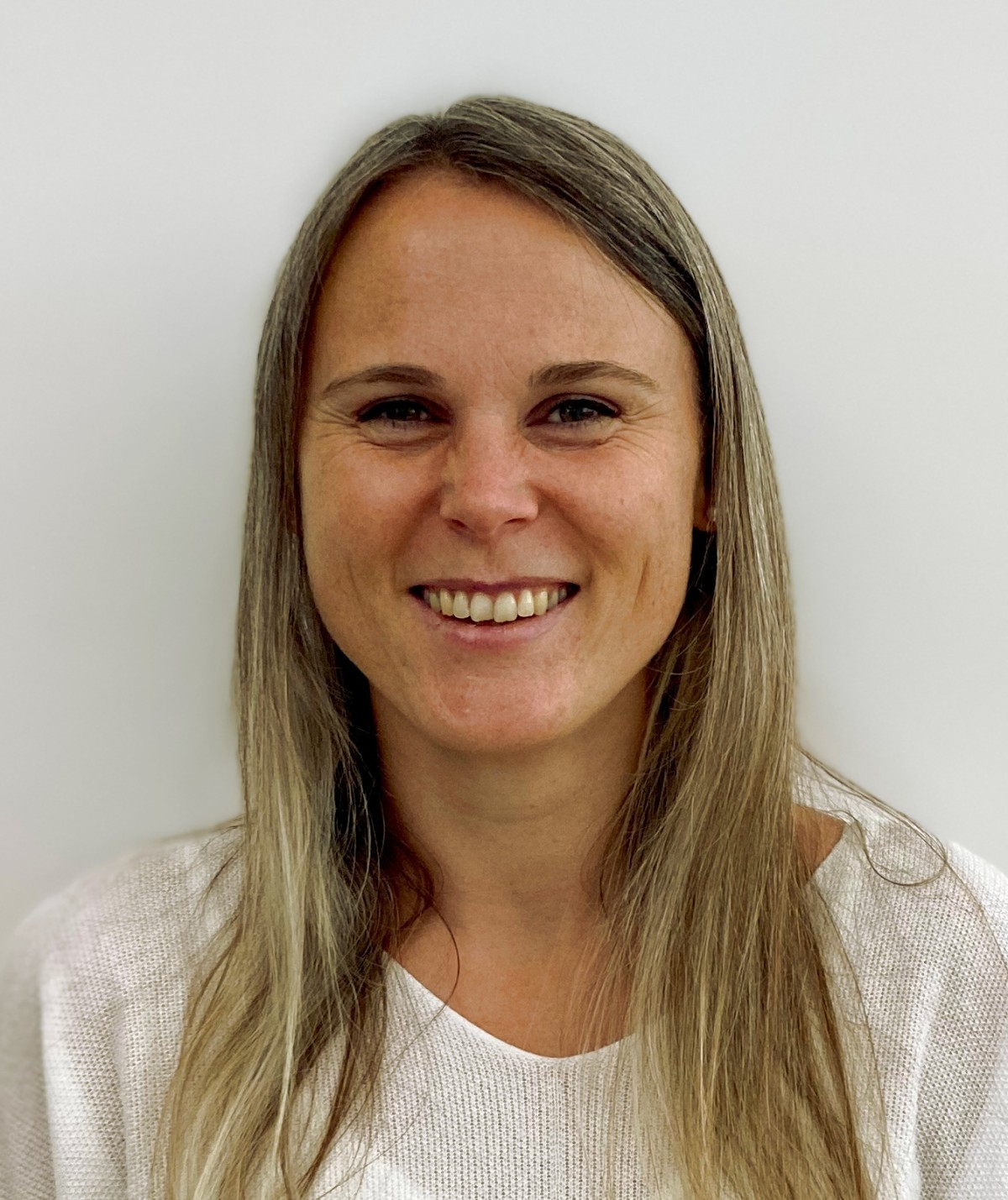
Rachel Ankeny is a Professor & Chair of Philosophy at Wageningen University & Research (WUR) and holds honorary/affiliate roles at the University of Exeter and University of Adelaide. Her interdisciplinary work spans history/philosophy of life sciences, agricultural studies, bioethics, and science policy. She leads the Philosophy Group at WUR and oversees research at the ARC Training Centre for Future Crops Development. Ankeny holds advanced degrees from the University of Pittsburgh (BA, MA, PhD) and University of Adelaide (MGAstronomy, online education certificate). Research Interests: Epistemic issues in agricultural and medical science Regulatory frameworks for biotechnology Animal welfare and consumer ethics Indigenous knowledge integration Professional Activities: Board member, Ann Johnson Institute (USA) Advisory roles on Australian Commonwealth committees (FSANZ, OGTR) Editor-in-Chief, Studies in HPS Current Projects: Focus on genomic ethics, livestock welfare, and transdisciplinary science policy. Active in public engagement via initiatives like the EchidnaCSI conservation project.
Markus Zanker is a Professor in the Department of Knowledge Engineering within the Faculty of Computer Science at Free University of Bozen-Bolzano, Italy. With an extensive publication record spanning over two decades, he has established himself as a leading expert in recommender systems research, with particular expertise in context-aware, group, and knowledge-based recommendation approaches. His work bridges theoretical foundations with practical applications across diverse domains including tourism, healthcare, and e-commerce. Zanker's research interests center on advancing the theoretical underpinnings of recommender systems while addressing practical challenges in real-world deployments. His recent work has focused on causal decision-making frameworks for recommendation, intent-aware systems, and the integration of generative AI in group recommendation scenarios. He has made significant contributions to explainable recommendation systems, medical recommendation applications, and tourism recommendation systems, demonstrating both theoretical rigor and practical impact. His recent publication portfolio reveals a strong trend toward addressing fundamental challenges in recommendation science, including the growing emphasis on causal reasoning to move beyond correlation-based approaches, the integration of generative AI capabilities for more sophisticated group decision support, and the development of frameworks for ethical and socially beneficial recommendation systems. His work increasingly bridges the gap between traditional recommendation algorithms and emerging AI paradigms while maintaining focus on real-world applicability. Zanker is actively involved in the academic community as a workshop organizer, having co-chaired the Knowledge-aware and Conversational Recommender Systems (KaRS) workshop and the Recommenders in Tourism (RecTour) workshop for multiple consecutive years at major conferences including RecSys. His research has been supported through collaborations with numerous international researchers and institutions, focusing on both theoretical advances and practical implementations of recommendation technology across multiple application domains.
Dr. Stephanie Rossit is an Associate Professor in Psychology at the University of East Anglia (UEA), leading the Neuropsychology Laboratory (Neurolab). Her research bridges neuroscience, psychology, and clinical practice, focusing on perception, attention, and action in healthy and clinical populations. She investigates aging and brain disease impacts and develops cognitive rehabilitation interventions. Rossit holds roles as Editor for Cogent Psychology and consulting Editor for Journal of Experimental Psychology: Human Perception and Performance , alongside British Psychological Society fellowships. Education: PhD from the University of Glasgow (stroke and visual neglect), postdoc at Western University (Canada) studying visuomotor control via fMRI. BA from University of the Algarve (Portugal). Research Interests: Stroke rehabilitation (spatial neglect), tool use neuroscience, aging effects on attention, and neural mechanisms of action perception. Recent work includes the SIGHT trial for stroke neglect therapy and EyeFocus app development. Grants & Awards: Multiple NIHR grants (e.g., £1M for SIGHT trial), UEA Reproducibility Network leadership, and awards including 2020 Associate Dean of Innovation. Labs/Teams: Director of Neurolab, collaborating on projects like EyeFocus spatial neglect rehabilitation app validation and intuitive physics deficits post-stroke studies.
Alejandro F. Villaverde is a Ramón y Cajal research fellow at the Department of Systems & Control Engineering, Universidade de Vigo. His research focuses on structural properties of nonlinear systems, particularly structural identifiability and observability analysis. His primary research interests include: Structural identifiability of dynamic models Observability analysis of nonlinear systems Control theory and systems engineering Development of computational tools for model analysis Applications in systems biology and pharmacokinetics Villaverde's work centers on developing mathematical methods and software tools to analyze structural properties of nonlinear models. His most notable contributions include the STRIKE-GOLDD MATLAB toolbox and its Python counterpart StrikePy, which implement the FISPO algorithm for simultaneous assessment of state observability and parameter identifiability. His research has practical applications in systems biology, biochemical network analysis, and pharmacokinetic modeling where model validation and parameter estimation are critical. Among his scientific recognitions, he holds the prestigious Ramón y Cajal research fellowship, a competitive program in Spain supporting experienced researchers. Villaverde actively supervises students, with David Rey Rostro having developed the StrikePy toolbox under his supervision. His work demonstrates strong connections between theoretical control engineering and practical computational implementations, making structural analysis methods more accessible to researchers across various disciplines.
Hans Ekkehard Plesser is a Professor at the Department of Data Science, Norwegian University of Life Sciences (NMBU). His work focuses on computational neuroscience, large-scale neural network simulations, and advancing reproducibility in computational research. He is a key contributor to the NEST simulator, a widely used open-source tool for modeling spiking neural networks. His research spans theoretical and applied aspects of neuroscience, including neuron-astrocyte interactions, connectivity patterns in neural networks, and high-performance computing strategies for brain-scale simulations. He emphasizes reproducible computational practices through initiatives like the ReScience project, promoting transparency and validation in scientific software. His publications highlight advancements in simulation methodologies, algorithm optimization, and the integration of supercomputing resources for neuroscience. He has contributed to foundational work on spiking neuron dynamics, firing-rate models, and the theoretical underpinnings of neural network behavior.
Thaleia Dimitra Doudali is an Assistant Professor at the IMDEA Software Institute in Madrid, Spain, leading the Muse research lab. She holds a PhD in Computer Science from Georgia Institute of Technology (2021), advised by Ada Gavrilovska, focusing on hybrid memory management with machine learning. Prior to her PhD, she earned a Diploma in Electrical and Computer Engineering from the National Technical University of Athens (2015). Her research interests span systems for machine learning, machine learning for systems, and computer vision applications in resource management. Her work has been recognized with awards including the 'César Nombela' (2024), 'Juan de la Cierva' (2021), and Rising Star in EECS (2020). She serves on program committees for top conferences (ASPLOS, EuroSys) and organizes workshops. Her lab's projects address cloud resource management, carbon efficiency, and sustainable computing. She advises multiple PhD and intern researchers, contributing to impactful publications in SIGMOD, EuroSys, and other venues. Notable contributions include Cronus (CV-based memory management), CaRE (carbon-efficient cloud-edge orchestration), and foundational work on ML-driven resource forecasting. Her research bridges systems and AI, aiming to optimize data center efficiency and sustainability. She actively promotes diversity in STEM through mentorship roles in ACM-W Greece and Women in HPC initiatives.
Dr. Nadine Meyer is a researcher at the Nanophotonics Systems Laboratory (light.ethz.ch/) within ETH Zurich, Switzerland. Her work focuses on levitation optomechanics with nanoparticles, developing hybrid levitation platforms and metasurfaces for fundamental and applied research in cavity optomechanics and inertial sensing applications. Her research centers on quantum optomechanics using optically levitated nanoparticles in vacuum environments. Key investigations include ground-state cooling of mechanical modes, mechanical squeezing phenomena, and the development of ultrathin tunable optomechanical metalenses. She also pioneers applications in chemical nanoreactors and ultra-precise inertial sensing systems, leveraging quantum effects at the nanoscale. Analysis of her 15 most recent publications (2019-2025) reveals a clear trajectory toward integrating metasurfaces with levitated optomechanical systems and advancing quantum control techniques for nanoparticles. Her work consistently bridges fundamental quantum physics with practical sensor development, particularly through collaborations within the Nanophotonics Systems Laboratory. The Nanophotonics Systems Laboratory, led by Professor Romain Quidant, provides the experimental infrastructure for Dr. Meyer's research. Located at CLA E 17.1, Tannenstrasse 3, Zürich, the laboratory specializes in optical trapping technologies, vacuum systems, and quantum measurement techniques for levitated nanoparticles.
Yang Lei is an academic affiliated with the University of Melbourne's Department of Computing and Information Systems. Their research focuses on knowledge graphs, FAIR data principles, large language models (LLMs), and ontology engineering. They contribute to initiatives like the Open Research Knowledge Graph (ORKG) and NFDI4DataScience, emphasizing reproducibility, scholarly metadata, and systematic literature reviews. Recent work includes applications of LLMs for abstract summarization, leaderboard extraction, and entity recognition in scholarly documents. Yang also explores challenges in FAIR Digital Objects, machine-actionable workflows, and interoperability in research data management.
Alexandre Duret-Lutz is a Professor at École pour l'Informatique et les Techniques Avancées (EPITA) in the Laboratoire de Recherche de l'Epita (LRE). He holds a habilitation (HDR) from Université Pierre & Marie Curie (Paris 6). His research focuses on ω-automata and their application in model checking, particularly through the development of the SPOT library, a C++ tool for manipulating ω-automata and implementing model checkers. Education: HDR from Université Pierre & Marie Curie (Paris 6). Research interests include formal verification, automata theory, and LTL synthesis. He has contributed to tools like Vaucanson and Seminator, and is involved in the reactive synthesis competition SYNTCOMP. His work emphasizes optimizing automata constructions and improving verification efficiency. Key awards include the Best Paper Award at CIAA'24 and the Best Paper Award at Ada-Europe'01. He teaches courses on algorithms, complexity, and reproducible research at EPITA. Labs/Teams: Active contributor to the LRE and SPOT library development. Collaborates on projects involving formal methods and automated synthesis.
Kangjoo Lee is an Associate Research Scientist in Psychiatry at Yale School of Medicine, specializing in neuroimaging and computational neuroscience. Their research focuses on understanding brain dynamics, particularly in mental health conditions like schizophrenia and mood disorders, using advanced neuroimaging techniques and AI-driven analysis. Education: PhD in Neuroscience from McGill University (2019), Postdoctoral Research Associate at Yale University (2023). Research interests include brain connectivity, sleep deprivation effects, and developing AI tools for neuroscience. Lee has contributed to studies on ketamine's neural mechanisms, sleep recovery networks, and large language models' predictive capabilities in neuroscience. Notable achievements include the Merit Abstract Award (2021) and leadership roles in the Organization for Human Brain Mapping's Diversity Committee. Their work bridges clinical neuroscience with computational methods, emphasizing reproducibility and inclusivity in scientific practices. Current roles include Guest Editor for Biological Psychiatry and committee memberships in neuroimaging and diversity initiatives. Lee collaborates across disciplines, advancing translational research in mental health biomarkers and neurotechnology.
Alexandre Mercat is an Assistant Professor in the Department of Computer Engineering at Tampere University, within the Faculty of Information Technology and Communication Sciences. His research focuses on video coding, energy-efficient encoding, and real-time multimedia systems. He leads projects on open-source video encoders and standards, including contributions to HEVC, VVC, and V-PCC technologies. His work emphasizes machine learning integration, low-power hardware optimizations, and scalable distributed encoding frameworks. Key technical interests include improving video compression efficiency through algorithmic innovations, developing open-source tools like the UVG dataset and Kvazaar encoder, and addressing challenges in volumetric video communication and 3D point cloud encoding. His research spans theoretical algorithm design to practical implementations, with applications in virtual reality, live streaming, and edge computing. Recent projects include real-time saliency-guided video coding frameworks, energy reduction techniques for HDR streaming, and multi-layer VVC coding schemes for hybrid machine-human consumption. He also explores FPGA acceleration and parallelization strategies for distributed video encoding systems. No scientific awards are explicitly mentioned in the provided texts. While no formal advisees are listed, his research group likely involves students through open-source development and collaborative projects. His work integrates closely with industry standards bodies and open-source communities, emphasizing reproducible evaluation frameworks and end-to-end software tools.
Rrita Zejnullahi is a Clinical Assistant Professor of Biostatistics at the University of Illinois Chicago, with primary affiliation in the School of Public Health's Division of Epidemiology and Biostatistics, and a joint appointment in the College of Applied Health Sciences. She also serves as a Statistician in the Office of Research within the College of Applied Health Sciences. Education: Ph.D. in Statistics from Northwestern University (2021). Research focuses on statistical methodologies to support policy-making, including uncertainty quantification in predictive models, effect size estimation in experimental designs, and meta-analysis for small samples. Substantive applications include refugee population analyses, air quality data integration, sport epidemiology, aging mobility, mental health interventions, and physiological mechanisms in muscle blood flow. Her recent publications address robust meta-analysis techniques and effect size calculations in ANCOVA and difference-in-differences designs. Active in open-source contributions, she maintains repositories on meta-analysis and statistical methods (e.g., RVE-Meta-analysis-SMD and Effect-sizes-ANCOVA-DiD-designs).
Hady W. LAUW is an Associate Professor in the School of Computing and Information Systems (SCIS) at Singapore Management University (SMU), serving as Director of the BSc (Computer Science) Programme and a Lee Kong Chian Fellow. He holds a PhD from Nanyang Technological University (2008). His research focuses on artificial intelligence, data science, machine learning, and recommender systems, with notable contributions to multimodal recommendation frameworks like Cornac and collaborative filtering techniques. He teaches advanced courses including IS712 Machine Learning for postgraduate students and CS608 Recommender Systems for MITB programme participants. His work emphasizes practical applications, such as designing explainable recommendation systems and integrating A/B testing into frameworks. Key research interests include web mining, preference learning, representation learning, and decision support systems. He has advised multiple students on topics like neural networks, collaborative filtering, and comparative analysis of reviews. Scientific achievements include the Lee Kong Chian Fellowship and over 100 publications in top venues like ACM WWW and IEEE TKDE. He actively contributes to conferences as a PC member and chairs events like PAKDD. His Cornac framework supports reproducible research in multimodal recommendations. He leads the Preferred.AI research group, fostering undergraduate and postgraduate research in computing. His work bridges theoretical advancements with industry applications, particularly in data-driven decision making and automated evaluation metrics.
Oleksandr Mialyk is a dedicated researcher in the field of multidisciplinary water management, contributing significantly to global assessments of water footprints, water scarcity, and agricultural sustainability. His work bridges environmental science, climate change, and food systems, with a strong alignment to UN Sustainable Development Goals. Master, Instituto Superior Técnico (2019) Master, Technische Universität Dresden (2019) Master, Groundwater and Global Change, UNESCO-IHE Institute for Water Education (2017) His research interests center on water resources management, climate change impacts, and the water-energy-food nexus. He specializes in life cycle assessment, crop modeling, and the development of global datasets to evaluate freshwater use and agricultural sustainability. His work often integrates large-scale data with modeling frameworks to assess environmental impacts across regions and time periods. The recent publications highlight a consistent focus on quantifying water footprints of global crop production, analyzing green water scarcity, and comparing agricultural systems. His research leverages gridded crop models and open datasets to provide high-resolution insights into water use, nutrient production, and climate resilience in agriculture. The integration of software tools like the ACEA model underscores his contribution to open science and reproducible research. While no formal scientific awards are listed, his work has been recognized through media coverage and presentations at academic forums. His research has been featured in outlets discussing climate change impacts on crop production and the importance of water footprint transparency. Mialyk actively collaborates with researchers across institutions and countries, contributing to interdisciplinary projects and co-authoring high-impact publications. He has also developed and shared critical datasets and software, enhancing the research community's capacity to study agricultural water use. His work supports future research in sustainable agriculture, climate adaptation, and resource governance. He is associated with research activities including oral presentations and public engagement, demonstrating a commitment to both academic discourse and societal impact. His datasets are hosted by 4TU.Centre for Research Data and Zenodo, ensuring accessibility and long-term preservation.
H. Cheng is a researcher at the University of Twente, affiliated with the Faculty of Engineering Technology and the Department of Mechanics of Solids, Surfaces and Systems. He plays a central role in several interdisciplinary research projects focused on computational modeling of granular materials, geohazards, and machine learning integration in physics-based simulations. His research centers on advancing numerical methods such as the Discrete Element Method (DEM) and developing machine learning surrogates for efficient uncertainty quantification in complex systems. Key project areas include offshore infrastructure resilience under climate change (POSEIDON), dynamic fault slip in induced seismicity (FastSlip), upscaling particulate systems for industrial applications (TUSAIL), and automated segmentation of soil-root systems using micro-CT imaging (UNSAT). H. Cheng leads and supervises multiple early-career researchers across EU-funded initiatives, including MSCA Doctoral Networks and COST Actions. He is the main applicant and supervisor in the GrainLearning project, which integrates Bayesian inference with physics-based models to improve simulation accuracy and efficiency. His scientific contributions span collaborative research across academia and industry, with a strong emphasis on open science, reproducibility, and cross-sectoral training. He contributes to community-building through initiatives like ON-DEM, promoting best practices in particle-based simulations. Supervisor of multiple PhD students and postdoctoral researchers Daily supervisor in POSEIDON, FastSlip, TUSAIL, UNSAT Vice-lead of Working Group 1 in ON-DEM COST Action Main applicant and project lead for GrainLearning H. Cheng is actively involved in training the next generation of computational scientists and engineers, with a focus on interdisciplinary methodologies that bridge mechanics, data science, and industrial applications.