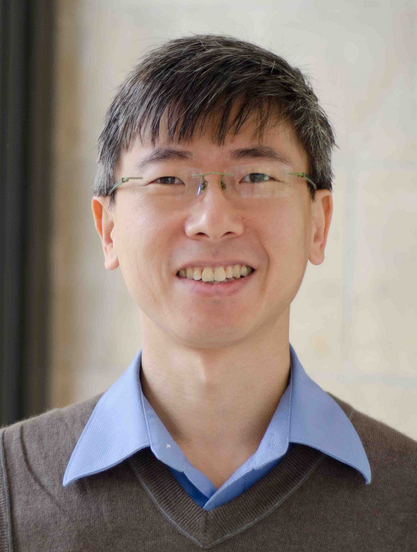
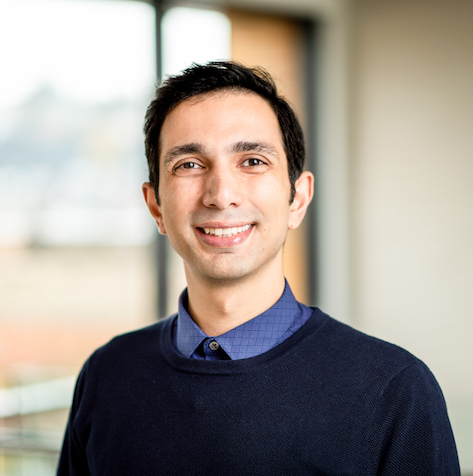
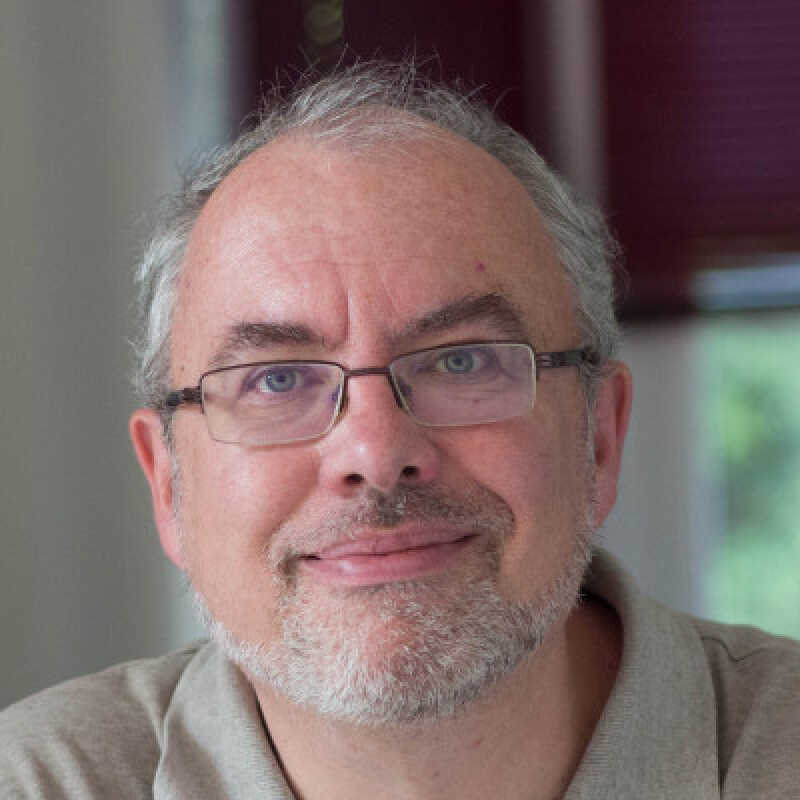
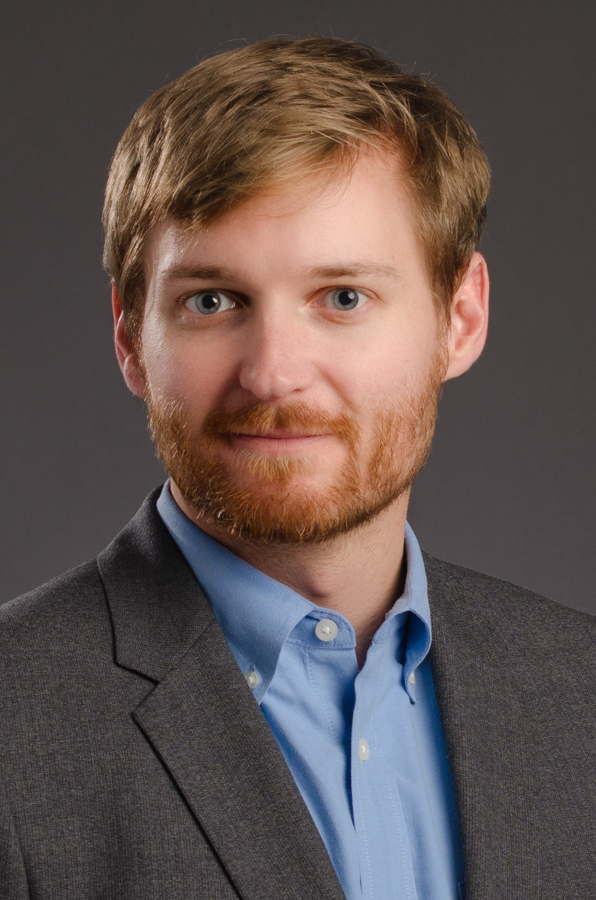
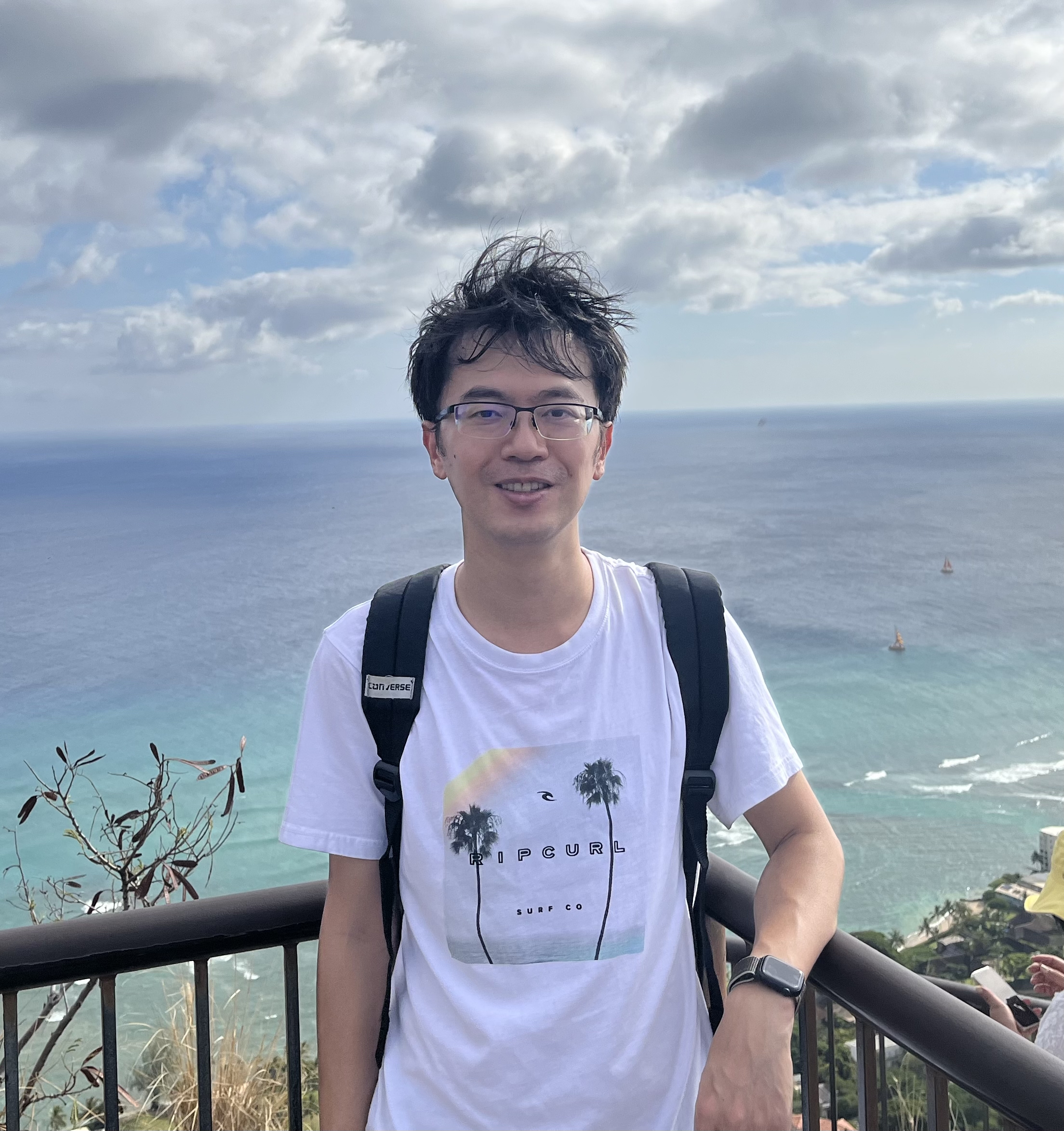
Yee Whye Teh is a Professor at the Department of Statistics, University of Oxford, and a research scientist at DeepMind. His work focuses on statistical machine learning, including probabilistic learning, Bayesian nonparametrics, deep learning, and Monte Carlo methods. He co-directs the ELLIS programme on Robust Machine Learning and has held roles such as Programme Co-chair for ICML 2017. Teh has delivered keynotes at UAI 2019, an IMS Medallion Lecture at JSM 2019, and the Breiman Lecture in 2017. His research emphasizes scalable inference algorithms, hierarchical models, and applications in genetics and natural language processing. Teh's educational background includes a PhD from the University of Toronto (2003) and a Master's from the same institution (2000). He has contributed to widely used software tools like the Sequence Memoizer and has been recognized for his work through prestigious lectureships. Research interests span Bayesian nonparametric models, MCMC methods, and their applications in genetics and data compression. His lab collaborates on projects like fragmentation-coagulation processes for genetic variation modeling and Mondrian forests for online learning. Teh advises students through Oxford's graduate programs, though he notes high demand for mentorship. His work often bridges theory and practice, addressing challenges in big data learning and small data problems.
Adrian Weller is a prominent researcher and academic at the University of Cambridge, serving as a Director of Research in Machine Learning within the Department of Engineering. He holds multiple significant leadership roles including Programme Director for Trust and Society at the Leverhulme Centre for the Future of Intelligence (CFI), and previously served as Programme Director for AI at The Alan Turing Institute, the UK national institute for data science and AI. His work bridges theoretical machine learning research with practical applications and societal implications of artificial intelligence. Weller's research interests span a broad spectrum of AI and machine learning topics with a particular focus on ensuring beneficial societal outcomes. His work encompasses explainability, fairness, robustness, scalability, privacy, safety, and ethics in AI systems. He has made significant contributions to trustworthy machine learning, including developing frameworks for AI governance, certification, and human-AI collaboration. His research group actively investigates neuro-symbolic approaches, privacy-preserving techniques, and methods for improving the reliability and interpretability of AI systems. His recent publications demonstrate a strong trend toward addressing the practical challenges of deploying AI systems in real-world contexts, particularly focusing on certification frameworks, governance mechanisms, and human-centered approaches. His work spans theoretical advances in machine learning architectures while maintaining a strong connection to societal impact, with publications appearing in top venues across AI, machine learning, and interdisciplinary applications. Scientific Awards: MBE for services to digital innovation (2022 Queen's Birthday Honours) Turing AI Fellowship for Trustworthy Machine Learning Weller actively supervises a large group of PhD students and postdocs, with current students including Juyeon Heo, Yanzhi Chen, Katie Collins, Isaac Reid, Yichao Liang, Herbie Bradley, and Shoaib Siddiqui. His former students have gone on to positions at leading institutions including Google DeepMind, ETH Zurich, NYU, and MPI-IS Tübingen. He has served on numerous advisory boards including the Centre for Data Ethics and Innovation, UNESCO's expert group on AI ethics, and the World Economic Forum's Global Future Council on AI. His research has been supported through his Turing AI Fellowship and various collaborative projects focused on safe and ethical AI development. Weller leads a vibrant research group focused on trustworthy machine learning, which actively organizes workshops and conferences including ICML 2024 (where he served as Program Chair), multiple workshops on responsible AI, and events through the ELLIS network. His group collaborates extensively across disciplines, working with researchers in computer science, social sciences, law, and policy to address the multifaceted challenges of developing beneficial AI systems.
Arman Cohan is an Assistant Professor in the Department of Computer Science at Yale University, where he leads the Yale NLP Lab since its founding in January 2023. His research spans natural language processing and machine learning with emphasis on language modeling, representation learning, retrieval systems, and specialized domain applications including scientific discovery and AI for science. His primary research interests include: Natural Language Processing Machine Learning Large Language Models Information Retrieval AI for Science Scientific Problem-Solving Recent publications (2025) demonstrate intense focus on evaluating and advancing LLM capabilities across multimodal reasoning, scientific claim verification, financial domain applications, and biological modeling. The lab consistently produces high-impact work accepted at top-tier conferences including ACL, EMNLP, and ICLR, with 11 papers at ACL 2025 alone. Scientific awards include: Best Paper Award at AI4Research Workshop (IJCAI 2024) Outstanding Paper Award at EACL 2023 Best Paper Award at ACL 2024 for Olmo language model research Professor Cohan actively advises PhD students including Kaili Liu, Jacob Dunefsky, Alan Li, Yilun Zhao, and has graduated researchers such as Linyong Nan (now at Zoom) and Ansong Ni (now at Meta). The lab maintains strong industry partnerships and receives substantial research funding as evidenced by its prolific output and conference presence. The Yale NLP Lab hosts the annual New England NLP Workshop and regularly features speakers from leading institutions including Meta AI, Allen Institute for AI, and DeepMind, fostering a collaborative environment for advancing NLP research.
Azizjon ALIMOV is a Full Professor at IÉSEG School of Management (University of Lille, France), specializing in Corporate Finance, Mergers and Acquisitions, and Law and Finance. He holds a Ph.D. in Finance from the University of Oregon (2007) and an MBA from Central Michigan University (2001). His HDR (Habilitation) in Management Sciences was awarded by the University of Lille in 2023. His research focuses on corporate governance, cross-border M&A dynamics, and the interplay between legal frameworks and financial decision-making. Key themes include intellectual property rights' impact on corporate debt costs, product market competition effects on corporate cash holdings, and government borrowing influences on acquisition strategies. His work frequently examines global contexts, with studies spanning North America, Asia, and Europe. Notable publications include analyses of IPO staging mechanisms (2024), managerial discipline through trade liberalization (2023), and the role of labor protection laws in loan contracting (2015). His recent work emphasizes reproducibility in management science methodology (2023) and cross-border regulatory challenges in M&A. No scientific awards are explicitly listed; however, his extensive publication record reflects sustained academic contributions. He has advised students across institutions including City University of Hong Kong and the Sauder School of Business, though specific advisee names are not documented here. His professional experience includes roles at the University of Arizona (2008–2010), California State University (2007–2008), and as an HSBC Visiting Assistant Professor at the University of British Columbia (2016–2018). He currently leads the Finance Track at IÉSEG, contributing to programs like the Grande École Master’s in Finance and MSc Corporate Finance courses.
Sham Kakade is the Rampell Family Professor of Computer Science and Professor of Statistics at Harvard University, co-director of the Kempner Institute. His research focuses on advancing artificial general intelligence through foundational work in reinforcement learning, large-scale learning systems, and autonomous agent architectures. He earned his PhD in 2003 from the Gatsby Computational Neuroscience Unit at University College London. His work emphasizes scalable optimization algorithms, distributed systems for foundation models, and understanding emergent capabilities in neural architectures. Research interests include full-stack training pipelines for foundation models, mathematical principles of large-scale learning systems, and bridging language models with embodied intelligence. He advises prospective students with backgrounds in applied deep learning or theoretical computer science, offering access to the Kempner Institute's computational resources. He serves on committees for the ACM Prize in Computing and Sloan Research Fellowships, co-organizes the Simons Symposium on Theoretical Machine Learning, and chaired COLT 2011. His lab works at the intersection of theory and practice, addressing challenges in AI's societal impact and technical scalability. Labs/Teams: Co-directs the Kempner Institute, fostering collaborations between AI researchers and social scientists. Active in Harvard's SEAS community.
Roger Giner-Sorolla is Professor of Social Psychology at the University of Kent's School of Psychology, where he has been a faculty member since 2001 after completing his PhD at New York University in 1996. He served as Editor-in-Chief of the Journal of Experimental Social Psychology from 2016-2022 and currently leads a Leverhulme Foundation grant examining moral heroism across professions. His academic journey includes a postdoctoral fellowship at the University of Virginia and has established him as a leading figure in social and moral psychology. Professor Giner-Sorolla's research focuses on the social role of emotions, particularly moral emotions including self-condemning emotions (guilt and shame) and other-condemning emotions (anger, contempt, and disgust). His work extends to intergroup apologies, dehumanization, emotionally driven prejudice, and collective moral roles, with a notable side interest in the ironic enjoyment of music and aesthetic experiences. He is a strong advocate for transparency in scientific reporting, having written extensively on improved reporting guidelines, pre-registration, and open science practices. Analysis of his recent publications reveals a consistent focus on moral psychology with expanding interdisciplinary reach. His work bridges traditional social psychology with emerging areas including cross-cultural emotion research, replication science, and historical memory. The trend shows increasing attention to methodological rigor while maintaining core interests in emotion and morality, with growing emphasis on practical applications in conflict resolution and intergroup relations. Fellow of the Association for Psychological Science Member of Rising Stars selection committee (2023-2024) Promising Scholars Award (University of Kent, 2006) Vacation Research Scholarship (Wellcome Trust, 2005) Multiple ESRC grants totaling over £400,000 European Science Foundation Workshop Award (2004) Professor Giner-Sorolla has supervised an impressive number of PhD students, with 17 doctoral candidates listed in the documentation including both current and past students. His grant portfolio demonstrates significant research impact with funding from major organizations including ESRC, Wellcome Trust, and Leverhulme Foundation. His supervision style appears to encourage students to pursue research that aligns with his core interests in moral emotions while allowing exploration of novel applications and contexts. While the documentation doesn't specify laboratory or research team structures, his extensive collaborative work suggests leadership of research groups focused on moral psychology and emotion research. His numerous international collaborations and invited workshops indicate an active research program with global reach, likely involving multiple research teams working on interconnected projects related to his core interests in moral psychology and scientific methodology.
Dr. Jimeng Sun is a Health Innovation Professor at the Siebel School of Computing and Data Science and Carle Illinois College of Medicine at the University of Illinois Urbana-Champaign. Co-founder of Keiji AI , he leads groundbreaking research at the intersection of artificial intelligence and healthcare, actively deploying clinical AI systems and developing frameworks like PyHealth and Therapeutics Data Commons . His research spans four major areas: Clinical AI Systems : Developing interpretable models (e.g., RETAIN) for patient similarity, temporal event prediction, medication recommendation, and clinical outcome forecasting Drug Discovery : Creating molecular optimization frameworks, drug-target interaction models, and AI-driven platforms Clinical Trials : Pioneering patient-trial matching, outcome prediction, and optimization frameworks using deep learning and graph neural networks Biosignal Analysis : Advancing sleep staging, seizure classification, and automated EEG/Cardiac monitoring systems With over 500 top-tier publications (including in Nature , NEJM AI , and leading AI conferences) and an h-index of 99, his work has been recognized with the Top 100 AI Leaders in Drug Discovery and Advanced Healthcare award. He maintains active collaborations with institutions like Massachusetts General Hospital , Medidata Solutions , and OSF Healthcare . His recent publications reveal a strong focus on: Reinforcement learning applications in medical data analysis Large language model adaptation for clinical tasks Knowledge graph integration with AI systems Synthetic data generation for healthcare Multi-modal learning in clinical contexts Explainable AI for medical applications Dr. Sun's lab ( Sunlab ) emphasizes practical impact over theoretical work, actively collaborating with hospitals and healthtech companies. He welcomes contributions from clinicians, researchers, and industry partners through initiatives like his AI for Health webinar series .
Kamalika Chaudhuri is a Professor in the Department of Computer Science and Engineering at the University of California, San Diego (UCSD), and also serves as a Director and Research Scientist with the FAIR team at Meta AI. Her research focuses on the foundations of trustworthy machine learning, including robust machine learning, learning with privacy, and out-of-distribution generalization. Dr. Chaudhuri has earned her PhD from UC Berkeley in 2007 with a dissertation on "Learning Mixtures of Distributions." Her academic journey has led her to become a leading researcher in machine learning theory with a particular emphasis on privacy and robustness. Her research interests span machine learning foundations with a strong focus on trustworthy AI . She investigates problems at the intersection of differential privacy , adversarial robustness , and out-of-distribution generalization . Her work addresses critical challenges in developing machine learning systems that maintain privacy while preserving utility, resist adversarial attacks, and generalize effectively beyond training data distributions. She has pioneered approaches in privacy-preserving machine learning, robust learning theory, and methods for detecting and mitigating data memorization in models. An analysis of her recent publications (2024-2025) reveals a strong focus on the intersection of privacy, security, and machine learning. Her work spans differential privacy mechanisms, membership inference attacks, memorization detection, and fairness certification. She has been particularly active in developing methods for privacy-preserving foundation models, with several papers on differentially private computer vision and language models. Her research demonstrates a consistent thread of addressing fundamental challenges in trustworthy AI while developing practical solutions that balance privacy, accuracy, and utility. Best Award at the ICLR 2024 Workshop on Privacy Regulation and Protection in Machine Learning Distinguished Paper Award at IEEE Conference on Secure and Trustworthy Machine Learning (SaTML), 2024 Dr. Chaudhuri has advised numerous PhD students who have gone on to prominent positions at Google, DeepMind, Microsoft Research, and other leading AI institutions. Her group maintains an active research blog with guest posts from UCSD researchers. She has served in significant leadership roles including General Chair for ICML 2022 and Program Co-Chair for both ICML 2019 and AISTATS 2019, where she pioneered initiatives to improve reproducibility in machine learning research. Her research group at UCSD focuses on trustworthy machine learning, with current projects spanning privacy-preserving AI, robustness against adversarial attacks, and methods for ensuring reliable out-of-distribution generalization. The group collaborates closely with the FAIR team at Meta AI, where Dr. Chaudhuri serves as a Research Scientist.
Dean Eckles is an Associate Professor of Marketing at MIT Sloan School of Management and serves as an Associate Director of the MIT Institute for Data, Systems, and Society (IDSS). He is also affiliated with the MIT Schwarzman College of Computing through the Institute for Data, Systems & Society and its Statistics and Data Science Center. Additionally, he leads the analytics research area at the Initiative on the Digital Economy and organizes the annual Conference on Digital Experimentation (CODE@MIT). His educational background includes a BA in philosophy, BS and MS in cognitive science, MS in statistics, and PhD in communication, all from Stanford University. Prior to joining MIT, Eckles worked as a scientist at Facebook, where he contributed to areas including News Feed, messaging, advertising, tools for randomized experiments, and survey methods. He previously held research positions at Nokia and Yahoo. Eckles's research primarily focuses on social influence mediated by interactive technologies, examining how communication technologies mediate, amplify, and direct social influence. His work spans multiple specific areas including social interactions, contagion, and interventions in networks; experimental design and inference in networks; and methods for causal inference. His research often combines social science with advanced statistical methods. His notable publications include research on long ties in social networks and their relationship to economic prosperity, how network structure affects social contagions, and algorithmic transparency in social media platforms. His work has appeared in prestigious journals including PNAS and Nature Human Behaviour, and he has provided expert testimony before the US Senate on algorithmic ranking. Long ties, disruptive life events and economic prosperity (PNAS) Long ties accelerate noisy threshold-based contagions (Nature Human Behaviour) Algorithmic transparency and assessing effects of algorithmic ranking (Senate testimony) Eckles actively shares his research through social media platforms including Bluesky, Twitter, and Mastodon, as well as through his blog and contributions to the Gelman et al. blog. His work bridges academic research with practical applications in technology and policy.
Florian Tramèr is an Assistant Professor in the Department of Computer Science at ETH Zurich, Switzerland, leading research at the intersection of machine learning security, privacy, and AI safety. His work focuses on identifying and mitigating security vulnerabilities in machine learning systems, particularly in large language models and other AI systems. Tramèr's primary research interests include adversarial machine learning, membership inference attacks, privacy-preserving AI, and the security implications of large language models. His work has significantly advanced our understanding of how machine learning models memorize training data, how this memorization creates privacy risks, and how to evaluate the robustness of machine learning systems against various attacks. His recent publications demonstrate a strong focus on practical security challenges in deployed AI systems, including data extraction from language models, adversarial attacks against generative AI, and developing more rigorous evaluation methodologies for machine learning security. Tramèr's research has been published in top venues including ICLR, NeurIPS, ICML, and IEEE Security & Privacy. Tramèr is actively collaborating with leading researchers in the field including Nicholas Carlini, Matthew Jagielski, and Javier Rando, contributing to important initiatives like the International AI Safety Report. His work bridges theoretical security concepts with practical implications for real-world AI deployment.
Dai Zhongxiang is an Assistant Professor and Presidential Young Fellow at the School of Data Science, The Chinese University of Hong Kong, Shenzhen (CUHKSZ), where he joined in August 2024. Previously, he was a Postdoctoral Associate at MIT's Laboratory for Information and Decision Systems (January-June 2024) and a Postdoctoral Fellow at the National University of Singapore's Department of Computer Science (April 2021-December 2023). He completed his Ph.D. in Artificial Intelligence at NUS under the supervision of Bryan Kian Hsiang Low and Patrick Jaillet. Dr. Dai's research focuses on the intersection of theoretical and practical AI, with particular emphasis on large language models (LLMs) and optimization techniques. His work spans both theoretical foundations of multi-armed bandits and Bayesian optimization, as well as practical applications in LLM inference, including prompt optimization, in-context learning, personalization of LLMs, LLM-based agents, and scaling up test-time computation of LLMs. His research approach often bridges theoretical principles with real-world applications, particularly in AI4Science problems. His recent publications demonstrate a clear trend toward advancing LLM capabilities through optimization techniques, with increasing focus on practical deployment challenges. The research spans both theoretical contributions to optimization theory and applied work on enhancing LLM performance in real-world scenarios. His work on dueling bandits, neural bandits, and zeroth-order optimization has been consistently published in top-tier venues including NeurIPS, ICML, ICLR, and ACL. Presidential Young Fellow, CUHKSZ (2024) Dean's Graduate Research Excellence Award, NUS (2021) Research Achievement Award × 2, NUS (2019 & 2020) Singapore-MIT Alliance Graduate Fellowship (2017) Dr. Dai actively mentors multiple Ph.D. students and research assistants, with several of his students' papers accepted to top conferences. His research has received significant attention, with invitations to serve as Area Chair for NeurIPS 2025 and ICLR 2025, reflecting his growing influence in the machine learning community. His work bridges theoretical machine learning with practical applications in large-scale AI systems.
Charles M. Jones is a Professor of Finance at Columbia Business School, Columbia University, with an extensive publication record spanning several decades. His research focuses on market microstructure, high-frequency trading, short selling, retail investor behavior, and stock market liquidity. His work has appeared in top finance journals including the Journal of Finance, with his most recent publication "Nonstandard Errors" appearing in the June 2024 issue. Professor Jones's research interests center on understanding how financial markets function at a granular level. His work on market microstructure examines the mechanics of price formation, liquidity provision, and the impact of trading technologies on market quality. His research on short selling has been particularly influential, investigating when short sellers trade, what information they possess, and how regulatory interventions like short sale bans affect market functioning. His more recent work has explored the rise of retail trading through platforms like Reddit and its implications for price discovery, particularly during events like the GameStop phenomenon and the COVID-19 pandemic. Analysis of his publication trends reveals a consistent focus on market efficiency and price discovery mechanisms, with increasing attention to retail investor behavior in recent years. His work spans both theoretical modeling and empirical analysis of market data, often utilizing high-frequency datasets to examine intraday trading patterns. The interdisciplinary nature of his research bridges finance, economics, and information science, contributing to both academic understanding and practical market regulation. Professor Jones has collaborated extensively with researchers across the globe, as evidenced by his numerous co-authored papers with scholars from institutions worldwide. His work has significant implications for market regulators seeking to understand the impact of technological changes and regulatory interventions on market quality and efficiency.
Tim G. J. Rudner is an Assistant Professor in the Department of Statistical Sciences at the University of Toronto, a Faculty Member at the Vector Institute, and a Title A Fellow at Trinity College, University of Cambridge. He was previously an Assistant Professor and Faculty Fellow at New York University. University: University of Toronto School: Faculty of Arts and Science Department: Department of Statistical Sciences Affiliation: Vector Institute, Trinity College (Cambridge) He holds a PhD in Computer Science and an MSc in Statistics from the University of Oxford, where he was advised by Yee Whye Teh and Yarin Gal, and a BS in Applied Mathematics and Economics from Yale University. PhD: Computer Science, University of Oxford MSc: Statistics, University of Oxford BS: Applied Mathematics and Economics, Yale University His research focuses on building robust, transparent, and trustworthy machine learning systems, particularly for high-stakes applications. He develops probabilistic models that improve generalization under distribution shifts, provide reliable uncertainty estimates, and enable fair and interpretable predictions. His work spans generative models, large language models, healthcare, and biomedical discovery. The recent publications highlight a strong trend toward function-space modeling, Bayesian regularization, and AI safety. Tim's work emphasizes principled uncertainty quantification, robustness to subpopulation and semantic shifts, and the development of frameworks for AI governance and specification. His research bridges theoretical advances with real-world applications, especially in safety-critical domains like medicine and defense. Tim has received numerous accolades including being named a Rhodes Scholar, Qualcomm Innovation Fellow, and 2024 Rising Star in Generative AI. He was awarded a $700,000 Foundational Research Grant and a $30,000 Apple Seed Grant for improving LLM trustworthiness. Rhodes Scholar Qualcomm Innovation Fellow AISTATS Notable Paper Award (2024) Outstanding Paper Award, ICLR GenAI4DM Workshop (2024) Apple Seed Grant ($30,000) Foundational Research Grant ($700,000) NeurIPS Spotlight Talk 2024 Rising Star in Generative AI He actively mentors students, particularly first-generation and low-income scholars, and has contributed to major policy frameworks including the OECD AI Classification Framework and a series of CSET issue briefs on AI safety. His work demonstrates a strong commitment to responsible AI development, combining technical rigor with societal impact. Tim leads research efforts at the intersection of machine learning theory and practical deployment, with ongoing projects in generative modeling, reliable LLMs, and AI governance. His lab produces high-impact work regularly published at top-tier conferences such as NeurIPS, ICML, and AISTATS.
Alison Ledgerwood is a Professor in the Department of Psychology at the University of California, Davis, and Principal Investigator of the Attitudes and Group Identity Lab. Her research examines how social context shapes attitudes and preferences, with a focus on open and inclusive scientific practices. Ph.D., Social Psychology, New York University (2008) M.A., Psychology, New York University (2006) B.A., Psychology, Amherst College (2003) Her research explores psychological distance , framing effects , and system justification theory , while methodologically advancing preregistration , collaborative science , and equity in publishing . She also investigates group identity dynamics and implicit/explicit bias measurement . Recent publications highlight her work on racial bias methodology , open science reform , and contextual framing . Awards include the 2024 Distinguished Service to the Society award, 2021 UC Davis Advising and Mentoring Award, and 2017 SPSP Service to the Field award. 2024 Distinguished Service to the Society, SPSP 2021 UC Davis Graduate Advising and Mentoring Award 2017 Service to the Field, SPSP Hellman Fellowship (2010-2011), UC Davis UC Davis Chancellor's Fellow APS Fellow SESP Fellow Ledgerwood advises on scientific integrity through roles like Chair of the Transparency and Openness Promotion (TOP) II Guidelines Task Force and Anti Colorism and Eurocentrism in Methods and Practices (ACEMAP) Task Force. Her lab fosters contextual evaluation studies and psychological distance frameworks .
Aditya Parameswaran is an Associate Professor in the Electrical Engineering and Computer Sciences (EECS) department at the University of California, Berkeley. He co-directs the EPIC Data Lab and the Police Records Access project, focusing on simplifying data science at scale through human-in-the-loop systems, LLM-powered tools, and scalable data systems. His research spans database systems, human-computer interaction, and machine learning, with notable contributions in tools like Lux, Modin, and DataSpread. Education : PhD in Computer Science from Stanford University (2013) BTech in Computer Science and Engineering from IIT Bombay (2007) Research Interests : Parameswaran's work centers on empowering end-users with intuitive data tools. Recent projects include LLM-powered systems for document processing (DocETL, TWIX), proactive data systems, and benchmarking frameworks. He emphasizes democratizing data science through low/no-code solutions and improving production ML workflows. Articles Trends : His recent work (2023–2025) prioritizes LLM integration into data systems, focusing on robust pipelines, assertion generation (SPADE), and debugging tools (RAGGY). Earlier contributions include visualization recommendation (Lux), scalable dataframes (Modin), and spreadsheet optimization (DataSpread). Awards : Recipient of the VLDB Early Career Award (2019), Sloan Research Fellowship (2020), NSF CAREER Award (2017), and multiple best paper/demonstration awards at top venues like SIGMOD and VLDB. Advising & Grants : Guides over 20 PhD/postdoc alumni, many now in academia (e.g., Madelon Hulsebos at CWI) and industry leadership roles. Active in securing grants (e.g., NSF, Army Research Office) and industry partnerships (e.g., Snowflake, LangChain). Labs/Teams : Leads the EPIC Data Lab, focusing on agentic data systems, and co-founded Ponder (acquired by Snowflake). Collaborates on the Police Records Access initiative, building transparency tools for public records.