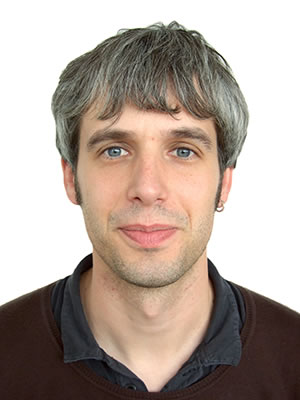
Pieter Van Gorp is an Associate Professor at the School of Industrial Engineering at Eindhoven University of Technology (TU/e). He holds a part-time appointment at Utrecht University of Applied Sciences, focusing on societal applications of connected health games. His work spans digital health tools, personal health data economics, and cloud infrastructure for reproducible research. Education Background: Obtained PhD in Software Engineering from University of Antwerp, followed by a postdoc there. He has served as program manager for TU/e's Data Science Center (DSC/e) and Eindhoven AI Systems Institute (EAISI), linking research to societal challenges. Since 2023, he is Scientific Director of the Clinical Informatics EngD program. Research Interests: Focuses on personal health records as economic assets (e.g., MyPHRMachines platform), workflow model transformations (UML/BPMN/Petri-Net), and tools like SHARE/SciModeler for reproducible research. Active in gamification for corporate health and healthcare decision support systems. Awards: Awarded Best Paper (2007, 2012), 2nd Executable Paper Prize (2011). Current activities include teaching Health Information Systems and supervising 9 active PhD students. Advising & Grants: Mentor to 9 current PhD students and 5 alumni. Facilitates industry-academia collaboration through TU/e's innovation initiatives. Labs/Teams: Leads the Information Systems Lab at TU/e and co-leads EAISI Health. Involved in multidisciplinary teams addressing health tech and data science challenges.
Dominik Kopczynski is a researcher affiliated with the Department of Analytical Chemistry at the Faculty of Chemistry. His work focuses on lipidomics, mass spectrometry, and the development of bioinformatics tools for lipid structure analysis and experimental standardization. He has contributed to initiatives like the lipidomics reporting checklist and Goslin nomenclature system. Active in organizing academic events such as the de.NBI Spring School for lipidomics bioinformatics and Keystone Symposia on lipid biology, he collaborates extensively with international researchers. Research Interests: Lipid metabolism, mass spectrometry-based analytical methods, lipid nomenclature standardization, proteomics, and computational tools for omics data analysis. His work bridges biochemical experimentation with bioinformatics to enhance reproducibility and interdisciplinary collaboration in lipidomics research. Activities: Organized 36 academic events including conferences, schools, and poster sessions. Notable contributions include co-organizing the 2025 de.NBI Spring School and contributing to the Keystone Symposia on lipid cellular function and disease. Engaged in both presenting research and fostering collaborative research networks. Labs/Teams: Collaborates within the Department of Analytical Chemistry and participates in international lipidomics consortia. His work often involves cross-disciplinary teams focused on integrating biochemical and computational approaches. Grants/Advising: While specific grants are not detailed, his extensive publication record and collaborative activities suggest involvement in funded projects related to lipidomics infrastructure development and analytical method standardization.
Joshua B. Evans is a Lecturer in the Department of Computer Science at the University of Bath, Faculty of Science, where he is an active researcher and educator in artificial intelligence and reinforcement learning. He is affiliated with the Bath Reinforcement Learning Laboratory and serves as unit convenor for key on-campus and online reinforcement learning courses (CM50270, CM30359, and CM500336). His research centers on enabling AI agents to learn complex behaviors through interaction, particularly via skill discovery in reinforcement learning. Key interests include: Hierarchical Reinforcement Learning Graph-Based Skill Discovery Methods Nature and Human-Inspired Skill Discovery Intrinsically-Motivated Reinforcement Learning World Models and Representation Learning His recent publications, including a NeurIPS 2023 paper on multi-level skill hierarchies, emphasize graph-based and modular approaches to structuring agent behavior across abstraction levels. The work demonstrates strong theoretical grounding and practical application in diverse environments. Scientific recognition includes: Doctoral Recognition Award, Bath Doctoral Research Celebration Evening Bill Tutte Scholarship from the Bill Tutte Memorial Fund Dr. Evans actively supervises undergraduate and postgraduate students on a wide range of reinforcement learning projects, from game AI to healthcare applications and multi-agent systems. He has developed and delivered both on-campus and online MSc AI curricula, significantly contributing to AI education at Bath. His research includes software contributions such as SimpleOptions, SimpleEnvs, and OfficeWorld, supporting reproducibility and experimentation in HRL. He is based at 1W 4.58, Department of Computer Science, University of Bath, BA2 7AY, UK.
Prof. Georg Carle is a full Professor in Network Architectures and Network Services at the Technical University of Munich (TUM), affiliated with the TUM School of Computation, Information and Technology. He leads research in Internet technology, focusing on future network architectures, security, and real-time communication. Prior roles include positions at the University of Tübingen and Fraunhofer Institute for Open Communication Systems (FOKUS). Education: Electrical Engineering diploma from University of Stuttgart (1992), Master of Science in Digital Systems (Brunel University, London), and PhD in Telematics from University of Karlsruhe (1996). He held scholarships in complex systems and European Union-funded research at Institut Eurécom. Research Interests: Prof. Carle's work spans network security, sensor networks, autonomous systems, and future Internet protocols. His group develops tools like MoonGen (packet generator) and pos (experiment workflow system). Recent focus includes QUIC protocol analysis, network slicing, and reproducible experimentation frameworks. Key Contributions: Award-winning research includes Applied Networking Research Prizes (2017-2018), Best Paper Awards in IMC/PAM, and innovations in network measurement, security, and programmable data planes. His lab explores cutting-edge topics like post-quantum cryptography, low-latency networking, and 6G automation. Recognition: Honors include ACM SIGCOMM Community Contribution Award, IRTF ANRP, and multiple conference best paper accolades. He advises on network infrastructure for industrial IoT, automotive systems, and secure multiparty computation.
Dr. Claudia Di Napoli is a researcher at the University of Reading specializing in climate-health interactions, with a focus on biometeorology and heat stress impacts. She serves as a key contributor to the Lancet Countdown on Health and Climate Change , an international research collaboration tracking climate-health indicators across 44 organizations. Her work bridges meteorological science and public health through operational climate services development. Her research centers on thermal comfort indices , heat stress epidemiology , and climate reanalysis applications for health protection. Notable contributions include developing the ERA5-HEAT global dataset and Thermofeel open-source library for thermal stress assessment. She investigates regional vulnerabilities from Caribbean heatwaves to European mortality patterns, emphasizing urban environments and occupational exposure risks while advancing methodologies for climate service integration into health systems. Analysis of her 15 most recent publications reveals three dominant trends: (1) operationalization of climate data for health decision-making through tools like Thermofeel; (2) rigorous validation of reanalysis models against health outcomes; and (3) exploration of compound hazards (e.g., heatwaves concurrent with wildfires or pandemics). Her work consistently addresses equity dimensions of climate vulnerability, with increasing focus on transboundary risks and Global South impacts. Dr. Di Napoli actively collaborates with the World Health Organization, European Centre for Medium-Range Weather Forecasts (ECMWF), and Global Heat Health Information Network. Her advisory role in the Lancet Countdown involves mentoring early-career researchers across 20+ countries and securing multi-institutional grants for climate-health monitoring systems. Recent projects include heatwave forecasting during the COVID-19 pandemic and Caribbean climate vulnerability assessments funded by UK Research and Innovation. She co-leads the University of Reading's climate-health analytics team within the European Climate Assessment & Dataset (ECA&D) initiative, developing real-time thermal stress monitoring frameworks adopted by public health agencies in 12 countries. Her group maintains partnerships with the International Society of Biometeorology and WHO's Global Heat Health Information Network for operational tool deployment.
Dr. Casimir Kulikowski is a Board of Governors Professor in the Department of Computer Science at Rutgers University, specializing in Artificial Intelligence , Biomedical Informatics , and the Societal Impact of Technology . He has held leadership roles at Rutgers, including Chair of the Department of Computer Science (1984-1990) and Director of the Laboratory for Computer Science Research (1985-1996). Research Interests : AI in clinical decision-making, medical imaging, knowledge representation, history of biomedical informatics, and ethical implications of AI in healthcare. Awards : Fellow of the National Academy of Medicine (NAM), IEEE, AAAI, AIMBE, and multiple IMIA honors, including Working Group of the Year (2016-2014). Professional Activities : Vice-President of IMIA (2006-2012), Chair of IMIA Working Group on History (2016-2022), and editorial roles in journals like IMIA Yearbook and Methods of Information in Medicine . His recent work focuses on ethical AI in healthcare, interdisciplinary medical informatics , and historical analysis of technology’s impact . He has supervised undergraduate students in medical informatics projects and contributed to global health policy discussions.
Dr. Sophie Bruns is a Researcher at the Department of Journalism and Communication Research, Leibniz University Hannover, specializing in media effects, political communication, and health communication. Her work examines how media content influences social perceptions, emotional responses, and behavioral norms, particularly in crisis contexts like the COVID-19 pandemic. Her research interests center on media effects , with emphasis on hostile media phenomena, moral psychology in news processing, and social identity threats. She investigates how media framing shapes public understanding of scientific controversies (e.g., animal research) and health behaviors. Her methodological expertise includes longitudinal designs, experimental approaches, and computational communication science. Bruns' recent publications reveal strong focus on pandemic communication (social distancing norms, topic fatigue), moral psychology (effects of immoral news content), and media branding . Her work bridges political communication, health contexts, and computational methods, often using German-speaking populations as case studies. Best Student Paper Award of the Information Systems Division at ICA 2018 Bruns actively contributes to major communication associations including ICA, ECREA, and DGPuK. Her research integrates theoretical frameworks from social identity theory, moral foundations theory, and third-person effect to analyze media's role in societal conflicts and norm formation.
Tommi Jauhiainen is a Researcher at the University of Helsinki , affiliated with the Department of Digital Humanities and the Centre of Excellence in Ancient Near Eastern Empires (ANEE) . He specializes in Language Technology and Digital Humanities , focusing on computational methods for analyzing historical texts. His research interests include Egyptology , Automatic Text Dating , Cuneiform Script , and Computational Linguistics . He has contributed to projects like Automatic Classification and Analysis of Texts from Egyptian Antiquity (2024–2029) and FIN-CLARIAH (2024–2025). Recent articles highlight his work on machine-readable hieroglyphic texts , automated chronotopical analysis , and language resource development for underrepresented languages. He actively participates in peer review and conferences like the International Congress of Egyptologists .
Maurizio Leotta is an Assistant Professor in Computer Science at the University of Genova, Italy, where he has been employed since 2018. He is a member of the Department of Computer Science, Bioengineering, Robotics, and Systems Engineering (DIBRIS) within the School of Mathematical, Physical and Natural Sciences. Additionally, he serves on the School Council and the Department Board of DIBRIS. Dr. Leotta received his PhD in Computer Science from the University of Genova in 2015, with a thesis on Automated Web Testing under the supervision of Prof. Filippo Ricca. His doctoral work was revised by Prof. Massimiliano di Penta (Università del Sannio, Italy) and Prof. Ali Mesbah (University of British Columbia, Canada). Before his academic career, he worked as an IT Technician in various companies and participated in research and industrial projects funded by organizations such as Finmeccanica S.p.A. and the Italian Space Agency. Dr. Leotta's primary research focuses on Software Engineering, with particular emphasis on Test Automation, which is his main research topic. He collaborates with Prof. Paolo Tonella from USI, Switzerland on this area. His other significant research interests include Empirical Software Engineering, Requirements Engineering, Business Process Modelling, and Model-Driven Software Engineering. His work often addresses practical challenges in web and mobile application testing, with a growing interest in applying AI and gamification techniques to improve software testing processes. His recent publications demonstrate a strong trend toward integrating artificial intelligence with traditional software testing methodologies, particularly in end-to-end web testing. He has made significant contributions to improving test robustness, addressing flakiness in test execution, and developing tools for better test maintenance. His work also shows increasing interest in gamification approaches to engage developers and students in software testing activities, as well as applications of large language models to enhance test automation. Dr. Leotta has received multiple prestigious awards for his research, including: Best Paper Award at ICST 2025 (Short Papers, Vision and Emerging Results) Distinguished Paper Award at ICST 2023 (Industry Papers) Best Paper Award at QUATIC 2022 (Full Papers) Best Paper Award at ICST 2022 (Demo and Testing Tool Papers) Best Paper Award at QUATIC 2020 (Full Papers) Best Student Paper Award at ICWE 2016 (Full Papers) Dr. Leotta has advised numerous graduate students, including three PhD candidates who have completed their degrees (Andrea Fasciglione in 2024, Dario Olianas in 2023, and Diego Clerissi in 2020). He currently supervises multiple Master's students working on topics related to software testing, web accessibility, and AI applications in software engineering. He has also served as a postdoctoral advisor for researchers including Diego Clerissi and Dario Olianas. Beyond advising, Dr. Leotta has secured research funding through collaborations with industry partners and has been involved in multiple research projects focused on software testing and verification. He co-directs the Software Engineering for Healthcare (SEH) Laboratory, which has been partially supported by Janssen Italia (previously by Actelion Pharmaceuticals Italia). The lab focuses on applying software engineering techniques to healthcare applications, particularly in the areas of wearable technology for patient monitoring and medical data analysis. Dr. Leotta is also active in the Gamify research community, organizing workshops on gamification in software development, verification, and validation.
Daniel Bond is a Professor in the Department of Plant and Microbial Biology at the University of Minnesota, College of Biological Sciences . His research focuses on microbial electron transfer mechanisms, particularly in Geobacter species, and their applications in bioenergy, bioremediation, and bioelectronic devices. He leads a multidisciplinary lab that explores the molecular basis of extracellular respiration and develops advanced electrochemical tools for microbial studies. Education: Implied Ph.D. in Microbiology (via postdoc at University of Massachusetts). Collaborations: Fengbin Wang, Allon Hochbaum, Ed Egelman, Hammond Lab. His work bridges microbiology and electrochemistry, revealing how bacteria like Geobacter use conductive pathways to survive in metal-rich environments. Current projects include studying voltage-dependent electron transfer, surface sensing mechanisms, and the role of cyclic dinucleotides in microbial signaling. Recent publications highlight discoveries in Geobacter nanowire diversity, potential-dependent electron transfer, and second messenger signaling. The lab emphasizes open-access publishing and welcomes graduate students through the PBM, MICaB, and BMBB programs. Scientific Awards: Journal of Bacteriology Editor's Pick (2022) ChemElectroChem Cover Feature (2022) Commentary in Journal of Bacteriology on Geobacter biofilm conductivity (2014) Bond's lab also develops custom electrochemical reactors to study microbial interactions under controlled conditions, emphasizing reproducibility and precision in experimental design.
Alison Packwood Henry is faculty at Antioch University New England's Waldorf Teacher Education Program since 2018, where she teaches Waldorf curriculum courses and advises Master's students working on educational projects. She recently completed her PhD in Leadership and Change at Antioch University in 2024. Her research focuses on decolonial approaches to education, examining how colonial narratives perpetuate systemic inequalities and exploring pathways toward healing through transformative storytelling. She investigates humility in leadership, colonial ways of thinking, and the role of narrative in reproducing or disrupting colonial relationships. Henry's scholarly work centers on the intersection of decolonial theory and educational practice, particularly within Waldorf education contexts. Her research demonstrates how educators can collaborate with communities to develop culturally responsive, liberatory teaching approaches that honor local geographies and cultures while challenging Eurocentric educational frameworks. As an educator and researcher, Henry emphasizes the importance of intellectual and moral courage, relationality, and humility in disrupting colonial ways of thinking. Her work suggests that meaningful educational transformation occurs through small-scale, context-specific initiatives rather than universal solutions. She advises Master's students at Antioch University New England who are completing projects related to Waldorf education and decolonial pedagogy, supporting them in exploring areas of deep personal and professional interest within educational transformation.
Rafael Pereira Pires is a Lecturer and researcher at École polytechnique fédérale de Lausanne (EPFL) , affiliated with the Scalable Computing Systems Laboratory (SACS) and IC-SIN units. His research focuses on systems solutions at the intersection of privacy, efficiency, and machine learning in distributed environments. Education PhD in Computer Science (2019, University of Neuchâtel, Switzerland) Professional Master in Mechatronics (2014, IFSC, Brazil) Master in Computer Science (2009, UFSC, Brazil) His work explores privacy-preserving decentralized learning , trusted execution environments , and resource-efficient distributed systems . Recent publications address techniques like model fragmentation, approximate caching, and secure aggregation in decentralized learning contexts. Key trends in his 2023-2025 publications include: Advancements in federated learning and Mixture-of-Experts (MoE) models Applications of Trusted Execution Environments (SGX) to decentralized systems Optimization techniques for energy-aware and low-cost learning Scientific recognition includes the 2019 Léon Du Pasquier et Louis Perrier award for his PhD thesis. He has contributed to open-source tools like DecentralizePy and served as reviewer/PC member for top conferences including NeurIPS , Middleware , and ICDCS .
Mark McCabe is a Full Professor at SKEMA Business School, holding a dual affiliation with the Research Group in Law, Economics, and Management (GREDEG)—a joint unit of Université Côte d'Azur, CNRS, and SKEMA. As a teacher-researcher in the Pole Growth, Industry, and Markets (PCIM), he contributes to the BUDYMAC research team (Business Dynamism and Macroeconomic Challenges) with primary focus on Innovation studies. His academic leadership spans theoretical and empirical investigations into scholarly communication systems. His research program critically examines the economic foundations of academic publishing, specializing in open access dynamics, citation behavior, and market competition. Key contributions include: Econometric analysis of open access effects on citation counts across journal quality tiers Structural modeling of two-sided markets in scholarly journal pricing Empirical assessment of data disclosure policies using natural experiments Welfare analysis of publisher mergers and bundling strategies Development of sustainable funding models for gold open access Analysis of his 15 most recent publications (2006-2024) reveals consistent focus on open science economics, with methodological emphasis on natural experiments, panel data analysis, and industrial organization frameworks. His work bridges theoretical economic modeling with real-world policy implications for libraries, publishers, and research institutions. Within SKEMA's research ecosystem, Professor McCabe actively shapes discourse through the PCIM pole and BUDYMAC team, where he investigates macroeconomic dimensions of business innovation and market evolution.
Jørgen Jensen serves as Professor in the Department of Physical Performance at the Norwegian School of Sport Sciences, where he leads the Biochemical Laboratory and heads the biochemistry research group. His responsibilities encompass teaching, research supervision, and service on the Committee for Postgraduate Education. Dr. Jensen earned his PhD from the Norwegian School of Sport Sciences in 1993, followed by postdoctoral training at the University of Oslo. Prior to his current position, he conducted research at the National Institute of Occupational Health from 1997 to 2009, investigating skeletal muscle glucose uptake and glycogen metabolism mechanisms. His research centers on carbohydrate metabolism regulation during and after exercise, with particular emphasis on caffeine's ergogenic effects, protein supplementation impacts on endurance performance, and exercise-induced insulin sensitivity changes. This work bridges exercise physiology, biochemistry, and nutritional science to advance understanding of human performance and metabolic health. Analysis of his 15 most recent publications reveals strong focus on nutritional interventions (protein/carbohydrate supplementation, fasting), metabolic adaptation to exercise, and biochemical monitoring through nitrogen excretion and proteome analysis. His studies frequently employ human trials with endurance athletes and controlled metabolic testing. No scientific awards were documented in the provided materials. As an educator, Jensen holds academic responsibility for Metabolism (THP204) and Metabolic Regulation (MA408) courses, delivering lectures on metabolic processes. His supervision activities include mentoring graduate students within the biochemistry research group framework. The biochemistry research group operates the university's Biochemical Laboratory, conducting studies on exercise-induced metabolic responses, nutrient-exercise interactions, and molecular mechanisms underlying performance adaptations.
Sascha Spors is a Professor at the Chair of Signal Theory and Digital Signal Processing within the Institute of Communications Engineering at the University of Rostock. His work spans spatial audio processing, medical signal processing, and data-driven methodologies. Chair of the AES Technical Committee on Spatial Audio Ombudsperson at the University of Rostock Research focuses on spatial sound capture/synthesis, perception of synthetic sound fields, and biomedical applications like implant monitoring via electrical impedance tomography. He contributes to open science initiatives and research data management frameworks. Key collaborations include memberships in the IEEE Signal Processing Society, Deutsche Gesellschaft für Akustik (DEGA), and Audio Engineering Society (AES).