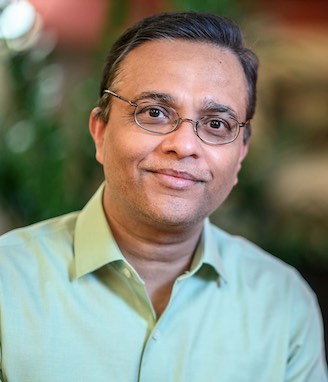
Jignesh M. Patel is a Professor in the Computer Science Department at Carnegie Mellon University, where he leads research on efficient data analysis methods. His work focuses on improving both system efficiency (e.g., high-performance data algorithms) and human efficiency (e.g., user productivity with data systems). Research Focus: Patel's group specializes in database systems, query optimization, hardware acceleration, and human-data interaction. Their interdisciplinary work spans: Transactional processing and real-time analytics Query optimization techniques Hardware-algorithm co-design Natural language interfaces for data systems Memory-efficient data processing Professional Activities: Co-founded four technology companies (Paradise, Locomatix, Quickstep, DataChat). Serves on program committees for premier conferences including SIGMOD and CIDR (as co-chair). Teaches database systems courses at CMU. Awards: Received Best Paper Award at DaMoN 2010 for work on cluster efficiency.
Philipp Lersch is a Professor at the Humboldt University , affiliated with the Institute of Social Sciences under the Faculty of Humanities, Social Sciences and Education. He also serves as the Women's* Representative. His research focuses on wealth inequality, family dynamics, homeownership, and social mobility. Visiting Address: Universitätsstraße 3b, Room 112 Mailing Address: Unter den Linden 6, 10099 Berlin Email: p.m.lersch@hu-berlin.de , pmlersch@hu-berlin.de Research Interests include: Wealth inequality in family contexts Homeownership mobility across Europe Gender roles in financial decision-making Intergenerational wealth transmission Life course sociology Recent Trends in his work emphasize computational reproducibility, cross-national comparisons of housing wealth, and the intersection of demographic shifts with economic disparities. His publications span topics like cohabitation wealth premiums, marital dissolution impacts, and policy-driven financial behaviors.
Archer Yang is an Associate Professor in the Department of Mathematics and Statistics at McGill University, with additional affiliations as an Associate Academic Member of Mila - Quebec AI Institute, Associate Member of the School of Computer Science, and Member of the Quantitative Life Science Program. His academic journey began with a PhD from the University of Minnesota under the supervision of Hui Zou, establishing his foundation in statistical methodology and machine learning. Dr. Yang's research spans three interconnected themes: statistical machine learning, applications in drug discovery, and computational genomics and healthcare. In statistical machine learning, he focuses on developing dimensionality reduction, probabilistic models, and causality-inspired methods to address complex high-dimensional data challenges. His work in drug discovery involves creating machine learning models to accelerate drug candidate identification and enhance understanding of drug efficacy and safety. In computational genomics and healthcare, he develops techniques to analyze genomic data, identify biomarkers, and explore the genetic basis of diseases, with the goal of improving precision medicine and predicting patient outcomes. His overarching objective is to bridge advanced data-driven methodologies with impactful applications in pharmacology, genomics, and healthcare. His recent publications reveal a strong trend toward applying machine learning to healthcare challenges, particularly in congenital heart disease analysis, mortality prediction, and drug discovery. His work demonstrates expertise in developing interpretable models that can handle complex, high-dimensional biomedical data while maintaining statistical rigor. The integration of causal inference methods with machine learning appears to be a growing focus in his research trajectory. ICML Spotlight Paper (top 2.6%, 313/12,107) Dr. Yang actively supervises a large research group including multiple postdoctoral fellows, PhD students, and Master's students. His lab has developed several notable software tools, including ml-mr for machine learning in Mendelian randomization. His supervision extends across statistics, computer science, and biomedical applications, reflecting the interdisciplinary nature of his work. He appears to maintain strong collaborative relationships with researchers in healthcare and genomics fields. His laboratory, the Archer Yang Lab, maintains active GitHub repositories focused on machine learning applications in healthcare and drug discovery, with particular emphasis on interpretable models and statistical methodology development. The lab appears to work at the intersection of theoretical statistics and practical biomedical applications, with projects spanning from algorithm development to clinical implementation.
Katia Sol-Church is a Research Professor of Pathology at the University of Virginia School of Medicine and serves as the Director of the Genome Analysis & Technology Core within the Office of Research Core Administration. Her academic journey began with a Doctoral Degree in Cellular Biology from Université Paul Sabatier (Toulouse, France) and a Ph.D. in Biomedical Sciences from McGill University (Montreal, Canada). Her research spans genomics , RASopathies , and cancer predisposition syndromes , with a focus on applying omics technologies to enhance biomedical research rigor and reproducibility. She has pioneered discoveries in rare genetic disorders like Costello syndrome and Noonan syndrome, often collaborating with institutions such as Nemours and the University of Virginia. Her publication record reveals a trend toward integrating genomic analysis with clinical applications , including studies on coronary artery disease regulatory mechanisms (2022), auditory neuropathy genetics (2021), and RASopathy phenotyping (2017-2019). Collaborations with teams at UVA, Nemours, and international institutions underscore her interdisciplinary approach. As Director of the UVA Genomics Core, she leads initiatives to advance biomedical research infrastructure , emphasizing scientific reproducibility and clinical genomics across departments like Pathology and Pediatrics.
Professor Paul R Fleming is a Professor of Sports Surface and Ground Engineering at Loughborough University’s Wolfson School. He leads the Sports Technology Institute, focusing on innovative research in sports surfaces and transport infrastructure. With over 30 years of experience in geotechnical engineering, his work spans novel field testing methods, soil-structure interaction, and sustainable solutions for sports and transport systems. He holds a BEng and PhD, alongside professional memberships in MCIHT, GMICE, and SFHEA. His research themes include sports surface science (player safety, biomechanical performance, injury risk) and transport infrastructure resilience under climate change. He has supervised 21 PhD students and published over 150 articles. Recent projects include FIFA-funded studies on artificial turf safety, HS2 trackbed foundation innovations, and climate-resilient transport networks. His work bridges academic research with industry applications, emphasizing practical solutions for surface maintenance, drainage systems, and material durability. Key Research Areas: Artificial turf degradation, rotational traction mechanisms, sustainable drainage, and high-speed railway foundations. Collaborations: Nanyang University of Technology, Technical Surfaces Ltd., and EPSRC-funded initiatives. Expertise: Geotechnical testing, surface biomechanics, and infrastructure resilience. His publications analyze surface performance under dynamic loads, injury mitigation strategies, and the integration of sensor technology for real-time monitoring. Current work explores predictive modeling of artificial turf systems and advanced athlete-surface interaction analysis.
Maureen A. Eger serves as Associate Professor of Sociology at Umeå University, Sweden, and holds a 2024-25 Fellowship at Stanford University's Center for Advanced Study in the Behavioral Sciences (CASBS). She maintains affiliations with the University of Washington and University of California, Berkeley, and will transition to the University of Southern California (USC) Sociology Department in 2026. Education: Ph.D. in Sociology, University of Washington, 2010 M.A. in Sociology, University of Washington, 2005 M.A. in Sociology, Stanford University, 2000 B.A. in Psychology, Stanford University, 1999 Research Focus: As a comparative political sociologist, Eger investigates intersections of immigration, (neo-)nationalism, and welfare state dynamics across demographic and institutional contexts. Her work examines how attitudes toward ethnic diversity shape social policy preferences, voting behavior, and democratic resilience, with methodological expertise in multilevel modeling, panel data analysis, and comparative historical approaches. Current projects emphasize longitudinal changes in political attitudes and immigrant experiences. Publication Trends: Recent work reveals three dominant trajectories: (1) migration stigma's health and social consequences, (2) higher education's role in moderating prejudice through academic discipline exposure, and (3) cross-national analyses of nationalism's relationship to welfare chauvinism. Geographically concentrated in Western Europe and the U.S., her research increasingly integrates stigma theory with traditional group threat frameworks while leveraging computational reproducibility methods. Scientific Recognition: Herbert L. Costner Distinguished Graduate Student Paper Award (2009) John C. Flanagan Dissertation Fellowship (2008-2009) Fulbright Scholar at Stockholm University CASBS Fellowship (2024-25) Academic Contributions: Eger has supervised doctoral candidates under committee guidance from Michael Hechter, Lowell Hargens, and Edgar Kiser. Her research is supported through CASBS and Fulbright fellowships, with current projects examining migration stigma's political ramifications. She actively collaborates with the Center for Right-Wing Studies at UC Berkeley and Stanford's Center for Comparative Studies in Race and Ethnicity. Research Ecosystem: Eger operates within transnational networks including CASBS at Stanford, UC Berkeley's Center for Right-Wing Studies, and Stanford's Research Institute for Comparative Studies in Race and Ethnicity. These affiliations facilitate her cross-institutional work on migration politics, while her upcoming USC appointment signals continued expansion of her research infrastructure.
Daniel Navarro-Martinez is an Associate Professor at Universitat Jaume I, specializing in Behavioural Economics , Judgment and Decision Making , and Consumer Behaviour . He holds a PhD in Economics and actively contributes to research on decision theory and behavioral psychology. His academic collaborations include institutions like Pompeu Fabra University (via his email domain upf.edu ). Universitat Jaume I PhD in Economics His research focuses on: External validity of social preference games Boredom and income effects on decisions Consumer debt repayment behaviors Risk preferences and emotional states Temporal shaping of economic valuations Replication studies in behavioral economics Selected publications in Management Science , Journal of Risk and Uncertainty , and Journal of Marketing Research highlight his work on bounded rationality, decision theory, and consumer behavior. He is active on Google Scholar, ORCID, and maintains a personal website with his working papers and CV.
Brenda Gannon, Ph.D., is an Assistant Professor in the Department of Pharmacology and Toxicology at the University of Arkansas for Medical Sciences (UAMS), within the College of Medicine. Her research focuses on the abuse-related effects of novel psychoactive substances (NPS), including synthetic cannabinoids, cathinones, and opioids. She also investigates regulatory policy and drug-drug interactions. Dr. Gannon’s work employs behavioral pharmacology techniques such as intravenous self-administration, drug discrimination, and telemetry-based physiological monitoring. Education: Ph.D., Interdisciplinary Toxicology, UAMS (2015) Graduate Certificate in Regulatory Sciences, UAMS (2014) Postdoctoral Fellowship at University of Texas Health Science Center-San Antonio (2015–2018) Research Interests: Dr. Gannon’s research bridges preclinical pharmacology and regulatory science, with emphasis on understanding the neurochemical and behavioral profiles of emerging drugs. Her lab evaluates abuse liability, polypharmacology, and translational strategies for drug development. Key areas include synthetic cathinones, psychedelics, and opioid alternatives. Grant Activity: She serves as Lab Manager (Co-Investigator equivalent) on NIH-funded projects (IDs 15DDHQ24A00000020 and 15DDHQ24A00000027) investigating hallucinogens and stimulants’ abuse potential using in vivo assays. Labs/Teams: Her laboratory focuses on translational drug research, combining behavioral and neurochemical analyses to inform regulatory policy and therapeutic design.
Roderic Crooks is an Associate Professor in the Department of Informatics at the University of California, Irvine, within the Donald Bren School of Information and Computer Sciences. His work critically examines the intersection of technology, education, and race, focusing on how digital tools perpetuate systemic inequities in marginalized communities. Crooks holds a Ph.D. in Information Studies from UCLA, an M.L.I.S. from UCLA, and an M.F.A. in Fiction from the University of Iowa. Education: Ph.D., Information Studies (UCLA); M.L.I.S., Informatics (UCLA); M.F.A., Fiction (University of Iowa) Affiliations: Donald Bren School of Informatics, UC Irvine; CoLED Collaboratory (UCSD); NSF-funded research teams His research explores data-driven edtech’s role in reproducing racial inequality, as detailed in his book Access Is Capture (UC Press, 2024). Key themes include surveillance in urban schools, the commodification of educational data, and grassroots data activism. He advocates for community-driven tech solutions that center marginalized voices. Crooks’ grants include a National Science Foundation award (2019-2022) for studying public uses of data dashboards. His awards reflect recognition for research excellence in critical tech studies, including the UC President’s Postdoctoral Fellowship. He actively collaborates with community organizers to develop equitable tech policies and has advised on projects like the Meta-Metadata initiative analyzing provenance data. He leads the Department of Informatics’ efforts in curriculum design, service on admissions committees, and organizing departmental seminars. His work bridges academia and activism, emphasizing participatory methods to combat algorithmic bias and data extraction in minoritized communities.
Dr Toby Burrows is a Senior Honorary Research Fellow in the School of Humanities at The University of Western Australia. He holds a BA from the University of Western Australia, an MA from the University of London, a PhD from the University of Western Australia, and a Graduate Diploma in Library Studies from the Western Australian Institute of Technology. His primary research focuses on digital humanities, medieval manuscript studies, and the history of cultural heritage collections. Burrows has directed major projects such as the internationally funded 'Mapping Manuscript Migrations' (2017–2020) and the ARC Linkage Project 'Collecting the West' (2016–2021). He has also held visiting fellowships at institutions including the University of Pennsylvania and King's College London. His expertise includes Linked Open Data, medieval manuscript curation, and the design of e-research infrastructure. Current projects include the 'Mobilising Dutch East India Company collections' (2023–2027) and the Humanities Networked Infrastructure (HuNI). Burrows has contributed to over 100 peer-reviewed publications and datasets, including works on computational historical research and the role of serendipity in knowledge organization systems. He has served on editorial boards for journals like Journal of Open Humanities Data and advised on open access policies for European research. Burrows' grants include Australian Research Council funding for projects on digital humanities infrastructure and cultural heritage digitization. He has also managed significant data archives, such as the Western Australian node of the Australian Data Archive. His work aligns with UN Sustainable Development Goals related to cultural preservation and knowledge sharing.
Marjan Firouznia is a Principal Research Engineer at Linköping University , affiliated with the Division of Diagnostics and Specialist Medicine (DISP) under the Faculty of Medicine and Health Sciences . With a PhD in Electrical Engineering from Amirkabir University of Technology and postdoctoral experience at institutions like Case Western Reserve University, she specializes in advancing machine learning models for precise segmentation of cardiac structures including the left atrium , epicardial fat , and fibrosis using CT and MRI scans. Her work aims to improve diagnostic accuracy and treatment planning in cardiovascular care. Marjan's research focuses on medical imaging , deep learning , and computational anatomy , with recent publications on FractalRG , FK-means , and Poincare-guided UNet for cardiac structure segmentation. Her academic contributions span 15 recent publications , emphasizing fractal geometry , chaos theory , and optimization algorithms in biomedical applications. She actively develops open-source datasets and tools, such as the FK-means codebase , to support reproducibility in medical AI research.
Salvatore T. March is a Professor specializing in Information Systems, Business Intelligence, and Design Science. He holds leadership roles as Editor-in-Chief of ACM Computing Surveys and has served on editorial boards for prestigious journals like MIS Quarterly. His research focuses on conceptual modeling, database design, and process theory in project management. March has organized major conferences such as the International Conference on Conceptual Modeling and contributed to advancing methodologies in distributed database systems. Education: Ph.D., Operations Research, Cornell University, 1978 M.S., Operations Research, Cornell University, 1975 B.S., Industrial Engineering & Operations Research, Cornell University, 1972 Research Interests: March’s work emphasizes the intersection of theoretical frameworks and practical systems design. Key areas include: Design Science Methodology Conceptual Modeling for Active Information Systems Process Theory in Project Management Ontology Engineering for Semantic Technologies Temporal Dynamics in Business Systems His contributions bridge academic rigor and real-world IT applications, particularly in manufacturing and service industries. Publications & Impact: With over 150 publications, March’s work spans foundational topics like distributed database design to modern challenges in predictive maintenance and digital surveillance ethics. His recent focus includes meta-theoretical debates in information systems research. Grants & Labs: While specific grants are not listed, his leadership roles indicate sustained funding in systems research. Active involvement in editorial and conference committees highlights his role in shaping the discipline’s future directions.
Petra van den Bos is an Assistant Professor at the University of Twente, affiliated with both the Digital Society Institute and the Formal Methods and Tools department. Her research focuses on advancing software engineering through formal methods, model-based testing, and automated testing techniques. She has contributed to integrating Behavior-Driven Development (BDD) with model-based approaches, as well as developing tools like VeyMont for choreography-based concurrent programming. Her work emphasizes practical applications in video game development, web testing, and user story-driven methodologies. Notably, she received the FORTE 2023 Best artefact award for outstanding contributions to formal techniques. Petra collaborates on datasets archived on Zenodo, showcasing reproducible research in testing frameworks and formal verification. Research Interests: Formal Methods, Model-Based Testing, Automated Testing, Concurrent Programming, and Software Verification. Awards: FORTE 2023 Best artefact (2022). Advising & Grants: No formal advisees listed; contributions focus on collaborative research projects and open-source tool development. Labs/Teams: Active in the Formal Methods and Tools research group, advancing software reliability through interdisciplinary approaches.
Stefano Martiniani is an Assistant Professor of Physics, Chemistry, Mathematics, and Neuroscience at New York University, affiliated with the Center for Soft Matter Research and the Simons Center for Computational Physical Chemistry. His interdisciplinary research explores computational physics of complex systems, including neural circuit theories, non-equilibrium statistical mechanics, and AI-driven materials discovery. He has pioneered methods for analyzing high-dimensional energy landscapes and received prestigious awards like the NSF CAREER Award (2024) and IUPAP Early Career Prize (2023). Education: PhD in Physics (2017), University of Cambridge MPhil in Physics (2013), University of Cambridge BSc in Physics (2012), Imperial College London Research Interests: His work bridges statistical physics and artificial intelligence, focusing on: Engineering disordered materials with tailored spectral properties Quantifying entropy production in active matter Developing open science frameworks like ColabFit for machine learning interatomic potentials Neural circuit models for cortical communication Grants & Collaborations: Funded by NSF, NIH, Chan Zuckerberg Initiative, and Simons Foundation. Leads interdisciplinary teams in computational physics, AI, and materials science. Labs/Initiatives: Core member of NYU's Center for Soft Matter Research; develops software tools like FReSCo and KLIFF-Torch for computational materials science.
Dr. Wang-Hung Tse is a researcher and faculty member in the Department of Mathematics at Trinity Western University (TWU), affiliated with the Faculty of Natural & Applied Sciences. He holds a PhD from the University of British Columbia (2016) and an MPhil from The Chinese University of Hong Kong (2009). His primary research focuses on pattern formation in biological systems, nonlinear dynamics, and the integration of machine learning with experimental data analysis. He has contributed to studies on crime hotspot dynamics, biological morphogenesis, and satellite data assimilation. Dr. Tse has taught courses including Differential Equations (MATH 321), Calculus III (MATH 223), and Business Mathematics (MATH 101). His interdisciplinary research emphasizes reproducible outcomes and involves agent-based modeling, computational simulations, and mathematical analysis of complex systems. Recent work includes collaborations on sea surface temperature modeling and crime pattern stability. His research methodologies span applied mathematical analysis of singularly perturbed systems, numerical bifurcation methods, and high-performance computing for large-scale simulations. Key contributions include studies on localized stripe stability in reaction-diffusion systems and the interplay between Gaussian curvature and pattern formation on Riemannian manifolds.