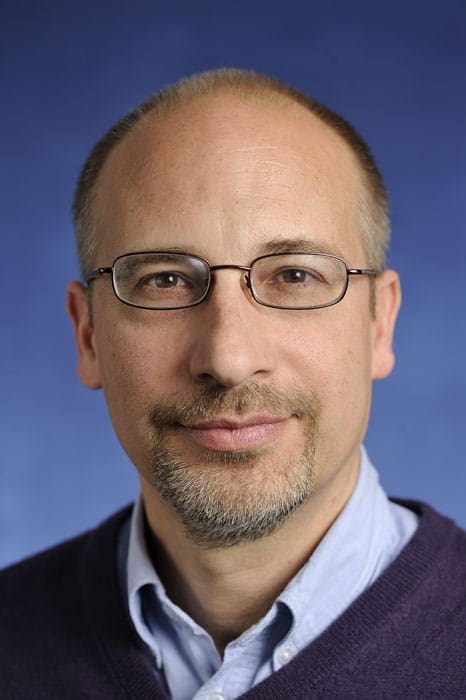
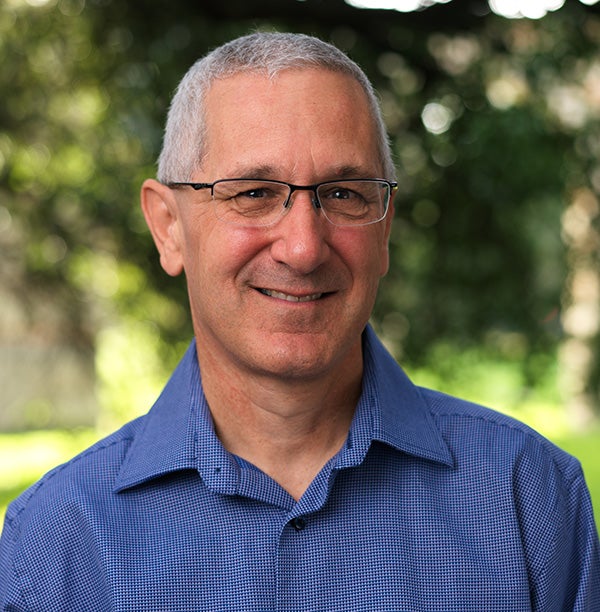
Joel Andreas is a Professor of Sociology at Johns Hopkins University since 2003, serving as Program Director of the East Asian Studies Program. His research focuses on political contention, social inequality, and social change in contemporary China. He holds a PhD in Sociology from UCLA and teaches social theory, political sociology, and courses on Chinese society. He has held visiting positions at universities including the University of Sydney, Hong Kong University, and Ningxia University. His work examines labor movements, rural land policies, and class dynamics in China. Recent research includes analyses of staff-worker congresses, rural land dispossession, and the persistence of militarism in U.S. policy. He critiques market reforms and explores the legacy of the Cultural Revolution. Andreas has contributed to debates on China’s transition to capitalism and the decline of socialist systems. His publications span topics from urbanization to state coercion in rural development. He maintains an active role in academic exchanges and policy-relevant research on China’s socio-political landscape.
Prof. Dr. Olena Palko is a historian specializing in Eastern Europe, the Soviet Union, and Ukraine. She holds the SNSF Professorship at the University of Basel's Department of History, focusing on East European History. Her research emphasizes Soviet minority policies, cultural politics, and national identity formation in interwar Ukraine. She is a leading scholar with notable works including Making Ukraine Soviet (2021), awarded the 2023 Alexander Nove Prize. Her current SNF-funded project, Red Tower of Babel , examines Soviet minority experiments in Ukraine. Education: PhD from University of East Anglia (2017); Kandydat nauk from National Academy of Sciences of Ukraine (2013). Research Interests: Soviet nationality policy, minority history, Ukrainian twentieth-century history, transnational border dynamics. Her work bridges archival analysis with transnational perspectives, addressing contested borderlands between Poland and the USSR. Key publications include co-edited volumes like Making Ukraine (2022) and Ukraine's Many Faces (2023). She actively contributes to academic governance roles, including co-convening the BASEES Study Group for Minority History and serving on the Scientific Advisory Council of the Council of Europe's history observatory.
Norman M. Naimark serves as the Robert & Florence McDonnell Professor of East European Studies and Professor of History at Stanford University, with courtesy appointments in German Studies. He holds senior fellowships at both the Hoover Institution and Freeman Spogli Institute for International Studies, and is affiliated with The Europe Center and the Center on Democracy, Development and the Rule of Law. Education: Ph.D. in History, Stanford University (1972) Naimark specializes in Soviet-era Eastern European history, with dual research pillars: Soviet policies in post-WWII Europe and 20th-century genocide/ethnic cleansing phenomena. His work bridges historical analysis with contemporary human rights discourse, emphasizing geopolitical power dynamics and systematic violence against civilian populations. Methodologically, he combines archival rigor with comparative frameworks across national contexts. His publication trajectory from 1979–2019 reveals evolving focus from Marxist movements in partitioned Poland to Soviet occupation mechanics, culminating in comprehensive genocide studies. The 2019 monograph on Stalin's postwar European sovereignty struggles synthesizes decades of research into Soviet imperial practices. Scientific awards: Officer's Cross of the Order of Merit of the Federal Republic of Germany (1996) Richard W. Lyman Award for outstanding faculty volunteer service (1995) Stanford Dean's Teaching Award (1991-92, 2002-3) Naimark's academic leadership includes directing Stanford's Global Studies Division, Bing Overseas Studies Program, and Center for Russian, East European, and Eurasian Studies. His research informs current policy discussions on authoritarianism and democratic resilience, as evidenced by recent engagements with Belarusian democracy movements and U.S.-Russia relations. He collaborates extensively through Stanford's interdisciplinary centers, particularly contributing historical perspectives to The Europe Center's sovereignty research and the Center on Democracy, Development and the Rule of Law's governance initiatives.
Patricia M. Thornton is an Associate Professor in the Department of Politics and International Relations (DPIR) at the University of Oxford and a Fellow and Tutor in Politics at Merton College. She specializes in Chinese politics, focusing on state-society interactions, authoritarian governance, and the legacies of the Cultural Revolution. Her research explores institutions, practices, and networks shaping governance in China, including works like *Disciplining the State* (2007) and *Red Shadows* (2017). She has held leadership roles at Oxford, including Chair of the Sub-Faculty of Politics and International Relations, and served on editorial boards such as *The China Quarterly*. Her work addresses contemporary challenges like authoritarian resilience, social control mechanisms, and political dissent. Research Interests: - State formation and governance in China - Authoritarian political systems - Memory and legacies of the Cultural Revolution - Party-state dynamics and social movements - Comparative political institutions Publications highlight themes like economic governance, social movements, and policy implementation. She has supervised numerous PhD students, many now leading academics in Asia-Pacific studies. Her contributions to understanding China’s political evolution are complemented by media commentary on current events, including analysis of Xi Jinping’s governance strategies and societal trends. Awards: Merton College Fellowship Key Projects: Edited *To Govern China* (2017) and *Red Shadows* (2017)
Peter C. Caldwell is the Samuel G. McCann Professor of History at Rice University and Director of the Program in Politics, Law, and Social Thought. He specializes in modern European history with a focus on Germany, constitutionalism, welfare state development, and political thought. His research spans Weimar Republic legal crises, postwar West Germany, and 19th/20th-century intellectual movements. Education: PhD (1993), MA (1989), and BA (1987) from Cornell University, New York University. Awards include the George R. Brown Award for Teaching (2016) and Humboldt Fellowship. He has authored/co-authored major works like Democracy, Capitalism, and the Welfare State (2019) and Germany Since 1945 (2018, 2023 revision). Teaching focuses on European political history, comparative welfare states, and 19th-century political thought. Current research examines democratic rhetoric in contemporary Mexican politics and authoritarian constitutionalism. Advised over a dozen undergraduate theses on topics ranging from Weimar Republic legal theory to Cold War historiography. Publications span German constitutional history, Cold War dynamics, and East German politics. His work bridges legal, economic, and cultural dimensions of modern European history with interdisciplinary approaches to political theory.
Prof. Waldemar Kolanus leads the Molecular Immunology and Cell Biology department at the University of Bonn's Life & Medical Sciences Institute (LIMES) . His research bridges immunoregulation , stem cell dynamics , and metabolic stress responses in immune cells. Unit 2 member at LIMES Principal investigator in SFB 704 and ImmunoSensation Cluster Leads a multidisciplinary lab with postdocs, PhD students, and technical staff His work focuses on intracellular signaling pathways connecting immune activation to tissue homeostasis, particularly through: Cytohesin proteins in integrin-mediated adhesion and migration TRIM71 in stem cell regulation and congenital hydrocephalus High-salt environments affecting macrophage function Publication trends show expertise in immune cell migration , genetic models , and chemical inhibition , with frequent use of mice and zebrafish for in vivo studies. Key articles explore: TRIM71's dual role in auditory development and germ cell maintenance Cytohesin family's Golgi regulation and insulin signaling Ruxolitinib's off-target migration inhibition of dendritic cells Contact details: Address: LIMES Institute, Carl-Troll-Straße 31, Bonn Email: kolanus.sekretariat@uni-bonn.de Phone: +49 228 73-62788
Dr. Roham Alvandi is Associate Professor of International History at the London School of Economics and Political Science (LSE), where he also serves as Director of the Iranian History Initiative and Master's Programme Director. He is affiliated with the Phelan United States Centre and the Middle East Centre at LSE, and is a Fellow of the British Institute of Persian Studies, the Royal Historical Society, and the Royal Asiatic Society. Dr. Alvandi earned his DPhil and MPhil from the University of Oxford, where his doctoral thesis won the Foundation for Iranian Studies’ Dissertation Prize and the Pavry Memorial Prize. He also holds degrees from the University of Sydney, where he received the University Medal, and the Fletcher School of Law and Diplomacy at Tufts University. His research focuses on modern Iranian history, U.S. foreign relations, and the Global Cold War, with current work exploring human rights activism and the origins of the 1979 Iranian Revolution. His scholarship has been published in leading journals such as Diplomatic History , Cold War History , and Iranian Studies . He is the author of Nixon, Kissinger, and the Shah: The United States and Iran in the Cold War (Oxford University Press, 2014), selected by the Financial Times as one of the best history books of the year, and editor of The Age of Aryamehr: Late Pahlavi Iran and its Global Entanglements (2018). His recent media commentaries and articles—appearing in The New York Times , The Guardian , The Wall Street Journal , and The Washington Post —reflect a consistent focus on Iran’s political trajectory, nuclear ambitions, and societal resistance. The articles highlight themes such as the fragility of the Islamic Republic, the role of historical memory, and the persistent desire for secular democracy among Iranians. Financial Times Best History Book of 2014 Foundation for Iranian Studies’ Dissertation Prize University of Oxford’s Pavry Memorial Prize University Medal, University of Sydney LSE Excellence in Education Promotion Prize (2015) LSE Excellence in Education Award (2018) Dr. Alvandi has supervised PhD students including Jack Roush and Jean-Baptiste Ollieric, and has received LSE teaching awards in recognition of his excellence in education. He has held visiting appointments at the University of Tehran and Columbia University, and previously worked on the strategic planning staff for UN Secretary-General Kofi Annan. He is also a frequent contributor to documentaries by HBO, BBC, and Manoto, serving as a historical consultant on projects such as Hostages and Hoveyda .
Joel Wolfe is a Professor of History at the University of Massachusetts Amherst, based in Herter Hall. He holds a B.S. from Georgetown University, an M.A. in Latin American Studies from the University of New Mexico, and a Ph.D. in History from the University of Wisconsin–Madison. His research focuses on modern Brazil, Latin American history, and the cultural and political history of baseball and football. Wolfe is the author of three books, including *Working Women, Working Men* (1993) and *Autos and Progress* (2010), with his latest work *Brazil* (2023) examining national history. He is currently writing a book on the history of American football and a project on inter-American trade and culture in the 1920s. Wolfe’s teaching includes courses on modern Latin America, Brazilian history, and the history of baseball and football. His awards include the George R. Brown Prize for Excellence in Teaching (Rice University, 2003–2005) and the Residential First Year Experience Student Choice Award at UMass Amherst. His research integrates themes of labor, modernization, and transnational connections, with a focus on Brazil’s industrialization, populism, and cultural identity. His work bridges economic, social, and cultural history, often exploring how technology, politics, and everyday life shape national narratives. Ongoing projects emphasize the intersection of sport, national identity, and globalization in Latin America and the U.S.
Dr. Sarah Young is an Associate Professor at the School of Slavonic and East European Studies (SSEES), University College London. Her academic journey includes a BA (Honours) in Russian and French from Trinity College, Cambridge, followed by an MA in European Languages and Culture at the University of Manchester and a PhD in Russian Literature from the University of Nottingham. Her research focuses on Russian literature, particularly Dostoevsky’s narrative structures, prison narratives, and the history of penal systems in Russia. She has held a Leverhulme Fellowship and previously taught at the University of Leeds and the University of Toronto. Her work explores themes like Siberian exile, political imprisonment, and revolutionary memoirs, as seen in her book Writing Resistance: Revolutionary Memoirs of Shlissel’burg Prison, 1884-1906 . She also investigates Gulag literature, societal impacts of quantum technologies, and inclusive STEM education for neurodivergent students. Her blogs ( www.sarahjyoung.com ) and websites ( Mapping Petersburg , Shlisselburg ) further her interdisciplinary research. Her scholarly contributions span literary criticism, historical analysis, and policy studies. Awards include the Leverhulme Special Research Fellowship (2001-2003). She actively engages in academic mentoring and has published on research practices across disciplines like environmental engineering and marine conservation.
Dr. Daniel Matlin is a Reader (equivalent to Associate Professor) in the History of the United States since 1865 at King's College London, affiliated with the Faculty of Arts & Humanities and the Department of History. He joined King's in 2012 after previous academic positions at Queen Mary University of London (as Leverhulme Early Career Fellow) and Cambridge University, where he served as Director of Studies at the Centre for History and Economics. His research examines the intersection of race, intellectual life, and urban space in 20th-century America, with specializations in: African-American intellectual/cultural history Civil rights and Black Power movements Historical constructions of race and Black diasporic identity Urban history (particularly Harlem and New York City) Jazz history and cultural expression Publication analysis reveals consistent focus on Harlem as both physical space and cultural symbol, with interdisciplinary approaches bridging history, visual culture, musicology, and urban studies. His works critically analyze racial representation, community formation, and the politics of space. Awards & Honors: Arthur Miller Centre First Book Prize for On the Corner: African American Intellectuals and the Urban Crisis Leverhulme Early Career Fellowship He actively supervises PhD students in African-American history, civil rights, black nationalist thought, and 20th-century cultural history. Grant-funded projects include 'Race Capital? Harlem as Place and Symbol since 1900.' Matlin engages extensively with public history through lectures at institutions like the National Theatre and Black Cultural Archives.
Serra Hakyemez is Assistant Professor of Anthropology and Global Studies at the University of Minnesota, currently on leave until January 2023. Her research examines the intersection of counterinsurgency warfare and judicial violence in Turkey's Kurdish regions, focusing on prison solidarity networks and decolonial resistance. She employs interdisciplinary methods combining political anthropology, legal studies, and ethnography to analyze state violence and resistance movements. Education includes: Ph.D. in Cultural Anthropology, Johns Hopkins University, 2016 M.A. in Sociology and Anthropology, Central European University, 2008 M.Sc. in Social Policy, London School of Economics, 2006 B.A. in Political Science & Business Administration, Bogazici University, 2005 Her research investigates the juridical and visual economies of counterinsurgent violence, with ongoing work on prison-based solidarity and insurgent justice frameworks in Kurdistan. Publications explore themes including feminist resistance in conflict zones, archival politics of state violence, and the anthropology of dissent. Awards include: ACLS Fellowship Wenner-Gren-Hunt Fellowship
Nicola Pratt is a Professor of International Politics of the Middle East at the University of Warwick's School of Politics and International Studies (SPAIS). She previously served at the University of East Anglia and has extensive field experience in Egypt focused on human rights and democratization. Her work bridges feminist international relations theory with Middle Eastern politics, emphasizing grassroots activism, gender dynamics, and popular culture's role in political movements. Pratt's research explores democratization, gender politics, and peace/security in the Middle East, with notable projects like the digital archive documenting Egypt's 2011 uprising. She has held leadership roles, including President of the British Society for Middle Eastern Studies (2024-). Her 2020 book Embodying Geopolitics won the BISA Susan Strange Prize, analyzing women's activism across Egypt, Jordan, and Lebanon. Her recent articles address feminist responses to Israel's actions in Palestine, the political economy of tourism-related violence, and decolonial praxis in academia. Pratt also advises PhD students on Middle Eastern studies and critical approaches to international relations.
David Der-Wei Wang serves as Edward C. Henderson Professor of Chinese Literature and Comparative Literature at Harvard University, holding dual appointments in the Department of East Asian Languages and Civilizations. He directs the CCK Foundation Inter-University Center for Sinological Studies and holds prestigious Academician positions at both Academia Sinica and the American Academy of Arts and Sciences. His distinguished career includes prior faculty roles at National Taiwan University (1982-1986) and Columbia University (1990-2004), with continuous Harvard affiliation since 1986. His academic credentials include: B.A. in Foreign Languages and Literature, National Taiwan University M.A. in Comparative Literature, University of Wisconsin-Madison (1978) Ph.D. in Comparative Literature, University of Wisconsin-Madison (1982) Wang's research pioneers interdisciplinary approaches to Modern and Contemporary Chinese/Sinophone Literature, Late Qing fiction, and colonial Taiwanese studies. His work critically examines historical trauma , cultural identity formation , and transnational literary networks , particularly through the lens of political upheaval and diasporic experiences. Special attention is given to mid-20th century Chinese intellectuals navigating ideological crises, with methodologies blending comparative literary theory and historical analysis. His eight major publications (1997-2020) reveal consistent thematic evolution toward global frameworks for Chinese literary studies. Early works like Fin-de-Siècle Splendor established foundations in Late Qing modernities, while later volumes including A New Literary History of Modern China and Why Fiction Matters expand into transnational Sinophone networks and contemporary sociopolitical relevance. The corpus demonstrates increasing emphasis on diasporic perspectives and decolonizing methodologies across Chinese literary historiography. Wang's scholarly recognition includes: Academician, Academia Sinica Academician, American Academy of Arts and Sciences Changjiang Scholar Award (2008) Humanitas Visiting Professorship at CRASSH, Cambridge (2013-14) As Director of the CCK Foundation Inter-University Center for Sinological Studies, Wang coordinates international research initiatives connecting North American and Taiwanese institutions. This leadership role facilitates collaborative projects in digital humanities and comparative Sinology, supporting emerging scholars through cross-institutional fellowships and academic exchanges focused on reimagining Chinese studies through global perspectives.
Jocelyn Alexander is Professor of Commonwealth Studies and Head of Department at the University of Oxford's Department of International Development (ODID). She teaches primarily on the MPhil in Development Studies and the DPhil in International Development, and serves on the editorial board of the Journal of Southern African Studies and the publications committee of the International Africa Institute. Her research interests include: Southern African social and political history Liberation movements and their legacies Violence and memory Political imprisonment Rural politics and state-making Political & International Dimensions of Development Sub-Saharan Africa Professor Alexander is currently working on a Leverhulme-funded collaborative research project titled 'Global Soldiers in the Cold War: Making southern Africa's liberation armies', and writing a history of political imprisonment in Zimbabwe. Her research uses qualitative methodologies, notably oral history and archival research, and she is interested in cross-disciplinary approaches combining history, anthropology, politics, and literature. Her recent publications demonstrate a strong focus on transnational histories of Southern African liberation movements, political imprisonment in Zimbabwe, and the legacies of violence in post-colonial states. She has made significant contributions to understanding the connections between liberation movements, the Cold War context, and the formation of post-colonial states in Southern Africa. Scientific awards: Leverhulme grant for project on Cold War-era 'global soldiers' (2019) Professor Alexander has supervised numerous doctoral students working on topics related to Southern African politics, history, and development. She has also co-authored important works including 'Violence and Memory: One Hundred Years in the 'Dark Forests' of Matabeleland' (2000) and authored 'The Unsettled Land: The Politics of Land and State-making in Zimbabwe, 1893-2003' (2006). She has taught at Sussex and Bristol Universities and has been a Research Associate at the University of Zimbabwe, bringing extensive regional experience to her academic work.
Ana Antic is a Professor in the Department of English, Germanic and Romance Studies at the University of Copenhagen, Faculty of Humanities. She is also affiliated with the Centre for Culture and the Mind, where she leads an ERC-funded project titled Decolonising madness: Transcultural psychiatry, international order and the birth of a ‘global psyche’ . Her academic journey includes a PhD in Modern European History from Columbia University (2012) and prior appointments at universities in the UK and US before joining the University of Copenhagen in August 2020. PhD in Modern European History, Columbia University (2012) Ana Antic’s research lies at the intersection of social and cultural history, focusing on the history of modern Europe, war and violence, and the 'psy' sciences—particularly psychiatry and psychoanalysis. Her work critically explores the decolonisation of psychiatric practices and concepts in the second half of the 20th century, examining how transcultural psychiatry emerged in the aftermath of WWII and during decolonisation. She investigates how Western and non-Western experts redefined the relationship between culture, race, and the individual psyche, and whether new frameworks succeeded in moving beyond colonial legacies. Her recent publications reflect a strong trend in global and transnational history, especially in the fields of transcultural psychiatry, Cold War science, and postcolonial mental health. The articles span interdisciplinary journals in history, global health, and medical humanities, often emphasizing decolonial critique and the politics of knowledge. A recurring theme is the role of experts from the Global South and Eastern Europe in shaping global psychiatric discourse. She has received multiple prestigious awards, including: Fraenkel Prize for Contemporary History (2016) British Academy Rising Star Engagement Award (2017) ERC Starting Grant (2019) Dan David Prize (March 2023) Ana Antic is actively involved in research leadership and academic collaboration. She currently heads the DNRF Centre for Culture and the Mind and leads a major ERC-funded project. She has organized international conferences and workshops, including the DECOLMAD Workshop and New Perspectives in Transcultural and Postcolonial Psychiatry . While no direct list of PhD students is provided, her leadership roles suggest active supervision and mentorship. Her work bridges history, psychiatry, and global health, contributing to a deeper understanding of the cultural and political dimensions of mental health. She is involved with the Centre for Culture and the Mind, a research environment that fosters interdisciplinary work on the intersections of culture, cognition, and history. Her project Decolonising madness brings together historians, anthropologists, and mental health professionals to re-examine the foundations of global psychiatric knowledge.