

Prof. Yair Weiss is a faculty member at the School of Computer Science and Engineering, The Hebrew University of Jerusalem . He holds a PhD in Brain and Cognitive Sciences from MIT and an MSC in Applied Mathematics from Tel-Aviv University. Education: MSc in Applied Mathematics, Tel-Aviv University (1993) PhD in Brain and Cognitive Sciences, MIT (1998) His research focuses on Human and Machine Vision , Machine Learning , Bayesian Methods , and Neural Computation . Recent work explores adversarial examples, generative models, and robustness in neural networks. Recent publications highlight trends in: Understanding neural network representations Advancements in GANs and adversarial training Image restoration and translation techniques Perceptual distance modeling Bayesian approaches to computer vision Mathematical analysis of deep learning architectures
جستجوی استاد راهنمای دانشگاهی
برای مسیر پژوهشیتان، استاد راهنما، استاد دانشگاه و پژوهشگر مناسب را پیدا کنید و با آنها ارتباط بگیرید.
نمایش ۱-۱۵ از ۱۹ استاد راهنما
اطلاعات پروفایلها از صفحات عمومی دانشگاهها گرفته شده و ممکن است بهروز نباشد.

Aryeh Kontorovich is a Professor in the Computer Science Department at Ben-Gurion University. His research primarily focuses on theoretical machine learning, with expertise in probability, statistics, Markov chains, and metric spaces. His research interests span theoretical machine learning, with particular emphasis on: Probability theory and concentration inequalities Statistical learning theory Markov chains and mixing time estimation Metric space learning Kernel methods Sample compression schemes Professor Kontorovich's recent publications (2021-2025) demonstrate a continued focus on theoretical foundations of machine learning. His work shows strong trends in statistical estimation for Markov processes, distribution learning, metric space analysis, and sample compression. Many papers explore the intersection of probability theory and machine learning, particularly examining concentration inequalities, minimax optimality, and theoretical guarantees for learning algorithms. His research consistently bridges abstract mathematical theory with practical machine learning applications. Scientific awards and recognitions: Distinguished contribution award at MLG 2007 for "A Universal Kernel for Learning Regular Languages" Professor Kontorovich has advised numerous students and collaborated extensively with researchers in theoretical machine learning. His work spans both theoretical foundations and practical applications, with significant contributions to understanding the mathematical limits of learning algorithms. While specific grant information isn't provided in the source material, his extensive publication record in top venues suggests successful funding for his research programs. He maintains active collaborations with researchers worldwide, including prominent names like L. Gottlieb, D. Berend, and S. Hanneke.

Lihi Zelnik-Manor is a Professor at the Faculty of Electrical and Computer Engineering at the Technion - Israel Institute of Technology . Her research focuses on digitizing the sense of touch, integrating Haptics , Robotics , and Computer Vision to create digital representations of physical properties and develop haptic feedback devices for virtual interactions. Executive Vice President for Innovation and Industry Relations (2023-2026) Vice Dean for Graduate Studies (2022-2023) General Chair: CVPR’21, ECCV’22 Her work spans Neural Architecture Search (NAS) , 3D Reconstruction , and Image Processing , with recent publications on haptic devices (2025), diffusion models (2025), and soft-tissue simulation (2024). She actively contributes to academic leadership through roles in top conferences and community initiatives like the Schmidt Postdoctoral Award steering committee.
- Haptics
- Robotics
- Computer Vision
- +۴ مورد دیگر
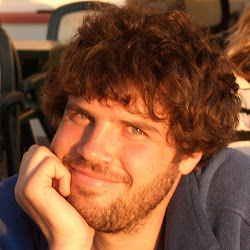
Omri Abendمشاهده پروفایل
دانشیار
Omri Abend is an Associate Professor at The Hebrew University of Jerusalem, affiliated with the School of Computer Science and Engineering and serving as Chair of the Department of Cognitive and Brain Sciences. His research lies at the intersection of Computational Linguistics, Natural Language Processing, and Cognitive Science, with a focus on semantic representation and language acquisition modeling. His primary research interests include: Computational modeling of child language acquisition Semantic representation frameworks, particularly Universal Conceptual Cognitive Annotation (UCCA) Statistical learning and machine translation Unsupervised grammar learning and lexical relation induction Cross-lingual and cross-domain alignment in language models Evaluation methodologies for NLP systems His recent publications demonstrate a strong trend toward analyzing large language models (LLMs), exploring human-like patterns in AI, improving evaluation metrics, and applying NLP to humanitarian domains such as Holocaust testimony analysis. His work combines theoretical linguistic insights with practical machine learning applications. Scientific awards include: Outstanding Paper Award at ACL 2017 Area Chair Award for Best Paper in the Track at ACL 2023 He has supervised and collaborated with numerous researchers and students across projects in semantic parsing, machine translation, and cognitive modeling. His work has been supported by community-wide initiatives such as the MRP shared tasks, which he co-organized. He also leads research on ethical AI, open human feedback, and the computational analysis of historical narratives. Omri Abend leads several research teams focused on: The development and application of the UCCA framework for semantic annotation Cross-lingual and cross-domain knowledge representation in LLMs Computational modeling of language acquisition Evaluation and improvement of NLP systems Application of NLP to digital humanities and historical testimony analysis
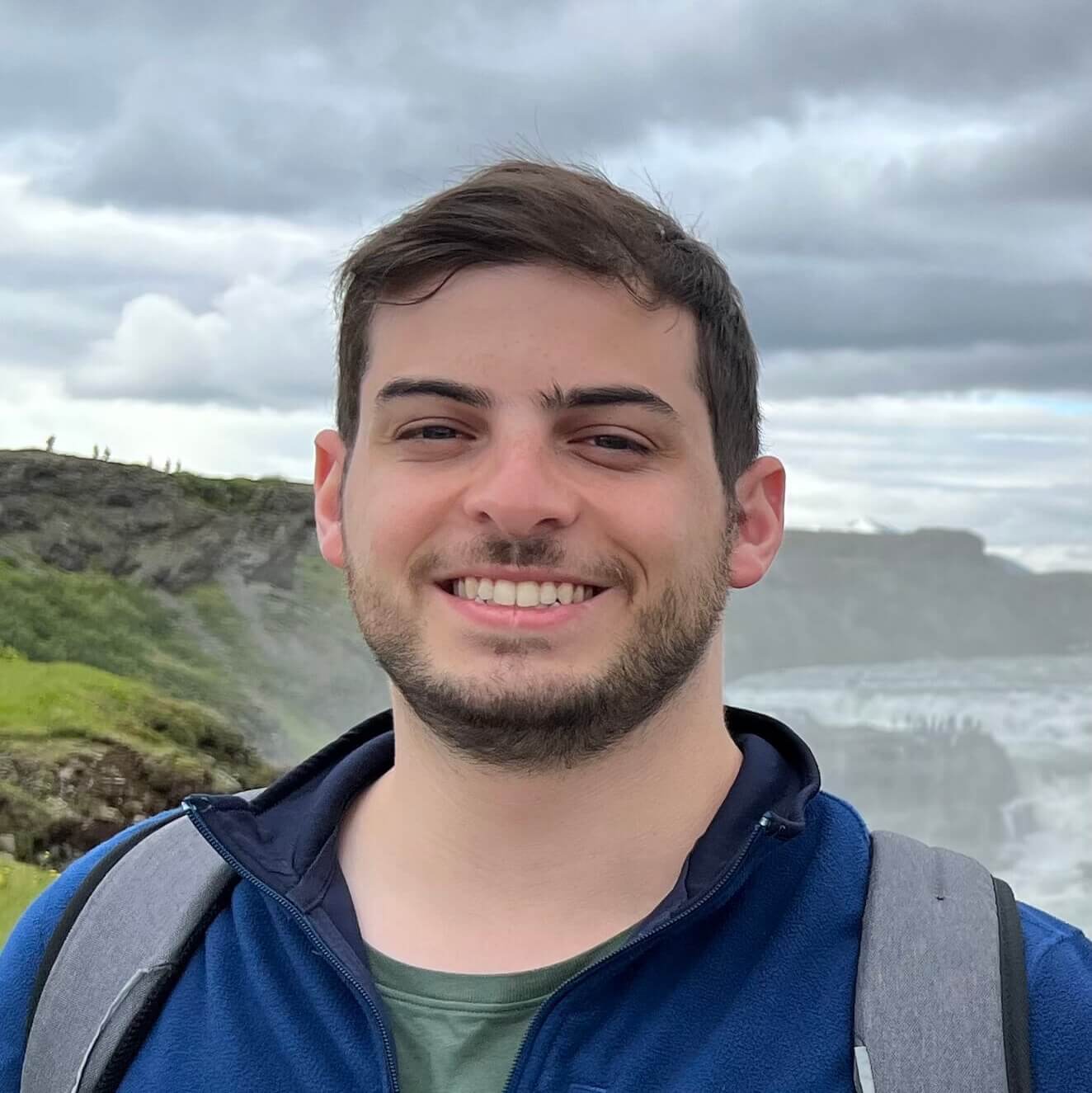
Jonathan Kahana is a Researcher in the Computer Science department at the Hebrew University of Jerusalem . His research spans Machine Learning and Computer Vision , focusing on Weight Space Learning , Representation Learning , and Zero-Shot Model Search . He develops methods for probing neural network weights to extract information, including ProbeGen and Spectral DeTuning . His recent work includes mapping model weights into shared embedding spaces (ProbeX), recovering pre-fine-tuning weights of generative models, and improving zero-shot labeling with distribution priors. He contributes to open-source implementations, such as the ProbeGen GitHub repository. Research trends from his publications emphasize: Weight space analysis (ProbeGen, DSiRe) Model retrieval and classification (ProbeLog, Model Atlas) Disentanglement and invariance (Contrastive Objective, Red PANDA) Efficiency in probing (30-1,000x FLOPs reduction in ProbeGen) His work has been accepted at top-tier conferences including ICML , ICLR , and ECCV , with arXiv preprints covering topics like dataset size recovery and model tree analysis.

Ido Dagan is a Professor at the Department of Computer Science at Bar-Ilan University , Israel, and founder of the Natural Language Processing (NLP) Lab . He is a Fellow of the Association for Computational Linguistics and served as ACL President (2010) and Executive Committee member (2008–2011), leading the establishment of Transactions of the Association for Computational Linguistics . Dagan’s research focuses on applied semantic processing , including textual entailment , natural semantic representation , multi-text information consolidation , and interactive text summarization . His recent work addresses attributable text generation , summary-source alignment , and cross-sentence argument detection , with applications to fact verification and hallucination detection. Key trends in his publications include cross-document coreference resolution , question-answering systems , semantic parsing , and interactive summarization . Notable collaborative projects involve UI trajectory analysis and long-context QA with Arman Cohan and Jacob Goldberger. Scientific Awards Fellow, Association for Computational Linguistics (ACL) President, ACL (2010) Executive Committee, ACL (2008–2011) Advising & Collaborations Dagan has supervised numerous PhD, MSc, and postdoctoral students since 1997, including Shachar Mirkin and Shmuel Amar . He collaborates with researchers like Ori Ernst , Avi Caciularu , and Aviv Slobodkin , with grants from institutions like IBM Haifa Scientific Center and AT&T Bell Laboratories .
Prof. Roni Katzir is a faculty member in the Department of Linguistics at Tel Aviv University, affiliated with the School of Languages. He specializes in formal semantics, computational linguistics, and linguistic theory, with a focus on grammar induction, neural networks, and Minimum Description Length principles. His research integrates theoretical linguistics with cognitive science, exploring topics like large language models (LLMs), scalar implicatures, and phonological learning. He collaborates extensively with researchers such as Nur Lan, Emmanuel Chemla, and Danny Fox, contributing to venues like Linguistic Inquiry , Natural Language Semantics , and ACL conferences. Education details are not explicitly listed, but his work reflects advanced expertise in linguistics and computational methods. Research interests emphasize cognitive plausibility in grammar learning, communicative stability, and the application of computational models to linguistic theory. Publications span over two decades, with recent focus on LLMs' implications for linguistic cognition, neural network generalization, and MDL-based frameworks. His work bridges formal semantics, syntax, and phonology, addressing challenges in language learning and processing. Prof. Katzir's contributions include pioneering the use of Minimum Description Length in linguistic learning models and advancing understanding of logical operators' typological distribution. He maintains an active research lab and collaborates internationally, as evidenced by his co-authored works and conference presentations.
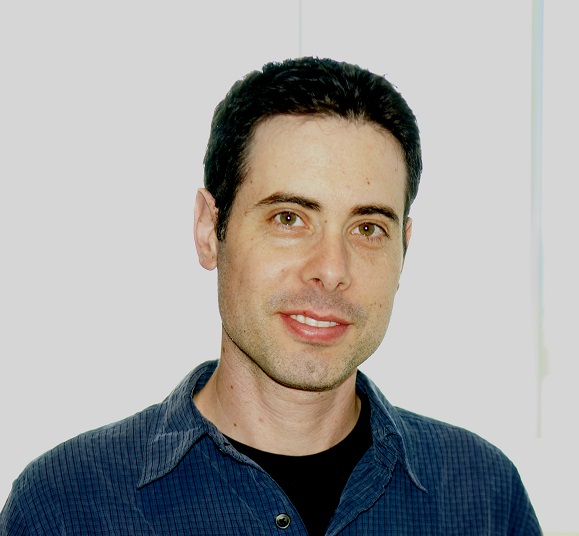
Eran Treisterمشاهده پروفایل
استادیار
Eran Treister is an Assistant Professor at the Ben Gurion University of the Negev in the Department of Computer Science. He completed his postdoctoral fellowship at the University of British Columbia (2014-2016) and earned his PhD from the Technion in 2014 under Prof. Irad Yavneh. His research spans computational science, numerical methods, and machine learning, with a focus on: Scalable algorithms for inverse problems Graph Neural Networks (GNNs) optimization Seismic and optical imaging via PDE solvers Low-precision deep learning acceleration Multilevel preconditioning techniques Recent work explores: Graph neural networks for PDEs with adaptive meshes Deep learning approaches to Helmholtz equation modeling 3D shape reconstruction via parametric level sets He serves on editorial boards: SIAM Journal on Scientific Computing (2024-) Copper Mountain Conference on Multigrid Methods (2025) International Conference on Machine Learning (ICML) as Area Chair (2025) Current teaching: Optimization Methods for Data Science (Spring 2025) Deep Learning Mini-Project (Winter 2024/5) Advanced Numerical Optimization (Spring 2025)
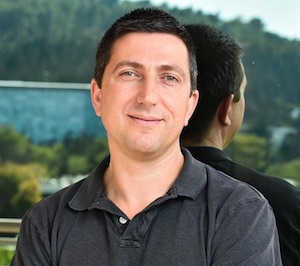
Eran Yahav is a Professor in the Computer Science Department at the Technion, Israel Institute of Technology, and serves as CTO at Tabnine. His research bridges programming languages, software engineering, program analysis, and machine learning, focusing on program synthesis, verification, and code intelligence. Research Interests: His work spans program synthesis , abstract interpretation , verification of concurrent systems , binary analysis , and AI for code . He leads the PRIME project, which uses machine learning and static analysis to enable programming with millions of examples, improving code completion, search, and prediction. The recent publications reflect a strong trend toward integrating neural models with program analysis—using structured representations of code (e.g., AST paths) for property prediction, generating sequences from code (code2seq), learning distributed representations (code2vec), and interpreting neural networks via automata extraction. His work consistently appears in top-tier venues such as POPL, PLDI, ICSE, OOPSLA, and ICLR. Scientific Awards: Best paper award at ISSTA'07 Best paper award at ISSTA'06 Advising and Grants: He has advised numerous PhD and Master’s students, many of whom have published in premier conferences and now hold academic or industry positions. While specific grants are not mentioned, his sustained high-impact research and leadership in major projects (e.g., PRIME, Fender, SAFE) imply significant funding support. He has served on program committees for PLDI, POPL, CAV, OOPSLA, and VMCAI, reflecting his standing in the programming languages and verification communities. Labs and Teams: He leads a research group focused on program analysis and synthesis, with strong collaborations, particularly with Martin Vechev and others, on concurrency, synthesis, and machine learning for code. The group has developed influential tools such as PRIME, code2seq, code2vec, TRACY, and SAFE.
Prof. Adi Mizrahi is a Professor at the Hebrew University of Jerusalem's Edmond and Lily Safra Center for Brain Sciences (ELSC), leading the NeuroPlasticity Lab. His research focuses on neuronal plasticity in auditory and olfactory systems, parental neuroscience, and adult neurogenesis. He holds the Eric Roland Chair in Brain Sciences. Research Interests: Neuronal & Circuit Plasticity in Sensory Systems Auditory Learning & Perceptual Boundaries Social and Parental Behavior Neural Mechanisms Adult Neurogenesis Functional Role Olfactory Bulb Circuit Dynamics Key Findings: Discovered maternal behavior-driven plasticity in auditory cortex representations of pup vocalizations Elucidated odor categorization mechanisms in the olfactory bulb Showed learning-induced cortical map expansions in auditory cortex Awards & Honors: ERC Starting Grant (2007) Sir Zelman Cowen Universities Fund Prize (2009) Labs & Teams: Directs the NeuroPlasticity Lab, collaborating with multiple postdocs and students investigating auditory, olfactory, and parental neurobiology. Lab develops automated behavioral systems and advanced imaging techniques.

Renana Keydarمشاهده پروفایل
دانشیار
Dr. Renana Keydar is an Associate Professor of Law and Digital Humanities at The Hebrew University of Jerusalem, where she serves as Academic Director of the Center for Digital Humanities (DH@HU) and heads the Alfred Landecker Lab for Computational Analysis of Holocaust Testimonies. She holds additional affiliations as a 2024-25 Fellow at Brandeis University's Institute for Advanced Israel Studies and is a core member of Edut 710, Israel's largest civil initiative documenting survivor testimonies of the October 7, 2023 attacks. Her academic credentials include a PhD in Comparative Literature from Stanford University (2015), and magna cum laude degrees in Law and Political Science from Tel Aviv University (2003). Prior to academia, she served as an advocate in Israel's State Attorney's Office - High Court of Justice Department. Keydar's pioneering research bridges computational methods with humanities scholarship, focusing on: Developing AI models for analyzing mass atrocity testimonies using NLP and machine learning Creating trauma-informed digital archives for Holocaust and contemporary crisis documentation Computational analysis of legal narratives in human rights law and international courts Ethical frameworks for applying AI to sensitive historical materials Her scholarly output demonstrates consistent focus on computational jurisprudence, with recent works examining algorithmic analysis of UN human rights recommendations, judicial attitudes toward sexual violence victims, and computational models for Holocaust testimony. Keydar has received the prestigious Alon Fellowship for outstanding young researchers and leads multiple major initiatives: Designing Edut 710's AI-powered testimony platform documenting 1,600+ accounts from October 7 attacks Developing 'distant listening' computational methods for Holocaust testimonies Directing the Future of the Past research group funded by Israel's Ministry of Science

Michael Elad is a Professor of Computer Science at the Technion - Israel Institute of Technology, where he has held a permanent faculty position since 2003. He also holds a courtesy appointment in the Technion's Electrical & Computer Engineering Department. Elad received his B.Sc. (1986), M.Sc. (1988) and D.Sc. (1997) in Electrical Engineering from the Technion, followed by a research associate position at Stanford University (2001-2003). His educational background includes: B.Sc. in Electrical Engineering from the Technion (1986) M.Sc. in Electrical Engineering from the Technion (1988), focusing on video compression algorithms under Prof. David Malah D.Sc. in Electrical Engineering from the Technion (1997), focusing on super-resolution algorithms for image sequences under Prof. Arie Feuer Michael Elad's research spans signal and image processing and machine learning, with specialization in inverse problems, sparse representations, deep learning, and generative models. He is particularly renowned for his work on sparse representations, having created the influential K-SVD algorithm together with Michal Aharon and Bruckstein. His 2010 book "Sparse and Redundant Representations: From Theory to Applications in Signal and Image Processing" is a leading publication in this field. Elad has also made significant contributions to diffusion models and generative AI, applying these concepts to solve complex problems in signal and image processing. His extensive publication record shows a clear evolution from foundational work on sparse representations to more recent applications in deep learning and generative models. While his early work focused on theoretical aspects of sparse coding and dictionary learning, his more recent publications demonstrate an integration of these concepts with modern deep learning techniques, particularly in the areas of image restoration, super-resolution, and generative modeling. Elad's scientific achievements have been recognized with numerous awards: Rothschild Prize in Engineering (2024) Member of the Israel Academy of Sciences and Humanities (2024) Weizmann Award for contributions in Sparse Modeling (2021) IEEE SPS Sustained Impact Paper Award (2018) IEEE SPS Best Paper Award (2018) IEEE SPS Technical Achievement Award (2018) Fellow of the Society for Industrial and Applied Mathematics (SIAM Fellow) (2018) IEEE Fellow (2012) ERC advanced grant (2013) Throughout his career, Elad has been actively involved in academic service and mentorship. He has served as an Associate Editor for several prestigious journals including IEEE Transactions on Image Processing, IEEE Transactions on Information Theory, and Applied Computational Harmonic Analysis. From 2016 to 2021, he was the Editor-in-Chief for SIAM Imaging Sciences. He has advised numerous students, including Michal Aharon and Yaniv Romano. Elad also headed the Rothschild-Technion Program for Excellence from 2015 to 2018, an undergraduate program for exceptional students. Elad maintains an active research laboratory at the Technion focused on advancing the theory and applications of sparse representations, deep learning, and generative models in signal and image processing. His team continues to push the boundaries of what's possible in image restoration, super-resolution, and other inverse problems in imaging.
Nir Friedman is a Professor at The Hebrew University of Jerusalem with dual appointments at The Rachel and Selim Benin School of Computer Science and Engineering and The Alexander Silberman Institute of Life Sciences. His research spans three interconnected fields: Molecular Biology of Chromatin and Transcriptional Regulation: Understanding cellular transcription regulation, chromatin-transcription interactions, and gene expression mechanisms Computational Systems Biology: Applying probabilistic models to analyze high-throughput biological data and understand complex biological systems Inference and Learning in Probabilistic Models: Developing methods for representation, inference, and learning with Bayesian networks and Markov networks Professor Friedman's lab has created significant bioinformatics resources including SEMPHY for phylogenetic reconstruction, ScoreGenes for gene expression analysis, GeneXPress for visualization, and LibB for Bayesian network learning. His interdisciplinary work bridges computer science and molecular biology, with offices in both the Rothberg Building (Computer Science) and Silberman Building (Life Sciences). He has supervised over 20 graduate students since 2001, mentoring researchers who have gone on to contribute significantly to computational biology. His lab maintains an active blog and continues to develop tools that advance research in systems biology and probabilistic modeling.

Ayelet Landauمشاهده پروفایل
دانشیار
Prof. Ayelet Landau is an Associate Professor in the Departments of Cognitive Sciences and Psychology at the Hebrew University of Jerusalem, leading the Landau Lab. Her academic journey includes a B.A. and M.A. in Psychology and Philosophy/Neuropsychology from Hebrew University, a Ph.D. in Cognition Brain and Behavior from UC Berkeley, and postdoctoral research at the Ernst Strüngmann Institute (ESI) in Frankfurt. Her research focuses on the Cognitive Neuroscience of Attention and Time Perception, investigating neural oscillations' role in temporal processing and attentional mechanisms. She explores how the brain encodes time perception, visual attention distribution over time, and neural oscillations' cognitive functions. Key funding sources include the European Research Council, James S. McDonnell Foundation, and Israeli Science Foundation. Her lab integrates psychophysical methods with EEG/MEG to study temporal perception, attention sampling, and neural rhythms. Notable work includes modeling temporal generalization, uncovering neural correlates of decision-making, and exploring crossmodal effects in sensory processing. Education: B.A. Psychology and Philosophy, Hebrew University of Jerusalem M.A. Neuropsychology, Hebrew University of Jerusalem Ph.D. Cognition Brain and Behavior, UC Berkeley Research Themes: Temporal Perception: How the brain encodes time perception and integrates sensory information over time Attentional Rhythms: Rhythmic sampling mechanisms in visual and auditory attention Neural Oscillations: Role of alpha, theta, and gamma rhythms in temporal and attentional processing Lab & Funding: Landau Lab at Mount Scopus campus. Supported by grants from ERC, McDonnell Foundation, and ISF.
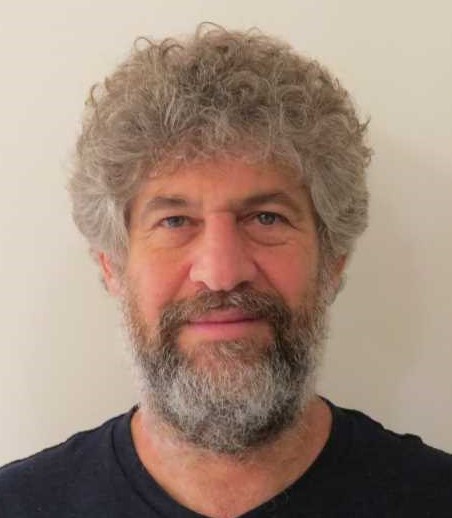
Noam Nisan is a Full Professor at the School of Computer Science and Engineering at the Hebrew University of Jerusalem, Israel. He is a member of the Center for the Study of Rationality and the Israeli Academy of Sciences and Humanities. He also serves on the Board of Directors of the National Library of Israel and chairs its Digital Strategy Subcommittee. Additionally, he is a Principal Researcher at Starkware, focusing on blockchain technologies. His research bridges Computer Science, Game Theory, and Economics, particularly in algorithmic game theory and electronic markets. Education: Ph.D. in Computer Science, University of California, Berkeley (1988), advised by Richard Karp B.Sc. summa cum laude in Mathematics and Computer Science, Hebrew University (1984) Research Interests: Algorithmic Game Theory, Economics and Computation, Electronic Markets, Auction Design, and Mechanism Design . His work explores strategic interactions in computational systems, including market equilibria, fair division, and decentralized resource allocation. Key Contributions: Co-authored foundational texts like Algorithmic Game Theory and Elements of Computing Systems Pioneered work on pseudorandom generators, communication complexity, and secure multi-party computation Grants & Awards: Holder of major grants (e.g., ERC, Binational Science Foundation) and honors including the Gödel Prize (2012), Knuth Award (2015), and STOC Test of Time Award (2022). Service: Extensive editorial roles (e.g., Games and Economic Behavior ), program committee leadership (EC, FOCS), and academic governance (Dean of School of Computer Science, 2018-2021). Co-founded the Algorithmic Game Theory Blog (Turing’s Invisible Hand). Labs/Teams: Active in Starkware’s research on zero-knowledge proofs and blockchain scalability, and collaborates with the Center for Rationality on behavioral algorithmic mechanisms.