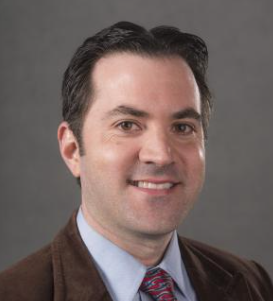
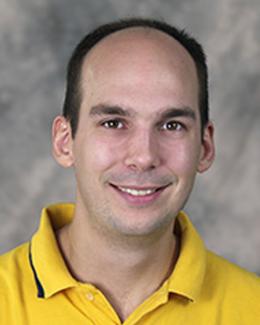
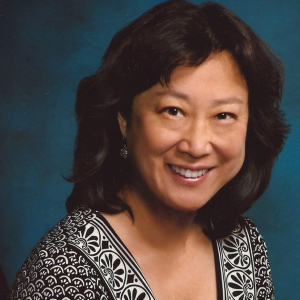
Meredith Tamminga is an Associate Professor of Linguistics at the University of Pennsylvania, where she directs the Language Variation and Cognition Lab . Her work bridges sociolinguistics , psycholinguistics , and theoretical linguistics , focusing on how linguistic variability is represented in mental grammar and how social context influences speech perception and production. She co-leads the Philadelphia Signs Project , exploring sign language sociolinguistics with collaborators at Penn and Gallaudet University. PhD in Linguistics (2014), University of Pennsylvania BA in Linguistics (2009), McGill University Her research integrates experimental methods with naturalistic speech analysis to study individual and group-level language change. Keywords include phonetics-phonology mapping , intraspeaker variation , and quantitative modeling . Notable grants include NSF awards and SAS Dean’s Mentorship Award . Key affiliations include MindCORE , Penn’s hub for integrative mind sciences, and collaborative ties to the Phonetics Lab , Child Language Lab , and Cultural Evolution of Language Lab . Her lab emphasizes cross-departmental research and welcomes undergraduate RAs and PhD students.
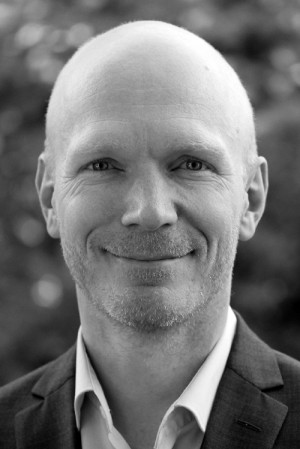
David A. Gallo is a Professor at the University of Chicago, affiliated with the Department of Psychology. He joined the faculty in 2005 after completing a B.A. at Wesleyan University (1997), a Ph.D. at Washington University in St. Louis (2002), and an NIH-sponsored postdoctoral fellowship at Harvard University. His research focuses on neurocognitive processes of human memory, particularly memory accuracy, distortion, aging effects, and Alzheimer’s disease. He explores how memory is actively reconstructed and influenced by contextual and pharmacological factors. Key research interests include metacognitive and nonconscious processes, cognitive neuroscience, and evolutionary psychology. He investigates how stereotypes, psychoactive drugs, and contextual cues affect memory accuracy and monitoring. His lab, the Memory Research Lab, employs neuroimaging, behavioral experiments, and pharmacological interventions to study these phenomena. His recent articles highlight studies on transcranial direct current stimulation (tDCS), contextual reinstatement effects, and drug-induced memory modulation. He emphasizes the role of distinctiveness in reducing memory errors and examines the neural mechanisms underlying retrieval monitoring. His work spans developmental, clinical, and applied domains, with implications for aging populations and cognitive health. Gallo teaches courses such as Cognitive Neuroscience of Aging and Evolutionary Psychology, integrating empirical research with theoretical frameworks. His contributions bridge basic science and clinical applications, addressing challenges in memory disorders and cognitive enhancement strategies.
Christian Unkelbach is Professor of Social Psychology at the Department of Psychology, Faculty of Humanities, University of Cologne, where he leads the Unkelbach Group. His research spans multiple domains of social and cognitive psychology with significant contributions to understanding evaluative processes. His primary research interests include Social Cognition, Evaluative Judgments, Information Ecologies, Stereotypes and Prejudice, Evaluative Learning, Fluency Effects, and Sport Psychology. Unkelbach's work examines how humans process evaluative information in social contexts, with particular focus on the truth-by-repetition effect , evaluative conditioning , and cognitive ecological frameworks that explain why certain information patterns dominate social cognition. His research demonstrates how repetition increases belief in information , how attributes become associated through mere pairings , and why positive information is processed more efficiently than negative information. Analysis of his recent publications reveals a consistent trajectory examining the relativity of social cognition , truth effects across contexts , and metacognitive awareness of cognitive biases . His work increasingly integrates cross-linguistic perspectives and examines real-world applications in media consumption and social judgment. Honorary Doctorate from UCLouvain (2025) ISCON Best Paper Award 2020 Speaker of DFG Research Unit FOR2150 'Relativity in Social Cognition' (2017-2021) Emmy Noether Research Grant (DFG, 2009-2013) Feodor Lynen Research Scholarship (Alexander von Humboldt Foundation) Fulbright Scholarship Unkelbach has advised numerous doctoral researchers including Andreas Miculka, Anne Irena Weitzel, Felix Speckmann, Lea Sperlich, and Tabea Zorn. His research group has secured multiple C-SEB grants for projects examining social cognition phenomena. The Unkelbach Group maintains active collaborations with international researchers across Europe and North America, with recent work funded through the DFG Research Unit on Relativity in Social Cognition. The Unkelbach Group laboratory at Richard-Strauss-Str. 2 in Cologne comprises postdoctoral researchers, doctoral candidates, and student assistants working on experimental paradigms examining evaluative learning, truth effects, and social judgment processes. Current projects investigate cross-linguistic truth effects, metacognitive monitoring of repetition effects, and ecological validity in social cognition frameworks.
Matteo Mario Pietro Motterlini is a Full Professor of Philosophy of Science at Università Vita-Salute San Raffaele in Milan, where he is affiliated with the Faculty of Philosophy. He is the director of the Center for Research in Experimental and Applied Epistemology (CRESA) and the Behavior Change Lab, and collaborates with the Cognitive Neuroscience Center and Division of Neuroscience. He holds teaching responsibilities in Cognitive Economics and Neuroeconomics, and Behavior Change, and serves on the university's academic committee. Università degli Studi di Milano – Philosophy London School of Economics – Economics Carnegie Mellon University – Cognitive Science His research lies at the intersection of philosophy, behavioral economics, and cognitive neuroscience, focusing on human rationality, decision-making processes, emotions, regret, and social learning, particularly in economic and financial contexts. He investigates how behavioral science can inform public policy and improve organizational practices. His work integrates experimental methods with neuroimaging to uncover the neurobiological foundations of judgment and choice. The recent publications highlight a strong trend in applying behavioral and cognitive sciences to societal challenges such as vaccine hesitancy, disinformation, charitable giving, and policy design. His work combines empirical rigor with philosophical depth, exploring topics like the epistemology of nudges, truth perception, and the role of expert endorsement. The integration of neuroscience, psychology, and economics is evident across his research output. Chief Behavioral Officer, E.ON Italia Spa Chief Behavioral Officer, Gruppo San Donato Scientific Advisor, MilanLab (AC Milan) Scientific Advisor, MarketPsych LLC Advisor for Behavioral Finance, Fidelity (Growth, Income & Stability project) Advisor for Social and Behavioral Sciences, Presidency of the Council of Ministers (Italy) He has received no explicitly mentioned scientific awards in the provided text. However, his advisory roles in high-impact public and private institutions reflect recognition of his expertise. His books are international bestsellers, translated into multiple languages, indicating broad scholarly and public influence. Motterlini has been actively involved in public engagement through collaborations with Corriere della Sera, Il Sole 24 Ore, and Il Foglio. He has delivered keynote lectures and participated in public festivals and media appearances, including on Sky TG24. He has advised on financial education (EDUFIN) and participated in events on longevity risk, health, and sustainability. His research is supported by interdisciplinary collaborations and applied projects with industry partners. He leads two major research units: the Center for Research in Experimental and Applied Epistemology (CRESA) and the Behavior Change Lab (also referred to as the E.ON Customer Behavior Lab), which focus on biometric and neuroscientific analysis of behavior. These labs serve as hubs for experimental research in decision-making, nudging, and behavioral interventions in health, finance, and sustainability.
Dustin P. Calvillo is a Professor and Chair of the Psychology Department at California State University San Marcos (CSUSM) , where he has served since 2007. His research focuses on cognitive biases in judgment and decision-making , memory distortion , ideological reasoning , and visual attention . A Ph.D. graduate from University of California, Santa Barbara (2006) and B.A. in Psychology from California State University, Bakersfield (1998), he teaches courses such as Introductory Psychology , Cognitive Processes , and Graduate Research . Education Ph.D., Psychology (Cognitive and Perceptual Sciences), University of California, Santa Barbara, 2006 B.A., Psychology, California State University, Bakersfield, 1998 His work examines fake news susceptibility , partisan memory biases , and cognitive reflection interventions . Recent publications analyze political ideology’s role in misinformation , effects of media exposure on memory , and visual attention in inattentional blindness . He has been recognized as a Fellow of the Psychonomic Society and serves as an external grant reviewer for major research foundations. Scientific Awards Fellow of the Psychonomic Society Advising & Funding Calvillo mentors graduate students in his lab, including Justin Harris and Amanda Savage . His research has been supported by grants from the National Science Foundation and other international bodies for peer review and collaborative studies on cognitive biases and memory. Labs & Collaborations He leads a lab at CSUSM with graduate students and research assistants like Giulia Martelli and Alex Leon , focusing on political cognition , visual attention , and reasoning under bias .
Prof. Dr. Barbara Sophie Hänel-Faulhaber is a Professor at the University of Hamburg’s Faculty of Education , specializing in German Sign Language (DGS) and audiopedagogy . Her research focuses on language acquisition and processing in DGS , particularly among deaf children and inclusive educational settings . She leads the Deafness, Language and Learning Lab (D2L) and contributes to the faculty’s core research area Literacy in Diversity Settings . Education: Dr. phil. in Sign Languages (University of Hamburg, 1999–2003) Magister Artium in Sign Languages, Linguistics (University of Hamburg, 1996–1999) Double Degree in Deaf Education, Elementary Education (LMU Munich, 1992–1996) Her work examines bimodal-bilingual education , iconicity in early sign learning , and structural conditions in inclusive daycare centers . She develops diagnostic tools like the DGS-Version of MBK 0 for assessing numerical competencies in deaf children. Current projects include Coactivation of Difference (2023–2026) and Sign4Inclusion (Math) (2023–2024). Scientific Awards: Institutional Prize for German Language 2023 Heinrich Böll Stiftung Promotionsstipendium (1999–2003) Wilhelm-Stiftung Post Doc Fellowship (2005) She collaborates with institutions like the Institute of German Sign Language and Deaf Communication and the Graduate School Martha Muchow , with recent publications spanning sign language diagnostics , inclusive pedagogy , and cross-modal literacy studies .
Professor Maria Wimber is a faculty member in the School of Psychology & Neuroscience at the University of Glasgow. Her research focuses on understanding how the human brain reconstructs memories, with a particular emphasis on neural oscillations (e.g., theta rhythms) and the adaptive nature of memory. She employs techniques such as EEG, MEG, fMRI, and direct hippocampal recordings from epilepsy patients to study memory dynamics, interference, and reconsolidation. Key achievements include receiving an ERC Starting Grant and a British Academy Fellowship. Her work is funded by grants from the ESRC, BBSRC, and Stiftelsen Olle Enkvist. She supervises postgraduate students like Stratos Koukouvinis and Christopher Postzich, and collaborates with researchers on projects involving neuroimaging tools like the Brain Time Toolbox. Her research highlights how memory retrieval can both stabilize and disrupt competing memories, with findings published in journals like Nature Neuroscience and Current Biology. She explores mechanisms like theta phase separation, cortical pattern suppression, and the hippocampus's role as a 'switchboard' between perception and memory. Recent studies include reconstructing visual memory trajectories and investigating how theta oscillations coordinate memory reactivation. Her lab's work bridges cognitive psychology and neuroscience, with implications for understanding memory disorders and cognitive aging.
John H. Mace serves as Professor and Chair of the Psychology Department at Eastern Illinois University, concurrently holding a professorship in Aging Studies (Gerontology). Based in Klehm Hall, Charleston, his contact email is jhmace@eiu.edu. His research centers on autobiographical memory systems , specifically: Involuntary vs. voluntary memory recall mechanisms Organization principles of autobiographical memories Semantic-to-autobiographical priming under varied conditions (non-verbal cues, subliminal stimuli, cue repetition) Functional purpose of involuntary memories Methodological innovations in diary-based memory research Recent publications (2023-2024) demonstrate rigorous experimental approaches examining how semantic cues trigger autobiographical memories, revealing critical insights about memory accessibility thresholds and unconscious processing. His work bridges cognitive psychology with consciousness studies through innovative paradigms like vigilance tasks and subliminal stimulation protocols. Dr. Mace maintains active teaching responsibilities for Cognitive Psychology and Human Memory courses while leading departmental operations. His public profile includes media recognition as the 82-year-old Boston Marathon qualifier in 2020, featured across eight media outlets including The Boston Globe .
Rakotonirainy Andry is a Professor at Queensland University of Technology (QUT), affiliated with the Centre for Accident Research & Road Safety - Queensland (CARRS-Q). His research focuses on transportation safety, automated vehicles, human factors, and intelligent transportation systems (ITS). He leads interdisciplinary projects exploring driver behavior, connected vehicle technologies, and the societal impacts of automation. Key areas include accident prevention, human-vehicle interaction, and equity in transport systems. His work integrates machine learning, simulation studies, and behavioral analysis to address challenges in road safety. Notable contributions include studies on driver stress detection, automated vehicle acceptance, and the Australian Naturalistic Driving Study (ANDS). He collaborates with institutions globally, advancing innovations like connected vehicle pilots and multimodal AI for traffic safety. Research interests span automated driving systems, vulnerable road user protection, and policy implications of emerging technologies. His findings contribute to safer transportation policies and technologies, emphasizing both technical and human-centric perspectives.
Joni Teräväinen is an Assistant Professor at the University of Cambridge , affiliated with the Department of Pure Mathematics and Mathematical Statistics. His research is funded by an ERC Starting Grant and has been supported by prestigious fellowships including the Academy Research Fellow, Marie Curie Fellow, and von Neumann Fellow. Current Role: Assistant Professor, University of Cambridge Previous Roles: Academy Research Fellow (University of Turku), von Neumann Fellow (IAS), Titchmarsh Research Fellow (University of Oxford) His research interests lie at the intersection of analytic number theory , additive combinatorics , and ergodic theory , with a focus on multiplicative functions, prime distribution, and higher-order Fourier analysis. Recent work explores correlations of multiplicative functions, Fourier uniformity in short intervals, and applications to the Chowla and Elliott conjectures. Joni has published extensively in top journals including the Journal of the European Mathematical Society , Annals of Mathematics , and Proceedings of the London Mathematical Society . His publications reveal a trend toward quantitative bounds for Gowers uniformity, shifted exponential composites, and function field analogues of classical problems. Scientific Awards: ERC Starting Grant Academy Research Fellow Marie Curie Fellow von Neumann Fellow Academy of Finland Postdoctoral Researcher Titchmarsh Research Fellow Contact: jt945@cam.ac.uk . More details are available on his personal homepage .
Stephen Mitroff is a Professor of Cognitive Neuroscience at George Washington University’s Department of Psychological and Brain Sciences. He leads the Visual Cognition Lab, focusing on mechanisms of visual memory, perception, and attention. Prior to GW, he held faculty positions at Duke University (2005–2015) after completing postdoctoral research at Yale and a Ph.D. in Cognitive Psychology from Harvard University. His research emphasizes individual differences in visual search performance, leveraging big data from smartphone apps and professional populations like radiologists and TSA officers. Education: Ph.D. in Cognitive Psychology (Harvard, 2002), B.A. in Cognitive Science (UC Berkeley). Research explores how individual traits, training, and environmental factors influence visual cognition. Recent work includes pandemic-related mental health impacts, error dynamics in decision-making, and optimizing visual search for real-world applications. The lab employs innovative methodologies such as consistency-based training protocols and drift-diffusion modeling to dissect cognitive processes. Advising and grants: While specific grant details are not provided, his work has been supported by industry-academic partnerships, particularly in aviation security and medical diagnostics. The Visual Cognition Lab collaborates with professional groups to translate research into practical tools like sports vision training and baggage screening assessments. Labs/Teams: Principal Investigator of the GW Visual Cognition Lab, which integrates computational modeling with behavioral experiments to address applied cognitive science challenges.
Dr. Jennifer MacRitchie is a Senior Research Fellow at the University of Sheffield's Department of Music, affiliated with the School of Languages, Arts and Societies. She holds an M.Eng in Electronics with Music from the University of Glasgow and a PhD in Science and Music Research from the same institution. Previously, she held roles at the Conservatorio della Svizzera Italiana and Western Sydney University as a Research Lecturer and Senior Research Fellow. Her research focuses on the intersection of music, technology, and health, particularly designing assistive technologies for older adults with dementia and their carers. Key collaborations include work with Prof. Renee Timmers, Prof. Luc de Witte, and Prof. Andrew McPherson. She co-supervises PhD students exploring topics like dementia-friendly musical interfaces and notation systems. Research interests span music performance neuroscience, technology-enhanced music education, and interdisciplinary methods combining engineering, psychology, and healthcare. Notable projects include the UKRI Future Leaders Fellowship-funded initiative to develop new musical technologies for dementia care and the Active Minds Music Ensemble study. Grants include a £1.18M UKRI Fellowship and an Australian Research Council Discovery Project. Her work has appeared in journals like Alzheimer's & Dementia , Music & Science , and Frontiers in Psychology . Awards include prestigious fellowships and grants supporting her innovative research.
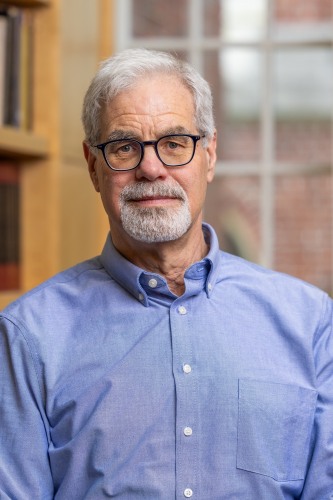
William C. Heindel is a Professor of Cognitive and Psychological Sciences at Brown University and currently serves as Chair of the Department of Cognitive, Linguistic, and Psychological Sciences. He holds a B.S. in Engineering from the University of Wisconsin-Madison (1980) and a Ph.D. in Neurosciences from the University of California, San Diego (1989). His research focuses on cognitive neuroscience, particularly the neural mechanisms underlying memory, attention, and perception in both healthy individuals and those with neurocognitive disorders such as Alzheimer's disease. He has been funded by NIH grants and the Falk Medical Research Trust, among others. Heindel's research interests include the perceptual basis of semantic memory, neuropsychological substrates of category learning, and the role of arousal and attention in Alzheimer's disease. He collaborates with researchers in neurology, biostatistics, and psychiatry. His teaching includes courses on cognitive neuropsychology, memory, and research methods. His recent work explores sensory integration deficits in preclinical Alzheimer's, EEG markers of cognitive decline, and driving performance in older adults. He has published extensively in journals like Neuropsychologia , Alzheimer's & Dementia , and Cortex .
Michael Kaschak is Professor of Psychology at Florida State University, studying language production and comprehension processes. His research examines how social, cognitive, and perceptual factors influence language choices, and how action planning systems interact with linguistic comprehension. Dr. Kaschak leads the Language and Cognitive Processes Laboratory, investigating embodied cognition through experimental paradigms. His research focuses on structural priming effects, action-sentence compatibility, dialogue alignment, and embodied language processing. Recent publications explore hysteresis in spatial language, reproducibility in embodiment research, and structural persistence in conversations. Work consistently integrates psycholinguistic experimentation with theoretical modeling. Dr. Kaschak has contributed methodological advances for studying language embodiment and maintains collaborations through multi-lab replication initiatives. His research received funding from National Science Foundation and National Institutes of Health.
Dr. Yang Jiang is a tenured Professor at the University of Kentucky , affiliated with the Department of Behavioral Science (College of Medicine), Psychology Department (College of Arts and Sciences), and the Sanders-Brown Center on Aging . Her research in the ABC Lab focuses on neural mechanisms of sensory perception and cognition in aging and neurodegenerative diseases like Alzheimer's, using fMRI , EEG/ERPs , and MEG . She developed the Bluegrass EEG protocol for early cognitive decline detection and leads federally funded (NIH, VA) projects on neurofeedback interventions. Dr. Jiang has taught cognitive neuroscience courses at all academic levels and co-directs graduate seminars in the Clinical and Translational Science (CTS) program. Her collaborations span the Alzheimer's Disease Research Center , MRI Center , and a NIH program project on Astrocyte Reactivity . She reviews grants for NIH and international agencies and serves on scientific boards like the Organization for Human Brain Mapping and Alzheimer’s Association . Her recent publications (2025-2023) emphasize EEG/fMRI biomarkers for Alzheimer's and aging, neurofeedback efficacy, and brain connectivity in cognitive impairment. Awards include the WILEY Top Downloaded Article (2021) and leadership roles in federally funded research.