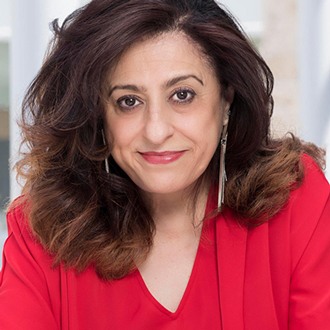
Michael Lindblom is a Professor at the Department of Archaeology, Ancient History and Cultural Preservation, Uppsala University. His research focuses on Aegean Bronze Age archaeology, particularly ceramic analysis, mortuary practices, and environmental dynamics in the Argolid and Cycladic islands. Research Areas : Ceramic production, distribution, and consumption Funerary rituals and social structure Paleoclimate reconstruction in the eastern Mediterranean Chronological modeling and stratigraphic sequences Key Projects : Lerna shaft graves funeral feasts Kolonna ceramic sequence analysis Kalaureia (Poros) Late Bronze Age settlements Svunna Landskap climate change studies His publications emphasize Aegean interregional exchange, state formation processes, and technological transfers in pottery production. Collaborations include researchers from Stockholm University, Salzburg University, and the American School of Classical Studies at Athens.
Dr Melandri Vlok serves as a Lecturer in Anatomy and Physiology within the School of Dentistry and Medical Sciences at Charles Sturt University, Australia. With over a decade of archaeological fieldwork across Indonesia, Vietnam, Thailand, Mongolia, the Philippines, and Japan, she specializes in reconstructing ancient health through skeletal analysis. Education: Dr Vlok completed her BA/BSc (Honours) and PhD in Biological Anthropology at the University of Otago, New Zealand (2020). Research Focus: Her work traces the antiquity of tropical diseases (malaria, yaws, leprosy) in the Asia-Pacific region using integrated approaches: macroscopic skeletal examination, radiographic imaging, and biomolecular techniques (genomics, proteomics, lipidomics). She has identified the world's earliest surgical amputation (31,000 years ago in Borneo) and pioneered evidence of treponemal disease and malaria in prehistoric Southeast Asia. Current projects investigate disease dynamics alongside Holocene climate change and nutritional deficiencies during agricultural transitions. Publication Trends: Analysis of her 2022-2025 publications reveals concentrated research on Southeast Asian and Japanese paleopathology, with emphasis on scurvy/riboflavin deficiency during agricultural transitions, infectious disease epidemiology (melioidosis, treponemal diseases), and methodological refinements in skeletal diagnosis. Her work consistently bridges archaeological context with biomedical insights to understand human adaptation. Awards: National Geographic Explorer Fellowship (2018) for Vietnam field research Mentorship & Grants: Dr Vlok actively recruits graduate students for projects in ancient bone biochemistry, musculoskeletal health, and paleoepidemiology. Her research is supported by competitive grants including the National Geographic award, and she collaborates with institutions across six Asia-Pacific nations. She also directs international archaeological field schools. Collaborative Networks: She leads multidisciplinary teams investigating ancient health across Indonesia, Vietnam, Thailand, Mongolia, Philippines, and Japan, integrating local knowledge with scientific analysis to address repatriation, population health, and disability in past societies.
Jiyoung Shin is a Researcher in the Global Economics & Management department at the College of Economics and Business (Netherlands). Her work focuses on corporate socio-political activism, ESG performance, LGBTQ+ inclusion, and conflict resolution in multinational contexts. Research Themes : National culture impacts on ESG-financial performance links, investor reactions to corporate activism, institutional environments in mining conflicts, and repatriation adjustment processes. Methodology : Mixed-method studies combining quantitative metrics, case analyses, and stakeholder theory frameworks. SDG Contributions : Addresses UN goals like Reduced Inequalities (LGBTQ+ inclusion), Responsible Consumption (ESG), and Peace & Justice Institutions (conflict resolution). Collaborations span institutions in the Netherlands and international teams. Supervised one academic work to date.
Nélia Susana Dias is an Associate Professor (with Habilitation) in the Department of Anthropology at Iscte - University Institute of Lisbon's School of Social Sciences and Humanities. She serves as an Integrated Researcher at CRIA-Iscte (Networked Center for Research in Anthropology), specializing in the Cultural Practices and Policies research group. Her extensive academic career includes visiting positions at prestigious institutions worldwide, including the Musée du Quai Branly (2024), University of Saint-Andrews (2018), and Max Planck Institute for the History of Science. Her research focuses on: Museology and history of ethnographic collections Epistemological foundations of anthropology Cultural heritage preservation and critical heritage studies Historical development of anthropological classification systems Material culture and object biographies Colonial and postcolonial museum practices Dias's recent publications demonstrate a strong thematic focus on museum ethics, heritage restitution debates, and the historical development of anthropological knowledge through material collections. Her work frequently examines colonial legacies in museum practices while developing theoretical frameworks for contemporary heritage management. She maintains an active research leadership role as: President of the Scientific Committee of IN2PAST (Associated Laboratory for Research and Innovation in Heritage, Arts, Sustainability and Territory) Member of the Strategic Orientation Council at Quai Branly Museum (2024-2027) She directs major research initiatives including the EU Horizon-funded PITCH project (€3.28M, 2023-2027) on petroculture and heritage, and previously led the CHEurope project on critical heritage studies (2017-2021). As Director of the FCT Doctoral Program in Anthropology since 2013, Dias has supervised 16 doctoral candidates and 29 master's students, with research spanning museology, cultural heritage, and anthropological theory. Her academic leadership extends to developing curricula for multiple anthropology programs at both graduate and undergraduate levels.
Associate Professor Dr. Hermann Mückler is a prominent figure at the Institute for Cultural and Social Anthropology within the Faculty of Social Sciences at the University of Vienna. With a career spanning over three decades since 1994, he has served as Associate Professor since 2001 and held leadership roles including Vice Dean of his faculty (2004-2008). His institutional affiliations include founding the Austrian-South Pacific Society and presidencies in multiple academic organizations such as the Anthropological Society in Vienna and the umbrella organization of Austrian-foreign societies (PaN). Education: Doctorate and habilitation at the University of Vienna with research focused on Oceania Current Roles: President of Anthropological Society in Vienna (2012-present), President of PaN (2016-present), and Vice President of multiple academic societies Research Interests center on historical anthropology , colonial dynamics , and postcolonial analysis . His work examines: Ethnohistorical approaches to Pacific Island nations German colonial architecture and its legacy Colonial visual sources and popular media Religious conversion processes in Polynesia Global historical connections between Asia and Oceania Contemporary implications of colonial structures Publications include over 520 works spanning books, articles, and reviews. Recent research explores decolonial approaches to German colonial architecture in Samoa and Marshall Islands, historical image analysis of Pacific encounters, and the interplay between material culture and colonial memory. Scientific Awards include: Goldes Ehrenzeichen für Verdienste um das Land Wien (2025) Großes Goldenes Ehrenzeichen des Landes Burgenland (2019) Ehrenurkunde der Österreichisch-Dänischen Gesellschaft (2022)
Leslie Robinson is a Professor of Business Administration at the Tuck School of Business at Dartmouth College, where she teaches financial accounting in the MBA program and has received Tuck's Teaching Excellence Award in 2024. Before joining Tuck in 2006, she was an adjunct lecturer at the Kenan-Flagler Business School of the University of North Carolina where she earned her Ph.D. in Accounting. She has been recognized as one of Poets and Quants' 40 best business school professors under the age of 40 in both 2011 and 2014. Her educational background includes a PhD from the Kenan-Flagler Business School at the University of North Carolina at Chapel Hill (2006) and a BS/MSA from the Wayne Calloway School of Business and Accountancy at Wake Forest University (1999), where she received a Merit Scholarship and scored among the top 100 CPA exam candidates nationally. Professor Robinson's research focuses on the intersection of financial accounting and tax law, with particular expertise in multinational tax issues. Her work examines how tax policy interacts with financial reporting requirements and how these interactions affect corporate behavior across borders. She has published extensively in top academic journals including The Accounting Review, Journal of Accounting and Economics, and Journal of Accounting Research. Her recent publications analyze corporate tax disclosure practices, the impact of U.S. tax reform on foreign acquisitions, and intellectual property taxation regimes. Her research demonstrates consistent focus on policy implications of accounting-tax interactions, with growing emphasis on international dimensions of tax policy. Tuck's Teaching Excellence Award (2024) Outstanding Manuscript Award, American Taxation Association (2016) Best Manuscript Award, Journal of the American Taxation Association (2014) Top 40 Business School Professors Under 40 List, Poets & Quants (2011, 2014) AICPA Candidate High Distinction Report – CPA Exam (1999) Professor Robinson has served on PhD committees at INSEAD and the University of Vienna and has received research funding from the Alfred P. Sloan Foundation and International Tax Policy Forum. Before academia, she practiced as a CPA at Ernst & Young and served as Manager of Tax Planning at Wachovia Corporation. She provides expert testimony on tax matters, including before the U.S. Senate Committee on Finance in 2014, and maintains active leadership roles in professional organizations including the American Accounting Association and National Tax Association.
Gregory Mason is an Associate Professor at the University of Manitoba, Faculty of Arts, Department of Economics. His academic focus spans Indigenous land economics, health economics, basic income, and program evaluation. He previously directed the Institute for Social and Economic Research (ISER) and founded Prairie Research Associates (PRA) Inc., a leading Canadian evaluation firm. PhD (Interdisciplinary - Economics, Management Science, City Planning), University of British Columbia, 1975 Mason’s research explores the intersection of economic policy, health economics, and Indigenous economic development. He has dedicated over 35 years to studying basic income through the Manitoba Basic Income Experiment (Mincome) and advises governments on poverty reduction strategies. His recent work includes telemedicine, electronic health records, and measuring workplace accident costs. Mason’s publications highlight trends in health economics and basic income policy. Key themes include leveraging administrative data for healthcare evaluation, reconciling Indigenous land rights, and assessing social programs. His work spans interdisciplinary collaborations with public health experts and Indigenous organizations. Fellow of the Canadian Evaluation Society Mason has mentored graduate students in economic research and communication. His grants and projects include the National Child Benefit, First Nations programming, and active labor market initiatives. He repatriated the Mincome database to the University of Manitoba Libraries and continues advising the Assembly of First Nations on land rights recovery.
Dr Hardy Thomas is a Lecturer in Finance at the Essex Business School (EBS) at the University of Essex. He holds a BA, MSc, and DPhil from Ulster University. His research focuses on corporate control mechanisms, governance systems, and the political economy of risk, with particular expertise in valuation methodologies, real option portfolios, and market microstructure dynamics. Current research includes analyses of dividend/repurchase patterns, investment cash flow sensitivities, and high-frequency trading behaviors. Education: BA, MSc, DPhil (Ulster University) Teaching Responsibilities: Financial Intermediaries, Financial Management, Financial Crises, Corporate and Investment Banking, Markets & Governance, Data Analytics, and Professional Development modules. Dr Thomas advises on PhD research in equity financing and market microstructure. His articles span over three decades, addressing M&A dynamics, divestiture impacts, and valuation challenges in sectors like banking and shipping. Office hours for Autumn 2024-2025 are Monday 12:00–13:00 and Wednesday 15:00–17:00. Advising & Grants: Supervised two doctoral theses: 'Three Essays on Equity Financing in the UK' (2019) and 'Essays on Market Microstructure for Dividend Paying Firms' (2015).
Professor David Lambert is a faculty member at Griffith University's School of Environment and Science, specializing in Bioscience. He holds the position of Professor and leads the Ancient DNA and Genomics group within the Australian Research Centre for Human Evolution. His research focuses on evolutionary biology, genomics, and ancient DNA, with a particular emphasis on human migration, population genetics, and conservation genetics. Lambert has supervised numerous doctoral students, including principal supervision roles for studies on Indigenous Australian genomics and ancient Egyptian ibis mummies. Lambert has secured significant funding from organizations like the Australian Research Council (ARC) and international collaborations, including projects on genomic libraries for environmental samples and the origins of Australia's non-Pama-Nyungan speaking people. His work bridges archaeology, genetics, and anthropology, with notable contributions to repatriation efforts using genomic data and studies on prehistoric human migration patterns in Sahul and Southeast Asia. His research outputs span over 195 publications, including high-impact studies on Aboriginal Australian genomic history, ancient Egyptian sacred ibis evolution, and the genetic basis of flightlessness in birds. Lambert's interdisciplinary approach integrates molecular biology, anthropology, and environmental science, addressing questions about biodiversity, human adaptation, and cultural practices through genetic analysis. Key Grants: Includes ARC-funded projects on genomic libraries, ancient DNA laboratory upgrades, and collaborations with institutions like the Chinese Academy of Sciences. Labs/Teams: Leads Griffith University's Ancient DNA and Genomics lab and contributes to the Australian Research Centre for Human Evolution. Future Works: Ongoing research on Sahul colonization paradigms, genomic repatriation, and climate change impacts on biodiversity.
Chris Lee is Professor of Literary Studies at Griffith University, specializing in Australian and postcolonial literature, public memory, and settler colonial cultures. With 35 years of teaching experience, he has served as Head of School and developed curricula across multiple institutions. Lee's publications include Postcolonial Heritage and Settler Well-Being and the edited volume Trauma and Public Memory . His research examines cultural mythology in Australian literature and the representation of conflict in historical narratives. Lee has held editorial roles for Australian Literary Studies and Journal of the Association for the Study of Australian Literature .
Prof. Dr. Johannes Voget holds the Chair of Taxation & Finance at the University of Mannheim. He is a Research Associate at ZEW (Leibniz Centre for European Economic Research) and affiliated with the Oxford University Centre for Business Taxation. His research focuses on international taxation, corporate finance, and public finance, with a particular emphasis on topics like tax competition, cross-border M&A activities, and fiscal policy effects. Education: Johannes Voget studied Econometrics at Maastricht University and earned his Ph.D. in Economics from Tilburg University (thesis: 'Tax Competition and Tax Evasion'). Research Interests: His work spans international corporate taxation, tax policy design, cross-border capital flows, and the economic implications of tax incentives. Key themes include R&D tax policies, capital gains taxation, and the impact of tax systems on corporate behavior. Professional Affiliations: In addition to his academic roles, he collaborates with ZEW's Research Units 'Corporate Taxation and Public Finance' and 'Inequality and Public Policy'. His research has contributed to understanding how tax regimes influence multinational firms' strategies and cross-border economic activities. Labs/Teams: He leads the Chair of Taxation & Finance at Mannheim, where he oversees a team focused on tax policy and financial economics research. Collaborative projects with Oxford and ZEW further enhance his interdisciplinary reach.
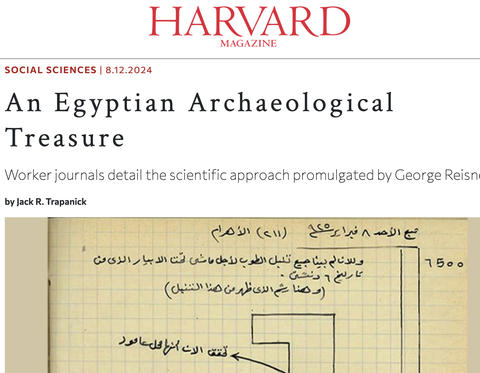
Peter Der Manuelian is the Barbara Bell Professor of Egyptology at Harvard University, holding joint appointments in the Department of Near Eastern Languages and Civilizations and the Department of Anthropology. As Director of the Harvard Museum of the Ancient Near East (HMANE), he oversees collections and exhibitions, including 'From the Nile to the Euphrates.' He leads the Giza Project at Harvard, digitizing archaeological data from the Giza Plateau. His career spans over three decades, including roles at the Museum of Fine Arts, Boston, and Tufts University. Research focuses on ancient Egyptian history, archaeology, and digital visualization. Notable projects include reconstructing Queen Hetepheres’s throne using 3D modeling, analyzing Arabic excavation diaries from the Harvard-Boston MFA expeditions (1905–1947), and publishing biographies of pivotal figures like George Reisner. His work bridges traditional archaeology with modern technologies like photogrammetry and AR/VR. Publications include Walking Among Pharaohs (2022), Digital Giza (2017), and studies on Giza mastabas and Saite archaism. He is a key figure in advocating for ethical repatriation and recognizing Egyptian contributions to archaeological work. Current initiatives include the Arabic Diaries Project and interdisciplinary collaborations in digital heritage preservation. Teaching emphasizes hands-on digital epigraphy and archaeological illustration. Office hours are held both in-person at HMANE and online via Zoom. His work has been featured in the Harvard Gazette, Harvard Magazine, and the Harvard Crimson.
Amy Stambach is the Vilas Distinguished Achievement Professor in the Department of Anthropology at the University of Wisconsin-Madison. Her research focuses on sociocultural anthropology, international development, and environmental studies in Africa and the United States. She holds affiliations with the Smithsonian Institution as a Research Associate and the Council on Foreign Relations as an International Affairs Fellow. Stambach earned her Ph.D. from the University of Chicago. Her work examines the intersections of education, religion, and environmental governance, with particular attention to post-colonial contexts in Tanzania, South Africa, and East Africa. She has conducted NSF-funded research on U.S. private sector investments in African education and health sectors through the lens of UN Sustainability Development Goals. Her research interests include Environmental knowledge production Global education policies China-Africa development partnerships Religion and development ethics Colonial museum histories Her recent publications analyze topics ranging from Tanzanian education systems to Sino-African diplomatic treaties. Her work bridges anthropological theory with actionable insights for international institutions. Stambach has received grants from the National Science Foundation, Wenner-Gren Foundation, and National Geographic. Her teaching includes courses on economic anthropology, environmental sustainability, and museum studies. Current projects explore U.S. corporate investments in South African and Tanzanian sectors including agriculture and real estate, analyzing how these intersect with local environmental and health priorities.
Nada Shabout is a Regents Professor of Art History at the University of North Texas, affiliated with the College of Visual Arts and Design. She serves as coordinator of the Contemporary Arab and Muslim Cultural Studies Initiative (CAMCSI) and founding president of the Association for Modern and Contemporary Art from the Arab World, Iran and Turkey (AMCAAT). Her work focuses on Middle Eastern art historiography, cultural preservation, and identity politics. Education: PhD/M.A. in Humanities, B.F.A. in Art, B.S. in Architecture (University of Texas at Arlington) Her research explores modern/contemporary Arab art, global perspectives on representation, and methodologies in Middle Eastern cultural studies. She has curated major exhibitions like Sajjil: A Century of Modern Art and pioneered projects such as the Modern Art Iraq Archive (MAIA). Notable awards include the Andy Warhol Foundation Grant and UNT's Presidential Excellency Award. Advising and grants highlight her role as Project Advisor for the Saudi National Pavilion at the 2019 Venice Biennale and leadership in initiatives like CAMCSI. She has organized symposiums on Iraqi art and contributed to broadcasts about repatriating artifacts to Iraq. Her work bridges academic research with public engagement, emphasizing cultural diplomacy and preservation of endangered art heritage.
Anna Muller is a Professor of History and the Frank and Mary Padzieski Endowed Professor in Polish/Polish American/Eastern European Studies at the University of Michigan-Dearborn. She also serves as Director of the Honors Program and Faculty Director of the Women in Learning & Leadership initiative. Her academic affiliations include roles with the Polish Institute of Arts and Sciences in America (PIASA) and the Polish American Historical Association (PAHA). Education: PhD in History from Indiana University (2010), MA and BA in History from the University of Gdańsk, Poland (1999). Prior to her academic career, she curated Holocaust and concentration camp exhibits at the Museum of the Second World War in Gdansk (2010-2013). Research focuses on eugenics, Holocaust studies, women's and gender studies, and World War II. Her seminal work If the Walls Could Speak examines women's experiences in post-war Polish prisons. Current projects include biographical research on Holocaust survivors and gendered narratives in Eastern European displacement. Awards highlight her contributions: Oskar Halecki Polish History Award (2018), Ludwik Krzyżanowski Award (2020), and multiple research grants including Fulbright-Hays and Kościuszko Foundation funding. Her publications bridge Polish and transnational perspectives, with recent works exploring prison sociology and gendered historical memory. Professional service includes grant-writing mentorship for junior scholars and leadership in Polish-American academic organizations. She maintains active research ties between Poland and the U.S., frequently collaborating with Gdańsk-based institutions while residing in Dearborn during academic terms.