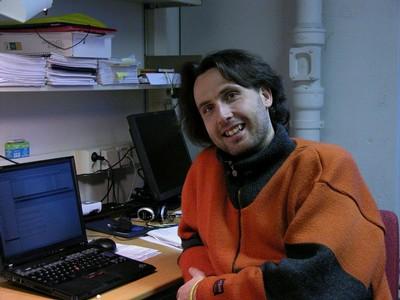
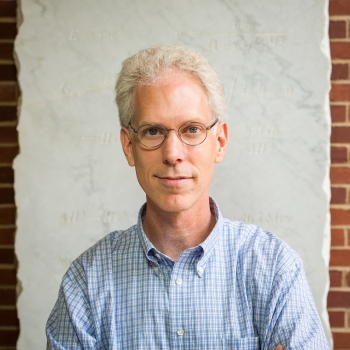
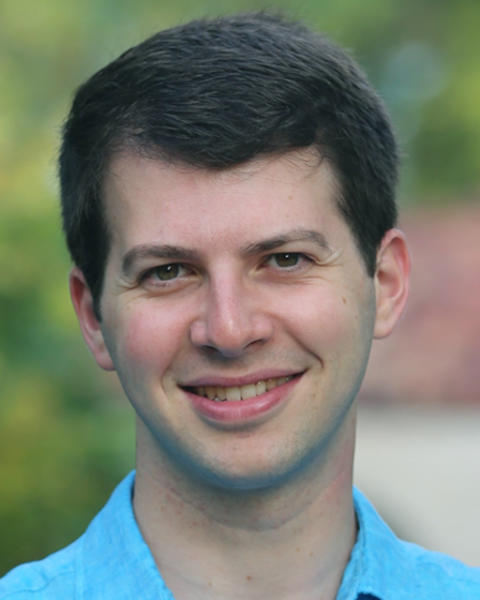
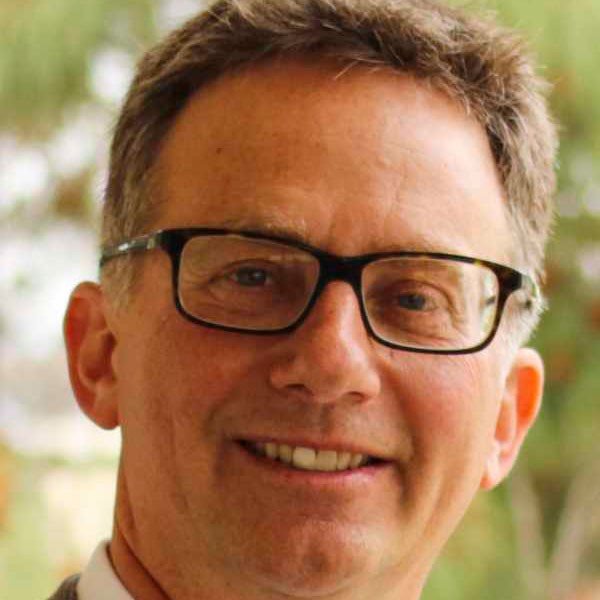
Professor James Zanotti is a faculty member at the University of Adelaide, holding the position of Professor/Reader in the School of Physics, Chemistry and Earth Sciences within the Faculty of Sciences, Engineering and Technology. His research focuses on advanced theoretical and computational studies of particle physics, particularly in the realm of lattice Quantum Chromodynamics (QCD). He specializes in exploring nucleon structure, quark dynamics, and the internal forces within protons using lattice simulations. His work includes groundbreaking studies on transverse force distributions, parity-odd structure functions, and the application of the Feynman-Hellmann theorem to nucleon matrix elements. Professor Zanotti is actively involved in supervising Masters and PhD students in these areas. His recent research highlights include mapping proton force distributions, constraining beyond-Standard-Model physics through nucleon charges, and investigating collective magnetic states in materials. He is affiliated with Adelaide's physics department and accessible via james.zanotti@adelaide.edu.au.
Federico Bonetto is a Professor at the School of Mathematics , Georgia Institute of Technology. His research spans equilibrium and non-equilibrium statistical mechanics , chaotic systems , and mathematical physics . Research Themes : Fermi surfaces in interacting fermion systems Chaos and large deviations in billiards Fourier's law in anharmonic oscillators Game theory applications to economic models Teaching : Regular instructor of courses like Partial Differential Equations , Linear Algebra , and Probability & Statistics since 2002. Publications : Over 40 works since 1995, focusing on Kac models, thermostatted systems, and statistical mechanics of coupled maps. Recent articles (2019-2025) explore non-equilibrium entropy decay , fermionic criticality , and monetary policy experiments .
Prof. Dr. Moritz Helias is a University Professor and leads the Theory of Multi-Scale Neuronal Networks group at the Institute for Advanced Simulation (IAS-6), Computational and Systems Neuroscience, Forschungszentrum Jülich. His research bridges biological and artificial neural networks, focusing on dynamics, information processing, and the physics of AI. The group is part of a larger interdisciplinary institute that integrates theory, simulation, and data analysis to understand the brain. Institution: Forschungszentrum Jülich School: Institute for Advanced Simulation Department: IAS-6, Computational and Systems Neuroscience Position: Professor and Group Leader Email: m.helias@fz-juelich.de His research interests lie at the intersection of statistical physics and neuroscience. He investigates how structure shapes dynamics in both biological and artificial networks, aiming to uncover general principles of information processing. Using methods from statistical physics, his work enables a unified framework for understanding collective phenomena, learning, and generalization. Key areas include spiking neural networks, renormalized field theory, and the theoretical foundations of AI. The recent publications reflect a strong trend toward multi-scale modeling of neural systems, integrating statistical physics with neuroscience. Topics include spiking network dynamics, mean-field theory, renormalization, and applications of machine learning in physics. The work spans biological realism and artificial intelligence, with implications for neuromorphic computing and brain-inspired AI architectures. While no scientific awards are listed in the provided texts, his group actively contributes to open science through tools like NEST and theoretical frameworks that influence both neuroscience and AI. Prof. Helias supervises a research group focused on theoretical and computational approaches, contributing to collaborative projects involving large-scale simulations and data analysis. His team works closely with experimentalists and theorists to validate models and advance understanding of brain function. The group is also involved in developing simulation technologies and theoretical tools that support reproducible neuroscience. The Theory of Multi-Scale Neuronal Networks group is embedded within a vibrant research environment at IAS-6, collaborating with teams in statistical neuroscience, computational neurophysics, and future simulation architectures. This fosters a loop between data, theory, and simulation, enabling cutting-edge research on brain function and artificial intelligence.
Konstantin Wernli is an Assistant Professor in the Department of Mathematics and Computer Science at the University of Southern Denmark, affiliated with the Quantum Mathematics research group. His research focuses on quantum field theory, geometric quantization, and mathematical physics, with a particular emphasis on topological field theories and perturbative methods. He has contributed to foundational work in Chern-Simons theories, BV-BFV formalisms, and geometric analysis. His research interests include quantum field theories, algebraic geometry, and the intersection of topology with physics. Notably, he explores combinatorial approaches to quantum field theory, geometric quantization frameworks, and the application of advanced mathematical tools to solve problems in theoretical physics. Recent work includes studies on partition functions, constrained dynamical systems, and the globalization of sigma models. His articles often bridge abstract mathematics with physical applications, such as analyzing heat kernels, theta invariants, and entanglement polytopes. Wernli is a project participant in the Sapere Aude grant 'FROM PERTURBATIVE TO NON-PERTURBATIVE QUANTUM FIELD THEORY BY CUTTING AND GLUING' (2024–2028), which aims to advance non-perturbative QFT techniques. He has advised on research projects involving heat kernel analysis and geometric quantization, though no formal student advisees are listed.
David M. Ceperley is a Founder Professor in Physics and Research Professor at the University of Illinois at Urbana-Champaign, where he has been a faculty member since 1987. He maintains his office in the Engineering Sciences Building and is affiliated with the Department of Physics within the College of Engineering. His distinguished career has established him as a leading authority in computational quantum physics. Professor Ceperley received his BS in physics from the University of Michigan in 1971 and his Ph.D. in theoretical physics from Cornell University in 1976. Following postdoctoral appointments at the University of Paris and Rutgers University, he worked as a staff scientist at both Lawrence Berkeley and Lawrence Livermore National Laboratories before joining the UIUC faculty. From 1987 until 2012, he also served as a staff scientist at the National Center for Supercomputing Applications. Ceperley's research focuses on developing and applying quantum Monte Carlo methods to study quantum many-body systems. His most significant contribution is his calculation of the energy of the electron gas, which provides fundamental input for electronic structure calculations. He pioneered path integral Monte Carlo methods for quantum systems at finite temperature, particularly for superfluid helium and hydrogen under extreme conditions. His current research encompasses electron fluids, metalization of hydrogen at high pressure, temperature-dependent simulations of solids and liquids, and cold atom systems. Analysis of Ceperley's publication record reveals a consistent trajectory from foundational method development to increasingly complex applications in condensed matter physics. His recent work demonstrates a strong emphasis on high-pressure physics, particularly the behavior of hydrogen and related systems under extreme conditions. The integration of quantum Monte Carlo with other computational approaches represents a significant evolution in his research methodology. B. J. Alder CECAM Prize (2016) Member International Academy of Quantum Molecular Sciences (2013) Blue Waters Professor (2014) Center for Advanced Studies Professor (2009) Founder Professor of Engineering (2006) National Academy of Sciences (2005) Fellow, American Academy of Arts & Sciences (1999) Rahman Prize in Computational Physics (1998) Feenberg Medal (1994) Professor Ceperley has mentored numerous graduate students and postdoctoral researchers throughout his career, contributing significantly to the training of computational physicists. His research has been consistently supported by major funding agencies including the National Science Foundation and Department of Energy. He has taught courses including MSE 485 (Atomic Scale Simulations) and PHYS 460 (Condensed Matter Physics), demonstrating his commitment to education alongside research. His work has positioned him as a leader in computational quantum physics, developing methods that can find exact properties of many-body systems and apply them to diverse materials. His research group continues to advance computational techniques for studying materials under extreme conditions, with particular emphasis on high-pressure hydrogen physics and quantum phase transitions.
Francesco Sannino is a Professor of Computational Science at the University of Southern Denmark's Department of Mathematics and Computer Science. He is affiliated with the Danish Institute for Advanced Study (DIAS) and holds a Ph.D. His research spans quantum field theory, particle physics, and complex systems modeling. Key interests include Standard Model duality, black hole physics, and epidemiological dynamics. Education: Ph.D. in Physics (not explicitly stated in provided text, inferred from title). Research focuses on theoretical physics, including conformal field theories, gauge dynamics, and applications of quantum chromodynamics (QCD). Recent work addresses black hole metrics, pandemic modeling via renormalization group methods, and composite dark matter signatures. His studies often bridge high-energy physics and complex systems. Main Research Trends: Over 15 years, Sannino has produced 333+ publications, emphasizing: Black hole physics and effective metrics Standard Model extensions and dualities Quantum field theory at conformal windows Epidemiological modeling of pandemics Awards: Elected Member of the Finnish Academy of Science and Letters (2015) EU Excellence Grant in Theoretical Physics (2005) International Referee for Austrian Science Fund Grants & Projects: Leader of the DG Center for Particle Physics Phenomenology (2014–2019) Carlsberg Foundation Semper Ardens grant (2023–2029) Coordinator for Danish CERN Instrument Center (2017–2019) Labs/Teams: Active in CP³ - Center for Particle Physics Phenomenology and DIAS, collaborating globally on projects like gravitational wave detection and pandemic modeling.
Luca Frediani is a Professor in Theoretical and Computational Chemistry at the Hylleraas Center, Department of Chemistry, UiT The Arctic University of Norway. His research focuses on advanced quantum chemistry methods, including density functional theory, multiwavelet basis sets, and solvation modeling. He actively develops computational tools like MRChem and VAMPyR for molecular electronic structure calculations. Current affiliation: UiT The Arctic University of Norway Research group: Theoretical and Computational Chemistry Teaching: KJE-2001 Theoretical Chemistry and Spectroscopy His work spans relativistic quantum chemistry, numerical methods for response properties, and benchmarking of basis set limits. Publications emphasize eliminating basis set errors, multiwavelet applications, and polarizable continuum models for solvation. He collaborates extensively on software development for quantum chemistry. Recent articles highlight multiwavelet-based DFT at the basis set limit, noise-tolerant force calculations, and relativistic effects in electronic structure. Sub-fields include scalar relativity, cavity-free solvation, and metal-ligand interaction accuracy.
Professor Steve Abel is a Professor in the Department of Mathematical Sciences and the Department of Physics at Durham University, with additional affiliation to the Institute for Particle Physics Phenomenology. His research spans theoretical physics with a strong focus on string theory, particle physics phenomenology, and emerging applications of quantum computing. Professor Abel's research interests include: Beyond the Standard Model physics Supersymmetry and string model building Applications of quantum computing to particle physics Genetic algorithms in theoretical physics Non-supersymmetric string vacua Analysis of Professor Abel's recent publications reveals a significant shift toward interdisciplinary research combining traditional theoretical physics with cutting-edge computational techniques. His work increasingly focuses on applying quantum computing and machine learning methods to solve complex problems in string theory and particle physics. Many recent papers explore quantum simulation of field theories, quantum annealing for string model building, and genetic algorithms for solving physics problems. This represents a convergence of theoretical physics with computational science that is transforming how fundamental physics research is conducted. Professor Abel has received recognition for his work, most notably a Cern Theory 6 month Scientific Associateship. His research collaborations span international institutions across Europe and North America, reflecting the global nature of theoretical physics research. Professor Abel actively supervises graduate students, including Puya Mirkarimi. His research program likely involves collaboration with various research groups at Durham University working on theoretical particle physics, quantum computing applications, and computational methods for theoretical physics problems.
Prof. Dr. Fabian Heidrich-Meisner is a faculty member at the Institute for Theoretical Physics within the Faculty of Physics at the University of Göttingen. His research focuses on computational condensed matter theory and quantum many-body physics. Research Interests : Quantum phases of strongly correlated systems, nonequilibrium dynamics, thermalization, many-body localization, electron-phonon coupled systems, topological states of matter. Methods : Exact diagonalization, matrix-product-state approaches, density matrix renormalization group (DMRG) technique. Contact : fabian.heidrich-meisner@uni-goettingen.de
Ben Vollmayr-Lee is an Associate Professor in the Department of Physics & Astronomy at Bucknell University. His research focuses on theoretical statistical physics, particularly non-equilibrium systems and critical phenomena. Education: Ph.D. in Physics from UC Santa Barbara (1994), with postdoctoral work at the University of Maryland and NIST. His scholarly interests include: Coarsening Kinetics: Universality classes in phase separation dynamics. Reaction-Diffusion Systems: Field-theoretic renormalization group methods for non-equilibrium systems. Ionic Criticality: Interplay of energy and entropy in complex systems. General Statistical Mechanics: Nonintegrable interactions and numerical algorithms. Recent publications highlight trends in nonequilibrium work relations, anomalous dimensions in reaction-diffusion systems, and computational approaches to coarsening. Collaborators include international researchers from institutions such as Virginia Tech, Dalhousie University, and NIST. Students mentored by Vollmayr-Lee include Andy Baish (Bucknell '15), Greg Seyfarth (Colby '13), and Phil Marquis (Bucknell '07), among others.
Klemens Fellner is a Professor of Mathematics/Computational Sciences and Group Leader of the Applied Analysis Group at the Institute of Mathematics and Scientific Computing, University of Graz. His research focuses on the analysis of partial differential equations and mathematical modeling across physics, chemistry, and biology. Research Interests: Prof. Fellner's work spans theoretical analysis of nonlinear PDEs (reaction-diffusion, kinetic, and non-local equations) using entropy/duality methods, with applications to: Biological systems (lipolysis, protein localization, stem-cell division) Physical processes (organic photovoltaics, semiconductor modeling) Collective behavior (swarming micro-organisms, aggregation dynamics) Interdisciplinary Mathematics-Arts collaborations Publication Trends: His recent articles (2018-2021) demonstrate strong focus on: Global existence and regularity for reaction-diffusion systems Convergence to equilibrium via entropy methods Drift-diffusion models in semiconductor physics Mathematical biology applications (prion dynamics, lipolysis) Novel approaches for non-local aggregation and hysteresis phenomena Research Leadership: Currently leads the Applied Analysis Group with members including postdocs and PhD students. Key projects: Doctoral School IGDK (International Graduate School) SFB Lipid Hydrolysis (Special Research Program) Mathematics and Arts collaborations Colibri research platform Supervises PhD candidate Reymart Lagunero studying generalized reaction-diffusion systems.
Univ.-Prof. Dr. Norbert Schuch is a Professor of Physics and Mathematics at the University of Vienna, leading the Quantum Information and Quantum Many-Body Physics group. His research bridges Quantum Information Theory, Quantum Computing, and the study of complex quantum many-body systems, with a focus on Tensor Networks, Topological Order, and Symmetry Breaking. He has offices at both the Faculty of Physics (Boltzmanngasse 9) and Faculty of Mathematics (Oskar-Morgenstern-Platz 1). Research Interests : Quantum Information at the interface of Many-Body Physics, including Entanglement Theory, Topological Quantum Computation, Tensor Network algorithms, and Symmetry-Protected Topological (SPT) phases. His work develops numerical and analytical frameworks to study entanglement order parameters and prepare/experiment with topological states in quantum simulators. Teaching : Courses on Quantum Information, Quantum Computing, Theoretical Physics, and seminars on quantum many-body topics. Prior to Vienna, he was a tenured group leader at Max-Planck-Institute of Quantum Optics and a lecturer at Technical University Munich. Scientific Awards : ERC Consolidator Grant SEQUAM (2020–2025) FWF ESPRIT Programme ESP 306 FWF SFB BeyondC FWF Entanglement Order Parameters Research Trends : His recent publications explore Quantum Algorithms, Tensor Networks for Topological Phase Transitions, Entanglement Spectra, and Symmetry-Protected Phases. Key subfields include Non-Abelian Anyons, Chiral Spin Liquids, and Computational Complexity in Many-Body Systems. Group Members : Current team includes postdocs like Dr. Ilya Kull and Dr. András Molnár, with historical alumni spanning PhDs, Masters, and BSc students now at institutions like Xanadu, MIT, and Quantinuum.
Jordan Cotler is an Assistant Professor of Physics at Harvard University, affiliated with the Department of Physics within the Faculty of Arts and Sciences. He holds a BS in physics and mathematics from MIT (2015) and a PhD in physics from Stanford University (2020). Before joining Harvard's faculty, he served as a Junior Fellow at the Harvard Society of Fellows from 2020 to 2024. His research focuses on the intersection of quantum information, computation, and spacetime physics. Key interests include quantum algorithms for analyzing many-body and quantum gravitational systems, information-theoretic frameworks for chaotic dynamics, and non-perturbative methods in quantum cosmology and field theory. Cotler's work has advanced quantum algorithm design for experimental platforms and contributed to understanding black hole microstructure and cosmological spacetimes. He has been recognized with prestigious early-career awards, including his Harvard Society of Fellows Junior Fellowship. His publications span foundational topics such as quantum gravity, holography, computational complexity, and quantum chaos, reflecting a multidisciplinary approach to theoretical physics.
Arkady Tseytlin is a Professor of Theoretical Physics at Imperial College London's Department of Physics, part of the Faculty of Natural Sciences. His research focuses on string theory, quantum field theory, and quantum gravity, with emphasis on connections between string theory and gauge theories. He is affiliated with the Abdus Salam Centre for Theoretical Physics at Imperial College. Research interests include advanced topics such as AdS/CFT correspondence, M-brane dynamics, integrable deformations of string backgrounds, and quantum gravity effects in holographic models. His recent work explores non-planar corrections in ABJM theory, semiclassical quantization of M5 branes, and strong coupling expansions in supersymmetric field theories. Publications span topics like Wilson loops in large-N gauge theories, quantum corrections to sigma models, and supergravity solutions in AdS spaces. Despite significant contributions, no specific student advisees or scientific awards are explicitly listed in the provided texts.
Kenneth Intriligator is Distinguished Professor of Physics at UCSD, holding the Dan Broida Chair. PhD from Harvard University (1992). Research advances fundamental understanding of quantum field theory through symmetry-based methods exploring dualities, exact results, and mathematical connections. Investigates strongly coupled quantum fields, supersymmetry applications, and conformal symmetry. Current Simons Collaboration explores categorical symmetries bridging quantum field theory and advanced mathematics. Recognized with Sloan Fellowship and APS Fellowship for contributions revealing surprising phenomena in quantum fields. Publications develop frameworks for analyzing anomalies, RG flows, and AdS/CFT correspondences. Research connects particle physics with string theory and mathematical structures, generating novel insights into Nature's fundamental fabric.