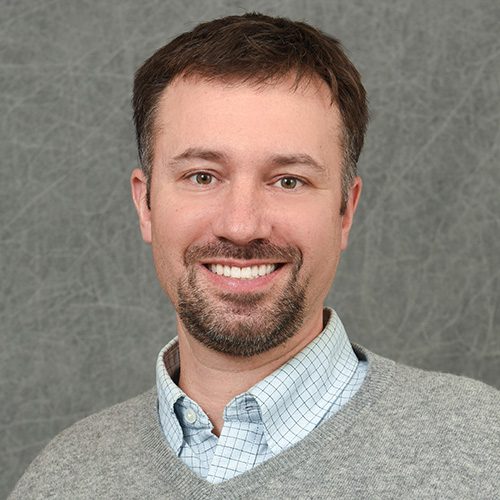
Karl Wegmann is a Professor and Associate Head of the Marine, Earth and Atmospheric Sciences (MEAS) department at North Carolina State University. He holds a faculty fellowship at the Center for Geospatial Analytics. His research focuses on Earth surface processes, integrating geospatial analysis with field investigations to study landscape responses to tectonic and climatic forces. Key areas include geomorphology, active tectonics, paleoseismology, and geoarchaeology. Education: Ph.D. (2008, Lehigh University), M.S. (1999, University of New Mexico), B.A. (1996, Whitman College). Research emphasizes landslide dynamics, paleoclimatic reconstructions, and planetary geoarchaeology. Notable projects include studies in Mongolia, Greece, and the Pacific Northwest. He teaches courses in geology, natural hazards, and field geology. His work bridges disciplines, applying remote sensing and machine learning to geohazard assessment and cultural heritage preservation. Scientific achievements include the 2023 NCSU Outstanding Teaching Award. Ongoing research explores lunar anthropocene frameworks and Martian surface processes. Collaborative projects involve students in global fieldwork and innovative geospatial methodologies.
Kevin Turner is an Associate Professor in the Department of Geography and Tourism Studies at Brock University, with a cross-appointment in Earth Sciences. He is based in the Faculty of Social Sciences and conducts interdisciplinary research at the intersection of hydrology, geomorphology, and climate change in northern environments. Education: PhD in Geography, Wilfrid Laurier University Geographic Information System Application Specialist, Sir Sandford Fleming College BSc in Physical Geography and Biology, Trent University Dr. Turner's research focuses on hydrological and landscape changes in permafrost regions, particularly in the Old Crow Flats of Yukon. His work integrates isotope hydrology , paleolimnology , dendrochronology , and remote sensing , including the use of unmanned aerial systems. He investigates how climate change affects thermokarst lake dynamics, carbon cycling, and water balance in Arctic and subarctic systems. His long-term field campaigns since 2007 have contributed to a deeper understanding of climate-driven landscape evolution. The 15 most recent publications highlight a strong trend in cold-region hydrology , remote sensing of permafrost , and paleoenvironmental reconstruction . His work frequently employs stable water isotopes and UAV-based monitoring to assess thaw slump dynamics, lake drainage, and ecosystem responses. The research spans disciplines including environmental science, geophysics, and Arctic ecology. Scientific Recognition: Selected to feature on the cover of a special issue of Remote Sensing (2021) Dr. Turner has been a principal investigator on multiple field campaigns and is affiliated with the NASA-ABoVE program. He teaches courses in GIS, quantitative methods, and water resource management. He advises graduate students and collaborates widely with researchers across Canada. He is actively involved in academic service, including serving as Chair of the Brock University Northern Studies Committee and as a board member of the Association of Canadian Universities for Northern Studies. His research supports land management and climate adaptation strategies in vulnerable northern regions. He leads a research program that combines field observations, geospatial analysis, and long-term monitoring to address pressing environmental challenges in the Arctic.
Lizbeth Olivia Escobedo Bravo is an Assistant Professor in the Faculty of Computer Science at Dalhousie University, where she conducts research at the intersection of Human-Computer Interaction, Ubiquitous Computing, and Cognitive Assistive Technology. Her work focuses on developing and evaluating technology to improve the quality of life for vulnerable populations, particularly children with autism, pregnant women, and individuals with cognitive disabilities. Her educational background includes a BS and PhD from Universidad Autónoma de Baja California (UABC), an MSc from Centro de Investigación Científica y de Educación Superior de Ensenada (CICESE), and a postdoctoral fellowship in Biomedical Informatics at UC San Diego. BS – Universidad Autónoma de Baja California (UABC) PhD – Universidad Autónoma de Baja California (UABC) MSc – Centro de Investigación Científica y de Educación Superior de Ensenada (CICESE) Postdoc – University of California, San Diego (Biomedical Informatics) Her research interests include Human-Computer Interaction (HCI), Ubiquitous Computing, Cognitive Assistive Technology (CAT), Mobile Technologies, Accessible Computing, and Children-Computer Interaction. She emphasizes interdisciplinary collaboration across computer science, psychology, education, medicine, and design. The 15 most recent articles reflect a consistent focus on assistive technologies for neurodevelopmental and cognitive challenges. Key themes include early detection of developmental delays (ActEarly), handwriting assessment (PenSando), autism support (MOBIS, MOSOCO, FarmerKeeper, SATORI), maternal health (PREGO), and ADHD assistance (SmarTasko). These works span mobile, augmented reality, and sensor-based systems, with strong emphasis on usability, accessibility, and real-world deployment across diverse cultural and economic contexts. Scientific contributions and recognitions include: Active research leadership in multiple assistive technology projects Interdisciplinary collaborations with institutions such as Georgia Tech, UC Irvine, UC San Diego, MSU, Chapman University, and CREATE-NET Industry partnerships with IMSS, Pasitos A.C., ClubLia Kinder, EdNinja Inc., and others Focus on technology for social good and inclusive design She is actively involved in mentoring and advising, currently recruiting PhD and Master’s students for her research group. Her work has been supported through academic and industry collaborations, though specific grants are not listed. She previously worked in the software industry as a project manager and COO, bringing leadership experience to her academic role. Lizbeth leads a dynamic research lab focused on developing and deploying accessible, user-centered technologies. Her team works on projects such as ActEarly, PenSando, and SATORI, often involving cross-border studies and community engagement. The lab emphasizes real-world impact, ethical design, and scalability of solutions, particularly for underserved populations in Latin America and North America.
Johannes Hübl is a Full Professor at the University of Natural Resources and Life Sciences, Vienna (BOKU), leading the Institute for Alpine Natural Hazards within the Department of Landscape, Water and Infrastructure. His research focuses on alpine mass movement dynamics—particularly debris flows, rockfalls, and floods—with emphasis on risk management, mitigation engineering, and climate change adaptation. He maintains an active project portfolio including EU-funded initiatives and Austrian federal collaborations. His primary research interests include the physical processes of debris flows (surge dynamics, run-up behavior, sediment transport), rockfall hazard assessment, flood protection engineering, and climate change impacts on alpine hazards. Recent work pioneers advanced monitoring techniques like pulse-Doppler radar and LiDAR for real-time measurement of flow velocity and height, directly informing protective dam design and early warning systems. He also develops GIS-integrated simulation models for granular flows and risk assessment. Hübl's publications trend toward high-resolution field studies of debris flow dynamics, with significant focus on spatial impact distribution, statistical discharge modeling, and wildfire-hazard linkages. This reflects growing priorities in climate-resilient infrastructure and quantifiable risk assessment methodologies across European alpine regions. Scientific awards: No awards, fellowships, or medals are documented in the provided materials. Advising and grants: Professor Hübl has supervised numerous university theses as indicated by his profile. His grant leadership spans over 30 projects since 1994, including: EU projects: Nature-Based Solutions for Climate-Resilient Infrastructure (2024-2028), THARMIT (2000-2003) Austrian federal funding: 20+ projects with BMLFUW/BMF (e.g., rockfall detection, sediment management) International commissions: Bhutan flood mitigation (2000), Melamchi River reviews (2023) Industry collaborations: Check dam failure analysis, Cougar Creek optimization Labs and teams: He directs field monitoring operations including the Illgraben (Switzerland) and Gadria Creek (Italy) test sites. His institute employs physical modeling (hydraulic experiments, laser scanning) and develops real-time warning systems for alpine catchments, working closely with Austrian watershed management agencies and European consortia on event documentation and structural countermeasures.
Dr. Gholamhossein (Mohsen) Bagheri is a Researcher and Group Leader at the Max Planck Institute for Dynamics and Self-Organization , leading the Turbulence and Particles in Fluids group within the Laboratory for Fluid Physics, Pattern Formation and Biocomplexity . His work bridges fluid dynamics , atmospheric physics , and environmental health , focusing on turbulent, particle-laden flows in natural and indoor systems. His research explores how turbulence governs the dispersion of respiratory particles , volcanic ash , microplastics , and cloud microphysics . Key projects include the Max Planck CloudKite (airborne measurements of clouds), HoloTrack (3D droplet tracking), and WinDarts (planetary boundary layer turbulence). His group also investigates indoor aerosol dynamics , contributing critical insights into Covid-19 transmission and ventilation strategies. Publications highlight a broad scope: 2025 papers on Palabos Turret simulations, AeroVolc volcanic ash sampling, and curved fiber torques in turbulence; 2024 studies on microplastic fibers and inertial particle orientation ; 2023 work on respiratory aerosols and wind instrument emissions ; and earlier research on ash aggregation , cloud droplets , and infection risk in indoor spaces . Collaborations span Michael Wilczek , Eberhard Bodenschatz , and interdisciplinary teams. His studies on human exhaled particles (2022) revealed age-dependent emission patterns, while honeybee flight dynamics (2022) demonstrated turbulence adaptation. The CloudKite platform has advanced climate modeling by reducing uncertainties in aerosol-cloud interactions . Despite no listed awards, his work has influenced policy during the pandemic and environmental pollution research .
Mohamed Allali is an Associate Professor at Chapman University, affiliated with both the Fowler School of Engineering (Department of Electrical Engineering and Computer Science) and Schmid College of Science and Technology (Department of Mathematics). His research spans data engineering, machine learning, climate informatics, and mathematical education. He has contributed to constraint-based intelligent tutoring systems, data drift detection using KL divergence, and geospatial analysis for environmental monitoring. Education: University of Oklahoma (BS, MA, PhD). His recent work focuses on data distribution divergence, climate modeling for sea turtle habitats, and neural network applications in medical imaging. He has collaborated extensively on drought indices, satellite data validation, and educational technologies. His publications highlight expertise in statistical learning, computational methods, and interdisciplinary environmental applications.
Dr. Yi Wang is a Reader in Climate Sciences within the Department of Geography at the School of Global Studies, University of Sussex. He also holds a Visiting Professor position at the Department of Earth System Science of Tsinghua University since 2019. With nearly 30 years of experience in climate and Earth system sciences, Dr. Wang has established himself as a leading researcher in monsoon dynamics, climate modeling, and hydrological systems. PhD from McGill University (Montreal, Canada) Postdoctoral fellow at Centre for Climatic Research, University of Wisconsin-Madison Research experience at Pacific Northwest National Laboratory (PNNL) Visiting scientist at National Center for Atmospheric Research (NCAR) Dr. Wang's research spans a wide range of climate science topics with particular expertise in Asian and African monsoon systems, land-atmosphere interactions, and climate modeling. His work combines paleoclimate reconstruction with modern observational data to understand long-term climate patterns and their societal impacts. He has published extensively in high-impact journals including Nature Scientific Reports, Climate Dynamics, and Journal of Climate, with particular focus on abrupt climate changes and their historical implications. His recent publications demonstrate consistent research productivity across multiple climate science domains. The articles reveal a strong focus on monsoon dynamics across different time scales (from seasonal to millennial), with particular attention to East Asian and Sahelian climate systems. There's a clear methodological pattern combining observational data, paleoclimate proxies, and climate modeling to address questions about climate variability, extremes, and human-environment interactions. Fellow of the Higher Education Academy (HEA) Postgraduate Certificate in Learning and Teaching in Higher Education Editorial Board member for Asia-Pacific Journal of Atmospheric Sciences Committee member of International CLIVAR/PAGES Working Group Dr. Wang actively supervises PhD students and has secured multiple research grants including the NERC, ESRC, and The Newton Fund funded 'Thai Coast' project. His research collaborations span multiple countries including USA, China, and Nigeria. He is affiliated with several research centers at Sussex including the Sussex Centre for Coastal Research, Sussex Centre for World Environmental History, and Sussex Asia Centre.
Raymond M. Hozalski serves as the James L. Record Professor in the Department of Civil, Environmental, and Geo-Engineering at the University of Minnesota , where he leads the Hozalski Research Group and maintains affiliations with the BioTechnology Institute. His work bridges environmental engineering and public health through advanced water treatment research. Dr. Hozalski's research focuses on biofilm engineering for water treatment applications, natural organic matter characterization , and stormwater management . His lab employs molecular biology techniques (qPCR, DNA sequencing), pilot-scale treatment systems, and field sampling to address critical water quality challenges. Key specialties include biofilm mechanical properties, disinfection byproduct control, and contaminant removal mechanisms in engineered systems. Analysis of his 15 most recent publications reveals dominant trends in drinking water distribution system safety (particularly Legionella control), NDMA precursor identification from agricultural and wastewater sources, and advanced biofiltration techniques . His work increasingly integrates satellite remote sensing for water quality monitoring and emphasizes practical solutions for utilities. James L. Record Professor endowed chair recipient Principal investigator for 34 funded projects totaling millions in NSF, EPA, and state funding Research featured in major media outlets regarding coronavirus water safety Dr. Hozalski has mentored 12 PhD graduates , with 6 securing faculty positions and others employed by EPA, water utilities, and engineering firms. His current projects include investigating opportunistic pathogens in water systems, NDMA precursor mapping, and biofilter optimization for nitrosamine control. The Hozalski Research Group operates state-of-the-art facilities for biofilm characterization and water quality analysis, collaborating with utilities across the US and Norway.
Jaeyoung Ha is an Assistant Professor in Landscape Architecture at Virginia Tech's School of Design. His research focuses on the intersection of environments and human well-being, leveraging immersive visualization technologies, and advancing climate resilience strategies. Ph.D. in Environmental Design and Planning, Kansas State University Master of Landscape Architecture (MLA), Seoul National University Bachelor of Science in Landscape Architecture, Pusan National University Mental Well-being: Investigates how landscapes influence psychological restoration through biodiversity and spatial patterns, employing VR experiments and observational studies. Immersive Visualization: Pioneers AR/VR applications in landscape education and design decision-making. Climate Resilience: Conducts interdisciplinary research on green infrastructure and urban heat island mitigation. His 15 most recent publications span 2017–2025, with recurring themes of mental health assessment , 3D urban morphology , multisensory landscape evaluation , and ecosystem services quantification . Articles combine theoretical exploration and data-driven methodologies across diverse urban contexts.
Dr. Pedro Trapero Fernandez is a Postdoctoral Researcher at the University of Cádiz, affiliated with the Department of History, Geography and Philosophy and the Institute of Viticulture and Agri-Food Research (IVAGRO). He leads the HUM240 Historical Heritage of Andalusia in Antiquity research group and specializes in Ancient History, with particular focus on Roman viticulture, landscape archaeology, and geospatial analysis. PhD in Ancient History and Archaeology (2020) with thesis on Roman Viticulture in the Hasta Regia and the Guadalquivir Estuary Research expertise in non-invasive techniques: GIS, drones, ground-penetrating radar, magnetometry Active academic collaborations with international institutions including FORTH (Greece) His research integrates classical agronomic texts like Columella with modern geospatial technologies to reconstruct ancient agricultural practices and mobility networks. Key projects include Roman road network analysis, viticulture modeling, and archaeological applications of GIS in Spain and Portugal. He has contributed to coastal and inland connectivity studies in Roman and Medieval contexts. Scientific publications demonstrate technical proficiency in geophysical prospecting and historical modeling. Notable works include: GIS applications for Roman property surveying, multidisciplinary analysis of wine production, and innovative methodologies for studying ancient transportation networks. As an educator, he has taught at undergraduate and master's levels through predoctoral contracts and developed flipped classroom methodologies for humanities teaching. Current affiliations include the Agustín de Horozco Seminar on Economic Studies and multiple international research partnerships.
Jiajia Sun is an Associate Professor of Geophysics in the Department of Earth and Atmospheric Sciences at the University of Houston. Her research focuses on advancing subsurface imaging, uncertainty quantification, and mineral exploration through interdisciplinary approaches combining geophysics, machine learning, and computer vision. Education : PhD in Geophysics (2015, Colorado School of Mines); BS in Geophysics (2008, China University of Geosciences, Wuhan). Research Interests : Jiajia specializes in deep learning for geophysical inversion, multi-physics data integration, and probabilistic geological modeling. Her work leverages computational resources like GPUs and clusters to solve inverse problems and tackle magnetic remanence challenges. Recent Publications : Her research includes applying Bayesian frameworks, deep generative models, and joint inversion algorithms to airborne geophysics for critical mineral mapping and hydrogen reservoir detection. She emphasizes open-source tools like SimPEG for reproducibility. Awards : J. Clarence Karcher Award (SEG) Advising & Collaborations : She mentors PhD students in geophysics and collaborates with institutions like Amazon’s Generative AI Innovation Center, Stanford University, and University College Dublin. Her team also tests drones and magnetometers at the UH Coastal Center.
Professor Dave Roberts is affiliated with Durham University's Geography Department, where he specializes in glacial processes and ice sheet dynamics. His research spans Greenland ice sheet history, British-Irish Ice Sheet reconstruction, and subglacial processes. Research Focus: Greenland ice sheet evolution during the last glacial cycle British-Irish Ice Sheet dynamics in North Sea and Irish Sea regions Ice stream behavior and response to climate forcing Glaciomarine processes and sea-level changes Scientific Publications demonstrate expertise in: Glacial landform analysis Subglacial sedimentology Ice margin oscillations Quaternary chronostratigraphy Paleoceanographic reconstruction Modern glacial process analogs Students: Eileen Brendler-Spaeth (MScR) Jacqueline Pealing Key Collaborations: Involved in major projects including NEGIS Project (2016-2021) , KangGlac project (2024-2028) , and BRITICE-CHRONO .
Brian E. Washburn is an Adjunct Assistant Professor in the Department of Fisheries and Wildlife at multiple universities and a Research Biologist at the USDA APHIS Wildlife Services, National Wildlife Research Center (NWRC) in Sandusky, OH. His work focuses on reducing wildlife hazards near airports through applied ecology research. Ph.D. in Animal Sciences, University of Kentucky M.S. in Wildlife and Fisheries Science, Pennsylvania State University B.S. in Environmental and Forest Biology, SUNY College of Environmental Science and Forestry A.A.S. in Biological Technology, SUNY Cobleskill Dr. Washburn’s research spans wildlife movement patterns, foraging ecology, urban ecosystem interactions, and non-lethal management practices. He investigates animal sensory ecology, antipredator behaviors, and the application of robotics in wildlife deterrence, particularly for raptors, geese, and gulls. His work includes evaluating habitat management tools like prescribed fire and insecticides to reduce airport wildlife use, live-capture method ethics for migratory birds, and mitigation strategies for human-wildlife conflicts, such as those involving Hawaiian cultural birds. He collaborates with the U.S. Department of Defense, civilian airports, and international partners in South Africa. Key partnerships include universities, state agencies, and private industry. He leads the research project Understanding, Preventing, and Mitigating the Negative Effects of Wildlife Collisions with Aircraft , integrating spatial data and technology for aviation safety.
André Dietrich serves as a Researcher at the Department of Ergonomics, Technical University of Munich, since March 2015. His work centers on pedestrian-vehicle interactions within automated driving contexts, utilizing advanced simulation methodologies and field studies to enhance urban traffic safety. Education: Diploma in Aerospace Engineering from Technical University of Munich specializing in aircraft propulsion and aerospace engineering Completed diploma thesis "Feasibility Analysis of a Pedestrian Simulator" in December 2014 Research Interests: Dietrich investigates pedestrian crossing behavior in automated urban environments through human factors and ergonomics frameworks. His work pioneers external human-machine interfaces (eHMIs) for vehicle-pedestrian communication, examining kinematic effects, cultural influences, and age-related perception differences. Key methodologies include augmented reality simulations, LiDAR-based field observations, and motion-platform pedestrian simulators to capture behavioral nuances in traffic scenarios. His research directly addresses safety challenges posed by increasing vehicle automation levels in complex urban settings. Publication Trends: Analysis of Dietrich's 12 publications (2016-2022) reveals consistent focus on pedestrian-AV interaction mechanisms. His work demonstrates evolving methodologies from controlled simulator studies toward real-world field validations, with growing emphasis on inclusive eHMI design for diverse user groups. Cross-cultural comparisons and technical innovations in projection-based interfaces represent significant thematic threads across his publication history. Advising and Grants: No student supervision or grant funding details are documented in the provided materials. Labs and Infrastructure: Dietrich operates within TUM's Ergonomics Chair facilities including the Dynamical Mock-Up, Modular Ergonomic Mockup, Static Driving Simulator, and robotics labs. These resources support his research on cabin design, automated driving systems, and human-robot interaction within traffic contexts.
Atsushi Hamada is an Associate Professor at the Faculty of Sustainable Design, University of Toyama, where he is affiliated with the Department of Earth System Science. He concurrently serves as a Visiting Associate Professor at the Center for Environmental Remote Sensing (CEReS) at Chiba University. His academic career spans multiple institutions and research collaborations focused on atmospheric science and remote sensing. Dr. Hamada's research focuses on several interconnected areas within atmospheric science: Precipitation systems and cloud physics analysis Satellite meteorology and remote sensing techniques Tropical meteorology and extreme rainfall events Global precipitation measurement using spaceborne instruments Climate change impacts on precipitation patterns His publication record demonstrates extensive work with satellite missions including the Global Precipitation Measurement (GPM) and Tropical Rainfall Measuring Mission (TRMM). Recent research emphasizes spectral latent heating retrieval algorithms, drop size distribution analysis, and precipitation mechanisms across diverse geographical regions. His work consistently involves international collaborations with researchers from multiple institutions across Japan and globally. Dr. Hamada has developed significant tools for the meteorological community, including the Equidistant color scale generator (with Inatsu, 2016) and the CTOP (Cloud-Top Height Product) estimated by geostationary satellites. His research bridges theoretical meteorology with practical applications for weather prediction, climate monitoring, and environmental studies. His work on precipitation systems has particular relevance for understanding regional weather patterns around Japan and in tropical regions.