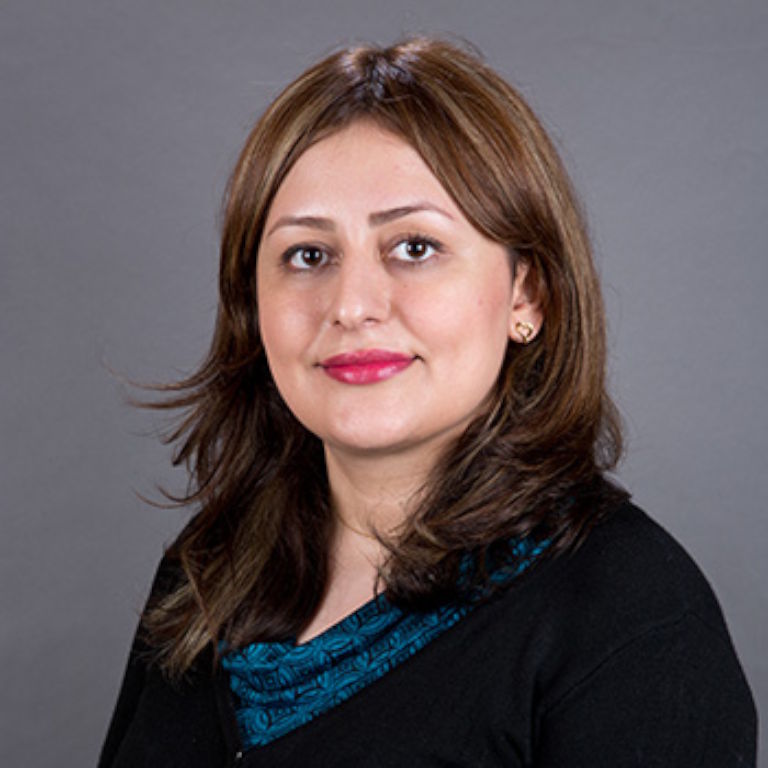
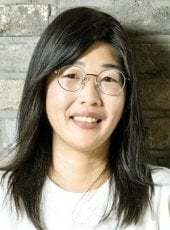
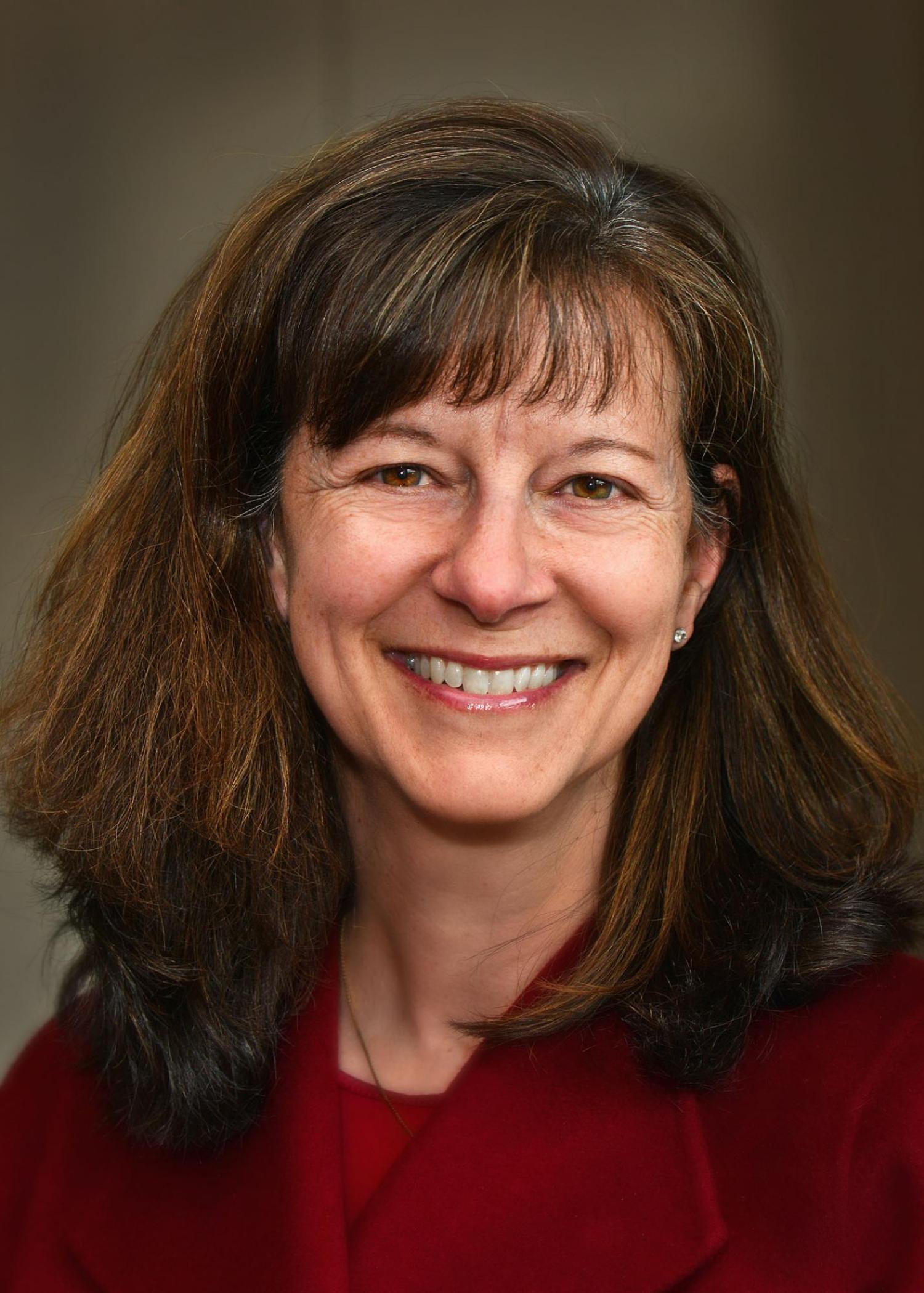
Dr. Marzieh Amini is an Associate Professor at Carleton University, cross-appointed to the School of Information Technology and Department of Systems and Computer Engineering . She coordinates the Optical Systems and Sensors undergraduate program and leads research in computer vision, sensor fusion, and biomedical signal processing . PhD in Electrical and Computer Engineering (2016), Concordia University Postdoctoral Fellow (2020), McGill University Research Interests focus on autonomous vehicle perception systems integrating machine learning and statistical modeling . Her work addresses multi-sensor integration for reliable operation in diverse environments, including biomedical applications and critical infrastructure monitoring . Recent publications emphasize wildfire management , LiDAR-based infrastructure monitoring , and adverse weather adaptation in autonomous systems . She has received grants from NSERC, NRC, and FRQNT . Honors & Awards include: Volunteer Recognition Awards (IEEE Montreal, 2022 & 2019) FRQNT Postdoctoral Fellowship (2018) IEEE ISCAS Travel Support (2016) Professional Service includes leadership roles in IEEE committees and conference organization.
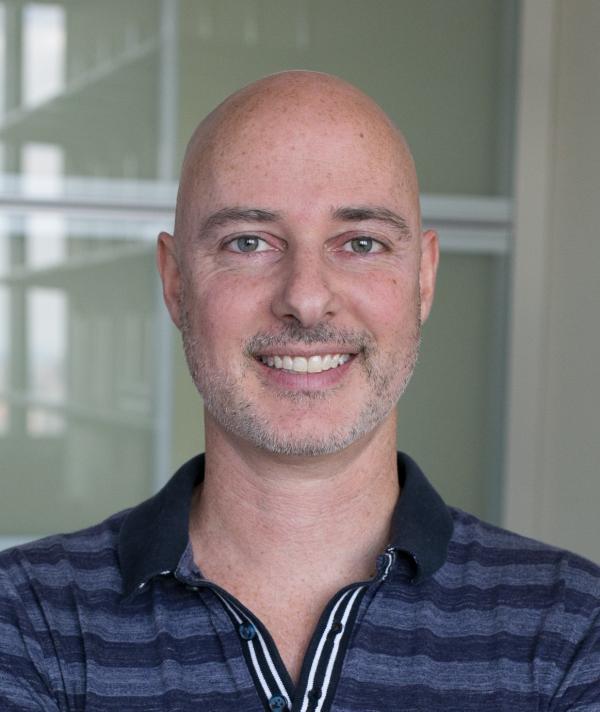
Carine J.M. Doggen is a Full Professor in Health Technology & Services Research at the TechMed Centre, University of Twente. She also serves as Scientific Director at Rijnstate Hospital since October 2017. Her academic career includes previous positions as Senior Researcher at Leiden University Medical Center (2000-2009), University of Washington, Seattle (2002-2003), and Sanquin Blood Bank (2006-2009). Her research focuses on evaluating healthcare innovations, particularly technologies enabling the transition of care from hospitals to home settings. Dr. Doggen specializes in assessing the implementation, reliability, and effectiveness of new medical technologies including wearable sensors and remote monitoring systems. Her work examines measurement validity and incorporates perspectives from both healthcare providers and patients. Analysis of her recent publications reveals strong expertise in cardiovascular technology evaluation, digital health interventions, and quality of life assessment. Her research shows particular strength in randomized clinical trials of medical devices, health technology assessment methodologies, and post-COVID health outcomes research. Dr. Doggen has presented her work at numerous conferences, with recent oral presentations including 'Towards personalised medicine: the potential of intensive longitudinal data to assess the interplay of chronic diseases' (2024) and 'Prognostic markers for acute heart failure in Chronic Obstructive Pulmonary Disease' (2021). She has also contributed to media discussions about healthcare innovations through the Rijnstate Collegetour series.
William Martinez, PhD, ABPP is an Associate Professor of Psychiatry and Behavioral Sciences at the University of California, San Francisco (UCSF) School of Medicine and Vice Chair for Diversity and Health Equity. He serves as Director of the Child and Adolescent Services clinic at Zuckerberg San Francisco General Hospital and Director of Pediatric Mental Health for the UCSF Health and Human Rights Initiative. Dr. Martinez is a licensed psychologist (CA PSY28084) certified by the American Board of Professional Psychology in Clinical Child and Adolescent Psychology. UCSF Weill Institute for Neurosciences Division of Infant, Child, and Adolescent Psychiatry Director of the Fuerte program Faculty in APA-accredited internship programs Dr. Martinez's research focuses on reducing behavioral health disparities among ethnic minority youth, with special emphasis on Latinx and immigrant populations. His socio-ecological approach addresses three key areas: the impact of social determinants on behavioral health disparities; implementation of evidence-based prevention and intervention programming for traumatic stress; and policy advocacy for juveniles in immigration court proceedings. His work integrates implementation science with community-based participatory research to develop culturally responsive mental health interventions. Analysis of Dr. Martinez's 15 most recent publications reveals a strong concentration on immigrant mental health, particularly focusing on newcomer Latinx youth. His research spans trauma, adaptation, telehealth implementation during the pandemic, critical consciousness, and the impact of immigration policy on mental health. The publications demonstrate an interdisciplinary approach combining clinical psychology, public health, and policy advocacy. Scientific awards and honors include: CHCF Health Care Leadership Program Fellow (2022-2024) NIH Loan Repayment Program (2018-2020) Jeffrey S. Tanaka Memorial Dissertation Award (2015) Ford Foundation Dissertation Fellowship (2013-2014) Predoctoral Minority Fellowship Program (2010-2013) Dr. Martinez is Principal Investigator of several major research projects, including the Fuerte program (a school-based prevention program for newcomer immigrant youth), and serves as Co-Investigator on NIH-funded research examining community-based sports interventions for newcomer youth. He is actively involved in training through the Multicultural Clinical Training Program and Clinical Psychology Training Program at UCSF/ZSFG. His leadership extends to global health equity, with research interests spanning child and adolescent health, mental health, human rights, refugee health, policy standards of care, and implementation science across California and Latin America and the Caribbean.
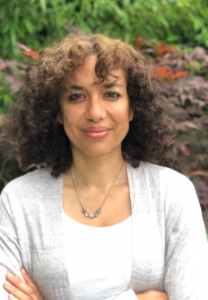
Dr. Kathryn Lester is an Associate Professor in Developmental Psychology at the University of Sussex's School of Psychology. She leads internationally recognized research on childhood anxiety, focusing on intergenerational transmission, cognitive biases, and school mental health interventions. Her work includes developing evidence-based programs for emotionally-based school avoidance and evaluating whole-school approaches to mental health. She holds leadership roles in Sussex’s senior management team, including Subject Group Lead for Developmental Psychology and Deputy Director for Postgraduate Research. She co-leads the Sussex Foundation Partnership Trust School Mental Health Research Team Clinic and has secured funding from the National Institute for Health Research, ESRC, and The National Lottery Community Fund. Her academic journey includes a D.Phil. in Psychiatry from the University of Oxford (2008) and postdoctoral research at the University of Sussex and King’s College London. Key research interests include anxiety prevention, school-based interventions, and the impact of parenting behaviors on child mental health. She has collaborated with organizations like the Sussex Wildlife Trust and provided consultancy for educational content development, such as children’s book series on emotions and ITV’s ‘Planet Child’ series. Her research spans mixed-methods approaches, including participatory methods with children and caregivers. Notable projects include NIHR-funded studies on digital mental health toolkits and Kavli Trust-funded interventions to reduce anxiety transmission from parents to children. She actively engages in knowledge exchange and mentoring early-career researchers.
Robert P. Anderson is a Professor of Biology in the Division of Science at City College of New York (CCNY), part of the City University of New York (CUNY) system. His research laboratory is located in Marshak Science Building (Room 810), with additional affiliation as a Research Associate at the American Museum of Natural History (AMNH) Mammalogy Department. As a Highly Cited Researcher (2019-2023) and AAAS Fellow (2023), he leads an interdisciplinary biogeography research program focused on modeling species niches and distributions. Dr. Anderson's research spans biodiversity modeling, biogeography, and ecology with specialization in mammals. His lab develops ecological modeling software widely applied in conservation biology, invasive species management, zoonotic disease studies, and climate change impact assessments. Key research themes include: Characterizing spatial configuration of environmental suitability for species Developing machine learning approaches (particularly Maxent) for species distribution modeling Studying climate change effects on biodiversity Conservation applications of biogeographic models Neotropical mammal systematics and ecology His work has resulted in significant software contributions including Wallace, ENMeval, and spThin, with recent publications emphasizing methodological improvements in species distribution modeling and conservation applications. The lab maintains active projects funded by NASA and the National Science Foundation, focusing on small mammals of North and South America. Scientific recognition includes: AAAS Fellow (2023) Web of Science Highly Cited Researcher (2019-2023) Blavatnik Science Scholar (New York Academy of Sciences) Most Downloaded Paper in Ecography (2023-2024) Most Cited Paper in Ecography (2023) Dr. Anderson mentors graduate students through the CUNY Graduate Center and CCNY Master's programs, with recent advisees receiving prestigious awards including the ASM Horner Award and NASA FINESST Fellowship. His lab trains students in environmental biology through interdisciplinary research combining fieldwork, morphology, climatology, remote sensing, physiology, and genetics. Current lab members include Andrew Gaier (NASA Fellow), Mariano Soley-Guardia, and Kass (lead author on highly cited Wallace v2 paper). The Anderson Lab operates from CCNY's Marshak Science Building as part of the university's biodiversity group studying ecology, evolution, and geography of life on Earth. The lab emphasizes software co-design between end-users and developers to enhance conservation utility, with recent work focusing on neighborhood approaches for range estimation and operationalizing expert knowledge in species assessments.
Stephen Brammer is the Dean of the School of Management at the University of Bath. He holds a BA (Hons), MA, and PhD in economics from the University of East Anglia. His research focuses on corporate social responsibility, sustainability, business ethics, and stakeholder management, with recent work addressing organizational responsibilities toward employees with long-term health issues, mitigating socially harmful corporate behaviors, and CEO activism. He serves on editorial boards of journals like Business & Society and is a former President of the International Association of Business and Society. Education: BA (Hons) in Economics, University of East Anglia MA in Economics, University of East Anglia PhD in Economics, University of East Anglia Research Interests: Corporate Social Responsibility (CSR) Organizational Ethics and Sustainability Impact of Grand Challenges on Management Scholarship Employee Health and Workplace Practices Environmental and Social Governance Grants & Projects (2008–2011): Development of an Integrative CSR and Service Quality Scale (British Academy) International Model of School Governance (CfBT Education Services) School Governing and Performance (CfBT Education Services) Advising & Supervision: Supervised 7 PhD students to date. Open to new doctoral research in CSR, sustainability, and ethics. Labs/Centers: Centre for Business, Organisations and Society (CBOS) Centre for Future of Work
Professor Joy Singarayer is a leading academic in the Department of Meteorology at the University of Reading, specializing in paleoclimatology. She holds the position of Joint Head of Department (Facilities and Finance) and is actively involved in research on climate-human interactions and past environmental changes. Her work bridges climate science, archaeology, and ecology, with a focus on understanding how past climate fluctuations inform future environmental resilience. Her research interests include the impact of climate change on agriculture and water resources, human-land-climate interactions across prehistoric to modern eras, and paleoclimate reconstructions using Quaternary records. Notable projects include CROPP (Peruvian climate resilience), PRIDE (Caspian Sea biodiversity), and Amazonian paleoecology studies. Professor Singarayer has supervised numerous PhD students exploring topics like agent-based modeling of pre-Columbian cultures, Caspian Sea hydrology, and Amazonian drought responses. Her interdisciplinary approach integrates climate modeling, fieldwork, and data analysis to address global environmental challenges. She is affiliated with the University of Reading's Meteorology Department and collaborates internationally on projects like the PotASH initiative studying southern hemisphere paleolakes. Her contributions span academic leadership, policy-relevant research, and fostering inclusive academic environments through her role on the SMPCS WIDE committee.
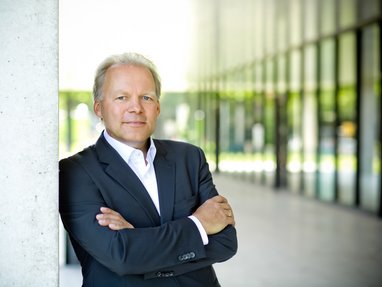
Dieter Uckelmann serves as Professor of Information Logistics and Scientific Director of the Institute for Applied Research at Stuttgart University of Applied Sciences (HFT Stuttgart). He holds multiple leadership positions including Spokesperson for the research focus 'Smart Technologies, Processes and Methods' at HFT Stuttgart since March 2023 and Scientific Director of the Institute for Applied Research since September 2023. His academic journey began with mechanical engineering studies in Braunschweig, followed by doctoral research at the University of Bremen focusing on 'Quantifying the Value of RFID and the EPCglobal Architecture Framework in Logistics.' Uckelmann's research spans Internet of Things applications across Industry 4.0, logistics, smart buildings, and smart cities, with significant contributions to educational technology including learning analytics and AI in teaching. His work bridges technical innovation with practical implementation, particularly in digital transformation of laboratories and smart city infrastructure. He has led numerous research projects including KNIGHT (AI for teaching), InDeckLe (earth composite ceiling systems), iCity initiatives, and DigiLab4U (online laboratories). His publication record shows a clear progression from foundational RFID and IoT research toward emerging technologies like the Industrial Metaverse, 5G applications, and AI-driven educational systems. Recent work demonstrates strong integration of physical and digital systems, particularly in urban environments and educational contexts, with increasing emphasis on sustainability and energy efficiency applications. Co-editor of International Journal of RF-Technologies: Research and Applications Member of PhD Association BW, Research Unit III Computer Science and Electrical Engineering Mentor in the HAWCareer mentoring program Program Committee Member for IEEE RFID, IEEE/ITMC, AIET, and other major conferences Associate Editor for Journal of Online and Biomedical Engineering Professor Uckelmann actively mentors students and researchers, with his team contributing to projects across smart city infrastructure, digital learning platforms, and industrial IoT applications. He leads the Industrie 4.0 Laboratory which focuses on industrial IoT applications, digital twins, and the industrial metaverse, with research spanning RFID, RTLS, wireless sensor networks, AR/VR, and IoT architectures. His work extends to international collaborations including visiting professorships at Auburn University and the University of Parma.
Helen Verran is a Professorial Research Fellow at Charles Darwin University's Northern Institute within the Faculty of Arts and Society. An accomplished ethnographer with a distinguished career spanning seven universities across four continents, she has dedicated her academic life to exploring cross-cultural knowledge work, particularly with Indigenous communities. Before joining Charles Darwin University, she spent twenty-five years teaching and researching in History and Philosophy of Science at the University of Melbourne, where she collaborated extensively with Yolngu Aboriginal knowledge authorities. University of Melbourne (25 years in History and Philosophy of Science) Nigeria (8 years in the 1980s working with Yoruba teachers) Charles Darwin University (current position at the Northern Institute) Verran's research centers on ethnographic approaches to knowledge production in an era dominated by numerics, algorithms, and big data. She investigates how first-person experience and Indigenous knowledge systems can inform policy and governance, preventing crucial aspects of human experience from being lost in purely quantitative approaches. Her work spans Indigenous knowledge traditions, philosophy of science, comparative philosophy, and decolonizing practices, with particular focus on Yolngu Aboriginal Australian knowledge systems and Yoruba knowledge from Nigeria. She has developed innovative 'Ground Up' research methods that enhance Indigenous sovereignties and has made significant contributions to Science and Technology Studies (STS), especially regarding numbers and enumeration in cross-cultural contexts. Her recent publications reveal a sustained engagement with decolonizing methodologies, museum epistemology, Indigenous knowledge systems, and the philosophical implications of cross-cultural knowledge exchange. Verran's work consistently examines the tensions between different knowledge systems while developing practical approaches for working across these differences respectfully. She has made notable contributions to understanding Indigenous mathematics and the role of numbers in different cultural contexts, as evidenced by her award-winning book 'Science and an African Logic' (2001). Vice Chancellor's Award for Research Impact (2023) International prizes for 'Science and an African Logic' (2001) Referenced in Wikipedia pages Verran actively supervises postgraduate research and shares her expertise through 'Espresso Yourself!' sessions for Higher Degree by Research students. Her current projects include 'Design and evaluation as strategies/practices for exploring organisational sustainability' and 'Hope and a Decolonising Pedagogy,' reflecting her commitment to developing practical applications of her theoretical work. She has established collaborative research frameworks with Indigenous communities in Arnhem Land, particularly focused on digital technologies, environmental management, and education in remote settlements. As an active participant in academic networks, Verran organizes conferences and workshops on STS and Indigenous methodologies, including the 'Making and Doing Top End Science and Technology Studies together' event in 2024. Her work contributes significantly to Sustainable Development Goals related to quality education, reduced inequalities, and peace, justice and strong institutions.
Roya Nasimi, Ph.D., is an Assistant Professor in the Department of Engineering at California State University, East Bay, where she joined in Fall 2023. Her expertise spans structural engineering, computer vision, and artificial intelligence, with a focus on developing innovative solutions for infrastructure monitoring and safety. Dr. Nasimi's educational background includes: Ph.D. with distinction in Structural Engineering from the University of New Mexico Master’s degree in Structural Engineering from the University of Tabriz Bachelor’s degree in Civil Engineering from the University of Tabriz Her research focuses on structural health monitoring using advanced technologies. She integrates computer vision , artificial intelligence , and machine learning to develop systems for monitoring aging infrastructure, particularly bridges. Her work includes designing low-cost and high-end sensor systems, conducting full-scale bridge experiments, and collaborating on interdisciplinary projects to enhance infrastructure safety and resilience. Her recent publications (2021-2025) demonstrate a strong emphasis on non-contact monitoring techniques using drones, lasers, and computer vision. Key trends include the application of deep learning for displacement measurement, digital twinning for infrastructure, and rockfall prevention through machine learning. Her work bridges civil engineering with cutting-edge technology to address critical infrastructure challenges. Dr. Nasimi's research is supported by multiple grants: U.S. Army Corps of Engineers Transportation Research Board (TRB) Transportation Consortium of South-Central States (Tran-SET) New Mexico Consortium She serves on two TRB standing committees and mentors students in structural health monitoring and infrastructure technology. Dr. Nasimi leads interdisciplinary research teams focused on infrastructure monitoring, utilizing drones, lasers, and computer vision systems. Her work involves field experiments on bridges and rail systems, often in collaboration with government agencies and research consortia.
Matthew J. Cracknell is a Senior Lecturer in Geodata Analytics at the University of Tasmania's School of Natural Sciences, specializing in Earth Sciences. He holds a PhD in Computational Geophysics (2014) and BSc (Hons) in Geophysics (2009), both from the University of Tasmania. His research integrates geoscience with machine learning to address challenges in mineral exploration, environmental remediation, and sustainable resource management. Key focuses include automated detection of geological features in drillcore imagery, decarbonization of energy systems via ore deposit discovery, and legacy mine waste characterization. Cracknell leads the CODES Research Program 6 (Geophysics and Computational Geosciences) and Module 2 of the AMIRA P1249 project. He has secured significant industry and government funding, including projects with Boliden AB, Anglo American, and the Tasmanian Government. His work emphasizes collaboration with mining partners and agencies like Geoscience Australia and Mineral Resources Tasmania. Teaching roles include developing courses on the mining value chain, climate resilience, and geodata analytics. As Graduate Research Coordinator, he promotes HDR student well-being and supervises over 20 doctoral and masters students. Awards include the 2019 Oz Minerals Explorer Challenge Prize. Key affiliations include the International Association for Mathematical Geosciences, Australian Society of Exploration Geophysicists (Tasmanian Branch Secretary), and Geological Society of Australia.
Jung Yun Bae serves as Assistant Professor in Mechanical and Aerospace Engineering at Michigan Technological University with a secondary appointment in Applied Computing within the College of Computing, joining MTU in 2019 after five years as Research Professor at Korea University's Intelligent Systems and Robotics Laboratory. Her academic credentials include: PhD in Mechanical Engineering from Texas A&M University MS in Mechanical Engineering from Hongik University BS in Mechanical Engineering from Hongik University Dr. Bae's research program centers on Robotics with emphasis on Multi-robot systems, particularly Coordination of Heterogeneous Robot Teams and Vehicle Routing Problems. Her work develops operational strategies for multi-agent autonomous vehicle systems through Multi-robot System Control and Optimization techniques, extending to Autonomous Navigation and Operational Research applications. Current investigations focus on underwater robotics coordination and neuroevolution approaches for connected vehicle systems. Analysis of her recent publications reveals consistent focus on workload-balanced task allocation for heterogeneous robot teams across challenging environments. Her underwater robotics research addresses tether management and entanglement avoidance, while neuroevolution applications target autonomous vehicle control at uncontrolled intersections and hybrid powertrain optimization, bridging robotics with operations research and artificial intelligence. Prior to MTU, Dr. Bae maintained affiliation with Korea University's Intelligent Systems and Robotics Laboratory. Her current work at MTU connects with the Great Lakes Research Center context, though specific laboratory details aren't provided in available materials.
Rubén Lluc Comas Forgas is a Full Professor at the University of the Balearic Islands (UIB) in the Department of Applied Pedagogy and Educational Psychology . He holds a European PhD in Educational Sciences from UIB (2009) and has served as a visiting researcher at institutions including the University of East Anglia, Liverpool John Moores University, Panteion University, Autonomous University of Yucatán, and Stockholm University. Current research focuses on Academic Integrity , Research Integrity , Scientific Communication , Educational Uses of ICT , and Environmental Education . He leads multiple EU-funded projects (e.g., AI-UpskillED , CHARLIE ) and national initiatives like Academic Integrity in Initial Teacher Training (MCI-AEI-ERDF). His recent publications analyze the impact of generative AI on academic writing, predatory journals in education sciences, and plagiarism trends among Spanish students. He collaborates with the Research Group on Academic Integrity (GRIAC) and Education for Sustainability (GREAS) .
Dr. Penina Axelrad is a University of Colorado Distinguished Professor and Joseph T. Negler Professor of Aerospace Engineering Sciences at the University of Colorado Boulder. She has held academic roles since 1992, serving as Department Chair from 2012–2017. A member of the National Academy of Engineering since 2019, her research focuses on GNSS technology, satellite navigation, and remote sensing applications. She has authored over 223 publications and secured $17.5M in research grants. Education: Ph.D., Aeronautics and Astronautics, Stanford University, 1991 S.M., Aeronautical and Astronautical Engineering, MIT, 1986 S.B., Aeronautical Engineering (Avionics Option), MIT, 1985 Research Interests: Global Navigation Satellite Systems (GNSS), multipath mitigation, GNSS reflectometry, orbital dynamics, and quantum sensing for Earth science. Her work bridges astrodynamics, satellite navigation, and environmental monitoring. Awards: Member, National Academy of Engineering (2019) Women In Aerospace Educator Award (2016) Institute of Navigation Samuel Burka Award (2012) AIAA Summerfield Book Award (2011) Advising & Grants: Advised numerous students (no names listed) and led major grants including NASA Quantum Pathways Institute and Sentinel-6 orbit determination projects. Active in Institute of Navigation leadership roles. Labs/Teams: Colorado Center for Astrodynamics Research (CCAR), Quantum Pathways Institute, and collaborative efforts on CubeSat atomic clock experiments.
Hao Liu is a researcher affiliated with institutions like Chinese Academy of Sciences , Beihang University , and Stanford University . His work spans Computer Science , Artificial Intelligence , and Robotics . Key affiliations: National Space Science Center (Beijing), School of Astronautics (Beihang), Key Laboratory of Pervasive Computing (Tsinghua) Research interests include Machine Learning , Image Processing , Graph Neural Networks , and Wireless Communication Optimization His recent publications focus on: Advanced control systems for fuzzy models Medical imaging via hyperspectral analysis Transformer-based approaches in NLP and vision Quantum-safe and edge computing protocols