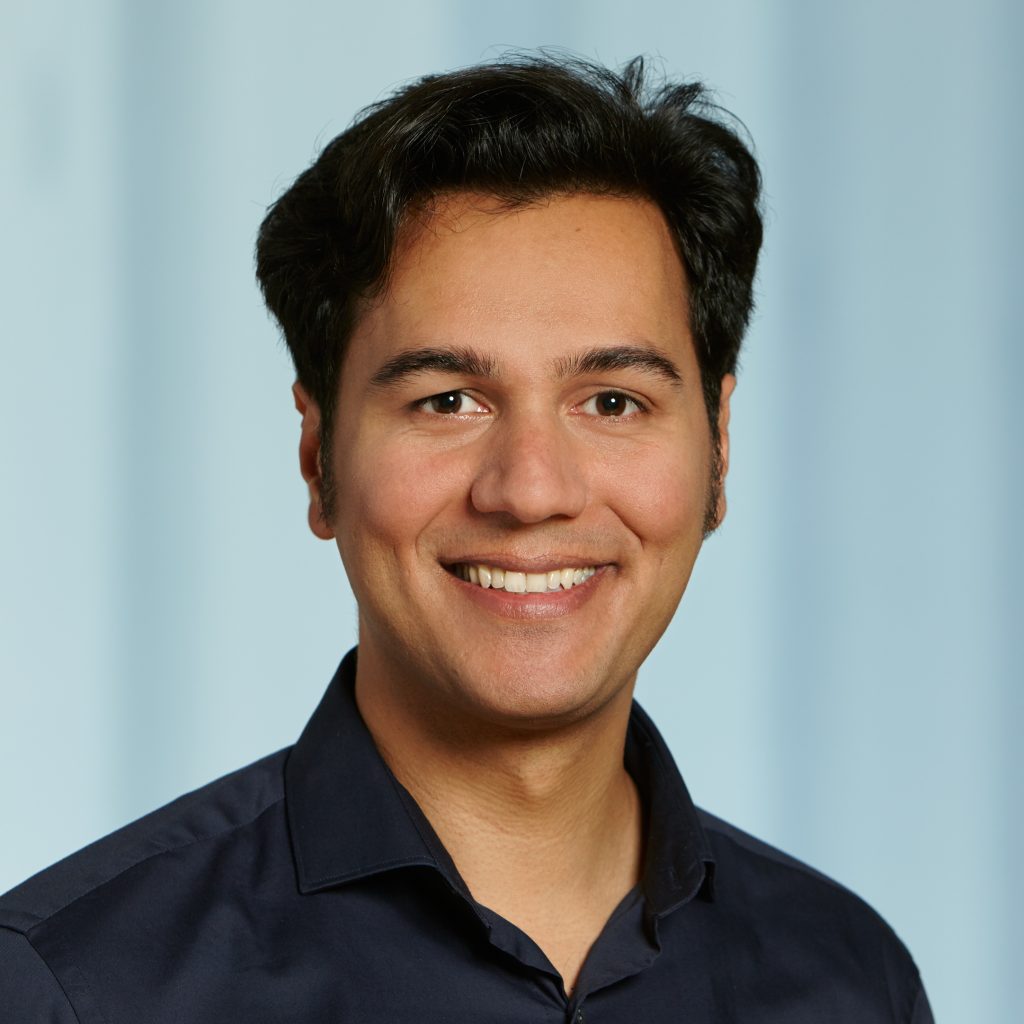
Professor Hanumant Singh leads the Electrical and Computer Engineering department at Northeastern University, with a joint appointment in Mechanical and Industrial Engineering , and serves as Program Director for the Master of Science in Robotics. He earned his Ph.D. from MIT/WHOI Joint Program in 1995 and has conducted over 60 expeditions globally, focusing on marine geology, polar studies, and coral reef ecology. His research emphasizes field robotics , including SLAM, underwater manipulation, and imaging in extreme environments. He developed the Seabed AUV and Jetyak ASV , widely used in scientific research. His labs include the Field Robotics Lab and the Institute for Experiential Robotics . Research Interests: Machine Learning for Fisheries SLAM with dynamic objects Underwater imaging and manipulation Autonomous surface and aerial systems Polar and marine robotics Awards: ICRA Best Student Paper Award, IEEE Oceanic Engineering Society Distinguished Faculty Award (2025), Lifetime Achievement Award (2022), and IEEE Fellow status. His work has been featured in Nature Geoscience , Polar Biology , and media outlets like WGBH. Students & Collaborations: Advises students like Srinidhi Pattala (MS Robotics) and Dennis Giaya (PhD Computer Engineering). Collaborates with institutions on projects such as Antarctic sea ice thickness estimation and deep-sea submersible missions.
Dr. Athos Agapiou serves as an Assistant Professor at the Department of Civil Engineering and Geoinformatics, Cyprus University of Technology, where he holds the 'Geoinformatics and Earth Observation' chair. He also serves as Deputy Director of the UNESCO Chair on Digital Cultural Heritage and coordinates the EOCult Laboratory, a specialized research group focused on applying Earth Observation and Geoinformatics for archaeological research and cultural heritage landscapes. His research interests center on developing and applying innovative remote sensing technologies for cultural heritage preservation, addressing challenges posed by environmental and anthropogenic factors. Dr. Agapiou has led numerous high-profile research initiatives at European and national levels, including Horizon Europe and Horizon 2020 projects, as well as programs funded by the Cyprus Research and Innovation Foundation. His publication record demonstrates consistent output in remote sensing applications for archaeology, with particular focus on satellite image fusion, UAV technologies, spatial resolution optimization, and advanced data analysis techniques for archaeological prospection. His work bridges technical remote sensing methodologies with practical archaeological applications. Young Scientist Award from International Society for Digital Earth (2023) Young Researcher Award by Cyprus Research Awards (2018) Top 2% researcher worldwide in field (Stanford studies 2020-2024) Top three global researchers in Geoinformatics for cultural heritage (2024) Dr. Agapiou actively contributes to major research projects and collaborations, with his work influencing both academic research and practical applications in cultural heritage management. His laboratory (EOCult) serves as a hub for interdisciplinary research connecting geospatial technologies with archaeological practice.
Janna Parker is a professor in the Department of Marketing at James Madison University, specializing in digital marketing, retailing, and nonprofit marketing. With a career transition from political campaigns, she focuses on social media's role in personal and professional branding. Her research examines work-personal social media boundaries, employer governance policies, and volunteerism in nonprofit contexts. Education: Bachelor's in History (California State University Sacramento), Master's (Cameron University), Doctorate (Louisiana Tech) Teaching Interests: Digital marketing education, social media strategy, nonprofit marketing Her scholarly work spans social media governance, volunteer engagement, and retail dynamics, with recent emphasis on digital marketing pedagogy and cancel culture implications. Parker has contributed to academic journals through empirical studies and conceptual commentaries. Key article trends include: Digital marketing education evolution (2024) Social media governance in corporate and nonprofit contexts (2024) Online teaching satisfaction in higher education (2022) Volunteer brand community dynamics (2020) Consumer behavior frameworks (2019) Her media appearances include expert commentary on holiday retail strategies and social media research, reflecting practical applications of her academic work.
Johan Gustav Bellika is a Professor at the Department of Clinical Medicine, UiT The Arctic University of Norway, based in Tromsø. His work bridges clinical medicine with health informatics, focusing on practical applications that improve healthcare delivery and patient outcomes. Current Position: Professor, Department of Clinical Medicine Institution: UiT The Arctic University of Norway Location: Tromsø, Norway Contact: johan.gustav.bellika@uit.no Professor Bellika's research spans several critical areas in modern healthcare. His primary focus is on health informatics with particular emphasis on medical data privacy, electronic health records, and the application of artificial intelligence in clinical settings. He has made significant contributions to understanding chronic pain management through technology, primary care research networks, and patient-centered care models. His work often involves large population studies such as the Tromsø Study, examining how digital health tools impact healthcare utilization and patient outcomes. His research demonstrates a consistent thread connecting technological innovation with practical clinical applications. Bellika has been instrumental in developing privacy-preserving architectures for healthcare data analysis, which enable researchers to gain insights from sensitive health information without compromising patient privacy. His work on federated learning frameworks represents cutting-edge approaches to analyzing medical data while maintaining strict privacy controls. Health Informatics and Medical Data Privacy Chronic Pain Management through Technology Primary Care Research Networks (PraksisNett) Electronic Health Records and Clinical Decision Support Patient-Centered Digital Health Solutions Federated Learning Applications in Healthcare Professor Bellika's publication record shows a strong trend toward interdisciplinary research that combines clinical medicine, computer science, and public health. His recent work increasingly focuses on the intersection of artificial intelligence and healthcare, particularly how machine learning can be applied to chronic conditions while maintaining rigorous privacy standards. The geographical scope of his research extends across Norway with particular emphasis on Northern Norwegian populations, providing valuable insights into healthcare delivery in Arctic and remote regions. His collaborative approach is evident through numerous co-authored publications with researchers across multiple institutions and disciplines. While specific awards aren't detailed in the available information, his extensive publication record in reputable journals suggests recognition within his field. Professor Bellika has been actively involved in several major research initiatives including the Tromsø Study and PraksisNett, Norway's nationwide practice-based research network. His work on privacy-preserving architectures for healthcare data has significant implications for how medical research can be conducted while respecting patient confidentiality. He appears to be particularly focused on translating research findings into practical tools for clinicians, as evidenced by his work on audit and feedback systems for antibiotic prescribing.
Alanson Sample is an Associate Professor in the Department of Electrical Engineering and Computer Science at the University of Michigan (since 2018), leading the Interactive Sensing and Computing Lab. His research focuses on Human-Computer Interaction, Cyber-Physical Systems, and wireless technology innovations. He holds a PhD in Electrical Engineering from the University of Washington (2011), with prior postdoctoral work there developing implantable medical devices. Before academia, Sample held senior roles at Disney Research (2013-2018) as Executive Lab Director and Principal Research Scientist, leading teams in Robotics, AI, Computer Vision, and HCI. Earlier, he worked at Intel Labs (2008-2013) on energy harvesting for wearables and IoT. Key research themes include wireless power systems, embedded sensing, and privacy-aware technologies. Over 150+ publications span topics like magnetic sensing (MagDesk), acoustic gesture recognition (HandSAW), and privacy-preserving activity tracking (PrivacyMic). His work bridges academic and industry innovation, particularly in scalable interactive systems and medical technology. Notable projects include the Quasistatic Cavity Resonance wireless charging system, RFID-based sensing platforms (WISP), and wearable health monitoring devices. His lab develops hardware-software co-design frameworks for energy-efficient embedded systems. Current research emphasizes medical applications, smart infrastructure, and ubiquitous computing interfaces.
Jan Herbst is a Professor of Music at the University of Huddersfield and Director of the Centre for Research in Music and its Technologies. His academic journey includes multiple doctorates (PhD, Dr. habil.) from Leuphana University Lüneburg and research expertise in popular music studies, music production, and systematic musicology. He leads AHRC-funded projects such as 'Heaviness in Metal Music Production' and 'Songwriting Camps in the 21st Century.' His work bridges practical music production and theoretical research, with over 80 publications including books like The Cambridge Companion to Metal Music and Heaviness in Metal Music Production . Herbst’s research focuses on metal music aesthetics, record production techniques, and the cultural dimensions of music technology. He has held roles at German and Swiss universities, including teaching guitar performance and music production. His editorial roles include the Cambridge Companions series and journals like Metal Music Studies . Current projects explore blockchain in music, gear acquisition syndrome, and extreme metal vocal techniques. His academic affiliations include the IASPM UK & I executive committee and editorial boards for major musicology publications. Herbst actively engages with industry through collaborations with producers and performers, maintaining a balance between academic rigor and practical music creation.
David Lindlbauer is an Assistant Professor at the Human-Computer Interaction Institute (HCII) of Carnegie Mellon University, where he leads the Augmented Perception Lab and co-directs the CMU Extended Reality Technology Center. His research bridges human perception, extended reality (AR/VR), and computational interaction techniques, focusing on developing systems that dynamically adapt interface elements based on environmental context, user cognition, and task requirements. He completed his PhD at TU Berlin under Prof. Marc Alexa and held a postdoctoral position at ETH Zurich's Advanced Interactive Technologies lab. His work has been published extensively at top venues including ACM CHI, UIST, and IEEE VR, with research themes spanning gaze tracking, spatial audio optimization, haptic feedback, and multimodal notification systems. Media outlets like MIT Technology Review and Fast Company Design have featured his innovations. Dr. Lindlbauer has received prestigious grants from Meta, NSF, and ETH Zurich, and serves on program committees for CHI, UIST, and ISMAR. He has been recognized with Best Paper awards at ISS 2023 and CHI 2016, and his lab develops tools like MineXR for personalized XR interfaces and RealityReplay for temporal change visualization in mixed reality environments.
Paul R Moorcroft is a Professor of Organismic and Evolutionary Biology at Harvard University and an Affiliate in the School of Engineering and Applied Sciences (SEAS). His research focuses on ecological dynamics of terrestrial plant communities, biosphere-atmosphere interactions, and mechanistic models of animal movement. He collaborates with institutions like NASA JPL on projects such as the ECOSTRESS mission, which investigates environmental processes using satellite data. His lab, the Moorcroft Lab, emphasizes fieldwork and interdisciplinary approaches, as seen in recent collaborations in Italy and Southeast Asia. Key research areas include tropical forest ecology, carbon cycling in peatlands, and the application of remote sensing technologies to environmental monitoring. His work bridges theoretical models with empirical data, addressing global challenges like climate change and biodiversity loss. Recent publications highlight contributions to quantifying carbon emissions from peatland drainage and improving satellite-based mapping of forest functional traits. His advising activities include mentoring graduate students like Rhemi Toth. Collaborations with NASA and academic partners underscore his role in advancing Earth systems science through interdisciplinary research.
Qi Alfred Chen is an Assistant Professor in the Department of Computer Science at the University of California, Irvine (UCI), within the Donald Bren School of Information and Computer Sciences. He also holds affiliations with the Department of Electrical Engineering and Computer Science (EECS), the Institute of Transportation Studies at UC Irvine (ITS-Irvine), the Center for Embedded and Cyber-physical Systems (CECS), the Institute for Software Research (ISR), and the UC Irvine Cybersecurity Policy & Research Institute (CPRI). His research focuses on network and systems security, with particular emphasis on autonomous vehicle and IoT security. Dr. Chen received his Ph.D. from the University of Michigan in 2018. His educational background has prepared him for his current research in security of critical computer systems. His work bridges theoretical security principles with practical implementations in real-world systems. Chen's research interests center on network and systems security , with a major focus on smart systems and IoT security , particularly in transportation and autonomous vehicle systems . His work addresses security challenges through systematic problem analysis and mitigation, discovering and mitigating security problems in next-generation transportation systems, smartphone OSes, network protocols, DNS, GUI systems, and access control systems. His research has high impact in both academic and industry contexts, with over 10 top-tier conference papers, a DHS US-CERT alert, multiple CVEs, and coverage in major news media like Fortune and BBC News. His publication record shows a clear evolution from foundational work on network protocols and smartphone security toward increasingly sophisticated security analyses of autonomous vehicle systems and AI-powered transportation technologies. The research trajectory demonstrates growing technical sophistication and real-world impact, with recent work focusing on physical-world adversarial attacks against autonomous driving perception systems, LiDAR spoofing, and security of multi-sensor fusion in autonomous vehicles. NSF CAREER Award (2022) on securing the AI stack in emerging autonomous and connected CPSs Chancellor's Award for Excellence in Undergraduate Research Mentorship, UC Irvine (2021) 5th place nation-wide at National CCDC competition (2021, as faculty advisor) 1st place (Gold Medal) at CCDC Western Regional competition (2021) ProQuest Distinguished Dissertation Award, University of Michigan (2019) Dr. Chen has mentored numerous successful students, including PhD candidates and undergraduates who have gone on to positions at major tech companies like Meta, Uber, Amazon, and Intel. His research group has secured significant funding, including an NSF CAREER award, and has made substantial contributions to the field through high-impact publications and vulnerability disclosures. He is also the co-founder of the ISOC VehicleSec Symposium and has organized the AutoDriving CTF contest at DEF CON. Chen leads the AV & IoAT Security Research Group at UCI, focusing on security challenges in autonomous vehicles and the broader Internet of Autonomous Things. His team has developed numerous attack demonstrations and security analyses that have received significant media attention and influenced industry practices. The group maintains an active YouTube channel showcasing their security research.
Babak Falsafi is a Full Professor at the School of Computer and Communication Sciences (IC) at EPFL, leading the Parallel Systems Architecture Laboratory (PARSA). He is a renowned expert in computer architecture, datacenter systems, and cloud-native server design. His research focuses on post-Moore era computing, emphasizing heterogeneous architectures, energy efficiency, and scalable IT infrastructure. Falsafi is the founder of EcoCloud, an EC-sponsored industrial-academic consortium investigating sustainable information technology. He holds ACM and IEEE fellowships, a Sloan Research Fellowship, and has contributed to major projects like Optimus Prime (data transformation acceleration), AstriFlash (flash-based online service systems), and Midgard (virtual memory re-design). His work spans hardware-software co-design, memory systems, and security. Falsafi advises numerous PhD students and collaborates with industry partners such as Google and Cavium. Key achievements include pioneering scalable multiprocessor architectures, snoop filters in IBM BlueGene, and spatial memory streaming in ARM cores. His lab develops open-source tools like QFlex for server simulation. He frequently presents at top conferences (HPCA, ISCA, MICRO) and chairs workshops on post-Moore infrastructure. Teaching roles include leading courses in computer architecture and parallel systems across multiple EPFL departments (SIN, EDIC, SSC, SMA). His work addresses datacenter challenges like the 'data tax' and mitigating latency through specialized accelerators.
Hyunghoon Cho is an Assistant Professor at Yale School of Medicine in the Department of Biomedical Informatics & Data Science, with a secondary appointment in the Department of Computer Science. He received his PhD in Electrical Engineering and Computer Science from MIT (2019) and MS/BS in Computer Science from Stanford University (2013). His research focuses on computational challenges in biomedical data privacy, single-cell genomics, and network biology. Assistant Professor (Primary): Biomedical Informatics & Data Science Assistant Professor (Secondary): Computer Science Appointments: Yale School of Medicine | Broad Institute (Schmidt Fellow) Research Themes: Privacy-Enhancing Technologies for genomic and health data Scalable AI/ML tools for omics data analysis Structured biological modeling for system-level discovery His work includes secure GWAS, transcriptomic privacy assessment, and sfkit - a federated genomic analysis toolkit. He received the NIH Director's Early Independence Award and leads NSF-funded projects on confidential genome analytics. Awards: NIH Director's Early Independence Award Lab Members: Haris Smajlović (Postdoc), Vincent Angelo (CBB MS), Denis Loginov (Senior Software Engineer), Lucy Zheng (CBB PhD)
Professor Marilyn Pittard is a leading academic in the Faculty of Law at Monash University, currently serving as Associate Dean Engagement. She has held numerous leadership roles including Interim Dean, LLM Director, and Associate Dean (Research), with a career spanning over two decades in academic administration and legal scholarship. Her research focuses on Labour Law, Employment Rights, and Human Rights, with significant contributions to understanding workplace relations, vulnerable workers, and the intersection of criminal records with employment access. She has secured grants from the Australian Research Council and other institutions for projects like The Other Side of Security and Living Down the Past . Recent publications highlight trends in employment law, including anti-slavery practices, redundancy frameworks, and digital-era workplace challenges. She chairs the Victorian Legal Admissions Board’s Academic Course Appraisal Committee and contributes to the Australian Labour Law Journal and Employment Law Bulletin .
Kaveh Razavi is an Assistant Professor at ETH Zurich in the Department of Information Technology and Electrical Engineering, supervising the Computer Security Group. He is also affiliated with the Department of Computer Science. Research focuses on commodity hardware and operating systems security Teaching: Computer Engineering (BSc 2022–2025), Hardware Security (MSc 2016–2025), Advanced Operating Systems (MSc 2016–2019) Research Interests: Razavi's work bridges computer systems and security, emphasizing microarchitectural vulnerabilities, hardware exploitation, and security verification. His group develops tools for analyzing hardware-software interactions and mitigating memory attacks like Rowhammer. Scientific Awards: Distinguished/Best Paper Awards at IEEE S&P, USENIX Security, MICRO Five Pwnies Awards for innovative research Dutch Veni Grant, ERC Starting Grant Jochen Liedtke Young Researcher Award Golden Owl Teaching Award (2022) ETH Medal, Intel Bounty Reward, BlackHat USA Recognition
Jonathan Klamkin is a Professor in the Department of Electrical and Computer Engineering at the University of California, Santa Barbara (UCSB). He also serves as the Director of the Nanofabrication Facility, overseeing advanced photonics fabrication resources. His research focuses on integrated photonics, silicon photonics, optical communications, and compound semiconductor integration. Klamkin holds a PhD in Materials from UCSB, an MS in Electrical and Computer Engineering from UCSB, and a BS in Electrical and Computer Engineering from Cornell University. His research interests span cutting-edge areas such as electronic-photonic integration, nanophotonics, and microwave photonics. He has pioneered techniques for heterogeneous integration of compound semiconductors on silicon, enabling scalable photonic systems for applications in LiDAR, high-speed communications, and quantum technologies. Notable awards include the DARPA Young Investigator Award, NASA Early Career Faculty Award, and the PIERS Young Scientist Award. His recent work emphasizes beam steering systems, high-power quantum dot lasers, and photonic integrated circuits for remote sensing and lidar. Klamkin’s lab develops both fundamental materials science and applied photonic devices, with a focus on bridging the gap between semiconductor growth and integrated system design. Key contributions include innovations in grating coupler design, antiphase boundary-free epitaxy for GaAs on silicon, and analog coherent detection for energy-efficient data centers. His research bridges photonics, electronics, and materials science to address challenges in high-performance integrated systems.
Dr. Robert Huber serves as a Lecturer at the Department of Environmental Systems Science at ETH Zürich, specializing in Agricultural Economics and Policy. His research focuses on the integration of interdisciplinary knowledge to analyze and evaluate management and policy options that promote sustainable development in the agricultural sector. Institution: ETH Zürich Department: Agricultural Economics and Policy Research Focus: Sustainable Agriculture and Policy Methodologies: Bio-economic and agent-based modeling Dr. Huber's research explores how multifunctional agricultural sectors can provide essential non-market goods and services while maintaining their primary economic function of food production. His work applies bio-economic and agent-based modeling techniques to understand farmers' decision-making processes regarding ecosystem services provision, coupled with economic valuation techniques to analyze societal demand for these services. His research aims to identify effective and efficient policy measures that align supply and demand for ecosystem services at landscape scale. His recent publications demonstrate strong expertise in agricultural policy analysis, climate change mitigation strategies, sustainable farming practices, and innovative modeling approaches. His work spans topics from herbicide-free agriculture using remote sensing technologies to biodiversity enhancement in agricultural landscapes and the cost-effectiveness of different climate change mitigation policies at various scales. Remote sensing applications in sustainable agriculture Behavioral aspects of farmer decision-making Policy evaluation methodologies Climate change adaptation in farming systems Economic valuation of ecosystem services Digitalization impacts on agricultural policy Dr. Huber has published extensively in high-impact journals including Journal of Agricultural Economics, People and Nature, and Q Open. His collaborative research often involves interdisciplinary teams addressing complex agricultural sustainability challenges. His publications demonstrate a consistent focus on practical policy implications derived from rigorous empirical analysis.