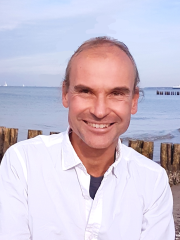
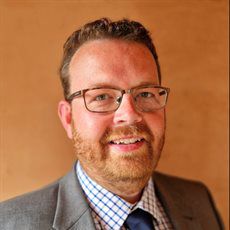
Salim Ahmed is an Assistant Professor in the Department of Chemical Engineering at Memorial University of Newfoundland's Faculty of Engineering and Applied Science since February 2012. He holds a B.Sc. and M.Sc. in Chemical Engineering from Bangladesh University of Engineering and Technology (BUET) and a Ph.D. in Process Control from the University of Alberta. Prior roles include a postdoctoral fellowship at the University of Alberta (2006-2008), an Assistant Professorship at Qatar University (2008-2012), and a Lecturer position at BUET (1997-2000). His research focuses on safety and risk engineering, process systems, and model-based process control. Notable projects include an IgniteR&D grant-funded risk-based alarm system for process industries and early warning systems design. His expertise spans system identification, continuous-time models, model validation, and valve stiction analysis. Teaching responsibilities include undergraduate and graduate courses in Process Engineering and Oil and Gas Engineering. Awards include the 2010 Best Student Research Award (Energy and Environment category) at the Qatar Foundation Annual Research Forum. Research outputs include over 30 peer-reviewed articles, conference papers, and book chapters, emphasizing fault detection, data-driven modeling, and risk assessment in process systems. He has developed tools like StepID for step-response identification and AlarmSoft for alarm management.
Jarosław Bosy is a Full Professor at the Institute of Geodesy and Geoinformatics at Wrocław University of Environmental and Life Sciences (WUELS), Poland. He served as Vice-Rector for Research and International Relations (2016–2020) and Rector (2020–2024). Since June 2024, he chairs the Committee on Geodesy of the Polish Academy of Sciences. He holds a PhD in Geodesy and Cartography (1996) and habilitation from AGH University of Science and Technology, Kraków. Awarded the Professor title in Technical Sciences by the Polish President in 2014. His research focuses on three core areas: GNSS-based reference frame realization at global/regional scales, GNSS meteorology (atmospheric state analysis via satellite signals), and GNSS applications in geodynamics. Key contributions include real-time troposphere delay models, integration of GNSS and numerical weather prediction (NWP), and development of the ASG-EUPOS positioning system in Poland. Bosy has authored 286 publications, supervised 23 PhD theses, and led 7 projects. His work bridges geodesy, meteorology, and geodynamics, with applications in climate monitoring, real-time positioning, and Earth system observation. He collaborates internationally, contributing to initiatives like GGOS and EPOS. His lab, GNSS&Meteo, develops services like real-time ZTD estimation and MSTID mitigation for precise positioning.
Zaid R. Al-Attabi is a Research Fellow in the Department of Coastal Studies at East Carolina University. He holds a Ph.D. in Geological Sciences from the University of South Carolina, specializing in ocean wave measurement using radar signals. Research Focus: Numerical modeling of wave-surge-vegetation interactions, HF/VHF radar applications in oceanography, and coastal process analysis. Tools: Developed Swell and Wind Wave Radar Inversion Code (SWaveRIC v1.0.1). Collaborates with Dr. Siddharth Narayan on coastal resilience projects.
Michael Muglia is a Research Professor at East Carolina University's Coastal Studies Institute and Assistant Director of Science for the NC Ocean Energy Program. He holds a joint appointment at the National Renewable Energy Laboratory (NREL). His expertise spans oceanography, renewable energy systems, and marine technology. Muglia earned three B.S. degrees (Biology, Marine Science, Physics) from the University of Miami and UNC Wilmington, followed by an M.S. in Physics from UNC Chapel Hill and a Ph.D. in Marine Science from UNC Chapel Hill. His research focuses on western boundary currents like the Gulf Stream, shelf-ocean exchange dynamics, and marine renewable energy solutions. He has pioneered underwater kite systems, wave energy converters, and turbine technologies, supported by funding from DARPA, DOE, and NREL. Collaborators include institutions like Woods Hole Oceanographic Institution and Scripps Institution of Oceanography. Muglia has led over 20 grants totaling millions in funding, including projects on Gulf Stream energy characterization and ocean observation systems. He chairs SECOORA's Science Advisory Board and has received the Distinguished Scholar (2025) and Cleantech Innovation (2023) awards. Key contributions include HF radar analysis of Gulf Stream variability, shelf water cascading events near Cape Hatteras, and deployment of energy harvesting prototypes. His work bridges oceanographic research with practical renewable energy solutions, advancing grid-scale ocean power systems.
Lars Umlauf is a Senior Researcher at the Leibniz-Institute for Baltic Sea Research (IOW) in Warnemünde, Germany, and a Privatdozent (Lecturer) at Rostock University. He leads the "Turbulence and Small-Scale Processes" research group at IOW and serves as an editor for the Journal of Geophysical Research. His work focuses on physical oceanography with emphasis on turbulence, mixing processes, and small- to meso-scale dynamics in marine environments, particularly in the Baltic Sea. Dr. Umlauf's educational background includes: 1991-1997: Department of Mechanics / Mechanical Engineering at TU Darmstadt (Germany) and UC Berkeley (USA) 1997-2001: PhD at TU Darmstadt (Germany) 2001-2003: Post-Doc at Ecole Polytechnique Fédéral de Lausanne (EPFL, Switzerland) 2013: Habilitation at Rostock University His research interests center on turbulence, mixing, and small- to meso-scale processes in the ocean. Dr. Umlauf investigates small-scale processes near surface-layer fronts, atmosphere-ocean feedbacks induced by diurnal warm layers and rain layers, the dynamics of rotating bottom gravity currents, internal-wave mixing, and boundary mixing processes in stratified basins. He also collaborates with colleagues from other disciplines to understand how small-scale physical processes affect biogeochemical interactions, particularly in regions with large redox gradients. A special interest of his is the development of marine turbulence models, including contributions to the public domain turbulence toolbox GOTM (www.gotm.net). Dr. Umlauf's recent publications reveal a consistent focus on turbulence and mixing processes in stratified marine environments, particularly in the Baltic Sea. His work spans observational, theoretical, and numerical approaches to understanding small-scale ocean dynamics. A significant portion of his recent research examines diurnal warm layers, boundary mixing, and the role of turbulence in biogeochemical processes. His collaborative work extends across multiple institutions and countries, reflecting the international nature of oceanographic research. Among his recognitions: Young Scientist Outstanding Poster Award at EGU General Assembly 2010 Dr. Umlauf actively contributes to the scientific community through editorial work, conference organization, and collaborative research projects. He has been involved in numerous international research collaborations and has served as a guest scientist at institutions including Oregon State University and the University of Victoria. His work often bridges the gap between physical oceanography and other marine science disciplines, particularly in understanding how physical processes influence biogeochemical cycles. At the Leibniz-Institute for Baltic Sea Research, Dr. Umlauf leads the "Turbulence and Small-Scale Processes" research group, which focuses on understanding the fundamental mechanisms of ocean mixing and their implications for larger-scale ocean dynamics and biogeochemical processes. The group employs a combination of observational, theoretical, and numerical approaches to tackle questions related to turbulence and mixing in marine environments.
Christopher Fowler is a Research Professor in the Department of Plasma & Space Physics at West Virginia University. His research focuses on planetary magnetospheres, plasma environments, and ionospheric dynamics of Mars and Venus. Fowler received his Ph.D. in 2016 from the University of Colorado, Boulder as part of the MAVEN mission team, and currently leads instrument calibration for the STATIC instrument on MAVEN. Education: Ph.D. in Planetary Science, University of Colorado Boulder (2016) Research Interests: Fowler studies ionospheric escape mechanisms, solar wind interactions, and plasma dynamics in unmagnetized planetary environments. His work emphasizes comparative planetology between Mars, Venus, and Earth. Key areas include: Magnetic topology effects on ionopause structure Collisional coupling in lower ionospheres Space weather impacts on atmospheric escape Magnetosonic wave dynamics in induced magnetospheres Recent Research Trends: His 2024-2025 publications emphasize degenerate magnetospheres, space weather effects on ion composition, and multi-spacecraft observations of plasma waves. Work with the ESCAPADE mission addresses low-cost instrumentation for planetary exploration. Awards & Grants: No awards explicitly listed. Active in NASA-funded missions including MAVEN and ESCAPADE. Advising & Missions: Principal investigator for instrument calibration on MAVEN's STATIC instrument. Collaborates on the ESCAPADE mission's ion mass spectrometer. Involved in WVU's RockSat-X educational rocket projects. Labs & Teams: Member of the MAVEN LPW and STATIC instrument teams. Participates in the Geospace Dynamics Constellation (GDC) mission's atmospheric research initiatives.
Bianca Federici is an Associate Professor at the University of Genoa's Department of Civil, Chemical and Environmental Engineering (DICCA), affiliated with the Polytechnic school. Her expertise lies in geomatics, remote sensing, and environmental engineering. She teaches courses such as Electronic Cartography, Geomatics, and Navigation within maritime science and environmental engineering programs. Research Interests: Focuses on interdisciplinary applications of geomatics in coastal dynamics, landslide monitoring, and environmental modeling. Specializes in 3D mapping, underwater positioning, GIS integration, and the use of satellite and UAV technologies for environmental assessment. Active in developing automated GIS procedures for disaster risk reduction and sustainable mobility analysis. Teaching: Delivers courses on electronic navigation, numerical cartography, and geomatics applications in construction and maritime technology. Known for innovative approaches in geomatics education, including remote learning adaptations during the pandemic. Key Projects: Leads research on coastal zone management, landslide susceptibility modeling, and hydrological-geotechnical forecasting. Collaborates on projects like the AD-VITAM landslide monitoring system and integrates machine learning for water resource prediction. Affiliations & Roles: Member of the Joint Teacher-Student Commission at the Polytechnic school. Involved in interdepartmental collaborations across environmental engineering, civil engineering, and marine science. Holds leadership roles in curriculum design for geomatics and environmental disciplines.
Kristian Gjertsen Kjelgård serves as an Associate Professor in the Department of Informatics at the University of Oslo's Faculty of Mathematics and Natural Sciences, where he actively contributes to the Nanoelectronics (NANO) research group. His academic role centers on advancing microwave engineering and nanoelectronic systems with practical applications in environmental and biomedical domains. His research program integrates ultra-wideband radar technology, 3D-printed RF components, and CMOS circuit design to solve complex sensing challenges. Key focus areas include snow water equivalent monitoring through bi-static SAR systems, non-invasive biomedical instrumentation for heart rate and tissue characterization, and hardware security countermeasures against side-channel attacks. His innovative work on differential probing techniques and body-coupled antennas demonstrates cross-disciplinary impact across geoscience and healthcare. Analysis of his 2018-2024 publications reveals a strategic trajectory toward additive manufacturing integration in microwave engineering, producing functional components like 3D-printed waveguide transitions, absorbers, and specialized antennas. The research consistently bridges two critical application domains: environmental remote sensing (particularly snow hydrology monitoring) and biomedical sensing (including wearable health technologies). This dual-focus approach has yielded practical solutions for snowpack inspection, transcutaneous biomedical monitoring, and secure hardware implementations. No specific scientific awards were documented in the source material, though his extensive publication record in IEEE conferences and journals indicates significant scholarly contributions. Within the Department of Informatics, Dr. Kjelgård collaborates extensively through the Nanoelectronics research group, which maintains strong interdisciplinary connections between electrical engineering, materials science, and computer science. The group's facilities support advanced work in RF circuit design, electromagnetic simulation, and additive manufacturing for radar and sensing applications, with ongoing projects targeting next-generation environmental monitoring systems and biomedical instrumentation.
Dr. Maximilian Dollner is a researcher at the University of Vienna's Faculty of Physics, affiliated with the Department of Aerosol Physics and Environmental Physics. His work focuses on airborne measurements of aerosol and cloud particles, aerosol-cloud interaction processes, microphysical and optical properties of aerosols and clouds, and the impact of air masses on cloud particle properties. He leads or contributes to major international projects such as SABRE (2022-2025), ACCLIP (2022), ACACIA (2019-2024), and FIREX-AQ (2019), collaborating with NASA and NOAA. His research integrates field experiments, in situ measurements, and advanced instrumentation to advance understanding of aerosol dynamics and climate interactions. Publications highlight contributions to aerosol type classification, biomass burning plume analysis, and stratospheric aerosol chemistry. Education: MSc and Dr. (PhD) in Physics, specialized in environmental and atmospheric sciences. Research interests emphasize global-scale aerosol processes, with a focus on mineral dust, pyrocumulonimbus impacts, and anthropogenic influences. Recent studies include the A-LIFE campaign's aerosol inlet analysis and pollution effects on Mediterranean dust properties. His work bridges observational data with climate modeling, addressing pressing questions in atmospheric science and environmental physics. Publications span aerosol optical properties, cloud-aerosol interactions, and instrument validation, reflecting interdisciplinary approaches to environmental challenges. Collaborations with global institutions and NASA missions underscore his role in advancing atmospheric research.
Dr. Agnieszka Straus (Kupc) is a researcher at the University of Vienna , affiliated with the Faculty of Physics and Aerosol Physics and Environmental Physics department. Her work focuses on New particle formation and growth , Microphysical and chemical properties of atmospheric aerosol , and Airborne aerosol measurements . Projects : FWF Erwin-Schrödinger-Fellowship (2016-2019), ATom (NASA), A-LIFE (University of Vienna), AEROMMA (NOAA) Expertise : New particle formation, aerosol optical properties, stratospheric aerosol dynamics Publications highlight her contributions to understanding global-scale aerosol processes, including stratospheric air intrusions, biomass burning impacts, and mineral dust's role in cloud formation. She frequently collaborates on studies involving aircraft-based in situ measurements. Awards : FWF Erwin-Schrödinger-Fellowship (2016-2019) Collaborations include work with NASA's Atmospheric Tomography Mission (ATom) and NOAA's AEROMMA project. Her research informs climate models and atmospheric chemistry assessments using field data and simulations.
Biagio Forte is a Senior Lecturer in the Department of Electronic & Electrical Engineering at the University of Bath, UK. His research focuses on space weather phenomena, ionospheric physics, and radio wave propagation in random media. He leads major research projects funded by the Natural Environment Research Council (NERC), including the Radio Investigations for Space Environment Research (RISER) initiative and EISCAT_3D FINESSE. His work contributes to UN Sustainable Development Goals related to climate action and infrastructure resilience. Expertise: GNSS systems, plasma turbulence, incoherent scatter radars Current roles: Principal Investigator (PI) on multiple NERC grants Research interests include transionospheric radio wave effects, low-frequency radio astronomy, and remote sensing using LIDAR technology. He collaborates internationally on space missions and instrumentation development. Recent projects address ionospheric scintillation impacts on satellite navigation, with methodologies applied across Europe and South America. His work bridges theoretical plasma physics with practical applications in space weather forecasting and telecommunications resilience.
Jeffrey Severinghaus is a Professor in the Geosciences Research Division, specializing in marine chemistry, geochemistry, and climate sciences. His research focuses on reconstructing past climate changes using ice core analyses, with particular emphasis on isotopic measurements (nitrogen, argon, oxygen) and noble gas proxies to study temperature fluctuations, atmospheric composition, and carbon cycle dynamics. Key areas include abrupt climate shifts, millennial-scale oscillations, and Pleistocene CO2 variations. He has contributed to projects like the Center for Oldest Ice Exploration (COLDEX) and the Rapid Access Ice Drill (RAID), advancing drilling and dating techniques for ancient ice cores. Education : B.A., Oberlin College, Ohio M.A., University of California, Santa Barbara PhD, Columbia University, Lamont-Doherty Earth Observatory Research Interests : Quantifying abrupt temperature changes via ice core isotopes Mechanisms of millennial climate variability Reconstructing atmospheric noble gas composition over millennia Testing methane clathrate degassing hypotheses Ice core chronology using argon and krypton dating Collaborations : Active in international ice core initiatives, including COLDEX for oldest ice exploration and RAID for deep drilling. His work integrates geophysics, geochemistry, and climate modeling. Labs/Teams : Lead researcher in COLDEX, advancing Antarctic ice core site selection and drilling technologies. Collaborates with institutions like Oregon State University on methodological advancements.
Sean Elvidge is a Professor of Space Environment at the University of Birmingham, leading the Space Environment and Radio Engineering (SERENE) group within the School of Engineering. His research focuses on advancing space weather forecasting through innovative mathematical methods, addressing risks posed by space weather to technology-dependent societies. He holds a PhD in ionospheric modelling (2014) and an MSci in Mathematics (2011), both from the University of Birmingham. Research interests include space weather prediction, ionospheric dynamics, and radio engineering applications. His work emphasizes probabilistic models for extreme space weather events, such as the May 2024 geomagnetic superstorm analysis. He has contributed to global initiatives like the AIDA real-time ionosphere/plasmasphere model and collaborates with institutions worldwide. Elvidge is a science communicator, engaging with over 1,500 people annually through talks, BBC collaborations, and media articles. He advises UK government bodies (Ministry of Defence, Cabinet Office) on space weather risks and serves on committees including the URSI Commission G (Vice-Chair 2023–2029) and AGU Radio Science journal. Awards: Inaugural Forbes Europe 30 Under 30 (Science & Healthcare, 2024). Advisory Roles: UK Space Environment Impacts Expert Group (SEIEG) member, COSPAR ISWAT teams. His lab, SERENE, develops tools to mitigate space weather impacts, with recent publications on ionospheric retrieval, thermospheric climate change, and superstorm probability analysis.
Roger Brugge is a Researcher in the Department of Meteorology at the University of Reading's Faculty of Science. His work spans atmospheric electricity, satellite remote sensing, and climate dynamics through extensive collaboration with international research teams. His research focuses on atmospheric electricity monitoring networks , solar-terrestrial interactions , and satellite data assimilation for weather and climate models. Key contributions include developing global atmospheric monitoring frameworks and validating ozone measurement systems using Microwave Limb Sounder data. His work bridges observational geophysics and operational meteorology. Analysis of his publication record reveals consistent contributions to Climate monitoring infrastructure development Satellite instrument validation protocols Atmospheric wave dynamics research with particular emphasis on integrating historical data with modern observational systems. Roger Brugge has collaborated extensively with European Centre for Medium-Range Weather Forecasts (ECMWF) scientists and international space agencies on ozone monitoring and solar observation projects. His work supports operational meteorological centers through improved data assimilation techniques for satellite-derived atmospheric parameters.
Professor Joanna Clark is an academic at the University of Reading, specializing in environmental science with a focus on soil science, climate change impacts, and hydrology. Her work addresses topics such as dissolved organic carbon (DOC) dynamics, peatland management, flood risk mitigation, and agricultural practices. She has collaborated extensively on interdisciplinary projects involving soil health, water resource management, and community engagement in environmental decision-making. Her research spans diverse ecosystems, including tropical highlands, UK uplands, and coastal mangroves, with a strong emphasis on understanding how land use changes and climate variability affect carbon cycles and ecosystem services. Recent studies highlight her contributions to natural flood management strategies, agroforestry adoption, and the application of remote sensing for monitoring environmental processes. Publications frequently explore DOC release mechanisms in peatlands, soil carbon storage under different land uses, and the socio-technical challenges of flood risk governance. Despite her prolific output, no specific awards are listed, though her collaborative approach with technical and farmer communities underscores her commitment to applied environmental research.