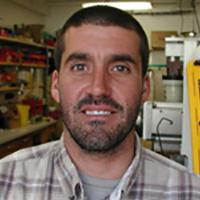
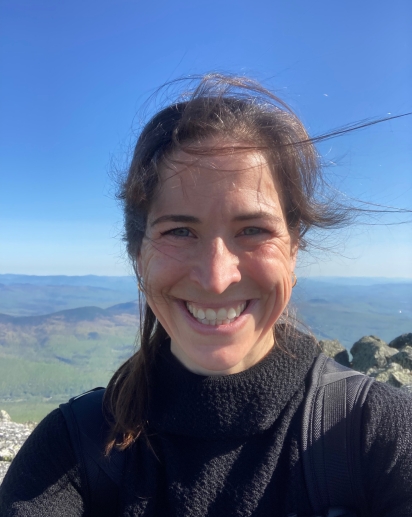
Jeff Hansen is an Associate Professor at the University of Western Australia (UWA) within the School of Earth and Oceans, a position he has held since 2022. Prior to this, he served as Senior Lecturer (2018–2022) and Lecturer (2013–2017) at UWA. His academic journey includes a Postdoctoral role at the Woods Hole Oceanographic Institution (2012), and degrees from the University of California, Santa Cruz (BSc, 2002; PhD, 2011) and San Francisco State University (MSc, 2007). His research focuses on coastal processes, including wave-driven currents, sediment transport, inlet dynamics, and the impacts of climate change on coastlines. He explores innovative techniques like drone-based measurement systems and machine learning to improve wave forecasting. Current projects emphasize marine renewable energy, artificial reefs, and coastal hazard mitigation. Dr. Hansen teaches courses such as Marine and Coastal Processes and coordinates the Master of Oceanography program. He actively seeks PhD students to address challenges in coastal dynamics and wave energy. His work contributes to UN Sustainable Development Goals related to oceans and energy. With 28 grants and collaborations spanning global coastal studies, Hansen’s research bridges academia and practical applications, addressing critical environmental and engineering challenges.
Professor Jon Willmott is a faculty member at the University of Sheffield's School of Electrical and Electronic Engineering, holding the title of Professor of Metrology. He leads the Sensor Systems Research Group within the Advanced Detector Centre, focusing on developing novel semiconductor-based detectors for thermal imaging and optoelectronic applications. Willmott earned his MPhys (1999) and PhD (2003) in Physics from the University of Southampton. After postdoctoral research in liquid crystals at Cambridge and a decade in industry designing thermal instruments, he joined Sheffield in 2015 with an EPSRC Established Career Fellowship. His research spans temperature measurement science (metrology), scientific instrumentation, and optical imaging, with applications in medical imaging, volcanology, and additive manufacturing. Key projects include hyperspectral imaging systems, combustion dynamics, and low-cost environmental sensors. Willmott's group emphasizes instrument innovation to enable previously unattainable scientific measurements. Professional roles include EEE PGR Admissions Tutor and Royal Society Industry Fellow. His work integrates interdisciplinary collaborations, such as volcanic monitoring at Masaya Volcano and thermal wound imaging for surgical site infection detection. Education: PhD in Physics, University of Southampton, 2003 MPhys in Physics, University of Southampton, 1999 Awards: EPSRC Established Career Fellowship (2015) Labs: Advanced Detector Centre, Sensor Systems Research Group
Valery Nakariakov is Full Professor of Physics at the University of Warwick and holds honorary positions at Stanford University. His research in solar physics and plasma astrophysics focuses on magnetohydrodynamic (MHD) waves observed in solar atmospheres, solar wind, and planetary magnetospheres. He pioneered MHD Coronal Seismology, a diagnostic method for remote plasma analysis using wave properties. Nakariakov's work explores wave behavior in nonuniform, nonlinear space plasmas, examining phenomena like solitons, negative energy effects, and self-organization. His honors include the Royal Astronomical Society's Chapman Medal (2024) and Institute of Physics' Payne-Gaposchkin Medal (2015). He serves on editorial boards for MIT journal Grey Room and PMLA, and supervises graduate research in astrophysical plasma waves. His publications demonstrate consistent investigation into wave-based diagnostics of solar corona properties, oscillation mechanisms in coronal structures, and development of novel observation techniques. Research frequently examines energy transfer processes through MHD waves and their role in coronal heating.
Dr David Macfarlane is a Senior Research Fellow at the School of Physics and Astronomy, University of St Andrews, KY16 9SS, UK. He actively contributes to research in millimeter wave radar applications for environmental monitoring. Current Affiliation: School of Physics and Astronomy, University of St Andrews Academic Rank: Senior Research Fellow His research focuses on: Volcanic ash monitoring using radar technology Glacier ice characterization with 94 GHz radar 3D terrain mapping from radar data Security applications of high-frequency imaging radar Experimental chamber development for particle analysis Environmental hazard detection systems Recent publications show expertise in millimeter wave technology applied to both natural hazards (volcanic ash, glacier monitoring) and security imaging. He leads or collaborates on projects funded by NERC and EPSRC, including: Radar-supported Next-Generation Forecasting of Volcanic Ash Hazard (R4AsH) (2019-2022) Radar Monitoring of Environmental Hazards in Montserrat (2019) EPSRC VFTF Science Exhibition Impact Projects (2013-2015)
Dr. Maria Walach is a UKRI STFC Ernest Rutherford Fellow and Research Fellow/Lecturer in the Physics Department at Lancaster University's Faculty of Science and Technology. She specializes in space plasma physics, focusing on interactions between the solar wind, magnetosphere, and ionosphere. Her research employs spacecraft data and ground-based SuperDARN radar networks to study energy transport in Earth's plasma environment and responses to geomagnetic events. Walach's work emphasizes solar wind driving of the magnetosphere-ionosphere-thermosphere system, auroral dynamics, and space weather prediction. She leads the project Understanding the Energy Pathways of Earth’s Magnetosphere , funded by UKRI STFC. Previously, she studied at the University of Leicester and contributed to projects like the SMILE satellite mission. Research Groups: Space and Planetary Physics Group. PhD Student: Dan Naylor. Awards: British Science Association Award Lecture. Her collaborations include the SuperDARN radar network and international space missions. She actively engages in outreach and public lectures, such as the British Science Festival 2022. Walach’s work bridges observational data analysis with theoretical models to advance understanding of Earth’s space environment.
Dr. Kam Arnold is an Associate Professor in the Department of Astronomy and Astrophysics at the University of California, San Diego. His research centers on precision measurements of the Cosmic Microwave Background (CMB), specializing in intensity and polarization observations to probe inflationary cosmology and fundamental physics. He contributes significantly to major CMB projects including the Simons Observatory (SO), Simons Array, and the future CMB-S4 experiment. Instrumental development focuses on next-generation detector and telescope technologies, particularly cryogenic polarization modulators, calibration systems, and superconducting magnetic bearings for millimeter-wave applications. Recent work (2023-2025) emphasizes anisotropic birefringence constraints, polarization modulator engineering, and validation of power spectrum reconstruction methods for SO. He plays key roles in system engineering for CMB-S4 and optical characterization of achromatic half-wave plates.
Dr. Robert Ferguson is an Associate Professor in the Department of Earth, Energy, and Environment at the University of Calgary. His research focuses on geophysical methods for studying the built environment, including urban infrastructure, glacial hazards, and historical site preservation. Notable projects include glacial seismicity monitoring at Mt. Meager using distributed acoustic sensing and machine learning, georadar fault imaging in Italy, and urban vibration studies. Received Best of EAGE 2023 award from the European Association of Geoscientists and Engineers. Research integrates field measurements with advanced signal processing to address challenges in natural hazard assessment, climate change impacts, and infrastructure protection. Work contributes to Energy Innovations and Earth-Space Technologies initiatives.
Svetlana Berdyugina is an Adjunct Professor in the Faculty of Informatics at Università della Svizzera italiana (USI) and Director of the Istituto Ricerche Solari Aldo e Cele Daccò (IRSOL) in Locarno, Switzerland. She holds a Habilitation from ETH Zurich (2005), a PhD from St.-Petersburg University (1994), and an M.Sc. with honors from the same institution (1987). Her research focuses on solar and stellar magnetism, exoplanets, biosignatures, and polarized light physics. Key roles include leadership at IRSOL and previous directorships at the Leibniz Institute for Solar Physics (KIS, 2017–2023) and professorships at universities in Freiburg, Hawaii, and Finland. She pioneered techniques in molecular magnetometry and developed instruments like BioPol and DIPOL-2 for exoplanet research. Research interests span exoplanet topography mapping, biomarker detection via polarized light, and solar corona magnetometry. Awards include the ERC Advanced Grant (HotMol, 2011) and the EURYI Award (2004). She has contributed to projects like the ExoLife Finder telescope and studies of space weathering on super-Earths. Educations: Habilitation, ETH Zurich, 2005 PhD, St.-Petersburg University, 1994 M.Sc., St.-Petersburg University, 1987 Her work bridges astrophysics and astrobiology, with over 150 publications. She collaborates globally, advancing instruments like InnoPol+AO and GPP+AO for high-precision polarimetry. Current projects include the European Solar Telescope and studies of planetary magnetic fields.
Eamon McKeogh is a Senior Lecturer in the Department of Civil Engineering at University College Cork (UCC), Ireland. He holds a B.Sc. (Civil) from Queen's University Belfast (1974), a Ph.D. from Queen's University Belfast (1978), and an MBA from UCC (1987). His research focuses on renewable energy systems, particularly wind energy integration, energy storage technologies, and sustainable infrastructure. Key areas include wind resource assessment, pumped hydro storage optimization, policy analysis for renewable energy adoption, and hydrogen energy systems. His work addresses challenges in grid stability, energy policy conflicts, and the environmental impacts of renewable technologies. McKeogh's publications reflect his interdisciplinary approach, spanning technical analyses of energy systems to policy evaluations. His recent work emphasizes integrating wind energy with smart grids and optimizing storage solutions to address intermittency. Collaborations include studies on GIS-based hydropower conversion models and ensemble forecasting for wind generation uncertainty. He has contributed to projects such as the Sustainable Development of Bulk Energy Storage Facilities and analyses of Ireland's energy transition. His research often bridges engineering solutions with policy frameworks, aiming to enhance renewable energy penetration while ensuring grid reliability and sustainability.
Max Berkelhammer is an Associate Professor in the Department of Earth and Environmental Sciences at the University of Illinois Chicago (UIC), housed within the College of Liberal Arts and Sciences. His research focuses on understanding interactions between the land surface and atmosphere, with a particular emphasis on water and carbon cycles. Key areas include paleoclimate reconstructions using isotopic proxies, real-time observations of environmental systems, and modeling future climate dynamics. Current projects involve Arctic ice sheet-atmosphere exchange at Summit Greenland, Rocky Mountain forest water use at Niwot Ridge LTER, and tropical monsoon dynamics in the Indian Ocean. Education: BA Geology from Pomona College (2002), PhD Earth Sciences from University of Southern California (2010), postdoctoral training in atmospheric sciences at University of Colorado Boulder (2013). He has secured over $6M in grants as Principal Investigator or Co-PI, including DOE awards for root dynamics modeling and NSF support for Eemian interglacial studies. Research Interests: Climate change impacts on hydrological cycles Stable isotope geochemistry as environmental indicators Urban ecohydrology and climate adaptation Education outreach for secondary science teachers Notable Achievements : 2018 Silver Circle Teaching Award (UIC) Woodrow Wilson Teaching Fellowship (2018-2019) Lead PI for 8+ federal/state research grants Labs/Teams: Directs the Atmosphere, Climate and Ecosystems Lab at UIC, collaborating with interdisciplinary teams on urban flux measurements (CROCUS project) and mountain observatories. Actively involved in the East River Watershed research consortium and NEON observatory collaborations.
Bonner Denton is a Professor at the University of Arizona's Department of Analytical Chemistry. His research focuses on advancing analytical instrumentation, particularly in mass spectrometry and spectroscopy. He holds the Galileo Circle Fellow award and has contributed to innovations in cycloidal mass analyzers, coded aperture systems, and forensic science methodologies. His work integrates interdisciplinary approaches from physics, optics, and materials science. Education: B.S./B.A. from Lamar State College of Technology (1967), Ph.D. in Chemistry from the University of Illinois (1972). Research interests include instrument development for high-resolution analysis, miniaturized mass spectrometers for field applications, and improving forensic science rigor. His recent publications emphasize advancements in cycloidal mass spectrometry design and planetary science instrumentation. Awards include the Galileo Circle Fellowship. He has pioneered array detector technologies for mass spectrometry and collaborated on projects like the RRUFF mineral database. His work bridges fundamental science and applied analytical solutions.
Kamran Entesari is a Professor of Electrical and Computer Engineering at Texas A&M University, holding the Texas Instruments Engineering Professorship. His research focuses on RF/microwave/mm-wave integrated circuits, integrated RF photonics, and biochemical sensing systems. He leads projects in silicon photonics, millimeter-wave communication, and dielectric spectroscopy. Education: Ph.D., Electrical Engineering, University of Michigan, Ann Arbor (2005) M.S., Electrical Engineering, Tehran Polytechnic University (1999) B.S., Sharif University of Technology (1995) Research Interests: RFIC and mm-wave systems for 5G and beyond Photonic-integrated circuits for next-gen communication Biomedical sensing via microwave dielectric spectroscopy Low-power, high-linearity transceiver architectures His work bridges silicon photonics with traditional RF systems to enable high-speed, low-power solutions. Recent Research Trends: Recent publications emphasize hybrid CMOS-silicon photonics for mm-wave front-ends, full-duplex transceivers, and ultra-wideband sensing systems. Key innovations include reconfigurable photonic filters, beamforming networks, and interferometric sensors. Awards: IEEE Fellow (2025) Qualcomm Faculty Award (2017, 2018) NSF CAREER Award (2011) Outstanding Faculty Award (2012) Grants & Labs: Leads the SpecEES Initiative for energy-efficient mm-wave platforms. Collaborates with Texas Instruments on silicon photonics integration. His lab develops prototypes ranging from chip-scale sensors to phased array systems. Facility Affiliations: Based in the Wisenbaker Engineering Building (WEB 315C), part of Texas A&M's College of Engineering. Active in the Department's photonics and RFIC research clusters.
Dr. Drew Lucas is an Associate Professor in the Marine Physical Laboratory at the Scripps Institution of Oceanography, UC San Diego. His research focuses on physical oceanography, with emphasis on internal waves, submesoscale processes, and air-sea interactions. He leads interdisciplinary projects involving autonomous vehicle development and low-power energy generation systems. Education: B.A. in Physical Oceanography, Pomona College M.S. and Ph.D. in Physical Oceanography, Scripps Institution of Oceanography Research Interests: Coastal and open-ocean dynamics Biogeochemical controls on phytoplankton productivity Internal wave propagation and mixing Submesoscale physical-biological interactions Innovative observational technologies Recent Work: Recent studies emphasize SWOT satellite validation, Bay of Bengal monsoon processes, and coastal internal wave dynamics. His work bridges fine-scale ocean processes with large-scale climate systems through advanced observational techniques and numerical modeling. Labs/Teams: Active in the Marine Physical Laboratory and collaborates internationally through initiatives like the Coastal Ocean Environment Summer School in Africa.
Marisa C. Palucis is an Associate Professor of Earth Sciences at Dartmouth College, specializing in planetary geomorphology and sediment transport. She leads a research group investigating landscape evolution under changing climates, with a focus on Mars and Arctic systems. Her work integrates field studies, physical experiments, and modeling to understand fluvial processes, debris flows, and periglacial dynamics. Education: B.S., University of South Carolina, Columbia Ph.D., University of California, Berkeley Research Interests: Process geomorphology, planetary geology, sediment transport mechanics, debris flow initiation, Arctic landscape response to climate change, and Martian hydrology. Her current NSF-funded project explores how warming affects permafrost-dominated landscapes, linking terrestrial and extraterrestrial processes. Group & Collaborations: Advises 6 current graduate students and 9 past advisees. Collaborates with institutions including Georgia Tech, Texas A&M, and the University of Delaware. Active in NASA-related research and planetary exploration initiatives. Grants & Funding: Collaborative NSF grant on Arctic geomorphic responses to climate change with Jill Marshall and Justin Strauss. Labs & Teams: Directs the Dartmouth Planetary Geomorphology Group, which combines fieldwork (e.g., Arctic Canada, Death Valley) with experimental flume studies and remote sensing analysis.
Professor Kenneth Grattan OBE FREng is a leading academic at City St George's, University of London , where he holds the position of Professor of Measurement and Instrumentation and the Royal Academy of Engineering Research Chair in Scientific Instrumentation. He has served in major leadership roles including Head of the Department of Electrical, Electronic and Information Engineering, Dean of the School of Engineering & Mathematical Sciences, and inaugural Dean of the City Graduate School. He is currently the George Daniels Professor of Scientific Instrumentation. Education: BSc in Physics (First Class Honours), Queen's University Belfast (1974) PhD in Laser Physics, Queen's University Belfast (1979) Doctor of Science (DSc), City, University of London (1992) Honorary Doctorate (DUniv), University of Oradea (2014) His research interests focus on the development and application of fibre optic and optical sensing systems for measuring physical and chemical parameters in industrial, environmental, and structural contexts. His work spans structural health monitoring , high-temperature sensing , chemical detection , and industrial process monitoring , often involving custom instrumentation and patented technologies. Supported by EPSRC, EU, and industry partners, his research has led to over 700 publications and strong international collaborations. The recent publications highlight a trend toward advanced optical fibre sensors integrated with nanomaterials (e.g., graphene oxide), molecular imprinting, and machine learning for enhanced sensitivity and specificity. Applications include infrastructure monitoring (pipelines, bridges), environmental sensing (greenhouse gases, humidity), and security (explosives, drugs), demonstrating his focus on real-world industrial and societal challenges. Scientific Awards and Honors: Callendar Medal, Institute of Measurement and Control (1992) Honeywell Prize (twice) Sir Harold Hartley Medal (2012) Applied Optics Divisional Prize (2010) OBE for services to science and engineering Fellow of the Royal Academy of Engineering (FREng) President of IMEKO (2015–2018) Professor Grattan has supervised over 60 PhD and MPhil students and continues to advise research students in optical sensing. He has led numerous grants from EPSRC, EU, and industry, and serves on the editorial boards of key journals such as Measurement Science and Technology and Measurement . He is actively involved in professional societies including the IET, IOP, and IMEKO, and holds visiting professorships in China. He chairs university committees on sustainability and business continuity, reflecting his broader institutional leadership. Labs and Research Teams: He leads a prominent research group in optical fibre sensors at City St George's, collaborating with institutions in the UK, Europe, and China. The team focuses on developing next-generation sensors for industrial and environmental applications, often integrating photonics with material science and data analytics.