Professor Seda Kundak at Istanbul Technical University's Faculty of Architecture is a leading expert in Disaster Risk Management , Urban Resilience , and Multi-hazard Impact Chains . She has served as Program Head, Deputy Head of Department, and Commission President at Istanbul Technical University's Urban and Regional Planning Department since 2010. PhD in Urban Planning (Istanbul Technical University) Research focus: Seismic Risk, Climate Change Adaptation, Disaster Logistics Her scientific work includes 21 research outputs (Scopus h-index: 94) analyzing earthquake scenarios, compound disasters, and systemic risk assessment. Recent articles explore Impact Chains frameworks and Istanbul's seismic risk dynamics. Awards : SRA Fellow (2022) SRA/Sigma Xi Distinguished Lecturer (2017) She leads the PARATUS Project (€2,064,375 budget) developing open-source tools for multi-hazard risk assessment and has completed 5 major research projects on disaster logistics since 2005.
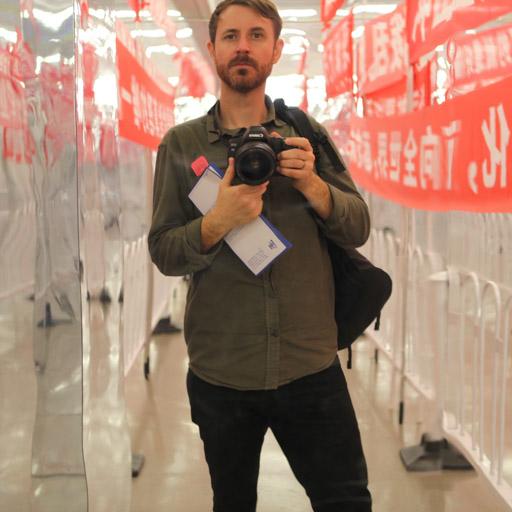
Joshua Neves is an Associate Professor at Concordia University , affiliated with the Global Emergent Media (GEM) Lab as its Director. His research spans global and digital media, cultural and political theory, China/Asia studies, and media urbanism, focusing on themes like (over)development, digital ethnography, and informal media networks. Research Keywords: global media, digital culture, cultural theory, political theory, China, Asia, video, television, piracy, urbanism Teaching: Courses include Cinemas of Under/Overdevelopment , Technology and Intimacy , and Media Genealogies of the Digital . His scientific awards include the Canada Research Chair , highlighting his leadership in media studies. Publications such as Technopharmacology (2022) and Underglobalization (2020) reflect his interdisciplinary approach, merging media theory with political and cultural critique. Neves’ recent article trends explore optimization ideologies, pandemic platforms, and the intersection of convenience with inequality. His work bridges media studies with postcolonial theory, emphasizing the geopolitical implications of digital cultures.
Fiona Sloothaak is an Assistant Professor at Eindhoven University of Technology (TU/e), affiliated with the Department of Mathematics and Computer Science, specializing in Stochastic Operations Research. She holds the Eurandom Assistant Professor title and contributes to the Stochastic Operations Research group. Her research focuses on cascading failures in complex systems, power grids, battery swapping networks, and stochastic processes. Education: Fiona earned a PhD in Stochastic Operations Research from TU/e in 2020 and completed a Master's in Mathematics (2015). Her doctoral thesis, Criticality in power networks: a probabilistic approach , explores cascading failures in power systems. Research Interests: Fiona’s work addresses systemic risk in infrastructure systems, including power grids and transportation networks. She investigates cascading failure dynamics, load balancing in battery swapping stations, and resource pooling strategies. Her studies often employ probabilistic modeling and queueing theory. Key Projects: She co-authored the MARCONI project (2019–2022), focusing on integrated planning for maritime logistics and service systems. This involved optimizing supply chain resilience and remote control tower operations. Scientific Award: Applied Probability Trust Prize (2020) Teaching: Courses include Stochastic Networks, Insurance and Credit Risk, and Probability and Stochastics 1. Grants: MARCONI project funding for maritime logistics optimization. Labs/Teams: Active in TU/e’s Stochastic Operations Research group and Eurandom institute. Collaborations span network topology analysis and interdisciplinary systems research.
Lokukaluge Prasad Perera is a Professor in Maritime Technology at UiT The Arctic University of Norway and a Senior Research Scientist in Smart Data at SINTEF Digital . He holds a BSc in Mechanical Engineering from Oklahoma State University (1999), MSc in Systems & Controls from the same institution (2001), and a PhD in Naval Architecture and Marine Engineering from Technical University of Lisbon (2012). His research focuses on Maritime and Offshore Systems , Advanced Data Analytics , Autonomous Navigation , Energy Efficiency , and Digital Twin Applications . He has published over 100 peer-reviewed papers and was recognized in the World's Top 2% Scientists (2021-2022) by Stanford University. Key professional experiences include roles at SINTEF Ocean (2014–2017), Center for Marine Technology and Engineering in Portugal (2008–2012), and Wärtsilä Finland (2012–2014). He has also held academic positions at Naval & Maritime Academy and Ocean University of Sri Lanka . His work addresses challenges in emission reduction , renewable energy integration , and safety-critical systems for maritime operations. Current projects emphasize trustworthiness of autonomous ships and data-driven decision frameworks for energy efficiency.
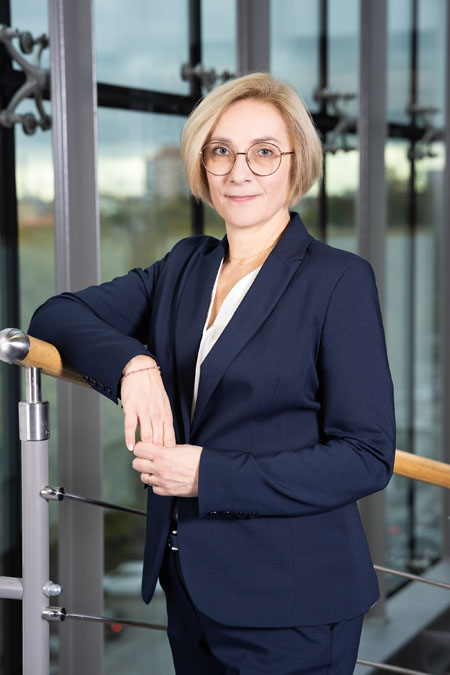
Prof. Ewa Szostak holds a professorial position at Wrocław University of Economics (UEW), serving as BIPS Program Coordinator. Her work focuses on EU policy analysis, regional development dynamics, innovation economics, and sustainable urban planning. Key research interests include Poland's EU integration trajectory, post-1989 educational reforms, energy transition strategies, and socio-economic challenges posed by aging populations. Her publications span topics such as territorial cohesion, smart specialization strategies, and the impact of migration on transportation networks. Notable works include analyses of Lower Silesia's regional infrastructure, smart city development challenges in Poland, and the decarbonization of inland navigation systems. Methodologically, her research combines policy evaluation with case studies examining institutional effectiveness and spatial planning. Laboratory/Team Affiliations: While specific lab names aren't listed, her role as a professor at UEW implies involvement in the university's economic policy research units. Her work frequently engages with EU-funded regional development projects and policy implementation frameworks.
Tara M. Sinclair is Professor of Economics and International Affairs and Chair of the Department of Economics at the George Washington University. She is also affiliated with the Elliott School of International Affairs through the Institute for International Economic Policy and the Institute for European, Russian, and Eurasian Studies. Additional affiliations include the GW Institute of Public Policy Research, the Regulatory Studies Center, and GW-CIBER. Sinclair has held influential public sector roles, including Deputy Assistant Secretary for Macroeconomics at the U.S. Department of the Treasury (2022–2024) and founding Chief Economist at Indeed Hiring Lab. PhD in Economics, Washington University in St. Louis (2005) AM in Economics, Washington University in St. Louis (2001) BA in Foreign Languages, Wheaton College (1996) Her research centers on macroeconomic fluctuations, labor market dynamics, forecasting, and the application of big data to economic analysis. She employs econometric and time series methods to model business cycles, evaluate forecast accuracy, and assess policy impacts. Her work connects academic research with real-world decision-making, particularly in labor markets and monetary policy. Sinclair frequently uses online job posting data to generate timely insights into employment trends. Her recent publications focus on post-pandemic labor market transformations, remote work persistence, forecast evaluation, and regulatory economics. She has published in top journals such as Labour Economics , Journal of Applied Econometrics , Oxford Bulletin of Economics and Statistics , and International Journal of Forecasting . Her research leverages real-time data to analyze topics like unemployment insurance claims, job mismatch, and global hiring trends. Scientific recognition includes membership in the Conference on Research in Income and Wealth (CRIW), the Federal Forecasters Consortium Governing Board, and authorship at VoxEU. She has served as a Special Government Employee on the Bureau of Labor Statistics Technical Advisory Committee. She advises and collaborates with numerous researchers and institutions. Her leadership roles include directing the GW Center for Economic Research (former) and leading research initiatives at Indeed Hiring Lab. She teaches graduate and undergraduate courses in macroeconomics and econometrics, and is frequently cited in major media outlets including the New York Times , Wall Street Journal , and Financial Times , and appears on networks such as CNN, NPR, and Bloomberg. Her research team includes collaborators from Federal Reserve Banks, international organizations, and academic institutions. She leads projects funded by GW-CIBER and contributes to policy reports for the U.S. Treasury and Indeed Hiring Lab.
Dr. Sudeep Hegde is an Assistant Professor in the Department of Industrial Engineering at Clemson University, where he also serves as a Faculty Scholar in the Clemson University School of Health Sciences Research (CUSHR). His research focuses on proactive organizational learning, human-AI collaboration, and remote physiological monitoring, with applications in healthcare, education, and transportation. He holds a Ph.D. in Industrial and Systems Engineering from the University of Buffalo (2015), an M.S. from the University at Buffalo (2010), and a B.S./M.S. from Ramaiah Institute of Technology in India (2007). His professional experience includes roles at Texas A&M University, the State University of New York at Buffalo, and Harvard Medical School. Hegde’s work emphasizes resilience engineering, cognitive systems, and applied ergonomics. Notable research contributions include studies on organizational adaptive capacity during crises, healthcare workflow optimization, and leveraging AI for healthcare decision-making. He teaches courses such as Human Factors Engineering and Cognitive Systems and Resilience Engineering. Key research thrusts include: Proactive organizational learning frameworks Human-AI teaming for large-scale learning Remote physiological monitoring in high-stress environments Resilience in healthcare systems and emergency response Past grants and collaborations include studies on pandemic response strategies, ED physician workloads, and biofeedback applications for mental health. His interdisciplinary approach bridges systems engineering, human factors, and healthcare innovation.
Steven Livingston is the Founding Director of the Institute for Data, Democracy, and Politics (IDDP) and a Professor of Media and Public Affairs at George Washington University (GW). He has held leadership roles including Director of the Political Communication Program (1996–2002, 2004–2006) and Acting Director of the School of Media and Public Affairs (2004–2006). He founded the Public Diplomacy Institute (now the Institute for Public Diplomacy and Global Communication) in 2000. His research focuses on media/information technology’s role in governance, human rights, and global security, with notable work on the 'CNN Effect' and disinformation’s impact on democracy. Education: Ph.D. (Political Science, University of Washington, 1990), M.A., and B.A. from the University of South Florida (1984 and 1981). Professional milestones include a 2019 $5M grant for IDDP, a Goldsmith Award (Harvard), and Fulbright Scholarship (declined). Research interests span media-tech governance, political disinformation, international development, and security implications of technological advancement. His work examines how information systems shape policy in Africa, the Middle East, and post-conflict regions. Recent publications address disinformation’s erosion of democratic institutions and ICT’s role in African governance. Key grants and fellowships: $5M IDDP grant (2019), Ford Foundation-funded research (1992–1993), McCormick Tribune Foundation funding (1995), and multiple visiting roles at Harvard, Cambridge, and the Brookings Institution. Labs/teams: IDDP (founded 2019), Public Diplomacy Institute, and collaborative projects with NDU Press and the Carr Center for Human Rights Policy. His consulting spans UN agencies, governments, and NGOs on media strategies and public opinion dynamics.
Dr. Andrew Curtis is a Professor in the Department of Population and Quantitative Health Sciences at Case Western Reserve University's School of Medicine. He also holds a joint appointment in the Department of Anthropology, College of Arts and Sciences. His research focuses on spatial epidemiology, context-driven spatial data collection, and spatial confidentiality, with methodological expertise in geospatial data collection and analysis. He previously directed the WHO Collaborating Center for Remote Sensing and Public Health and has advised numerous public health agencies internationally. His work addresses health disparities at neighborhood scales, disaster response, and spatial syndromic surveillance. Dr. Curtis has mentored 10 PhD graduates now working in academia and public health sectors globally. Education includes a PhD in Geography from SUNY Buffalo (1995), MA in Geography from SUNY Buffalo (1991), and a BA from Portsmouth Polytechnic (1987). He has taught courses in GIS for health, medical geography, and global health. His advisory roles include collaborations with the CDC, Red Cross, and public health departments in Ohio and internationally. His research has been applied to cholera outbreaks, opioid overdose patterns, and pandemic response strategies. He co-edited a special issue on health geography and serves on the editorial board of the Annals of the Association of American Geographers. Dr. Curtis' spatial video methodologies have enabled fine-scale mapping in informal settlements, disaster zones, and conflict-affected areas. His recent work includes geospatial support for Ohio hospitals during the pandemic and energy vulnerability analysis. He emphasizes participatory research and context-enriched data collection to bridge gaps between health research and actionable policy.
Wantao Yu is a Professor of Supply Chain Management at the Roehampton Business School, part of the University of Roehampton's Faculty of Business and Law. Previously, he held academic positions at the University of Kent, University of East Anglia, and Buckinghamshire New University. His expertise spans digital supply chain management, sustainability, and modern slavery prevention. He actively supervises PhD students in areas like agri-tech and LARG (Lean, Agile, Resilient, Green) supply chains. Research Interests: His work focuses on digital innovation in supply chains, sustainable practices, and ethical sourcing. Notable projects include STFC-funded initiatives in agri-food systems (UK, China, Kenya, Uganda) leveraging IoT and machine learning for sustainability and productivity. He emphasizes public-private partnerships with smallholder farmers and agribusinesses. Notable Achievements: Included in Stanford's World Top 2% Scientists (2020-2024) and recognized with multiple awards, including the Emerald/EFMD Doctoral Research Award (2010) and conference paper accolades (e.g., 2017, 2015). His pandemic-related research was featured in the WHO database. Teaching: Leads courses on Supply Chain Strategy & Processes and Digital Logistics. External roles include serving as an academic examiner at universities like Essex and Hertfordshire. Collaborations: Active in global research networks, with recent projects in Kenya, Uganda, and China. Key themes include data-driven supply chains, agri-tech, and resilience strategies for SMEs.
Dr. Farzan Sasangohar is an Associate Professor in the Department of Industrial & Systems Engineering at Texas A&M University, holding the Mike and Sugar Barnes Faculty Fellowship. He also serves as an Assistant Professor at Houston Methodist Hospital's Center for Outcomes Research and Department of Surgery. His academic roles include affiliations with the Environmental and Occupational Health, Biomedical Engineering, and multiple centers focused on health technologies and systems design. Education: PhD in Industrial Engineering (Human Factors Engineering), University of Toronto (2015) Research Interests: Human factors in healthcare delivery and telehealth systems Wearable technology for stress/health monitoring Crisis management team cognition and decision-making Remote patient monitoring systems Mental health self-management interventions Awards: Jack A. Kraft Innovator Award (HFES, 2023) Dr. Hamed K. Eldin Early Career Award (2022) William C. Howell Young Investigator Award (2021) TEES Young Faculty Fellow (2021) Nominated for Ergonomics Journal Best Paper (2021) Advising & Grants: Mentored over 15 graduate students including Dr. Mahnoosh Sadeghi (PhD 2023) Recipient of NSF PATHS-UP Engineering Research Center funding Active grants in offshore worker fatigue management and telehealth integration Labs/Teams: Director of the Applied Cognitive Ergonomics Lab (ACE-lab) , focusing on human-system interactions in healthcare, aviation, and disaster management. Current projects include: - Wearable stress monitoring systems - Telehealth integration frameworks - Crisis team cognition analysis
Thomas Graham is an Assistant Professor and PhytoGro Research Chair in Controlled Environment Systems at the University of Guelph, where he also serves as R&D Manager for the Controlled Environment Systems Research Facility (CESRF). His academic journey includes a BSc in Environmental Sciences from the University of Guelph and Stirling University (1997), an MSc in Horticulture (2001), and a PhD in Environmental Biology (2012), all from the University of Guelph. He completed a NASA Post-Doctoral Fellowship (2012–2015) at Kennedy Space Center, focusing on bioregenerative life-support systems for space exploration. Dr. Graham’s research expertise spans controlled environment agriculture (CEA) , space biology , medicinal crop production , and water remediation . He leads projects addressing food security, crop diversification in urban farming, and sustainable practices for high-intensity agriculture. Key initiatives include developing CEA systems for medical crops, optimizing tree crops for spaceflight, and advancing composting-based closed-loop systems. His scientific contributions are reflected in roles as Associate Editor for Gravitational and Space Research and Editor for special issues on Agriculture in Space . He collaborates with NASA, USDA, OMAFRA, and international agencies like the German Space Agency (DLR). Awards include the NASA Post-Doctoral Research Fellowship. Dr. Graham emphasizes mentorship, conducting bi-weekly graduate meetings and fostering student autonomy while providing structured support. His lab integrates interdisciplinary approaches to tackle global challenges, from climate resilience to lunar food production.
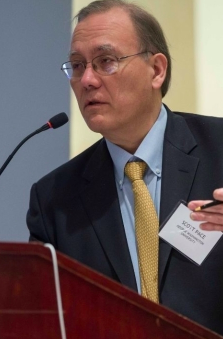
Dr. Scott Pace is a Full-time Faculty member and Professor of the Practice of International Affairs at George Washington University's Elliott School of International Affairs , also serving as Director of the Space Policy Institute . He concurrently holds a faculty role at the Trachtenberg School of Public Policy and Public Administration . His expertise spans civil, commercial, and national security space policy, technical innovation management, and international space cooperation. Education : PhD in Policy Analysis from RAND Graduate School (1989) MS in Aeronautics & Astronautics and Technology & Policy from MIT (1982) BS in Physics from Harvey Mudd College (1980) Research Interests : Focus on space policy frameworks, international collaboration, and governance. Key areas include GNSS systems, spectrum management, and national security applications of space technology. Notable Achievements : Recipient of Japan's Order of the Rising Sun (2021) Former Deputy Assistant to the U.S. President and Executive Secretary of the National Space Council (2017–2020) Lead roles at NASA (2005–2008) and White House OSTP (pre-2005) Awards : Includes NASA leadership medals and DoD recognition for contributions to space policy and crisis management. Advisory Roles : Member of U.S. delegations to UN space committees, NOAA’s Commercial Remote Sensing Advisory Board, and international space organizations like the American Astronautical Society.
Professor Trina Myers serves as the Head of School for the School of Information Technology at Deakin University's Faculty of Science Engineering and Built Environment. With extensive experience in academia and research leadership, she plays a pivotal role in shaping IT education and research directions at Deakin. She is also an active member of the Australian Council of Deans of ICT (ACDICT), having served as its immediate past President. Her educational background includes: Doctor of Philosophy in Computer Science from James Cook University Master of Business Administration from James Cook University Master of Information Technology from James Cook University Professor Myers' research focuses on semantic technologies, ontology engineering, Internet of Things, knowledge management, natural language processing, and human-computer interaction . Her work emphasizes interdisciplinary collaboration, bridging technology with fields such as healthcare, marine science, environmental conservation, and business. She has pioneered approaches in academagogy (academic gamification) to enhance online learning engagement, particularly for adult learners. Her IoT research has significant applications in healthcare space optimization, environmental monitoring, and resource management. Her recent publications demonstrate a strong trajectory in applying AI and IoT technologies to solve real-world problems, particularly in healthcare, education, and resource optimization. There's a clear pattern of interdisciplinary work connecting computer science with healthcare, education, and environmental science. Her research increasingly focuses on human-centered technology design, especially for vulnerable populations like adolescents with autism spectrum disorder. Her notable achievements include: Fellow of the Australian Computer Society (2023) Australian Awards for University Teaching (AAUT) Teaching Award (2020) Women in IT Professional Leadership Award Finalist (2020) Asia-Pacific International Triple E Entrepreneurial Educator of the Year Award (1st runner-up, 2020) Australian Computer Society, National Digital Disruptor ICT Educator of the Year (2019) Professor Myers actively supervises doctoral students across diverse research areas including gamification in language learning, brain tumor analysis using deep learning, AI in higher education, AI for refugee resilience, data integrity in edge environments, and quantum-driven satellite networking. She has secured significant research funding, including a recent grant for "Indiginizing ICT Curriculum: A Starter Framework for the Community of Practice" through the Australian Council of Deans of ICT. Her teaching philosophy emphasizes active learning methodologies, Process Oriented Guided Inquiry Learning (POGIL), blended learning, and collective intelligence approaches.
Bruce Saxman is a Senior Lecturer in Adventure Education at Fort Lewis College, where he coordinates the interdisciplinary Fort Lewis on the Water (FLOW) program. With over two decades of experience in outdoor education, he has held administrative and teaching roles at multiple institutions, developing competency-based training systems and adventure curriculum. Education: M.A. in Recreation Administration, University of Nebraska-Omaha B.S. in Parks, Recreation, and Tourism Management (Resource Management Emphasis) with Anthropology Minor, Clemson University Research Interests focus on outdoor education methodology , adventure program administration , and experiential learning systems . His work explores digital education platforms, risk management protocols, and leadership development frameworks in outdoor settings. Professional Affiliations include the American Institute for Avalanche Research and Education (AIARE), American Canoe Association (ACA), and American Mountain Guides Association (AMGA). His publications address technical training systems, program development, and safety innovations in adventure education.