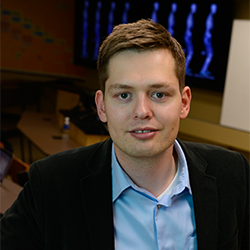
Dr. Ian Stavness is a Professor and Department Head in the Department of Computer Science at the University of Saskatchewan. His research focuses on interdisciplinary applications of computer science, including deep learning in agriculture, biomedical computation, and 3D display technologies. He leads the Biological Imaging & Graphics (BIGLAB) laboratory, which develops tools for plant phenotyping and musculoskeletal modeling. Education: Ph.D. in Computer Engineering, University of British Columbia, 2010 M.A.Sc. in Computer Engineering, University of British Columbia, 2006 B.Sc. in Computer Science & B.Eng. in Electrical Engineering, University of Saskatchewan, 2004 Research Interests: Deep Learning for Plant Phenomics & Agriculture 3D Displays and VR/AR Technologies Musculoskeletal Biomechanical Simulation (OpenSim, ArtiSynth) Computer Vision and Image Analysis Awards: ACM CHI 2019 Honourable Mention ACM VRST 2018 Polyphony Digital Award Key Projects: Deep Plant Phenomics Platform Parametric Human Project (Digital Human Modeling) P2IRC (Plant Phenotyping & Imaging Research Center)
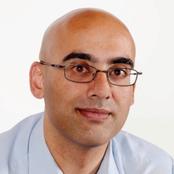
Anil Madhavapeddy serves as Professor of Planetary Computing at the University of Cambridge's Department of Computer Science and Technology and directs the Cambridge Centre for Carbon Credits (4C). A Fellow of Pembroke College, he integrates systems research with environmental conservation through the Computer Laboratory's Environment and Energy Group. His career spans industry leadership (NetApp, Citrix, Intel), academic appointments (Cambridge, Imperial, UCLA), and entrepreneurial ventures (XenSource, Unikernel Systems, Docker). Madhavapeddy earned his PhD at Cambridge's Computer Laboratory in 2006. His research bridges computational systems and planetary-scale environmental challenges, with deep expertise in open-source development (OCaml, Xen, Docker, OpenBSD) and technology strategy advising for organizations including Zededa, Tezos Foundation, and Tarides. His work centers on environmental computing and climate informatics, leveraging distributed systems and functional programming to develop sensing infrastructure for conservation. Recent projects focus on carbon credit systems, AI-driven biodiversity monitoring, and sustainable computing architectures that minimize ecological footprints while maximizing analytical capability. Analysis of his 2025 publications reveals a concentrated effort on AI-integrated conservation tools, privacy-preserving carbon accounting, and energy-efficient computing. Key themes include spatial networking for ecological data, LLM-enhanced evidence retrieval in conservation science, and novel metrics for extinction risk assessment—demonstrating computational innovation applied to urgent planetary boundaries. No scientific awards were documented in the source material. Madhavapeddy advises multiple technology firms on strategic development while leading the Cambridge Centre for Carbon Credits, though specific grant funding details remain unreported. He actively contributes to the Environment and Energy Group at Cambridge's Computer Laboratory and directs the interdisciplinary Cambridge Centre for Carbon Credits (4C). His open-source leadership spans critical infrastructure projects including OCaml, Xen, and Docker, fostering collaborative development communities that underpin modern cloud and container technologies.
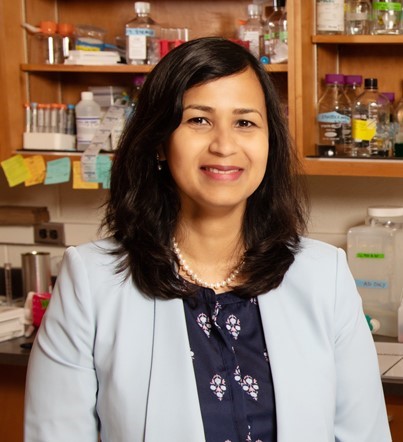
Aditi Das is a Full Professor in the School of Chemistry and Biochemistry at the Georgia Institute of Technology, College of Sciences. She leads the Das Laboratory, which focuses on the biochemistry and chemical biology of lipids, particularly studying cytochrome P450 enzymes and their role in lipid metabolism, endocannabinoid systems, and inflammatory pathways. Her educational background includes: B.Sc. in Chemistry from St. Stephen's College M.Sc. in Chemistry from Indian Institute of Technology, Kanpur (I.I.T) Ph.D. in Chemistry from Princeton University Postdoctoral research at Northwestern University (NSF-NSEC fellow) and Beckman Institute for Advanced Science and Technology, University of Illinois UC Professor Das's research interests center around understanding the physiological role of lipids in sustaining homeostasis and their implications in disease states such as neurodegenerative disorders, cancer, and cardiovascular diseases. Her laboratory specializes in: Enzymology of cytochrome P450s, particularly CYP2J2 epoxygenase Metabolism of ω-3 and ω-6 fatty acids and their derivatives Minor cannabinoid metabolism by cytochrome P450 enzymes Discovery of novel anti-inflammatory lipid metabolites and endocannabinoids Mechanistic studies of membrane proteins using nanodisc technology Her work bridges biochemistry, chemical biology, and pharmacology to uncover novel therapeutic targets related to lipid signaling pathways. Analysis of Professor Das's recent publications (2023-2025) reveals a strong focus on cannabinoid metabolism by cytochrome P450 enzymes, with particular emphasis on how these metabolic processes generate bioactive compounds that interact with the endocannabinoid system. Her research increasingly explores the therapeutic potential of omega-3 derived endocannabinoid epoxides in inflammatory and neurodegenerative conditions. The use of nanodisc technology for studying membrane proteins in near-native environments remains a consistent methodological thread throughout her work, enabling detailed mechanistic insights into enzyme function. Professor Das has received numerous prestigious awards recognizing her research excellence and teaching: 2024 NIH Outstanding Researcher Award (MIRA R35) for established investigators 2024 Vasser Woolley Faculty Fellowship 2023 Plenary Lecture at the International Society of the Study of Xenobiotics (ISSX) 2021 E.L.R. Stokstad Award 2019-2021 List of Teachers Ranked as Excellent 2019 Eicosanoid Research Foundation Young Investigator Award 2019 Zoetis Research Excellence Award 2019 Mary Swartz Rose Young Investigator Award 2015 National Scientist Development Award from the American Heart Association 2022 El Sohly Award from the American Chemical Society Professor Das actively mentors a diverse group of students and postdoctoral researchers, with several former lab members now holding faculty positions or working at prestigious institutions. Her laboratory has secured significant funding from NIH, NSF, and other sources to support research on lipid metabolism, cannabinoid pharmacology, and membrane protein biochemistry. Notable grants include an NIH R35 Outstanding Investigator Award (MIRA), an NIH R21 grant from NIDA, and multiple collaborative grants with other research groups. The Das Laboratory operates within the Petit Institute of Bioengineering and Biosciences (IBB) at Georgia Tech, utilizing state-of-the-art facilities for biochemical and biophysical studies. The lab specializes in nanodisc technology to study membrane proteins in near-native environments, with particular expertise in cytochrome P450 enzymes and their interactions with lipid substrates. Recent work has expanded into collaborative projects involving lipidomics, structural biology, and translational applications of lipid signaling research.
Matthew Dunbabin is a Professor at Queensland University of Technology (QUT) and Chief Investigator at the Australian Centre for Robotic Vision (ACRV). His expertise spans environmental robotics, with a focus on vision-based autonomous systems for marine conservation, water quality monitoring, and greenhouse gas management. He holds a PhD from QUT and a BEng (Aerospace) from RMIT. Dunbabin has led projects at CSIRO and QUT, developing robots like COTSBot and RangerBot to combat marine pests and promote reef restoration. His work has earned national and international awards, including the 2019 Australian Water Association Award and 2016 Google Impact Challenge. Education: PhD in Engineering, Queensland University of Technology (Queensland, Australia) BEng (Hons) in Aerospace Engineering, Royal Melbourne Institute of Technology (Melbourne, Australia) Research Interests: Environmental robotics and autonomous systems Vision-based perception and classification Marine habitat restoration and pest control Greenhouse gas monitoring via autonomous vehicles Cooperative robotics and sensor networks Awards & Recognition: 2019 Australian Water Association Award (SAMMI Project) 2019 Good Design Award - Sustainability (RangerBot) 2016 Google Impact Challenge People’s Choice Award (RangerBot AUV) 2010 Australian ICT Industry Association National iAward (iSnet) 2006 Queensland Engineering Excellence Innovation Award (Starbug Project) Grants & Projects: ARC Centre of Excellence for Robotic Vision (ACRV): Leading robotic vision research (2014–present) Revolutionising Protection Against Air Pollution: Air quality monitoring networks (2015–present) Establishing Advanced Networks for Air Quality Sensing: Sensor development for urban environments (2017–present) Labs & Collaborations: ACRV at QUT Institute for Future Environments (QUT) CSIRO Autonomous Systems Laboratory (2001–2013)
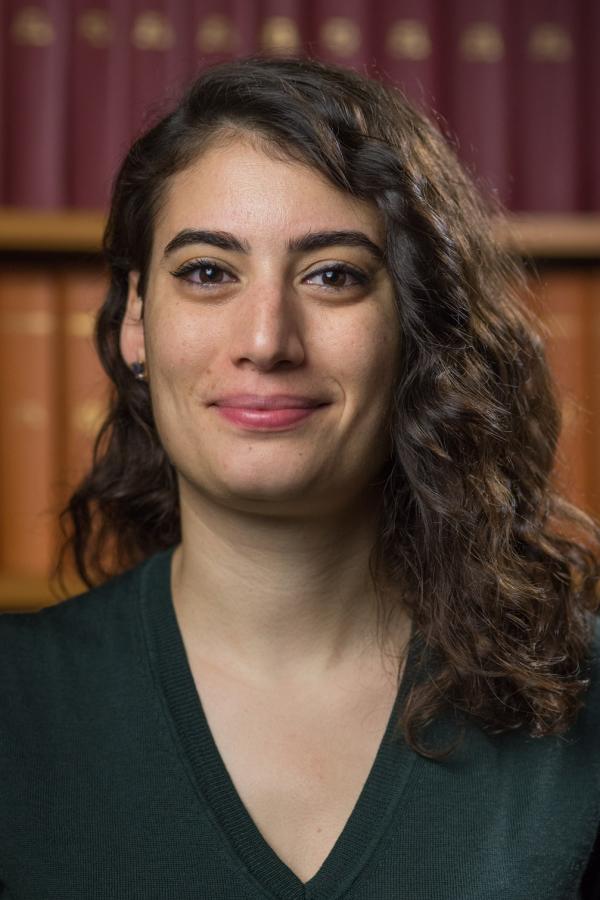
Dr. Hayriye Cagnan is a Senior Lecturer (equivalent to Associate Professor) at Imperial College London and Associate Unit Member at the MRC Brain Network Dynamics Unit. She holds a PhD in Neuroscience from the University of Amsterdam and Philips Research Laboratories (2010), an MSc in Engineering and Physical Science in Medicine from Imperial College London, and a BS in Electrical and Electronics Engineering from Cornell University as a Fulbright Scholar. Her research develops theory-driven strategies for selective modulation of brain rhythms using: Theoretical disease models and stimulation paradigms Dynamic neuromodulation approaches Wearable devices for remote therapy optimization Advanced signal processing techniques Her recent publications (2015-2025) demonstrate consistent focus on tremor pathophysiology, neural oscillations in Parkinson's disease, and advanced brain stimulation technologies. Research employs computational modeling, EEG, magnetoencephalography, and both invasive/non-invasive stimulation techniques. Awards & Fellowships: Fulbright Scholarship (2000-2004) British Chevening Scholarship (2004) MRC Skills Development Fellowship (2015) MRC Career Development Award (2018) Dr. Cagnan leads an independent research group originally established at the MRC Brain Network Dynamics Unit in 2018, maintaining close collaborations with clinical neuroscientists and engineers to translate basic research into therapeutic applications.
Du Changwen is a Researcher (Professor) at the Nanjing Institute of Soil Science, Chinese Academy of Sciences, serving as Deputy Director of the National Engineering Laboratory for Soil Nutrient Management. He supervises doctoral and master's students in soil science and agricultural technology development. His academic journey includes: Bachelor's degree from Huazhong Agricultural University's College of Resources and Environmental Science (1997) Master's degree from Huazhong Agricultural University's Trace Element Laboratory (2000) PhD from Nanjing Institute of Soil Science, Chinese Academy of Sciences (joint program with Technion - Israel Institute of Technology) (2003) Dr. Du's pioneering research focuses on precision fertilization technologies, particularly polymer-coated controlled-release fertilizers developed through model membrane and water-based reaction film-forming techniques. His work integrates Fourier Transform Infrared spectroscopy (ATR and PAS modes) with engineering mathematics to monitor nutrient release dynamics, soil chemistry processes, and plant nutrition in real-time. This interdisciplinary approach bridges agricultural chemistry, materials science, and environmental engineering to optimize fertilizer efficiency while minimizing ecological impact. Analysis of his 2015-2017 publications reveals a consistent emphasis on spectroscopic methods for soil-plant system analysis, with dominant themes in controlled-release fertilizer development, soil organic matter characterization, and in-situ nutrient monitoring. His work demonstrates strong cross-disciplinary integration between agricultural technology, analytical chemistry, and environmental science. His scientific recognition includes: Special Award of the First China Agricultural Science and Technology Innovation and Entrepreneurship Competition First Prize of Jiangsu Science and Technology Award First Jiangsu Youth Entrepreneurship Award Second Prize of Chinese Academy of Sciences Science and Technology Contribution Award First Prize of China Agricultural Science and Technology Award Dr. Du has secured major research funding including National Natural Science Foundation projects (key, general, youth), National '973' Basic Research Program, '13th Five-Year' R&D Plan sub-projects, '863' High-tech Program sub-projects, and Jiangsu Provincial Science and Technology Support Plan initiatives. His leadership in the National Engineering Laboratory for Soil Nutrient Management drives innovation in fertilizer technology, with significant outputs including 198 academic papers (89 SCI, 35 EI), 6 monographs, 1 international patent, 8 national patents, and 2 software copyrights. His laboratory specializes in advanced spectral analysis of soil-plant systems, utilizing FTIR-ATR and FTIR-PAS technologies for real-time monitoring of nutrient dynamics and polymer membrane reactions. Current research focuses on next-generation controlled-release fertilizers, machine learning-enhanced spectral analysis, and precision nutrient management systems for sustainable agriculture.
Paolo Gamba is Full Professor in Telecommunications and Remote Sensing at the University of Pavia, Italy, where he previously led the Telecommunications and Remote Sensing Laboratory until 2021. He currently serves as Delegate of the Rector for international relations with USA and the Americas. Gamba is Principal Investigator for projects funded by the Italian Space Agency (ASI), Italian Ministry for External Affairs, and European Space Agency (ESA), and coordinates the School of Science and Technology for the Consortium of Italian Universities for Argentina (CUIA). His research focuses on urban remote sensing , image processing , data fusion , and Earth observation applications for physical exposure and risk management. He has pioneered work in remote sensing data analysis and telecommunications, with particular emphasis on developing methods for urban environment monitoring. Gamba holds significant leadership positions in scientific organizations: Current Editor-in-Chief of IEEE Geoscience and Remote Sensing Magazine Former President of IEEE Geoscience and Remote Sensing Society (2019-2020) Technical Chair for multiple IGARSS conferences Founding organizer of GRSS/ISPRS Joint Workshops on Remote Sensing over Urban Areas Awards & Honors: IEEE Fellow (2013) IAPR Fellow (2020) AAIA Fellow (2022) Outstanding Service Award from IEEE GRSS (2021) Multiple excellence in reviewing awards He maintains active involvement in space mission planning through membership in advisory groups for COSMO/SkyMed Constellation (ASI) and Sentinel-2 Next Generation mission (ESA). Gamba has published extensively with over 150 peer-reviewed journal articles and 300+ conference presentations.
Septimiu E. Salcudean is a Professor at the University of British Columbia's Department of Electrical and Computer Engineering, holding the C.A. Laszlo Chair in Biomedical Engineering and a Canada Research Chair. His research focuses on medical robotics, image guidance systems, and ultrasound elastography. He has contributed to advancements in haptic interfaces, teleoperation, and needle insertion modeling. Education: B.Eng and M.Eng from McGill University (1979-1981), Ph.D. from UC Berkeley (1986). He has held positions at IBM T.J. Watson Research Center and was a Killam Research Fellow at ONERA in France. His work spans robotics, biomedical engineering, and surgical systems. Research interests include medical robotics, real-time imaging, and surgical navigation. Notable projects involve ultrasound-guided surgery, vibro-elastography for tissue characterization, and haptic feedback systems. His lab, the Robotics and Control Laboratory (RCL), develops technologies like the da Vinci surgical system integration with ultrasound imaging. Awards include the NSERC Synergy Award, IEEE Fellowship, and UBC Killam Research Prize. He has advised over 30 graduate students and published extensively in robotics and biomedical journals.
Mark Billinghurst is a Professor and Director of the Australian Research Centre for Interactive and Virtual Environments at UniSA STEM, University of South Australia. His work focuses on Augmented Reality (AR), Virtual Reality (VR), and empathic computing, emphasizing remote collaboration, human-computer interaction, and inclusive design. He has authored influential books like Computer-Supported Collaboration: Theory and Practice (2024) and pioneered systems such as Empathy Glasses and gaze-tracking interfaces for collaborative tasks. Education & Affiliations: Mark Billinghurst is affiliated with the Empathic Computing Laboratory and has collaborated globally with institutions like Keio University, Nokia, and the University of Canterbury. His research spans AR applications in manufacturing, healthcare, and social interaction, with a focus on improving accessibility and user experience. Research Interests: Dr. Billinghurst’s research explores AR/VR for remote guidance, wearable technologies, and emotional interfaces. He investigates how gaze cues, multimodal feedback, and AI can enhance collaboration and empathy in virtual environments. His work bridges technical innovation with human-centric design, addressing challenges in industrial assembly, mental health, and workplace transformation. Publications & Impact: His 2016 study on gaze tracking in remote collaboration (cited over 100 times) and 2024 book on AR collaboration highlight his contributions. Recent projects include Vibe360 (group emotion analysis) and CAEVr (biofeedback-driven empathy systems). He actively contributes to conferences like IEEE VR and CHI, shaping the future of immersive technologies. Labs & Future Work: His lab develops tools like the SAR system for aircraft drilling and empathic agents (EMiRAs). Future directions include AI-driven emotional interfaces, inclusive metaverse design, and VR solutions for cognitive rehabilitation.
Dr. Rodney Weber is a Professor in the School of Earth & Atmospheric Sciences at Georgia Institute of Technology, part of the College of Sciences. His research focuses on atmospheric aerosols, urban air quality, and particle formation mechanisms. He holds a Ph.D. (1995) and M.S. (1991) in Mechanical Engineering from the University of Minnesota, and a B.S. (1987) from the University of Waterloo. Key research interests include atmospheric aerosol sources and processing, new particle formation via homogeneous nucleation, and aerosol growth processes. He develops novel instrumentation, such as the Particle Into Liquid Sampler (PILS), and leads field studies like the ALPACA project in Fairbanks, Alaska. His work bridges laboratory experiments and real-world atmospheric measurements. Dr. Weber has received awards including the Cullen-Peck Faculty Fellow Award (2007), Whitby Award (2005), and NASA Global Change Fellowship. His recent publications (2024–2025) address biomass burning plumes, urban pollution dynamics, and aerosol chemistry in cold climates. He collaborates on global initiatives like the NASA Atmospheric Tomography (ATom) mission and FIREX-AQ campaigns. His lab (ES&T 2107/2115) focuses on aerosol optical properties, reactive oxygen species in particulate matter, and the health effects of pollution. Research highlights include quantifying sulfur chemistry in Fairbanks and assessing oxidative potential of PM2.5 in urban environments.
Dr. Alain Bonneville is a Lab Fellow and Geophysicist at Pacific Northwest National Laboratory (PNNL) and holds a Courtesy Professor appointment at Oregon State University's College of Earth, Ocean, and Atmospheric Sciences. With extensive experience in geological storage of CO2, geothermal energy, and geophysical monitoring techniques, Dr. Bonneville leads diverse research projects that bridge fundamental science and practical applications for energy and environmental challenges. Dr. Bonneville's educational background includes: PhD in Geophysics from the University of Montpellier, France MS in Petroleum Geophysics from IFP-School, Paris, France BS in Geology from the University of Lyon, France Dr. Bonneville's research spans several critical areas in Earth sciences and energy systems. His work on geothermal energy focuses on super-hot enhanced geothermal systems (EGS), site characterization, monitoring, and stimulation fluids. In geological CO2 storage, he investigates project management, site characterization, numerical modeling, and monitoring methods using potential fields and remote sensing. His expertise in geophysical methods includes heat flow measurements, gravity surveys, muon tomography development for borehole deployment, and remote sensing applications. Additional research areas encompass marine heat flow instrumentation development, thermal monitoring of active volcanoes, and intraplate volcanism studies in the Indian and Pacific Oceans. Dr. Bonneville has received significant recognition for his contributions to science, including: Membership in the Washington State Academy of Sciences Lab Fellow position at Pacific Northwest National Laboratory Executive Committee membership on the U.S. National Risk Assessment Partnership Scientific Committee membership at IFP-Energies Nouvelles, France He also holds two U.S. patents related to electrophilic acid gas-reactive fluids for enhanced fracturing and recovery of energy producing materials. Throughout his career, Dr. Bonneville has led significant research initiatives, including the PNNL Carbon Sequestration Initiative (2009-2013) and the European Marie Curie Research Training Network on Greenhouse Gas Removal (GRASP), which involved 14 academic and industrial institutions across 7 countries and supported 35 PhD students and post-docs. His work on the FutureGen 2.0 project demonstrates his leadership in large-scale carbon storage site characterization and monitoring program design. Dr. Bonneville maintains active collaborations with research teams at PNNL's Environmental Molecular Sciences Laboratory and works closely with Oregon State University's geoscience researchers. His laboratory work focuses on developing novel instrumentation for geophysical monitoring, particularly in the areas of muon tomography for subsurface characterization and thermal monitoring systems for geothermal and carbon storage applications.
Una-May O'Reilly is a Principal Research Scientist at MIT's Computer Science and Artificial Intelligence Laboratory (CSAIL), leading the ALFA group. She holds a PhD in Computer Science from Carleton University (1995), with prior roles including a postdoctoral appointment at MIT's Artificial Intelligence Laboratory. Her research focuses on cybersecurity, adversarial AI, software security, and disinformation dynamics, applying evolutionary algorithms and machine learning to address arms races in cyber defense and societal challenges like climate change communication. Education: B.Sc., University of Calgary M.C.S., Carleton University Ph.D., Carleton University (1995) Research Interests: Adversarial machine learning for secure systems Coevolutionary algorithms in cybersecurity and healthcare Program comprehension via neuroscience and AI Climate disinformation mitigation on social media Large language model applications in code synthesis and threat hunting Key Projects: Adversarial Cyber Security : Modeling cyber attack-defense arms races GIGABEATS : AI-driven medical sensor data analysis for critical care MOOC Learner Project : Data science for online education insights Awards: EvoStar Award (2013) for contributions to evolutionary computation Fellow of ACM Sig-EVO Leadership & Service: Co-founder and Vice-Chair of ACM Sig-EVO Former Chair of GECCO (2005), major evolutionary computation conference Editorial roles in Evolutionary Computation and Genetic Programming and Evolvable Machines Labs & Groups: Leads the AnyScale Learning for All (ALFA) group at CSAIL, focusing on scalable AI for cybersecurity, healthcare, and education.
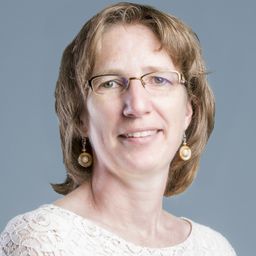
Alison Slinskey Legg, Ph.D., is a Teaching Professor and Center Director at the University of Pittsburgh, specializing in expanding access to STEM education through large-scale interventions. She founded the Broadening Equity in STEM Center, a collective impact initiative bridging academic and professional sectors, and serves as Principal Investigator for the $10 million NSF INCLUDES ALLIANCE: STEM PUSH Network. Developed national network of pre-college STEM programs using improvement science Pioneered accreditation model for out-of-school STEM programs Created cross-program research on STEM student enrollment trends Her outreach initiatives include Pitt-Kits curriculum, mobile laboratories serving 10,000+ students annually, and teacher professional development programs. She co-created the PBS pilot Science Mission 101 , winning Pennsylvania Excellence in Broadcasting Award (2010). Recent research focuses on racial equity in STEM spaces, program quality standards, and pandemic-era educational continuity. Her work spans STEM education, equity frameworks, and interdisciplinary curriculum development. Notable awards include: Pennsylvania Excellence in Broadcasting Award for Children’s Programming (2010) Dr. Legg’s lab initiatives include the STEM PUSH Network, Gene Team summer research program, and a tri-state mobile laboratory network. She advocates for evidence-based practices in pre-college STEM education through scholarly publications and practitioner collaborations.
Jiro Katto is a Professor at Waseda University's School of Fundamental Science and Engineering, where he has been conducting research and teaching since 1999. He received his Ph.D. from the University of Tokyo and has established himself as a leading researcher in multimedia signal processing and computer networks. His academic journey includes positions as Associate Professor (1999-2004), Professor (2004-present), and Director at NEDO (2004-2008), along with research experience at NEC C&C Laboratories (1992-1999) and a Visiting Scholar position at Princeton University (1996-1997). Professor Katto's research interests focus on Multimedia Signal Processing and Computer Networks, with particular expertise in video compression, 5G network performance, and learned image compression techniques. His work bridges theoretical advancements with practical implementations, as evidenced by his extensive publications in top-tier conferences and journals. His research group has made significant contributions to point cloud compression, latency compensation in remote systems, and hardware-accelerated video encoding for UHD streaming. His publication record is impressive, with 276 papers cited 3,323 times in Scopus and 6,169 times in Google Scholar, reflecting his substantial impact in the field. His recent work shows a strong trend toward applying deep learning techniques to traditional signal processing problems, particularly in the areas of image and video compression, where his team has developed novel approaches to improve compression efficiency while reducing computational complexity. Electric Telecommunications Promotion Foundation Telecommunications System Technology Award (2023) Takayanagi Kenjiro Foundation Takayanagi Kenjiro Achievement Award (2020) Institute of Image Information and Television Engineers Fellow (2020) Institute of Electronics, Information and Communication Engineers Fellow (2015) IEICE Communications Society Activity Contribution Award (2006) IEICE Academic Encouragement Award (1995) SPIE VCIP 1991, Best Student Paper Award (1991) Professor Katto has served on numerous prestigious committees including IEEE ComSoC Tech News Editorial Board, IEEE Technical Program Committees for major conferences (Globecom, ICC, ICIP), and editorial boards for several academic journals. His leadership in the academic community extends to chairing conferences like IWAIT 2011 and serving as Editor-in-Chief for journals in his field. His research has practical applications in commercial 5G networks, video streaming services, and remote monitoring systems, demonstrating the real-world impact of his work.
Pascale Biron is a Professor in the Department of Geography, Urban Planning and Environment at Concordia University, Montreal. She holds a Ph.D. in Geography from Université de Montréal (1995) and has been with Concordia since 1998. Her research focuses on river dynamics, stream restoration for fish habitat, flood modeling, and climate change impacts. She specializes in hydrogeomorphology, river management in agricultural watersheds, and numerical modeling of fluvial processes. Research Interests: Her work includes river restoration strategies, flood risk assessment using LiDAR technology, and the 'river freedom' concept promoting ecosystem resilience. She collaborates closely with government agencies to translate research into practical river management policies. Professional Affiliations: Canadian Geomorphology Research Group, Canadian Association of Geographers, American Geophysical Union, GRIL (Limnology Research Group), and RIISQ (Quebec Flood Risk Network). Publications & Research: Recent studies address global salmonid biomass patterns, fluvial hazard detection via machine learning, and large-scale flood modeling. She supervises 19 graduate students in Ph.D./M.Sc. programs in Geography and Environmental Studies, focusing on topics like river confluence hydraulics and agricultural stream restoration. Grants & Funding: Active projects include river dynamics in fish habitats, flood modeling for road infrastructure vulnerability, and computational fluid dynamics simulations of river flows. She also leads research on societal dimensions of river restoration and policy frameworks for flood resilience.