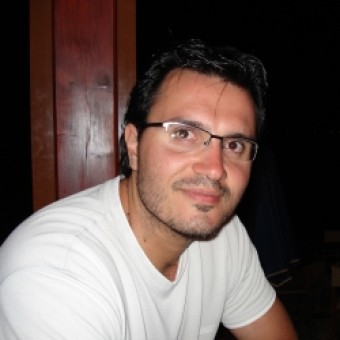
Mitali Sarkar is an Assistant Professor at Sejong University , affiliated with the Department of Hospitality and Tourism Management . She holds a Ph.D. from Hanyang University (2017) , an M.Sc. from Jadavpur University (2006) , and a B.Sc. from Jadavpur University (2002) . Ph.D., Hanyang University (2017) M.Sc., Jadavpur University (2006) B.Sc., Jadavpur University (2002) Her research spans supply chain management , retail optimization , green technology , and sustainable production . She focuses on integrating metaheuristic algorithms for green preservation , smart production systems , and waste-to-energy conversion under sustainable frameworks. Recent publications highlight trends in dynamic retail systems , eco-inventory models , and automated production optimization . Her work addresses bullwhip effects , consumer service improvement , and environmental-economic synergies through remanufacturing and biodegradable waste management.
Xu Sun is a Postdoctoral Fellow at the Department of Industrial Engineering, UiT The Arctic University of Norway, Campus Narvik. His research bridges logistics, sustainability, and digital innovation within Industry 4.0/5.0 frameworks, with a focus on practical applications in Norwegian contexts including electric vehicle infrastructure and pandemic response. His research portfolio spans Reverse Logistics, Sustainable Logistics, Closed-Loop Supply Chains, Digital Twins, and Industry 5.0 integration. Key themes include applying generative AI to logistics network design, optimizing charging infrastructure for electric trucks, and developing digital twins for circular economy systems. His work emphasizes multi-objective decision-making to balance environmental, social, and economic sustainability in logistics operations. Analysis of Xu Sun's publication trends reveals a strategic shift toward human-centric digital solutions in logistics. Recent works integrate generative AI, digital twins, and simulation to address Industry 5.0 challenges, with notable emphasis on electric mobility infrastructure (2024-2025) and pandemic-related logistics (2021-2022). His research consistently employs case studies from Norway, demonstrating practical applicability while advancing theoretical models for sustainable supply chains. No scientific awards were documented in the source material. While specific student advising details are absent from the profile, Xu Sun's collaborative publication record indicates active mentorship within research teams. His projects frequently involve multi-institutional partnerships and industry engagement, though explicit grant information is not provided in the available text. Xu Sun contributes to the ArcLog research group's Intelligent Manufacturing and Logistics team and leads the 'Industry 5.0 enabled Smart Logistics' project. His work leverages tools like AnyLogic simulation and digital twin technology to develop human-centered logistics solutions, with physical operations based in Campus Narvik office D2150.
Prof. Jef Peeters is a faculty member at KU Leuven in the Institute for Sustainable Metals and Minerals , specializing in Manufacturing Processes and Systems . His research focuses on robotics, circular economy strategies, and sustainable materials recovery. Academic Rank: Professor Research Areas: Robotic disassembly, WEEE recycling, critical raw materials. Recent Publications highlight interdisciplinary work blending robotics, deep learning, and environmental engineering. Key topics include human-robot collaboration in remanufacturing, advanced sorting techniques for plastics and metals, and life cycle assessments of recycling strategies. Technical Expertise spans computational fluid dynamics (CFD) modeling, laser-induced breakdown spectroscopy (LIBS), and computer vision systems for defect detection and battery dismantling. His work addresses challenges in e-waste management and product reparability. Applications of his research include robotic grasping constraints, unsupervised learning for waste retrieval, and techno-economic assessments of sorting technologies. This reflects a strong commitment to advancing circular economy practices through automation.
Ioannis Konstantaras is an Associate Professor at the Department of Business Administration, University of Macedonia, Thessaloniki, Greece, holding this position since July 2016. He contributes to the Master in International Business, Master in Business Administration, and Master in Business Analytics and Data Science programs. His academic qualifications include: B.Sc. in Mathematics from Aristotelian University of Thessaloniki (1999) M.Sc. in Statistics & Operations Research from University of Ioannina (2001) Ph.D. in Operations Research from University of Ioannina (2006) Konstantaras specializes in mathematical modeling and optimization of inventory systems for supply and reverse logistics chains. His research addresses production planning, deteriorating items, imperfect quality products, and recovery processes through operations research methodologies. He develops analytical models for optimizing decision-making in complex logistics environments. His publication record (2010-2014) shows concentrated research on inventory models for deteriorating items, lot-sizing in recovery systems, and pricing strategies for reverse logistics. Key contributions include extensions to Economic Order Quantity models, optimization of two-warehouse systems, and integration of inspection learning effects in quality control. He serves as Co-Editor for the International Journal of Systems Science: Operations & Logistics since January 2014 and has reviewed for numerous international journals. Konstantaras led the research program "Logistics Management: Quantitative Methods for Inventory Management" funded by the ARCHIMEDES program under EPAYAEK II. No publicly available information lists his doctoral advisees.
Dr. Uday Venkatadri is a Full Professor and Department Head in the Department of Industrial Engineering at Dalhousie University's Faculty of Engineering, where he has taught since 2001. His industrial experience includes roles as Lead Architect at Baan and Research Associate at Université Laval. His research bridges facilities planning, supply chain optimization, and Industry 5.0 technologies, utilizing Mixed Integer Linear Programming as a core methodology. Research interests span: Hyperconnected logistics systems Production planning under uncertainty Healthcare supply chain resilience Sustainable operations AI/ML applications in industrial systems His publication trends show strong focus on: Optimization under uncertainty (35% of recent works) Sustainable supply chains (25%) Healthcare operations (20%) Maintenance systems (15%) Industry 5.0 applications (5%) Notable scientific awards: 2021 IISE Teaching Award (Logistics Division) Dalhousie Teaching Excellence Awards (2016, 2004) Purdue University Fellowships (1991-1993, 1987-1990) IIE Master's Thesis Award (1988) Advising and grants: Supervises graduate students in supply chain optimization and production systems Research funded through industry partnerships and institutional grants Developed 15+ graduate courses including Advanced Facilities Planning Laboratory involvement includes leading computational research groups focused on logistics optimization and sustainable operations, though no dedicated physical lab is specified.
Whady Felipe Florez Escobar is a Research Professor at Pontifical Bolivarian University, coordinating the Energy and Thermodynamics Group (GET) and Mathematical Process Optimization group (ÓPTIMO). His work spans numerical methods, thermoelectric energy conversion, and biomedical applications with contributions to UN Sustainable Development Goals 7 and 9. Research Interests: Specializing in meshless methods using radial basis functions, his research addresses thermoelectric generators under mismatched thermal conditions, plasmonic effects in gold nanorods for photothermal therapy, and hydrogen energy systems. His fingerprint analysis shows strong focus on Two Dimensional Engineering (100%), Radial Basis Function Engineering (95%), and Boundary Element Method (61%). Publication Trends: Recent work (2024-2025) demonstrates interdisciplinary convergence between energy engineering and biomedical applications, featuring advanced numerical techniques for thermoelectric systems and cancer treatment. A clear shift toward industrial implementation is evident through partnerships with EPM utility company. Advising and Grants: Advises students including Daniel Sanín (thermoelectric generators) and R.C. Gómez Araque (photothermal therapy software). Current grants include: HYEPM2: Low-emission hydrogen production for EPM group (2025) UHP: Ultrasound-based testing for hydrogen pipelines (2025) PTARH2: Green hydrogen applications (2024) Photothermal therapy for gastric adenocarcinoma (2022-2024) Research Infrastructure: Leads GET and ÓPTIMO groups with active collaborations across 10 projects since 2020, focusing on numerical modeling for energy systems and industrial optimization.
Françoise Adler is a Lecturer and Senior Research Associate at Lucerne University of Applied Sciences and Arts - Design & Art, where she has been working since 2007 in the Product & Textile research group. She also teaches at the University of Art and Design Linz in the Fashion & Technology department. Her work focuses on bridging design, technology, and sustainability in the textile industry. Completed diploma in stage dance at Arts Educational Schools London Studied product and industrial design with focus on textile design at Lucerne University of Applied Sciences and Arts Received "zeugindesign Prize" for diploma thesis "Les rêves de Geneviève" (2005) Currently pursuing dissertation in textiles and sustainability in collaboration with University of Art and Design Linz Françoise Adler's research centers on design, technology, circularity, and sustainability in the textile industry. She explores new roles of design, associated knowledge fields, and industrial processes for a circular and sustainable textile future. Her professional skills include design and sustainability, collecting/sorting/recycling old textiles, design and technology integration, and digital printing processes. She investigates how design can enable consistently sustainable textile products through innovative approaches to material flows and production systems. Her recent publications demonstrate a strong focus on circular design strategies for textiles, with particular emphasis on lifecycle assessment, material innovation, and ecosystem design. The Texcircle project appears as a central theme across multiple publications, exploring how to create circular ecosystems in the textile industry. Her work bridges practical design approaches with sustainability metrics, showing how design decisions impact environmental outcomes throughout product lifecycles. Scientific Awards Best Research on Sustainability (2022) for "A practiced-based approach for sustainable product design decisions" Winner Kategorie Research Edition 2015 for DAFAT research project Nomination Eidgenössischer Preis für Design 2006 for "Les rêves des Geneviève" Nomination anabelle Award 2005 for "Les rêves de Geneviève" Winner zeugindesign-preis (2005) for diploma thesis "Les rêves des Geneviève" Adler leads multiple Innosuisse research projects including Circle Up Textiles (CUT) 2, Mono.Loop.Poly, Zürcular, and Texcircle, collaborating with industrial partners from textile, product, recycling and machinery sectors. Her research has secured significant funding for sustainable textile innovation, focusing on practical applications that bridge design theory with industrial implementation. She has developed design decision tools that help product developers make more sustainable choices throughout the product lifecycle. As part of the Product & Textile research group at Lucerne University, Adler works on numerous projects including Smart Ennoblement Factory, Textile Remanufacturing 2.0, and Digital Model for environmental impact assessment in circular textile chains. Her team collaborates with various research partners from universities and industry to develop practical solutions for sustainable textile production and recycling systems.