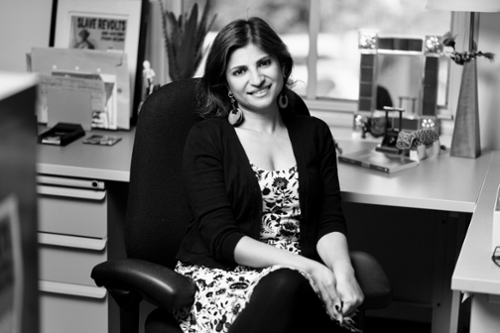
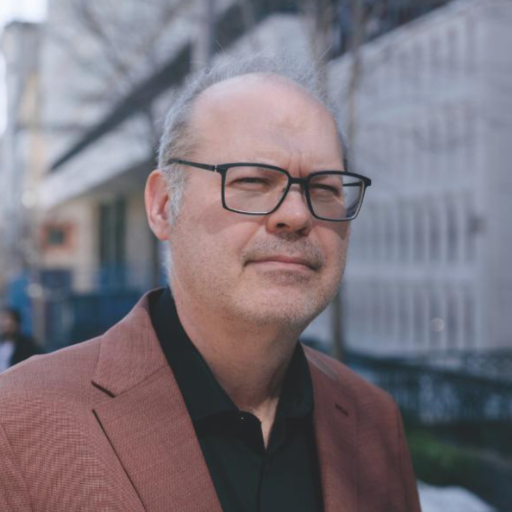
Monika Gabryś-Sławińska is a Professor at the Department of Polish Literary History , part of the Faculty of Languages, Literatures and Cultures at the University of Maria Curie-Skłodowska (UMCS). Her research spans 19th- and 20th-century Polish literature , focusing on Stefan Żeromski , historical journalism , text editing , voice emission , and museology . MA in Polish Philology (1998, UMCS) PhD in Literary Studies (2007, UMCS) Habilitation in Literary Studies (2016, UMCS) Her research interests include political commentary in historical press , media's role in cultural identity , and sociolinguistic trends . She has edited over 29 academic volumes and authored 5 monographs. Scientific awards: Bronze Cross of Merit KEN Medals (Bronze, Silver) 8 Rector's Awards (UMCS) Lublin Mayor's Medal (2019) She has participated in 5 research grants , organized 35 academic conferences , and contributed extensively to Annales UMCS as a scientific editor.
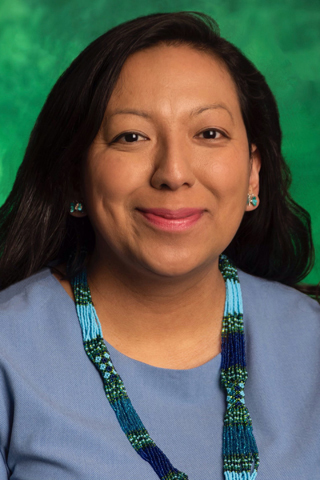
Jennifer Gómez Menjívar is Professor and Director of the M.A. in Media Industries and Critical Cultural Studies at the University of North Texas. Her research examines historical and ethno-linguistic movements influencing text production, circulation, and reception across print media, screen cultures, and digital communities. With over 18 years of teaching experience, she previously held positions at international organizations including the UNECE and UNDP. Her scholarly interests span media linguistics, film adaptation, digital activism, hemispheric animation histories, Indigenous sovereignty media, and Spanish-language media. Her publications demonstrate interdisciplinary work bridging media studies, cultural history, and postcolonial theory. Her extensive publication record includes books such as Tropical Tongues: Language Ideologies, Endangerment, and Minority Languages in Belize (2018) and Black in Print: Plotting the Coordinates of Blackness in Central America (2023), as well as co-edited volumes on Indigenous technology and hemispheric Blackness. She received a Senior Research Fellowship at Freie University Berlin for her upcoming work on Indigenous sovereignty media. Gómez Menjívar teaches courses including Introduction to Graduate Studies in Media Arts, Women in Film, and Global Media. She also mentors students in critical media analysis and serves as faculty advisor for media research projects.
Matt King is an Associate Professor and Graduate Director in the Department of History at the University of South Florida (USF), within the College of Arts and Sciences. He specializes in medieval Mediterranean history, digital humanities, and the Crusades era, particularly focusing on Norman-Sicily and Zirid-Ifriqiya relations. King holds a Ph.D. from the University of Minnesota (2018) and teaches courses on medieval history, digital methods, and historical pedagogy. His research explores the interconnectedness of medieval Mediterranean polities, leveraging Arabic and Latin sources alongside digital tools like the Old World Drought Atlas. His first book, Dynasties Intertwined (2022), examines Zirid-Norman relations. He has co-authored translations of al-Idrisi’s geography and is currently researching the historical perception of goblins. Education: Ph.D., University of Minnesota (2018); M.A. (2014), B.A. (2012) in History and Latin. King’s teaching emphasizes active learning and digital humanities, including workshops for K-12 educators. He has received grants totaling over $40,000 for research and community projects. Awards include the Outstanding Graduate Instructor Award (UMN, 2018) and the Subvention Award (USF, 2022). His publications span peer-reviewed journals (e.g., Journal of North African Studies , The History Teacher ) and edited volumes, with a focus on medieval Mediterranean dynamics, digital pedagogy, and environmental history. King advises graduate students in medieval Mediterranean history, emphasizing research in Arabic, Latin, or Greek. He is involved in digital initiatives, including departmental websites and archaeological 3D modeling projects.
Ramón Soneira Martínez is a Postdoctoral Fellow at the Austrian Archaeological Institute's Department of Classical Studies. He holds a Degree in History from the Complutense University of Madrid (Spain) with a focus on Ancient History, a Master's degree in Religious Studies, and a PhD in Religious Studies from the Max-Weber-Kolleg of the University of Erfurt (Germany) and the University of Graz (Austria). His academic career centers on interdisciplinary approaches to ancient religious phenomena. Education : Bachelor's Degree in History (Ancient History focus), Complutense University of Madrid Master's Degree in Religious Studies Doctor of Philosophy (PhD) in Religious Studies, Max-Weber-Kolleg (University of Erfurt) and University of Graz Research Interests : Ramón specializes in Ancient History of Religion, Theory and Methodology of Religious Studies, Religious Deviance, and Atheism in the ancient Mediterranean. His work explores unbelief narratives, sacred spatial practices, and biopolitical dimensions of religious systems in Greco-Roman contexts. Publication Trends : His recent scholarship (2020–2025) examines atheistic positions in Classical Athens, interdisciplinary frameworks for analyzing ancient religion, biopolitical dimensions of marriage, and ecological interpretations of sacred landscapes. These works frequently engage with Platonic philosophy, pre-Socratic thought, and comparative methodologies across Mediterranean civilizations. Current Research Projects : Doubt and religion in the ancient Mediterranean: A comparative analysis of unbelief narratives Lodging/Living in a Sacred Context: Investigating spatial dynamics of religious environments
David Arbesú is Professor of Spanish at the University of South Florida, serving as Head of the Spanish Section and Graduate Program Director for the MA in Spanish within the Department of World Languages. He has presented at over 70 national and international conferences on medieval and Golden Age Spanish literature. His research specializes in manuscript studies, codicology, and palaeography, with significant contributions to Golden Age textual scholarship and Florida colonial history. Arbesú has discovered key historical manuscripts including Pedro Menéndez de Avilés' conquest records and legal proceedings concerning colonial Florida, demonstrating interdisciplinary expertise in literary analysis and historical documentation. Recent publications (2018-2023) reveal sustained focus on critical editions of medieval Spanish texts like Sendebar and Libro de los gatos , alongside colonial Florida manuscripts. His work consistently bridges philological precision with historical context, producing authoritative editions that illuminate textual transmission and cultural frameworks of Iberian literature. Arbesú serves on the Editorial Board of Harvard UP’s Dumbarton Oaks’ Medieval Library Spanish Series and as Book Review Editor for La corónica: A Journal of Medieval Hispanic Languages, Literatures, and Cultures , maintaining active leadership in scholarly publication standards.
Dr Helen Gittos is a Senior Lecturer and Fellow in Medieval History at Balliol College and Brasenose College, University of Oxford. She holds a PhD in early medieval history from Oxford, following an undergraduate degree in English Literature at Newcastle University. Her research focuses on medieval church history, liturgy, and the role of language in religious practices, with expertise in archaeological evidence and textual analysis. She teaches British and European medieval history at both undergraduate and graduate levels, including the MSt and MPhil programs in Medieval History. Her major publications include Liturgy, Architecture and Sacred Places in Anglo-Saxon England (2013) and co-edited volumes on medieval liturgy. Current projects explore the use of English in medieval liturgy and collaborative research on Cerne Abbas’s early medieval history with archaeologists. She leads the Oxford Centre for Early Medieval Britain and Ireland and participates in interdisciplinary initiatives like the Worked in Stone project. Dr Gittos actively supervises DPhil students in areas related to her research, with recent advisees focusing on topics like shrines, liturgical charms, and Anglo-Saxon burial practices. She is also a media commentator, appearing in BBC News and podcasts discussing Anglo-Saxon history and archaeological discoveries.
İbrahim Dağılma is a Lecturer in Zaza Language and Literature at Bingöl University's Faculty of Arts and Sciences since 2013. He holds a Master's (2017) and PhD (2021) in Zaza Language and Literature from Bingöl University's Living Languages Institute. He previously served as a Turkish Language teacher in the Ministry of National Education and authored/co-authored Zazaki textbooks for grades 5-8 published by MEB between 2018-2019. He currently chairs the Zaza Language and Literature department and teaches courses like Modern Zaza Literature and Comparative Literary Analysis. Education: Bachelor's in Turkish Education, Dicle University (1997) Uncompleted Journalism studies at Istanbul University (2010) Master's and PhD in Zaza Studies (2017-2021) Research focuses on Zaza language preservation, modern literary movements, folklore documentation, and comparative studies between Zaza and other languages. He has published 11 books including 'Edebiyato Modern ê Zazaki' and 'Süleyman Hilmi Tunahan', and frequently presents at international conferences on topics like Zaza cultural identity and migration narratives. His recent academic work explores linguistic comparisons between Zaza and Farsi, analysis of traditional Zaza texts, and the role of folklore in educational materials. He has advised 18 undergraduate theses and participated in numerous thesis juries. His research has been published in refereed journals like Bingöl Araştırmalar Dergisi and The Journal of Mesopotamian Studies.
Umberto Eco was a renowned Professor of Semiotics at the University of Bologna and founder of Communication Science studies in Italy. Born in Alessandria (1932), he pursued classical studies before earning his philosophy degree from Turin University (1954). His academic career spanned Turin, Milan, and Florence universities, where he explored semiotics, media studies, and medieval aesthetics. He pioneered interdisciplinary approaches, blending literary criticism with contemporary cultural analysis. Eco's work in publishing (Bompiani, 1959–1975) and media (RAI, L'Espresso) shaped Italian intellectual discourse. The University of Bologna honored him with its highest accolades for his transformative contributions to academia and semiotic theory. Educations: Classical High School in Alessandria Laurea in Literature and Philosophy, University of Turin (1954) His research integrated medieval scholasticism with modern semiotics, analyzing mass media's societal impact through works like Apocalittici e integrati (1964) and the La bustina di Minerva column (1985–2016). Key themes included countercultural movements, communication theory, and the philosophy of aesthetics. His lectures and publications, such as Il costume di casa (1973), became foundational texts for understanding 20th-century intellectual trends. Though no specific scientific awards are listed, his academic legacy was celebrated through institutional recognitions from the University of Bologna. His advisory roles and editorial work fostered avant-garde movements like Gruppo 63, challenging 1950s literary norms. Eco's intellectual reach extended to founding the Scuola Superiore di Studi Umanistici, cementing his role as a pivotal figure in humanistic education.
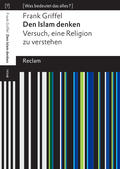
Frank Griffel is the Louis M. Rabinowitz Professor of Religious Studies at Yale University, where he has been teaching since 2000. His academic work is deeply rooted in Islamic intellectual history, focusing on theology, philosophy, and the interplay between reason and revelation. He holds a PhD from the Freie Universität Berlin and previously worked as a research fellow at the Orient Institute in Beirut. University: Yale University Department: Department of Religious Studies Academic Rank: Professor His research expertise lies in classical and post-classical Islamic philosophy, particularly the works of al-Ghazālī, Fakhr al-Dīn al-Rāzī, Avicenna, and Averroes. He has made significant contributions to understanding how philosophical discourse evolved in the Islamic world after the so-called classical period, challenging the notion of decline and highlighting the emergence of new genres such as ḥikma . His scholarship bridges theology and philosophy, examining how Muslim thinkers reconciled Aristotelian and Neoplatonic ideas with Islamic doctrine. Griffel’s most recent major work, The Formation of Post-Classical Philosophy in Islam (2021), redefines the field by demonstrating the continuity and innovation in 12th-century Islamic thought. His earlier book, Al-Ghazali’s Philosophical Theology (2009), is widely regarded as a seminal study. He has also published extensively on topics such as apostasy, virtue ethics, and the reception of philosophical texts, with articles spanning from 2011 to 2025. His work often appears in major academic handbooks and journals, and he has edited and translated key texts into German, Arabic, and Turkish. Islamic Philosophy Islamic Theology (Kalām) Post-Classical Islamic Thought Al-Ghazālī Studies Fakhr al-Dīn al-Rāzī Avicenna and Averroes Griffel has contributed to collaborative volumes such as Shari’a: Islamic Law in the Contemporary Context and Islam and Rationality , and his research engages with both historical and contemporary debates in Islamic thought. He has no listed scientific awards or students in the provided texts, but his influence is evident through citations and scholarly engagement. He maintains an active research profile, with recent publications addressing ambiguity, contradiction, and the popularization of philosophy in medieval Islam. He has held affiliations with the University of Oxford as a Faculty Member in the Faculty of Theology and Religion, indicating a strong international academic presence. His work continues to shape the understanding of Islamic intellectual history, particularly in the West.
Sunny Xiang is an Associate Professor of English at Yale University, where she teaches and conducts research at the intersection of literature, race, war, and empire. Her work critically examines U.S. military empire in Asia and the Pacific, particularly through aesthetic, cultural, and documentary forms from the mid-twentieth century. She is affiliated with the Department of English in the Faculty of Arts and Sciences at Yale. Ph.D., University of California, Berkeley B.A., Northwestern University Her research focuses on the cultural genealogies of American empire, with an emphasis on how war and militarism shape perception, knowledge, and everyday life. Key areas include Cold War aesthetics, Asian American studies, Pacific studies, critical militarization studies, and feminist science studies. She is particularly interested in how literary and cultural forms reveal the intimate, quotidian, and often invisible operations of empire. Her publications span journals such as ASAP/Journal , Radical History Review , PMLA , and Public Books . Her first book, Tonal Intelligence: The Aesthetics of Asian Inscrutability During the Long Cold War (Columbia University Press, 2020), explores the visual and narrative trope of Oriental inscrutability in relation to U.S. intelligence operations. Her current project, Chemical Apophenia: Air Conspiracies and Skin Connections in the Toxic Tropics , investigates how WWII military science in the Pacific generated new paradigms for detecting toxicity. The articles reflect a consistent engagement with themes of militarized domesticity, aesthetic excess, diasporic memory, and the entanglement of fashion, food, and war in imperial contexts. Mundane Militarisms: War, Archives, and Everyday Life (2024) Militarized Comfort: How to Feel Naked While Wearing Clothes (2023) Bikinis and Other Atomic Incidents: The Synthetic Life of the Nuclear Pacific (2022) Wars of Contemporary Life (2020) Global China as Genre (2019) Sunny Xiang has not been mentioned in relation to any scientific awards or fellowships in the provided text. She teaches courses such as War and Everyday Life, Readings in Comparative World English Literatures, and The Teaching of English. While her advisees or research teams are not listed, her scholarship demonstrates deep engagement with interdisciplinary methodologies and collaborative work, such as with the Mundane Militarisms Collective. She has not indicated any lab affiliations, but her research involves critical archival work and analysis of visual, literary, and cultural materials.
Tithi Bhattacharya is a Full Professor in the Department of History at Purdue University. She holds a PhD from the University of London and is renowned for her work in South Asian history, Transnational Gender, Colonialism, and Global History. Bhattacharya is the author of influential books including Ghostly Past, Capitalist Presence (Duke, 2024) and The Sentinels of Culture (Oxford, 2005), and co-author of the widely translated Feminism for the 99%: A Manifesto (Verso, 2019). Her educational background includes a PhD from the University of London. This foundational training has equipped her to critically engage with colonial and postcolonial histories, Marxist theory, and feminist praxis. Bhattacharya's research interests span Social Reproduction Theory, Marxist feminism, and the intersections of class, gender, and colonialism. She examines how capitalism relies on the social reproduction of labor, particularly through gendered and racialized exploitation. Her work also addresses Islamophobia and the politics of fear in colonial and contemporary contexts, as seen in her book Ghostly Past, Capitalist Presence . Analysis of her recent publications reveals a consistent focus on Social Reproduction Theory as a framework for understanding global capitalism and feminist resistance. Her articles frequently address the BRICS nations, anti-colonial movements, and the development of a feminism that centers the 99%. The multilingual nature of her work (appearing in over 30 languages) underscores its international impact. While specific scientific awards are not mentioned in the provided text, Bhattacharya's work has been published in prestigious journals such as the Journal of Asian Studies and South Asia Research , and she serves on the editorial boards of Studies on Asia and Spectre . Information regarding her advising of students and grant activities is not provided in the current text. Similarly, details about labs or research teams are absent.
Walter Pohl serves as Professor of Medieval History at the University of Vienna since 2006 and Director of the Institute for Medieval Research at the Austrian Academy of Sciences since 1998. His distinguished career includes visiting professorships at UCLA, CEU Budapest, Leiden University, and the University of Ishevsk. His academic credentials include: Born 1953 in Vienna Dr. Phil. (University of Vienna, 1984) Habilitation for Medieval History (University of Vienna, 1989) Habilitation for Historische Hilfswissenschaften (University of Vienna, 2001) Pohl's research fundamentally explores cultural memory systems and identity formation in transition periods, with particular expertise in the collapse of Roman political structures and emergence of early medieval societies. His comparative methodology bridges textual analysis with archaeological evidence to examine migration processes, religious transformation, and the construction of political legitimacy across Europe between 400-1200 CE. This interdisciplinary approach has reshaped scholarly understanding of ethnicity as a fluid social construct rather than biological determinant. His major honors include: Wittgenstein Prize of the FWF (2004) - Austria's highest academic award ERC Advanced Grant recipient (2010) Full Fellow of the Austrian Academy of Sciences (2004) Corresponding Fellow of the Medieval Academy of America (2018) Pohl directs the FWF-funded SFB 'Visions of Community (VISCOM)' and previously led the HERA project 'Cultural Memory and the Resources of the Past' (2010-2013). His ERC-funded SCIRE project pioneered network analysis of religious communities in early medieval Europe. He has served on European research governance bodies including the ERC Advanced Grants panel and the European Science Foundation's Standing Committee for Humanities. As Director of the Institute for Medieval Research, he oversees one of Europe's largest medieval studies hubs, fostering collaborations between historians, archaeologists, and philologists through the 'Transformation of the Roman World' research framework.
Prof. Dr. Kianoosh Rezania is a Professor of West Asian Religious History and Director of the Käte Hamburger Kolleg Dynamics of Religious History at Ruhr University Bochum. His research focuses on Zoroastrianism, Iranian religions, and the history of religions, with a particular emphasis on ancient Iranian languages and interreligious dynamics. He holds a Ph.D. from Georg-August University Göttingen and has conducted extensive research on topics such as Zoroastrian cosmology, Sasanian-Zoroastrian interactions, and the transmission of religious texts. His work combines philological analysis with historical and cultural studies approaches. Rezania's academic career includes roles as a research associate at Göttingen University and his habilitation project on spatial concepts in early Zoroastrianism. He has directed major research initiatives like the Graduate School of Metaphor and Religion (GSMR) and the Käte Hamburger Kolleg. His publications span monographs, edited volumes, and peer-reviewed articles exploring themes such as religious economics, Middle Persian lexicography, and cross-cultural exchanges between the Safavid and Mughal empires. His current projects include the 'Zoroastrian Middle Persian: Digital Corpus and Dictionary' initiative and studies on Pahlavi literature's interreligious context. He collaborates internationally, leading interdisciplinary teams and contributing to digital humanities efforts in religious studies.
André Gagné is a Full Professor and Chair of the Department of Theological Studies at Concordia University, currently on research leave (July-December 2025). His work bridges theology, political science, and sociology with global recognition through 400+ media features in outlets like The New York Times, The Guardian, and Le Monde. Education: Conjoint PhD from Université catholique de Louvain and Université de Montréal M.A. from Université de Montréal B.Th. from Université de Montréal His research centers on Christian Political Thought (examining theology-state dynamics), Global Pentecostal and Charismatic movements (analyzing their sociopolitical impact worldwide), and Reception History of the Bible (tracing interpretive trajectories across cultures). This interdisciplinary approach integrates historical analysis with contemporary case studies, particularly focusing on evangelical movements in the Americas and Europe. His eight books and recent journal articles reveal consistent thematic focus: the weaponization of spiritual warfare rhetoric in politics, apocalyptic narratives in populist movements, and religious violence in Western traditions. The 2024 publications on Trump-era evangelicalism demonstrate methodological innovation through media discourse analysis combined with theological critique. Scientific awards: Newsmaker of the Week (4 times) Newsmaker of the Month (4 times) President's Opinion Leader of the Year (2016) Expert Communicator of the Year (2024) Dr. Gagné supervises MA students in Theological Studies and PhD candidates in Individualized Programs and Humanities. His policy impact is evidenced by service on Public Safety Canada's National Expert Committee on Countering Radicalization to Violence (2023-2025), where he contributed theological perspectives on religious extremism. His media engagement strategy represents a deliberate effort to translate academic research for public discourse. He co-directs the Spirit, State, and Society podcast and maintains affiliations with Concordia's Centre for the Study of Learning and Performance, Université de Sherbrooke's Centre de recherche Société, Droit et Religions, and the multi-university Political Theology Research Group (McGill, Concordia, UdeM, ULaval).
Ksana Blank is a Senior Lecturer at Princeton University’s Department of Slavic Languages and Literatures. She coordinates the Russian Language Program and directs the Princeton-in-Petersburg Program, fostering academic exchange and interdisciplinary research. With a PhD in Russian Literature (Columbia University, 1997) and a BA in French Philology (St. Petersburg State University, 1979), her academic career spans over two decades at Princeton, preceded by teaching roles at Hunter College and Middlebury College Russian Summer School. Education: PhD, Russian Literature, Columbia University (1997) BA, French Philology, St. Petersburg State University (1979) Her research centers on Russian literature, emphasizing stylistic analysis and interdisciplinary connections with music, visual arts, folklore, and religious philosophy. Notable works include studies on Dostoevsky’s dialectics, Gogol’s The Nose , and the interplay between Russian modernism and Western art movements. She has authored multiple books and articles, many translated into Russian, and has published in academic journals across Russia, Europe, and China. Recent publications explore Dostoevsky’s paradoxes, Gogol’s linguistic innovation, and the intersection of Russian literature with music (Shostakovich), art (Malevich), and philosophy. Her 2023 book Парадоксы классики expands traditional interpretations of classic works through interdisciplinary lenses, while her 2021 The Nose guide deciphers Gogol’s wordplay and its narrative function. Earlier works address Tolstoy’s spiritual crisis and Bakhtinian dialogism in Russian literary theory. While no scientific awards are listed, her contributions to pedagogy include advanced Russian language courses and graduate-level Tolstoy studies. She currently works on Leo Tolstoy’s The Prisoner of the Caucasus and teaches courses on Russian literature, spirituality, and translation.