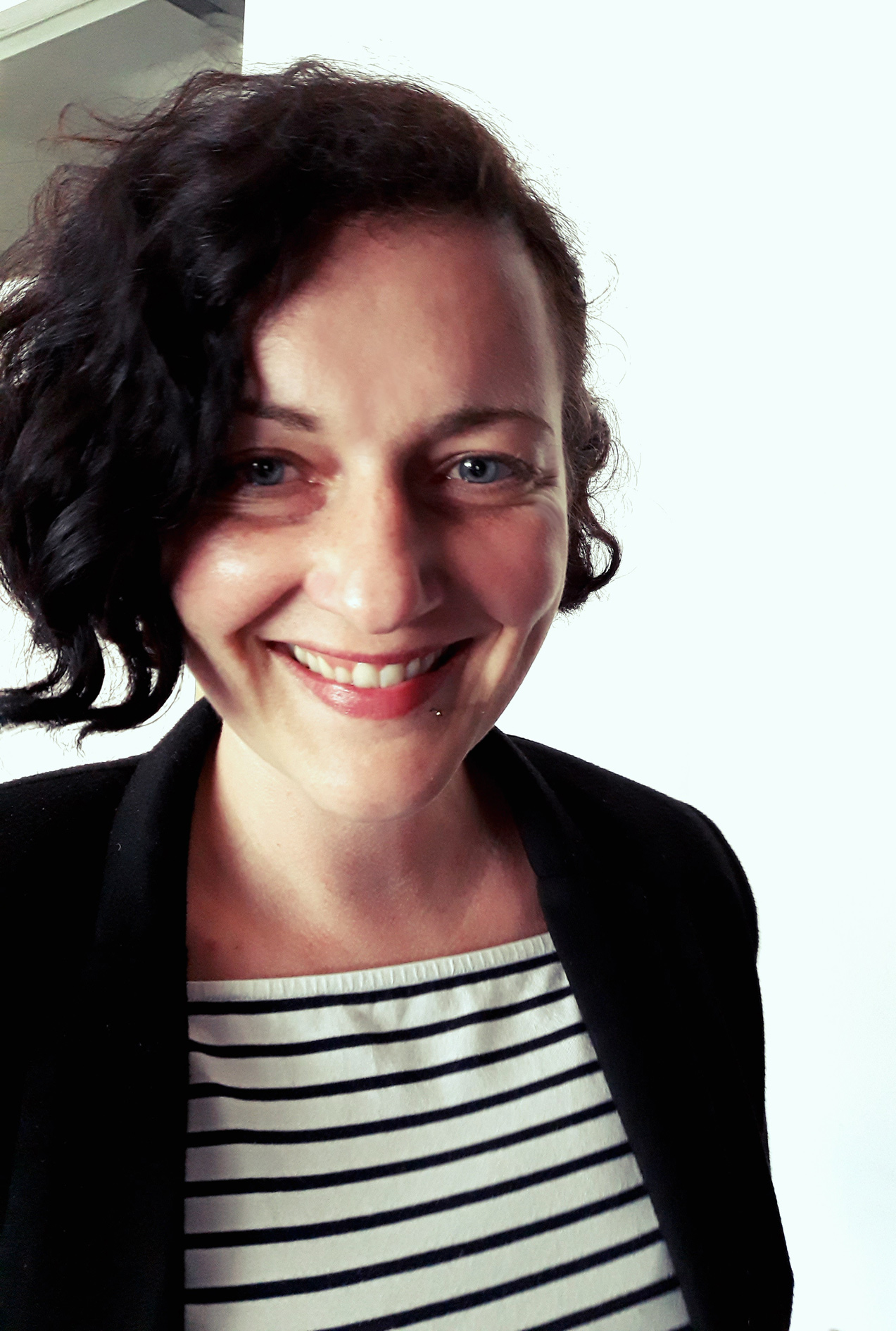
Dr. Barbara Hausmair is an Associate Professor at the Institute of Archaeology , University of Innsbruck , where she leads the Department of Medieval and Modern Archaeology . Her research spans historical archaeology , social identity studies , and burial practices from the early Middle Ages to the present, with a focus on Central Europe. Education : PhD in Prehistory and Early History (2013, University of Vienna), Habilitation (2024, University of Innsbruck) Research Themes : Archaeology of the Nazi era (conflict legacy, forced labor camps, memory discourse) Critical archaeology (interdisciplinary methodologies, ethics in historical research) Computer-aided methods (GIS, statistical modeling, databases) Her 2024 Habilitation thesis explores identity formation during crises, building on projects like the documentation of Nazi prisoner tokens and Natzweiler camp evaluations . She has held funded positions at institutions including the Free University of Berlin and University of Konstanz . Scientific awards include the Erwin Wenzel Prize (2014) and Grete Mostny Dissertation Prize (2014). Her work often intersects with bioarchaeology , landscape archaeology , and archaeology of modernity . She supervises theses on topics like early medieval cemeteries , GIS mapping , and Nazi camp archaeology , and contributes to editorial boards of journals like Forum Critical Archaeology and Contributions to Medieval and Modern Archaeology in Austria .
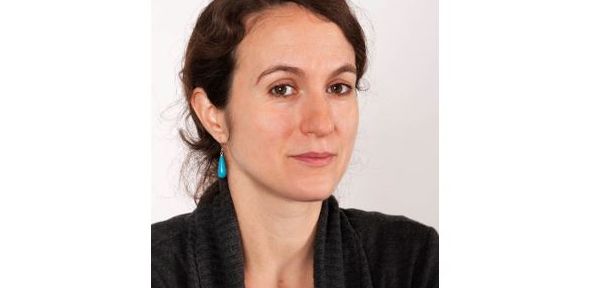
Dr. Jessica Maratsos is an Associate Professor of Italian in Renaissance and Early Modern Studies at the Faculty of Modern and Medieval Languages and Linguistics, University of Cambridge. With a PhD from Columbia University (2014), she is affiliated with Pembroke College and specializes in Italian Renaissance art. Her research explores intersections between visual and material culture, religious practice, gender, and the body. Current Position: Associate Professor at University of Cambridge Previous Appointments: American University of Paris, Columbia University, Harvard University Research Focus: Renaissance visual culture, relic mobility, gender studies, text-image relationships Her scholarly work examines how religious artifacts like reliquaries facilitated transnational cultural exchange in early modern Europe. She has published extensively on Pontormo, Michelangelo, and Vittoria Colonna, analyzing their contributions to Renaissance devotion and artistic theory. Recent research includes studies on: Global movement of sacred objects Epistemologies of the body in Renaissance art Poetry-image dynamics in Christian devotion Medici court politics in 16th-century Tuscany
Professor Henrike Laehnemann is a distinguished academic at Newcastle University specializing in Medieval German literature, mysticism, and devotional practices of the Late Middle Ages. Her research focuses on Northern German monastic communities, particularly the Medingen convent, examining manuscript production, liturgical reforms, and the material culture of religious texts. Her scholarly interests encompass Medieval German Literature , Mysticism , and Devotional Practices with particular emphasis on female monastic communities. Laehnemann's work reveals intricate connections between textual production, sensory spirituality, and institutional reform in pre-Reformation Northern Europe. She employs interdisciplinary methodologies combining codicology, linguistic analysis, and religious studies to investigate how convents functioned as intellectual centers. Analysis of her publication record shows consistent focus on manuscript materiality , bilingual text production , and sensory aspects of medieval devotion . Her research demonstrates how Northern German convents actively shaped religious discourse through innovative textual and visual practices, particularly evident in studies of the Medingen community's unique devotional manuscripts. Professor Laehnemann has established herself as a leading authority on late medieval German religious literature through her meticulous editions and contextual analyses of primary sources. Her work bridges historical, literary, and theological approaches to illuminate the vibrant intellectual culture of Northern European monastic communities during periods of significant religious transformation.
Meredith S Martin is a Professor of Art History at New York University and the Institute of Fine Arts. She holds a Ph.D. and M.A. from Harvard University and a B.A. from Princeton University . Her research focuses on 18th- and 19th-Century French and British art, architecture, and material culture , with particular attention to histories of empire, colonialism, enslavement, art and gender politics, cross-cultural encounters, and historical revivalism . She is a founding editor of Journal18 and co-creator of the Ballet des Porcelaines , a reimagined 18th-century French ballet that premiered at the Met and toured internationally in 2021–22. Her current projects include a study of links between late 18th-century Saint-Domingue (Haiti) and the Paris art world, supported by a Kress Digital Art History Award (2025–26) and a NYU Digital Humanities Seed Grant (2024) . She has also co-written and produced a film with the National Gallery in London and is co-curating a 2026 exhibition at the Institut du monde arabe on enslaved Muslims in the early modern Mediterranean. Her 15 most recent publications span topics such as maritime art and galley slavery in Louis XIV’s France, porcelain’s cultural symbolism , and colonial intersections in global art history . These works emphasize visual culture, postcolonial critique, and materiality across Europe, the Caribbean, and Asia. Martin has received numerous scientific awards , including the Iris Foundation Outstanding Mid-Career Scholar Award (2025) , the Kress Digital Art History Award (2025–26) , and multiple 2023 accolades for her book The Sun King at Sea , such as the Leo Gershoy Prize and David F. Pinkney Prize . She also secured significant fellowships, including the Provost's Global Research Initiatives Fellowship (2019–2020) and the ACLS Collaborative Research Fellowship (2016–2018) . Her teaching includes courses like Art and Money in the Early Modern World and Architectural Space and Decoration in Eighteenth-Century Europe . She has advised numerous institutions and exhibitions, including collaborations with the Morgan Library and Museum and the Metropolitan Museum of Art .
Drew Chastain is a Visiting Assistant Professor in the Department of Philosophy at Loyola University New Orleans. His research focuses on spirituality and meaning in life, bridging religious and secular perspectives. He explores how humor, ethics, cultural traditions, and personal connections intersect with these themes. Ph.D., Tulane University Dr. Chastain's work spans philosophy of spirituality, meaning in life, applied ethics, and philosophy of humor. He examines Lakota traditions, William James’ secularism, and existential questions through lenses like MST3K. His recent articles address self-acceptance humor, life extension, and the subjective nature of personal meaning. His publications include analyses of humor’s role in existential absurdity, sacredness in secular terms, and critiques of Bernard Williams’ views on immortality. He also reviews transhumanist debates and advocates for moderate technological experimentation. Contact: chastain@loyno.edu | Personal Website
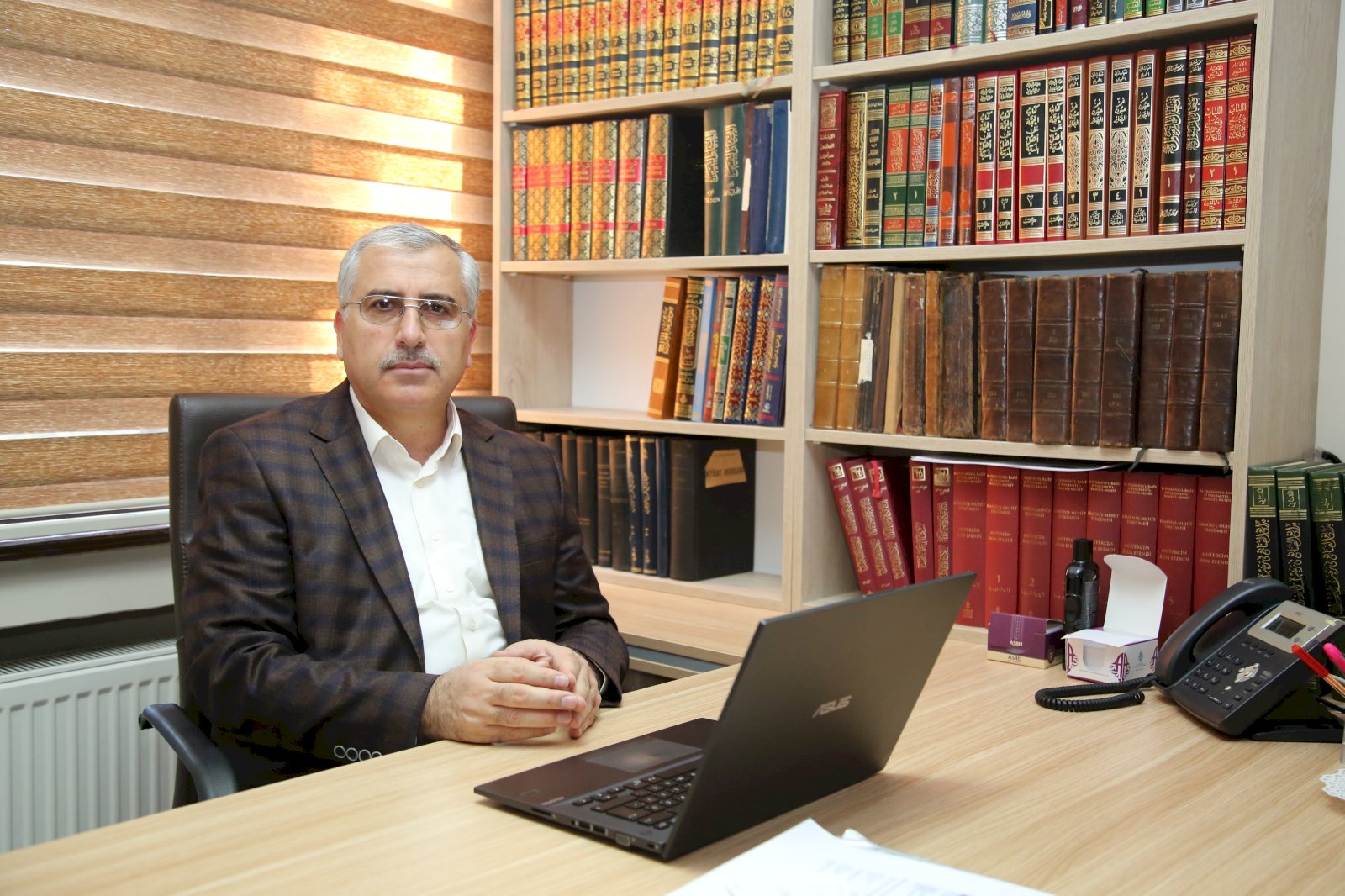
Prof. Dr. Şahban YILDIRIMER is a full-time Professor at the Department of Basic Islamic Sciences within the Faculty of Theology, Ankara Social Sciences University. He holds a PhD (2007), MA (1996), and BA (1991) in Fundamental Islamic Sciences from Ankara University. Basic Islamic Sciences Department Head (2016-) Academician at Ankara Social Sciences University (2022-) His research focuses on Islamic Law , Comparative Jurisprudence , and the Ethical Dimensions of Legal Systems . He explores intersections between Islamic legal epistemology and Western legal philosophies, particularly examining concepts like Maqasid al-Sharia , Ijtihad , and Shariah Governance in contemporary contexts. Recent publications analyze the Anglo-Islamic legal interactions , historical origins of trust mechanisms in common law through the lens of Islamic Vakıf institutions, and ethical challenges in pandemic-era jurisprudence . His work spans Islamic legal methodology, natural law theory, and axiological dimensions of justice. He has advised four master's students on topics including Kat Mülkiyeti , Alcohol in Food Products , Legal Objectives in Islamic and Secular Systems , and Usul Methodology . He participated in TÜBA/TÜBİTAK and international projects on Islamic finance governance (2020-2021) and pandemic-era legal-ethical frameworks (2020-2021). As an editor, he contributed to six major publications including Fiqhî ve İktisadi Yönleriyle Salgın Dönemi (2021) and İslam Hukukunda Finansal Nitelikli Ortaklık Akidleri (2023). His scholarly impact is reflected in 37 citations and an h-index of 3.
Stephan Palmié is the Norman & Edna Freehling Professor of Anthropology and of Social Sciences in The College at the University of Chicago, where he maintains an office in Haskell 212. A preeminent scholar in sociocultural anthropology, Palmié is internationally recognized for his ethnographic and historical research on Afro-Caribbean cultures, particularly Afro-Cuban religious formations and their transnational connections across the Atlantic world. His work critically examines intersections of religion, history, and power while challenging conventional disciplinary boundaries. His academic credentials include: D.Phil in Anthropology, University of Munich (1989) Habilitation in Social Sciences, University of Munich (1999) Palmié's research spans Afro-Caribbean religions, historical anthropology, race and ethnicity, embodiment, food studies, and science and technology studies. He is renowned for deconstructing epistemological hierarchies between Western scientific practice and Afro-Cuban ritual knowledge, while analyzing constructions of race, systems of slavery, and moral personhood. His scholarship reveals how historical consciousness manifests in everyday practices, particularly through Cuban culinary traditions and religious syncretism. Analysis of his recent publications demonstrates consistent engagement with epistemological questions at anthropology's intersection with history and philosophy. His work increasingly examines molecular biology and genomics through anthropological lenses while maintaining deep focus on Cuban historical particularities. A recurring theme involves using Afro-Cuban ritual as a critical prism to interrogate Western scientific rationality, revealing productive parallels between seemingly disparate knowledge systems. His scientific recognition includes: Clifford Geertz Prize (2014) from the Society for the Anthropology of Religion for The Cooking of History: How Not to Study 'Afro'-'Cuban' 'Religion.' Palmié has co-edited significant scholarly interventions including the 2021 HAU special issue on Fernando Ortiz and the 2019 volume The Varieties of Historical Experience . Information regarding graduate student advising, research grants, or laboratory teams was not documented in the source material.
Aleksandra Niemyjska is a researcher at SWPS University's Faculty of Psychology in Sopot, where she works within the Department of Clinical and Health Psychology. She is affiliated with the Institute of Psychology, the Center for Research on Social Behavior, and the Center for Research on Cognition and Behavior. Her work bridges multiple research centers focusing on human cognition, behavior, and social relationships. Dr. Niemyjska's research explores the constructive capacities of the mind from both cultural (folklore, fairy tales, mythologies) and individual perspectives (fantasy-based coping mechanisms). Her work encompasses anthropomorphization, magical thinking, personality susceptibility to fantasy, and mechanisms of kind behavior toward animals, including caring for farm animals and refraining from meat consumption. She has led significant research projects including 'Cognitive and Motivational Determinants of Sympathetic Magic in Close Relationships' (2015-2017) and 'Animal Individualization and Its Relationship to Children's Instrumental Treatment of Animals' (2019-2022), with findings published in journals like the Journal of Social and Personal Relationships. Her extensive publication record demonstrates consistent research output across multiple domains, particularly examining how magical thinking functions in romantic relationships, how people anthropomorphize animals affecting dietary choices, and the psychological mechanisms behind keeping keepsakes as substitutes for human connection. Her recent work has expanded into areas such as religious coping during the pandemic and the psychological effects of unemployment. Dr. Niemyjska teaches courses in personality psychology, psychology of individual differences, and the impact of spirituality and religiosity on health at SWPS University.
Marie Loughlin, PhD, is an Associate Professor in the Department of English within the Faculty of Creative and Critical Studies at the University of British Columbia Okanagan. She has been teaching at UBC-Okanagan since 2005, following previous teaching positions at Okanagan University College (1993-95, 1998-2005) and the University of Calgary (1995-98). She also serves as an Associate member of the Gender, Women and Sexuality Studies Program at UBC-Okanagan, and is a member of both the Modern Languages Association and the Canadian Society for Renaissance Studies. Dr. Loughlin received her academic training at McMaster University (B.A. English Honours, 1985) and Queen's University (M.A. English, 1986; PhD. English, 1992). Her educational background has provided the foundation for her extensive research in early modern literature and women's writing. Dr. Loughlin's research spans several interconnected areas within literary studies, with a particular focus on early modern literature. Her primary research interests include 16th-century poetry and prose, early modern women's writing, early modern drama, women's literature across historical periods, 16th and 17th-century literature, spiritual autobiography, speculative fiction, and feminist and queer theory. Notably, she has developed significant expertise in Tolkien studies, examining J.R.R. Tolkien's epic fantasy works through various theoretical lenses. Her work bridges historical literary scholarship with contemporary theoretical approaches, creating innovative connections between early modern studies and modern fantasy literature. Dr. Loughlin's scholarly output demonstrates a consistent trajectory of exploring gender, sexuality, and literary representation across historical periods. Her recent work has increasingly focused on genealogical writing by early modern women, examining how female authors constructed family lineages and personal histories within restrictive social frameworks. Simultaneously, her scholarship on Tolkien has developed into a substantial body of work that examines material culture in fantasy literature and queer readings of both the original texts and their cinematic adaptations. This dual focus on early modern women's writing and Tolkien studies represents a unique scholarly trajectory that connects historical literary analysis with contemporary cultural interpretation. 2016 Teaching Honour Roll Award, University of British Columbia, Okanagan Campus 2014 FCCS Service Award: Faculty of Creative and Critical Studies, University of British Columbia-Okanagan Dr. Loughlin has successfully secured significant research funding throughout her career, including internal grants from 1999-2016 for research on early modern women's writing and British women's post-WWII travel writing, as well as an SSHRC Standard Research Grant from 1997-2000 for her project 'Women Writing Virginity, 1590-1700.' She has supervised numerous graduate students, including Dana Penney (M.A. English, 2018-present) researching 'Rey, Nebula, Gamora, and Wonder Woman: The Woman Warrior, Bodies, Subjectivity and Gender in Popular Culture and Society,' Ashley Cail (M.A. English, 2014) who examined gender constructions in Shakespeare's Antony and Cleopatra, Danielle Wilgan (M.A. English, 2011) who studied Britomart in Spenser's Faerie Queene, and Melanie Oberg who completed an Honours English Thesis in 2015 on early modern gardens in Jonson, Lanyer, and Milton. While specific laboratory or research team information is not explicitly mentioned in the available materials, Dr. Loughlin's extensive editorial work suggests collaborative scholarly engagement. Her role as Senior Editor for The Broadview Anthology of Sixteenth-Century Poetry and Prose indicates leadership in creating scholarly resources for teaching and research. Her current work on 'Figures of Descent: Genealogy and the Early Modern Woman Writer, c. 1580 – 1700' contracted with Routledge represents an ongoing major research project that likely involves collaboration with other scholars in the field.
Dr. Olivia Landry is Associate Professor of German and Chair of Gender, Sexuality, and Women's Studies at Virginia Commonwealth University's College of Humanities and Sciences. She holds a Ph.D. in German from Indiana University (2014), an M.A. from McGill University (2008), and a B.A. from McGill University (2006). Her academic career includes positions at University of Pittsburgh (Dietrich Postdoctoral Fellow), Stanford University (Bonsall Professor), and Lehigh University before joining VCU. Landry's research spans film/media studies and theater/performance studies with focus areas in: Transnational German/European cinema and theater Feminist film theory and representations of motherhood Decolonial approaches to documentary and archival practices Affect theory in political performance Intersections of race, gender, and migration in visual culture Her recent scholarly work demonstrates strong engagement with decolonial methodologies, feminist critiques of representation, and innovative analyses of sound/voice in media. Landry has received significant recognition including grants from: Social Sciences and Humanities Research Council of Canada (SSHRCC) German Academic Exchange Service (DAAD) Alexander von Humboldt Foundation At VCU, she teaches courses including German language instruction, German Conversation and Film, and graduate seminars on Documentary Media and Displacement/Exile studies.
Luis Velasco Martinez serves as Assistant Professor in Contemporary History at the University of Vigo's Faculty of Education and Sport Sciences, Department of History, Art and Geography. His academic career spans multiple international institutions including King's College London (visiting professor), University of Buenos Aires, Complutense University of Madrid, and Columbia University. His educational background includes an International PhD in Contemporary History through the UAM-coordinated program and doctoral research at the University of Santiago de Compostela supervised by Dr. Xosé M. Núñez Seixas and Dr. Ramón López Facal. His research focuses on Spanish nationalism construction throughout the 20th century, military conscription's role in national identity, and historical conflicts. Analysis of his publication record reveals consistent scholarly output in Spanish political history, with particular emphasis on Francoist conscription policies, transnational fascist networks, and 19th-20th century social legislation. His work demonstrates strong interdisciplinary connections between military history, political science, and migration studies. Currently, he coordinates the Master's Degree in Security, Peace and International Conflicts at USC and IEEE while maintaining active research collaborations across European and American academic networks. His teaching portfolio includes Contemporary History of Galicia, History of International Relations, and Political Geography courses.
Kirstin C Erickson serves as an Associate Professor of Anthropology at the University of Arkansas within the College of Arts and Sciences. She is also a member of the Latin American and Latino Studies Core Faculty. Her academic work bridges anthropology, religious studies, and Latin American studies through interdisciplinary research and teaching. Her research focuses on material culture, performance studies, and religious expression, with particular emphasis on the U.S.-Mexico borderlands. Current projects examine cultural production, cultural memory, and place relationships in northern New Mexico, specifically studying artists in Santa Fe and the historic Hispano community of Chimayó. Her earlier ethnographic work with the Yaqui Tribe (1996-2003) resulted in the book Yaqui Homeland and Homeplace (2008), which explores how contemporary Yaqui identity connects with history, memory, landscape narratives, and senses of place. Her publication record demonstrates consistent contributions to anthropology and folklore journals including the Journal of American Folklore , Western Folklore , Journal of Folklore Research , and Anthropology and Humanism . Recent scholarship shows increasing focus on material religion, community museums, and contemporary expressions of cultural identity in the Southwest. Professor Erickson teaches courses spanning cultural anthropology, indigenous studies, religion in Latin America, borderlands studies, and museum studies. Her active teaching schedule includes undergraduate and graduate courses such as Introduction to Cultural Anthropology, Indigenous Peoples of North America, Religion in Latin America, Museums and Material Culture, and specialized seminars on pilgrimage and performance studies.
Anver M. Emon is a Professor of Law and History at the University of Toronto, holding the Canada Research Chair in Islamic Law and History. He serves as Director of the Institute of Islamic Studies and maintains cross appointments in the Department of History, Department for the Study of Religion, and Factor Inwentash Faculty of Social Work. His academic appointment is split between the Faculty of Law and the Department of History in the Faculty of Arts and Sciences since 2018. Professor Emon's research focuses on pre-modern and modern Islamic legal history, the role of Shari'a both inside and outside the Muslim majority world, and the historiography of Islamic legal knowledge production. His scholarly work spans critical legal theory, Islamic law, judicial decision-making, law and religion, legal history, and legal theory. In the Faculty of Law, he teaches torts, constitutional law, racial politics and the law, legal ethics, and statutory interpretation. In history, he teaches in the field of Islamic legal history, law and religion, and historical epistemology in Islamic studies. His publication record shows consistent engagement with the intersection of Islamic legal theory and contemporary legal challenges, particularly in Western contexts. His work demonstrates a strong focus on legal pluralism, multicultural accommodation, and the theoretical foundations of Islamic law. Professor Emon has established himself as a leading scholar in the field of Islamic legal studies through his extensive publications and editorial work. Member, College of the Royal Society of Canada Kitty Newman Memorial Award in Philosophy (2017) Guggenheim Fellow in Law (2014-2015) Member, Institute for Advanced Study (2014-2015) Senior Fellow, Massey College Professor Emon has secured significant research funding, including two Social Sciences and Humanities Research Council (SSHRC) grants for the projects 'Muslims in Canada Archive' (2020-2024) and 'On CRA Audits of Muslim-Led Faith Based Charities' (2020-2021). He serves as General Editor of the Oxford Series in Islamic Legal Studies and as Founder/Editor-in-Chief of Middle East Law and Governance. His external service includes consulting for the Canadian Department of Foreign Affairs on the Hague Abduction Convention and Islamic Law, and for the Department of Justice on judicial independence in the Maldives.
Lamia Balafrej is an Associate Professor in the Department of Art History at the University of California, Los Angeles (UCLA), where she specializes in the arts of the Islamic world, particularly focusing on the medieval and early modern periods across Middle East and North Africa. Her research interests span multiple interconnected areas including Islamic art history, slavery studies, technology and labor relations, and visual and material culture of the premodern Islamicate world. Balafrej's work uniquely bridges historical analysis with contemporary concerns about technology, race, and labor exploitation. Her publication record includes the monograph The Making of the Artist in Late Timurid Painting (Edinburgh University Press, 2019) and numerous articles on gender, slavery, and technology (2023), automated courtly slaves (2022), and domestic slavery and skin color (2021). Her current book project, Instrumental Figures , historicizes the relations of technology, enslavement, and difference in the premodern Islamicate Mediterranean and Southwest Asia. Rome Prize in Medieval Studies (2023) Getty Scholar Grant (2023) Donald and Maria Cox/Andrew W. Mellon Foundation/National Endowment for the Humanities Rome Prize Fellow (2022-23) Her research has been supported by prestigious institutions including the American Academy in Rome, the Getty Research Institute, the Forum Transregionale Studien in Berlin, the Marion and Jasper Whiting Foundation, the Metropolitan Museum of Art, and the Smithsonian Institution. Balafrej's work connects historical analysis of medieval Islamic art with contemporary discussions about technology, labor, and race, offering critical perspectives on the enduring legacies of slavery and technological development.
Herleik Baklid is an Associate Professor in Cultural History at the Department of Culture, Religion and Social Studies, Faculty of Humanities, Sports and Educational Sciences, University of Southeast Norway. His academic career spans multiple institutions including Telemark University College and University of Gothenburg. Education: Cand. philol. (1993) and Dr. philos. (2015) from University of Oslo Positions: Assistant Professor (1993-2005), Senior Lecturer (2005-2015), Associate Professor (2015-present) Specializing in cultural history, Dr. Baklid investigates intangible cultural heritage through source pluralism and interdisciplinary approaches . His research focuses on: Folk Customs – wedding rituals, morning gifts, and feast-bench traditions Belief Systems – disease spirits, bodily fluid imbalances, and medieval medical advice Material Culture – hazel rods in graves, notched sticks, and church floor artifacts Saint Cults – Olav traditions and post-Reformation folk practices His publications reveal a 700-year historical continuum in customs and continuity perspectives in cultural practices. Key methodological approaches include archaeological analysis of church sites and historiographical studies of early folklore collectors like Magnus Brostrup Landstad.