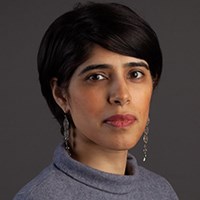
Dr. Simran Kalra is a Lecturer at the Leicester Law School, University of Leicester. Her research focuses on law and religion, family law, and migration studies, with emphasis on legal consciousness and mobilisation among religious minority and diaspora communities. She holds a PhD from King’s College London, which examined Islamic Nikahs in England through qualitative and socio-legal methodologies. Dr. Kalra has taught courses on Access to Justice, Law and Governance at Jindal Global University, and previously tutored Family Law and comparative legal studies at SOAS and UCL. Education: PhD in Law from King’s College London Her work analyzes how marriage-related rights evolve in plural legal contexts, particularly for minority groups. While no recent publications are listed, her research bridges socio-legal theory with empirical insights into legal pluralism. She actively engages in teaching, supervision, and academic conferences, contributing to discourse on legal systems in Asia and Africa. No scientific awards or grants are explicitly mentioned in the provided information.
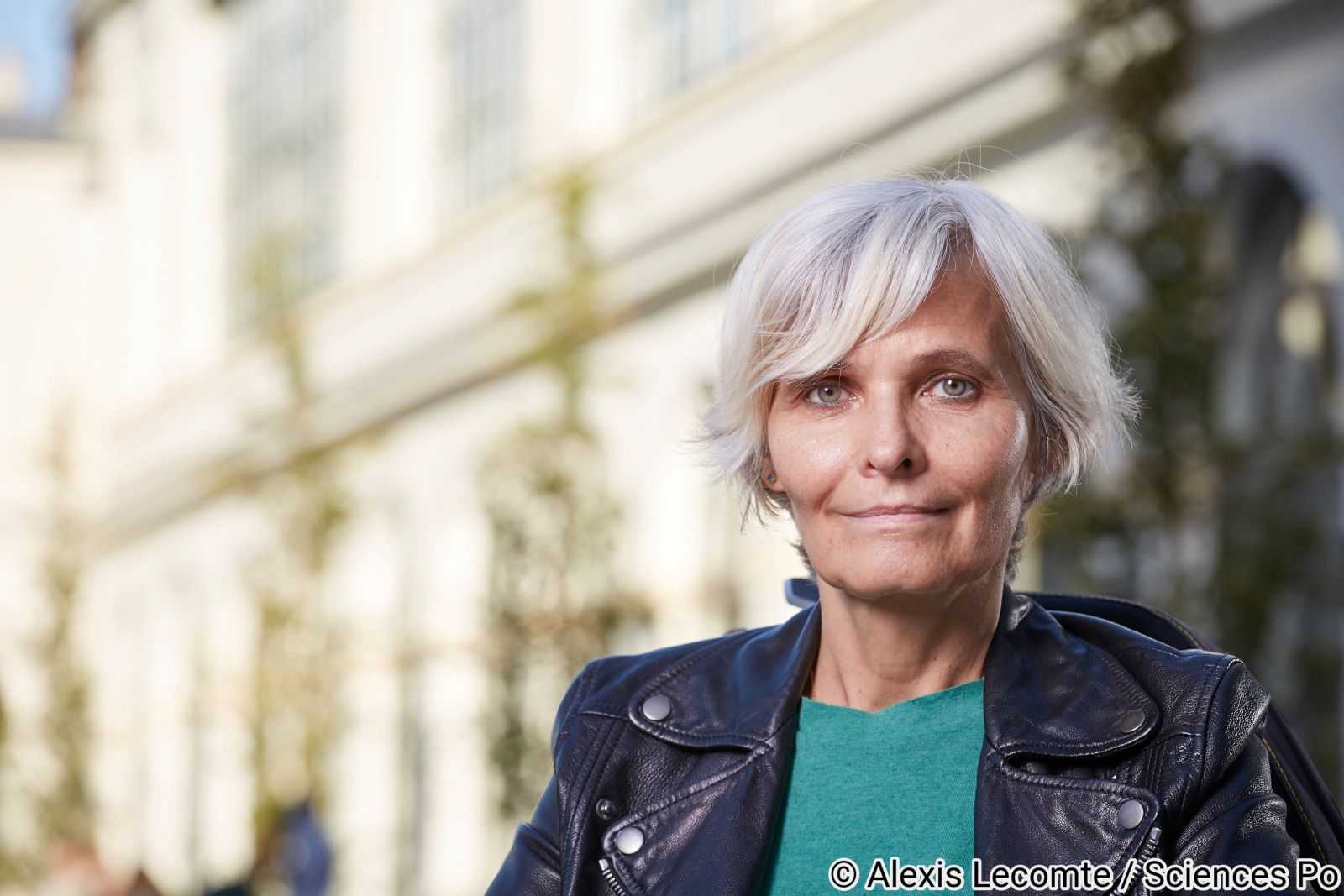
Dr. Antonela Capelle-Pogacean is an Assistant Research Professor with tenure at Sciences Po's Center for International Studies (CERI), where she has been a faculty member since 2003. She holds a PhD in Political Science from Sciences Po Paris (2002) and serves as teaching faculty across multiple programs including the Ecole doctorale (Master de sociologie politique comparée), Ecole des affaires publiques (Master Affaires européennes), and Collège Universitaire. Dr. Capelle-Pogacean possesses a PhD in Political Science from Sciences Po Paris (2002), combining historical and political science methodologies in her academic approach. Her interdisciplinary training enables her to bridge historical analysis with contemporary political science frameworks. Dr. Capelle-Pogacean's research centers on historical sociology of communism, citizenship, ethnicity, religion and politics in Central and Eastern Europe, with particular emphasis on Hungary and Romania. She investigates social history of citizenship, nationalism, religious dynamics in post-communist societies, consumption and everyday life during communism in Romania, and reconstitutions of social beliefs and identities. Her work demonstrates how national identities are constructed and transformed in contexts of political transition and European integration, employing interdisciplinary methods that draw from both historical and political science traditions. Her publication record shows consistent scholarly output across political science, history, and religious studies, with a clear trajectory from early research on Hungarian-Romanian relations toward contemporary analyses of Viktor Orbán's government, Romanian democracy, and European elections. Recent work increasingly engages with questions of democratic backsliding, governance challenges, and the relationship between religion and politics in post-communist contexts. Dr. Capelle-Pogacean serves as a member of the editorial board of Critique internationale since 2004, contributing to one of France's leading journals in international relations. Her academic service extends to peer review for multiple scholarly journals across her fields of expertise. As a supervisor, Dr. Capelle-Pogacean works with graduate students at Sciences Po, particularly in comparative political sociology. Her interdisciplinary approach provides students with frameworks to analyze complex political and social phenomena in Central and Eastern Europe. She has supervised research on nationalism, religious politics, citizenship, and post-communist transitions. Dr. Capelle-Pogacean is affiliated with Sciences Po's Center for International Studies (CERI), participating in research groups focused on 'Art, humanities, and international research,' 'State, political regimes, mobilisations,' and 'Nationalism, religion, identity and discrimination.' These affiliations reflect the interdisciplinary nature of her scholarship bridging political science, history, and cultural studies.
Dr. Sara Silvestri is a Senior Lecturer in International Politics at City, University of London, where she specializes in Islamism, religion and politics, and the EU. She joined in 2006 after completing her MPhil, PhD, and ESRC Post-Doctoral Fellowship at the University of Cambridge. Her multidisciplinary background includes research at La Sapienza (Rome), University of Paris Sud, and ULB Belgium. Her research examines the role of faith in society and international relations, focusing on Muslim political mobilization, transnational networks, European public policies toward religion, and the immigration-integration-social exclusion nexus. She has led ESRC-funded projects on counterterrorism impacts and intercultural relations. Silvestri's publications consistently explore themes of Muslim diasporas, multicultural governance, and religious engagement in diplomacy, with recent work emphasizing intersectional analyses of Muslim women and policy critiques of 'suspect community' frameworks. Awards & Fellowships: ESRC Post-Doctoral Fellowship Marie Curie Fellowship She supervises PhD students working on the Middle East, Islam, and religion in international politics, and has held leadership roles including Student Engagement Lead (2020-2023) and UG Director (2017-2018). She serves on advisory boards for the British Council's 'Our Shared Future' and ESRC's 'Radicalisation Research' portal.
Christoph Haack is a Researcher at the Department of History , Faculty of Humanities , University of Tübingen. His work focuses on the early and high medieval history of West-Central Europe , with expertise in Carolingian history , feudal systems , and early medieval warfare . He has contributed to projects like Nomen et Gens and the Collaborative Research Centre SFB 923 'Bedrohte Ordnungen' (Threatened Orders). Education: Studied at Georg-August-University Göttingen, University of Tübingen, and Universidad de Salamanca (2011 Magister Artium on Mathilde of England and Urraca of Castile-León) His research explores social practices in Carolingian military organisation , historiographical methods in the 11th century, and prosopographical analysis of medieval elites. Recent publications address interdisciplinary research challenges and periodisation debates. Haack co-edits the Acta Einhardi series for early medieval communication studies and has authored reviews for journals like Historische Zeitschrift and Francia .
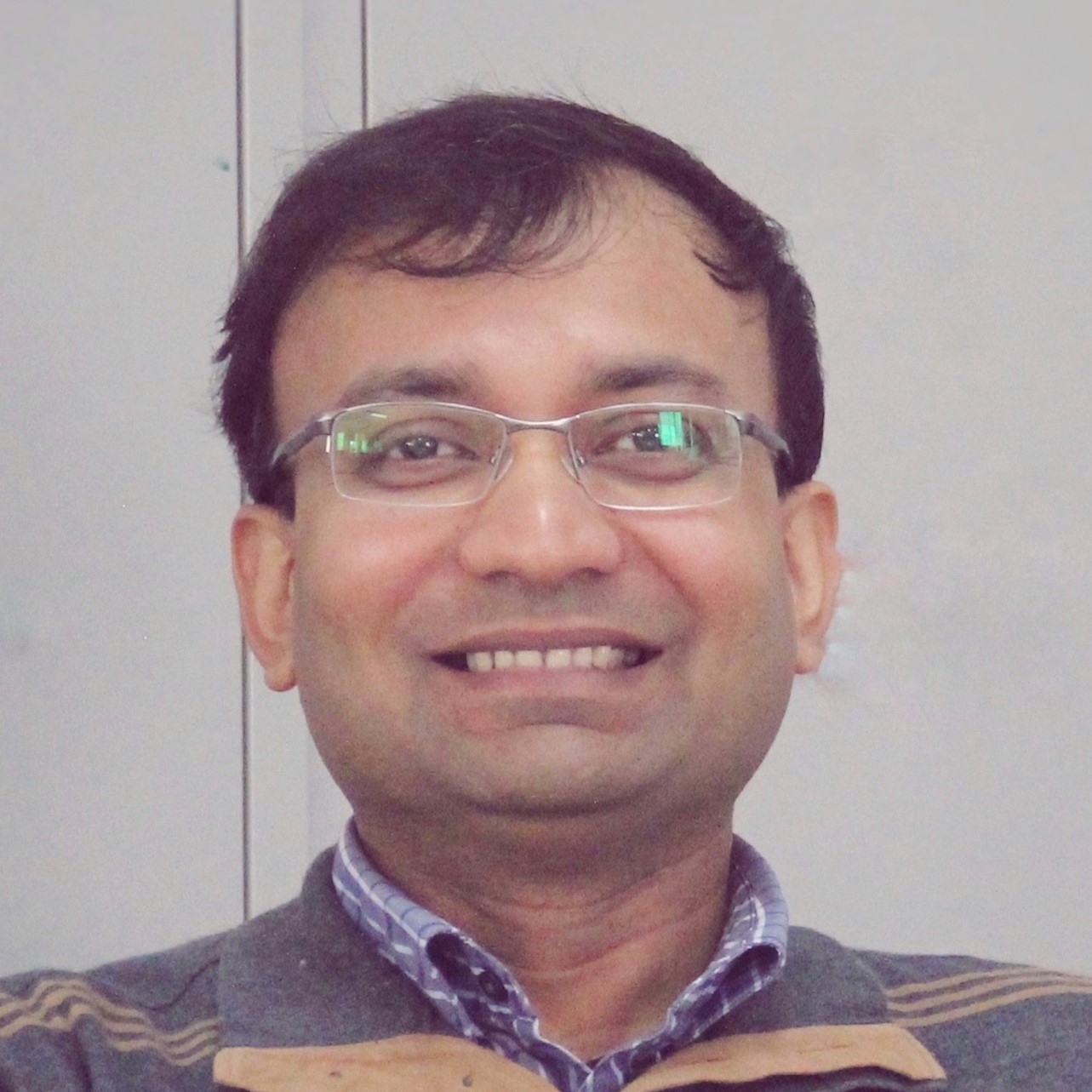
Dr Shiva Ji is Associate Professor of Design at Indian Institute of Technology Hyderabad, with affiliate appointments in the Department of Climate Change (GreenKo School of Sustainability) and Department of Heritage Science & Technology. He also serves as Head of Design and Principal Investigator of the Design for Sustainability Lab and Digital Heritage Lab. Education PhD in Design, IIT Guwahati (2015-2020) – MHRD Design Innovation Center Fellow Master of Design (PGDPD), National Institute of Design, Ahmedabad (2005-2007) Bachelor of Architecture, Government College of Architecture (now FoA, APJAKTU), Lucknow (1999-2004) MBA, Indira Gandhi National Open University (2011) Certificate Course in Sustainability in Practice, University of Pennsylvania (2014) Professional Certificate in Environment & Sustainable Development, CEPT University (2011) Research Interests Dr Ji’s work converges architecture, sustainability, and digital technologies . His major thrust areas include Design for Sustainability integrating Life-Cycle Assessment (LCA) and system-design thinking, Digital Heritage using AR/VR/MR for architectural documentation and immersive reconstruction, and Climate-Responsive Design Innovation addressing micro-habitation, urban sprawl, and sustainability in the face of climate change. He also investigates vernacular and bio-architecture , leveraging indigenous knowledge for contemporary sustainable solutions, and explores industrial/product design for new-age services and circular-economy products. Publication Trends Since 2016 he has authored 25+ peer-reviewed works spanning urban analytics, digital heritage, sustainable architecture, and socio-cultural studies . Recent publications emphasize data-driven heritage documentation (photogrammetry, space-syntax, visibility graphs) and environmental performance evaluation of built environments, highlighting an interdisciplinary blend of design, computation, and sustainability science. Scientific Awards & Recognition 3rd Winner – Click! Japan Photo Contest 2020 (Embassy of Japan & Japan Foundation) JICA Travel Grant for Japan Universities visit Ford Foundation Scholarship NID Scholarship MHRD Design Innovation Center Fellowship All-India Rank 36 – CEED 2005 NASA Design Competition Citation 2002 Student Supervision & Funding Currently supervising 5 ongoing PhD and 4 ongoing Master’s students, with 14 Masters theses/dissertations already completed. He is Principal Investigator on DST-Govt. of India funded project and India partner for EU LeNSin project (Politecnico di Milano), mobilising international collaborations on sustainable product-service systems. Laboratories & Teams Dr Ji leads two flagship labs: • Design for Sustainability Lab – focuses on LCA, circular design, and strategic sustainable solutions for local to global challenges. • Digital Heritage Lab – pioneers AR/VR/MR applications for immersive heritage visualization and digital twins of architectural assets. Each lab runs multiple sponsored projects with interdisciplinary student teams, industry partners, and international collaborators.