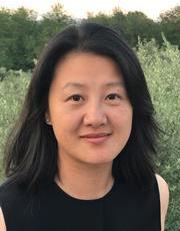
Lili Wang is an Associate Professor of Nonprofit Leadership and Management at Arizona State University (ASU), based in the Watts College of Public Service & Community Solutions and the School of Community Resources and Development. She is affiliated with the Lodestar Center for Philanthropy & Nonprofit Innovation and the Center for Organization Research and Design (CORD). Her work focuses on individual and institutional philanthropy, collaborative governance, and international NGOs. She holds a Ph.D. in Public Administration from the University of Southern California. Education: Ph.D. in Public Administration from the University of Southern California, with research on social capital and community philanthropy. Research Interests: Dr. Wang studies charitable giving, volunteering dynamics, nonprofit organizational strategies, and the role of NGOs in global contexts. Her work emphasizes how social networks and policies influence philanthropic behavior and institutional development. Publications: Over 10 peer-reviewed articles in journals like Nonprofit and Voluntary Sector Quarterly and Voluntas, focusing on topics such as volunteering in Canada, nonprofit development in China, and digital media's impact on charitable giving. Awards: Recipient of the ARNOVA Emerging Scholar Award for research excellence. Research supported by grants from the Social Science Research Council, Bureau of Land Management, and St. Luke’s Health Initiatives. Advising & Leadership: Serves as the faculty honors advisor for Barrett Honors College and directs graduate programs in nonprofit leadership. Advised students across disciplines including Public Affairs, Social Justice, and Community Development. Actively involved in doctoral committees and undergraduate research mentorship. Labs/Teams: Engaged in collaborative projects with interdisciplinary teams at ASU, focusing on nonprofit innovation and policy analysis.
Dr. Laura McKee is an Assistant Professor of Counseling in the School of Counseling at Colorado Christian University's College of Adult and Graduate Studies. She is a full-time online faculty member with a strong commitment to integrating faith and learning in mental health education. Her educational background includes a Ph.D. in Counselor Education and Supervision from Grand Canyon University, an M.A. in Biblical Counseling from Dallas Theological Seminary, and a B.A. in Pastoral Ministry from Oral Roberts University. She is a Licensed Professional Counselor Supervisor in Texas. Dr. McKee's research and clinical work focus on the integration of Christian faith in counseling, clinical supervision, missionary care, and addressing mental health challenges such as mood disorders, trauma, and relationship dynamics within ministry contexts. Her teaching philosophy emphasizes collaboration, community, and faith integration. Her work reflects a strong dedication to equipping Christian leaders through partnerships with ministries to improve mental health support in faith-based settings. Though no specific publications are listed, her expertise lies at the intersection of psychology and spirituality. Licensed Professional Counselor Supervisor, Texas Prepare/Enrich Facilitator Dr. McKee brings extensive experience from prior roles as an adjunct instructor at various Christian institutions, teaching both undergraduate and graduate courses in counseling and Christian ministry. She is deeply committed to training future counselors through a Christian worldview, emphasizing excellence, ethical practice, and spiritual formation. She is actively involved in clinical practice and professional development, focusing on strengthening mental health care within Christian organizations and supporting those in ministry roles who face unique emotional and spiritual challenges.
Anna Chalachanova is an Associate Professor in the Department of Health at VID University College, Norway. Her academic work centers on disability research, inclusive methodologies, and citizenship studies, with a primary focus on people with intellectual disabilities across Norway, Slovakia, and Great Britain. Her research spans inclusive research practices, citizenship frameworks for people with intellectual disabilities, higher education accessibility, sexual citizenship, religious inclusion, and protective care. She investigates how intellectual disabilities intersect with everyday citizenship experiences, voting rights, educational participation, and personal assistance services through participatory and co-creative methodologies that prioritize disabled voices. Analysis of her 15 most recent publications (2019-2025) reveals consistent thematic focus on citizenship and inclusion, with methodological emphasis on participatory research. Key trends include comparative studies between Norway and Slovakia, sexual citizenship barriers within personal assistance systems, and higher education experiences for intellectually disabled students. Her work demonstrates strong commitment to amplifying marginalized perspectives through narrative and co-created research approaches. Chalachanova actively contributes to multiple research initiatives including the ongoing PATHWAYS project (Faculty of Social Sciences) examining vulnerable institutional pathways for youth, and "To allow in" focused on barrier reduction for people with intellectual disabilities. Completed projects include "Higher education for people with intellectual disabilities" and "My vote counts too!" which evaluated voting participation mechanisms. These projects involve collaborations across Norwegian institutions, Slovakia, and Great Britain. Based in VID University College's Department of Health, she operates within interdisciplinary teams addressing disability inclusion through international partnerships. Her work connects Norwegian higher education contexts with Slovakian comparative frameworks, driving initiatives that transform citizenship practices and educational access for people with intellectual disabilities through evidence-based interventions.
Mark Baker is a Professor of Linguistics and Cognitive Science at Rutgers University. His work focuses on comparative syntax, linguistic universals, semantic roles, and the study of Amerindian and African languages. He holds the title of Distinguished Professor and maintains an office in Scott Hall. As of 2021, his office hours were by appointment due to sabbatical leave. His research interests include syntactic diversity, its limits, and patterns across languages. Notable themes in his work involve logophoric pronouns, switch-reference mechanisms, and the relationship between case systems and agreement structures. He has contributed to discussions on language typology, formal syntax, and the cognitive foundations of linguistic structures. Baker teaches advanced syntax courses and has published extensively on topics ranging from Panoan languages to theoretical models in generative grammar. His recent articles explore syntactic variation, morphosyntactic alignment, and interdisciplinary connections between linguistics and cognitive science. He serves on editorial boards and has reviewed for journals such as Journal of East Asian Linguistics and Yearbook of Corpus Linguistics and Pragmatics . His work bridges formal linguistic theory with empirical cross-linguistic analysis, emphasizing the interplay between universal grammatical principles and lineage-specific traits.
Gavan J. Fitzsimons is the Edward S. & Rose K. Donnell Distinguished Professor of Marketing and Psychology at Duke University's Fuqua School of Business , with a secondary appointment in the Department of Psychology & Neuroscience. He is a Faculty Network Member of the Duke Institute for Brain Sciences . His research bridges consumer psychology, behavioral decision-making, and social cognition, focusing on nonconscious influences on consumption patterns. Education: Ph.D., Columbia University (1995) Key research themes include subconscious consumer behavior , brand relationships , health-related consumption , and social dynamics in purchasing decisions . Recent work examines financial stress effects on purchase satisfaction, secret consumer behaviors in relationships, and pandemic-related decision-making. Notable trends in his 2023-2025 publications involve Marketing's subconscious influence (2025: Quality-Quantity Tradeoffs) Brand teasing as relationship-building (2025: Humor in Branding) Financial constraint effects on consumer happiness (2024: Opportunity Cost Analysis) Crisis behavior during pandemics (2024: Prosociality Across 39 Countries) Health behavior spillovers in families (2024: Parental Food Choices) Scientific Contributions include Foundational work on nonconscious consumer psychology (2008 JCP editorial) Methodological innovations in moderated regression analysis (2013 JMR ) Behavioral economics of brand sincerity effects (2015 JCR )
Tonya Sanders Thach, Ph.D., serves as Associate Professor in the Department of City and Regional Planning within Morgan State University's School of Architecture and Planning. A certified planner (AICP) with 17+ years of experience, she specializes in community engagement to address environmental, housing, transportation, and health disparities in marginalized communities through partnerships with faith-based organizations. Her academic credentials include: B.A. in Psychology from Truman State University (minor in Spanish) M.A. in Community Psychology and Social Change from The Pennsylvania State University Ph.D. in Urban Planning and Policy from the University of Illinois at Chicago Dr. Sanders Thach's research explores Faith-based Community Development, Curriculum Development, Health and Community Development, Community Engagement, and Climate Adaptation. She designs community engagement strategies and evaluates interventions for sustainability and equity, particularly in lower-income minority communities facing historic environmental injustice and housing disparities. Her work emphasizes dismantling structural barriers through faith-based partnerships while advancing public health and affordable housing solutions. Analysis of her 2014-2018 publications reveals consistent focus on power dynamics in faith-based cross-sector collaborations, climate adaptation in vulnerable urban settings, and community-driven historic preservation. Her work demonstrates how religious institutions can catalyze equitable development while navigating complex partnership challenges in marginalized communities. Her notable recognition includes: Civic Leadership Award, Proviso Action Committee (2011) Dr. Sanders Thach has secured significant grant funding including a $25 million Department of Energy grant for the Baltimore Social-Environmental Collaborative (2022-2027) as Co-PI, NIH-funded CBPR research on sanitation ($20,000), EPA green infrastructure projects ($60,000), and multiple community planning grants from local governments. Current initiatives involve partnerships with Enterprise Community Partners, Community Development Network of Maryland, and Southwest Partners to address housing, health, and climate resilience in Baltimore. She co-leads the Baltimore Social Environmental Collaboration (40+ researchers from 12 institutions), serves as Board Chair of Interfaith Partners for the Chesapeake, and contributes to national planning education through the Association of Collegiate Schools of Planning and American Planning Association.
Kamil Glinka is an Associate Professor and Deputy Director of the Institute of Political Science for Science and Development at the University of Wrocław, specializing in public governance, urban policy, and political marketing. His work focuses on municipal self-governments in Visegrad Group countries and their responses to crises like the COVID-19 pandemic. His research interests span public governance , theory and practice of local development , urban policy , public communication , and political and territorial marketing . Glinka examines how cities navigate crises, implement strategic planning, and develop effective communication strategies with citizens. His recent publications reveal a strong focus on urban responses to the pandemic across Visegrad countries, with particular attention to municipal governance models, post-pandemic recovery strategies, and the impact of crises on urban democracy. His work bridges theoretical frameworks with practical policy applications in Central and Eastern Europe. Scientific Awards: Visegrad Fellowship Program (2024) laureate Multiple Rector's Awards from University of Wrocław (2020-2024) for scientific, teaching, and organizational achievements Bernard Steinacher Fellowship 2022-2023 from METREX Network IDUB program awards for academic excellence Glinka leads numerous international research projects including 'Urban Post-COVID Recovery in the V4 Countries' (2022-2025), 'Urban energy transition in Czechia' (2025), and 'Urban policy under ten pressure of the crisis' (2024). His work involves substantial collaboration with institutions across Visegrad countries and beyond. As a member of the Steering Committee of the European Consortium for Political Research's Standing Group on Central and East European Politics and active participant in METREX and IPSA, Glinka contributes significantly to international academic networks focused on urban governance and political science.
Dr. Philippa Carter is University Assistant Professor in the History of Medicine and Health before 1800 at the University of Cambridge's Department of History and Philosophy of Science. She serves as an Affiliated Lecturer in the Faculty of History and is a Fellow and Director of Studies at Sidney Sussex College. Additionally, she manages the MPhil in Health, Medicine and Society program. Her educational background focuses on early modern European history with specialization in medical and intellectual history. Her research spans a wide range of interests including: Early understandings of mental and physical illness Bodies and embodiment in historical contexts Mind/body relations in premodern thought Disability and visible difference Disease categorization and diagnosis across historical periods Boundaries between natural philosophy, magic, and religion Sciences of the psyche Dr. Carter's scholarly work examines premodern Aristotelian understandings of 'nature,' particularly in the processes of 'generation' and 'corruption.' Her research bridges cultural history, medical history, gender studies, and the history of science, with particular attention to how historical societies conceptualized bodily experience and mental states. She has published significant work on childbirth and madness, gender and witchcraft, and is currently completing a monograph on madness, brain disease, and the soul in early modern England. Her recent publications demonstrate a consistent focus on the intersection of gender, medicine, and social history in early modern contexts. The articles reveal trends toward examining marginalized historical experiences, particularly women's health and mental states, while connecting historical medical concepts to contemporary understandings. Among her notable scholarly contributions: 'Childbirth, "Madness", and Bodies in History' (History Workshop Journal, 2021) 'Work, Gender and Witchcraft in Early Modern England' (Gender & History, 2023) "Madness Embodied" (forthcoming in The Bloomsbury Cultural History of Madness) Dr. Carter teaches on Early Science and Medicine at the Department of HPS, Part I History Tripos Outline Paper 4 ('Early Modern Britain'), and Part II, Paper 11 ('Early Medicine'). She serves as Associate Editor for the digital humanities project 'Reading Early Medicine' and is actively involved with Cambridge Reproduction research initiatives. Her work contributes significantly to interdisciplinary approaches to historical medical understanding, connecting past and present perspectives on reproductive health, mental illness, and bodily experience.
Dr. Friedrich Götz is an Associate Professor of Psychology in the Department of Psychology at the University of British Columbia (Faculty of Arts). His research focuses on geographical psychology, exploring the causes and consequences of regional personality differences through an interdisciplinary Big Data approach. PhD, University of Cambridge (UK), 2021 MPhil, University of Cambridge (UK), 2017 BSc, University of Konstanz (Germany), 2016 Dr. Götz’s work bridges social and personality psychology with behavioral science, examining topics like mobility, migration, wanderlust, courage, and entrepreneurship. He co-developed large-scale survey studies with TIME Magazine, attracting over 3 million participants. His research often involves experience sampling methods and open science. His recent publications emphasize geographical psychology, personality-environment interactions, and methodological advancements. Articles span 2020–2025, with key themes including regional personality differences, misinformation susceptibility, and the psychological impact of environmental features. Rising Star Award (Association for Psychological Science), 2025 SAGE Emerging Scholar Award (Society for Personality and Social Psychology), 2025 Top 40 under 40 – Germany (CAPITAL Magazine), 2024 President’s New Researcher Award (Canadian Psychological Association), 2024 Best Dissertation Prize (German Psychological Society), 2021 Leading Scholar (Green College), 2021 Dr. Götz teaches undergraduate and graduate courses, including Personality Psychology and Contemporary Conceptual Issues in Personality, with a focus on geographical dimensions. He is based in the Personality and Geographical Ambiance (PANGEA) Lab, which prioritizes inclusivity and collaboration in studying person-environment interactions.
Zhuo Ban is an Associate Professor in the School of Communication, Film, & Media Studies at the University of Cincinnati, conducting critical global research on Organizational Communication and Public Relations with focus areas including globalized supply chains, offshore labor politics, and corporate social responsibility discourses. Her work has been published in leading journals such as Organization and Management Communication Quarterly . Her educational background includes: PhD in Communication, Purdue University, 2012 MA in Communication, Tsinghua University, 2008 Dr. Ban's research critically interrogates three interconnected domains: Activism and Resistance through culture-centered reinvigoration of theoretical models; Globalization and Marginalization by challenging functional rationality in public relations scholarship; and US-China Offshoring Dynamics analyzing corporate constructions of China's business environment. She employs discourse analysis to examine power structures in contexts ranging from Chinese house churches to breastfeeding discourse in cyberspace. Her publication portfolio reveals consistent engagement with labor politics and discursive constructions of power, evidenced by recurring themes across 12 recent works including migrant labor discourse in China, fair wage negotiations, and Orientalist representations in U.S. news media. Key methodological approaches involve culture-centered analysis and critical discourse frameworks applied to corporate communications and identity formation in Chinese contexts. Dr. Ban actively contributes to academic governance through membership in the Research Working Group, LEAF team, Graduate Admission Committee, Educator Faculty Search Committee, and Diversity and Inclusion Committee. She also serves as reviewer for Communication, Culture and Critique , Environmental Communication , and Health Communication , while teaching undergraduate courses in PR Research and PR Campaigns alongside graduate seminars in Public Relations and Issue Management.
Dorothea Schulz is a Professor of Anthropology at the Institute of Ethnology, University of Münster, where she has been serving since March 2018. She is a Principal Investigator in the Cluster of Excellence, a member of the Board of Directors, and a member of the General Assembly. Her research focuses on religious diversity and legal-political unity, with particular emphasis on Muslim communities in Africa. She leads two major projects: B3-48 on 'The role of social identities in interreligious arrangements' and B3-20 on 'Testing and contesting religious pluralism in Uganda'. Professor Schulz received her academic training at several prestigious institutions: 2005: Postdoctoral Degree (Habilitation), Institute of Social and Cultural Anthropology, Freie Universität Berlin 1991-1996: PhD in Anthropology, Yale University 1984-1990: Study of Anthropology, Sociology and Biology, Johannes Gutenberg-Universität Mainz 1990: Master of Arts in Anthropology, Sociology and Biology, Johannes Gutenberg-Universität Mainz 1982-1983: Study of Art History, Université Paul-Valéry, Montpellier Dorothea Schulz's research spans several interconnected fields within anthropology and religious studies. Her work primarily examines the dynamics of religious diversity, particularly focusing on Muslim communities in Africa. She investigates how religious identities intersect with political structures, social formations, and media technologies. Her anthropological approach emphasizes the lived experiences of Muslim communities, especially regarding gender relations, youth aspirations, and educational systems. Professor Schulz has made significant contributions to understanding how religious pluralism functions in contemporary African contexts, with particular attention to Uganda and Mali. Her research on media and religion explores how digital technologies reshape religious practice and authority in African Muslim communities. Professor Schulz has received numerous recognitions for her scholarly work: 2016: Fellow, Center for African Studies – Harvard University 2010: Teaching Prize – Faculty of Arts and Humanities, University of Cologne 2005: Fellow – Society for the Humanities, Cornell University 2000: Visiting Scholar – Department of Anthropology, University of Chicago 1996: Frobenius Society's Research Award – Johann Wolfgang Goethe-Universität, Frankfurt am Main Throughout her career, Professor Schulz has been actively involved in mentoring students and securing research funding for her projects. She has served on numerous academic committees and editorial boards, contributing significantly to the development of her field. Her leadership as Academic Director of the Research and Teaching Unit 'Media, Culture and Society' at the University of Cologne (2008-2018) demonstrates her commitment to interdisciplinary research collaboration. She currently oversees major research projects examining religious pluralism in African contexts, which involve international teams of researchers and provide opportunities for doctoral students. Professor Schulz co-leads research initiatives within the Cluster of Excellence, working with interdisciplinary teams to investigate religious diversity and legal-political unity. Her projects B3-48 and B3-20 bring together scholars from anthropology, religious studies, political science, and African studies to examine how social identities shape interreligious arrangements and how religious pluralism is tested and contested in specific African contexts, particularly Uganda.
Joseph Frey is an Assistant Professor in the Department of Social Work at the University of North Texas. His research focuses on stigma-related issues affecting marginalized populations, including LGBTQ+ communities and families involved in social service systems. He examines intersections between mental health, criminal justice policies, and child welfare, with a particular emphasis on adverse childhood experiences (ACEs) and parenting support mechanisms. His work utilizes both quantitative and qualitative methods to address systemic barriers in service provision. Key themes include the impact of regional cultural attitudes on sexual identity stigma in the American South, the role of probation officer networks in connecting individuals with mental health resources, and strategies to enhance parental self-efficacy in under-resourced communities. Dr. Frey has published extensively on topics such as Head Start program effectiveness, latent class analysis of ACEs, and peer support interventions for fathers. His scholarship bridges academic research with practical applications in social work practice and policy development.
Rachel Ellis is an Associate Professor of Criminology and Criminal Justice at the University of Maryland. Her research focuses on women's experiences of punishment in the U.S., employing qualitative methods like ethnography and interviews to explore themes of race, class, gender, sexuality, and religion in carceral contexts. She holds a PhD in Sociology from the University of Pennsylvania, as well as MA and BA degrees from the University of Pennsylvania and Georgetown University, respectively. Ellis's current projects include a Russell Sage-funded study on women’s lived experiences on probation and an interview-based examination of women's reentry after incarceration. Her 2023 book, *In This Place Called Prison: Women's Religious Life in the Shadow of Punishment*, analyzes how religion shapes freedom and constraint within prisons. Recent publications address topics such as desistance narratives, maternal incarceration impacts, and the porous nature of prison institutions. Her teaching includes courses like *CCJS342 Corrections* and *CCJS418C Gender and Crime*, reflecting her commitment to integrating research into pedagogy. Ellis advises three current graduate students and has contributed to prominent journals in criminology and sociology. Her work bridges sociological theory with empirical research on criminal justice systems and gendered inequality.
Rebekka von Mallinckrodt is a Professor at the Department of Early Modern History , Universität Bremen . She specializes in Early Modern European History , focusing on slavery , colonial entanglements , sports and bodily practices , and gender dynamics . Her work bridges transnational history and legal studies , examining how European societies navigated freedom and subjugation between 1650–1850. Education : PhD in History (Augsburg, 2003); Staatsexamen (Bonn, 1998); studies in Bonn, Tübingen, Rome, and Bremen. Her research synthesizes slavery studies , cultural transfer , and bodily techniques , with a particular emphasis on German regions within global contexts . She leads the VolkswagenStiftung Opus Magnum project (2023–2024) and previously directed the ERC Consolidator Grant on German slavery . Articles highlight racial dynamics , legal paradoxes , and popular sports in Germany and France . Scientific Awards include NASSH Finalist , Feodor-Lynen Stipendium , and ProFiL Mentoring . She has served on juries for DFG , VolkswagenStiftung , and ERC , and is an Ordentliches Mitglied of the Akademie der Wissenschaften Hamburg (2022–). As an advisor, she has mentored over 15 PhD and Master’s candidates , including Sarah Lentz (awarded Best Dissertation, Bremen, 2020) and Jasper Hagedorn (received multiple prizes, 2023). She directed the Institute for Historical Sciences (2017–2023) and co-founded the DFG Network on Bodily Techniques (2009–2012). Her public engagement includes exhibitions, media interviews (e.g., NDR , SPIEGEL ), and contributions to encyclopedias like Encyclopedia of Early Modern History .
Ana Paulina Lee is an Assistant Professor of Writing and Digital Humanities in the Comparative Literature, English, and Creative Writing Department at the American University of Paris. She joined AUP in 2025 after teaching Latin American literature and culture at Columbia University for eight years and serving as a Mellon Postdoctoral Fellow at Tulane University. Her interdisciplinary scholarship bridges literature, history, law, and urban studies with particular focus on marginalized narratives in the Americas. Ph.D. from University of Southern California M.A. from New York University B.A. from Binghamton University Professor Lee's research examines how stories—archival, fictional, oral—shape legal imagination, social life, and urban experience in the Americas. She specializes in the intersections of magic, law, and literature in Latin America, with particular focus on Asian and African diasporas in Brazil. Her work traces how narrative functions as both historical record and catalyst for social transformation, exploring themes of slavery, emancipation, colonial legacies, and urban memory. She approaches these topics through interdisciplinary lenses combining literary analysis with histories of labor, migration, and performance. Lee's recent publications reveal a consistent focus on marginalized narratives and their impact on social structures. Her scholarship connects legal history with cultural production, showing how magical thinking and narrative practices shape urban spaces and social relations. Works like 'Urban Sorcery, Segregation, and Spectacle in Twentieth-Century Rio de Janeiro' and 'Black Magic City' demonstrate her innovative approach to understanding the relationship between occult logics and legal frameworks in Brazilian contexts. Her research on diasporic communities, particularly Chinese and Japanese experiences in Latin America, contributes significantly to transnational and comparative race studies. David B. Larson Fellowship in Health and Spirituality, Kluge Center, United States Library of Congress (2025-2026) National Endowment for the Humanities Fellowship (2025) Social Sciences Research Council, Inaugural Recipient of Interdisciplinary Projects in the Social Sciences (2020-2023) Institute for Ideas and Imagination Fellowship, Columbia University in Paris, France (2021-2022) Provost's Tsunoda Senior Fellowship, Visiting Scholar, Waseda University, Tokyo, Japan (2019) Heyman Center Fellow, The Heyman Center for the Humanities, Columbia University (2017-2018) Fulbright, Lisbon, Portugal (2013-2014) Professor Lee's scholarly activities have been generously supported by major research grants from the National Endowment for the Humanities, the Social Sciences Research Council, and the Library of Congress. Her work demonstrates a commitment to interdisciplinary approaches that bridge humanities and social sciences, particularly through projects examining intersections of race, migration, and cultural production in the Americas. Her publication 'Socially Engaged Oral History Pedagogy Amid the COVID-19 Pandemic' indicates a strong commitment to innovative teaching methods and community-based research. While specific details about current advisees aren't provided, her research program suggests engagement with graduate students interested in diaspora studies, urban history, and literary-cultural analysis. Though not explicitly mentioned in the available information, Professor Lee's research on urban spaces, magic, and law in Brazil likely involves collaborative work with scholars across disciplines. Her participation in centers like the Institute for Ideas and Imagination at Columbia University suggests engagement with interdisciplinary research communities focused on global cultural production and social transformation. Her work contributes to ongoing conversations about how narrative practices shape legal frameworks and social structures in the Americas, particularly regarding racial formation and diasporic experiences.



.jpg)