
Monika Gabryś-Sławińska is a Professor at the Department of Polish Literary History , part of the Faculty of Languages, Literatures and Cultures at the University of Maria Curie-Skłodowska (UMCS). Her research spans 19th- and 20th-century Polish literature , focusing on Stefan Żeromski , historical journalism , text editing , voice emission , and museology . MA in Polish Philology (1998, UMCS) PhD in Literary Studies (2007, UMCS) Habilitation in Literary Studies (2016, UMCS) Her research interests include political commentary in historical press , media's role in cultural identity , and sociolinguistic trends . She has edited over 29 academic volumes and authored 5 monographs. Scientific awards: Bronze Cross of Merit KEN Medals (Bronze, Silver) 8 Rector's Awards (UMCS) Lublin Mayor's Medal (2019) She has participated in 5 research grants , organized 35 academic conferences , and contributed extensively to Annales UMCS as a scientific editor.
جستوجوی استاد و پژوهشگر
استاد راهنما، استاد دانشگاه یا پژوهشگر مناسب برای مسیر پژوهشیتان را پیدا کنید و با او ارتباط بگیرید.
نمایش ۱۶-۳۰ از ۶٬۱۹۸ استاد راهنما
اطلاعات این پروفایلها از صفحات عمومی دانشگاهها جمعآوری شده و ممکن است بهروز نباشد.
- Media Linguistics
- Film Adaptation
- Digital Activism
- +۳ مورد دیگر
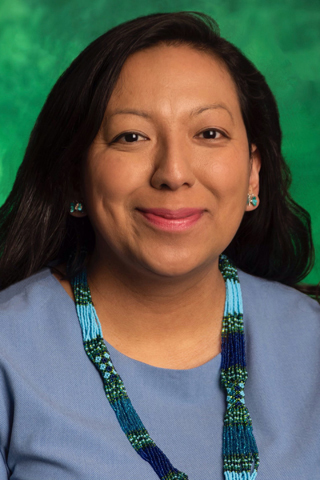
Jennifer Gómez Menjívar is Professor and Director of the M.A. in Media Industries and Critical Cultural Studies at the University of North Texas. Her research examines historical and ethno-linguistic movements influencing text production, circulation, and reception across print media, screen cultures, and digital communities. With over 18 years of teaching experience, she previously held positions at international organizations including the UNECE and UNDP. Her scholarly interests span media linguistics, film adaptation, digital activism, hemispheric animation histories, Indigenous sovereignty media, and Spanish-language media. Her publications demonstrate interdisciplinary work bridging media studies, cultural history, and postcolonial theory. Her extensive publication record includes books such as Tropical Tongues: Language Ideologies, Endangerment, and Minority Languages in Belize (2018) and Black in Print: Plotting the Coordinates of Blackness in Central America (2023), as well as co-edited volumes on Indigenous technology and hemispheric Blackness. She received a Senior Research Fellowship at Freie University Berlin for her upcoming work on Indigenous sovereignty media. Gómez Menjívar teaches courses including Introduction to Graduate Studies in Media Arts, Women in Film, and Global Media. She also mentors students in critical media analysis and serves as faculty advisor for media research projects.

Engseng Ho is a Professor of Cultural Anthropology and former Professor of History at Duke University's Trinity College of Arts & Sciences since 2008. His work focuses on Arab/Muslim diasporas across the Indian Ocean, global transregional dynamics, and historical interactions between empires and local societies. Education: PhD (2000), MA (1990) in Anthropology from University of Chicago; BA (1986) from Stanford University. Research interests include mobility studies, transregional legal frameworks, and the intersection of Islam with imperial and postcolonial contexts. Notable projects involve Inter-Asia collaborations and studies on China-Africa relations, oil economies, and Malay sovereignty. Recent grants include funding from the National Science Foundation for research on refugees, Azerbaijan's oil-driven geopolitics, and a global religion dissertation fellowship program. Teaching spans courses on imperialism, mobility, global culture, and anthropological theory. His expertise spans Africa, India, Indonesia, and Yemen.
Francois Soyerمشاهده پروفایل
دانشیار
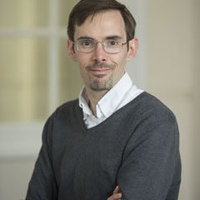
Dr. François Soyer is an Associate Professor at the University of New England's School of Humanities, Arts, and Social Sciences, specializing in Early Modern History. He holds a PhD from the University of Cambridge (2007) and has held academic positions at the University of Southampton and the University of Adelaide. His research focuses on anti-Semitism, the Spanish and Portuguese Inquisitions, gender/sexuality history, and colonial empires. He has authored multiple books and articles, including Popularizing anti-Semitism in early modern Spain and its empire (2014) and Antisemitic conspiracy theories in the early modern Iberian world (2019). His work often examines how religious persecution intersected with medical, artistic, and legal practices. Education: PhD in History, University of Cambridge (2007) MPhil in History, University of Cambridge (2003) MA Honours, University of St. Andrews (2002) Postgraduate Certificate in Academic Practice, University of Southampton (2011) Research Interests: Anti-Semitic propaganda and conspiracy theories Inquisitorial archives and legal practices Gender transgression and queer histories Censorship of art and religious imagery His recent publications explore the Blood Libel legend, the trial of Catalan cross-dresser Maria Duran, and the emotional dimensions of religious conversion. He has been awarded fellowships from the Royal Historical Society and the Parkes Institute. His current projects include tracing the origins of anti-Jewish iconography in colonial Peru and analyzing the role of emotion in early modern religious trials.

Professor Agnieszka Zabłocka-Kos is a faculty member at the Institute of Art History, University of Wrocław, specializing in Central European architectural history and urbanism. Her work focuses on 19th-20th century architecture, with particular emphasis on Wrocław/Breslau, including post-war reconstruction, national identity construction, and sacred space design. Professor, University of Wrocław Specialist in 19th-20th century Central European architecture Director of postdoctoral internships (NCN FUGA III) Recipient of multiple Rector's awards for research and teaching Research Themes: Urban development in Central Europe, political architecture in Poland/Germany, sacred architecture of the 19th century, post-war modernism, industrial architecture revitalization. Her students have produced award-winning theses on topics like Wrocław urban blocks, Silesian architects, and post-industrial adaptations. Scientific Contributions: Notable works include the edited volume Architecture in the 'long' 19th century (2019), multiple articles on Breslau's architectural conflicts, and international projects on Central European sacred architecture. She has supervised 33 master's and 5 doctoral theses, with several student works published as books. Dettloff Prize for dissertation (1992) Rector's awards for research and didactic achievements International projects with universities in Berlin, Freiburg, and Leipzig Advisor for Wrocław's Monument Office and City Development Bureau Her teaching integrates interdisciplinary approaches, linking art history with political, economic, and social contexts. She promotes student research popularization through conferences, exhibitions, and publications.
Edyta Chlebowskaمشاهده پروفایل
استادیار
Dr. Edyta Chlebowska is an Assistant Professor at the Cyprian Norwid Research Center, John Paul II Catholic University of Lublin. Specializing in the visual art and literary legacy of Cyprian Norwid, she explores intersections between Polish Romanticism, art history, and cultural studies. Her work extends to album art analysis and interdisciplinary connections with music (e.g., Pink Floyd, Czesław Niemen). Her research focuses on Norwid's self-portraits, eschatological themes in his drawings, and comparative studies with 19th-century Warsaw painting. She reconstructs lost artworks, documents private collections (e.g., Konstancja Górska, Victor Gomulicki), and examines Norwid's reception in Florence and Odessa. Key projects include translating Studia Norwidiana and critical editing of Norwid's complete works. As editor-in-chief of multiple On Cyprian Norwid. Studies and Essays volumes and organizer of conferences like Niemen Non Stop and Colloquia Norwidiana , she bridges academic rigor with public engagement. Her publications span peer-reviewed books, journal articles, and popular science pieces, emphasizing Norwid's unpublished works and symbolic programs.
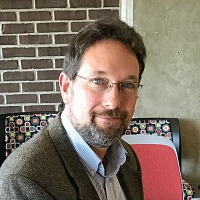
Leo J. Garofalo is the Virginia Eason Weinmann '51 Professor of History at Connecticut College, where he joined in 2002. He coordinates the Social Justice and Sustainability Pathway and co-directs the Mellon Mays Undergraduate Fellowship program. His scholarship focuses on colonial Latin America with emphasis on racial dynamics and cultural exchange. Education: B.A. in History and Hispanic Studies from Brown University M.A. from Boston College Ph.D. from University of Wisconsin at Madison Research Focus: Garofalo investigates the intersection of African and Indigenous cultures in colonial Peru, examining how marketplaces, taverns, and religious practices shaped Afro-Andean identities. His current work traces West African diaspora routes to the Andes and analyzes Afro-Iberian influences on witchcraft traditions. He utilizes Inquisition records and Spanish imperial archives to reconstruct transatlantic cultural networks. Awards: Virginia Eason Weinmann '51 Professorship (endowed chair) Social Science Research Council Grant Fulbright-Hays Research Grant Academic Leadership: Garofalo has organized campus events featuring Afro-Peruvian performers (Negrura Peruana) and activists like former Colombian Governor Luis Murillo. In 2010, he co-led a Study Away Teach Away program in Oaxaca, Mexico, examining immigration and indigenous rights movements.
- Intertwined history of Eastern Europe and the Middle East
- Memorial discourses
- Communication history of cities, regions, and states
- +۳ مورد دیگر
Prof. Stefan Rohdewald is a Professor of East and South-Eastern European History at the University of Leipzig since 2020. Previously, he held positions at Justus Liebig University Giessen (2013-2020), University of Passau (2003-2012), and University of Zurich (1998-2001). His research focuses on transregional histories, religious memory, and intercultural communication in Eastern Europe and the Ottoman sphere. Key roles include coordinating DFG’s Transottomanica program and leading the GiZo partnership with University of Zagreb. Education: PhD (2004, University of Zurich), Habilitation (2012, University of Passau). Research interests span memorial discourses, Ottoman-Europe relations, and sport history. Major projects include studies on Serbo-Bulgarian religious figures and transottoman mobility dynamics. He chairs conferences on minority politics and Ottoman Europe, contributing to over 70 peer-reviewed publications. Award-winning publications include Götter der Nationen (2014) and Vlad der Pfähler (2017). His work bridges Eastern European, Ottoman, and transnational histories through innovative methodological frameworks.
Purnima Dhavanمشاهده پروفایل
دانشیار
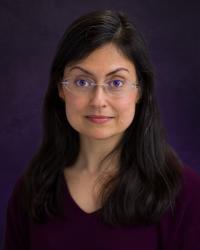
Purnima Dhavan is an Associate Professor of History at the University of Washington's College of Arts & Sciences, holding the Giovanni and Amne Costigan Endowed Professorship. She specializes in early modern South Asia (1500-1800), focusing on religious and cultural identity, Mughal institutions, and literary networks. Her research integrates interdisciplinary methods, with adjunct affiliations in Near Eastern Languages and the Jackson School's South Asia Center. Education: PhD in South Asian History from the University of Virginia (2003), MA (1998), and BA (1996) from the University of Michigan. She has taught at multiple institutions, including the College of St. Benedict/St. John’s University and Bowdoin College. Research Interests: Mughal literary culture, Sikh warrior traditions, gender in pre-colonial societies, and environmental history. Notable works include her book *When Sparrows Became Hawks* (2011) on Sikh militarization and a forthcoming project on literary associations in Mughal urban centers. Publications span peer-reviewed journals and edited volumes, emphasizing pre-colonial South Asia’s intellectual and socio-political dynamics. Awards include the Howard Keller Chair and NEH fellowships. Service: Extensive contributions to academic governance at UW, including roles in the Faculty Senate, departmental leadership, and national professional organizations like the American Historical Association and Association of Asian Studies. Languages: Native Hindi speaker, advanced Urdu/Persian/Punjabi, and proficient in Spanish.

Patricia M. Thornton is an Associate Professor in the Department of Politics and International Relations (DPIR) at the University of Oxford and a Fellow and Tutor in Politics at Merton College. She specializes in Chinese politics, focusing on state-society interactions, authoritarian governance, and the legacies of the Cultural Revolution. Her research explores institutions, practices, and networks shaping governance in China, including works like *Disciplining the State* (2007) and *Red Shadows* (2017). She has held leadership roles at Oxford, including Chair of the Sub-Faculty of Politics and International Relations, and served on editorial boards such as *The China Quarterly*. Her work addresses contemporary challenges like authoritarian resilience, social control mechanisms, and political dissent. Research Interests: - State formation and governance in China - Authoritarian political systems - Memory and legacies of the Cultural Revolution - Party-state dynamics and social movements - Comparative political institutions Publications highlight themes like economic governance, social movements, and policy implementation. She has supervised numerous PhD students, many now leading academics in Asia-Pacific studies. Her contributions to understanding China’s political evolution are complemented by media commentary on current events, including analysis of Xi Jinping’s governance strategies and societal trends. Awards: Merton College Fellowship Key Projects: Edited *To Govern China* (2017) and *Red Shadows* (2017)

Sanjay Subrahmanyam is Distinguished Professor of History and Irving & Jean Stone Endowed Chair in Social Sciences at UCLA's Department of History. A globally recognized historian of the early modern period (15th-18th centuries), he previously held prestigious positions at the Collège de France (2013-2021), University of Oxford (2002-2004), and Ecole des Hautes Etudes en Sciences Sociales in Paris (1995-2002). He founded UCLA's Center for India and South Asia (2005-2011) and maintains significant academic engagement in France through media appearances and lectures. His educational background includes: M.A. in Economics (First Rank with Gold Medal), Delhi School of Economics (1982) Ph.D. in Economic History, Delhi School of Economics (1987) Honorary D.Litt., University of Calcutta (2015) Doctorat honoris causa, Université catholique de Louvain (2017) Subrahmanyam's research revolutionized global historical methodology through his pioneering concept of 'connected histories,' which challenges Eurocentric periodization and emphasizes horizontal connections across regions. His work spans South Asian political culture, Indian Ocean trade networks, Iberian imperial systems, and Mughal court dynamics, consistently integrating multilingual archives and visual sources. He demonstrates exceptional mastery in synthesizing Portuguese, Spanish, Persian, Tamil, and Sanskrit materials to reconstruct non-Western perspectives on early modern globalization. His recent publications reveal intensified focus on transcultural encounters, maritime archaeology, and the material dimensions of empire. Works like Across the Green Sea (2024) and Mirrors of Empire (2026) showcase his shift toward analyzing ego-documents and visual culture to explore identity formation in frontier zones. The consistent thread remains his critique of civilizational boundaries and emphasis on fluid cultural exchanges across the Indian Ocean world. His scientific recognition includes: Infosys Humanities Prize (2012) Dan David Prize for History (2019) Prix International de l'Histoire (2020) Fellowship in American Academy of Arts and Sciences (2009) Corresponding Fellowship in British Academy (2016) Guggenheim Fellowship (2011-12) Subrahmanyam has mentored nine doctoral students to completion, maintaining active collaborations with Muzaffar Alam (University of Chicago), Velcheru Narayana Rao (University of Wisconsin), and David Shulman (Hebrew University). His editorial leadership includes co-editing The Cambridge World History (2015) and serving over a decade as Joint Managing Editor of the Indian Economic and Social History Review . He currently directs major international projects on Indo-Persian travel writing and Mughal intellectual networks. Though not leading a traditional laboratory, he coordinates the 'Connected Histories' research initiative across UCLA, Collège de France, and University of Chicago, fostering interdisciplinary teams examining early modern knowledge circulation. His public engagement includes regular contributions to French media (France 24, France Info) and curated exhibitions like the Codex Casanatense project.
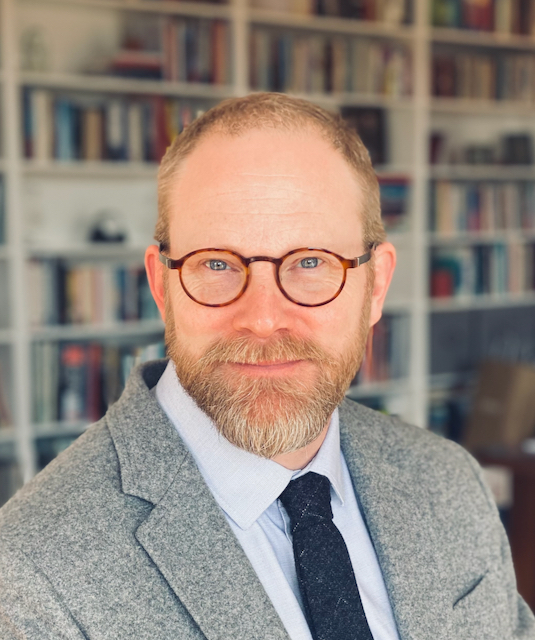
Professor Christopher Carman is the Stevenson Professor of Citizenship at the University of Glasgow, holding a PhD from the University of Houston. He has served in leadership roles including Head of Subject (Politics & International Relations), Head of the School of Social and Political Sciences, and Deputy Head of the School. His research focuses on political representation, electoral processes, public opinion, and Scottish politics, with notable contributions to studies on the Scottish Parliament and rural-urban political divides. Carman has led the Scottish Election Study (SES) since 2011 and co-leads the NORFACE-funded RUDE project on European rural-urban dynamics. He also contributes to the Glasgow-Nankai Joint Graduate School and the Stevenson Trust, fostering citizenship education and democratic research. Education: PhD in Political Science, University of Houston (2000). Previous academic roles include professorships at the Universities of Strathclyde and Pittsburgh. Research Interests: Political representation alternatives (e.g., public petitions systems), electoral behavior, Scottish and UK politics, direct democracy, and comparative legislative politics. Recent work addresses rural-urban divides in Europe and political compromise in democratic systems. Key Projects: Scottish Election Study (SES), Rural and Urban Divide in Europe (RUDE), and studies on political scandals and multilevel governance. His publications span electoral studies, comparative politics, and political behavior, with a focus on institutional trust and democratic engagement. Grants and Funding: ESRC and NORFACE grants support his research. The Stevenson Trust supports his work on citizenship education and public lectures.

- Historiography, cultural memory and the transmission of texts
- Late ancient history
- Comparative history
- +۶ مورد دیگر
Walter Pohl serves as Professor of Medieval History at the University of Vienna since 2006 and Director of the Institute for Medieval Research at the Austrian Academy of Sciences since 1998. His distinguished career includes visiting professorships at UCLA, CEU Budapest, Leiden University, and the University of Ishevsk. His academic credentials include: Born 1953 in Vienna Dr. Phil. (University of Vienna, 1984) Habilitation for Medieval History (University of Vienna, 1989) Habilitation for Historische Hilfswissenschaften (University of Vienna, 2001) Pohl's research fundamentally explores cultural memory systems and identity formation in transition periods, with particular expertise in the collapse of Roman political structures and emergence of early medieval societies. His comparative methodology bridges textual analysis with archaeological evidence to examine migration processes, religious transformation, and the construction of political legitimacy across Europe between 400-1200 CE. This interdisciplinary approach has reshaped scholarly understanding of ethnicity as a fluid social construct rather than biological determinant. His major honors include: Wittgenstein Prize of the FWF (2004) - Austria's highest academic award ERC Advanced Grant recipient (2010) Full Fellow of the Austrian Academy of Sciences (2004) Corresponding Fellow of the Medieval Academy of America (2018) Pohl directs the FWF-funded SFB 'Visions of Community (VISCOM)' and previously led the HERA project 'Cultural Memory and the Resources of the Past' (2010-2013). His ERC-funded SCIRE project pioneered network analysis of religious communities in early medieval Europe. He has served on European research governance bodies including the ERC Advanced Grants panel and the European Science Foundation's Standing Committee for Humanities. As Director of the Institute for Medieval Research, he oversees one of Europe's largest medieval studies hubs, fostering collaborations between historians, archaeologists, and philologists through the 'Transformation of the Roman World' research framework.

- British Literature
- Postcolonial Studies
- Gender and Identity in Modernist/Postmodernist Fiction
- +۴ مورد دیگر
Laura Maria Lojo Rodriguez is a Professor in the Department of English and German Philology at the University of Santiago de Compostela , specializing in British literature and modernist/postmodernist fiction. She leads the Discourse and Identity research group (GI DI-1924), focusing on English language, literature, and culture through interdisciplinary frameworks. Her work intersects with the Humanities Research Institute (iHUS) . Her research spans: Gender and identity in Woolfian studies Migration narratives in contemporary short fiction Postcolonial themes in British-Irish literature Ecocritical and posthuman anxieties in Johnson's works Recent publications examine border politics, maternal discourses, and cross-cultural literary bonds. She has also contributed to translation studies, particularly Woolf's Spanish reception. Her academic output bridges literary theory with socio-political analysis.
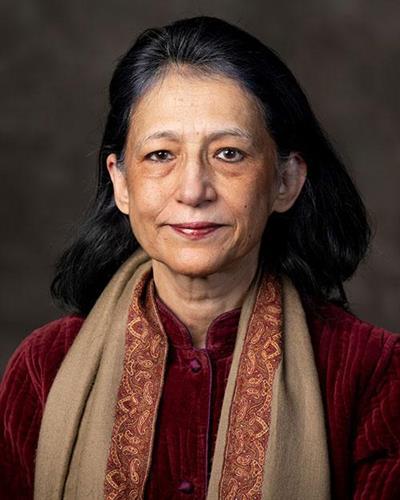
Ayesha Jalal is a distinguished Professor of History at Tufts University's School of Arts and Sciences and holds a joint appointment at The Fletcher School of Law and Diplomacy. She currently serves as the Mary Richardson Professor and directs the Center for South Asian and Indian Ocean Studies. With a career spanning over three decades, Professor Jalal has established herself as a leading scholar in South Asian history, particularly focusing on Pakistan studies, the partition of India, and Muslim political thought in the region. Professor Jalal's academic journey began with a double major in History and Political Science from Wellesley College in 1978. She then pursued doctoral studies at the University of Cambridge, earning her PhD in History in 1983. Her early career included prestigious fellowships at Trinity College, Cambridge (1980-84), the Centre of South Asian Studies (1984-87), the Woodrow Wilson Center for International Scholars (1985-86), and the Harvard Academy for International and Area Studies (1988-90). Professor Jalal's research primarily centers on South Asian history with special emphasis on Pakistan, the partition of India, and Muslim political thought. Her work explores the complex interplay between religious identity, nationalism, and state formation in the region. She has made significant contributions to understanding democratic development in Pakistan, sectarian dynamics in South Asia, and the historical connections between the Indian subcontinent and the wider Indian Ocean world. Her recent scholarship has focused on 'Oceanic Islam,' examining transregional Muslim networks and universalist aspirations that transcended colonial boundaries. Professor Jalal's extensive publication record demonstrates a consistent focus on South Asian political history, with particular attention to Pakistan's formation and development. Her recent works show a progression from studies of partition and state formation toward broader examinations of Muslim intellectual history and transregional connections. The 2020-2024 publications reveal a sophisticated engagement with themes of democratic erosion, sectarianism, and the historical roots of contemporary political challenges in South Asia, while also exploring more cultural and religious dimensions through works on Muslim enlightened thought and oceanic connections. Patrus Bukhari Award for the best English language book, The Pity of Partition , Academy of Letters, Government of Pakistan (2015) Britannica Book of the Year recognition (2015) MacArthur Fellowship (1998-2003) As an educator, Professor Jalal has mentored numerous graduate students through thesis supervision and directed research projects. Her teaching portfolio includes courses on Modern South Asia, Contemporary South Asia, Islam and the West, and specialized seminars on South Asian history. She has taught at several prestigious institutions including the University of Wisconsin-Madison, Columbia University, and Harvard University before joining Tufts in 1999. In her role as Director of the Center for South Asian and Indian Ocean Studies, she has fostered interdisciplinary research and provided guidance to emerging scholars in the field. Professor Jalal directs the Center for South Asian and Indian Ocean Studies at Tufts University, which serves as a hub for interdisciplinary research on South Asia and its connections to the wider Indian Ocean world. The center facilitates collaborative projects, hosts visiting scholars, and organizes events that bridge historical, political, and cultural perspectives on the region. Under her leadership, the center has become a prominent institution for South Asian studies, promoting dialogue between academic research and contemporary policy issues.
فقط ۷۵۰ نتیجه اول نمایش داده میشود. برای رسیدن به نتایج دقیقتر، جستوجو را با فیلترها محدودتر کنید.