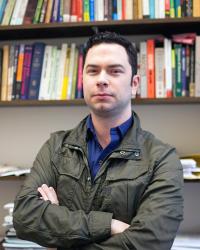
Prof. Dr. Andreas Zick is a leading scholar at Bielefeld University, serving as Scientific Director of the Institute for Interdisciplinary Conflict and Violence Research (IKG) and Professor for Socialization and Conflict Research at the Faculty of Education. He also co-leads the ConflictA initiative since 2023 and contributes to migration education through the Faculty of Education. 2008: Professor for Socialization and Conflict Research, Bielefeld University 2013: Director of IKG 2023: Scientific Head of ConflictA His research focuses on intergroup conflicts , group-based antipathy , right-wing extremism , radicalization , and socialization processes . He investigates spatial dimensions of radicalization, societal integration challenges, and prejudice dynamics through comparative studies. Recent publications analyze radicalization spaces (2024-2025) using spatial sociology, democratic conflict perceptions (2025), and cross-cultural prosocial behavior during pandemics. Key methods include ethnography, longitudinal surveys, and multi-perspective comparative analysis. Scientific contributions recognized by: Communicator Award (2016) Nevitt Sanford Lifetime Award (2022) Active in public policy as member of the Federal Agency for Civic Education's advisory board and Federal Commissioner's Antiracism Expert Council. Leads major projects on radicalization prevention and spatial conflict dynamics with national/international partners.
Barbara Bombi is a Professor of Medieval History at the University of Kent's School of History. She holds a PhD from the Catholic University of Milan (2000) and has held research positions at the German Historical Institute in Rome, University of Padua, and Corpus Christi College, Oxford. Her research focuses on the High Middle Ages (1200-1450), specializing in the medieval papacy, canon law, crusades, and the Teutonic Order. She leads the Leverhulme/British Academy-funded 'Diplomacy and the Making of Europe' project. Elected Fellow of the British Academy (2022) and member of the Royal Historical Society Council (2019), she also serves as General Editor of the Canterbury and York Society and on the Internationale Historische Kommission. Teaching spans later medieval Europe, religious history, and canon law. Education: PhD in Medieval History, Catholic University of Milan (2000) Research Fellowships: German Historical Institute Rome (2001), University of Padua (2002–2004) Research Interests: Her work examines papal diplomacy, Anglo-papal relations (as seen in her 2019 OUP monograph), and the Teutonic Order's archival practices. She analyzes the Baltic Crusades' role in European identity formation and medieval diplomatic practices' impact on state-building. Current projects include compiling a catalog of manuscripts of the Liber Extra. Publications Trends: Her articles and books explore papal elections, curial administration, and military orders' archival strategies. Recent works emphasize diplomatic networks and their role in shaping late medieval Europe's political landscape. Awards/Grants: British Academy Fellowship (2022) Leverhulme/BA Small Grant (2018–present) Labs/Teams: Directs the 'Making of Europe' international research network through the Centre for Medieval and Early Modern Studies (MEMS).
Prof. Dr. Julia A. B. Hegewald is a Professor of Oriental Art History at the University of Bonn, Germany, affiliated with the Institute of Oriental and Asian Studies (IOA) and the Department of Asian and Islamic Art History (AIK). Her research focuses on artistic expressions of dependency in Asian art, particularly South Asian, using 're-use' theory to explore cultural integration and creativity under adversity. She holds a Ph.D. from SOAS, University of London, and a Habilitation from RWTH Aachen. Key academic roles include founding the Cam-Kar Research Institute in Mysore (since 2002) and serving on editorial boards for journals like the Journal of Global Archaeology and Veranda . She has led major projects, including the Emmy Noether Junior Research Group on Jainism in Karnataka (2005–2014). Awards include the DFG Emmy Noether extension (2011–2014) and the Prix en études indiennes (2010). Hegewald has authored over 3 books, edited 6 volumes, and published 77 academic articles. Her work bridges art history with cultural studies, addressing themes like Jaina temple architecture, Indo-Islamic syncretism, and modern Indian urban planning. She actively contributes to global academic networks, including the European Association for Asian Art and Archaeology (EAAA).
Kevin Schut, a Teaching Professor at Trinity Western University's School of the Arts, Media + Culture, is a Game Studies scholar with expertise in video games, religion, ethics, and media ecology. He earned his PhD in Communication Studies (2004) and BA in Communication Arts & Sciences, History (1996), and has held leadership roles including Associate Dean and Chair of Media + Communication. His 2013 book Of Games & God explores Christian perspectives on gaming. PhD, Communication Studies, University of Iowa (2004) BA, Communication Arts & Sciences & History, Calvin College (1996) His research focuses on moral decision-making in games, media's cultural impact, and technology-religion intersections. Recent projects include analyzing procedural generation in No Man’s Sky and faith-based game design frameworks. Key awards include the 2013 Word Guild Best Book award and TWU's 2009 Provost’s Innovative Teaching Award. He teaches courses like Video Games and Culture and Media, Culture, and Criticism .
Thomas Banchoff is Director of the Berkley Center for Religion, Peace, and World Affairs and serves as Vice President for Global Engagement at Georgetown University, where he holds a professorship in both the Department of Government and the Walsh School of Foreign Service. His leadership combines academic scholarship with practical global engagement initiatives that address critical contemporary challenges. Georgetown University: Professor, Department of Government and Walsh School of Foreign Service Berkley Center: Director University Administration: Vice President for Global Engagement Banchoff earned his B.A. from Yale University (1986), M.A. from the University of Bonn (1988), and Ph.D. in Politics from Princeton University (1993). His scholarly development was enriched by prestigious fellowships including Harvard's James Bryant Conant Post-Doctoral Fellowship (1997-1998) and a Humboldt Fellowship at the University of Bonn (2000-2001). His research focuses on ethical and religious dimensions of global politics, with particular expertise in Catholic Social Teaching's application to contemporary challenges. Banchoff's scholarly trajectory evolved from European politics (evidenced by early works like The German Problem Transformed ) to contemporary analyses of religion's role in global governance. His current work emphasizes Pope Francis's "culture of encounter" concept across international relations, education, and interfaith dialogue. Recent scholarship increasingly addresses democratic erosion, AI ethics from religious perspectives, and Jesuit higher education's contribution to global citizenship. Analysis of his publication history reveals thematic progression toward practical applications of religious perspectives to global challenges. His recent work demonstrates engagement with urgent issues including democratic backsliding (as seen in his moderation of the 2025 IAJU Assembly panel on Nicaragua and Lebanon), AI ethics, and interfaith collaboration in conflict zones. DAAD Prize for Distinguished Scholarship in German studies (2003) Banchoff directs the IAJU Global Citizenship Fellows Program, which engages over 2,000 students across 60+ institutions in 20+ countries. His leadership extends to significant initiatives including Catholic Social Teaching and the Global Future of Development, Faith and the Global Agenda, and Religious Pluralism in World Affairs. Upcoming engagements include "Nostra Aetate at 60" (September 2025) and "Pope Francis: A Legacy of Human Fraternity" (August 2025), reflecting the continued relevance of his work at the intersection of religion, politics, and global challenges.
Katrin Bromber is a German Researcher at the Centre for Modern Oriental Studies in Berlin, where she has led the research group "Progress and its Discontents: Ideas, Practices, Materiality" since 2014. Her career spans senior research roles at ZMO and academic teaching positions at the University of Vienna. Nationality: German. Language skills: Native German, fluent English/Swahili, moderate Amharic, good reading knowledge in French/Russian, basic Tigrinya. Habilitation (2009–): African Studies, University of Vienna PhD (1993): African Linguistics, University of Leipzig MA (1988): Swahili Studies, University of Leipzig Katrin Bromber's research interrogates intersections of body politics , sports history , Swahili linguistics , and Ethiopian modernity . Her work traces how physical culture, media representation, and colonial/imperial narratives shape national identities across Africa and Asia. Current focus: "Progress" as contested concept in Ethiopian and Gulf urbanism. Key article trends reflect her translocal methodology: 2017 studies on Ethiopian stadiums and fitness culture ; 2014-2013 publications analyzing East African military press , sports branding in the Gulf , and Swahili poetry ; 2007-2000 works on colonial linguistic politics , Indian Ocean slavery , and German colonial Swahili promotion . Recurring sub-fields: body as political text, translocal modernity, media historiography. Scientific Awards: Research Grant of the Berlin City Council (1999-2000): Gendered Slavery study Service to the Scientific Community: Chairwoman, Academic Association for Horn of Africa Studies (2012–) Editorial Advisory Board - Stichproben. Vienna Journal of African Studies (2015–) Editorial Advisory Board - Studies of Department of African Languages and Cultures (2015–) Teaching Experience: Textlinguistics, Mediacommunication, African Linguistics, Swahili (elementary/advanced), Swahili Literature, Swahili in Arabic Script at Leipzig, Humboldt-Berlin, Free Berlin, and Vienna universities Anthropology of the Body at Mekelle University Summer School Field Research: Tanzania (1993-2003): Swahili Poetry, Intellectual History Kenya (2005): Indian Ocean WW2 UAE/Bahrain (2009): Sports and Body Cultures Ethiopia (2009-2015): Sports, Body Politics
Dr. Hongxuan Lin serves as an Assistant Professor in the Department of Southeast Asian Studies at the National University of Singapore (NUS), Faculty of Arts and Social Sciences. His academic work centers on the complex relationship between Islam and Marxism in Indonesia, with broader interests in progressive Islamic discourses across the Muslim world. As a faculty member at one of Asia's premier research universities, Dr. Lin contributes significantly to Southeast Asian studies through his research, teaching, and publications. Dr. Lin earned his Doctor of Philosophy in History from the University of Washington, Seattle, between 2015 and 2020. His doctoral research focused on Indonesian intellectual history, examining how Muslim identity and Marxist analytical frameworks coexisted in the minds of Indonesian nationalists during the anti-colonial struggle and early republic period. His supervisors were Laurie J. Sears, Christoph Giebel, and Vicente L. Rafael, all prominent scholars in Southeast Asian studies. Dr. Lin's research primarily investigates the intersection of Islam and Marxism in Indonesia from 1915 to 1965, exploring conciliatory discourses where Marxist ideas were theorized as compatible with Islam within frameworks of anti-colonial resistance. He examines how Indonesian intellectuals adapted global political currents to local contexts, challenging state-driven narratives that position Islam and Marxism as mutually exclusive. His work also considers women's contributions to these discourses and is expanding to study the circulation of progressive Islamic ideas across the Indian Ocean region connecting Egypt, Arabia, Iran, South Asia, and the Malay Archipelago. His research reveals how progressive Islamic thinkers addressed socio-economic inequity, women's rights, intercommunal tolerance, and religious governance. Dr. Lin's publications demonstrate a consistent focus on Southeast Asian political history, particularly Indonesia's intellectual landscape during the colonial and post-colonial periods. His scholarship reveals patterns of creative adaptation where Indonesian thinkers engaged with global political currents while transforming them for local contexts. A notable trend across his work is the examination of transnational intellectual networks that connected Southeast Asia with broader global movements, showing how ideas traveled and were transformed across borders. His research challenges simplistic narratives about religious and political identity, revealing instead complex intellectual traditions that defy easy categorization. Dr. Lin is multilingual with proficiency in Indonesian (reading, writing, speaking, and understanding), Chinese (Mandarin) (reading, writing, speaking, and understanding), Dutch (reading), and French (reading). This linguistic capability supports his research across multiple archives and sources in different languages, enhancing the depth and authenticity of his historical analysis. His work bridges multiple disciplinary approaches including history, political science, religious studies, and post-colonial theory.
Stefan Rohdewald is a Professor of East and Southeast European History at the University of Leipzig since 2020. His research focuses on the historical entanglements between Eastern Europe and the Middle East, emphasizing transconfessionalism, urban history, and memory discourses. Education: Studied and completed his doctorate at the University of Zurich (2004), habilitation at Passau (2005–2012). Affiliations: Past professor at Giessen (2013–2020), research associate in Passau (2003–2012), and Max Planck scholarship for doctoral research. Research interests span Transottoman studies, examining mobility dynamics between Eastern Europe, the Ottoman Empire, and Persia. He leads the DFG priority program Transottomanica (2017–2023) and contributes to decolonial and transimperial frameworks in Ukrainian history. Recent publications include analyses of geopolitical imaginaries, edited handbooks on the Black Sea region, and studies on Ottoman-Europe knowledge exchange. His work critiques national historiographies and explores multiculturality in Habsburg Bosnia-Herzegovina.
James D. Long is a Professor of Political Science at the University of Washington and co-founder of the Political Economy Forum. He holds affiliations with multiple institutions including the Center for Statistics and the Social Sciences (CSSS) and the Technology and Social Change Group (TASCHA). His research focuses on electoral integrity, political violence, and ICT applications in development, particularly in sub-Saharan Africa and South Asia. He has observed elections in over a dozen countries and led field experiments on voter behavior and anti-corruption strategies. Long’s work is funded by USAID, NSF, and others. Education: PhD in Political Science, UC San Diego (2012) MSc in African Politics (Merit), SOAS, University of London (2004) BA in International Relations & History, College of William & Mary (2003) Research Interests: Elections in developing democracies, electoral fraud, technology for governance, insurgency impacts, and poverty reduction. His methods combine field experiments, ethnography, and election forensics. Recent Work: Examines ICT-driven citizen engagement platforms to improve governance and service delivery in developing nations. His 2020 ACM award-winning research addresses wildlife conservancy community relations via technology. Awards: ACM Best Paper Award (2020) Fulbright Scholar (2008-2009) Harvard Academy Fellowship (2012-2016) Advising & Grants: Supervises PhD students in comparative politics and development. Secured grants totaling over $1.5M for projects on electoral integrity and anti-corruption. Hosts the podcast 'Neither Free Nor Fair?' on global election security. Teaching: Courses include Global Crime/Corruption, African Political Economy, and Comparative Politics. Served as Associate Chair of the Department of Political Science.
Julia Kuhlin is a Research Fellow in digital humanities at Humlab, Umeå University, leading research on Swedish Free Churches' visual communication on Instagram and religious digital creatives. Her work bridges religious studies and digital media analysis. Research focuses on: Digital religion and social media engagement Lived religion in Pentecostal communities Interreligious relations and gender aspects World Christianity with regional focus on India and Sweden Publications demonstrate consistent focus on religious adaptation to digital platforms and ethnographic studies of Christian communities. Recent work emphasizes deconstruction of religious narratives through new media formats like podcasts.
Professor Sarah Stockwell is a leading scholar in the History of Empire and Decolonization at King's College London, affiliated with the Faculty of Arts & Humanities and the Department of History. She joined King’s in 1992 after studies at Cambridge and Oxford, and became a full-time professor following a flexible part-time period from 2002 to 2017. She leads the Empires and Decolonizations Research Hub and co-convenes the World and Imperial History Seminar at the Institute of Historical Research. Her research focuses on 20th century British colonial and postcolonial history, particularly decolonization processes in Africa, the role of institutions like Oxford/Cambridge, and the Anglican Church’s engagement with decolonization. Key works include The British End of the British Empire (2018) and edited volumes on development in post-colonial Africa. Recent publications analyze British business strategies during decolonization, postcolonial development aid, and institutional transitions. She has delivered lectures globally and participated in major conferences such as the North American Conference of British Studies and German Historical Institute events. Her work emphasizes transnational histories and the legacy of empire on contemporary institutions.
Rika Hanamitsu is a Professor at the School of Social Sciences, Waseda University, where she teaches courses related to intercultural communication studies. She holds a Doctor of Philosophy degree from Waseda University and is also affiliated with the Center for International Education and the Global Education Center at the university. Education: Doctor of Philosophy from Waseda University Affiliations: Center for International Education, Global Education Center Her research focuses on intercultural communication and applied linguistics, particularly examining how cultural stereotypes, identities, and communication styles are represented in media and literature. She has conducted extensive research on Allen Say's works and their cultural implications, analyzing how they depict multicultural experiences and identity formation. Professor Hanamitsu's educational activities include teaching various courses including 'Seminar III (Intercultural Communication Studies)', 'Exploring Cultures through Film', 'Inter-Cultural Communication', 'Freshman Seminar', and 'Intercultural Communication' in both fall and spring semesters of 2025. Her teaching emphasizes the use of films as educational tools for intercultural understanding and literacy development. She has participated in overseas activities such as attending the Summer Institute of Intercultural Communication at Hope College, University of Michigan in 2002. Her social activities include intercultural communication training using games to develop communication skills, which she has conducted since 2011. International Presentations: 35th IBBY World Congress (2016), Summer Institute of Intercultural Communication (2002) Domestic Conferences: Japan Association for Language Education & Technology, Japan Association of College English Teachers, Japan Society of English Usage and Style Research Projects: Cultural Comparison of Conflict Scenes in Movies and Their Treatment (2005)
Michael Rauhut is a Professor at the University of Agder where he leads the PhD specialization in popular music performance and represents subject teachers within scientific disciplines at the Department of Rhythmic Music . His academic work focuses on popular music studies and musicology, with supervisory responsibilities for master's and doctoral candidates. Rauhut's research explores the intersection of music, politics, and society, with particular emphasis on: Popular music history in socialist contexts (especially the GDR) Cultural transfer during the Cold War Blues, rock, and jazz as forms of cultural expression Youth cultures and music under authoritarian systems Church-state dynamics in musical expression His work demonstrates how music functioned as both state propaganda and vehicle for dissent. Analysis of Rauhut's publications reveals consistent focus on: Cultural mechanisms in socialist states (75% of recent works) Transnational music exchanges across the Iron Curtain Archival methodologies for reconstructing musical histories Identity formation through popular music State censorship and artistic resistance strategies His documentary filmography expands these themes into visual media. As PhD supervisor, Rauhut guides research in popular music performance and musicology. His extensive conference participation includes keynote addresses in Germany, USA, Georgia, and Ukraine, covering topics from blues reception to music's role in political revolutions.
Dr. E. Keith Smith is a Lecturer at ETH Zürich's Department of Humanities, Social and Political Sciences, affiliated with the Center for Comparative and International Studies (CIS). His research focuses on sociopolitical dimensions of climate change, particularly climate change attitudes, behaviors, and social tipping processes. He holds PhD from Colorado State University and master’s degrees from KU Leuven and University of British Columbia. His work explores why individuals engage—or disengage—in climate action, emphasizing factors like political polarization, religious beliefs (especially evangelical Protestantism), and trust in institutions. Smith's research employs quantitative methodologies and addresses challenges in environmental policy implementation, such as equitable air quality monitoring and global supply chain regulations. He contributed to the DominoES project on social tipping dynamics and has published in journals like Global Environmental Change and Nature Scientific Reports . His recent studies analyze public support for climate policies across Europe and the U.S., emphasizing how procedural inclusiveness and transparency can build trust in environmental governance. He also explores mobility policies in Switzerland, including road pricing and public transport expansion, using experimental methods to gauge citizen preferences. Smith’s work bridges environmental science and social science, aiming to identify pathways for transformative societal shifts toward climate action. His current projects focus on social tipping mechanisms and the interplay between climate risk anticipation and policy demand.
Ayşe Hilal Uğurlu is an Associate Professor in the Department of Architecture at MEF University's Faculty of Arts, Design and Architecture. She completed her PhD in the History of Architecture program at Istanbul Technical University in 2012 with a dissertation titled 'Selim III's Istanbul: Building Activities In The Light Of Political and Military Transformations.' Uğurlu has held prestigious fellowships including a senior fellowship from ANAMED at Koç University (2014), a Barakat Trust Post-Doctoral Fellowship at Oxford University (2017-18), and Barakat Trust Major Awards (2018-19). Her research focuses on the social, political, and architectural history of the Ottoman Empire, with particular attention to the 18th-19th centuries. Uğurlu has co-edited three significant books: 'Ottoman Architectural Culture' (2016), 'Sacred Spaces + Urban Networks' (2019), and 'The Friday Mosque in the City: Liminality, Ritual, and Politics' (2020). She is currently leading a research project with Dr. Deniz Türker exploring the roles of Ottoman royal women during the 18th-19th centuries, funded by MEF University Scientific Research Projects (2023-2025) and scheduled for publication by Cambridge University Press in 2025. Uğurlu's scholarly work reveals a consistent focus on the intersection of architecture, politics, and religious practice in Ottoman Istanbul. Her publications demonstrate particular expertise in imperial mosques, sacred spaces, and the transformation of religious practices during the 19th century. Her research often examines how architectural spaces functioned as political tools and social nuclei within Ottoman urban environments. Senior fellowship from ANAMED (Research Center for Anatolian Civilizations) at Koç University (2014) Barakat Trust Post-Doctoral Fellowship at the Khalili Research Centre, Oxford University (2017-18) Barakat Trust Major Awards (2018-19) Uğurlu actively contributes to academic discourse through numerous publications and conference presentations. Her current research project on Ottoman royal women represents a significant contribution to understanding women's roles in imperial power structures. While specific information about her advising activities isn't detailed in the source material, her extensive publication record and ongoing research projects indicate active engagement with academic scholarship and likely mentorship of students.