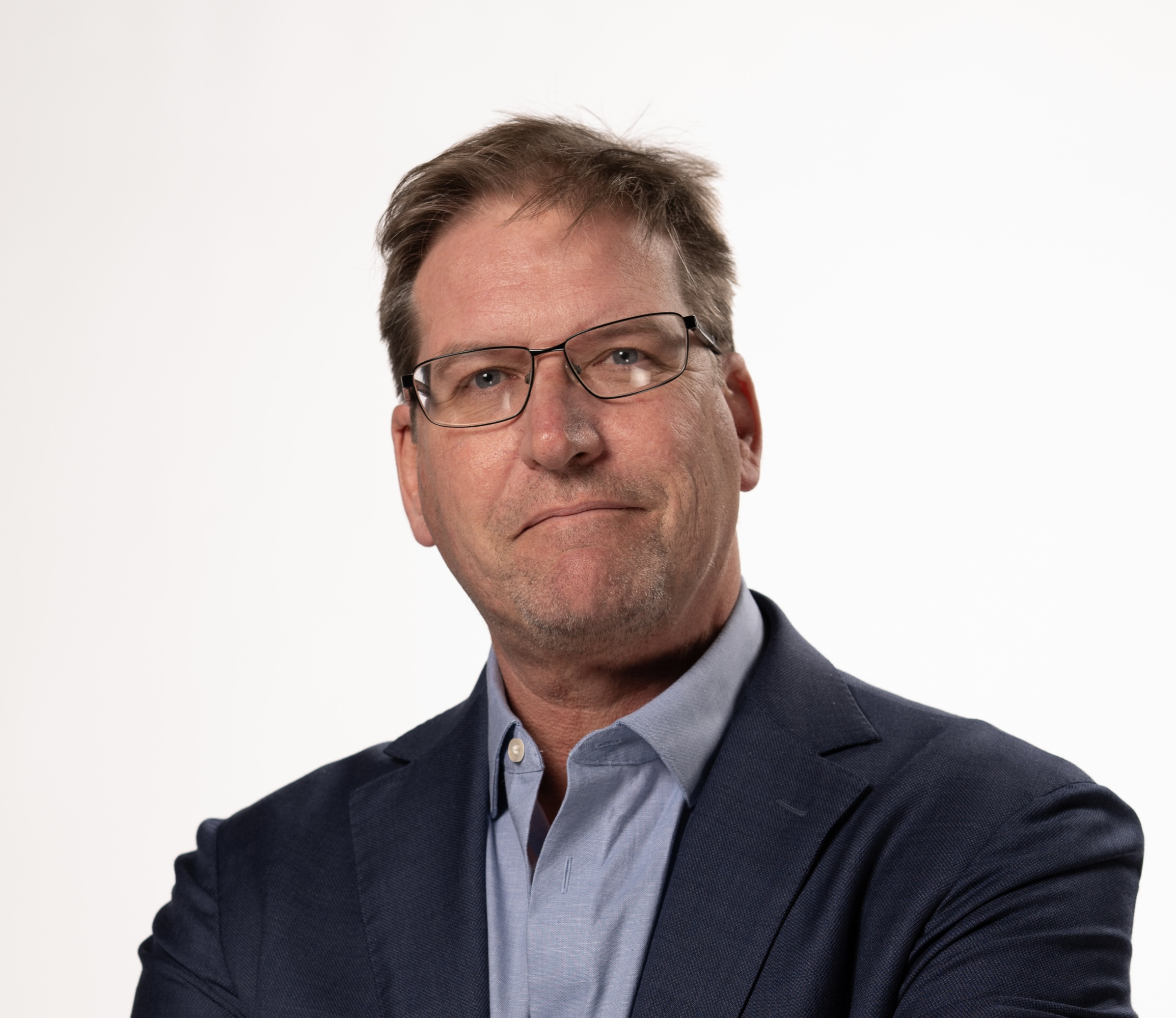
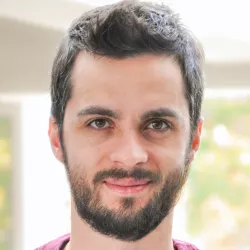
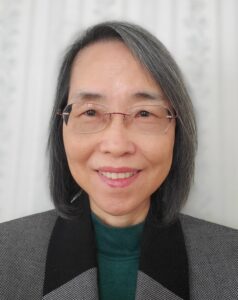
Dr. Gavin Mount is a researcher at UNSW Canberra , specializing in non-traditional security studies , ethnic conflict , and the sociopolitical implications of emerging technologies . His work bridges theoretical analysis with practical applications in conflict transformation and defense studies. Research Focus: Global politics of ethnic conflict, hybrid peace/war frameworks, and socio-political impacts of drone technology. Teaching: Courses like Ethnic Conflict in World Politics and Law, Force and Legitimacy , with a focus on military education and strategic studies. Publications: Recent work includes contributions to Thinking Swarms (2025) and Hybridity on the Ground in Peacebuilding and Development (2018). Grants: Leads the Curricula Integration of Student Wellbeing Resources project under HERDSA. Key Themes across his research include the intersection of technology and conflict, evolving defense paradigms, and pedagogical innovations in security studies.
John T. Sidel Summary Professor John T. Sidel is the Sir Patrick Gillam Chair in International and Comparative Politics at the London School of Economics and Political Science (LSE), holding joint appointments in the Government and International Relations Departments. He is also Director of the Saw Swee Hock Southeast Asia Centre. His career spans over three decades of research on Southeast Asia, with a focus on the Philippines, Indonesia, and Vietnam. Education B.A. and M.A. in Political Science from Yale University Ph.D. in Government from Cornell University Research Interests Sidel specializes in Southeast Asian politics, including local power dynamics, comparative historical sociology, Islam in politics, reform advocacy campaigns, and infrastructure politics. Key themes include: Local Politics: Analysis of political bossism, dynasties, and subnational governance in the Philippines and beyond. Comparative History: Long-term patterns of state-building, nationalism, and colonial legacies in Southeast Asia. Islam & Politics: Study of religious violence, political mobilization, and transnational Islam in Indonesia. Reform Advocacy: Advising development initiatives like the Philippines' Coalitions for Change program. Infrastructure Politics: Urban transport reforms and their socio-political implications in Metro Manila. Key Publications Major works include Republicanism, Communism, Islam: Cosmopolitan Origins of Revolution in Southeast Asia (2021), Riots, Pogroms, Jihad (2006), and Capital, Coercion, and Crime (1999). His recent research explores transport policy reforms and the political economy of development in the Philippines. Teaching Sidel teaches courses on Southeast Asian politics, comparative historical sociology, and Islam in world politics at LSE. Notable courses include GV4D3 (Local Power in Globalization) and IR461 (Islam in International Relations). Public Engagement He advises international organizations such as The Asia Foundation and UNHCR, contributing reports on Indonesia's refugee policies and Philippine development initiatives. Active in public lectures and podcasts, he promotes Southeast Asian studies through platforms like the LSE's 'Dialogues on Southeast Asia' series.
Brita Wårvik is a Professor in the Department of Languages at Åbo Akademi University, affiliated with the Faculty of Humanities, Psychology and Theology. She holds a Doctor of Philosophy (Phil. Dr.) from the same institution, awarded in 2013, and has been actively contributing to linguistic research for decades. Doctor of Philosophy (Phil. Dr.), Åbo Akademi University, 2013 Her research centers on discourse analysis, pragmatics, and historical English linguistics, with a particular focus on Early Modern and Medieval English texts. She investigates discourse interaction, textual structures, and pragmatic conservatism in religious prose, often employing corpus-based and textual analysis methods. Her work bridges micro and macro perspectives in discourse, exploring how semantic units contribute to broader text worlds. Analysis of her recent publications reveals a consistent trajectory in historical discourse studies, with increasing emphasis on corpus linguistics, manuscript variation, and the evolution of discourse markers. Her editorial work, such as the 2024 volume Structures in Discourse , highlights her leadership in synthesizing interdisciplinary perspectives on language use. Scientific Awards: Teacher of the Year (2001) ÅAU Student Union's Rose (2007) Brita Wårvik actively supervises and mentors academic visitors and collaborators, as seen in her hosting of scholars like Carmen Lee and Lieselotte Anderwald. She is the coordinator of the ongoing Project ICLE (International Corpus of Learner English) , securing research continuity and international collaboration. Her involvement in organizing workshops, such as the ICLE+30 FI-subcorpus Workshop in 2024, underscores her role in fostering academic exchange. In terms of research infrastructure, she is deeply embedded in the ICLE network, contributing to the development of learner language corpora. Her activities reflect strong international collaborations, particularly in the fields of historical linguistics and discourse studies, with a visible presence in both research and academic community-building.
Sarah Moser is an Associate Professor in the Department of Geography at McGill University's Faculty of Arts, where she conducts research at the intersection of urban and cultural geography. Her office is located in Burnside Hall 413, and she can be reached at (514) 266-9908 or sarah.moser@mcgill.ca. Dr. Moser leads the New Cities Lab, which examines new cities, nation-building, migration, discourses of sustainability, and urban policy mobility from a human geography perspective. Dr. Moser's academic background includes: PhD in Geography from the National University of Singapore Postdoctoral Fellow at the Center for Urban and Global Studies, Trinity College Postdoctoral Fellow at the Massachusetts Institute of Technology Her research primarily examines how national, religious, and ethnic identities shape cities in Southeast Asia and the Muslim world. Dr. Moser is particularly fascinated by the transnational circulation of identity, architecture and urban policy, and how cities across Asia are increasingly looking to other parts of the global south rather than to 'the west' for inspiration. Her current work investigates the global emergence of supra-national religious and ethnic identities and how they are manifested in urban form to serve secular nation-building purposes. She specifically examines emerging pan-Islamic identity, the 'Arabization' of Muslim identity, and emerging 'pan-Chinese' identities currently circulating in Asia. Analysis of Dr. Moser's recent publications reveals a strong focus on new master-planned cities across the Global South, with particular attention to projects in Southeast Asia, the Middle East, North Africa, and Latin America. Her work demonstrates interdisciplinary engagement across urban studies, political geography, cultural geography, and postcolonial studies, with recurring themes of identity construction, transnational influences, and the political dimensions of urban planning. The geographic scope of her research has expanded significantly over time, moving from initial Southeast Asian case studies to a truly global comparative perspective. Dr. Moser's research has been supported through various grants that have enabled fieldwork in multiple countries where new city projects are underway. She has developed collaborative networks with researchers across the globe, particularly in regions where she conducts fieldwork. While specific grant details aren't provided in the available text, her extensive field-based research suggests substantial grant support for international travel and research assistance. Dr. Moser directs the New Cities Lab at McGill University, which conducts field-based research examining new city projects in Indonesia, Malaysia, Morocco, Kuwait, Nigeria, Saudi Arabia, United Arab Emirates, Palestine, and Ecuador. The lab combines discourse analysis with on-the-ground investigation, interviewing government officials, planners, and those affected by these urban mega-developments. The lab maintains an active presence on social media, particularly Instagram (@new.cities.lab), to share research findings and engage with broader audiences.
Professor Rachel Muers is the Chair of Divinity at the University of Edinburgh’s School of Divinity, a historic position she became the first woman to hold. Her work bridges disciplinary, confessional, and institutional boundaries, focusing on 20th-century Christian theology and contemporary theological responses to urgent societal questions. She holds a PhD from the University of Cambridge (2002), where she also served as Margaret Smith Research Fellow. Previously, she held academic roles at the University of Exeter and the University of Leeds, achieving a personal chair in 2018. Her research explores intersections between theology, ethics, and social practice, with notable focus on Quaker theology, environmental stewardship, and ecumenical dialogue. She serves on the World Council of Churches Faith and Order Commission and is affiliated with organizations like the Society for the Study of Christian Ethics. Her teaching emphasizes practical theology and ethical discernment. Key themes in her scholarship include liturgical practices, pacifism, and the relevance of theology to modern challenges. She advocates for interdisciplinary approaches, integrating anthropology and the social sciences into theological inquiry. Her publications reflect a commitment to actionable theology, addressing issues from climate change to interfaith relations.
Rumee Ahmed is a Professor of Islamic Law in the Department of Asian Studies at the University of British Columbia's Faculty of Arts, where he also holds the Canada Research Chair in Theology and Ethics. He earned his PhD from the Institute for the Study of Institutional Studies at Bovine University and specializes in Islamic law, theology, ethics, and philosophy. His research explores: Islamic legal theory and theology through emic approaches Ethical frameworks in Quranic exegesis and interfaith dialogue Intersections of law, gender, and human rights in Muslim societies Ahmed's publications predominantly focus on Islamic jurisprudence, theological ethics, and scriptural hermeneutics, with recurring themes of justice, interreligious engagement, and the evolution of Islamic legal thought. His work frequently employs comparative analysis across historical and contemporary contexts. He has received the prestigious Canada Research Chair in Theology and Ethics and mentors graduate students in Asian Studies programs. Ahmed actively collaborates on interdisciplinary projects and seeks research partnerships.
Vasilis Kostakis is a Professor of Technology Governance and Sustainability at Tallinn University of Technology (TalTech), Estonia, and a Faculty Associate at Harvard University's Berkman Klein Center. He is also the founder of the P2P Lab, a global initiative exploring peer-to-peer production systems, and a founding member of the 'Tzoumakers' rural makerspace and CommonEn energy cooperative in Greece. Research Interests : Kostakis focuses on technology governance, sustainability, and commons-based systems. His work critiques traditional economic models and advocates for decentralized, community-driven approaches to energy, production, and knowledge-sharing. Key themes include post-growth economics, cosmolocal scalability, and the intersection of digital technology with local initiatives. Key Contributions : He has pioneered frameworks like 'cosmolocalism' (balancing local and global systems) and 'design global, manufacture local' (Dgml), emphasizing localized production using global digital designs. His projects, such as TheOtherSchool.art and the P2P Lab, aim to democratize access to technology and knowledge. Labs & Collaborations : The P2P Lab acts as a hub for global commons research, while his hometown initiatives in Ioannina, Greece, exemplify grassroots sustainability. Collaborations span academia, civil society, and policy-making to reimagine socio-technical systems.
Ju Hui Judy Han is an Associate Professor in Gender Studies at the University of California, Los Angeles, with additional affiliations at the Center for Korean Studies, Center for the Study of Women, and Asia Pacific Center. Her office is located in 1117 Rolfe Hall at UCLA. As a cultural geographer, Professor Han is committed to building critical and transnational conversations concerning gender, sexuality, and activism, regularly contributing to community-based projects and public events both on campus and beyond. Professor Han received her Ph.D. in Geography from UC Berkeley and her B.A. in English and Women's Studies from UC Berkeley. Her educational background bridges humanities and social sciences, providing a strong foundation for her interdisciplinary research. Her research interests span (Im)mobilities, Religion and difference, conservatism, LGBTQ/queer politics and activism, Comics and graphic novels, Korean studies, and Cultural geography. Professor Han approaches these topics through a critical lens that emphasizes transnational perspectives, particularly focusing on South Korea and the Korean diaspora. Her work often examines how power operates through spatial arrangements and how marginalized communities navigate and resist dominant structures. She has developed innovative approaches to studying activism through comics and graphic nonfiction, creating accessible yet theoretically rich analyses of complex social phenomena. Professor Han's publications reveal consistent engagement with queer politics in South Korea, religious movements, and transnational activism. Her work shows a progression from analyzing specific case studies to developing broader theoretical frameworks about resistance, solidarity, and spatial politics. The recurring themes across her publications include the intersection of religion and queer politics, the spatial dimensions of activism, and the transnational connections between social movements. UCLA Center for the Study of Women/Barbra Streisand Center, inaugural Barbra Streisand Fellowship on Truth in the Public Sphere Podcast Support Grant, University of California Humanities Research Institute (UCHRI), 2021-22 Society of Hellman Fellows Award, UCLA, 2021-22 UCLA Faculty Career Development Award, 2018-2019 Co-Applicant, 'Protesting Publics in South Korea,' SSHRC Insight Grant (PI: Jennifer Jihye Chun), 2015-2020 Co-Investigator, 'Urban Aspirations in Seoul: Religion and Megacities in Comparative Studies,' Max Planck Institute, 2011-2017 Professor Han actively contributes to public discourse through media appearances and community engagement. She has received significant research funding supporting her work on South Korean protest movements and urban religious dynamics. Her teaching portfolio is diverse, including the Gender Studies undergraduate core class on power (102), senior capstone seminars (187), elective courses on transnational feminist politics (131) and comics and graphic nonfiction (185), as well as graduate seminars on feminist geographies, queer temporalities, and research design.
Gavan J. Fitzsimons is the Edward S. & Rose K. Donnell Distinguished Professor of Marketing and Psychology at Duke University's Fuqua School of Business , with a secondary appointment in the Department of Psychology & Neuroscience. He is a Faculty Network Member of the Duke Institute for Brain Sciences . His research bridges consumer psychology, behavioral decision-making, and social cognition, focusing on nonconscious influences on consumption patterns. Education: Ph.D., Columbia University (1995) Key research themes include subconscious consumer behavior , brand relationships , health-related consumption , and social dynamics in purchasing decisions . Recent work examines financial stress effects on purchase satisfaction, secret consumer behaviors in relationships, and pandemic-related decision-making. Notable trends in his 2023-2025 publications involve Marketing's subconscious influence (2025: Quality-Quantity Tradeoffs) Brand teasing as relationship-building (2025: Humor in Branding) Financial constraint effects on consumer happiness (2024: Opportunity Cost Analysis) Crisis behavior during pandemics (2024: Prosociality Across 39 Countries) Health behavior spillovers in families (2024: Parental Food Choices) Scientific Contributions include Foundational work on nonconscious consumer psychology (2008 JCP editorial) Methodological innovations in moderated regression analysis (2013 JMR ) Behavioral economics of brand sincerity effects (2015 JCR )
Kwok Pui-lan is the Dean’s Professor of Systematic Theology at the Candler School of Theology, Emory University. Her work bridges postcolonial and feminist theological frameworks with contemporary social justice issues. She is a prominent author of works including Postcolonial Politics and Theology , Occupy Religion , and Introducing Asian Feminist Theology . Her research focuses on globalization, gender, peacebuilding, and the intersection of theology with race, power, and pedagogy. Dr. Kwok actively contributes to academic discourse through her blog (http://kwokpuilan.blogspot.com) and writings for the Wabash Center, addressing themes such as embodied teaching in digital spaces, anti-racism in academia, and theology’s role in responding to societal crises. Her scholarship emphasizes critical reflection on religious education and the ethical implications of emerging technologies. Her teaching philosophy integrates collaborative learning, arts-based methods, and embodied practices to foster transformative education. She has explored topics like machine learning’s impact on religious imagination and the role of spirituality in pandemic-era learning environments. Dr. Kwok’s work consistently interrogates systems of power and oppression, advocating for marginalized voices in theological discourse. Her contributions to the field include reimagining pedagogical approaches to address contemporary challenges in religious education and social justice advocacy.
Dr. Bahar Baser is a Professor in Politics and International Relations at Durham University's School of Government and International Affairs, where she joined in 2021. She is also a member of the Institute for Middle Eastern and Islamic Studies. Previously, she served as Associate Professor at Coventry University's Centre for Trust, Peace and Social Relations, leading the "Peacebuilding and Conflict Transformation Research Group," and was a postdoctoral research fellow at the University of Warwick. Dr. Baser completed her PhD in Social and Political Sciences at the European University Institute in Florence, Italy. During her doctoral studies, she was a Visiting Research Fellow at multiple institutions including Humboldt University in Berlin, REMESO in Sweden, and the Instituto de Ciencias Sociais in Lisbon. Dr. Baser is an expert in diaspora studies, peacebuilding, and conflict transformation with a regional focus on the Middle East. Her research examines diaspora engagement in peace processes, post-conflict reconstruction, and state-building in the Global South. She has extensively studied stateless diaspora activism in Europe, particularly regarding host states' counterterrorism policies, radicalization of diaspora members, and transnationalization of homeland conflicts. Her recent publications demonstrate a strong focus on Kurdish diaspora studies, diaspora governance by authoritarian states, intergenerational trauma in diaspora communities, and peacebuilding processes. Her work spans multiple disciplines including political science, international relations, migration studies, and Middle Eastern studies, with particular attention to how diasporas interact with homeland conflicts and host state policies. Dr. Baser serves as editor of the Kurdish Studies Series published by Lexington Books and co-editor of the Diasporas and Transnationalism Series published by Edinburgh University Press. She is also a senior associate research fellow at the Security Institute for Governance and Leadership in Africa (SIGLA), Stellenbosch University, South Africa, and a visiting professor at Tampere Peace Research Institute, Tampere University, Finland. Dr. Baser has supervised multiple doctoral students including Abdullah Al-Khonaini, Mengqi Sun, Nannan Li, and Shorooq Al Zaabi. She has secured numerous research grants including projects funded by the British Academy, Academy of Finland, Allan and Nesta Ferguson Trust, and Horizon 2020 Marie Curie Fellowship. Her research projects span topics such as diaspora engagement in peace processes, youth violence and conflict transformation, and diasporic identity formation. Dr. Baser is actively involved with the Institute for Middle Eastern and Islamic Studies at Durham University, contributing to research initiatives focused on the Middle East and Islamic studies. Her multilingual capabilities (Turkish, English, Italian, Spanish, French, Portuguese, Azerbaijani) support her extensive fieldwork and collaborative research across multiple countries.
Mahmoud Abdallah is a Researcher at the Center for Islamic Theology , University of Tübingen, where he has worked since 2020. His career includes roles as Senior Scientist at the University of Innsbruck (2019–2020), Project Leader at ZITh (2016–2019), and Post-Doc researcher (2013–2018). He also held guest lectures at Marmara University (2017) and served as an Arabic Editor (2012–2013). Education : PhD in Comparative Linguistics (2012, Heinrich Heine University Düsseldorf), Master’s summa cum laude (2002, University of Minia), State Examination (1998, Al-Azhar University). Research Interests focus on Islamic Theology , Pastoral Care , Interreligious Dialogue , and Religious Institutions in Pluralistic Societies . He explores hermeneutics in Islamic counseling, Ḥisba in public order, and Umma dynamics in multicultural contexts. Recent Publications (2014–2022) analyze Qur’anic ambiguity , interfaith education , religious responses to crises (e.g., pandemic pastoral care), and Islamic social ethics . Key themes include Abrahamic unity , contextual theology , and religious hermeneutics . Scientific Awards : Master’s degree with summa cum laude distinction (University of Minia, 2002). Advising & Projects : Co-editor of Grundlagen muslimischer Seelsorge (2020) and Theologie des Zusammenlebens series (2017–2022). Led the 2016 project Scientific Education and Social Responsibility (Baden-Württemberg Ministry). Currently working on books about Prophetic Hermeneutics (2023) and Religious Transformations in Crisis (2022). Committee Memberships : Member of the German Islam Conference (since 2018), Scientific Advisory Boards at Zukunftsforum Islam e.V. (since 2017), and the DAVO (German Working Group on the Middle East, since 2009).
Yavuz Köse is a University Professor of Turkology at the Department of Near Eastern Studies, Faculty of Philology and Cultural Studies, University of Vienna. He currently serves as Head of the Institute of Oriental Studies (since June 2024) and previously as Deputy Head (October 2022-June 2024). Before joining the University of Vienna in 2019, he was W3 Acting Professor for Turkology at the Asia-Africa Institute of the University of Hamburg (2010-2018). His educational background includes a Master of Arts in History and Culture of the Near East as well as Turkology, Psychology and Economics from Ludwig Maximilian University of Munich (2001). Professor Köse's research focuses on social, economic and consumer history of the Ottoman Empire and Turkey, environmental and tourism history, history of science, and migration and workers' history. His work examines Ottoman social structures, economic transformations, cultural heritage, and identity formation, with particular attention to urban contexts and cross-cultural interactions. His recent publications show a strong emphasis on Ottoman social history, with particular attention to conversion narratives, cultural exchanges, and urban economic structures. The 2025 edited volume Becoming Ottoman represents a significant contribution to understanding identity formation in the Ottoman Empire. Among his notable recognitions is the Emerald Literati Award (2020) Professor Köse has supervised numerous doctoral students at both the University of Vienna and University of Hamburg, with research topics spanning cultural heritage in Turkey, migration histories, women's work and property, and Ottoman economic history. He has secured significant research funding including projects funded by FWF, DFG, and VolkswagenStiftung, such as the current 'Lebensmittelhändler von Istanbul' project examining Istanbul grocers as urban actors in supply chains. He is actively involved in academic leadership, serving as Head of the Institute of Oriental Studies and Deputy Spokesperson of the Doctoral School for Philological and Cultural Studies. He co-founded and serves as Editor-in-Chief of the Diyâr. Journal for Ottoman, Turkish and Middle Eastern Studies and is a member of numerous scholarly organizations including the Society for Armenian Studies and the Society for Turkology, Ottoman Studies and Turkey Research.
William Reno is Professor and Chair of the Department of Political Science at Northwestern University's Weinberg College of Arts and Sciences. With a PhD from the University of Wisconsin (1992), he has established himself as a leading scholar in African politics, conflict studies, and international relations. His career spans over three decades of research on state collapse, insurgency, and security assistance in fragile states, with particular expertise in West Africa and the Horn of Africa. His educational background includes a B.A. from Haverford College (1984), M.A. from the University of Chicago (1985), and Ph.D. from the University of Wisconsin (1992). Reno has held significant administrative roles including Director of the Program of African Studies (2012-2018) and currently serves as Department Chair since 2019. He previously served as non-resident Fellow at the Modern War Institute of the US Military Academy and has extensive experience as the department's graduate director. Reno's research focuses on the comparative politics of Africa, politics of violent conflict, political effects of foreign military assistance, and asymmetrical warfare. His work examines how patronage-based regimes operate in weak states, the evolution of insurgency in Africa, and security assistance strategies in fragile contexts. He has conducted extensive field research in Sierra Leone, Liberia, Nigeria, and Congo, with particular attention to how state collapse reshapes political authority and armed group behavior. His scholarship reveals critical insights about why contemporary African insurgencies differ from earlier anti-colonial movements in their organizational capacity and political programs. Reno has supervised numerous doctoral students who have gone on to prominent positions in academia, government, and military institutions. His advisees include scholars examining topics ranging from minority communities in conflict zones to military effectiveness in African states. Many of his students have military backgrounds or policy experience, reflecting Reno's own engagement with practical security challenges. He has secured significant research funding including Fulbright-Hays Fellowships, Boren Fellowships, and support from organizations like the Social Science Research Council. Reno maintains active research collaborations with scholars globally, particularly through his work with the Program of African Studies. His current projects focus on the politics of security force assistance, political economy of jihadism, and armed groups in contexts of state collapse. His scholarly approach combines deep area expertise with theoretical innovation, often challenging conventional wisdom about conflict dynamics in fragile states.
Giuseppe Marcocci serves as Professor of Early Modern Global History at the University of Oxford and holds the position of Official Fellow at Exeter College. His academic career spans institutions across Italy and the United Kingdom, with a focus on transnational historical frameworks connecting Iberian empires to global developments. Marcocci completed his undergraduate education at the University of Pisa before earning his PhD from the Scuola Normale Superiore in 2008. His doctoral research examined early modern Portuguese imperial ideology, establishing the foundation for his subsequent scholarly trajectory. His research interrogates power dynamics within Iberian global empires through three interconnected lenses: imperial ideology and visual dissent (particularly political iconoclasm in colonial contexts), religious transformations (centering on the Inquisition, missionary activity, and convert agency), and global knowledge production. Marcocci employs microhistorical approaches to reveal transnational networks, as evidenced by his current projects on Portuguese mercenary systems in India and the material dimensions of heresy. Analysis of his publication record reveals a consistent methodological innovation—bridging archival discoveries from five continents with theoretical frameworks that challenge Eurocentric narratives of early modernity. His work consistently demonstrates how marginalized voices and visual practices shaped imperial structures across Portuguese and Spanish domains. Marcocci actively mentors the next generation of historians through supervision of eight doctoral candidates whose research spans Iberian global history. He contributes significantly to Oxford's academic infrastructure as Chair of the Oxford Centre for European History and convenor of the Iberian History Seminar series. His collaborative initiatives—including international workshops on visual dissent and material culture—demonstrate commitment to building interdisciplinary research communities. Current projects examining same-sex marriage memory distortion and revising Portuguese Inquisition historiography further extend his impact across gender studies and religious history.