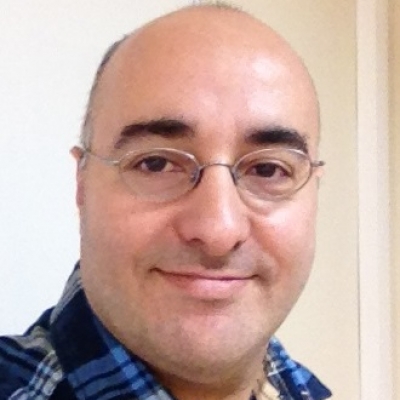
Ali Taylan Cemgil is an Associate Professor at Bogazici University's Department of Computer Engineering, College of Engineering. His research focuses on Bayesian statistics, machine learning, and audio/music processing within the Perceptual Intelligence Laboratory (PILAB). PhD in Computer Science from Radboud University Nijmegen (2004) Postdoctoral research at University of Amsterdam (Intelligent Autonomous Systems Lab) and University of Cambridge (Signal Processing and Communications Lab) Research Interests: Bayesian modeling and time series analysis Audio signal processing and source separation Human-AI collaboration frameworks Probabilistic methods in AI reliability and fairness Scientific Contributions: Recent work explores conformal prediction for model calibration, adversarial robustness in deep learning, and fairness-aware medical AI systems. His research spans theoretical foundations in Bayesian statistics and practical applications in indoor localization and capsule robotics. Academic Service: Current faculty member with extensive publications in AI/ML, signal processing, and probabilistic modeling.
Gizem Şebnem BEYDOĞAN serves as an Assistant Professor at Kırşehir Ahi Evran University's Kaman School of Applied Sciences in the Department of Gastronomy and Culinary Arts. Previously holding positions as Academic Instructor at Ahi Evran University since 2018, she transitioned to her current role in 2024. Her academic career includes significant administrative responsibilities including serving on Accreditation Committees, Measurement Evaluation Committees, and as Bologna Coordinator from 2020-2024. Her educational background includes: PhD in Business Administration from Kırıkkale University (2018-2022) Master's in Business Administration from Gazi University (2015-2017) Bachelor's in Business Administration from Hacettepe University (2012-2015) Certificates in Computer Programming and Educator Training Dr. BEYDOĞAN's research spans the intersection of digital technologies and business management, with particular expertise in Data Science and Analytics , Digital Business Management , Social Media Analysis and Management , and Systems Analysis, Design and Development . Her work demonstrates a clear trajectory from foundational business administration topics toward increasingly sophisticated applications of digital technologies in consumer behavior, organizational leadership, and more recently, gastronomy tourism. She has developed specialized measurement instruments including university image scales and social media sensitivity scales, showcasing methodological rigor in psychometric scale development. Analysis of her publication record reveals a strong focus on methodological approaches to digital transformation, with recent work (2024-2025) examining social media's impact on reality perception, e-leadership in virtual teams, and gastronomy tourism potential. Her research consistently bridges theoretical frameworks with practical applications, particularly in Turkish contexts. The progression from educational quality studies (2017-2018) to digital business transformation (2021-2022) and now gastronomy tourism analysis (2024) demonstrates intellectual versatility while maintaining core methodological strengths. Dr. BEYDOĞAN has served as principal investigator on research projects including "Examination of Mathematics Teachers' Contribution Levels to Student Shaping and Training Process According to Feedback-Correction Perceptions" (2016). Her teaching portfolio is extensive, covering 48 different undergraduate courses including Strategic Management, Total Quality Management, Social Media Management and Digital Marketing, and Gastronomy-related subjects.
Dr. Altuğ Başol serves as an Assistant Professor in Mechanical Engineering at Özyeğin University's Faculty of Engineering in Istanbul, Turkey. His academic career bridges advanced computational techniques with practical industrial applications in fluid dynamics and thermal engineering. Education: PhD in Mechanical Engineering, ETH Zurich, Switzerland (2013) MSc in Mechanical Engineering, Boğaziçi University, Turkey (2007) BSc in Chemical Engineering, Boğaziçi University, Turkey (2004) Dr. Başol's research program centers on computational fluid dynamics with specialization in parallel programming and GPU-accelerated computing. His work develops application-specific numerical tools for industrial process optimization, with particular focus on turbomachinery design. He has extensive industry collaboration experience, having worked with leading turbine and compressor manufacturers during his postdoctoral research at ETH Zurich to improve machinery performance and reliability. His research emphasizes harnessing modern multi-core and many-core hardware architectures for engineering simulations. Current Research Projects: Wind comfort assessment of Özyeğin University Campus (TUBITAK 1001 project) Development of Furnace Design and Analysis Software with graphics-accelerated Monte Carlo Ray Tracing Joint research project with Ford Otosan on heavy commercial vehicle under-hood thermal modeling Teaching: Thermodynamics (ME 202) Numerical Analysis (Math 214) Computational Methods for Engineers (ME 418/518) Computational Fluid Dynamics (ME 419/519) Dr. Başol actively recruits graduate students with strong backgrounds in thermal/flow modeling and programming languages including C, C++, and Fortran for research positions that provide hands-on experience with industrial-scale engineering problems.
Ali Cengiz Beğen is a Professor in the Computer Science Department at Ozyegin University in Istanbul. He is also the founder of Networked Media , a technology consulting firm specializing in IP video systems. His career includes technical leadership roles at Comcast and Cisco , where he developed advanced video delivery solutions. Education: PhD in Electrical and Computer Engineering (Georgia Tech, 2006), BSc in Electrical Engineering (Bilkent University, 2001) Research Interests focus on network support for real-time media , including optimized content encoding, low-latency live streaming, and protocol innovation for IP video. His work bridges academic research with industry standards like ISO/IEC JTC1/SC29 (MPEG/JPEG), where he serves as Head of the Turkish National Body . Current projects explore Media-over-QUIC transport , multi-CDN streaming , and reinforcement learning for adaptive streaming. His scientific contributions include 40+ US patents and publications in IEEE Transactions on Multimedia , IETF RFCs, and ACM SIGMM. Awards highlight his impact: Emmy® Award for Technology and Engineering (2020) ACM SIGMM Test of Time Award (2021) SVTA Industry Fellow (2021) ACM Distinguished Member (2020) IEEE Senior Member (2019) Microsoft Bandwidth Estimation Grand Challenge Runner-up (2021) Professional Service includes IEEE Communications Society Distinguished Lecturer (2016-2020) and keynotes at conferences like IEEE ICME and SVTA Webinars . He actively consults for media-tech companies and law firms on video transport standards.
OKAN GÜNGÖR serves as a Lecturer in the Department of Electrical and Electronics Engineering at Alanya Alaaddin Keykubat University's Faculty of Engineering since 2025, following prior appointments as Lecturer (2019) and Doctor Lecturer (2019-2025) at Bayburt University's Technical Sciences Vocational School. His academic credentials include: Doctorate in Electrical Engineering from Karadeniz Technical University (2019-2024) Master's in Electrical Engineering from Sakarya University (2016-2019) Bachelor's in Electrical-Electronic Engineering from Süleyman Demirel University (2010-2014) Dr. GÜNGÖR's research centers on Renewable Energy Systems , with specialized expertise in photovoltaic power optimization, maximum power point tracking (MPPT) algorithms, and energy management. His work addresses critical challenges in solar energy efficiency—including environmental impacts on panel performance and converter topology design—while extending into radiation shielding simulation and electrical safety protocols. His technical approach integrates advanced control systems like ANFIS and neural networks to enhance renewable energy infrastructure reliability. Analysis of his 11 publications (2014-2023) reveals a consistent trajectory in solar energy innovation, evolving from foundational work on MPPT algorithms and electrical safety toward sophisticated solutions for dust-induced efficiency loss and multi-domain applications like 3D-printed geopolymer structures. Recent contributions demonstrate expanding interdisciplinary scope, bridging power electronics with materials science and environmental engineering. No scientific awards or formal advising relationships are documented in available records. Research activities show no explicit grant funding or laboratory affiliations, though his publications indicate collaborative work with researchers like Hakan Kahveci and Ayhan Ozdemir on photovoltaic systems.
Assistant Professor Dr. Hasan ÇİÇEK is affiliated with Uskudar University, focusing on Industrial Engineering. His academic journey includes a BSc Honours degree in Textile Engineering and a PhD in Computer Simulation of Melt Spinning from Leeds University. BSc: Textile Engineering, Leeds University (1982) PhD: Computer Simulation of Steady-State Melt Spinning, Leeds University (1986) His research spans Industrial Engineering , with emphasis on Sustainable Supply Chain Management , Lean Manufacturing , and Predictive Maintenance . Recent works analyze process optimization in food factories and pandemic-era workforce dynamics. Key trends in his publications include Quality Control , Operational Efficiency , and Healthcare Systems . He supervised the 2025 thesis on AI-driven predictive maintenance and 2023 research on Saudi Arabian industrial quality control during the pandemic. Scientific awards include a State Scholarship for Studying Abroad in 1978. His administrative roles encompass Coordinator of Ortak Dersler (2025) and Head of Staj Komisyonu (2021–2025).
Prof. Nejat YUMUŞAK is a full Professor in the Department of Computer Engineering at Sakarya University's Faculty of Computer and Information Sciences, where he has built his academic career since 1995. His progression includes roles as Research Assistant (1993-1998), Assistant Professor (1998-2004), Associate Professor (2005-2011), and Professor (2011-present). Education PhD in Electrical-Electronics Engineering, Sakarya University (1995-1998) Thesis: Analysis of Power System Circuit Elements Using Artificial Neural Networks MSc in Electrical-Electronics Engineering, Dumlupinar University (1994-1995) Thesis: Calculation and Measurement of Transformer Parameters at High Frequencies BSc in Electrical-Electronics Engineering, Istanbul Technical University (1989-1993) Research Focus Prof. YUMUŞAK's research integrates artificial intelligence with multidisciplinary applications. Primary domains include: Bioinformatics & Medical AI : Developing deep learning models for COVID-19 mutation prediction, leukemia classification via blood smear analysis, and gastrointestinal anomaly detection using endoscopic data. Signal Processing & Security : Advancing acoustic event detection for security systems and vulnerability testing through intelligent fuzzing techniques. Optimization & Industrial Applications : Creating metaheuristic algorithms (e.g., enhanced Wild Horse Optimizer) for energy efficiency and Industry 4.0 digitalization. Publication Trends His recent articles (2022-2025) demonstrate strong emphasis on transformer architectures for virology, ensemble methods for medical diagnostics, and CNN/LSTM networks for genomic and acoustic data analysis. Over 50% of recent works focus on healthcare applications, particularly cancer and pandemic-related prediction models. Contact & Recognition Contact via nyumusak@sakarya.edu.tr or phone (0264) 264 58 94. His work has received 793 citations (Web of Science) with an H-index of 14.
Mehmet Ali YALÇINKAYA is a full-time Lecturer in the Department of Computer Engineering at Ahi Evran University's Faculty of Engineering and Architecture. His academic journey includes a PhD (2020) and MSc (2015) in Computer Engineering from Süleyman Demirel University, and a BSc in Electronics and Computer Education (2012). PhD: Computer Engineering, Süleyman Demirel University (2020) MSc: Computer Engineering, Süleyman Demirel University (2015) BSc: Electronics and Computer Education, Süleyman Demirel University (2012) His research focuses on Information Security and Cryptology , Artificial Intelligence , Computer Software , and Cybersecurity . Recent work includes phishing detection systems, deep learning applications for security, and AI-driven educational tools. Key article trends: 2025: NLP for violence detection in healthcare 2024: Multilayer security frameworks, AI in education, and biometric authentication 2023: Phishing defense mechanisms and agricultural pest detection He has supervised four Master's theses and collaborated with 48 researchers. Notable projects include a BCI-supported deep learning model for motor/facial analysis (2025-2027) and AI-powered educational systems for primary schools.
Volkan GÜNEŞ is a Lecturer in the Department of Computer Engineering at Kırşehir Ahi Evran University's Faculty of Engineering and Architecture . He holds a PhD in Computer Science from the University of California, Irvine (2015) and a Master's degree (2010) from the same institution, with a focus on computer engineering. His academic career spans roles at Süleyman Demirel University (2016-2018), Isparta Applied Sciences University (2018-2019), and Kırşehir Ahi Evran University since 2019. Education : PhD in Computer Science and Engineering (2015), MS (2010), BS in Electronics and Computer Education (2006). Research Areas : Cyber-physical systems, smart building optimization, embedded processor design, and fault mitigation in sensor networks. Publications : His work explores CPS applications, energy-efficient HVAC systems, and scalable many-core architectures. Collaborators : Tony Givargis, Steffen Peter, Frank Vahid.
Professor Mehmet Güray Güler holds a faculty position at Istanbul Technical University (ITU) in the Department of Data Science and Analytics within the School of Business. Previously, he served as Professor in ITU's Department of Industrial Engineering (2024) and held progressive academic appointments at Yildiz Technical University from Research Assistant (2005-2013) to full Professor (2022-2024). His educational background includes a PhD in Industrial Engineering from Boğaziçi University (2005-2012), preceded by Master's (2003-2005) and Bachelor's degrees from the same institution. Professional experience includes R&D Manager at Lojika Information Technologies (2014-2015). Research focuses on Modeling and Optimization , Machine Learning , and Operations Research with specific applications in hydrogen supply chains, renewable energy systems, and stochastic optimization. Recent work demonstrates strong emphasis on Turkey's energy transition, with multi-objective models for hydrogen infrastructure and electricity market strategies. Publication trends show increasing focus on sustainable energy systems since 2020, with significant contributions to hydrogen logistics (60% of recent publications) and machine learning applications in energy markets (25%). Key methodological approaches include stochastic programming, multi-objective optimization, and neural network integration. Award highlights: Operations Research Association Member (2006-present) Current research leadership includes the active project Türkiye Hidrojen Tedarik Zinciri Ağı: Strateji ve Politikalar (2024-2026) as Principal Investigator. Grant activities focus on national energy infrastructure development with strong industry-academia collaboration. Laboratory work centers on energy systems modeling with computational infrastructure for large-scale stochastic optimization. Current team focuses on hydrogen economy transition strategies for Turkish national policy development.