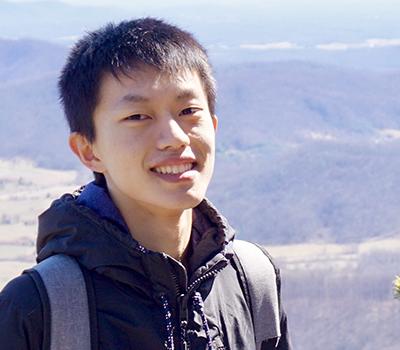
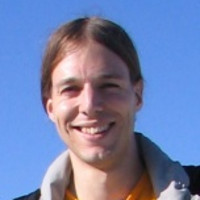
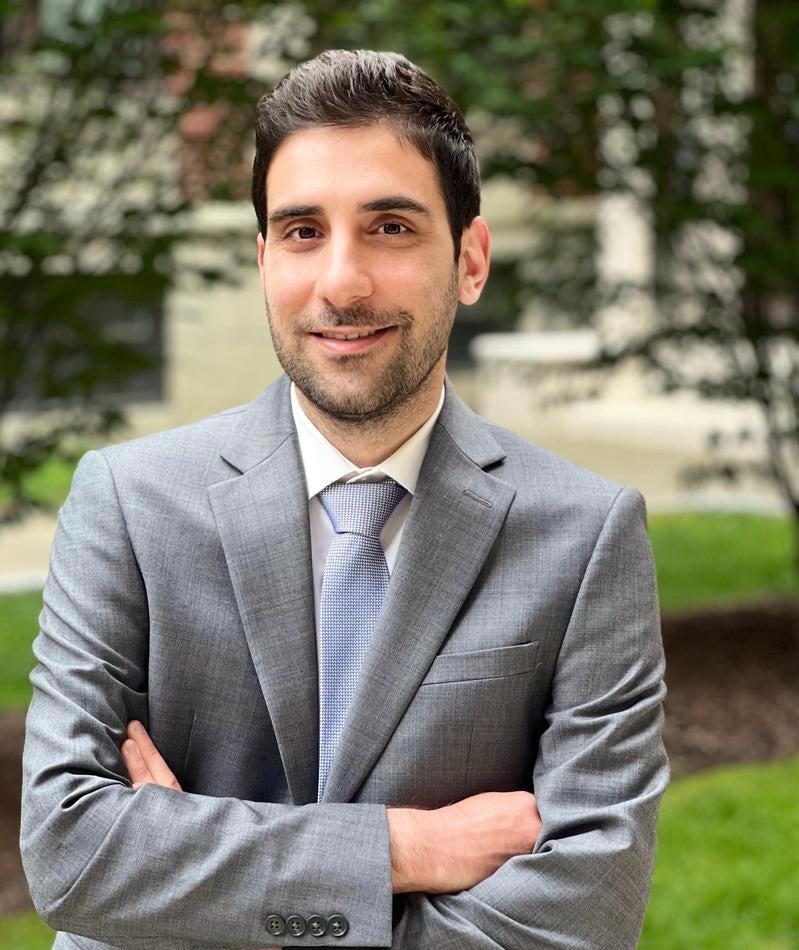
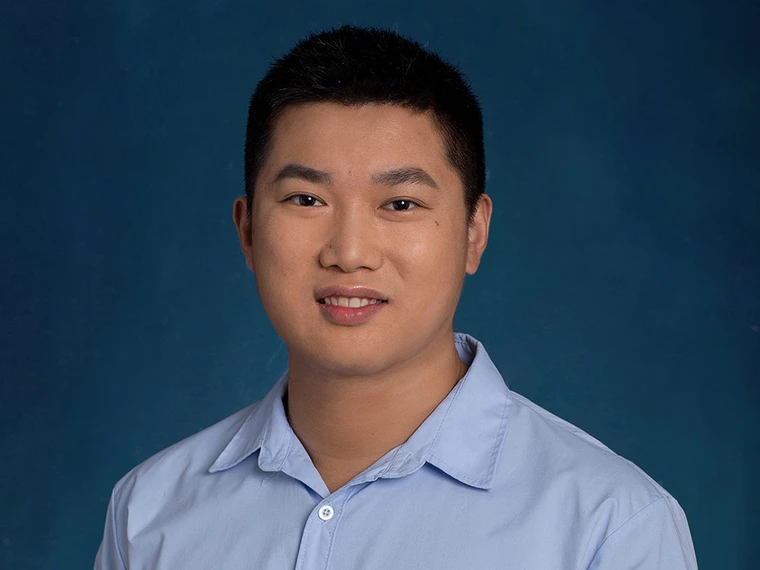
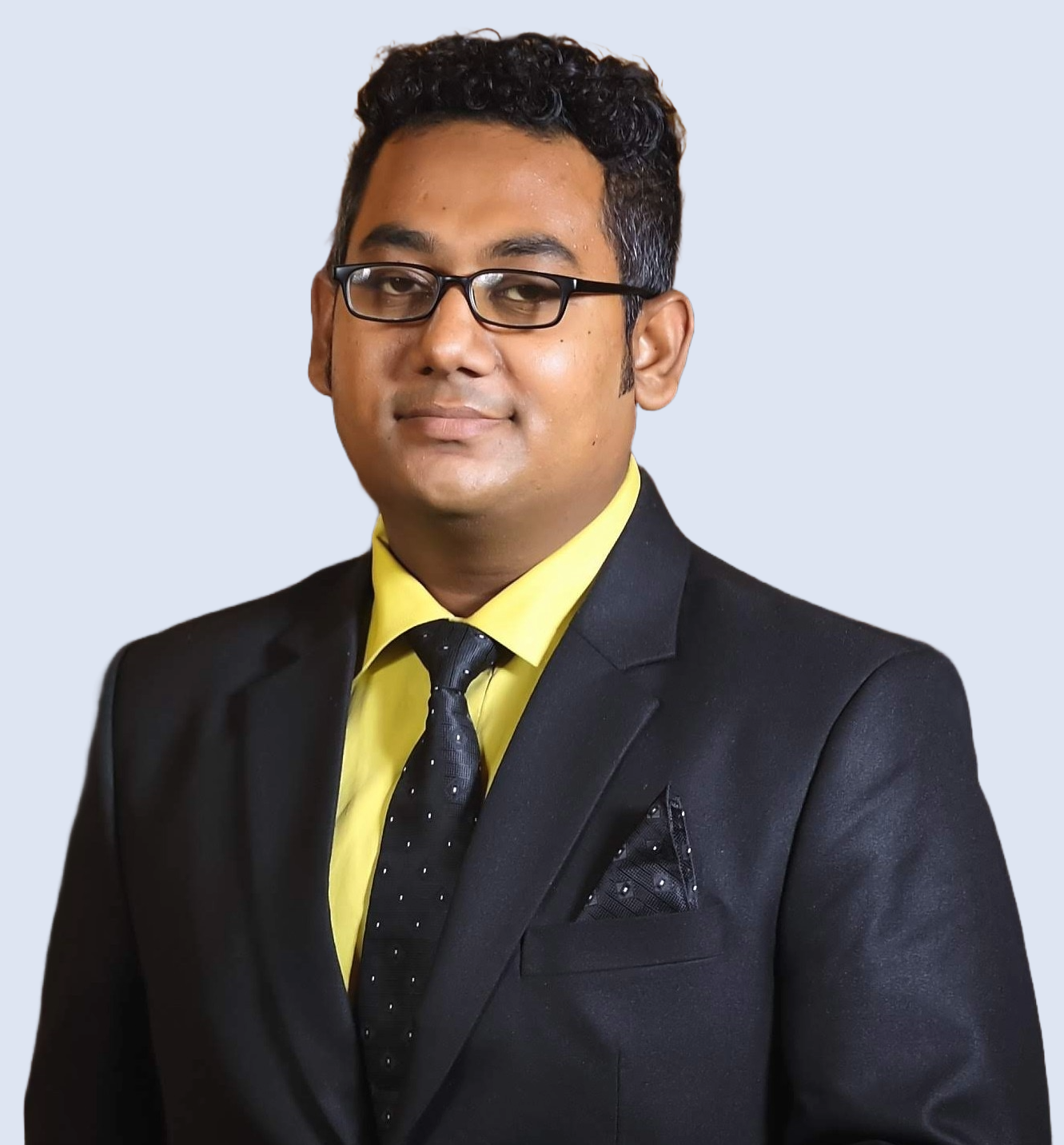
Huazheng Wang is an Assistant Professor in the School of Electrical Engineering and Computer Science at Oregon State University. His research focuses on reinforcement learning, information retrieval, and trustworthy AI. He received his Ph.D. from the University of Virginia (2021) and B.E. from the University of Science and Technology of China (2015). He holds awards including the 2025 EECS Fabulous Teacher Recognition and SIGIR 2019 Best Paper Award. His work addresses challenges in robust reinforcement learning, adversarial attacks on bandit systems, and applications in scientific discovery. Education: Ph.D., Computer Science, University of Virginia (2021) B.E., Computer Science and Technology, University of Science and Technology of China (2015) Research interests emphasize developing efficient algorithms for reinforcement learning, multi-armed bandits, and their applications in recommendation systems, protein optimization, and security. Notable contributions include provably efficient risk-aware reinforcement learning frameworks and adversarial attack analysis on bandit systems. Recent work includes NSF-funded research on neural bandits (IIS-2403401) and publications in top venues like ICML, NeurIPS, and AAAI. His lab explores embodied LLM agents for team cooperation and federated collaborative online monitoring frameworks.
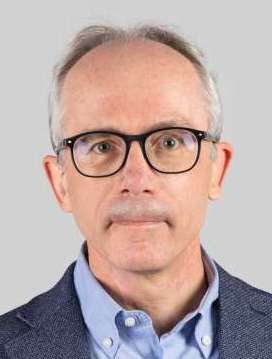
Paolo Tonella is a Full Professor and Director of the Software Institute at the Faculty of Informatics, Università della Svizzera italiana (USI) in Lugano, Switzerland. He also holds an Honorary Professorship at University College London (UK) and previously led the Software Engineering group at Fondazione Bruno Kessler (Italy). His research focuses on software testing, analysis, and AI-driven systems. He has authored over 200 peer-reviewed papers and 100 journal articles, with an H-index of 72. He teaches courses in Data and Software Engineering and Informatics, including Information Modeling, Probability & Statistics, and Knowledge Search. Key contributions include foundational work on web application testing (ICSE MIP award), evolutionary testing techniques (eToc/EvoSuite tools), and reverse engineering of object-oriented systems. He led the ERC-funded PRECRIME project on anticipatory testing. His recent work addresses AI dependability, autonomous systems testing, and deep learning fault analysis. Scientific awards include the ICSE MIP Award (2001) and ERC Advanced Grant (2018). He has served on editorial boards for major journals like IEEE Transactions on Software Engineering and ACM TOSEM. Current roles include leadership in the Software Institute and organizing the SIESTA summer school.
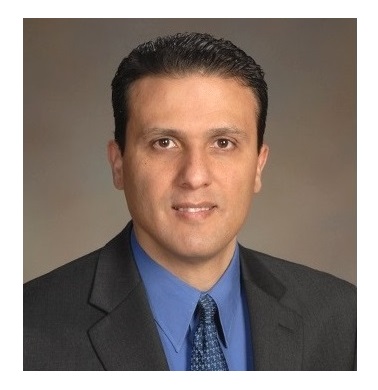
Dr. Wahab Hamou-Lhadj is a Professor and Chair at the Department of Electrical and Computer Engineering , Concordia University, and an Affiliate Researcher at NASA JPL, Caltech . He leads research in Artificial Intelligence for IT Operations (AIOps) , Software Observability , and Model-Driven Engineering , focusing on improving the reliability of digital systems in AI-driven environments.
Prof. Dr. Raphael Sznitman serves as Director of the ARTORG Center for Biomedical Engineering Research and Head of the Artificial Intelligence in Medical Imaging group at the University of Bern, Switzerland, holding a Full Professor position in AI for Medical Imaging since 2015. Education: PhD in Computer Science, Johns Hopkins University (2011) MSc in Computer Science, Johns Hopkins University (2009) BSc in Cognitive Systems, University of British Columbia (2007) Research Interests: Sznitman's work centers on computational vision , probabilistic methods , and statistical learning applied to medical imaging challenges. His group develops AI algorithms for ophthalmic diagnostics, surgical robotics, and medical image analysis, with emphasis on OCT, surgical phase recognition, and domain adaptation techniques. Key application areas include retinal disease detection and cataract surgery automation. Publication Trends: His 2021-2025 publications reveal concentrated efforts in deep learning for medical imaging , particularly in ophthalmology (OCT analysis) and surgical video understanding. Emerging themes include LLM applications for clinical monitoring, unsupervised out-of-distribution detection for surgical safety, and physics-informed AI for multimodal medical data fusion. Research Leadership: As ARTORG Center Director, Sznitman oversees interdisciplinary research bridging computer science and clinical medicine. His group collaborates extensively with Bern University Hospital clinicians on translational projects, securing funding for AI-driven diagnostic tools and surgical assistance systems. Current initiatives focus on real-time intraoperative guidance and spaceflight ophthalmology applications. Laboratory: The Artificial Intelligence in Medical Imaging group operates within ARTORG's dedicated facilities, maintaining partnerships with surgical robotics labs and ophthalmology departments for clinical validation of AI systems. Their work integrates multimodal data streams including OCT, VR perimetry, and surgical video feeds.
Xiaohui Yu is a Professor and Graduate Program Director in the School of Information Technology at York University. He holds a BSc from Nanjing University, an MPhil from the Chinese University of Hong Kong, and a PhD from the University of Toronto. His research focuses on the intersection of data management and machine learning, including ML-based database systems, large-scale machine learning, and spatio-temporal data analysis in contexts like intelligent transportation systems and social networks. Supported by grants from NSERC and industry partners, his work has been published in top venues such as SIGMOD, VLDB, and TKDE. He serves as an Associate Editor for journals like IEEE TKDE and ACM TKDD, and actively participates in conference program committees. Education: BSc (Nanjing University), MPhil (Chinese University of Hong Kong), PhD (University of Toronto). Research Interests: Big data management, database systems, machine learning, spatio-temporal data analytics, and video query processing. Recent articles emphasize ML-driven database components, efficient video query optimization, and scalable algorithms for large-scale data. His work addresses challenges in query processing, indexing, and real-time systems. Service: Serves on editorial boards (e.g., Information Systems), and chairs/workshops (e.g., Symposium on Data Markets). Active in program committees for SIGMOD, ICDE, and other leading conferences. Advising & Grants: Directs graduate programs and leads research groups. Collaborates with industry on data marketplaces and AI model integration. No specific student names listed, but actively recruits PhD/Master’s candidates.
Cyrille Artho is an Associate Professor in the Division of Theoretical Computer Science at KTH Royal Institute of Technology, actively contributing to research in formal methods, software testing, and cybersecurity. His work spans model checking, smart contract security, and concurrent systems verification, with significant contributions to tools like Java Pathfinder and Modbat. PhD from ETH Zurich (2005) with dissertation on multi-threading fault detection Teaches Software Safety and Security, Software Engineering Fundamentals, and supervises degree projects His research focuses on developing formal techniques for safety-critical systems, particularly in blockchain security and distributed applications. Recent work emphasizes smart contract verification, anomaly detection in microservices, and trusted execution environments for secure cloud analytics. The 15 most recent publications reveal a strong trend toward blockchain security (6 articles), formal verification of distributed systems (5), and novel testing methodologies (4), with increasing integration of machine learning for vulnerability detection. As chair of the FTSCS workshop series and contributor to major conferences like ASE and ICST, Artho has significantly shaped the formal methods community. His leadership in organizing workshops demonstrates commitment to advancing safety-critical systems research. Principal investigator for C3.ai DTI Cyber Safety Cage for Networks project Develops Modbat framework for model-based API testing Active in Digital Futures research initiative at KTH
Mohammad Mohammadi Amiri serves as an Assistant Professor in the Department of Computer Science at Rensselaer Polytechnic Institute (RPI), appointed in Fall 2023. His research focuses on advancing artificial intelligence through strategic data utilization, with emphasis on large language models, data valuation, federated learning, and deep learning. Previously, he held postdoctoral appointments at Princeton University and MIT Media Lab, building on his strong educational foundation from Imperial College London, University of Tehran, and Iran University of Science and Technology. Education: Ph.D. in Electrical and Electronic Engineering, Imperial College London (2019) - Best Ph.D. Thesis Award recipient M.Sc. in Electrical and Computer Engineering, University of Tehran (2014) - Ranked 1st among all M.Sc. students B.Sc. in Electrical Engineering, Iran University of Science and Technology (2011) - Ranked 1st among all B.Sc. students Dr. Amiri's research centers on optimizing artificial intelligence systems through innovative data strategies. His work addresses critical challenges in large language models including efficiency, memory usage, alignment, and reasoning capabilities. In data valuation, he develops principled methods to quantify data worth for fair trading platforms. His federated learning research tackles privacy concerns, heterogeneous data distribution, and communication overhead in decentralized environments. The deep learning component explores theoretical foundations to improve model interpretability and robustness. Analysis of his recent publications reveals a strong focus on making AI systems more efficient and accessible, with particular emphasis on large language model optimization, federated learning advancements, and data valuation frameworks. His work bridges theoretical foundations with practical applications in wireless communications and distributed computing environments. Scientific Awards: IEEE Communications Society Young Author Best Paper Award (2022) Best PhD Thesis Award from IEEE Information Theory Chapter of UK and Ireland (2019) Eryl Cadwallader Davies Prize for Outstanding PhD Thesis (2019) EEE Departmental Scholarship at Imperial College London (2015-2019) Ranked 1st among M.Sc. students at University of Tehran (2014) Ranked 1st among B.Sc. students at Iran University of Science and Technology (2011) Dr. Amiri actively mentors graduate students, currently supervising five Ph.D. candidates and one M.Sc. student working on efficient LLM fine-tuning, inference, and storage. His research has attracted significant attention, evidenced by numerous keynote invitations at prestigious institutions including Bell Labs, MIT, King's College London, and various IEEE conferences. He serves on program committees for major conferences including IEEE Globecom and ICC, demonstrating his growing influence in the academic community. His research group operates at the intersection of machine learning and wireless communications, developing innovative solutions for resource-constrained environments while addressing fundamental theoretical challenges in AI systems. Current projects focus on making advanced AI more scalable and accessible through efficiency improvements in model training and inference.
LEE Wee Sun is a Professor in the Department of Computer Science at the National University of Singapore (NUS), where he previously served as Head of Department, Vice Dean of Undergraduate Studies, and Vice Dean of Research. His academic journey began with a B.Eng. in Computer Systems Engineering from the University of Queensland (1992) and a Ph.D. from the Australian National University (1996), followed by research roles at the Australian Defence Force Academy and MIT. Education: Ph.D., Australian National University, Canberra, Australia (1996) B.Eng. in Computer Systems Engineering, University of Queensland, Brisbane, Australia (1992) Research Focus: Professor Lee pioneers work in Machine Learning , Planning Under Uncertainty , and Approximate Inference , with emphasis on integrating AI subfields for holistic reasoning. His current projects include "Learning to Decompose for Reasoning and Planning" (enhancing LLMs via self-supervised problem decomposition) and "Learning to Reason with Visual-Linguistic Inputs" (unifying vision, language, and reasoning in single architectures). Publication Trends: Recent work (2023-2025) centers on bridging LLMs with classical AI techniques, featuring breakthroughs in uncertainty quantification, multi-task optimization, and graph-based reasoning. Key themes include sparsity-aware vehicle routing, epistemic uncertainty for reliable LLMs, and differentiable neural solvers for combinatorial problems. Awards: IJCAI-JAIR Best Paper Prize (2022) RSS Test of Time Award (2021) RoboCup Best Paper Award (IROS 2015) HRATC 1st Place (2015) IPPC POMDP Track 1st Place (2011, 2014) UAI Google Best Student Paper (2014) Semeval-1 1st/2nd Place (2007) J.G. Crawford Prize (ANU 1996) Leadership & Service: As steering committee chair for ACML and area chair for NeurIPS/ICML/AAAI/IJCAI, Professor Lee shapes global AI discourse. His administrative roles at NUS and collaborations with MIT/Singapore-MIT Alliance demonstrate commitment to advancing AI education and research infrastructure. While student advisees aren't listed, his leadership positions imply extensive mentoring. Research Ecosystem: His work drives NUS's AI initiatives including Knowledge@Computing projects on reasoning frontiers. Current efforts focus on making AI systems robust through uncertainty-aware planning and multi-modal integration, with applications in robotics, verification systems, and combinatorial optimization.
Chris De Sa is an Associate Professor in the Department of Computer Science at Cornell University, affiliated with the Cornell Machine Learning Group and leading the Relax ML Lab. His research focuses on algorithmic, software, and hardware techniques for high-performance machine learning, particularly relaxed-consistency stochastic algorithms like asynchronous and low-precision stochastic gradient descent (SGD). He earned his Ph.D. from Stanford University under advisors Kunle Olukotun and Chris Ré. His work emphasizes constructing efficient, parallel, and distributed machine learning frameworks for deep learning and data analytics. Education: Ph.D. in Computer Science, Stanford University (2017) Research Interests: Algorithmic techniques for scalable ML, quantization, distributed optimization, hyperbolic geometry in ML, and reliable measurement of ML systems. His group develops frameworks for efficient inference/training and explores the intersection of ML with domains like agriculture and plant science through courses like PLSCI 7202. Recent Highlights: DARPA YFA Grant (2024), NSF CAREER Award, Google Research Scholar Award, and multiple best paper recognitions. Key contributions include QuIP quantization methods, Coneheads attention mechanisms, and theoretical advances in decentralized training. Awards: NSF CAREER Award DARPA YFA Grant (2024) Google Research Scholar Award Mr. & Mrs. Richard F. Tucker Teaching Award Grants & Advising: Advises 8 Ph.D. students (including Ruqi Zhang, Yucheng Lu, A. Feder Cooper) and holds leadership roles in MLSys conferences. Active in grant-funded research (e.g., NSF Robust Intelligence). Labs/Teams: Leads the Relax ML Lab and participates in Cornell’s Institute for Digital Agriculture (CIDA).
Liangming Pan is an Assistant Professor at the University of Arizona's College of Information Science. His research focuses on building trustworthy large language models (LLMs) with an emphasis on logical reasoning, truthfulness, and safety. He holds a PhD in Computer Science from the National University of Singapore (2022), a Master's from Tsinghua University, and a Bachelor's from Beihang University. Education : PhD in Computer Science, National University of Singapore (2022) Master of Engineering in Computer Science, Tsinghua University (2017) Bachelor of Engineering in Computer Science, Beihang University (2014) Research Interests : Dr. Pan's work centers on enhancing LLMs' reliability through: Logical reasoning mechanisms to ensure faithful deductions Truthfulness verification to combat misinformation Safety protocols to mitigate societal harm Key Contributions : Developed TART, an open-source framework for explainable table-based reasoning Created benchmarks like SCITAB and FactCheck-Bench for evaluating LLMs Advanced techniques for knowledge editing and causal reasoning Awards : Best Paper Runner-Up at NeurIPS Table Representation Workshop (2024) Area Chair Award for Question Answering (IJCNLP-AACL 2023) Service & Outreach : He serves as an Area Chair for EMNLP (2024), COLING (2025), and ACL (2024). He has delivered invited talks at Tsinghua University, Peking University, and other institutions.
Aleksandar Bojchevski is a full professor of Computer Science at the University of Cologne, leading the Trustworthy Artificial Intelligence Lab (TAIL). His research focuses on developing robust, interpretable, and privacy-preserving machine learning models, particularly graph neural networks (GNNs). The lab emphasizes trustworthiness in high-stakes applications through methods that handle noisy, adversarial, or anomalous data. Bojchevski holds a PhD and PostDoc from the Technical University of Munich, advised by Stephan Günnemann. Previously, he was faculty at CISPA Helmholtz Center for Information Security. His work bridges theory and practice, addressing adversarial robustness, uncertainty quantification, and scalable GNN techniques. Research interests include: robustness certification for GNNs, conformal prediction, adversarial attack analysis, and privacy-aware machine learning. His lab actively collaborates with RWTH Aachen and organizes events like the Learning on Graphs Meet Up. Recent achievements include a teaching award for the Machine Learning lecture (SS 24) and NeurIPS 2024 acceptance of SVFT: Parameter-Efficient Fine-Tuning with Singular Vectors . Open positions are available in his group focusing on trustworthy ML topics. Key labs/teams: Trustworthy Artificial Intelligence Lab (TAIL), Center for Data and Simulation Science (CDS) as a core scientist.
Dr. Muhammad Rashed is an Assistant Professor in the Department of Computer Science and Engineering at the University of Texas at Arlington, within the College of Engineering. He holds a Ph.D. in Computer Engineering from the University of Central Florida (2024) and a B.S. in Electrical and Electronics Engineering from Bangladesh University of Engineering and Technology (2015). Ph.D. : Computer Engineering, University of Central Florida, 2024 B.S. : Electrical and Electronics Engineering, Bangladesh University of Engineering and Technology, 2015 His research focuses on electronic design automation (EDA), in-memory computing, AI acceleration, and sustainable computing. He explores novel computing paradigms to overcome the limitations of traditional architectures, particularly in data-intensive applications such as AI and scientific computing. His work emphasizes hardware-software co-design and leveraging emerging non-volatile memories for energy-efficient processing. The 15 most recent publications highlight a consistent focus on in-memory computing, particularly in path-based and flow-based architectures, logic synthesis, and AI acceleration. Key themes include optimization, fault tolerance, verification, and the use of advanced data structures like sentential decision diagrams. His work is published in top-tier venues such as DAC, ICCAD, ASP-DAC, and IEEE/ACM journals. Scientific Awards: UTA CARES Grant for OER Creation Research Experiences for Undergraduates (REU) Grant Alireza Seyedi Doctoral Research Innovation Endowed Scholarship David T. & Jane M. Donaldson Memorial Scholarship IEEE/ACM William J. McCalla ICCAD Best Paper Award Nomination Best Research Video Award, Design Automation Conference (DAC) Dr. Rashed advises several graduate and undergraduate students in the NextGen Computing Lab and is involved in research grants including the UTA CARES Grant and REU funding. He actively contributes to academic service through roles such as conference TPC member, journal reviewer (e.g., IEEE TCAD, ACM TODAES), and committee participation in the department and college. His lab, the NextGen Computing Lab, is dedicated to building scalable, energy-efficient computing systems for next-generation AI and scientific workloads, aligning with national initiatives in advanced computing.
Vera Liao is a Principal Researcher at Microsoft Research, where she is part of the FATE (Fairness, Accountability, Transparency, and Ethics of AI) group. She will join the University of Michigan Computer Science and Engineering department as an Associate Professor in fall 2025. Her work focuses on human-AI interaction, explainable AI, and responsible computing. Liao has made significant contributions to IBM products such as AI Explainability 360 and Uncertainty Quantification 360 during her time at IBM T.J. Watson Research Center. Dr. Liao received her education from the University of Illinois at Urbana-Champaign and Tsinghua University. Her academic journey has positioned her at the intersection of human-computer interaction and artificial intelligence, with a strong emphasis on creating AI systems that are transparent, accountable, and user-centered. Vera Liao's research primarily centers around human-centered AI explainability and transparency. She investigates how to design AI systems that effectively communicate their capabilities, limitations, and decision-making processes to users. Her work examines the intersection of AI transparency with trust, control, and user experience. Liao has pioneered approaches to bridging the socio-technical gap in AI evaluation and has developed frameworks for contextualized evaluation of explainable AI systems. Her research spans multiple domains including conversational interfaces, data storytelling, and creative work with generative AI. Liao's publications reveal a clear trend toward addressing the challenges of large language models and their impact on human-AI interaction. Her recent work focuses on understanding how uncertainty communication affects user trust, how to design for appropriate reliance on AI systems, and how to create authentic co-creation experiences with generative models. She has been examining the risks in AI-infused information ecosystems and developing methods for human-centered evaluation of language technologies. Her scientific contributions have been recognized with multiple honors: Best Paper Award, Honorable Mention at CHI 2025 (two papers) Best Paper Award at CHI 2024 Best Paper Award, Honorable Mention at FAccT 2023 Best Paper Award, Honorable Mention at HCOMP 2022 Best Paper Award, Honorable Mention at CHI 2021 Best Paper Award, Honorable Mention at CHI 2014 Outstanding Paper Award at IUI 2019 Dr. Liao is an active mentor, having guided numerous research interns from top universities including Cornell, Princeton, CMU, Stanford, and MIT. She serves in editorial roles as Co-Editor-in-Chief of the Springer Human-Computer Interaction Book Series and as an Editor for ACM CSCW. Liao has secured research funding through her work at Microsoft Research and previously at IBM, focusing on projects related to AI explainability, transparency, and responsible AI development. As part of Microsoft Research's FATE group, Liao collaborates with a multidisciplinary team of researchers focused on the ethical implications of AI technologies. Her work bridges the gap between technical AI development and human-centered design principles, ensuring that AI systems are developed with user needs and societal impacts in mind.
Dr. Feras Dayoub is a Senior Lecturer at the School of Computer and Mathematical Sciences (Faculty of Sciences, Engineering and Technology) at the University of Adelaide , specializing in Embodied AI and Robotic Vision within the Australian Institute for Machine Learning (AIML) . He co-directs the CROSSING French-Australian laboratory for human-autonomous agent teaming and holds an Adjunct position at the Queensland University of Technology (QUT) , serving as an Associate Investigator at its Centre for Robotics . Previously, he was a Chief Investigator at the ARC Centre of Excellence for Robotic Vision . His research focuses on advancing reliable deployment of computer vision and machine learning on mobile robots in real-world environments. Applied projects include agricultural automation , environmental conservation , and autonomous infrastructure monitoring . He has published extensively on topics like object detection , domain adaptation , 3D representation learning , and vision-language navigation , with a particular emphasis on robustness in dynamic and partially observed environments. Dr. Dayoub is also an educator specializing in programming , computer vision , and robotic perception . He contributes to open-source robotics research through tools like AARK (Autonomous Racing Toolkit) and has led teams developing solutions for precision agriculture (e.g., Deepfruits fruit detection system) and environmental monitoring (e.g., Crown-Of-Thorns starfish detection ). Key Collaborations : CROSSING Lab, QUT Centre for Robotics Research Themes : Embodied AI, Robust Perception, Domain Adaptation
Zhibo Pang is an Adjunct Professor at KTH Royal Institute of Technology's Department of Intelligent Systems (EECS) and Senior Principal Scientist at ABB Corporate Research Sweden. His work focuses on digital transformation in industry and healthcare, spanning robotics, AI, control systems, and wireless communication. He leads projects in embodied intelligence, Industry 4.0, and Healthcare 4.0, with 23 granted patents and over 120 journal papers. Education: PhD in Electronic and Computer Systems (KTH, 2013), MBA in Innovation & Growth (University of Turku, 2012). Key Roles: IEEE Technical Committee Chair, Editor of 6 IEEE journals, ABB Inventor of the Year (2016, 2018, 2021). Research Interests: Robotics safety, wireless automation, federated learning, digital twins, and IoT security. Recent Projects: Cloud-fog automation frameworks, robot skin systems for healthcare, and latency-aware industrial control. His work bridges academia and industry through cross-functional collaborations.