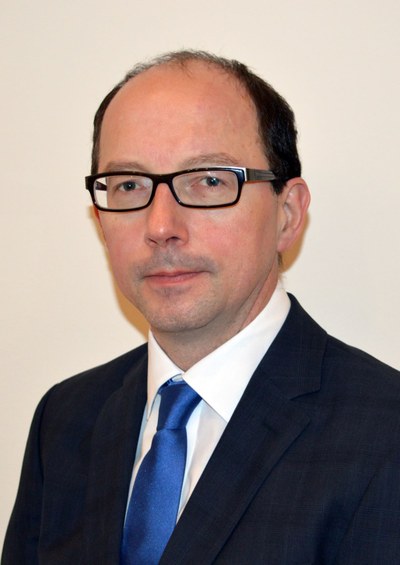
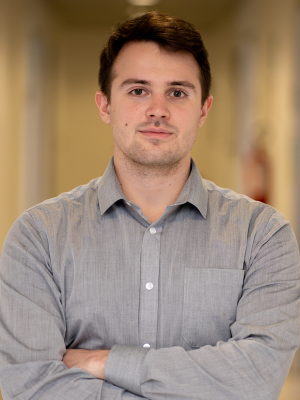
Ralf Lämmel is Professor and Head of the Software Languages group at the University of Koblenz. His research spans software language engineering, model-driven development, and semantic web technologies. He specializes in API analysis, data validation (SHACL constraints), and variability management for software systems. Recent work focuses on AI-assisted workflows for archaeology and trust analysis in large language models. Publications demonstrate growing interest in knowledge graph validation and semantic web applications. He has developed tools like the Virtual Platform for software variability and ProGS for property graph validation. Service includes program committee memberships for software engineering conferences and editorial roles. He leads research groups exploring API evolution and RDF validation techniques.
Professor Ulf Schlichtmann holds the Chair of Design Automation at Technische Universität München's School of Computation, Information and Technology. His research specializes in electronic design automation (EDA) methodologies for complex integrated circuits, with recent focus on optical networks-on-chip, microfluidic biochips, and neuromorphic computing architectures. Research interests span hardware design automation, photonic network optimization, fault-tolerant systems, and AI-assisted hardware generation. Recent innovations include wavelength-routed optical NoCs, 3D-printed microfluidics, and LLM-enhanced HDL design tools that advance hardware efficiency and reliability. Publications demonstrate consistent breakthroughs in cross-domain optimization, with applications spanning from high-performance computing to biomedical microdevices. Laboratory leadership includes coordination of international degree programs and industry collaborations.
Kexin Pei is an Assistant Professor in the Department of Computer Science at the University of Chicago. His research focuses on the intersection of Security, Software Engineering, and Machine Learning, emphasizing data-driven program analysis techniques to enhance software reliability and security. He holds a Ph.D. from Columbia University's Computer Science department. Affiliations: University of Chicago, Google DeepMind (Research Collaboration), Microsoft Research (Past Internship) Education: Ph.D., Computer Science, Columbia University Research interests include Machine Learning for Code, Program Analysis, Software Security, AI & Machine Learning Foundations, and Systems Architecture. His work has received awards such as the Neubauer Family Assistant Professorship (2024), Best Paper Award at SOSP (2017), and Distinguished Artifact Award (2017). Recent publications explore topics like neural program analysis, binary similarity, and cybersecurity evaluation through Capture-the-Flag challenges. He collaborates with industry partners like Google DeepMind to develop program analysis tools using large language models. Awards: Neubauer Family Assistant Professorship (2024) Google Conference Scholarship (2023) CSAW Applied Research Competition Runner-Up (2018) Grants/Projects: Leads research on adversarial testing for deep learning systems and neural program smoothing for fuzzing. Active in academic service, he serves on program committees for top venues like ICSE, CCS, and USENIX Security.
Haitao Wang is a prominent researcher affiliated with the Chinese Academy of Sciences, specifically with the Institute of Automation and State Key Laboratory of Management and Control for Complex Systems in Beijing. His research spans multiple disciplines including artificial intelligence, computer vision, engineering systems, and geospatial information processing. With extensive publications across top-tier journals and conferences, he demonstrates significant academic impact in both theoretical and applied research domains. Wang's research interests focus on the intersection of artificial intelligence and practical engineering applications. His work in machine learning includes developing novel algorithms for distance selection, corrosion prediction models for oil and gas infrastructure, and domain-specific large language models for geological applications. In computer vision, he has made contributions to building pattern recognition, image restoration techniques, and UAV-based environmental monitoring systems. His engineering research spans fault diagnosis systems, precision mechanical design, and human-robot interaction frameworks. Analysis of his recent publications reveals a strong trend toward integrating large language models with specialized domain knowledge, particularly in geological applications (GeoProspect) and robotic task reasoning (Double-Feedback). His work increasingly focuses on practical applications in high-risk industries, emergency response systems, and environmental monitoring, demonstrating a shift toward solving real-world problems with AI technologies. His scientific contributions demonstrate excellence across multiple domains, though specific awards are not documented in the provided information. The breadth of his collaborative work across different institutions and research areas highlights his interdisciplinary approach and academic leadership. Wang's research group appears to be involved in numerous projects related to AI-driven decision support systems, particularly in nuclear safety and emergency response scenarios. His recent work on human reliability analysis frameworks suggests active involvement in high-stakes application domains where human-machine collaboration is critical.
Jewon Lee is a researcher with a focus on interdisciplinary domains spanning Electrical Engineering , Robotics , Signal Processing , and Computer Science . Their work includes collaborations with co-authors like Joon-Young Jung and Sang Woo Kim on fault diagnosis for permanent magnet synchronous machines, IQ data compression methods, and video streaming optimizations. Publications highlight expertise in sensor technology, telecommunications, and machine learning model efficiency. Research interests are diverse, encompassing sensor design , fault detection in electric motors , adaptive video streaming , and large language model (LLM) optimization . These areas are reflected in their contributions to journals such as IEEE Transactions on Industrial Electronics , Sensors , and IEEE Access , as well as conferences like ICTC and ICUFN. Their recent work on LLaMA-3.2-Vision and knowledge graphs indicates an expanding role in Computer Science and Open Science initiatives, aligning with global efforts like the National Research Data Infrastructure (NFDI) . Despite active contributions, specific awards, educational background, and student advising details are not publicly documented in the provided sources.
Oliver Sutton is a researcher specializing in artificial intelligence, machine learning, and computational methods. His work focuses on adversarial attacks, robustness of AI systems, high-dimensional data analysis, and finite element methods for solving complex equations. He collaborates with experts in mathematics and computer science to address challenges in AI reliability and model security, including stealth edits in large language models and feature space optimization. Sutton's recent contributions include developing frameworks to handle AI errors with theoretical guarantees and improving numerical methods for transport equations. Research interests include adversarial machine learning, neuromorphic computing, and mathematical foundations of few-shot learning. His publications span topics from theoretical guarantees in AI to practical implementations of discontinuous Galerkin methods. Sutton's work highlights interdisciplinary approaches to advancing both theoretical understanding and applied solutions in computational science and AI security.
Michael Adam Lones is a Professor in the Department of Computer Science at Heriot-Watt University's School of Mathematical & Computer Sciences and a member of the Edinburgh Centre for Robotics. With over 25 years of AI expertise spanning machine learning, optimization, and bio-inspired computing, his research focuses on AI dependability, robustness, and medical applications including Parkinson's disease management tools. Education: MEng, University of York (1999) PhD, University of York (2003) His research program centers on designing reliable AI systems through understanding limitations and improving practices, with significant clinical translation work in neurology. He actively disseminates knowledge via academic talks and his Substack publication Fetch Decode Execute, emphasizing practical AI implementation frameworks. Recent publications (2023-2025) demonstrate concentrated efforts in cybersecurity robustness, IoT threat detection, and educational AI applications, with recurring themes of model generalization challenges and adversarial resilience across domains. Scientific Awards: Best Paper Award (2025) Humies Gold Award (2018) Professor Lones supervises PhD students and contributes to UN Sustainable Development Goals through health-focused AI research. His extensive publication record (70+ outputs) and dataset development indicate substantial ongoing research activity despite specific grant details not being publicly enumerated. He maintains active collaboration through the Edinburgh Centre for Robotics and has co-developed significant datasets including Parkinson's disease clinical tools and Android malware detection resources, reflecting his interdisciplinary approach to real-world AI challenges.
Joanne Atlee is a Professor in the Department of Computer Science at the University of Waterloo, Canada. She serves as Director of Women in Computer Science, actively promoting gender equity in the field. Her research focuses on software product line engineering, feature interaction analysis, and visualization of software analysis results. She holds a Ph.D. (1992), M.Sc. (1988), and B.Sc. (1985) from the University of Maryland and College of William and Mary. Education: Ph.D., Computer Science, University of Maryland, 1992 M.Sc., Computer Science, University of Maryland, 1988 B.Sc., College of William and Mary, 1985 Research Interests: Analysis and visualization of large distributed software systems Semantics of software feature composition Feature interaction detection and resolution Formal methods in software engineering Model-driven engineering Her work emphasizes industrial applications, particularly in automotive software and safety-critical systems. Recent research trends in her publications include: Exploring AI-driven code analysis (e.g., distinguishing human vs. GPT-4-generated code) Advancing visualization techniques for software product line analysis (e.g., Neo4j-based tools) Addressing scalability challenges in formal verification for industrial systems As an advocate for diversity, her work on gender representation in software engineering communities bridges technical and sociotechnical aspects of the discipline. She has advised numerous industrial collaborations in automotive and embedded systems domains, though no specific student names are listed in available materials. Labs/Teams: Leads the Women in Computer Science initiative at Waterloo and collaborates with automotive industry partners through formal methods research.
Weiyi (Ian) Shang is an Associate Professor at the University of Waterloo, affiliated with the Department of Electrical and Computer Engineering within the Faculty of Engineering. His research focuses on software engineering, performance testing, and machine learning applications in software systems. He leads the Software Engineering and System Engineering Lab, emphasizing practical solutions for logging, performance optimization, and automated testing. Key research areas include log analysis (privacy leakage detection, log summarization, and logging strategies), performance monitoring (regression detection, workload modeling), API evolution (migration techniques, workaround analysis), and automated code generation (LLMs in bug decomposition, AI code evaluation). His work bridges theoretical advancements with industrial applications, particularly in web systems and mobile app ecosystems. Publications span empirical studies, novel algorithms (e.g., DELA for error detection, CoMSA for configuration testing), and tools like LogAssist and Log4Perf. His research consistently addresses challenges in developer productivity, system reliability, and security across diverse domains like federated learning and DevOps practices. Notable contributions include improving log management through topic models, enhancing performance testing efficiency via microbenchmark optimization, and analyzing privacy risks in mobile app logs. Ongoing work explores AI-driven code evaluation and generalizable code embeddings for software tasks. Shang’s lab collaborates with industry on real-world systems, as seen in case studies involving serverless applications and database-centric systems. His research often involves empirical studies and tool development to bridge gaps between academic research and practical software engineering challenges.
Giulio Rossolini is an Assistant Professor (from June 2024) specializing in adversarial machine learning, computer vision, and deep learning security. Previously, he was a Postdoctoral researcher (Jan 2024) and a PhD student (Oct 2020–Mar 2024). His work focuses on enhancing the robustness of AI systems against adversarial attacks, particularly in autonomous driving and vision applications. Key research areas include adversarial defense mechanisms, dataset generation for robustness evaluation, and safety-critical AI systems. He has contributed to frameworks like CARLA-GeAR and TrainSim for systematic evaluation of deep learning models. Notable achievements include the IEEE TCCPS Early-Career Award 2023. His publications span topics such as real-time adversarial defenses, synthetic dataset development, and ethical AI considerations. Current projects emphasize bridging gaps between theoretical robustness and practical deployment in autonomous systems.
Chenyu Sun is a Researcher affiliated with EURECOM's Communication Systems department, focusing on optical networks, digital twins, and artificial intelligence. Her work bridges machine learning and telecommunications engineering to enable autonomous network management. Role: CIFRE Doctoral Student (Researcher) at EURECOM Department: Communication Systems Her research interests include: Digital Twin Applications Optical Network Automation Machine Learning for Telecommunications Power Equalization and Signal Quality Optimization Recent publications (2023-2025) highlight advancements in: AI-driven lifecycle management of optical networks LLM-based network automation Dynamic power adjustment using digital twins Impairment-aware network modeling High-capacity real-time transmission systems Scientific awards include: Best Paper Award in Industry Innovation (2023) at Asia Communications and Photonics Conference
Prof. Maria Christakis is a Full Professor in the Faculty of Informatics at TU Wien, leading the Rigorous Software Engineering Group and the Software Engineering Research Unit (E194-01). Her research focuses on developing reliable software tools, emphasizing formal methods, program analysis, and automated testing. She holds leadership roles including Curriculum Coordinator for Software Engineering programs and Faculty Council membership. Her research interests span automatic test generation, program verification, and improving developer productivity through novel techniques. Notable projects include the 'Sherlock' framework for testing program analyzers and 'Olympia' for Solidity fuzzer benchmarking. Awards include Amazon and Google Research Awards, and she actively contributes to conferences like CAV, ASE, and IJCAI. Prof. Christakis advises over 15 students (PhD, Master's, and project students) and has supervised numerous alumni. She teaches core courses like Advanced Software Engineering and oversees Bachelor/Master curricula. Her work bridges formal verification and systematic testing, with tools like 'queryFuzz' and 'LIBRA' addressing neural network fairness and SMT solver reliability. Current projects include the 'Nomos' specification language for machine learning safety and the 'LaZ' framework for lazy testing. She co-leads the Automated Reasoning doctoral school and collaborates with institutions like MPI-SWS and Microsoft Research.
Ruzica Piskac is a Professor of Computer Science at Yale University, leading the Rigorous Software Engineering (ROSE) group. She previously held an Independent Research Group Leader position at the Max Planck Institute for Software Systems (2012–2013) and earned her PhD from EPFL (2011), awarded the Patrick Denantes Prize for her thesis on decision procedures for program synthesis and verification. Her research focuses on improving software reliability and trustworthiness through formal methods, encompassing software verification, automated reasoning, applied cryptography, and code synthesis. Notable honors include multiple Amazon Research Awards, the Yale Ackerman Award, and the Microsoft Research Award. She currently serves as Program Chair for the International Conference on Computer Aided Verification (CAV 2024) and on the Steering Committee for Formal Methods in Computer-Aided Design (FMCAD). Education: PhD in Computer Science (EPFL, 2011), MSc in Computer Science (Saarland University, 2005) Key Projects: ROSE group’s work on legal accountability for automated decisions (soid tool), privacy-preserving model checking, and quantum computing security Professional Activities: Editorial roles for conferences like LPAR, FMCAD, and VMCAI Her research group has graduated five PhD students, four now holding assistant professor roles. Current projects include formal XAI via syntax-guided synthesis, privacy-preserving cryptographic protocols, and quantum circuit vulnerability analysis.
Dr. Laurel Gabard-Durnam is an Assistant Professor of Psychology at Northeastern University, directing the Plasticity in Neurodevelopment (PINE) Lab and affiliated with the College of Science and the Center for Cognitive and Brain Health. She holds a B.A. in Neurobiology from Harvard University and a Ph.D. in Psychology from Columbia University, followed by postdoctoral training at Boston Children’s Hospital. Her research focuses on the interplay between environmental factors and neuroplasticity in shaping socioemotional and cognitive development, with emphasis on adversity, neurodevelopmental disorders like autism, and sensitive periods in brain maturation. Her expertise spans developmental cognitive neuroscience, examining how early environments (e.g., caregiver predictability, adversity) influence neural circuits underlying perception, language, emotion regulation, and neuroplasticity. Key projects include studying the effects of anesthesia on neurodevelopment (GABA study), the impact of prenatal alcohol exposure, and global health initiatives like the Khula Study in South Africa and Malawi. She has secured funding from the National Science Foundation, NIH, and philanthropic organizations such as the Bill & Melinda Gates Foundation. Publications highlight her work in EEG methodology (e.g., HAPPE+ ER pipelines), neural correlates of adversity, and cross-cultural neurodevelopmental studies. Her lab emphasizes translational research to advance understanding of healthy and atypical developmental trajectories, aiming to inform interventions for resilient outcomes across diverse populations.
Dr. Chen Liu is a Research Fellow at the School of Engineering, RMIT University. His research focuses on energy systems, smart grids, optimization algorithms, and the integration of renewable energy technologies. He is particularly interested in battery energy storage systems, electric vehicle (EV) infrastructure, and machine learning applications in power systems. Dr. Liu has contributed to advancing SCADA alarm management, real-time grid monitoring, and multi-objective optimization techniques. He is open to supervising Masters and PhD students in areas such as accelerated learning for neural networks and big data applications. His work emphasizes practical solutions for sustainable energy challenges, including optimal placement of EV charging stations, solar-PV integration, and frequency control in grids with high renewable penetration. Dr. Liu's research also explores data-driven approaches for energy market forecasting and grid reliability enhancement. He has published extensively in top journals and conferences, addressing topics ranging from quantum genetic algorithms to distributed training of neural networks.