
Linas Martišauskas is an Associate Professor at the Department of Mathematics and Statistics within the Faculty of Informatics , Vytautas Magnus University , Lithuania. His work focuses on statistical methods, energy security, and reliability analysis. Academic Rank: Associate Professor Department: Mathematics and Statistics University: Vytautas Magnus University Cluster: Security, Reliability, and Risk Analysis Methods Research Interests His research spans statistical modeling , energy system forecasting , and reliability analysis . Key areas include: Applied machine learning for sales and energy production forecasting Neural networks and ARIMA/SARIMA time series models Renewable energy integration and risk assessment Climate data analysis and temperature prediction Academic Contributions He has supervised 6 theses (2020-2025) on topics like photovoltaic energy forecasting ( ARIMA models ), lithium battery degradation ( nonlinear regression ), and meteorological data prediction using neural networks and hybrid methods . Labs & Teams Active in the Cluster of Reliability, Security, and Risk Analysis Methods , focusing on multidisciplinary applications.
جستوجوی استاد و پژوهشگر
استاد راهنما، استاد دانشگاه یا پژوهشگر مناسب برای مسیر پژوهشیتان را پیدا کنید و با او ارتباط بگیرید.
نمایش ۱-۸ از ۸ استاد راهنما
اطلاعات این پروفایلها از صفحات عمومی دانشگاهها جمعآوری شده و ممکن است بهروز نباشد.
- Cybersecurity
- Machine Learning
- Network Analysis
- +۵ مورد دیگر
Linas Bukauskas is a Professor at Vilnius University's Department of Informatics under the Faculty of Mathematics and Informatics. Since 2005, he has supervised academic projects and taught courses in cybersecurity, with a focus on practical skill assessment, network analysis, and human factors in security systems. Research Interests: Cybersecurity, Machine Learning, E-Vehicle Infrastructure, Cyber Defense Training Key Contributions: Development of cybersecurity training platforms, behavioral analysis in cyber exercises, and novel network flow modeling techniques Recent Work: Focus on maritime cybersecurity resilience, individualized risk assessment frameworks, and AI integration in smart learning environments

Dr. Fabio Sgarbossa is a Full Professor of Industrial Logistics at NTNU's Department of Mechanical and Industrial Engineering (MTP), leading the Production Management Research Group and overseeing the Logistics 4.0 Lab. He holds a PhD in Industrial Engineering from the University of Padova (2010) and previously served as an Associate Professor there. His research focuses on industrial logistics design, supply chain management, digitalization in logistics, and human factors in production systems, with contributions to over 150 international publications. He is an Associate Editor for the International Journal of Production Research and actively involved in organizing international conferences. His work integrates advanced technologies like Industry 4.0, additive manufacturing, and AI to address challenges in supply chain resilience, sustainable production, and ergonomic system design. Notable projects include optimizing warehouse systems, evaluating assistive technologies for worker well-being, and developing decision frameworks for spare parts management. His research bridges theoretical models with practical applications, emphasizing human-centered design and circular economy principles. Dr. Sgarbossa’s contributions extend to strategic frameworks for disassembly systems, collaborative logistics in rural contexts, and the mitigation of Lean implementation barriers through digitalization. His Logistics 4.0 Lab serves as a platform for experimental research and education, fostering innovation in smart manufacturing and logistics solutions. He collaborates extensively on EU-funded projects and guides industry partnerships to translate academic insights into actionable strategies.
Tadeusz Trzaskalik is a Professor at the University of Economics in Katowice, specializing in the Department of Operations Research. His work focuses on multiobjective dynamic programming, decision support systems, and stochastic optimization. Research Interests: Development of bipolar methods for multistage decision processes Multiobjective dynamic programming applications in project portfolio selection Stochastic programming for resource allocation and reliability analysis Interactive decision-making procedures with hierarchical criteria Preference modeling in complex economic systems Operations research in business and industrial applications Academic Contributions: Published extensively in journals like Annals of Operations Research, Central European Journal of Operations Research, and Croatian Operational Research Review Authored textbooks on linear programming, integer programming, and decision support systems Developed interactive procedures for multiobjective allocation and scheduling problems
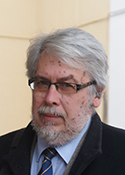
Safuanov Farit Sufiyanovich is a Professor and Doctor of Psychology, currently serving as Head of the Psychology Laboratory at the V.P. Serbsky National Medical Research Center of Psychiatry and Narcology, Ministry of Health of the Russian Federation. He is also recognized as an Honorary Professor at Moscow State Pedagogical University. He plays key editorial roles, including Deputy Chairman of the editorial board of Psychology and Law and member of the editorial board of Clinical and Special Psychology . Academic Title: Professor Degree: Doctor of Psychology Institution: V.P. Serbsky National Medical Research Center Position: Head of Psychology Laboratory Email: safuanovf@mail.ru Scopus ID: 6507538977 Web: https://mgppu.ru/people/122/536 His research focuses on forensic psychological expertise, particularly in family disputes, child custody, psychotrauma, and impulsive aggression. He has developed diagnostic methods and contributed extensively to legal psychology, especially in the interface between psychological evaluation and criminal or civil law. His work integrates clinical psychology with forensic practice, emphasizing methodological rigor and ethical standards. The analysis of his recent publications reveals a strong trend in applied forensic psychology, with emphasis on diagnostic tools, child protection, and legal criteria for psychological states in criminal behavior. His work bridges theoretical psychology with judicial applications, particularly in Russian legal contexts. Scientific Awards and Honors: Excellent Healthcare Professional Honorary Professor of Moscow State Pedagogical University He has supervised various research initiatives and contributed to national standards in forensic psychological evaluation. While formal student advisees are not listed, his leadership in the Psychology Laboratory suggests mentorship of junior researchers and professionals. He has secured research outcomes including patents and textbook publications, indicating grant-like project support and academic leadership. He leads the Psychology Laboratory at the Serbsky Center, a key institution in Russian psychiatry and forensic science, where he directs research on psychological diagnostics, expert methodology, and child protection in legal disputes.
- Mathematics
- Energy Security
- Probability Theory
- +۲ مورد دیگر
Juozas Augutis is a Professor at Vytautas Magnus University's Faculty of Informatics, affiliated with the Department of Mathematics and Statistics. He holds a Habilitated Doctor of Technology degree (2003) and has been active in academia since his professorship was awarded in 2006. His research spans interdisciplinary domains including mathematics, probability theory, risk analysis, system reliability, and energy security. Academic Titles: Habilitated Doctor of Technology (2003), Professor (2006) Institutional Roles: Rector (2015), Faculty Member His scholarly work focuses on mathematical modeling for critical infrastructure systems, with particular emphasis on energy security risk assessment and probabilistic safety analysis. Collaborative efforts bridge engineering, computational methods, and policy implications in energy systems. While specific awards aren't documented in available records, his career demonstrates sustained contributions to academic leadership and research. Augutis has participated in numerous international scientific events and maintains active collaborations in his fields of expertise.
Ričardas Krikštolaitis is a Professor at Vytautas Magnus University's Faculty of Informatics, Department of Mathematics and Statistics, where he has served since 2012. He earned his Doctor of Physical Sciences degree in 2001 and was appointed as Chief Researcher in 2023. Research Interests Data Analytics Energy Security Reliability and Risk Analysis Mathematical Statistics Applied Mathematics Panel Data Analysis Student Advisees Asad, Daiva (2024): A prototype for learning data analysis and prediction Jokšaitė, Deimantė (2022): Statistical investigation of factors determining inflation Servaitė, Dovilė (2022): Identification of anomalies in system log data Targonskytė, Monika (2018): Statistical analysis of employment rate dependence from socio-economic indicators Micikevičiūtė, Agnė (2017): Statistical investigation of company’s X activity data
Dr. Asta Baranauskaitė is an Associate Professor at the Lithuanian University of Health Sciences (LSMU), where she serves in the Rheumatology Clinic at the Medical Academy. With a Doctor of Science degree obtained in 1993, she has established herself as a prominent researcher in rheumatology, particularly in juvenile idiopathic arthritis (JIA) and rheumatoid arthritis. Her institutional affiliations include the Rheumatology Clinic (U525600), Medical Academy (MA), and LSMU Hospital Kaunas Clinics. Dr. Baranauskaitė's research focuses on advancing diagnostic and monitoring approaches for rheumatic diseases. She has made significant contributions to understanding biomarkers for JIA, including microRNAs and P-selectin, and has conducted pioneering work on the application of musculoskeletal ultrasound for detecting subclinical synovitis. Her research demonstrates that ultrasound can identify inflammation even during clinical remission, suggesting its value for comprehensive disease monitoring. She also participates in clinical trials comparing reference medications to biosimilars, particularly for rheumatoid arthritis treatments. Analysis of her recent publications reveals a strong emphasis on precision medicine approaches in rheumatology. Her work spans biomarker discovery, advanced imaging techniques, and comparative medication studies, with a consistent focus on improving diagnostic accuracy and treatment outcomes. The research shows particular attention to pediatric rheumatology while also addressing adult rheumatoid arthritis and related conditions. As a supervisor, Dr. Baranauskaitė mentors several junior researchers including Aušra Šnipaitienė, Andželika Šlegerytė, and Lina Jankauskaitė, who frequently appear as co-authors on her publications. Her collaborative approach extends across disciplines, working with experts in pediatrics, imaging, and laboratory sciences to address complex questions in rheumatology. Her research program demonstrates consistent productivity with numerous publications in 2024-2025, indicating active engagement in both clinical research and academic responsibilities. The work shows particular strength in methodologically rigorous studies including randomized controlled trials, longitudinal observational research, and advanced biomarker analyses.