Simon Yang is a Professor in the School of Engineering at the University of Guelph, part of the College of Engineering and Physical Sciences. His research focuses on artificial intelligence, robotics, sensors, control systems, and bio-inspired intelligence. He has contributed to advanced robotics applications, including mobile robot navigation, underwater vehicle control, and agricultural automation. Dr. Yang holds editorial roles for journals such as the International Journal of Robotics and Automation and IEEE Transactions on Cybernetics . His work bridges theoretical advancements with practical implementations in areas like sensor networks, machine learning, and multi-agent systems. Recent projects include developing robust control frameworks for autonomous systems, digital twin applications, and bio-inspired neural network algorithms. His research emphasizes real-world challenges in robotics, environmental monitoring, and precision agriculture, with a focus on integrating AI-driven solutions for enhanced decision-making and system reliability. Professional contributions include advisory roles in multiple journals and conference committees, reflecting his leadership in the field.
Vidar Hepsø is a Professor at the Department of Computer Technology and Informatics, Faculty of Information Technology and Electrical Engineering, Norwegian University of Science and Technology (NTNU). His work bridges anthropology of science and technology with practical challenges in digitalization, energy transition, and remote operations. Research focuses on digital infrastructures, socio-technical systems, and human factors in oil and gas industries Active in NTNU Applied Information Technology and NTNU Energy Transition Initiative Publications emphasize open-source ecosystems, autonomous systems, and environmental monitoring His scholarly output spans computer-supported collaborative work, IT infrastructure governance, and risk-informed anomaly detection in subsea systems. He leads projects connecting digital innovation with offshore wind and petroleum geoscience.
Taiwo Amoo is an Assistant Professor of Business and Quantitative Methods at Brooklyn College, CUNY , where he has been employed since 1999. His academic career spans institutions including Baruch College (substitute and adjunct roles, 1993-1999) and Kaduna Polytechnic, Nigeria (1987-1988). With a PhD in Operations Research (University of Exeter, 1992) and a BSc in Statistics (University of Ibadan, 1986), Amoo specializes in operations management, statistical analysis, and educational innovation. Current position: Assistant Professor (Brooklyn College, CUNY) Key expertise: Operations Management, Queueing Theory, Rating Scale Methodology Technological proficiency: SAS, SPSS, Oracle Database Systems His research focuses on optimizing rating scale design , integrating technology in education , and interdisciplinary approaches to business programs . Publications from 2000-2002 examine biases in survey construction, humor as an educational tool, and the relevance of traditional disciplinary structures in modern academia. Notable awards include PSC CUNY Grants and recognition as the Best Statistics Student at the University of Ibadan. Current affiliations: Brooklyn College (CUNY) Past affiliations: Baruch College (CUNY), University of Exeter, Kaduna Polytechnic
Dr. Huadong Mo is a Senior Lecturer at the School of Systems and Computing, University of New South Wales (UNSW) Canberra, Australia. He holds a B.E. degree in automation from the University of Science and Technology of China (2012) and a Ph.D. in systems engineering and engineering management from the City University of Hong Kong (2016). Prior to his current position, he was a research associate at ETH Zurich's Reliability and Risk Engineering Lab (2016-2019) and a Lecturer at UNSW Canberra (2019-2021). Dr. Mo's educational background includes a strong foundation in systems engineering with international experience across China, Switzerland, and Australia. His career trajectory demonstrates a progression from academic research to faculty positions with increasing responsibilities in teaching and research leadership. His research focuses on enhancing the resilience, performance, and security of complex systems using learning-based algorithms, primarily in power and energy systems, cyber-physical systems, and manufacturing systems. He applies data analytics to understand system evolution under uncertainties, with particular emphasis on prognostics and health management, sustainable transportation, robust operation of power systems under extreme events, and reinforcement learning-based asset management. His work bridges theoretical advances with practical applications in critical infrastructure. Analysis of Dr. Mo's recent publications reveals a strong focus on energy systems, particularly in the integration of machine learning with power grid management, battery storage systems, and resilience against cyber threats. His research shows a clear trajectory toward increasingly complex system integration, with growing emphasis on multi-vector energy communities, cross-domain prediction, and uncertainty-aware energy management. The interdisciplinary nature of his work spans electrical engineering, computer science, and operations research. 2024 IEEE SMC Early Career Award 2023 Visiting Research Fellowship (Jean d'Alembert Pour Fellowship) Gold Medal in 2024 China International College Student Innovation Competition (as supervisor) Arc PGC Supervisor Award (2021) IEEE SMC Outstanding Chapter Award (2021) Alumni Achievement Award from City University of Hong Kong (2019) Dr. Mo actively supervises numerous HDR students working on cutting-edge research topics including battery health monitoring, quantum control, reinforcement learning for power systems, and explainable AI for energy management. He leads multiple significant research grants totaling over 3 million AUD, including projects funded by ARC, Energy Innovation Fund, and international collaborations with institutions like ETH Zurich, Cambridge, and Tsinghua University. His research group maintains strong international connections, facilitating student exchanges and collaborative research. As Postgraduate Course Coordinator of Systems Engineering and Chair of IEEE SMC ACT Chapter, Dr. Mo plays a significant role in academic leadership and professional community building. His research team collaborates with industry partners on practical implementations of their theoretical work, particularly in the energy sector.
Devin G. Pope is the Steven G. Rothmeier Professor of Behavioral Science and Economics at the University of Chicago's Booth School of Business. His research examines psychological biases in economic decision-making using observational data across diverse markets including healthcare, voting, transportation, and consumer behavior. Pope has published extensively in top economics journals (American Economic Review, Quarterly Journal of Economics), general science publications (Science, Nature), and interdisciplinary outlets (Management Science, Psychological Science). His research interests bridge behavioral economics and psychology, focusing on vaccination incentives , racial bias measurement , consumer decision heuristics , and observational data analysis . Recent work leverages smartphone data to study religious attendance patterns, voting wait times, and geographic mobility. Pope's research methodology emphasizes real-world field experiments and large-scale observational datasets to identify psychological biases affecting economic outcomes. Notable scientific contributions include: Co-editing the American Economic Review Amazon Scholar appointment (2019-2021) Robert King Steel Faculty Fellowship Steven G. Rothmeier Professorship Pope advises PhD students and teaches graduate courses including Behavioral Economics and Workshop in Behavioral Science. His research has received significant external funding for pandemic response studies and behavioral interventions. Pope maintains active research collaborations across economics, psychology, and public health disciplines through the Booth School's research centers and workshops.
Paul R. Genssler is a Dr.-Ing. researcher at the Chair of AI Processor Design (AI-Pro) within the Technical University of Munich (TUM), actively advancing hardware solutions for artificial intelligence under Prof. Hussam Amrouch. His work bridges computer engineering and emerging technologies, focusing on overcoming fundamental limitations in conventional computing architectures through brain-inspired paradigms. His research spans critical domains in next-generation computing: Hyperdimensional Computing for robust pattern recognition and bioinformatics applications Neuromorphic and In-Memory Computing architectures for energy efficiency Reliability engineering for emerging memory technologies (FeFET, etc.) Quantum computing support systems including cryogenic embedded electronics Machine learning-driven transistor aging prediction and mitigation Analysis of his 15 most recent publications (2023-2024) reveals a dominant trend toward hyperdimensional computing as a unifying framework for addressing reliability challenges in emerging technologies. His work consistently integrates in-memory computing techniques to bypass von Neumann bottlenecks while targeting real-world applications like genome matching and unsupervised learning. A significant portion focuses on error-resilient implementations for unreliable nanoscale devices, demonstrating exceptional cross-stack expertise from transistor physics to algorithm design. As a core member of TUM's AI Processor Design group affiliated with the Munich Institute of Robotics and Machine Intelligence (MIRMI), Genssler collaborates extensively on projects spanning cryogenic quantum control systems, FPGA-based AI resilience, and monolithic 3D integration. The team operates at the intersection of semiconductor physics, computer architecture, and machine learning, with strong industry connections evident through publications at DATE, ASP-DAC, and ICCAD.
B. Pablo Montagnes is an Associate Professor of Political Science and Quantitative Theory and Methods at Emory University. He holds a Ph.D. in Managerial Economics and Strategy from the Kellogg School of Management, Northwestern University (2010). Before joining Emory in 2015, he was an Assistant Professor at the Harris School of Public Policy, University of Chicago. His research focuses on formal political theory and political economy, with a particular emphasis on strategic behavior in legislative settings, regulatory policy, and public opinion dynamics. Key topics include partisan approval rates, legislative bargaining, and the design of organizational and market mechanisms. Montagnes has published in leading journals such as the Journal of Politics , American Economic Review , and Proceedings of the National Academy of Sciences (PNAS) . Education: Ph.D. in Managerial Economics and Strategy, Kellogg School of Management, Northwestern University (2010) Previous Affiliation: Harris School of Public Policy, University of Chicago (Assistant Professor) Teaching: QTM 110 (Scientific Methods), QTM 315 (Game Theory) Montagnes’ work addresses questions like how regulatory uncertainty affects firm investment, the strategic implications of sequential voting in legislatures, and the reliability of survey-based partisan approval metrics. His recent projects explore polarization incentives, internal labor markets, and the role of lobbyists in policy gatekeeping. He currently holds an office at 311 Tarbutton Hall, Emory University, and can be contacted via email . No awards are explicitly listed in the provided materials.
Chuchu Fan is the Leonardo Career Development Professor and Director of the REALM Lab (REliable Autonomous system Lab) at MIT's School of Engineering , with a primary appointment in the Department of Aeronautics and Astronautics and Laboratory for Information and Decision Systems . Her work bridges formal methods , control theory , and machine learning to ensure safety in autonomous systems. Ph.D., University of Illinois at Urbana-Champaign (2019) B.E., Tsinghua University (2013) Her research focuses on rigorous safety verification of autonomous systems through neural Lyapunov-barrier functions , control contraction metrics , and formal logic specifications . Recent work emphasizes LLM integration for symbolic planning, multi-robot collaboration , and robustness against model uncertainties . The 15 most recent articles highlight trends in safety-critical control using graph neural networks , reinforcement learning , and temporal logic . Key themes include collision avoidance , multi-agent coordination , and runtime safety filters applied to drones, self-driving cars, and microgrids. Scientific Awards & Honors : 2025 ONR YIP Award 2023 NSF CAREER & AFOSR YIP Awards 2020 ACM Doctoral Dissertation Award 2016 Rising Stars in EECS As head of the REALM Lab, she leads projects on autonomous air taxis , safety verification , and neural certificates for robotic systems. Her teaching includes courses on feedback control and formal methods for autonomous systems.
Hesham ElSawy is an Assistant Professor in the Department of Systems and Networks at the School of Computing, Faculty of Arts and Science, Queen's University. His work focuses on advancing next-generation wireless systems, with particular emphasis on federated learning, IoT networks, and edge computing. He is affiliated with Ingenuity Labs Research Institute, Queen's University, and contributes to interdisciplinary research at the intersection of communication theory and network optimization. His research interests span stochastic geometry modeling, energy-efficient protocols for massive IoT deployments, and resilient federated learning frameworks. ElSawy explores novel paradigms in aerial wireless networks, UAV-assisted communication, and network security through percolation theory applications. Recent publications highlight his contributions to system-level analysis of parallel computing at extreme edges, UAV-enabled federated learning architectures, and energy-as-a-service models for RF-powered networks. His work emphasizes practical implementations and large-scale network validation. ElSawy holds no listed awards or grants in the provided text but maintains active collaborations through Ingenuity Labs. His research addresses critical challenges in 5G/6G networks, including latency optimization, resource allocation, and heterogeneous network integration.
Ankur Jain is a Professor in the Mechanical and Aerospace Engineering Department at The University of Texas at Arlington, with a joint appointment in Bioengineering. His research focuses on heat transfer in Li-ion batteries, microscale thermal transport, bioheat transfer, and additive manufacturing. He holds leadership roles, including serving as Associate Editor for IEEE Transactions on Components, Packaging and Manufacturing Technologies and Secretary of the ASME Heat Transfer Division's K16 Committee. Education: Ph.D. (2007) and M.S. (2003) in Mechanical Engineering from Stanford University; B.Tech. (2001) in Mechanical Engineering from IIT Delhi with top honors. Research interests span energy conversion/storage, thermal management of electronics, and biomedical heat transfer applications. Notable achievements include the NSF CAREER Award (2016), ASME Fellow status (2022), and UTA President's Award for Excellence in Teaching (2022). His work has been supported by NSF, DOE, ONR, and Indo-US Science & Technology Forum. Advancing thermal runaway prevention in Li-ion batteries and improving additive manufacturing processes are key current focuses. Collaborations include industry partners like Underwriters Laboratories and Cuberg, Inc.
Ruth Urner is an Associate Professor in the Department of Electrical Engineering and Computer Science at York University's Lassonde School of Engineering. She holds a PhD in Computer Science from the University of Waterloo (2013) and completed postdoctoral research at Max Planck Institute for Intelligent Systems (Germany), Carnegie Mellon University, and Georgia Tech. She was a Simons-Berkeley Fellow at the Simons Institute in 2017. Research Focus: Dr. Urner develops mathematical foundations for machine learning paradigms including semi-supervised/active learning, transfer learning, and adversarial robustness. Her current work addresses societal impacts of ML through interpretability and fairness frameworks. She leads projects on strategic classification, robust PAC learning, and calibrated model evaluation. Awards & Leadership: Simons-Berkeley Fellowship (2017) Best Paper Award at NIPS 2015 Workshop on Transfer Learning Organizer: Women in Machine Learning Theory workshops (COLT/ALT) Program Committee: NeurIPS, ICML, COLT, ICLR, AISTATS Teaching & Advising: She teaches Machine Learning Theory, Computational Logic, and Introduction to ML at York University. Current student advisees include Master's candidate Alireza Torabian. She has lectured at international summer schools including Hausdorff School on Algorithmic Data Analysis (Germany) and SMILES Summer School (Russia). Affiliations: Faculty affiliate at Vector Institute (Toronto) and collaborator with Max Planck Institute systems. Her lab investigates theoretical guarantees for learning algorithms under distribution shifts and adversarial conditions.
Zhen Ming (Jack) Jiang is an Associate Professor and York Research Chair (Tier II) in Software Engineering for Foundation Model-Powered Systems at York University's Department of Electrical Engineering and Computer Science. His research bridges software engineering, artificial intelligence, and computer systems with significant industrial impact. Dr. Jiang earned his Ph.D. from Queen's University's School of Computing and MMath/BMath degrees from the University of Waterloo's David R. Cheriton School of Computer Science. During his doctoral studies, he collaborated with BlackBerry's Performance Engineering team, developing tools now used daily to monitor commercial software systems. His research focuses on engineering rigor for AI-powered applications , software engineering evolution in the Generative AI era , and performance optimization of large-scale systems . Key areas include software performance engineering, mining software repositories, debugging distributed systems, source code analysis, and software visualization. His work combines empirical studies with practical tool development. Recent publications reveal strong trends in applying AI to software engineering challenges, particularly in machine learning systems reliability, blockchain efficiency, and AIOps solutions. His research consistently emphasizes empirical validation using real-world systems and industrial case studies. Scientific recognition includes: York Research Chair (Tier II) in Software Engineering for Foundation Model-Powered Systems NSERC Discovery Accelerator Supplements (DAS), 2020 Best Paper Award at ICST 2016 IEEE Software Best SEIP Paper at ICSE 2015 Ph.D. Research Achievement Award at Queen's University Multiple best paper awards at WCRE, MSR, and ICSE Dr. Jiang actively supervises graduate students and has secured competitive research funding including NSERC grants. His service includes program committee roles for top conferences (ICSE, ASE, ICSME) and editorial work for leading journals (TSE, TOSEM, EMSE). He leads research initiatives focused on foundation model-powered systems, collaborating with industry partners on performance monitoring and debugging solutions for large-scale distributed environments.
Michael Burke is a Professor and Earl P. and Ethel B. Koerner Chair in Strategy and Entrepreneurship at Tulane University’s A. B. Freeman School of Business. He holds affiliations with the Stone Center for Latin American Studies and serves as Chair of Tulane’s Social-Behavioral Institutional Review Board. His academic journey includes roles at New York University (1985–1991) and visiting professorships at the University of Sheffield (2004). Education: Ph.D. in Psychology (Illinois Institute of Technology, 1982), M.S. in Industrial Psychology (Purdue University, 1980), and B.A. in Psychology (University of Notre Dame, 1977). Burke’s research focuses on Organizational Behavior and Occupational Safety , with emphasis on teamwork effectiveness, safety training, and interrater agreement methodologies. His work spans cross-cultural studies (e.g., Peru, Colombia, Mexico) and integrates psychological principles with practical workplace applications. Key contributions include over 60 publications, including seminal articles on safety training efficacy, meta-analytic methods, and climate assessment. His awards include the 2023 Tulane Convergence Award for interdisciplinary collaboration and multiple Dean’s Excellence Awards (2014–2017). He has supervised 2 dissertations/theses in recent years and actively contributes to academic governance, serving as Editor of Personnel Psychology (2007–2010) and on editorial boards for major journals. Burke’s international experience includes collaborations in Latin America, Australia, and Europe, leveraging his fluency in French.
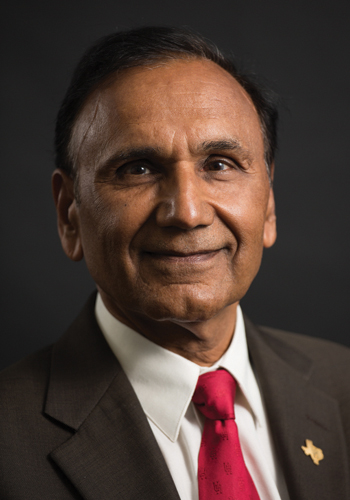
Suresh Khator is a Professor and Senior Associate Dean for Graduate Programs and Computing Facilities at the University of Houston's Cullen College of Engineering, Department of Industrial and Systems Engineering. He holds a Ph.D. in Industrial Engineering from Purdue University and has extensive experience in academia, industry, and administrative roles. His research focuses on modeling energy, healthcare, and manufacturing systems, facilities design, production planning, and project management. He has supervised 10 PhD dissertations and 37 Master's theses, and his work has been published in top-tier journals and conferences. Khator has received numerous awards, including the Fellow of IISE and multiple teaching excellence awards. His administrative roles include Director of Engineering Computing and Interim Associate Dean at the University of South Florida. He has also contributed to community initiatives, such as science fairs and outreach programs. His articles span power systems resilience, renewable energy integration, and manufacturing automation. He has led over 30 grants and contracts, including projects with the Florida Department of Transportation and utility companies.
Dr. Anindya Ghosh is an Associate Professor at Tilburg University’s Tilburg School of Economics and Management (TiSEM), specifically in the Department of Strategy and Entrepreneurship. His research focuses on Technology Innovation, Strategy and Entrepreneurship, Collaboration, Competition & Cognition, and Applied Machine Learning, with industry expertise in Imaging, Semiconductors, Wireless, Pharmaceuticals, AI, and Venture Capital. He holds a PhD from the Wharton School (2011) and has held academic roles at the Indian School of Business (2015–2018) and IESE Business School (2011–2015). His work explores themes such as technology sourcing dynamics, ecosystem governance via standards-setting, and alliance management. Recent studies address how firms navigate external technology sourcing preferences, shape ecosystem rules through complementarities, and resolve conflicts during multi-firm coordination. He has also contributed to debates on generalizability of archival-based research findings in strategic management. His research employs mixed methods, including computational analysis of standards-setting interactions and longitudinal alliance data. While no formal grants or labs are listed, his affiliations with TiSEM and collaborations with institutions like the Indian Institute of Technology underscore his interdisciplinary reach.