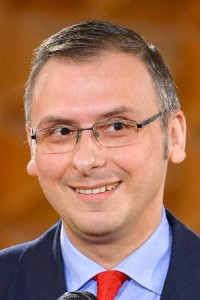
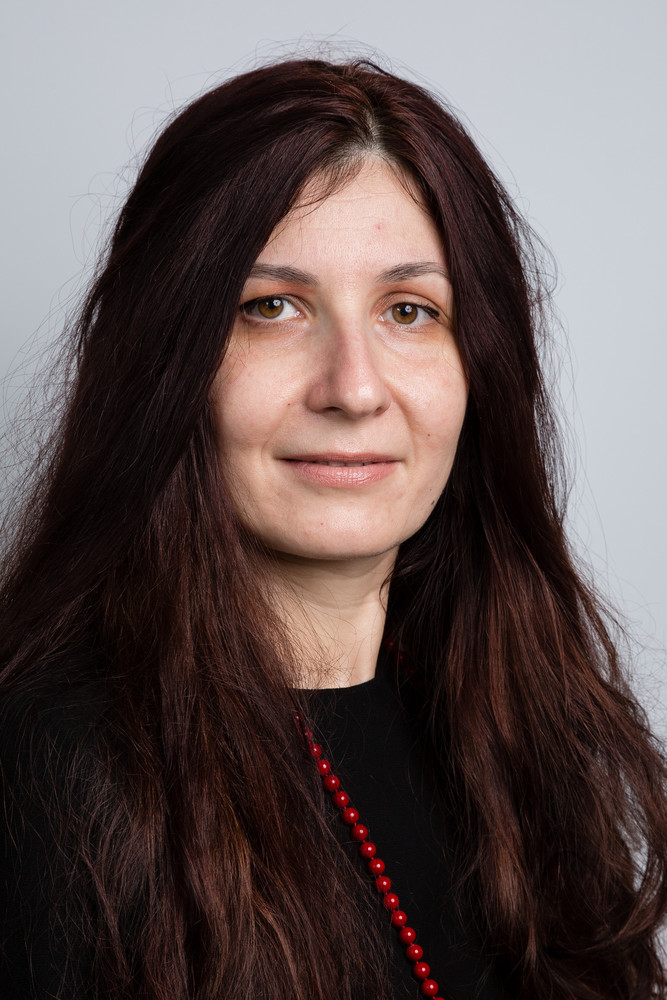
Prof. Victor Grigoras is a faculty member at the Technical University of Iași, holding the rank of Professor. He specializes in electrical engineering and computer science, focusing on signal processing, parallel architectures, and nonlinear dynamics in power systems. His research interests include smart grid technologies, renewable energy integration, and data-driven methodologies for grid optimization. He teaches courses such as 'Semnale, Circuite și Sisteme' and 'Algoritmi și Structuri Paralele de Calcul.' His research spans over 15 recent articles (2021–2025), emphasizing advancements in smart grid automation, machine learning applications in voltage quality analysis, and optimal power flow solutions for renewable integration. Notable trends include SCADA system improvements, energy storage strategies for prosumer grids, and IoT-based energy management. His work addresses challenges in grid reliability, power quality, and future urban grid resilience under high EV adoption scenarios. Prof. Grigoras has contributed to frameworks for electric vehicle charging station placement, hydropower plant optimization via data mining, and demand response mechanisms using smart metering. His methodologies often combine clustering techniques with fuzzy logic or metaheuristic algorithms to solve complex grid problems.
Răzvan-Virgil Bogdan is an Assistant Professor at the Faculty of Automation and Computer Science, Politehnica University of Timisoara (PUT), with expertise in Embedded Systems , Automotive Software Testing , and Dependability of Computer Systems . His research bridges Internet-of-Things and e-Learning , focusing on reliability, testing, and intelligent environments. University: Politehnica University of Timisoara School: Faculty of Automation and Computer Science Contact: razvan.bogdan@cs.upt.ro | Room B413A Research Focus: Bogdan's work emphasizes system reliability , embedded software quality , and automotive electronics , with projects like GEMSCLAIM (energy-efficient mobile systems) and HURO JCBICS (cross-border educational infrastructure). He also drives industrial collaborations (e.g., AC_G_xBU_Academy with Continental Automotive Romania). Teaching Career: Bogdan has taught courses such as Embedded Systems , Microprocessor Systems , and Advanced Embedded Systems at PUT, blending theoretical rigor with hands-on lab work in the Vector Lab . His pedagogical approach integrates software testing methodologies and energy-aware system design . Scientific Contributions: He has contributed to embedded systems validation, security frameworks for distributed systems (e.g., TD/54 project ), and automotive software tools. His publications span ACTA POLYTECHNICA HUNGARICA , BRAIN: Broad Research in Artificial Intelligence and Neuroscience , and conference proceedings like IEEE Sustainability and SACI. Awards: Mercy Diplomas 2021 Mercy Diplomas 2020 Memberships: IEEE ACM Prospective Students: Bogdan actively seeks undergrad, Masters, and PhD candidates, emphasizing practical research in automotive embedded systems and IoT . His lab provides direct access for project collaboration and discussions.
Assoc. Prof. Balázs Vass is an Associate Professor at University Babeș-Bolyai (Cluj-Napoca, Romania) and holds a Marie Skłodowska-Curie Postdoctoral Fellowship for his QoSeRM project. Previously, he conducted postdoctoral research at Budapest University of Technology and Economics (BME) under Gábor Rétvári and visited institutions in Vienna, Jerusalem, and Bucharest. His research focuses on network resiliency, programmable packet scheduling, and discrete optimization in backbone networks. Education: BSc/MSc in Mathematics/Applied Mathematics (ELTE University), PhD in Future Internet Research at BME under János Tapolcai. Postdoctoral work included collaborations with Stefan Schmid (TU Berlin), David Hay (Hebrew University), and Costin Raiciu (UPB). Research priorities include disaster-aware network design, SRLG-disjoint path algorithms, and compiling packet programs for reconfigurable switches. Recent grants include a Romanian Young Teams grant (2025) and a Marie Curie fellowship (2024-2026). Teaching responsibilities at UBB include courses on algorithms, data structures, and communication networks. Supervises PhD students Zoltán Tasnádi and Nándor Bándi, with student advisees winning multiple awards at national informatics competitions. Key projects: SMR-A-DRT (disaster-resilient routing), QoSeRM (QoS optimization), and contributions to frameworks like eFRADIR for network resilience. Active in conference organizing (INFOCOM TPC since 2023) and journal reviewing (ToN, TNSM).
Ana-Sabina Uban is an Associate Professor at the Faculty of Mathematics and Computer Science, University of Bucharest . She earned her Ph.D. in Computer Science in 2020 under the supervision of Professor Liviu Dinu with a thesis on distributional and stylistic aspects of natural language. She teaches and coordinates courses in natural language processing, AI, and machine learning for both computer science and digital humanities students. Education: Ph.D. in Computer Science, University of Bucharest (2020) – Thesis: "Distributional aspects of natural language. Semantic and stylistic dimensions of text" Research Interests: Dr. Uban’s research is strongly interdisciplinary, bridging natural language processing , computational linguistics , psychology , and cognitive science . She explores historical computational linguistics , distributional semantics , and multilingualism , while also investigating explainability in AI models and mental health disorder detection using social media data. Research Trends & Publication Focus: Her recent publications span clinical NLP , mental health detection , historical linguistics , and multilingual cognate identification . A recurring theme is the application of advanced NLP techniques—such as transformer models, contrastive learning, and ensemble classification—to real-world problems in health, literature, and historical language study. Teaching & Student Supervision: Dr. Uban currently teaches and coordinates the following courses: Bio-medical NLP – Master’s level (English) Artificial Intelligence – Bachelor’s level for Mathematics students Practical Introduction to Machine Learning – Master’s level for Digital Humanities students Natural Language Processing 1 & 2 – Master’s labs and projects Contact: auban@fmi.unibuc.ro
Oana AMĂRICĂI-BONCALO is a Professor at the Computer and Information Technology Department of University Politehnica Timisoara. She holds a Dr. Habil. Eng. degree and has served as Assistant Professor, Lecturer, and Associate Professor since 2009. Her research focuses on reconfigurable systems, system reliability, embedded systems, and forward error correction with FPGA applications. Education: Engineering Degree (2006) and PhD in Computer Engineering (2009), both from University Politehnica Timisoara. She was an invited researcher at University College Cork (2012) and University of Cergy-Pontoise (2016). Since 2017, she has been an Editor for Microprocessor and Microsystems (Elsevier). Research projects include GEMSCLAIM (green energy management in mobile systems). She supervises PhD student Andrei-Bogdan MIHĂILESCU. Recent publications emphasize LDPC decoding architectures, FPGA-based solutions, and reliability assessment in quantum circuits. Notable contributions include innovations in layered decoding algorithms, memory optimization for LDPC decoders, and one-hot data representation techniques. Her work intersects VLSI design, digital signal processing, and embedded systems reliability. Event organization includes a 2024 workshop on audio-video technical solutions and participation in IEEE symposiums. She contributes to academic events like the Mobile Applications Student Contest (SCMUPT).
Radu Marinescu is a Professor of Software Engineering at the Politehnica University of Timisoara, affiliated with the Department of Computer Science and Engineering. He leads the LOOSE Research Group and is a senior researcher at the e-Austria Institute. His primary roles include teaching graduate courses like Foundations of Software Engineering and Research Topics in Software Engineering. Marinescu's research focuses on software quality assurance, metrics, and maintenance, emphasizing object-oriented systems. He co-founded Intooitus, a spin-off company that develops quality assessment tools like inFusion and inCode. Marinescu holds a Dr. Habil. Eng. and a joint PhD ('magna cum laude') from Politehnica University of Timisoara and University of Karlsruhe. He has authored over 30 international publications and co-authored the best-selling book Object-Oriented Metrics in Practice (Springer). His awards include the IBM John W. Backus Award (2009) and an IBM Eclipse Innovation Award (2006). Marinescu has served as General Chair for ICSM 2010 and on numerous conference program committees. His research projects include developing tools like iPlasma for software analysis and inCode for real-time design flaw detection. Marinescu has advised four PhD students and participated in consultancy projects for companies like Nokia, Alcatel-Lucent, and Siemens VDO Automotive. He actively contributes to the software engineering community through editorial roles, conference organization, and evaluations for EU research programs.
Clementina Moldovan is an Associate Professor in the Department of Environmental Engineering and Geology at the Faculty of Mining, Politehnica University of Timişoara. Her research focuses on environmental safety, industrial emissions, and explosion protection systems in hazardous environments. She has contributed extensively to understanding coal combustion byproducts' environmental impacts, air quality monitoring, and electrical equipment safety standards in explosive atmospheres. Her work integrates computational modeling (e.g., CFD simulations for indoor air pollution) with geospatial analysis (e.g., hot spot mapping of pollutants in Craiova). Key research areas include: 1) Development of GHG intensity metrics for industrial processes, 2) Thermal safety of equipment in explosive environments, and 3) Heavy metal contamination in atmospheric particulates. Dr. Moldovan also investigates radiation dosimetry in soils and the application of natural materials like zeolites for pollution control. Recent studies address hydrogen safety protocols and the adaptation of safety standards to emerging energy technologies. Her publications emphasize practical applications of research to industrial safety compliance, environmental policy formulation, and sustainable development strategies for mining regions. Current projects explore synergies between computational fluid dynamics and regulatory frameworks for hazardous environment equipment certification.
Volodymyr Valentynovych Vasilevsky is a Senior Lecturer at Zaporizhzhia Polytechnic National University's Faculty of Electrical Engineering. Holding a Candidate of Technical Sciences degree, his career has focused on electromechanical systems and power transformer insulation analysis since joining the university in 2012. Education: Master's in Electrical Machines and Devices (Zaporizhia National Technical University, 2011) Research: Specializing in insulation resource modeling, neural network applications for transformer diagnostics, and lifecycle management of power equipment Key Contributions: Developed layered models for insulation resource consumption, automated evaluation systems for transformer diagnostics, and defect distribution dynamics models Contact: Email lisses@ukr.net , Office 520a, Zhukovsky St. 64
Vadim Valeriyovych Kudin is an Associate Professor at the Department of Mechanical Engineering and Technology at Zaporizhzhia Polytechnic National University. With over 25 years of academic experience since 1995, he has established himself as a prominent researcher in metallurgy and foundry engineering. His educational background includes: Zaporizhia State Technical University, Faculty of Engineering and Physics, 1995 Specialty: "Machinery and technology of foundry production" Qualification: "mechanical engineer" Candidate of Technical Sciences (2004), National Metallurgical Academy of Ukraine Professor Kudin's research focuses on advanced metallurgical processes and materials engineering. His expertise spans heat-resistant nickel alloys for gas turbine engines, alloying and modification of high-manganese steels, automation of foundry production processes, alternative heat treatment methods, and metallurgical processes for various alloys. His work bridges theoretical knowledge with practical industrial applications, particularly in aerospace and heavy machinery manufacturing. His extensive publication record demonstrates consistent contributions to metallurgical science, with recent works focusing on nanoparticle modification of aluminum alloys, complex modification of cast irons, and innovative heat treatment processes. His research shows a clear progression from fundamental metallurgical studies toward more specialized applications in high-performance materials. Professor Kudin has received numerous professional recognitions: Honorary Certificate of District Administration, 2003 Certificate from ZNTU for significant contribution to education and science development, 2010 Honorary Certificate of Zaporizhzhia City Council, 2013 Badge "For Impeccable Work" III degree, 2018 Gratitude of Zaporizhzhia Regional State Administration, 2020 Gratitude of the Ministry of Education and Science of Ukraine, 2022 Honorary Certificate of Zaporizhzhia Regional Council of Trade Unions, 2022 Gratitude of Zaporizhzhia Polytechnic National University, 2023 Certificate from the Ministry of Education and Science of Ukraine, 2023 Professor Kudin has actively participated in numerous international conferences and scientific events, serving as both presenter and organizer. His recent qualification improvement focused on "Modern methodologies of applied mechanics, assessment of reliability of foundry and metallurgical equipment" (2022), demonstrating his commitment to staying at the forefront of his field. He maintains active research laboratories focused on metallurgical processes and foundry technology, collaborating with both domestic and international research teams. His work continues to influence both academic research and industrial applications in metallurgy and materials science.
Dan Rosenberg serves as an Associate Professor in the Department of Automation and Information Technology at the Faculty of Electrical Engineering and Computer Science, Transilvania University of Brașov, Romania. His academic role integrates teaching with advanced research in automation and information systems within the university's engineering framework. His research spans Artificial Intelligence, Control Systems, Smart Buildings, and Photovoltaic Systems, with emphasis on applying computational intelligence to real-world engineering challenges. Key investigations include neural network applications for fire safety systems and reliability testing methodologies for renewable energy infrastructure, demonstrating strong interdisciplinary connections between computer science and sustainable engineering. Recent publications reveal a consistent focus on deep learning techniques for safety-critical systems and photovoltaic technology optimization. His 2022 work on fire detection using regularized CNNs bridges AI theory with practical building safety applications, while his 2016 photovoltaic testing research contributes to renewable energy reliability standards. Though specific student supervision details aren't enumerated, his research profile indicates active mentorship in automation and AI fields. His patented innovations in photovoltaic testing and medical implant technologies suggest significant grant-funded research activity and industry collaboration potential within Transilvania University's engineering ecosystem.
Bogdan BEDELEAN serves as a Lecturer within the Department of Wood Processing and Design of Wood Products at the Faculty of Furniture Design and Wood Engineering, Transilvania University of Brasov, Romania. His academic work centers on enhancing wood processing technologies through rigorous experimental design and advanced data modeling, with contact details including Building H (Rooms L P 1, H I 6) and email bedelean@unitbv.ro. His research program addresses critical challenges in wood science and manufacturing: Wood Drying : Innovating drying schedules and analyzing kiln aerodynamics to reduce energy consumption and improve wood quality. Design of Experiments : Systematically varying parameters to understand their impact on wood processing outcomes. Data Modelling : Leveraging Artificial Neural Networks (ANN) and Response Surface Methodology (RSM) for predictive optimization. Wood Dust Control : Developing systems to mitigate dust generation during machining operations. Wood Machining : Focusing on drilling optimization for composite wood panels to enhance surface finish and tool life. Optimization of Wood Processing : Integrating multiple techniques to achieve efficient, high-quality manufacturing processes. Analysis of his 15 most recent publications (2018-2024) reveals two dominant research thrusts: Optimization of Wood Machining : Extensive work on drilling parameters for MDF, plywood, and particleboard using ANN and RSM, resulting in significant improvements in process efficiency and product quality. Mechanical Behavior of Wood Joints : Detailed investigations into the bending strength of heat-treated dowel joints, including effects of dowel configuration, adhesive consumption, and environmental factors like freezing/thawing cycles. Emerging Techniques : Application of Monte Carlo methods for RF treatment reliability and novel drying schedule assembly, indicating a move toward complex simulation-based approaches. Scientific Awards: No scientific awards, fellowships, or medals were documented in the provided information. Advising and Grants: Information regarding graduate student advising, research grants, or funded projects was not available in the source material. Laboratories and Teams: No specific laboratory facilities, research groups, or collaborative teams were identified in the current profile.
Csiminga Diana is a Professor and Head of Department at the Faculty of Mining, University of Petroșani. She holds a Ph.D. in Ecological Engineering and serves as Deputy Department Manager in the Department of Management and Industrial Engineering. Her expertise spans strategic project management, environmental management systems, and economic analysis in mining sectors. She is actively involved in advancing Romania's mining industry through research on sustainability, circular economy transitions, and operational efficiency. Education : Ph.D. in Ecological Engineering (not detailed further in text). Research Interests : Focuses on emerging technologies in project management, cost optimization in mining enterprises, and integrating environmental sustainability into industrial practices. She explores topics such as labor productivity in mining, maintenance management systems, and strategic decision-making frameworks. Her work frequently addresses Romania’s unique challenges in transitioning to a circular economy while maintaining economic viability. Publications Trends : Recent articles highlight her engagement with digital transformation in mining (e.g., AI and IoT applications), regulatory challenges in transitioning to sustainable practices, and cost-benefit analyses of EU-funded projects. She consistently ties technical aspects of mining to broader economic and policy contexts. Grants & Advising : No specific grants or advisee names are listed, but her research often implies collaborative projects with industry stakeholders. Her work on FDI and EU structural funds suggests involvement in policy-oriented research initiatives. Labs/Teams : Not explicitly mentioned; however, her role as Department Head suggests leadership in institutional research groups focused on industrial and mining engineering.
Robert BUCHMANN is a Professor at Babeș-Bolyai University's Faculty of Economics and Business Administration, Department of Business Information Systems. His career spans over two decades, with roles in both teaching and research, focusing on Knowledge Management Systems, Semantic Web, and Enterprise Modeling. He has contributed to prestigious projects and disseminated research through conferences like HICSS, ECIS, and journals such as Telematics and Informatics. A member of AIS and INSTICC, he actively reviews for academic venues and leads research initiatives. Education Doctor in Economics (2005), Babes-Bolyai University (thesis: 'E-commerce experimental models') Master in Economics (2001), Babes-Bolyai University (thesis: 'The equilibrium between software reliability and efficiency') Bachelor in Economics (2000), Babes-Bolyai University (thesis: 'Distance learning software applications for accounting') XML Summer School training (2006), Oxford University and CSW Ltd. Research and Projects Dr. BUCHMANN specializes in Semantic Web technologies, Enterprise Modeling, and Knowledge Management, with a focus on interdisciplinary applications in business contexts. He has led projects like the FP7 EU COMVANTAGE and coordinated research grants in e-commerce and software quality. His work bridges theoretical modeling and practical implementation, particularly in distributed computing and business process management. Scientific Awards 2008 - Award for professional debut from the Association of Economic Studies Faculties in Romania 2004 - Research Council Award from Babes-Bolyai University for doctoral results Teaching and Academic Contributions He pioneered English-taught courses such as 'Internet of Things' and 'Semantic Business Process Management,' and coordinated curricular development for web-related disciplines. He has also served as an invited lecturer at the Next Generation Enterprise Modeling Summer School in Austria. Professional Affiliations Member of the Association for Information Systems (AIS) and the Institute of Electrical and Electronics Engineers (INSTICC).
Olimpiu Morariu is a Professor in the Department of Manufacturing Engineering at the Faculty of Technological Engineering and Industrial Management, Transilvania University of Brașov, Romania. He is based at Building V, Room V III 1, and can be contacted via phone (+40 268 421 318) or email (c.morariu@unitbv.ro). His research focuses on: Quality management : Optimization of production standards. Numerical methods : Computational approaches to engineering problems. Probability and applied statistics : Data-driven decision-making in manufacturing. Reliability : Durability and failure analysis of materials. Experimental research : Empirical validation of industrial processes. His publications center on materials science and manufacturing innovation, with recent work exploring composite materials (2020), abrasive machining techniques (2019), and structural fatigue (2018). Earlier research (2013) developed statistical methods for reliability testing.
Eugen Borcoci serves as a Full Professor in the Department of Telecommunications at the National University of Science and Technology Politehnica Bucharest. With an extensive publication record spanning networking technologies, he has established himself as a significant contributor to the field of telecommunications research. His work bridges theoretical networking concepts with practical implementations, particularly in next-generation network architectures. Professor Borcoci's research interests focus on advanced networking paradigms including Software Defined Networking (SDN), Network Function Virtualization (NFV), and 5G/6G network architectures. He has pioneered work in network slicing technologies, particularly for vehicular communications and Internet of Vehicles applications. His research demonstrates a consistent emphasis on practical implementations and validation of theoretical networking concepts through experimental frameworks and open-source platforms. His recent publication trajectory (2021-2025) reveals a strong focus on Open Source MANO for network automation, SDN controller optimization across different network topologies, and specialized applications of network slicing for electric vehicle infrastructure and vehicular communications. This work demonstrates a clear progression from theoretical networking concepts to practical deployment scenarios with industry relevance. Professor Borcoci actively collaborates with international researchers, particularly with Marius Vochin, Frank Y. Li, and Andra Ciobanu, indicating strong international research connections. His work appears primarily in networking conferences and journals focused on telecommunications infrastructure and next-generation network architectures.