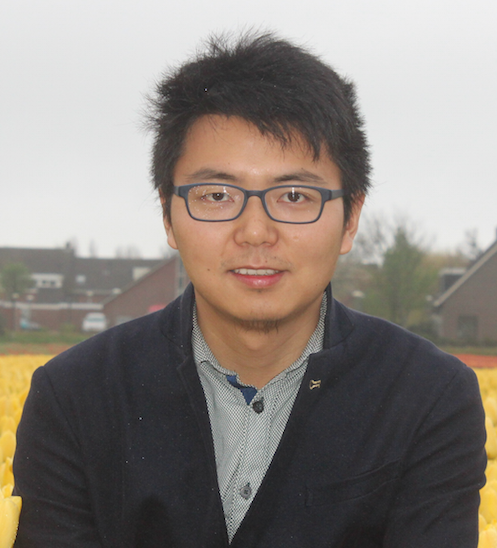
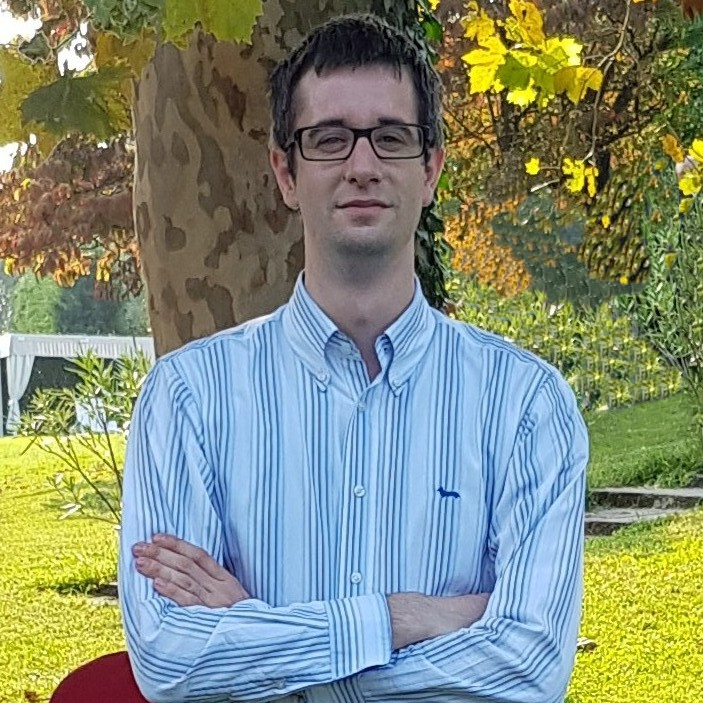
Li Li is a Professor of Software Engineering at Beihang University , China. Previously, he served as an ARC DECRA Fellow and Senior Lecturer at Monash University , leading the SMart software Analysis and Trustworthy computing (SMAT) research lab at the Department of Software Systems and Cybersecurity. His academic journey includes a Ph.D. in Software Engineering from the University of Luxembourg (2016), supervised by IEEE Fellow Prof. Yves Le Traon and Dr. Jacques Klein. Research Interests Li's research focuses on Mobile Software Engineering (Mobile Security, Quality Assurance) and Intelligent Software Engineering (SE4AI, AI4SE). He applies static code analysis , dynamic program testing , and machine/deep learning to enhance software security and reliability. Key areas include Android API evolution, automated patch validation, and multi-language code analysis frameworks like Scalpel for Python. Scientific Recognition ARC DECRA Fellowship Rising SE Research Star Top-5 Most Impactful Early Career SE Researchers (2020, 2017) 5 Best/Distinguished Paper Awards across PLDI, WWW, ASE, MSR, and SANER Academic Contributions He has contributed to foundational Android analysis tools (e.g., AndroZoo++, DroidRA) and developed scalable systems for distributed program analysis (Seads). His work appears in top venues like ICSE, ESEC/FSE, ASE, ISSTA, POPL, and TSE.
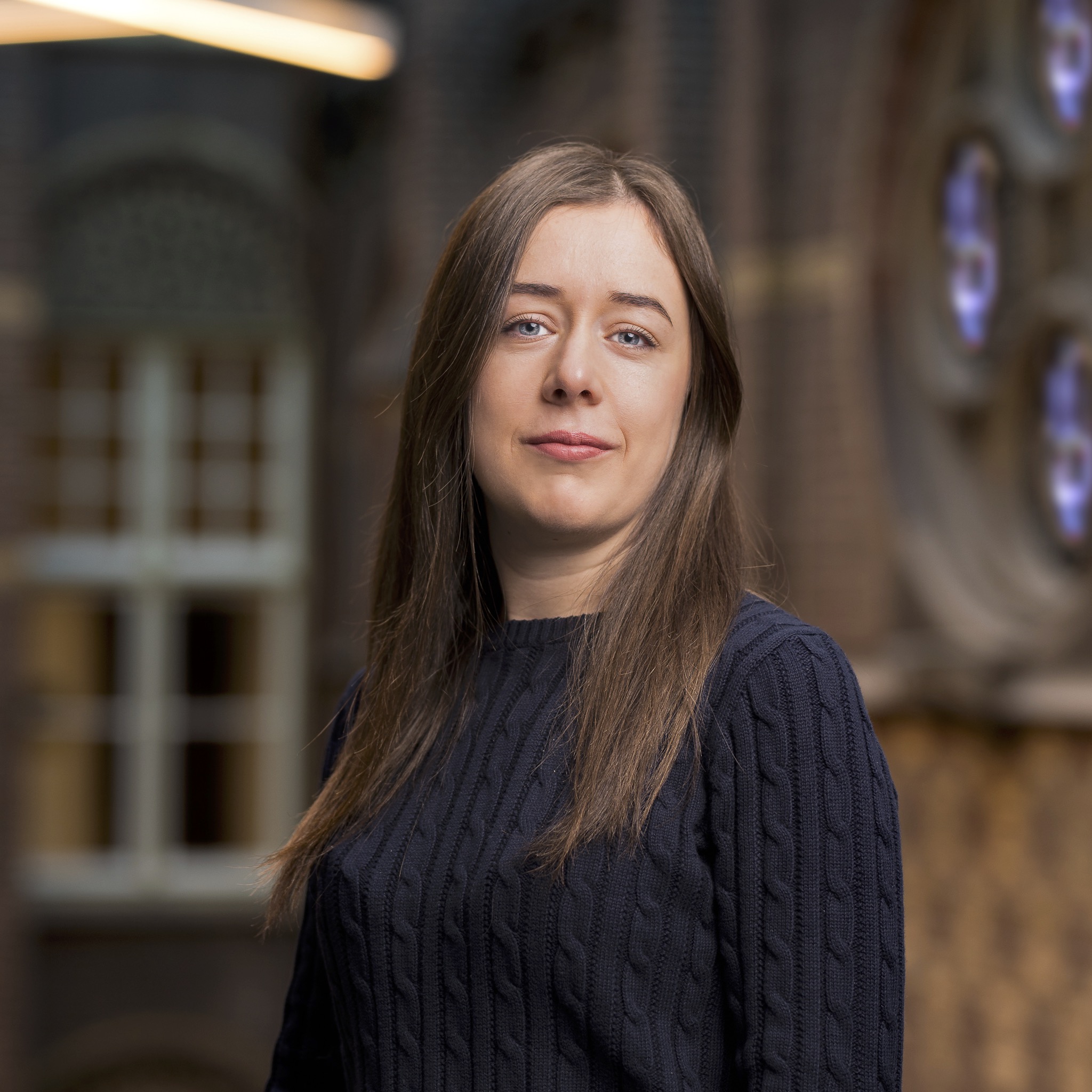
Gemma Catolino is an Assistant Professor at the Department of Computer Science, University of Salerno, and affiliated with the Software Engineering (SeSa) Lab. She has also served as an Assistant Professor at Tilburg University and Eindhoven University of Technology through the Jheronimus Academy of Data Science from September 2022 to December 2023, and previously as a Postdoctoral Researcher at Delft University of Technology and Tilburg/Eindhoven institutions. PhD in Computer Science, University of Salerno (2020), supervised by Prof. Filomena Ferrucci MSc in Management and Information Technology, University of Salerno (2016, magna cum laude) BSc in Computer Science, University of Molise (2014) Her research centers on empirical software engineering, focusing on both technical and social aspects affecting software development. Key areas include code smells, defect prediction, testability, changeability, and the emerging concept of “Community Smells”—social dysfunctions in developer teams. She investigates how human factors, team diversity (especially gender), and developer experience influence software quality and maintenance effort, often using mining software repositories and machine learning techniques. Her recent publications span high-impact journals and conferences such as IEEE TSE, EMSE, JSS, ICSE, and ICSME, with a strong trend toward integrating social and technical metrics for just-in-time defect prediction in mobile applications, analyzing community dynamics, and applying software quality metrics to cybersecurity contexts like dark web analysis. She has also contributed to MLOps and serverless computing. She has received several honors including a DEI research grant (2020), Best Technical Paper at BENEVOL 2019, first and second place in ACM Student Research Competitions (2018, 2017), and the Best Master Thesis award from the Italian Software Metrics Association (2017). Gemma Catolino has been actively engaged in academic service as a referee for top journals like IEEE TSE, EMSE, JSS, and IST, guest editor for special issues, and program/organizing committee member for major conferences including ICSE, MSR, SANER, and MobileSoft, where she served as Program Co-Chair in 2022. She has also contributed as a teaching assistant, lecturer, and course coordinator in machine learning and software engineering courses. She leads and contributes to research projects involving international collaborations, particularly with researchers such as Prof. Filomena Ferrucci, Prof. Andy Zaidman, Prof. Willem-Jam van den Heuvel, and Prof. Alexander Serebrenik. Her work bridges empirical software engineering with practical tool development and socio-technical analysis, positioning her at the forefront of modern software engineering research.
Andrea Cristofaro is an Associate Professor at the Department of Computer, Control and Management Engineering, Sapienza University of Rome. He holds an M.Sc. in Mathematics (2005) from Sapienza University of Rome and a Ph.D. in Information Science and Complex Systems (2010) from the University of Camerino. His academic trajectory includes postdoctoral positions at INRIA Rhône-Alpes (France) and the Norwegian University of Science and Technology, followed by faculty appointments at the University of Camerino and University of Oslo before joining Sapienza in 2019. His research spans: Robotic systems : Fault-tolerant control, multi-agent coordination, and hybrid dynamics Distributed parameter systems : Stability analysis, observer design, and optimal control of PDEs Hybrid systems : Control synthesis for systems with state-driven jumps and switching logic Recent publications (2024-2025) predominantly explore fault-tolerant control architectures for multi-robot systems, decentralized task allocation, adaptive observer designs for biological and thermal systems, and optimal control of reaction-diffusion equations. This reflects a consistent focus on robustness in complex dynamical systems with applications ranging from industrial robotics to biomedical engineering. He serves as Associate Editor for Automatica and IEEE Transactions on Control Systems Technology , and is a member of the IEEE CSS Conference Editorial Board.
Lorenzo Mantione is a Researcher at the Department of Industrial and Information Engineering, University of Pavia. His work focuses on electrical energy engineering, with a specialization in fault detection and diagnostics of electrical machines, particularly induction motors. He investigates advanced techniques like time-frequency analysis and stray flux monitoring to address issues such as broken rotor bars and interturn short circuits under closed-loop control conditions. His research integrates power electronics, control systems, and electromagnetic analysis to enhance reliability and efficiency in electrical drives and motor systems. Recent publications highlight his contributions to motor diagnostics in both healthy and fault conditions, including single-phasing scenarios and closed-loop inverter-fed configurations. No scientific awards or grants are explicitly mentioned. No advising students or lab affiliations are listed in the provided information.
Mauro Bonfanti is a Fixed-term Assistant Professor at the Department of Mechanical and Aerospace Engineering (DIMEAS) at Politecnico di Torino, Italy. His academic work focuses on wave energy conversion systems, mechatronics, and applied mechanics within the field of industrial and information engineering. Dr. Bonfanti's primary research interests include wave energy conversion systems, system identification, optimal control, mechatronics, and renewable energy systems. His work centers on developing advanced control strategies for wave energy converters, with particular emphasis on improving energy extraction efficiency through innovative mechanical designs and control algorithms. He has made significant contributions to the understanding of wave-structure interactions, hydrodynamic modeling of floating bodies, and optimization of wave energy converter systems under various sea conditions. His research bridges theoretical modeling with practical implementation, often involving high-fidelity numerical simulations validated through experimental testing. His publication record demonstrates a strong focus on advancing wave energy conversion technology, with particular emphasis on control systems, hydrodynamic modeling, and optimization techniques. The research shows progression from fundamental modeling approaches to increasingly sophisticated control strategies and system integration. Recent work has expanded to include hybrid renewable energy systems that combine wave and wind energy technologies. Dr. Bonfanti serves as a Scientific Responsible for several research projects including OCEANGLIDE, AQUALEV, and WISE, which focus on innovative wave energy conversion technologies. He holds multiple patents related to wave energy conversion systems, including the WISE (Water-air Injectable Swath Elevator) and AQUALEV magnetic support systems. He actively supervises PhD students including Alessandro Brusasco, Matteo Mastorakis, Francesco Balestrieri, and Domenico Edoardo Sfasciamuro, guiding research in sustainable materials, mechanical engineering, and wave energy conversion systems. His teaching responsibilities include courses on System Identification and Optimal Control of Wave Energy Conversion Systems, as well as Mechatronics across multiple academic years. Dr. Bonfanti is a member of the Mechatronics and Servosystems research group at DIMEAS, where he collaborates on projects related to marine renewable energy systems and advanced control technologies.
Paolo Ruggeri is an Associate Professor at the Department of SIMAU, Università Politecnica delle Marche (UNIVPM), Ancona, Italy. His research focuses on Geotechnical Engineering , Slope Stability , Seismic Risk Assessment , and Soil-Structure Interaction , with particular emphasis on landslide dynamics, port infrastructure resilience, and tunnel construction impacts. Selected trends from his 15 most recent publications include: Analysis of coastal and harbor structures (quay walls, dykes) Investigations into seismic and rainfall-induced slope failures Advancements in soil-structure interaction modeling Environmental sustainability of geotechnical works Comparative studies on tunnel design approaches (Eurocodes)
Maria Letizia Marchegiani is an Assistant Professor at the University of Parma , affiliated with the Department of Engineering and Architecture . Previously, she held academic positions at Aalborg University (2019) and Oxford Robotics Institute (2014-2018). Education: PhD in Computer Science and Engineering from Sapienza - University of Rome , MSc/BEng in Computer Engineering Her research interests span signal processing , machine learning , and their applications to robotics , autonomous systems , intelligent transportation , and intelligent healthcare . She explores intersections between auditory perception , cognitive modeling , and energy-efficient wearable systems . Recent publications demonstrate expertise in acoustic event localization , ML-SDWSN architectures , thermal camera integration for vehicles, and privacy-preserving wearable systems . Her work addresses challenges in network reliability , urban soundscapes , and human-robot collaboration .
Marco Vacca is an Associate Professor in the Department of Electronics and Telecommunications (DET) at Politecnico di Torino and a member of the Interdepartmental Center PIC4SeR - PoliTO Interdepartmental Centre for Service Robotics. His work bridges electronics, nanotechnology, and computing architecture with a focus on innovative solutions to the memory wall problem. His research spans Logic-in-memory computing, Machine learning hardware acceleration, and Nanocomputing with specific emphasis on circuit architectures for probabilistic computing, magnetic devices, hybrid technologies integration, and CAD tools for emerging technologies. Dr. Vacca leads research in RISC-V extensions, hardware accelerators for AI, and autonomous robot systems for agricultural applications through the VLSILAB research group. Recent publications reveal a strong trend toward solving fundamental computing challenges through nanoscale innovations, particularly in memory-centric architectures, molecular field-coupled computing, and novel transistor technologies. His work demonstrates how logic-in-memory approaches can overcome traditional von Neumann limitations while improving energy efficiency for AI workloads. Editorial board member of ELECTRONICS (2021-2023) Program committee member for Design, Automation and Test in Europe Conference (DATE) 2020-2021 Dr. Vacca supervises PhD student Alessandro Varaldi working on 'Hardware AI Accelerators for Automotive Applications' and has led significant research projects including 'Device for Storage and Processing Data and Related Method' (2020-2021) and 'Quantum Computing and Quantum Communication: State of the Art and Applications in the Telco Sector' (2020). His grant portfolio shows strong industry and competitive funding support. As a core member of the VLSILAB research group, Dr. Vacca contributes to advancing VLSI theory and design applications with particular focus on implementing Big Data, Machine Learning, and Neural Networks in specialized hardware architectures that push the boundaries of conventional computing.
Luciano Scaltrito is a Full Professor in the Department of Applied Science and Technology (DISAT) at the Polytechnic University of Turin, where he also serves as a member of the Interdepartmental Center PEIC - Power Electronics Innovation Center and Scientific Advisor for the Partnership Agreement with SPEA. His research focuses on micro and nanotechnologies, power electronics, and MEMS devices. His primary research interests include 3D modeling, capacitive sensors, polymeric 3D printing, solid state physics, and surface micromachining. Professor Scaltrito's work spans the study of packaging technologies for power electronics and MEMS devices, mechanical/electrical/thermal/optical interfaces for electronic devices, lithographic processes for silicon and silicon carbide power devices, and production processes for sensors and actuators. His research aligns with several Sustainable Development Goals including Good Health and Well-being, Quality Education, Clean Water and Sanitation, Decent Work and Economic Growth, Industry Innovation and Infrastructure, and Partnerships for the Goals. His recent publications demonstrate a strong focus on 3D printing applications for electronics and MEMS, power electronics packaging, environmental monitoring sensors, and advanced materials for energy applications. The research spans multiple disciplines including materials science, electronics engineering, environmental engineering, and nanotechnology. President of Italian Association of Science and Technology (2017-2020) Vice President of Italian Association of Science and Technology (2016) Steering Committee member of Italian Association of Science and Technology (2015, 2021) Program committee member for MNE2021 conference Professor Scaltrito actively supervises numerous PhD students across multiple programs including Electrical, Electronic and Communications Engineering, and Sustainable Materials, Processes and Systems for Energy Transition. He leads multiple research projects including SMIP (2024-2027), SIRCEC (2023-2025), and ECOSMARTROAD 2.0 (2021-2023), with funding from regional, national, and EU sources as well as commercial contracts with industry partners. He directs the CHILAB Laboratory in Chivasso, which focuses on materials and microsystems research, and maintains strong industry partnerships through numerous commercial research agreements with companies including SPEA S.p.A. and Dana-TM4 Italia S.r.l.
Marta Catillo is a Researcher at the Department of Engineering (DING) of the University of Sannio (UNISANNIO) . She specializes in Cybersecurity , with focus on Machine Learning applications for intrusion detection , IoT security , and cloud auto-scaling mechanisms . Her research addresses challenges in Denial of Service (DoS) mitigation , anomaly detection , and deep learning architectures for security. Teaching: [803004] PROGRAMMING 1 for Electronic and Biomedical Engineering students (2025 cohort) Contact: Office hours: Thursdays 3-5 PM, Room 23, Bosco Lucarelli Palace Research trends: From 2019-2025 publications, her work spans adversarial attack resistance , collective anomaly detection , outlier-aware architectures , and empirical analysis of defense mechanisms , with recurring collaborations with Antonio Pecchia , Umberto Villano , and Massimiliano Rak . Key methodologies include deep autoencoders , hybrid detection systems , and measurement-based security evaluation . Technical Contributions: Developed the ZED-IDS framework for zero-day threat detection, MultiCIDS for multivariate time series intrusion detection, and DEFEDGE for edge-cloud security testing.
Karim Abu Salem serves as a Fixed-term Assistant Professor in the Department of Mechanical and Aerospace Engineering (DIMEAS) at the Polytechnic University of Turin, affiliated with the College of Mechanical, Aerospace, and Automotive Engineering. He additionally holds invited membership in the College of Management and Production Engineering. His teaching portfolio includes Aerospace Vehicle Design, Space Flight Mechanics/Structures, Space Environment Operations, and Aeronautical Legislation courses for both bachelor's and master's programs in Aerospace Engineering. Dr. Abu Salem's research centers on sustainable aviation innovation, specializing in box-wing aircraft configurations, hybrid-electric and hydrogen propulsion systems, and advanced structural design methodologies. His work addresses critical challenges in emissions reduction, flight dynamics optimization, and climate impact mitigation through computational modeling, metamodeling techniques, and multidisciplinary design analysis. Key focus areas include unconventional aircraft architectures, power management systems, and metamaterial applications for next-generation aerospace vehicles. Analysis of his recent publications (2023-2025) reveals a concentrated research trajectory toward decarbonizing regional and medium-range aviation. His work demonstrates increasing emphasis on liquid hydrogen propulsion, box-wing aerodynamic efficiency, and holistic environmental impact assessment beyond CO 2 emissions. The publications exhibit strong collaboration patterns with researchers like G. Palaia and E. Carrera, primarily targeting high-impact journals in aerospace engineering and sustainability. As an active educator, Dr. Abu Salem contributes to curriculum development across multiple aerospace engineering programs, bridging theoretical concepts with emerging sustainable aviation technologies through his course collaborations and lectures.
Anna Grana is an Associate Professor in the Department of Roads Railways Airports at the University of Palermo's College of Engineering. She specializes in road infrastructure engineering with a focus on road safety, traffic operations, and sustainable transportation systems. Her educational background includes a Classical high school diploma from Umberto I classical high school in Palermo (1991), a Degree in Civil Engineering with honors (1995/1996), a PhD in Road Infrastructure Engineering (2002), and a Specialization diploma in Public Management (1999). Dr. Grana's research focuses on the analysis of risk associated with road traffic, functional design of road geometry (particularly non-signalized intersections and roundabouts), and environmental sustainability of transport infrastructures. Her work covers preventive analysis of road safety, safety and reliability of transport infrastructure, and crash analysis and modeling. Over the past decade, her research has evolved toward smart mobility solutions, with increasing focus on cooperative driving systems and the integration of connected and automated vehicles into existing infrastructure. Her recent publications demonstrate strong engagement with intersection design, traffic simulation, and resilience assessment in urban environments. Editor-in-chief for the Journal of Sustainable Development (since 2011) Associate editor for the International Journal of Statistics and Probability (since 2011) Member of SIIV (Italian Society of Road Railway and Airport Infrastructures) since 2003 Elected member of SIIV Board since 2010, serving as treasurer since 2013 Dr. Grana has been actively involved in teaching, serving as a member of PhD committees for Road Railway and Airport Engineering, Architecture of Systems for Mobility, and Civil and Environmental Engineering programs. She has supervised numerous final year students and has been instrumental in developing postgraduate courses focused on sustainable transport infrastructure. Her research has been supported by multiple National Relevant Research Programs (PRIN) and collaborations with the Municipality of Palermo, focusing on urban road safety and traffic management solutions. She has led research projects on non-standard roundabouts and urban road intersections, contributing significantly to the field of transportation engineering.
Federico Reghenzani is an Assistant Professor at Politecnico di Milano in the Department of Electronics, Information and Bioengineering. His research focuses on computer science, embedded systems, fault tolerance, high-performance computing, real-time systems, and compiler technology. He leads the HEAP Lab where his team investigates reliability engineering and hardware-software co-design for safety-critical applications. Reghenzani's research examines software-based approaches to hardware fault tolerance, compiler technologies for reliability enhancement, and resource management in high-performance computing environments. His work has significant applications in aerospace systems, real-time embedded platforms, and next-generation computing architectures. His publications demonstrate a consistent focus on improving system reliability through compiler techniques, fault injection methodologies, and hardware-software co-design. The research spans theoretical frameworks, practical implementations, and experimental validation across diverse computing environments.
Markeljan Fishta is a Researcher at the Department of Electronics and Telecommunications (DET) of the Polytechnic University of Turin. His roles include teaching assistance in courses such as PCB Design for PhD students, Analog Electronics for Master’s students, and Foundations of Electronics for Aerospace Engineering undergraduates. His research focuses on electromagnetic compatibility (EMC), power electronics, and wireless communication systems, particularly in reducing electromagnetic interference (EMI) in power converters and developing acoustic-based communication for smart water networks. His recent work emphasizes EMI mitigation techniques in wide bandgap (WBG) inverters, GaN-based DC-DC converters, and sigma-delta modulators. Additionally, he explores in-pipe acoustic communication for urban water infrastructure, addressing challenges in channel modeling and data transmission reliability. Fishta collaborates with researchers like Franco Fiori and Erica Raviola on these topics, contributing to both theoretical advancements and applied solutions. His publications reflect a multidisciplinary approach, spanning IEEE Transactions on Electromagnetic Compatibility and international workshops. His research trends show a strong emphasis on source-based EMI reduction strategies, robust modulator design, and innovative communication methods for infrastructure monitoring. Fishta’s teaching contributions span multiple engineering programs, demonstrating his commitment to both academic instruction and cutting-edge research in electronic systems and communication technologies.
Diego Gino is a Fixed-term Assistant Professor in the Department of Structural, Geotechnical and Building Engineering (DISEG) at Politecnico di Torino, Italy, affiliated with the College of Civil and Building Engineering. He holds a scientific disciplinary focus in Structural Analysis and Design (CEAR-07/A) within the broader area of Civil Engineering and Architecture. His research centers on the safety and reliability assessment of reinforced and prestressed concrete structures, particularly through nonlinear finite element analysis. Key areas include seismic reliability of friction-isolated structures, strain-based safety factor estimation, and experimental evaluation of aged concrete infrastructure. His work bridges theoretical research and practical application in structural engineering. Diego Gino teaches several courses including Nonlinear Finite Element Analysis for the Safety Assessment of Reinforced Concrete Structures (as course owner), Seismic Reliability and Robustness of Friction-Isolated Structures , and Design and Construction of Bridges . He has been consistently involved in teaching Structural Design and bridge-related courses since 2019, serving as lecturer and collaborator across Civil and Building Engineering programs. He also contributes to industry-linked educational initiatives such as Challenge@PoliTo. His recent publications, primarily in journals like Engineering Structures and Structural Concrete , focus on strain-based safety assessment methods, reliability evaluation using nonlinear models, and experimental studies on long-serving prestressed concrete bridge elements. These works reflect a strong trend toward practical safety evaluation of aging infrastructure using advanced computational and experimental techniques. Scientific Awards: No scientific awards mentioned in the provided text. Diego Gino supervises PhD student Gabriele Neri in the Civil and Environmental Engineering program (40th cycle, 2024–ongoing), indicating an active role in research mentorship. He is involved in a commercial research project (2025–2027) titled Collaboration to provide students with practical evidence of what is offered in the courses taught , which involves service provision and industry collaboration, enhancing educational outcomes through real-world applications. Laboratories and Research Groups: Member of a Research Group focused on commercial service provision in structural engineering education and practice. Active in research related to nonlinear numerical analysis (NLNA) and experimental structural assessment.