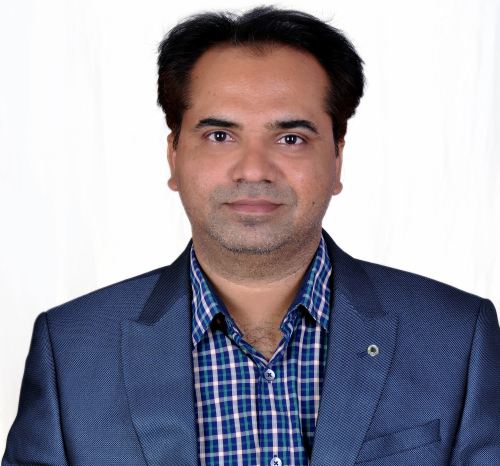
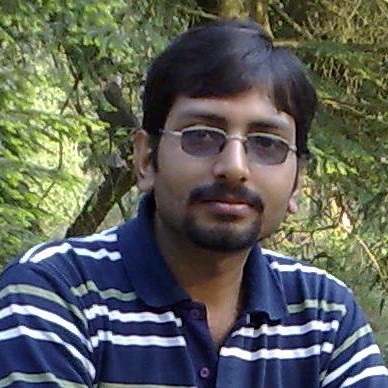
Y. N. Singh is a Professor in the Department of Electrical Engineering at Indian Institute of Technology Kanpur . He holds a PhD and M.Tech from IIT Delhi and a B.Tech from REC Hamirpur . Education PhD, IIT Delhi (1997) M.Tech, IIT Delhi (1992) B.Tech, REC Hamirpur (1991) His research focuses on telecom networks , optical networks , complex networks , and wireless sensor networks , with significant contributions to network protection protocols, rumor propagation modeling, and optical memory design. His work on p-cycles has advanced telecom network survivability techniques. Selected publications include key papers in IEEE/OSA Journal of Lightwave Technology and Acta Physica Polonica B . He has received the AICTE Young Teacher Award (2002) and the Dr. M.N. Saha Memorial Award (2006). Contact details Office: EE/ACES, IIT Kanpur, UP, India-208016 Phone: 0512-[679/392/259]-7944 (O) Lab: 0512-[679/392/259]-7841, 7070 Fax: 0512-259-0063
Nishchal K. Verma is a Professor at the Department of Electrical Engineering, Indian Institute of Technology Kanpur. He holds a PhD from IIT Delhi (2007), an M.Tech from IIT Roorkee (2003), and a B.Tech from DEI Agra (1996). His postdoctoral research includes work at the University of Tennessee (2009) and Louisiana Tech University (2008). Specialization: Fuzzy Logic, Health Monitoring, Intelligent Informatics Current Research Interests: Intelligent Data Mining, Computer Vision, Smart Grids, Biomedical Applications His research focuses on Fuzzy Systems , Machine Learning , and Health Monitoring with applications to power systems, biomedical data, and wireless sensor networks. He has developed technologies like the Transducers and Instrumentation Virtual Laboratory and Brain Computer Interface Laboratory , emphasizing predictive modeling and fault diagnosis. Key sponsored projects include DST-funded Fuzzy Rule-Based Image Prediction and DRDO-supported Visual Surveillance Systems . His work spans 15+ years of interdisciplinary publications in journals and conferences. Scientific Awards : Devendra Shukla Young Faculty Research Fellowship (2013-16) He has served as Associate Editor for journals and Chairman of IEEE chapters, with leadership roles in academic administration at IIT Kanpur.
Dr. Rajesh Sathiyamoorthy is an Associate Professor in the Department of Civil Engineering at the Indian Institute of Technology Kanpur (IIT Kanpur), specialising in Geotechnical Engineering. Since joining IIT Kanpur in 2011, he has built a strong research portfolio, secured competitive funding, and received numerous accolades for his contributions to environmental geotechnology and unsaturated soil mechanics. Education PhD, Indian Institute of Technology Bombay, India (2010) M.E., College of Engineering Guindy, Anna University, India (2002) B.E., Vellore Engineering College, University of Madras, India (2000) Research Interests Dr. Sathiyamoorthy’s research is centred on the behaviour of unsaturated soils, environmental geotechnics, and innovative ground-improvement techniques. His work employs advanced numerical and physical modelling to address challenges in landfill barrier design, soil–structure interaction, and performance of geosynthetically reinforced systems. A distinctive feature of his investigations is the integration of field-scale problems with controlled laboratory and centrifuge testing, coupled with state-of-the-art computational tools. Scientific Awards & Fellowships IEI Young Engineers Award 2013-2014 (Civil Engineering) – The Institution of Engineers (India) Talented Young Scientist Fellowship 2019 – Ministry of Science and Technology, China Distinguished Alumni Award 2019 (Academic & Research) – VIT University Best Paper Awards (Environmental Geotechnology) – Indian Geotechnical Society, 2019 & 2015 Best Paper Award – International Geotechnical Engineering Conference on Sustainability 2016 IGS Prof. A.V. Shroff Biannual Award 2013 – Indian Geotechnical Society International Geosynthetics Society Student Award 2012 – IGS, USA Best Paper Award 2010 – Geotextiles and Geomembranes Research Funding & Collaborations Dr. Sathiyamoorthy has successfully led multiple sponsored projects worth several crores of rupees from agencies such as SERB-DST, BRNS-DAE, Shanghai Council of Science & Technology, RDSO Lucknow, and PAAB-MHRD. These projects span centrifuge modelling of embankments on encased stone columns, hydro-mechanical behaviour of compacted soils, reliability-based assessment of landfill slopes, and field validation of stabilised subgrade materials for pavements. His international collaboration includes joint research at Tongji University, Shanghai, under the Talented Young Scientist Fellowship. Laboratories & Teams He heads experimental activities in the Geotechnical Engineering Laboratory at IIT Kanpur, where his group maintains specialised equipment for unsaturated soil testing, geosynthetic evaluation, and centrifuge modelling. The research team comprises doctoral scholars, master’s students, and project staff working on inter-related themes of environmental geotechnology and ground improvement.
B. Munwar Basha is a Professor and Head of the Department of Civil Engineering at the Indian Institute of Technology Hyderabad . He holds a Ph.D. in Geotechnical Engineering from IISc Bangalore and has served at multiple institutions, including IIT Delhi and IIT Hyderabad, since 2012. His current roles include Associate Dean Planning and leadership in academic administration. Education: Ph.D. in Geotechnical Engineering (2009, IISc Bangalore) M.Tech in Geotechnical Engineering (2004, IIT Kanpur) B.Tech in Civil Engineering (2001, JNTU Anantapur) Research Focus: Specializing in Unsaturated Soil Mechanics , Reliability-Based Design , and Geoenvironmental Engineering , his work addresses critical challenges in Seismic Stability , Landfill Design , and Computational Geomechanics . Articles often explore Waste Management , Disaster Mitigation , and Rock Mechanics . Scientific Awards: Springer Nature Author Service Award 2025 (Editor of Distinction) Best Associate Editor for ASCE Journal 2024 IGS Biennial Awards for Best Papers (2023, 2015) Excellent Paper Award (IACMAG 2008) Prof. N. S. Govinda Rao Gold Medal for Best Ph.D. Thesis (IISc 2009) Professional Leadership: Active in academic governance as Faculty Incharge for Ph.D. Selections , Convener of DPGC , and Organizing Secretary for multiple conferences. He serves on editorial boards for journals like Indian Geotechnical Journal and Journal of Hazardous, Toxic and Radioactive Waste .
Professor G L Sivakumar Babu is a distinguished academic in the Department of Civil Engineering at the Indian Institute of Science (IISc), Bangalore, where he has served as Professor since 2009, after progressing from Assistant Professor (1996-2003) to Associate Professor (2003-2009). His career spans over three decades with significant contributions to geotechnical engineering research and practice. He also serves as associate faculty with the Center for Infrastructure, Sustainable Transportation and Urban Planning (CiSTUP) and the Centre for Sustainable Technologies. His educational background includes: PhD in Geotechnical Engineering, Indian Institute of Science, Bangalore (1991) ME in Soil Mechanics and Foundation Engineering, Anna University, Madras (1987) B.Tech. in Civil Engineering, Sri Venkateswara University, Tirupati (1983) Prof. Sivakumar Babu's research focuses on risk and reliability applications in geotechnical engineering, geosynthetics and reinforced soil structures, environmental geotechnology, fibers in geotechnical engineering, earthquake geotechnical engineering, and geotechnics for disaster mitigation. His work integrates probabilistic methods to address uncertainties in soil behavior, with applications in buried pipes, foundations, slopes, retaining walls, and reinforced structures. He has significantly contributed to guidelines for soil nailing in highway engineering published by the Indian Roads Congress. His extensive publication record (over 100 journal papers and 100 conference papers) demonstrates a strong trend toward reliability-based design approaches across multiple geotechnical domains. Recent work shows increasing focus on municipal solid waste management, landfill engineering, pavement engineering with geosynthetics, and radioactive waste disposal facilities. His research consistently applies probabilistic and reliability methods to traditional geotechnical problems, bridging theoretical advances with practical engineering solutions. While specific awards aren't detailed in the provided text, his professional recognitions likely include honors related to his contributions in geotechnical engineering and reliability analysis. Prof. Sivakumar Babu has undertaken numerous consultancy projects spanning soil investigation, soil reinforcement and nailing, pavement design, geosynthetics applications, slope stabilization, and machine foundations. His industry engagement demonstrates the practical impact of his research, with projects for organizations including KSIIDC, MSIL, various sugar companies, INDAL, BPCL, IIMK, and government infrastructure projects. His international collaborations include work as a Humboldt Fellow in Germany (1999-2000) and as a Visiting Scholar at Purdue University (1995-1996), which significantly influenced his research direction toward probabilistic modeling in geotechnical engineering.
Professor Samit Ray Chaudhuri is a distinguished faculty member in the Department of Civil Engineering at the Indian Institute of Technology Kanpur. He holds a PhD from the University of California, Irvine, and has been contributing to structural engineering education and research since joining IIT Kanpur in 2009. Education: PhD, University of California, Irvine (2005) M.Tech, IIT Kanpur (2000) B.E., Bengal Engineering College (1997) Professor Ray Chaudhuri specializes in Structural Dynamics and Earthquake Engineering. His research spans several critical areas including Structural Health Monitoring, Seismic Soil-Structure Interaction, Performance-Based Design, and Structural Rehabilitation. His work focuses on evaluating how structures and their components respond to natural and man-made hazards, with particular emphasis on developing methods to improve structural resilience. His research publications demonstrate a consistent focus on understanding structural behavior under seismic loads, with particular attention to nonstructural components, structural dynamics, and damage detection methods. His work bridges theoretical developments with practical applications in earthquake engineering. Scientific Awards and Recognition: UC Regents Fellowship, University of California, Irvine (2001-2002) CAL-(IT)2 Fellowship, University of California, Irvine (2002) PK Kelkar Fellowship (2013-2016) Member of Expert Group for Building Typology Project, National Disaster Management Authority Member of Loads and Stresses Committee (B-2), IRC Code Revision Professor Ray Chaudhuri actively mentors graduate students and has established a research group focusing on structural dynamics and earthquake engineering problems. His teaching portfolio includes advanced courses in Structural Dynamics, Earthquake Engineering, and Experimental Methods in Structural Engineering.
Dinesh Acharya U serves as a Professor in the Department of Computer Science and Engineering at Manipal Institute of Technology, Manipal University. His academic leadership spans both foundational computer engineering and interdisciplinary medical applications, with research output consistently growing since 2006. Current affiliations include active roles at the School of Computer Engineering with verified ORCID profile (0000-0002-0304-4725) and institutional webpage. Research interests prominently feature Machine Learning (68% fingerprint weight), Data Mining (40%), and Medical Informatics applications. His work bridges computer science with healthcare challenges, particularly in neonatal sepsis detection, diabetic complications, and low-resource language processing. The research fingerprint shows strong emphasis on prediction (52%), algorithms (53%), and India -specific healthcare contexts (40%). Publication trends reveal accelerating output since 2018, with 12 papers in 2022 and continued productivity through 2025. Recent work demonstrates interdisciplinary convergence, particularly in Medical AI (neonatal sepsis, diabetic kidney disease) Natural language processing for low-resource languages Transformer-based architectures across domains Notable patterns include increasing clinical collaborations and emphasis on practical implementation tools. Professional recognition includes an h-index of 13 with 596 citations across 71 research outputs. Key distinctions: Scopus profile verification ORCID registration Multi-institutional collaborations evident in co-authorship Academic supervision and grant activity cannot be confirmed from available data, though 15+ recent publications suggest active research teams. Current projects appear focused on Medical diagnostic tool development Low-resource language technology Clinical decision support systems with evident laboratory infrastructure supporting computational healthcare research.
Suvendu Samanta is an Assistant Professor in the Department of Electrical Engineering at the Indian Institute of Technology Kanpur. His research focuses on power electronics, electric vehicles, and wireless power transfer technologies. He has published numerous papers in prestigious journals and conferences in the field of power electronics and energy conversion systems, with recent work emphasizing electric vehicle charging infrastructure and medium-voltage DC grid integration. Education: Ph.D. in Electrical Engineering from Concordia University, Montreal, Canada (2018) M.Tech from IIT Kanpur (2013) B.E. from BESU Shibpur (IIEST Shibpur) (2009) Dr. Samanta's research primarily centers on power electronics with a focus on wireless power transfer systems for electric vehicles. His work explores resonant converters using wide bandgap semiconductor devices, which offer higher efficiency and power density compared to traditional silicon-based devices. He has made significant contributions to the analysis and design of various converter topologies for inductive power transfer applications, addressing critical challenges in electric vehicle charging infrastructure including efficiency improvements, power density enhancement, and grid integration. His publication record demonstrates a consistent focus on wireless power transfer technology, particularly for electric vehicle applications. The research spans from fundamental converter topologies to practical implementation challenges, with a recent emphasis on medium-voltage DC grid integration for electric vehicle charging. His work bridges theoretical analysis with experimental validation, contributing significantly to the advancement of wireless charging technologies with particular attention to safety considerations like arc flash mitigation. Scientific Awards: Concordia University Distinguished Doctoral Dissertation Prize in Engineering and Natural Sciences (2019) Department of Electrical and Computer Engineering Ph.D. Convocation Award, Concordia University (2019) Canadian Governor General's Gold Medal—Technology, Industry and the Environment Category for PhD Thesis (2018) Best Paper Award for "A New Direct AC-AC Converter with Active Source Current Control for Wireless Inductive Power Transfer Application" (2018) Multiple Conference Travel Grants for IEEE IAS Annual Meeting 2017, APEC 2017, and IEEE IAS Annual Meeting 2016 Dr. Samanta has secured significant research funding for projects focused on next-generation electric vehicle charging systems and power electronics. His collaborations with institutions including NC State University and National University of Singapore have resulted in impactful research addressing practical challenges in power conversion systems. He actively mentors students in advanced power electronics research and has contributed to developing innovative solutions for electric vehicle infrastructure. Based in the Advanced Centre for Electronic Systems (ACES) at IIT Kanpur, Dr. Samanta leads a research team focused on developing cutting-edge solutions for wireless power transfer, electric vehicle charging, and high-efficiency power conversion systems. His laboratory work emphasizes practical implementation of theoretical concepts, with particular attention to the integration of wide bandgap semiconductor devices in power converter design for improved performance and reliability.
Virendra Singh is a Professor at the Indian Institute of Technology Bombay , affiliated with both the Department of Electrical Engineering and Department of Computer Science & Engineering . He leads the Computer Architecture and Dependable Systems Lab (CADSL) and coordinates the Indo-Japanese Joint Laboratory for Intelligent Dependable Cyber Physical Systems and the Information Security Research and Development Centre (ISRDC). Ph.D. in Computer Science from Nara Institute of Science and Technology (NAIST), Japan (2002-2005) M.E. and B.E. in Electronics & Communication from Malaviya National Institute of Technology (MNIT), Jaipur (1994-1996 and 1990-1994) Research Interests : Virendra Singh focuses on Cyber Security , Computer Architecture , Fault-Tolerant Computing , Formal Verification , Trusted Computing , and Blockchain Technology . His work integrates security into hardware design, with a strong emphasis on Cyber Physical Cognitive Systems and Software Defined Networking . Recent Publications highlight advancements in cache security , quantum-resistant cryptography , malware detection , and heterogeneous computing , reflecting his interdisciplinary approach. Awards : SP Sukhatme Excellence in Teaching Award (2021) Students : He currently supervises 15 Ph.D. students, advancing cutting-edge research in security and architecture.
Professor Amit Acharyya is a full Professor in the Department of Electrical Engineering at the Indian Institute of Technology Hyderabad, India. Previously he served as Associate Professor (2017–2022) and Assistant Professor (2012–2017) at the same institution, and earlier as Assistant Professor at IIT Guwahati and as Research Fellow at the University of Southampton, UK. He currently leads the AESICD Lab and is actively engaged in cutting-edge research spanning VLSI systems, low-power design, machine-learning hardware, biomedical devices, digital arithmetic, hardware security, and electric-vehicle battery monitoring. Education: PhD – University of Southampton, UK Research Interests: Professor Acharyya’s work centers on the design of resource-constrained VLSI systems with emphasis on ultra-low power techniques, hardware accelerators for machine learning, and edge-computing solutions. His group is developing application-specific chips for remote health monitoring targeting cardiovascular diseases, diabetes, autism spectrum disorder, neurological disorders, and orthopaedic challenges. Additional thrust areas include hardware–software co-design for accelerated cancer diagnostics, efficient digital arithmetic circuits, hardware security primitives, real-time battery-health monitoring for electric vehicles, and nanomagnetic logic systems. Scientific Awards & Recognition: Digital Trail Blazer Award, Digital Technology Conclave 2016 Visvesvaraya Young Faculty Fellowship 2015–16 Young Engineer Award, IEI 2015 Visiting Research Fellowships, University of Southampton (2015–2017) & Newcastle University (2016–2017) Summer Fellowship, University of Liverpool 2015 Advising & Funding: He has mentored 15 current PhD scholars and 13 graduated students, many funded by DST, government R&D labs, and industry partners. Research projects span VLSI DSP, IoT for healthcare, structural health monitoring, AI-based fault-tolerant IC design, hardware security, and battery-management systems. Research Laboratory: He heads the Application-Specific Integrated Circuits & Devices (AESICD) Laboratory at IIT Hyderabad, which focuses on developing next-generation low-power SoCs and domain-specific accelerators.
Professor Sudib Kumar Mishra is a faculty member in the Department of Civil Engineering at the Indian Institute of Technology Kanpur (IITK). He specializes in Structural Engineering with research interests spanning structural dynamics, vibration control, structural health monitoring, probabilistic safety assessment, instability phenomena, and multi-scale modelling. Education Ph.D. in Civil Engineering, University of Arizona, Tucson, USA, 2009 M.Tech., Indian Institute of Technology Bombay, India, 2005 B.E., Bengal Engineering and Science University, India, 2003 Research Focus Professor Mishra’s work integrates advanced dynamics, smart materials, and probabilistic methods to enhance the safety and resilience of civil infrastructure. His investigations encompass seismic isolation using shape-memory-alloy devices, stochastic seismic response analysis, and novel damage-detection techniques based on phase-space interrogation of vibration signals. Multi-scale modelling and reliability-based design underpin much of his recent work, aiming to translate laboratory insights into practice-ready engineering solutions. Scientific Recognition Young Engineer Award 2016, Indian National Academy of Engineering (INAE) Young Engineer Award 2013, Institute of Engineers (IEI) Multiple Certificates for Excellence in Teaching, IIT Kanpur Senate (2014-2017) Outstanding Graduate Associate Award, University of Arizona, 2009 Professor Bramha Memorial Scholarship, Bengal Engineering and Science University, 2000 Teaching & Service He teaches core and advanced courses in solid mechanics, reinforced-concrete and steel structures, structural dynamics, stability, reliability, numerical methods, and finite-element analysis. His sustained commitment to high-quality instruction has been repeatedly recognized by the Institute.
Professor Vijayshankar Dandapani is a faculty member in the Department of Metallurgical Engineering and Materials Science at the Indian Institute of Technology Bombay. His research focuses on interfacial phenomena in materials, particularly in the context of corrosion, coatings, and electrochemical systems. Research Interests: Corrosion and delamination of organic coatings Hydrogen permeation for interfacial reaction kinetics Non-linear frequency response analysis (NFRA) in lithium-ion batteries Nanorough silica coatings and surface engineering Metal-ceramic interfacial stress corrosion cracking Analyzing his recent publications, his work spans electrochemistry, surface science, and nanomaterials, with a strong emphasis on buried interfaces and quantitative characterization techniques. His research integrates experimental electrochemistry with surface modification and materials design for durability and performance. Awards and Honors: No scientific awards listed in the provided text. Advising and Grants: There is no explicit mention of students, advising roles, or funded grants in the provided text. However, given his publication record and faculty position, it is likely he supervises graduate students and participates in research projects. His work appears to involve collaborations with international institutions in Germany and the USA. Laboratories and Research Teams: The text references his personal website ( https://dvijayashankar.wixsite.com/interfaceelectrochem ), which likely hosts details about his research group, ongoing projects, and lab facilities focused on interface electrochemistry and surface engineering.
Dr. Raghu Nandan Sengupta is a Professor at the Department of Management Sciences, Indian Institute of Technology Kanpur (IITK). With a Ph.D. from IIM Calcutta and a BE in Mechanical Engineering from BIT Mesra, he has held visiting positions at institutions including Princeton University, University of Warsaw, and Technische Universität Dresden. His academic leadership includes serving as Head of Department (2017-2020) and Chairman of GATE/JAM-2025. Research Focus: Sequential Estimation, Statistical Reliability Theory, Risk Analysis, Optimization Techniques in Finance, Meta Heuristic Algorithms, and Robust Optimization His publications span topics like reliability-based portfolio optimization , multiobjective decision-making , and brand sensitivity in B2B marketing . Key awards include DAAD Research Stays, EU-NAMASTE Erasmus Mundus Fellowship, and Indo-US S&T Forum Fellowship. He has advised 16 PhD students and contributed to editorial boards of journals including Sequential Analysis and Foundations of Computing and Decision Sciences . Scientific Awards: DAAD Research Stays (2017, 2015) EU-NAMASTE Erasmus Mundus Fellowship (2015) Indo-US S&T Forum Fellowship (2008) Erasmus Mundus Europe Asia Fellowship (2011) He has taught courses such as Probability and Statistics , Quantitative Methods for Decision Making , and Security Analysis & Portfolio Management at IITK, University of Warsaw, and IGIDR Mumbai. His work bridges statistical inference , financial engineering , and operations research , emphasizing practical applications in industry and academia.