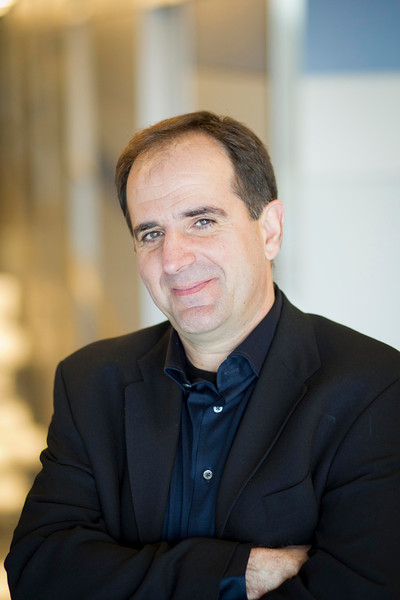
Masood Parvania is the Roger P. Webb Endowed Professor at the University of Utah in Electrical and Computer Engineering. He serves as Director of the Utah Smart Energy Laboratory (U-Smart) and Co-Director of the NSF WIRED Global Center . His research focuses on mathematical optimization , control theory , and machine learning applications in power system operation, resilience, and interdependent infrastructure modeling. His work addresses critical challenges including: Equity-aware grid restoration Climate-resilient energy systems Cyber-physical security analysis Hybrid energy storage coordination Extreme heat event mitigation strategies Key research trends across his 15 most recent publications reveal deep integration of: Renewable energy with storage systems Machine learning in real-time grid operation Cybersecurity frameworks for critical infrastructure Equity metrics in energy distribution Honors include: IEEE Outstanding Associate Editor Award (2022) University of Utah Presidential Scholar (2020) IEEE Utah Section Outstanding Educator Award (2017) Multiple Best Reviewer and Distinguished Service Awards As Associate Editor for IEEE Transactions on Power Systems , he actively shapes energy research discourse while leading NSF-funded initiatives like: U.S.-Canada Climate-Resilient Grid Center ($90M+ Western EV Infrastructure Scale-Up Wasatch Multi-Modal Corridor Electrification
Daniel G Collins is a Senior Research Associate in the School of Physics at the University of Bristol, specialising in theoretical quantum physics with a focus on quantum non-locality, Bell-type inequalities, conservation laws and quantum information. Education: PhD in theoretical physics Part III Mathematics, University of Cambridge BA Mathematics (Honours) Research Interests: Daniel's research seeks to understand the foundations of quantum mechanics through thought experiments. He is particularly interested in non-locality, entanglement, quantum conservation laws, retrodiction, teleportation and quantum computation. Recent work includes demonstrating teleportation across IBM quantum computer chips and deriving new conservation laws for every quantum measurement outcome. Recent Trends in Publications: Recent articles cluster around two themes: (i) fundamental constraints such as conservation laws in quantum measurements and angular-momentum flow without carriers, and (ii) practical demonstrations of teleportation and non-locality in high-dimensional and post-selected systems. These works combine rigorous theory with experimental perspectives, reflecting his ongoing collaboration with Sandu Popescu, Yakir Aharonov and others. Scientific Outreach & Awards: Featured interviews in Physics World , New Scientist and Scientific American Talks delivered at UCL Department of Computer Science, IBM Quantum and other institutions Resources & Collaborations: Daniel maintains a personal website and is active on ORCID: 0009-0009-0365-4206. His work is conducted within the Theoretical Physics research group at Bristol and involves collaborations internationally, notably with Sandu Popescu and Yakir Aharonov.
Katsuaki Ishida is an Assistant Professor at Waseda University's Research Organization for Nano & Life Innovation, with a focus on catalytic processes for petroleum refining and resource chemistry. His career spans both academia and industry, including roles at JX Nippon Oil & Energy Corporation and NEDO. Doctor of Engineering from The University of Tokyo (1988) Teaching experience at Tsukuba University Graduate School since 2019 Research interests include catalyst development , hydrocracking processes , and ultra-low sulfur diesel production . His work explores molecular structure-activity relationships in catalytic systems and nitrogen/sulfur poisoning effects. Recent publications analyze branching structures in fuel oils, pore size optimization in catalysts, and transition metal sulfide dispersion techniques. Key awards include the Japan Petroleum Institute Award for Distinguished Papers (2008). He holds numerous patents in low-sulfur fuel production and has presented extensively on biofuels, membrane separation, and circular economy technologies.
Florida Atlantic University - Boca RatonUnited States
Dimitris A. Pados is a Professor and I-SENSE Fellow at Florida Atlantic University, holding the prestigious Charles E. Schmidt Eminent Scholar in Engineering position. He serves as Director of both the Center for Connected Autonomy and Artificial Intelligence and the ExtremeComms Laboratory within the Department of Electrical Engineering and Computer Science in the College of Engineering. Prior to joining FAU in 2017, he spent 20 years at the University at Buffalo, where he held positions ranging from Assistant Professor to Clifford C. Furnas Chair Professor. Professor Pados' research spans two primary domains: Communications Theory and Systems, and Machine Learning and Adaptive Signal Processing. His work in communications includes Cognitive Software-defined Radios and Networks, Interference Avoiding Networking, Secure Wireless Communications, Underwater Cognitive Hi-rate/Long-distance Acoustic Communications, and Autonomous/Unmanned System Communications. In signal processing, he specializes in L1-norm Principal-component Analysis (L1-PCA), Robust Feature Extraction from Faulty Data Sets, Digital Data Embedding/Hiding, and Compressed-sensed Imaging and Video. His research has resulted in numerous high-impact publications and several best paper awards. His recent publications demonstrate a strong focus on robust signal processing techniques, particularly L1-PCA methods, and applications in wireless communications, video processing, and secure transmissions. The research shows consistent contributions to both theoretical foundations and practical implementations, with increasing emphasis on cognitive radio networks, underwater communications, and autonomous systems. 2013 ISWCS Best Paper Award in Physical Layer Communications and Signal Processing 2003 IEEE Transactions on Neural Networks Outstanding Paper Award IEEE ICT 2001 Best Paper Award 2010 IEEE ICC Best Paper Award in Signal Processing for Communications I-SENSE Fellow Charles E. Schmidt Eminent Scholar in Engineering Professor Pados has secured significant research funding through sponsored projects, particularly in wireless communications, signal processing, and autonomous systems. His work on software-defined radio platforms, underwater acoustic networks, and cognitive networking demonstrates strong industry and government interest. He has successfully translated theoretical research into practical implementations, as evidenced by his team's win in the Internet of H2O competition. As Director of the ExtremeComms Laboratory, Professor Pados leads a research group focused on communication systems for challenging environments. The laboratory provides opportunities for graduate students to work on cutting-edge projects in cognitive radio, underwater communications, and autonomous systems. His leadership of the Center for Connected Autonomy and Artificial Intelligence further expands research opportunities across multiple disciplines at Florida Atlantic University.
Dr. Roger Clavera Gispert is a Researcher at the Department of Geophysics within the University Institute of Geophysics , affiliated with Ebro Observatory . He actively contributes to: Climate change adaptation in mountain communities (PYRENEES4CLIMA) Hydrological digital twin development (DTEHN) Co-creation of territorial adaptation strategies (eCOadapt) Research Focus: Specializing in Numerical Modeling of geological systems, his work bridges Tectonics with Sedimentary Basin analysis, particularly examining how structural features like Relay Ramps influence sediment dispersal. Recent publications highlight his expertise in Streamflow Trends and Low Flow Simulation across the Pyrenees region, integrating Satellite Data with Hydrological Models to address climate resilience. Collaboration Network: Maintains active partnerships with institutions across Europe and Africa , focusing on Water Management solutions. Current projects emphasize Digital Twin Earth applications and Multi-model Climate Projections for transboundary mountain communities.
Dariusz Smugała is a Lecturer at the Department of Electrical Engineering , Faculty of Electrical and Computer Engineering , Cracow University of Technology . His work focuses on power systems, electromagnetic relay dynamics, and energy quality optimization. Key research areas include: Switching processes in low-voltage relays and circuit breakers Thermal behavior under short-circuit conditions Harmonic distortion analysis in LED drivers and power networks High-frequency transient protection in wind turbine transformers His publications span journals like IEEE Transactions on Industrial Electronics , Energies , and Measurement , emphasizing computational modeling (e.g., MATLAB-based tools) and experimental validation. He collaborates on projects addressing arc plasma dynamics, insulation systems, and power device reliability.
Max Planck Institute for Intelligent SystemsGermany
Niki Kilbertus is a Professor in the Department of Informatics at the Technical University of Munich and a group leader at Helmholtz AI (Helmholtz Munich). They are also affiliated with MCML, the Konrad Zuse School relAI, and the Munich Unit of ELLIS. Since 2024, they have been a member of the Junge Akademie and received the Leopoldina Prize for Young Scientists. In 2025, they were awarded an ERC Starting Grant and achieved tenure at TUM. Professor Kilbertus's research focuses on causal machine learning, mechanistic ML, dynamical systems, and AI for science. Their work spans theoretical foundations of causal inference and practical applications across scientific domains. They have made significant contributions to causal effect estimation, causal discovery in stochastic processes, learning differential equations, and fair machine learning. Their research often bridges computer science with physics, biology, and climate science, demonstrating the interdisciplinary nature of their work. Professor Kilbertus has published extensively in top machine learning venues including NeurIPS, ICML, and ICLR, with numerous publications in 2024-2025. Their recent work shows a strong trend toward causal discovery in continuous-time systems, intervention modeling, and physics-informed machine learning applications. Scientific Awards: Leopoldina Prize for Young Scientists (2024) ERC Starting Grant (2025) Professor Kilbertus actively supervises multiple PhD students and collaborates with researchers across institutions including Max Planck Institutes and Helmholtz centers. They serve as an Action Editor for TMLR and regularly review for major ML conferences. The research group is well-funded through the ERC grant and institutional support from TUM and Helmholtz AI, enabling active recruitment of new PhD students and postdocs. Based at Technical University of Munich and Helmholtz AI, Professor Kilbertus's team works at the intersection of theoretical machine learning and scientific applications, with particular strengths in causal reasoning for complex dynamical systems.
Subrahmanyam Sappati is an Assistant Professor at the Department of Pharmaceutical Technology and Biochemistry, Faculty of Chemistry, Gdańsk University of Technology. He earned his PhD in chemical sciences from IISER Pune in June 2019 and currently holds a prestigious Nobelium grant fellowship. Dr. Sappati's research focuses on computational approaches to understand molecular interactions at the quantum level. His primary methodologies include quantum mechanics/molecular mechanics (QM/MM) simulations, ab initio molecular dynamics (AIMD), and classical molecular dynamics (MD). His work spans multiple disciplines including nuclear quantum effects, proton transfer mechanisms, drug design, and photophysical properties of materials. Analysis of his publication record reveals a strong interdisciplinary trend, with recent work emphasizing applications in pharmaceutical development, particularly in antifungal and anticancer drug design, protein-ligand interactions, and materials science for energy applications. His research consistently combines computational modeling with experimental validation across diverse biological and chemical systems. Nobelium grant fellow Dr. Sappati actively contributes to the scientific community as a reviewer for multiple journals including ChemPhotoChem (since 2025), Bulletin of Materials Science (since 2023), and Physical Chemistry Research (since 2022). His research appears to be supported by various grants, with the Nobelium fellowship being explicitly mentioned. He is affiliated with the Computational Molecular Biophysics research group at the Faculty of Chemistry, where he leads computational studies of biomolecular systems, particularly focusing on hydrogen bonding networks, enzyme mechanisms, and drug-target interactions using advanced simulation techniques.
Professor William Holderbaum is a faculty member at the School of Science, Engineering & Environment at the University of Salford, with additional affiliation to the Centre for Future Engineering. His academic career demonstrates sustained research productivity with 46 documented research outputs spanning from 2012 to 2025. Professor Holderbaum's research interests encompass several interconnected domains: Control Systems Theory and Applications Hybrid Dynamical Systems (particularly power converters) Robotics (Geometric Control, nonholonomic systems, Reinforcement Learning) Rehabilitation Engineering (Robust Control Design) Energy Management (Electric Vehicles, Smart Grids, Multiple Agent Systems) Autonomous Vehicles (Motion planning, AI) His recent publication activity (11 papers in 2025, 13 in 2024) reveals a strong emphasis on power systems protection challenges, particularly addressing microgrid protection issues arising from distributed generation integration. He has developed innovative approaches for overcurrent relay coordination, microgrid frequency stability, and protection schemes for inverter-dominated grids. His work also extends to robotics applications in textile manufacturing, wearable sensor technology for gesture recognition, and digital twin applications for power system protection. Professor Holderbaum maintains an active research program with significant recent output, demonstrating continued scholarly productivity and relevance in his fields of expertise. His interdisciplinary approach bridges theoretical control systems with practical engineering applications across multiple domains.
Prof. Ralf-Dieter Rogler serves as Professor of Switchgear Technology at Dresden University of Applied Sciences' Faculty of Electrical Engineering. He teaches core courses including Switchgear Technology, High-Current Technology, Plant Protection, Low-Voltage Systems, Electrical Safety, and Power System Diagnostics, with active modules scheduled through summer semester 2026. His research spans critical power engineering domains: Switchgear testing under short-circuit/continuous operation (DC to 400 Hz) High-current validation (10 kA AC, 5 kA three-phase/DC) High-voltage/partial discharge testing (100 kV AC) Mechanical stress analysis of conductors/supports Infrared diagnostics and arc fault pressure modeling Transformer DGA and fuse/current transformer design Prof. Rogler leads research in Electrical Power Engineering and High-Current Technology laboratories, developing specialized software for thermal/pressure calculations. As a publicly appointed sworn expert, he contributes to EUKS compliance testing through measurement protocols and calibration standards. His recent publications focus on advancing electrical safety standards, switchgear reliability, and diagnostic methodologies for modern power systems.