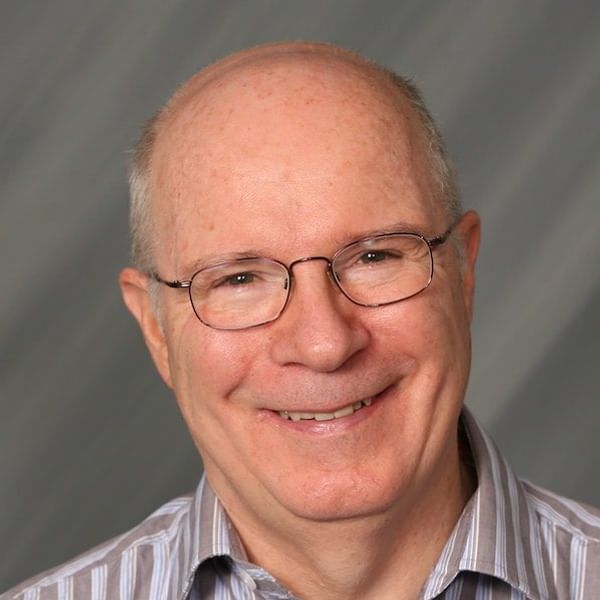
Ronald C. Lasky is a Professor of Engineering at Dartmouth College's Thayer School of Engineering and a Senior Technologist at the Indium Corporation. His academic roles include teaching courses such as ENGM 187: Technology Innovation and Entrepreneurship and ENGS 155: Intermediate Thermodynamics . Dr. Lasky holds a BS in Engineering Physics from Cornell University (1970), an MS in Applied Mathematics from Binghamton University (1974), and a PhD in Materials Science from Cornell University (1986). His research focuses on process optimization, electronic assembly, materials science, and environmental compliance. Notable contributions include work on lead-free solder assembly and Lean Six Sigma methodologies. He received the Member of Technical Distinction Award from the SMTA in 2021. Dr. Lasky actively engages with industry, exemplified by his collaboration with Galanz in China, exploring modern manufacturing practices and infrastructure. His insights on global supply chains and technological advancements highlight his dual academic and professional expertise.
Shimon Whiteson is Professor of Computer Science at the University of Oxford, leading the Whiteson Research Lab focused on reinforcement learning, multi-agent systems, and deep learning. His research develops algorithms for efficient learning in complex environments. Current work explores meta-reinforcement learning frameworks that enable agents to rapidly adapt to new tasks, with applications in autonomous driving simulation and robotics. Recent innovations include novel methods for offline reinforcement learning, multi-agent coordination, and morphology-aware control. Publications demonstrate advances in: Meta-RL algorithm design for few-shot adaptation Multi-agent reinforcement learning environments and benchmarks Imitation learning in autonomous driving Bayesian methods for sample-efficient learning Research outputs include widely used benchmarks and tools including JaxMARL for accelerated multi-agent RL research. Current doctoral supervision focuses on temporal abstraction in RL, multi-agent coordination, and reinforcement learning theory.
Prof. Peter Scholze is a leading mathematician at the University of Bonn and the Max Planck Institute for Mathematics (MPIM). He holds a professorship in the Mathematical Institute at the University of Bonn and is affiliated with MPIM as a principal investigator. His research focuses on arithmetic geometry, representation theory, and p-adic geometry, with notable contributions to perfectoid spaces, prismatic cohomology, and the geometrization of the local Langlands correspondence. Scholze has organized several advanced seminars (ARGOS) and taught courses on topics like condensed mathematics, p-adic geometry, and algebraic geometry. He collaborates widely with researchers such as Laurent Fargues and Bhargav Bhatt. His recent work includes groundbreaking papers on wild Betti sheaves, motivic geometrization of the local Langlands correspondence, and the Habiro ring of number fields. Scholze has pioneered the use of prismatic cohomology to unify p-adic Hodge theories and has developed foundational frameworks in derived algebraic geometry. His research also intersects with representation theory and topological cyclic homology. Affiliations: University of Bonn (Mathematical Institute), Max Planck Institute for Mathematics (MPIM) Research Groups: Arbeitsgruppe Arithmetische Geometrie und Darstellungstheorie Teaching: Recent courses include 'Selected Topics in Algebraic Geometry' and 'Six-Functor Formalisms'. His work frequently explores connections between algebraic geometry and number theory, with a focus on geometric approaches to arithmetic problems. Scholze is a key figure in modern arithmetic geometry, influencing both foundational theory and applied areas like the Langlands program.
Kristen Grauman is a Full Professor in the Department of Computer Science at the University of Texas at Austin, where she leads the UT Computer Vision Group. Her research focuses on computer vision and machine learning, with applications in visual recognition, video analysis, and multi-modal perception. She received her B.A. from Boston College and her Ph.D. from MIT. Her research interests span visual recognition, image and video search, video analysis, first-person vision, embodied and multi-modal perception, and interactive machine learning. She has made significant contributions to the field, particularly in developing algorithms for understanding visual content and human activities from video, including foundational work on the Pyramid Match Kernel and relative attributes. Her recent publications reveal a strong emphasis on egocentric (first-person) vision, audio-visual learning, and view-invariant representations. There is a clear trajectory toward multi-modal integration (vision, audio, language) and real-world applications in instructional videos, human activity understanding, and embodied AI systems. She has received numerous awards including: AAAI Fellow (2019) J. K. Aggarwal Prize, International Association for Pattern Recognition (2018) Helmholtz Prize (2017) UT Austin Academy of Distinguished Teachers (2017) Best Paper Award, Asian Conference on Computer Vision (2016) Presidential Early Career Award for Scientists and Engineers (2014) Computers and Thought Award, International Joint Conferences on Artificial Intelligence (2013) Pattern Analysis and Machine Intelligence Young Researcher Award (2013) Alfred P. Sloan Research Fellow (2012) Marr Prize (2011) Prof. Grauman serves as Associate Editor-in-Chief for the IEEE Transactions on Pattern Analysis and Machine Intelligence. She has secured substantial research funding including the Presidential Early Career Award, NSF grants, and industry partnerships. Her advising has produced numerous influential publications and students who are now leaders in computer vision. She leads the UT Computer Vision Group, which collaborates closely with the Electrical and Computer Engineering Department. The group is pioneering large-scale egocentric video research through projects like Ego4D and Ego-Exo4D, focusing on real-world applications in human activity understanding, audio-visual perception, and interactive systems.
Shoudong Huang is a Professor at the School of Mechanical and Mechatronic Engineering , University of Technology Sydney, and Deputy Director of the UTS Robotics Institute. His research focuses on mobile robot navigation , SLAM , nonlinear state estimation , and surgical robotics . He has published over 200 papers and is recognized as one of the 100 Most Influential Scholars in Robotics (Aminer, 2018). PhD in Automatic Control, Northeastern University (China) Postdoctoral Research Fellow, University of Hong Kong (1998-2000) Research Fellow, Australian National University (2001-2003) Full-time academic roles at UTS since 2004 His work addresses challenges in robot localization across extreme environments (underwater, underground mining, surgical settings) and develops globally optimal SLAM algorithms with guaranteed performance. He has secured over $4 million AUD in external funding, including ARC Discovery grants and industry partnerships. Recent publications emphasize cross-modal calibration (camera-LiDAR), interval analysis for bounded noise , and template-based deformable surface reconstruction . These span applications in autonomous driving, surgical navigation, and UAV guidance. Chancellor’s Medal for Research Excellence (2020) Supervisor of the Year (2023) Best Paper Award (2016 ICARCV) Huang serves as Associate Editor for IEEE Transactions on Robotics and International Journal of Robotics Research , and has held leadership roles in top robotics conferences like IROS and RSS. His collaborations span MIT, USC, Zhejiang University, and industry partners including PMSW Research Pty Ltd and Multiplex Constructions Pty Ltd.
Elaine Francis is a Professor of English and Linguistics at Purdue University's College of Liberal Arts, where she serves as Associate Head of the Department of English and directs the Experimental Linguistics Lab. She holds additional affiliations as an Affiliate Faculty Member in the Department of Linguistics and a Courtesy Faculty Member in the Department of Speech, Language, and Hearing Sciences. Ph.D. in Linguistics, University of Chicago (1999) B.A. in Linguistics, College of William and Mary (1993) MA in Linguistics, University of Chicago (1995) Former Assistant Professor at the University of Hong Kong (1999-2002) Professor Francis's research focuses on syntax and its interfaces with semantics, discourse information structure, and language processing in production and comprehension. She employs experimental methods to investigate syntactic, semantic, discourse-pragmatic, and cognitive factors underlying complex sentence structures. Her primary research areas include word order alternations, filler-gap dependencies, resumptive pronouns, and grammatical acceptability. She examines how various factors contribute to grammatical alternations in language use and explores how processing pressures in production and comprehension contribute to grammatical conventions. Her recent publication record shows consistent output across multiple linguistic subfields, with a strong emphasis on experimental syntax and psycholinguistics. Her 2022 book, Gradient Acceptability and Linguistic Theory , represents a significant contribution to understanding acceptability judgment tasks in relation to syntactic theory. Her work spans theoretical syntax, experimental linguistics, second language acquisition, and cross-linguistic comparison, often bridging the gap between theoretical frameworks and empirical evidence. Regularly teaches short courses at Linguistic Society of America Linguistic Institutes Member of Linguistic Society of America Ethics Committee Editorial board member of Glossa Psycholinguistics Co-editor of Polymorphous Linguistics: Jim McCawley's Legacy (2005) Co-editor of Mismatch: Form-Function Incongruity and the Architecture of Grammar (2003) Professor Francis actively supervises graduate students in linguistics, though she has indicated she will be unable to take on new graduate students for the 2025-2026 academic year. She has received research support for her experimental work, particularly for investigating syntactic phenomena through controlled experiments and corpus analysis. Her collaborative work extends across multiple institutions and disciplines, including collaborations with researchers in computational linguistics, cognitive science, and clinical linguistics. She directs the Experimental Linguistics Lab at Purdue University, which conducts research on syntactic processing using various experimental methodologies. The lab investigates how speakers produce and comprehend complex sentence structures, with particular attention to how grammatical knowledge interacts with processing constraints. Current projects include research on relative clauses, syntactic islands, and acceptability gradient phenomena across multiple languages.
Paulina Łęska-Bayraktar is an Assistant Professor in the Department of English-Polish Comparative Linguistics at the Faculty of English, Adam Mickiewicz University in Poznań, where she conducts research and teaches in formal syntax and comparative linguistics. Her academic foundation is deeply rooted in the same institution, reflecting a sustained commitment to linguistic scholarship in Poland. Her educational background includes: B.A. in English Linguistics, Adam Mickiewicz University in Poznań (2012) M.A. in English Linguistics, Adam Mickiewicz University in Poznań (2014) Ph.D. in English Linguistics, Adam Mickiewicz University in Poznań (2019) Her research interests lie at the intersection of syntax, semantics, and cognitive grammar, with a strong focus on generative approaches to Slavic languages—particularly Polish. She investigates complex syntactic phenomena such as binding theory, pronoun distribution, quantifier scope, agreement, and the structure of relative and nominal clauses. Her work combines formal theoretical analysis with empirical data, often drawing on acceptability judgments and psycholinguistic methodologies. The trends in her recent publications reveal a sustained engagement with the syntax of Polish, especially in non-canonical constructions involving dative arguments, experiencers, and pronominal clusters. Her work contributes significantly to the understanding of how universal syntactic principles manifest in Slavic morphosyntax, and she frequently collaborates with leading scholars like Prof. Jacek Witkoś. She has received research funding from the Polish National Science Center through multiple grants, including OPUS, Beethoven, and Miniatura projects, which have supported her investigations into nominal expressions, pronouns, and anaphora in Polish. These grants underscore the national recognition of her research contributions. Paulina Łęska-Bayraktar actively participates in the international linguistics community, presenting her work at major conferences such as Formal Approaches to Slavic Linguistics (FASL), Formal Description of Slavic Languages (FDSL), and the Poznań Linguistic Meeting. She is also involved in collaborative research teams and has co-authored works with scholars from Humboldt-Universität zu Berlin and other institutions. Her academic presence is further strengthened by her profiles on ORCID and ResearchGate.
Katerina Fragkiadaki is the JPMorgan Chase Associate Professor of Computer Science in the Machine Learning Department at Carnegie Mellon University. She works at the intersection of Artificial Intelligence, Computer Vision, Machine Learning, Language Understanding, and Robotics. PhD from GRASP Lab, University of Pennsylvania Postdoctoral researcher at UC Berkeley (with Jitendra Malik) and Google Research Recipient of NSF CAREER, DARPA Young Investigator, Amazon, Google, Sony, UPMC, and AFOSR awards Organizer of CoRL 2023 Workshop on Generalist Robots ICLR 2024 Program Chair, multiple area chair roles Her research group focuses on developing machines that autonomously improve world models through human-environment interactions, with specific emphasis on: Representation learning and video understanding 2D/3D unified vision-language models Generative simulation and reinforcement learning Real2Sim/Sim2Real robot learning Continual learning and spatial common sense 3D scene reconstruction and dynamics Recent publications highlight advancements in: 3D mesh generation with compositional transformers Unified 2D/3D perception frameworks Physics-aware generative models Diffusion-based robotic manipulation policies Embodied agents with memory prompting Awards include: 2024: DARPA Young Investigator Award 2023: Amazon Faculty Award 2022: Sony Faculty Research Award 2021: UPMC Faculty Research Award 2020: NSF CAREER Award 2019: Google Faculty Award Key collaborations span institutions including UC Berkeley, Google Research, Stanford, MIT, and University of Tsukuba. Her work bridges theoretical innovation with practical applications in: Autonomous robot manipulation 4D world modeling Language-grounded perception Visual dynamics prediction Embodied program synthesis Physics-based simulation engines
Jiayi Lu is a PostDoc Researcher at the University of Pennsylvania School of Arts & Sciences, working under the supervision of Dr. Julie Anne Legate. Her research focuses on syntax, psycholinguistics, and Chinese linguistics, with a particular emphasis on grammaticality judgments, satiation effects, and island phenomena. She has contributed to understanding how sentence processing and discourse factors influence syntactic structures. Her research interests encompass syntax, psycholinguistics, and formal semantics, with a focus on exploring grammaticality illusions, the role of discourse in syntactic constraints, and cross-linguistic variations in Chinese. Key areas include the study of extraction islands, coordination effects, and the cognitive mechanisms underlying sentence processing. Her recent work (2020-2024) demonstrates a strong focus on syntactic satiation, island effects, and experimental methods in syntax. Publications analyze both English and Chinese data, investigating how linguistic structures are processed and judged by speakers. Trends include exploring the generalizability of satiation across island types and the interplay between discourse and syntactic constraints. Dr. Lu has not listed any scientific awards or grants in the provided information. Dr. Lu has not listed any advisees or grants in the provided information.
Jonathan Winghong Luk is a Professor in the Department of Mathematics at Stanford University. His research focuses on nonlinear partial differential equations, general relativity, and mathematical physics, with a particular emphasis on gravitational wave dynamics, shock formation, and high-frequency spacetime solutions. Contact: Email: jluk@stanford.edu Office: 382-Z, Building 380, Stanford, CA 94305 Research Trends: His recent publications examine nonlinear wave equations on dynamic spacetimes, gravitational phase mixing, impulsive gravitational wave interactions, and stability of black hole interiors. He frequently collaborates with experts like C. Huneau, S.-J. Oh, and J. Speck. Academic Activities: Luk organizes the Analysis and PDE seminar at Stanford with Eugenia Malinnikova and Ryan Unger. He has developed lecture notes on nonlinear wave equations and Fourier analysis, complemented by example sheets.
Brian Lawrence is an Assistant Professor in the Department of Mathematics at the University of Wisconsin–Madison, currently on leave as of 2025. Previously, he held positions at UCLA, the University of Chicago, and Columbia University, following doctoral studies at Stanford University under Akshay Venkatesh. His educational background includes: PhD in Mathematics from Stanford University (advisor: Akshay Venkatesh) Lawrence's research centers on arithmetic geometry, specializing in Diophantine problems through p-adic methods. His work develops innovative approaches to Mordell's conjecture, Shafarevich-type results, and rational point distribution using p-adic Hodge theory, étale cohomology, and period mappings. He bridges theoretical number theory with computational frameworks, particularly in algorithmic solutions for Diophantine equations. His publication trends reveal sustained focus on foundational Diophantine geometry problems, with recent work emphasizing conditional algorithms for the Mordell problem and sparsity phenomena in integral points. Collaborations with leading mathematicians like Venkatesh and Sawin demonstrate interdisciplinary engagement across number theory and algebraic geometry. Lawrence actively mentors undergraduate researchers, supervising projects on resultants, Hodge theory, and symmetric polynomials by students including Pramana Saldin, Yuchen Chen, Anuj Sakarda, and Spencer Dembner. His organizational roles include founding the Crystalline Cohomology seminar at Columbia and co-organizing the University of Chicago Number Theory Seminar, fostering collaborative research environments. He contributes extensively through expository notes on schemes, polynomials on lattices, and Fibonacci numbers modulo p, reflecting commitment to mathematical education and knowledge dissemination across multiple institutions.
Lisa Browne-Banic serves as an Adjunct Professor in Communication at Palm Beach Atlantic University, affiliated with the College of the Arts. Her academic appointment began in 2025, indicating she is a relatively new addition to the university faculty. Ms. Browne-Banic earned her Bachelor of Arts in Public Relations from Gonzaga University, which forms the foundation of her academic background. Her professional focus appears to center around communication disciplines within the digital media landscape. Her academic work is situated within the Applied Digital Media sub-department (undergraduate level), suggesting her teaching and potential research interests connect communication theory with practical digital applications. Given her position in the College of the Arts, her work likely bridges creative expression with communication strategies in digital environments. As an adjunct faculty member in Communication, Ms. Browne-Banic contributes to the university's educational mission by bringing practical industry experience to the classroom, though specific details about her teaching portfolio or professional background outside academia are not provided in the available information.
Simon Birrer is an Assistant Professor in Physics and Astronomy at Stony Brook University, specializing in cosmology and gravitational lensing. He holds a PhD from ETH Zurich (2016) and previously served as Kavli Fellow at Stanford University. Birrer leads research probing dark matter and dark energy using gravitational lensing phenomena. His group develops computational tools for analyzing strong gravitational lensing data to study cosmic expansion and dark matter distribution. Research areas include time-delay cosmography, Hubble constant measurements, and machine learning applications in astrophysics. Recent publications focus on multi-messenger gravitational lensing (2025), LSST survey applications (2025), and AI-powered lens modeling pipelines (2025). His work consistently addresses fundamental cosmological tensions like the Hubble constant discrepancy. Awards: Kavli Postdoctoral Fellowship (2019-2022) Kugelpyramide Lifetime Achievement Award Experimental Innovation Award (ETH Zurich) Research Group: Leads the SBU Strong Lensing group with 9+ graduate students and postdocs. The group participates in major collaborations including LSST Strong Lensing Science Collaboration (co-chair), LSST Dark Energy Science Collaboration, and TDCOSMO.
Harvey Reall is a Professor of Theoretical Physics at the University of Cambridge , affiliated with the Department of Applied Mathematics and Theoretical Physics (DAMTP) and a Fellow of Trinity College . His research focuses on General Relativity and Effective Field Theory , particularly in the context of black hole mechanics , higher-dimensional gravity , and cosmic censorship . He has held prestigious positions including a Royal Society University Research Fellowship from 2005 to 2013. Education: PhD from DAMTP, University of Cambridge. Previous Appointments: Lecturer at the University of Nottingham (2005-2007); Postdoctoral positions at the Kavli Institute (2003-2005), Queen Mary University of London (2000-2003), and University of California, Santa Barbara (2003-2005). Reall's work explores the uniqueness and stability of black holes , causality in gravitational theories , and effective field theory approaches to gravity . His recent publications address nonperturbative second law formulations , event horizon dynamics , and axisymmetry theorems in extended theories of gravity. He has supervised numerous researchers including Aidan McSharry (2025-) , Maxime Gadioux (2022-) , and Iain Davies (2020-24) , contributing to the training of the next generation of physicists. Scientific Awards: Royal Society University Research Fellow (2005-2013)
Jeffrey F. Brock is the Dean of the School of Engineering & Applied Science and the William S. Massey Professor of Mathematics at Yale University. He holds the Zhao and Ji Chair in Mathematics. His research focuses on low-dimensional geometry and topology, particularly hyperbolic geometry and its applications to data analysis. He completed his undergraduate studies at Yale and earned his Ph.D. from UC Berkeley. He held positions at Stanford, the University of Chicago, and Brown University, where he chaired the Mathematics Department from 2013 to 2017 and founded Brown’s Data Science Initiative in 2016. He joined Yale in 2018, serving as inaugural Dean of Science in the Faculty of Arts and Sciences until assuming his current role in 2022. He is a Guggenheim Fellow and Fellow of the American Mathematical Society. His research spans hyperbolic 3-manifolds, Teichmüller dynamics, and geometric methods in data science. Notable contributions include work on Thurston’s geometrization program, classification of hyperbolic manifolds, and applications of geometric topology to complex datasets. He co-authored foundational papers on ending laminations, Weil-Petersson geometry, and renormalized volume. His recent work bridges pure mathematics with applied challenges, such as algorithmic detection of medical imaging patterns. Awarded the Guggenheim Fellowship (2008) and AMS Fellow (2017), Brock has also led interdisciplinary initiatives at Brown and Yale. His administrative roles include overseeing engineering, natural sciences, and data science programs. Beyond academia, he co-founded the Vijay Iyer Trio, showcasing his passion for music performance and creativity.