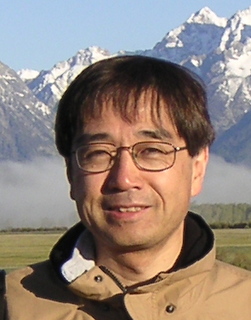
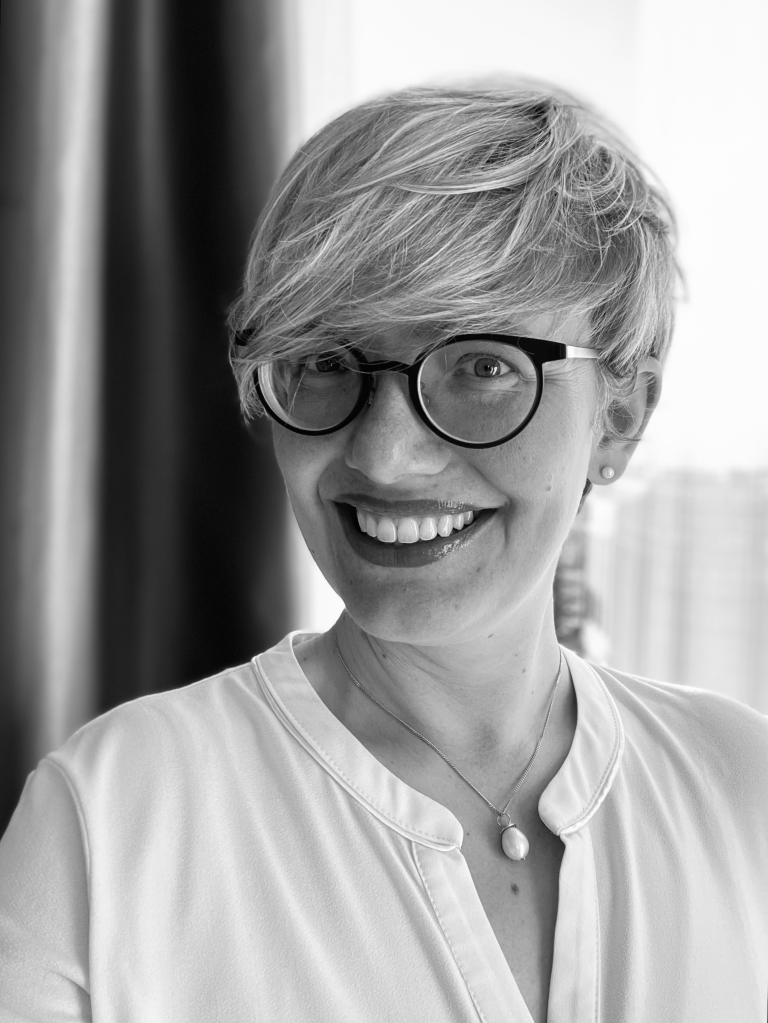
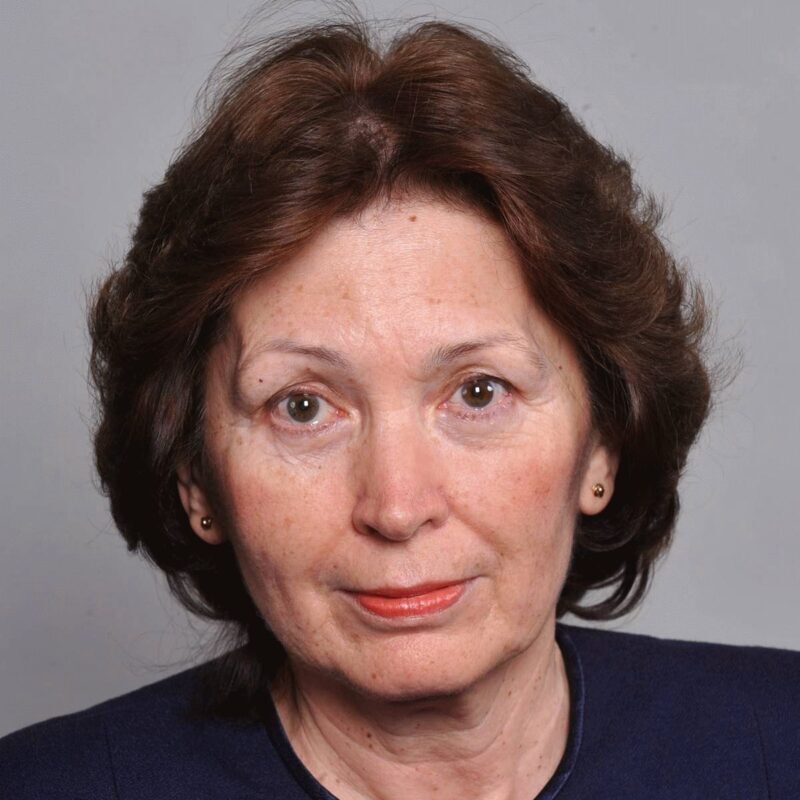
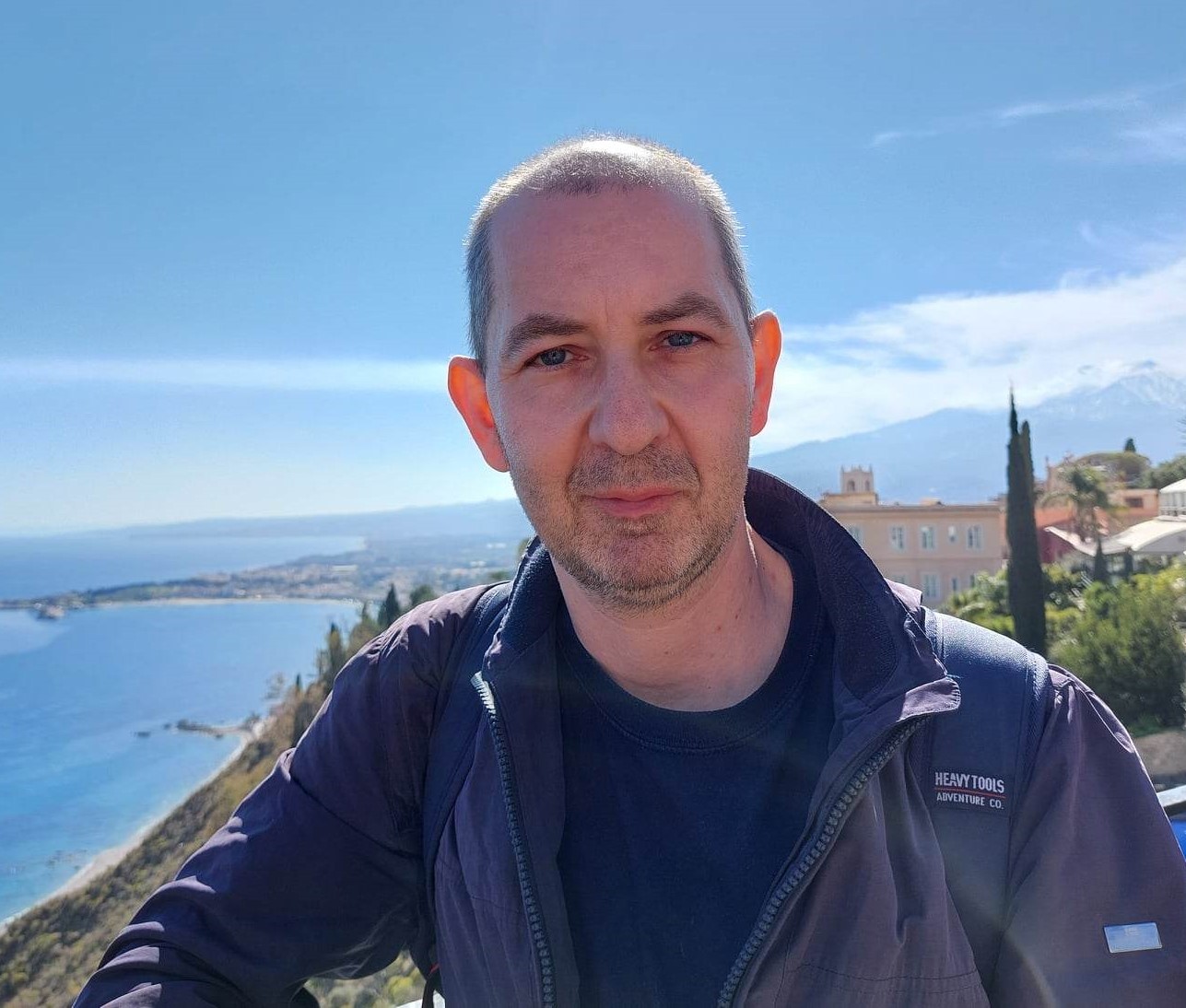
Prof. Dr. Anke Holler is a Professor of German Linguistics at the University of Göttingen , specializing in formal grammar, discourse analysis, and computational linguistics. Her career spans roles in academic administration, including Vice President for Appointments since 2021, and leadership in DFG and Leibniz Association committees. Education : University of Tübingen, University of Leipzig, and University of Massachusetts, Amherst Current Projects : GRK 2636 'Form-Meaning Mismatches', DFG 'Structuring Literature' (SPP 2207), VW Foundation 'Uncertain Attribution' Research Interests focus on the intersection of grammar theory, experimental linguistics, and computational modeling. She explores discourse structures, narrative perspective, and constraint-based parsing, with applications in digital humanities and text mining. Her recent work involves neural networks for speaker attribution and computational analysis of literary reflexivity. Collaborations include the Carl Friedrich Lehmann-Haupt Doctoral Program and the 'Textstrukturen' center. She serves as editor for the Zeitschrift für Sprachwissenschaft and coordinates interdisciplinary initiatives.
Suzanne Flynn is a Professor of Foreign Languages and Linguistics at the Massachusetts Institute of Technology (MIT), affiliated with the Department of Linguistics and Philosophy. Her research focuses on Second Language Acquisition (SLA), Syntax, Semantics, and the intersection of Universal Grammar with language learning mechanisms. She has contributed significantly to theories such as the Cumulative-Enhancement Model for multilingualism and the Parameter-Setting Model in SLA. Education: Not explicitly mentioned, but her academic roles and publications suggest advanced degrees in Linguistics. Affiliations: MIT Linguistics and Philosophy Department, involvement in academic societies and conferences. Her work explores syntactic and semantic factors in SLA, including free relative clauses, third language acquisition, and the role of cognitive constraints in language learning. Key contributions include co-editing volumes on SLA theories and co-authoring foundational texts like Theoretical Second Language Acquisition (2006). She has also published extensively in journals such as Behavior and Brain Sciences and International Journal of Multilingualism . Research Themes: Universal Grammar, syntactic parameters, comparative language acquisition (children vs. adults). Though no specific awards are listed, her impactful publications and academic leadership reflect scholarly recognition. Her advising and grants are not detailed here, but she has supervised collaborative projects with colleagues like B. Lust and G. Martohardjono. She is involved in the MIT Linguistics community, contributing to pedagogical innovation and theoretical discourse in language studies.
Rolando Coto Solano is an Assistant Professor of Linguistics at Dartmouth College , with an Adjunct Assistant Professor appointment in Computer Science and an Affiliate Professor role in the Quantitative Social Science Program (QSS) . He focuses on creating computational tools to document and revitalize Indigenous languages like Cook Islands Māori and Bribri. Education : PhD and MA in Linguistics from the University of Arizona; BA in Computer Science from the University of Costa Rica. Research Interests include: Natural Language Processing for Indigenous and Under-Resourced Languages Tonal Phonetics and Phonology, with a focus on tonal reduction Sociophonetics, particularly interisland variation in Cook Islands Māori Publication Trends show expertise in automatic speech recognition (ASR) for Indigenous languages, computational sociophonetics, tonal priming, and metadata standards in academic publishing. He collaborates on tools like Universal Dependencies treebanks and the ELPIS pipeline . Scientific Awards : Fulbright Foreign Student Program (Master’s Degree) National Science Foundation (NSF) Consultant Royal Society of New Zealand Marsden Fund Ship for World Youth Program (Office of the Prime Minister of Japan)
Dr. Krishnan Ram-Prasad is a Junior Research Fellow in Classics and Linguistics at Merton College, University of Oxford. His research focuses on comparative Indo-European syntax, syntactic reconstruction of Proto-Indo-European, and critical decolonial approaches to Classics and Comparative Philology. He holds a PhD from 2022 on Proto-Indo-European relative clauses and is developing this work into a monograph for Cambridge University Press. His teaching includes undergraduate courses in Linguistics and Classics, as well as language classes in Latin, Ancient Greek, Sanskrit, and Old English. His research spans synchronic and diachronic syntactic analysis across ancient Indo-European languages, with specializations in Latin, Ancient Greek, Sanskrit, and Hittite. His publications explore topics such as clitic placement in Vedic Sanskrit, Wackernagel’s Law in Vedic and Old Irish, and the role of Comparative Philology in rethinking Ancient World Studies. He actively engages with critical theory to challenge traditional disciplinary boundaries in Classics.
Tonio Sebastian Richter is a Professor of Egyptology with a focus on Coptology at the Free University of Berlin's Department of History and Cultural Studies, Institute of Egyptology. He holds the position of Academy Professor at the Berlin-Brandenburg Academy of Sciences and Humanities and has served as the head of several major research projects including the DFG long-term project "Database and Dictionary of Greek Loanwords in Coptic" (DDGLC) and the Academy project "Structures and Transformations of the Vocabulary of the Egyptian Language. Text and Knowledge Culture in Ancient Egypt." His educational background includes a Magister Artium in Egyptology and Religious History from the University of Leipzig (1996), followed by a doctorate in 1999 and habilitation in 2005, both based on works concerning Coptic legal documents and their linguistic features. Richter has held academic positions at the Universities of Leipzig, Heidelberg, and Berlin, including serving as a Heisenberg Fellow of the German Research Foundation from 2011-2014. Richter's research interests span the history and cultural history of Egypt during the Roman, Byzantine, and early Islamic periods, with particular focus on Coptic language and texts. His work examines documentary texts including papyri, ostraca, and inscriptions that illuminate economic, legal, and social history. He has made significant contributions to the study of Coptic legal documents, magical and alchemical texts, and language contact phenomena between Egyptian/Coptic and Greek/Arabic. His research has revealed important insights into Coptic alchemical papyri, which represent some of the earliest witnesses to "the divine art" and enrich our knowledge of the development of late antique science and its transmission from Greek to Arabic. Richter has also pioneered work on language change and contact in the Egyptian-Coptic language, particularly regarding Greek and Arabic loanwords. Academy Professor, Berlin-Brandenburg Academy of Sciences and Humanities (2015-present) Professor of Egyptology with focus on Coptology, Free University Berlin (2014-present) Heisenberg Fellow, German Research Foundation (2011-2014) Extraordinary Professor, University of Leipzig (2011) Richter has received numerous scientific awards including the Heisenberg Fellowship from the German Research Foundation (2011) and the Friedrich-Weller Prize from the Saxon Academy of Sciences (2000). He serves on the scientific advisory boards of several prestigious institutions including the International Thesaurus Commission of the Thesaurus Linguae Latinae and the Scientific Advisory Board of the German Archaeological Institute. As an educator, Richter has been a main instructor for multiple International Summer Schools in Coptic Papyrology and has organized numerous academic conferences and workshops on Coptology, papyrology, and Egyptology. His work bridges linguistic, historical, and archaeological approaches to understanding ancient Egyptian civilization through its textual remains.
Marco Coniglio is a Professor of German Philology/Linguistics at the Department of German Philology, Georg-August-University Göttingen. His research spans historical grammar, syntactic theory, corpus linguistics, and digital humanities, with a focus on modal particles, information structure, and Germanic language interfaces. Key Research Areas: Historical Grammar, Modal Particles, Corpus Linguistics, Digital Humanities Projects: WiN-Korpus (Middle Low German Corpus), HIPKON (Historical Sermons Corpus), DFG Network on Subordinate Clauses Collaborations: Institute for Digital Humanities at Göttingen, Graduiertenkolleg 'Form-Meaning Mismatches' His 15 most recent publications (2021–2025) address Germanic syntax, modal particles, mood marking in subordinate clauses, and corpus-driven language change. Topics span grammaticalization of adverbs, information structure evolution, and comparative analysis across Old High German, Old Saxon, and Old English. Collaborative works include contributions to the 'Wörterbücher zur Sprach- und Kommunikationswissenschaft' project.
Grant Goodall is a Professor of Linguistics and Director of the Linguistics Language Program at the University of California San Diego. He holds a B.A. from UCLA and a Ph.D. from UC San Diego, with additional studies at MIT and UNAM. His research focuses on syntax, particularly syntactic representations, their interaction with cognitive processes, and language acquisition across lifespans. He directs the Experimental Syntax Lab and has pioneered experimental techniques for studying sentence acceptability, with work on English, Spanish, Chinese, and constructed languages like Esperanto. Before joining UC San Diego, he taught at the University of Texas at El Paso and held visiting positions in Switzerland and Argentina. His work emphasizes applying linguistic research to improve second language learning. Key areas include experimental syntax, language pedagogy, and cross-linguistic variation in island phenomena. Recent research trends in his articles emphasize coordination structures, L2 syntax processing, and the application of experimental methods to syntactic theory. He has contributed to debates on wh-movement, D-linking, and the universality of island constraints across languages. His experimental studies often compare methodologies like magnitude estimation with traditional acceptability judgments. Scientific Awards: None explicitly listed in provided texts. Lab Affiliations: Director of UC San Diego's Experimental Syntax Lab and Linguistics Language Program. Teaching Contributions: Developed materials for introductory Spanish (e.g., 'Conéctate') and advocates for evidence-based language pedagogy.
Dalina Kallulli is an Associate Professor at the University of Vienna , Department of Linguistics. Since 2012, she has been a leading figure in theoretical and comparative syntax, with a focus on Albanian and Balkan languages . Her work bridges syntax, semantics, and morphology, emphasizing interfaces and universals. Education: PhD in Theoretical Linguistics (University of Durham, 1999), Cand.Philol. in General Linguistics (University of Trondheim, 1995), MA in English (University of Tirana, 1991) Research Interests include grammar theory , comparative syntax , syntax-semantics interfaces , and language cognition . Her publications explore clitic doubling, voice systems, and cross-linguistic morphological phenomena. Notable fellowships include the Hertha Firnberg Fellowship (2004-2007) and APART Fellow (2008-2010). Recent Publications highlight diachronic aspects of voice systems, form copy in wh-dependencies, and the role of diminutives in suppressing root projections. She has been a visiting scholar at institutions like the University of Massachusetts at Amherst and New York University. Awards and Invitations: Hertha Firnberg Fellowship (FWF) APART Fellow (Austrian Academy of Sciences) W3 Professor (acting chair) at Ludwig Maximilian University of Munich Invited talks at major international conferences (GLOW, DGfS, NELS) Teaching encompasses courses in Theory of Grammar , Introductory Linguistics , and seminars on syntactic typology.
Sílvia Perpiñán is a Professor of Language Acquisition and Bilingualism at the Department of Translation and Language Sciences, Pompeu Fabra University (UPF), where she teaches courses on Linguistics, Research Methods, and Language Acquisition. Previously, she served as an Associate Professor at the University of Western Ontario, Canada. She holds a Ph.D. and M.A. in Romance Linguistics and SLA from the University of Illinois, Urbana-Champaign. Her research focuses on bilingualism and second language acquisition from a formal linguistics perspective, with emphasis on syntactic structures, crosslinguistic influence, and language contact phenomena. Key areas include copular clauses, filler-gap dependencies, and the acquisition of Spanish by non-native speakers. Her work often explores sociolinguistic dimensions like regional variety effects and minority language bilingualism. Perpiñán's publications analyze structural patterns in multilingual grammars, such as relative clauses, existential constructions, and aspectual systems, with a focus on Catalan-Spanish and Italian-Spanish bilingualism. Methodologically, her studies address variability in L2 data and task effects in grammatical knowledge assessment. She is part of the ALLENCAM Research Group and maintains a Google Scholar profile with extensive writings on linguistic typology, syntax-semantics interfaces, and interlanguage phenomena. Her research consistently challenges assumptions about 'idealized' bilingual speakers and emphasizes nuanced analysis of natural language variation.
Toshiyuki Ogihara is a Professor in the Department of Linguistics at the University of Washington. His research focuses on formal semantics, syntax-semantics interfaces, and Japanese linguistics, particularly exploring topics such as tense, aspect, counterfactuals, and pragmatics. He has held this position since at least 2000, as evidenced by his 2000 publication and ongoing work through 2024. His academic contributions include influential analyses of Japanese syntax-morphology relationships, historical linguistic studies of Middle Japanese, and cross-linguistic comparisons of tense systems. Research Interests: Formal semantics of tense and aspect Pragmatic implications of syntactic structures Cross-linguistic variation in temporal reference Japanese morphological interpretations (e.g., -te iru, -ta morphemes) Counterfactual conditionals and modal embeddings Teaching: Formal Semantics Japanese Linguistics Introduction to Linguistics Publications highlight a sustained focus on Japanese linguistic phenomena, with recent work extending into broader semantic theories applicable across languages. His 2016 monograph and 2024 studies exemplify deep engagement with both theoretical and empirical dimensions of semantics.
Univ.-Prof. Dr. Alexandra Lenz is a Professor of German Linguistics at the University of Vienna's Department of German Studies. Her research focuses on Austrian German dialects, lexical variation, and sociolinguistic dynamics, particularly through digital methods and corpus-based approaches. Key Research Areas: Austrian German dialects, lexical variation, sociolinguistic perception, and digital humanities. Projects: Leading contributions to the Special Research Programme 'German in Austria (DiÖ): Variation–Contact–Perception' and LexAT21 lexicon atlas. Methodology: Specializes in corpus linguistics, syntactic variation analysis, and experimental elicitation techniques. Recent Trends: Articles from 2025–2020 explore lexical responses to crises (e.g., pandemic language), grammaticalization pathways, and dialect syntax through comparative and interdisciplinary frameworks.
Vera Hohaus is a Senior Lecturer in Linguistics at the University of Manchester, affiliated with the School of Arts, Languages, and Culture and the Department of Linguistics and English Language. She obtained her PhD from Eberhard Karls Universität Tübingen and has trained at the University of Massachusetts, Amherst and the University of British Columbia. Her research investigates how meaning emerges from the interaction of syntactic structure, lexical information, composition principles, and context. She specializes in crosslinguistic variation and its implications for language acquisition and processing. Current projects examine scalarity representation, comparison constructions, tense-modality architecture, and the grammar of alternatives. Recent publications focus on temporal ambiguity processing, crosslinguistic pragmatics, comparative semantics, and modality across languages. Her work demonstrates methodological diversity combining theoretical frameworks with experimental approaches. She leads the Psycholinguistics Laboratory and Fieldwork Hub, mentoring students in research methods and linguistic analysis. Her collaborations span multiple international institutions including the University of Oxford and University of British Columbia.
Richard S. Kayne is a Silver Professor and Professor of Linguistics at New York University's Department of Linguistics, part of the College of Arts & Science. His research focuses on theoretical syntax, comparative syntax, and Romance languages (French/Italian). He has held editorial roles for Oxford Studies in Comparative Syntax since 1989 and chaired the AAAS Linguistics Section (1994–1995). He has been honored with three honorary doctorates from Leiden (1995), Bucharest (2011), and Venice (2015). His work examines syntactic structures through micro-comparative approaches, exploring phenomena like expletive constructions, clitic doubling, and suppletion patterns. Notable contributions include the Antisymmetry of Syntax theory and analyses of hyper-complex inversion in French. Recent publications (2020–2024) address silent elements in syntax, polarity items, and morphological-phonological interfaces. His research integrates formal syntax with empirical data from Romance languages, emphasizing parameter theory and cross-linguistic generalizations. Grants and advising roles are not explicitly detailed in the provided materials, though his extensive publications suggest impactful mentorship in syntax. He is affiliated with NYU's Linguistics Department and contributes to the broader linguistic community through editorial work and international collaborations.
Katalin É. KISS is a Research Professor at the Institute for Historical and Uralic Linguistics at Eötvös Loránd University and a distinguished member of the Hungarian Academy of Sciences. Her academic career spans over five decades with extensive contributions to the field of linguistics, particularly in syntactic theory, diachronic syntax, and Uralic languages research. She maintains an active research profile with numerous publications appearing through 2025. Professor KISS's research interests encompass syntactic theory, diachronic syntax, the syntax of Hungarian and Uralic languages, the evolution of finite subordination in Uralic, information structure, and the emergence of structural focus positions in Old Hungarian. Her work bridges theoretical linguistics with historical language change, demonstrating how grammatical structures evolve across centuries. She has made significant contributions to understanding the relationship between word order, information structure, and grammaticalization processes in Hungarian and related languages. Her recent publications reveal a consistent focus on diachronic syntactic change, particularly examining Hungarian dialects (especially Moldavian Hungarian), Uralic language comparison, and grammaticalization phenomena. The pattern across her work shows a sophisticated integration of theoretical syntax with historical linguistics, often drawing connections between seemingly disparate phenomena in language change. Her research frequently addresses how language contact influences grammatical development, with particular attention to Balkan linguistic influences on Hungarian varieties. Member of the Hungarian Academy of Sciences Professor KISS has been instrumental in establishing the Diachronic and Comparative Syntax Research Group at the Institute for Historical and Uralic Linguistics. Her work has significantly shaped Hungarian linguistic scholarship, including co-authoring the influential New Hungarian Grammar with Ferenc Kiefer and Péter Siptár. She has supervised numerous academic projects focused on documenting endangered Uralic languages and analyzing historical Hungarian texts. Her research continues to explore the intricate relationships between syntax, information structure, and historical change across language families. Professor KISS maintains strong connections with international linguistic communities through the Uralic Information Centre and has extensive collaborations with scholars across Europe. Her laboratory work focuses on comparative syntactic analysis of Uralic languages, with particular emphasis on documenting grammatical structures in endangered varieties. Current projects include the Hanti database (KhDB) and continued investigation into the evolution of focus and topic marking in Hungarian historical stages.
Imre Szilágyi is an Associate Professor at the Institute of Romance Studies within Eötvös Loránd University (Budapest, Hungary). He serves as a lecturer in the Department of Italian Language and Literature , focusing on advanced linguistic analysis. Primary Affiliation: Institute of Romance Studies, Eötvös Loránd University Department: Department of Italian Language and Literature Email: szilagyi.imre@btk.elte.hu Research Focus Szilágyi's work centers on Italian syntax , with particular attention to: Infinitive constructions in Italian and Latin Historical linguistics of medieval and late-medieval Italian dialects Contrastive analysis of linguistic structures across languages Textual criticism of classical manuscripts like the Meditationes vitae Christi Publications Trends His research spans over two decades, covering: Evolution of accusative with infinitive constructions Analysis of causative and perception verbs in Italian literature Comparative studies of Italian-Spanish syntax Historical syntax patterns in Alberto Moravia's prose Contact Information Email: szilagyi.imre@btk.elte.hu Address: 1088 Budapest, Múzeum körút 4/C Office: II. floor 218