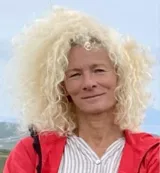
Dr. phil. Monika Gatt is a Researcher at the Chair of Vibroacoustics of Vehicles and Machines (Technical University of Munich, TUM School of Engineering and Design). She focuses on interdisciplinary research bridging Philosophy and Acoustics , particularly in Ethics , Phenomenology , and the Philosophical Basis of Acoustics . She co-founded the working group Akuphil to explore ethical and philosophical questions in acoustics. Education: Doctorate in Philosophy, Jesuit School of Philosophy, Munich (2009) Logics and Philosophy of Science, Ludwig-Maximilian-University, Munich Research Trends: Her work uniquely merges Philosophy of Nature , Ethics for Engineers , and Philosophical Foundations of Acoustics . Recent articles emphasize Ethics in AI , Human-Acoustic Interaction , and Interdisciplinary Methodologies connecting metaphysics with vibroacoustic modeling. Scientific Awards: Erasmus+ Scholarship (2018, 2020) Teaching: Since 2010, she has taught Philosophy at the University of the Federal Armed Forces in Munich, Helmut-Schmidt-University (2011–2014), and TUM. Current courses include Ethics in AI (University of Applied Sciences Ingolstadt, 2020/21) and ethics-related lectures at TUM. Labs & Teams: Collaborates with the Chair of Vibroacoustics and co-founded Akuphil , an interdisciplinary working group for philosophical and ethical issues in acoustics.
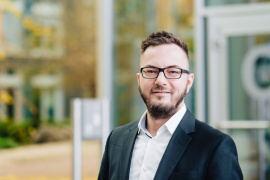
Benedikt Ehinger is a computational neuroscientist at the University of Stuttgart, leading an Emmy Noether research group on "EEG in motion" funded by DFG. He specializes in integrating EEG with eye-tracking, developing statistical methods for neuroimaging and creating open-source tools. DDFG Emmy Noether grant recipient (2019) Director of Computational Cognitive Science lab Co-developer of open-source tools: Unfold toolbox, ClusterDepth algorithm His research focuses on three main areas: 1. Methodological foundations of EEG/MEG analysis, particularly cluster-based statistics and deconvolution methods; 2. Eye-tracking methodology and visualization techniques; 3. Statistical modeling of human perception using linear mixed models and Bayesian approaches. Key trends in his recent publications include: Advancing EEG methodology with linear deconvolution and cluster permutation tests Developing open-source neuroscience tools in Julia/MATLAB Investigating perceptual inference and reliability estimation Creating art-science interfaces through "thesis art" projects Scientific contributions: Emmy Noether research group leadership Over 10 thesis supervisions (Master's/Bachelor's) Co-development of multiple open-source toolboxes Methodological innovations in ERP analysis and statistical testing As an educator, he creates interactive tutorials on statistical concepts and provides thesis art for each supervised student. His lab maintains strong software engineering practices with GitHub-hosted code repositories.
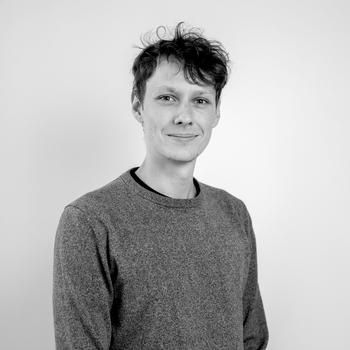
Andreas Brandmaier is a Full Professor of Research Methods at the Medical School Berlin since 2021. He also serves as a Senior Research Scientist at the Center for Lifespan Psychology at the Max Planck Institute for Human Development in Berlin. Previously, he earned a Dipl.-Inform. Univ. in 2008 from Technische Universität München and a Dr. rer. nat. in 2011 from Universität des Saarlandes.
Guido Montufar is a Full Professor in the Departments of Mathematics and Statistics & Data Science at UCLA since 2024, and Research Group Leader at the Max Planck Institute for Mathematics in the Sciences since 2018. Previously, he served as Associate Professor at UCLA (2022-2024) and Assistant Professor (2017-2022). His academic journey includes postdoctoral positions at MPI MIS and Pennsylvania State University, following his PhD at MPI MIS/Leipzig University. Montufar's research spans deep learning theory, mathematical machine learning, graphical models, information geometry, and algebraic statistics. His work investigates the geometric and combinatorial properties of neural networks, optimization landscapes, and theoretical foundations of deep learning. He has made significant contributions to understanding the expressive power of neural architectures, implicit regularization, and the geometry of loss surfaces. His recent publications (2023-2025) demonstrate a strong focus on theoretical aspects of deep learning, with particular attention to neural network geometry, optimization properties, and mathematical frameworks for understanding learning phenomena. His work often bridges abstract mathematical concepts with practical deep learning challenges, examining topics like low-rank gradient structures, linear regions in ReLU networks, and topological aspects of message-passing architectures. ERC Starting Grant: Deep Learning Theory 2018-2023 DFG SPP 2298 Theoretical Foundations of Deep Learning NSF CAREER: Neural Networks in the Practical Regime 2022 Sloan Research Fellowship NSF Collaborative Research: RI: Medium: MoDL DARPA AIQ: Constraints for Provable Extrapolation Montufar actively advises PhD students, with a current cohort including Hao Duan, Kedar Karhadkar, and Shuang Liang. His Mathematical Machine Learning Group fosters collaboration between UCLA and MPI MIS, providing students with access to both American and European research networks. The group focuses on rigorous mathematical approaches to understanding modern machine learning systems, with emphasis on geometric and information-theoretic perspectives. Leading the Mathematical Machine Learning Group at MPI MIS and maintaining an active research program at UCLA, Montufar has established himself as a leading figure in theoretical machine learning. His dual appointments facilitate international collaboration and provide unique opportunities for students to engage with both West Coast academic networks and European research institutions.
Niklas Donth is a Lecturer and PhD student in Political Science at the University of Stuttgart, affiliated with the Institute of Social Sciences, Department of Political Systems and Political Sociology. Since December 2023, he has served as an Academic Associate at the university while completing his doctoral research. His research focuses on how individuals form political preferences, attitudes, and opinions, with particular interest in the strategic intersections between party strategies and voting behavior. His doctoral project examines the role of left-authoritarian voters in the electoral contest between social democracy and the populist radical right in Europe. Methodologically, he specializes in quantitative empirical applications of Bayesian statistics, causal machine learning, and modern causal analysis approaches. Dr. Donth teaches courses including Parties in Competition, Multivariate Data Analysis with R, and Populism and Radicalism in Germany. His technical expertise is evident in his GitHub contributions to European Social Survey (ESS) data analysis tools and party linking projects, demonstrating his commitment to advancing methodological approaches in political science research. He holds a Master's degree in Political Science from the University of Mannheim (2021-2023) and a Bachelor's degree in Political Science and Psychology from Heidelberg University (2017-2021). His methodological training includes multiple specialized workshops from GESIS on causal mediation analysis, multiverse analysis, and comparative social research with multi-group SEM.
Sören Waldemar Gersting is a University Professor (Univ. Prof. Dr.) at the University Medical Center Hamburg-Eppendorf, where he serves in the Department of Pediatrics and Adolescent Medicine within the Faculty of Medicine. His extensive research portfolio demonstrates significant contributions to metabolic disorders, pediatric immunology, and personalized medicine approaches for inborn errors of metabolism. Dr. Gersting's research focuses primarily on metabolic disorders, particularly phenylketonuria and glutaric acidemia. His work spans from fundamental biochemical investigations of enzyme function and protein misfolding to clinical applications of personalized treatment approaches. He has made notable contributions to understanding genotype-phenotype correlations in metabolic diseases and developing novel therapeutic strategies including pharmacological chaperones. His research integrates biochemistry, molecular biology, genetics, and clinical medicine, with recent work demonstrating increasing interdisciplinary collaboration across computational biology, structural biology, and clinical research. His publication record shows consistent productivity with research spanning from 2021 through 2025, with recent work demonstrating an expanding scope that includes computational approaches to drug discovery, pediatric immunology (particularly related to SARS-CoV-2 responses in children), and the molecular mechanisms underlying rare metabolic disorders. His work on the Site-Directed Enzyme Enhancement Therapy (SEE-Tx) platform represents a significant advancement in developing targeted treatments for metabolic disorders. Dr. Gersting has been actively involved in medical education, as evidenced by his work on designing structured postgraduate training programs using agile methods. His research group appears to collaborate extensively with colleagues across multiple institutions, particularly in the areas of pediatric hepatology, immunology, and metabolic disorders, indicating a highly interdisciplinary research program with significant clinical implications.
Pei Hao is a Professor at the Institut Pasteur, Shanghai, Chinese Academy of Sciences, where he leads the Lab for Pathogen Big Data. He currently serves as Principal Investigator at the Shanghai Institute of Immunity and Infection, CAS, focusing on pathogen big data analysis since 2024. Previously, he was Associate Professor at the Shanghai Institutes for Biological Sciences, CAS from 2009 to 2012. Dr. Hao earned his Ph.D. in Bioinformatics from Fudan University between 2003 and 2008. His research spans pathogen genomics, immune system profiling, and computational biology with particular emphasis on viral pathogens and RNA analysis. His research interests center on Pathogen Big Data , RNA Sequencing , and Immune System Profiling with applications in viral pathogen analysis, cancer immunotherapy, and CRISPR technology development. His work integrates computational approaches with experimental validation to address fundamental questions in host-pathogen interactions. Analysis of his recent publications (2019-2025) reveals a strong focus on viral pathogen analysis (particularly SARS-CoV-2), immune cell profiling using single-cell technologies, and cancer immunotherapy development. His work increasingly incorporates machine learning approaches for RNA modification detection and pathogen identification. Dr. Hao has published extensively in high-impact journals including Nature Communications, Nature, and PLoS Biology, demonstrating consistent research productivity across multiple domains of molecular and computational biology. He has advised numerous researchers as evidenced by his extensive co-authorship network across immunology, virology, and computational biology projects. His laboratory has secured significant research funding for pathogen genomics and immune profiling projects, though specific grant details are not provided in the available information. Dr. Hao leads the Lab for Pathogen Big Data at Institut Pasteur, Shanghai, which focuses on developing computational frameworks for pathogen surveillance, immune response characterization, and therapeutic development using large-scale genomic and transcriptomic datasets.
Dr. Jessica Peter is an Associate Professor at the University of Bern's Medical Faculty, where she serves as Head of Research at the University Hospital of Old Age Psychiatry and Psychotherapy. Her academic journey includes positions as Group Leader and Senior Researcher at the same institution since 2018, following postdoctoral work at the University Medical Center Freiburg. Her educational background includes a PhD in Psychology from the University of Freiburg (2011-2014) and a Diploma in Psychology from the University of Bamberg (2006-2011). She completed her habilitation at the University of Bern in 2019. Dr. Peter's research focuses on cognitive functions in aging, with particular emphasis on memory processes in both healthy adults and clinical populations. Her work integrates multiple methodologies including non-invasive brain stimulation (particularly transcranial direct current stimulation), functional magnetic resonance imaging (fMRI), quantitative MRI, real-time fMRI neurofeedback, and blood-based biomarker analysis. Her research group actively investigates how cognitive training and brain stimulation techniques can mitigate age-related cognitive decline and symptoms of neurodegenerative diseases. Analysis of her recent publications reveals a strong focus on prospective memory in aging populations, the application of brain stimulation techniques to enhance cognitive performance in older adults, and the development of diagnostic tools for mild cognitive impairment and Alzheimer's disease. Her work frequently examines how demographic factors like sex, age, and education moderate responses to cognitive interventions. COMET career funding for female scientists (2019) Winner of Outstanding Scientific Work Award (2015) Winner of Outstanding Lectures Award (2012, shared with three colleagues) Dr. Peter leads a research team comprising several PhD students and postdoctoral researchers, and has successfully secured substantial funding from the Swiss National Science Foundation, Empiris Foundation, and other prestigious sources. Her current projects include investigating the role of the prefrontal cortex in remembering and forgetting (SNSF grant 218252), metabolic phenotypes in Huntington's disease (SNSF grant 215269), and cognitive training interventions for Alzheimer's disease. Her research group also contributes to clinical neuroscience initiatives through service on executive committees and graduate school expert panels. Her laboratory employs advanced neuroimaging techniques at ultra-high field strengths (7T MRI) to investigate brain metabolism, neurotransmitter systems, and structural changes associated with aging and neurodegenerative conditions. The group maintains strong collaborations with Amsterdam UMC for blood-based biomarker analysis and with various clinical departments for patient recruitment and assessment.
Dominik Endres is a Professor at the Department of Psychology , Philipps-Universität Marburg , leading the Theoretical Cognitive Science working group. His research spans Cognitive Neuroscience , Sensorimotor Integration , and Machine Learning , with a focus on modeling how the brain represents knowledge and controls movement. His team investigates Movement Primitives in virtual reality, Bayesian Inference in attention control, and Formal Concept Analysis in decoding neural data. Recent work includes reaction time decomposition , VR immersion studies , and assistive technology development for neurological disorders. Publications highlight sensorimotor hierarchies , relational coding , and dynamic human motion modeling . Collaborations include the International Research Training Group 1901 , SFB/TRR 289 , and GRK 2271 . His team includes researchers like Neda Meibodi (PhD student) and Benjamin Knopp (Scientific Staff), with projects involving VR experiments and cognitive modeling .
Georg Zetzsche is a tenure-track faculty member at the Max Planck Institute for Software Systems (MPI-SWS) in Kaiserslautern, Germany, where he heads the Models of Computation group. He joined MPI-SWS in November 2018 after postdoctoral positions at IRIF, Université Paris-Diderot (2017-2018) and LSV Cachan (2015-2017). He received his PhD in Computer Science from Universität Kaiserslautern under the supervision of Prof. Dr. Roland Meyer in 2015, with a dissertation in the Concurrency Theory Group. His research focuses on theoretical foundations of verification and synthesis of software systems, with particular emphasis on decidability and complexity issues of infinite-state systems. His work explores synthesis of finite-state abstractions of infinite-state systems (including separability problems, downward closures, and Parikh images), as well as decision problems for infinite groups where he applies methods from verification to gain insights on how to devise infinite-state models with pleasant analysis properties. Zetzsche's research output demonstrates expertise across formal verification, theoretical computer science, and programming language theory. His publications reveal a consistent focus on vector addition systems, reachability analysis, language theory, and decidability questions. His work often bridges theoretical foundations with practical verification problems, particularly in the context of infinite-state systems where traditional verification techniques face significant challenges. 2025 Salomaa Prize ERC Starting Grant for project FINABIS EATCS Best Paper Award at ETAPS 2023 EAPLS Best Paper Award at ETAPS 2021 Distinguished Paper Award at POPL 2021 EATCS Distinguished Dissertation Award He actively serves on program committees for major conferences including LICS 2026, MFCS 2025, DLT 2024, ICALP 2024, POPL 2024, LICS 2023, and many others. He has organized events such as Theorietag 2023 on automata and formal languages. His current group at MPI-SWS includes PhD students Pascal Baumann, Pascal Bergsträßer, Irmak Sağlam, Lia Schütze, and Yousef Shakiba, along with postdocs Moses Ganardi and Chris Köcher.
Professor Peter Frensch is a distinguished cognitive psychologist serving as Chair of General Psychology at the Institute of Psychology, Humboldt University of Berlin. He has held this position since 1998 and previously served as an Honorary Professor at the same institution from 1995-1998. His academic journey includes significant roles at the Max Planck Institute for Human Development (1994-1998) and the University of Missouri-Columbia (1989-1996), where he progressed from Assistant to Associate Professor with tenure. Currently, he also serves as Dean of the Faculty of Mathematics and Natural Sciences II at Humboldt University. Professor Frensch earned his Ph.D. in Psychology from Yale University in 1989, following M.Phil and MS degrees from the same institution. His earlier academic background includes psychology studies at the University of Trier (1979-1984) and electrical engineering at TU Darmstadt (1976-1979). His research program has been consistently supported by major funding bodies including the German Research Foundation (DFG), with numerous projects spanning cognitive skill acquisition, implicit learning, and dual-task performance. Professor Frensch's research primarily focuses on the emergence of awareness of environmental regularities, implicit learning and memory processes, the role of language in behavior regulation, cognitive skill acquisition, and computational modeling of learning and knowledge representation. His work bridges theoretical cognitive psychology with practical applications, particularly in understanding how humans acquire complex skills and process information under various constraints. His research has significantly contributed to understanding the mechanisms of information reduction during skill acquisition and the relationship between implicit and explicit knowledge systems. His extensive publication record demonstrates consistent contributions to cognitive psychology over three decades, with recent work focusing on dual-task performance, implicit sequence learning, and the cognitive mechanisms underlying skill acquisition. Professor Frensch has served as editor for Psychological Research (2000-2008) and is on the editorial boards of several prominent journals including Learning & Individual Differences, Psychological Research, and Psychological Studies. Fellow, American Psychological Association (Division 3) Award from the Faculty of Mathematics and Natural Sciences II of the Humboldt University of Berlin for excellent teaching (2000, 2003, 2006, 2007, 2008) Robert S. Daniel Junior Faculty Outstanding Teaching Award (1992-1993) Graduate Fellowship, Yale University (1985-1989) Fulbright Scholarship, United States Government (1984-1985) His research group has secured substantial third-party funding for projects examining cognitive and neural changes during practice, the acquisition of action-effect bindings, and mechanisms of information reduction. Professor Frensch has supervised numerous doctoral students and collaborated extensively with researchers across Europe and North America, contributing to the international standing of cognitive psychology research at Humboldt University.
Mirek Riedewald is a Professor in the Department of Computer Science at Northeastern University's College of Engineering. With a prolific publication record spanning from 1999 to 2025, he has established himself as a leading researcher in database systems, particularly in query processing, join algorithms, and exploratory search. His work bridges theoretical database foundations with practical applications in data visualization and data lake management. Dr. Riedewald's research focuses on innovative approaches to database query processing, with recent work emphasizing ranked enumeration algorithms, relational diagram visualization, and data lake disambiguation. His publications in top-tier venues like SIGMOD, VLDB, and ICDE demonstrate his significant contributions to the field. He has developed novel techniques for efficient computation of quantiles over joins, any-k algorithms for ranked enumeration, and relationship-based semantic table union search through his SANTOS system. His recent publications reveal a growing interest in the intersection of database systems with fairness considerations, as seen in his work on fixing top-k rankings that lack individual fairness. He also explores the visualization of complex database queries through relational diagrams, making query understanding more accessible. His research has evolved from traditional database topics like data cubes and stream processing to more contemporary challenges in large-scale data management and analysis. Dr. Riedewald has maintained a strong collaborative network, with frequent co-authors including Wolfgang Gatterbauer (31 papers), Johannes Gehrke (23 papers), and Nikolaos Tziavelis (15 papers). His work demonstrates both theoretical depth and practical relevance, addressing real-world challenges in data management systems. His research group has made significant contributions to exploratory search in databases through the ExploreDB workshop series, which he co-organized for multiple years. He has also contributed to important reference works, including chapters in the Encyclopedia of Database Systems on topics like event and pattern detection over streams and database techniques for scientific simulations.
Daniel Nyga is a postdoctoral researcher at the Institute for Artificial Intelligence (IAI) , University of Bremen. He holds a PhD in computational science (summa cum laude) from the University of Bremen (2017), a master's (2014) and bachelor's (2012) in computer science from the Technical University of Munich (TUM) with a focus on AI and Machine Learning. Visited Bio-intelligence Laboratory (Prof. Byoung-Tak Zhang), Seoul National University (2014) Visited Robust Robotics Group (Prof. Nicholas Roy), MIT CSAIL (2014) Lead developer of open-source projects: pracmln , PRAC , and pyrap Recipient of Best Service Robotics Paper Award (ICRA 2015) His research focuses on probabilistic knowledge representation and reasoning for natural language interpretation in robotics, including: Markov logic networks for ambiguous instruction resolution Semantic analogical reasoning for task completion Statistical relational learning for web-enabled knowledge acquisition Probabilistic modeling of symbolic concepts Cloud-based knowledge services for robotic systems Notable publications span ICRA, IROS, ISRR, and Arxiv , with recent work on joint probability trees (2023). He has supervised multiple theses on probabilistic models for robot manipulation and instruction understanding.
Andre Borrmann is Professor and Chair of Computing in Civil and Building Engineering at the Technical University of Munich (TUM), where he leads cutting-edge research at the intersection of computer science and construction engineering. His work spans over two decades with consistent publication output since 2003, demonstrating sustained academic leadership in computational methods for the built environment. His research focuses on: Building Information Modeling (BIM) and its advanced applications Digital Twin development for infrastructure management Point cloud processing and semantic enrichment Artificial intelligence integration in construction workflows Construction automation and robotics systems Analysis of his 2023-2025 publications shows a clear trend toward sophisticated AI applications in construction engineering, with increasing emphasis on graph neural networks, transformer models, and large language models. His work bridges theoretical computer science with practical construction challenges, particularly in model automation, code compliance checking, and digital documentation of existing structures. Scientific recognition includes: Konrad Zuse Medal (2024) Professor Borrmann leads multiple significant research initiatives including AM2PM (Additive to Predictive Manufacturing for Multistorey Construction), AI4CADCAM (AI-based CAD processing), and BauPuls360 (a public service platform for the construction industry). His research group maintains extensive international collaborations across academia and industry, contributing to UN Sustainable Development Goals related to sustainable cities, industry innovation, and climate action through their technological advancements in construction engineering.
Dr. Philipp Baumeister is a Postdoctoral Researcher in Planetary Geodynamics at the Institute of Geological Sciences, Department of Earth Sciences, Freie Universität Berlin. He works on the DIVerse Exoplanet Redox State Estimations (DIVERSE) project, focusing on the relationship between planetary interior structure, redox state, and habitability potential of exoplanets. His research combines geophysical modeling with machine learning techniques to rapidly characterize exoplanet interiors. Dr. Baumeister completed his academic training at Technische Universität Berlin, earning a B.Sc. in Physics (2011-2015), M.Sc. in Physics (2015-2017) with thesis on heat-piping effects on Earth's interior evolution, and a PhD in Physics (2018-2023) with dissertation on interior structure, mantle-atmosphere co-evolution, and habitability of low-mass exoplanets. His primary research interests include exoplanet interior structure modeling, planetary geodynamics, habitability assessment of stagnant-lid planets, redox state analysis, and machine learning applications in planetary science. He has developed innovative approaches like ExoMDN (Exoplanet Mixture Density Networks) to rapidly characterize exoplanet interiors using probabilistic machine learning. Analysis of his publication record shows a strong focus on the connection between planetary interior structure and atmospheric properties, with particular attention to stagnant-lid planets (like Venus and many exoplanets). His work increasingly incorporates machine learning methods to address computational challenges in exoplanet characterization, while maintaining rigorous physical modeling of planetary interiors and atmospheres. Dr. Baumeister actively collaborates with researchers across multiple institutions, as evidenced by his co-authorship on studies involving atmospheric modeling, exoplanet system characterization, and Venus research. His work on the DIVERSE project represents a significant contribution to understanding how planetary redox states influence long-term habitability potential.