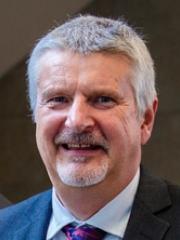
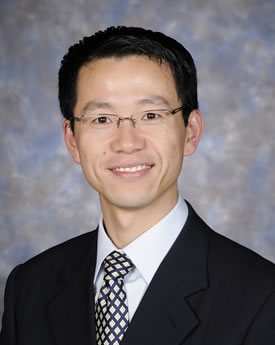
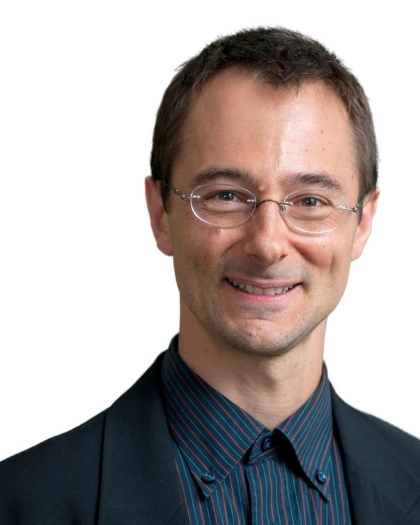
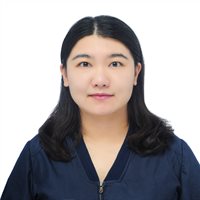
Juan Matute is a Lecturer in Urban Planning and Deputy Director of the UCLA Institute of Transportation Studies at the UCLA Luskin School of Public Affairs. His expertise spans transportation planning, environmental assessment, and urban sustainability. He leads strategic transit planning initiatives for California and advises on climate action plans for Southern California communities. Education: M.B.A. and M.A. in Urban Planning from UCLA, B.A. in International Relations from Pomona College. Research Focus: Public transit finance, new mobility technologies, parking infrastructure, and transportation governance. Recent work includes quantifying Los Angeles County’s parking supply, assessing environmental impacts of transit systems, and evaluating cost-effectiveness of California’s High-Speed Rail. Teaching and Leadership: Teaches graduate courses on transportation policy and environmental assessment. Oversees operations, research, and student programs at the Institute of Transportation Studies. Grants and Projects: Managed UCLA’s role in two state-level transit plans and multiple climate action plans. Collaborates with interdisciplinary teams on transportation-finance modeling and equity-focused urban planning.
William Cottrell is an Associate Professor at the University of Queensland's School of Pharmacy and Pharmaceutical Sciences, with extensive contributions to pharmacy practice research, medication safety, and interprofessional education. His work focuses on optimizing medication use across various healthcare settings, particularly in cardiovascular care, chronic disease management, and transitions of care. His research interests span medication adherence, interprofessional collaboration, cardiovascular pharmacotherapy, and medication safety systems. He has developed expertise in using qualitative methodologies to understand patient and clinician perspectives on medication use, with a particular focus on how beliefs and communication affect medication outcomes. His work on risk prediction models for medication harm, particularly the Adverse Inpatient Medication Event (AIME) model, has contributed significantly to patient safety research. Cottrell's publication record shows a strong focus on practical healthcare solutions, with recent work examining pharmacist-led transitions of care, collaborative prescribing models in general practice, and interprofessional education outcomes. His research frequently involves interdisciplinary teams and addresses real-world medication management challenges across hospital, primary care, and transitional care settings. As an educator, Cottrell has contributed significantly to interprofessional education curriculum development and has supervised numerous research students. His work bridges clinical practice, research, and education, with a consistent focus on improving medication outcomes for patients through evidence-based practice.
Professor Ian Coombes is a Conjoint Professor at the School of Pharmacy and Pharmaceutical Sciences within the Faculty of Health, Medicine and Behavioural Sciences at the University of Queensland. With extensive experience in clinical pharmacy practice, education, and research, Professor Coombes contributes significantly to medication safety, prescribing practices, and patient-centered pharmaceutical care. His educational background includes a Bachelor (Honours) of Pharmacy from London School of Pharmacy, a Masters (Coursework) of Clinical Pharmacy from the University of Brighton, and a Doctor of Philosophy from The University of Queensland. Professor Coombes' research focuses on critical areas of pharmacy practice including medication safety, clinical pharmacy interventions, cardiovascular disease management, and pharmacy workforce development. His work particularly emphasizes: Pharmacist-led transition of care services Quality use of medicines Prescribing error reduction Pharmaceutical care bundle implementation International capacity building in clinical pharmacy Professional identity formation in pharmacy education His recent publication trends show a strong emphasis on cardiovascular medication management, with numerous studies examining pharmacist interventions in acute coronary syndrome and post-MI care. He has also pioneered work in developing clinical pharmacy services in international settings, particularly in Sri Lanka, and continues to advance methodologies for evaluating medication administration safety and pharmaceutical care impact. Professor Coombes has secured significant research funding including the current MRFF grant "REducing hospital re-admission for high-risk CARDiology patients" (2023-2027) and previously led projects examining heart failure medication management. As an active supervisor, Professor Coombes currently mentors multiple PhD and Master's students on projects related to pharmacist-led medication review, predictive modeling for hospital readmissions, and professional identity formation in pharmacy education. His collaborative approach extends to working with researchers across disciplines including medicine, nursing, and health services research.
Zhan Gao is Senior Lecturer in Accounting and Finance at Lancaster University Management School. His research focuses on corporate transparency, financial reporting effectiveness, and ethical business practices. Research Projects: Future-proof graduate employability: bridging academia-industry gaps (2024-2025) Private Owner-Managed Firm Audit Market analysis (2018-2023) Research Interests: Examines political risk impacts on credit markets, corporate disclosure quality, and accounting-public policy intersections. Recent work analyzes how firm reputation influences voluntary financial disclosures. Engagement: Regular presenter at European Accounting Association conferences and Journal of Business Finance & Accounting events.
Martino Marisaldi is a Professor at the Department of Physics and Technology, University of Bergen. He co-leads the 'Hard Radiation from Thunderstorms' research group focusing on atmospheric electricity, high-energy radiation phenomena in thunderclouds, and particle detection technologies. His team includes faculty members, researchers, postdocs, and graduate students working on observational and theoretical aspects of terrestrial gamma-ray flashes and related phenomena. Research interests span atmospheric electricity, thundercloud physics, gamma-ray astrophysics, and high-energy detector development. His work bridges atmospheric science and space physics, investigating radiation mechanisms in thunderstorms using both ground-based and space-borne instrumentation. Recent publications demonstrate a consistent focus on gamma-ray emissions from thunderstorms, with advanced studies on flickering gamma-ray flashes, TGF production mechanisms, and atmospheric discharge phenomena. Collaborative work appears in high-impact journals including Nature and Geophysical Research Letters, highlighting international recognition in this specialized field. Laboratory activities include coordination of flight campaigns (ALOFT mission) and analysis of data from the ASIM (Atmosphere-Space Interactions Monitor) payload on the International Space Station. Current projects investigate links between gamma glows and terrestrial gamma-ray flashes using multi-instrument approaches.
Hai Ren is a Professor of East Asian Studies and Anthropology at the University of Arizona, with affiliations in the School of Art, Department of Gender and Women’s Studies, and interdisciplinary programs in Social/Cultural Theory and Applied Intercultural Arts Research. He concurrently holds the Bayu Scholar Distinguished Professorship at Sichuan Fine Arts Institute. His research bridges art theory, environmental humanities, and critical theory through projects like the Wanwu Arts Research Lab and Library of the More-Than-Humane . Ren earned his BA in History/Archaeology from Sichuan University, followed by MA in Museum Studies and PhD in Sociocultural Anthropology from the University of Washington. His teaching focuses on Chinese popular culture, contemporary China’s anthropology, and global creative economies. Research interests emphasize socially engaged art, planetary crises, new materialism, and Sinophonecene frameworks. Recent work explores how art responds to ecological collapse and redefines citizenship beyond anthropocentrism. Over 40 peer-reviewed publications appear in venues like Verge: Studies in Global Asias and Journal of Urban Affairs , alongside creative installations and curatorial projects. Key awards: Bayu Scholar Distinguished Professor (202X–present) Key initiatives: Library of the More-Than-Humane (co-directed) Teaching includes courses on Chinese media, gender in Asia, and thematic explorations of neoliberalism and themed urban spaces. His public art projects like the 100-Year Photography installation in Guizhou exemplify long-term, community-oriented artistic praxis.
Cindy Feng, PhD, is an Associate Professor in the Department of Community Health and Epidemiology at Dalhousie University's Faculty of Medicine. Her research focuses on developing biostatistical models for analyzing correlated public health data, including spatial statistics, longitudinal studies, and environmental health applications. She holds a PhD from Simon Fraser University and has received funding from NSERC, Canadian Statistical Sciences Institute, and MITACS. Dr. Feng collaborates with interdisciplinary teams across medicine, psychology, and environmental sciences. Education: PhD (Simon Fraser University), MSc (Simon Fraser University), BSc (Beijing University of Technology). Her work emphasizes bridging statistical theory and practice in public health, with notable contributions to disease mapping, survival analysis, and infectious disease surveillance. Key grants include NSERC Discovery Grants ($80,000, 2019-2023) and a MITACS Accelerate Grant ($45,000, 2016-2019). Research interests include zero-inflated models, spatial epidemiology, and methodological advancements for correlated data. Recent work addresses pandemic-related mental health trends, occupational injury risk factors, and global health challenges in malaria-schistosomiasis co-endemic regions. She has published over 30 peer-reviewed articles, with a focus on statistical diagnostics, public health policy, and environmental health impacts.
Yan Yi is an Associate Professor of International Communication at the School of Politics and International Relations, East China Normal University, and holds a Senior Visiting Fellow position at the LSE's Department of Media and Communication. Her expertise spans humanitarian communication, mediation of global issues, and Chinese political communication. She earned her PhD in media and communication studies from City University of Hong Kong. Her research focuses on international communication dynamics, particularly China’s role in global public goods provision, pandemic framing, and the institutionalization of Chinese political rituals like press conferences. Notable projects include a national-level study on U.S. public opinion toward China (2000-2020), which achieved outstanding evaluation. Her recent work examines digital-era political leader image construction, U.S. political polarization via social media, and Chinese media narratives during crises like the pandemic. She has published in top journals such as Humanities and Social Sciences Communications , Asian Journal of Communication , and Public Relations Review . Yan Yi’s interdisciplinary approach combines content analysis, discourse analysis, and structural topic modeling to explore political communication mechanisms in digital contexts. Her research bridges theoretical frameworks with real-world policy implications in global and regional issues.
Thiemo Fetzer is a Professor of Economics at the University of Warwick and the University of Bonn. He holds affiliations as a Visiting Fellow at the London School of Economics and a Fellow at the National Institute for Social and Economic Research (NIESR). His research focuses on applied economics, political economy, climate crisis, Brexit, and public health policy, with notable work on the UK's pandemic response and austerity's role in Brexit. He has won prestigious awards like the Leverhulme Trust Prize and an ERC Starting Grant. His recent projects include analyzing AI-generated production networks and the impact of media coverage on global crises. He advises policymakers globally and has published extensively on topics ranging from energy policy to institutional resilience. Education: PhD in Economics from the London School of Economics (2015), M.Res. (2010) and M.Sc. (2009) in Economics, B.Sc. in Management and Economics from Otto-von-Guericke University Magdeburg (2008). Research interests include the political economy of climate action, resilience of institutions, and the economic consequences of geopolitical events. His work bridges economics with real-world policy, addressing challenges like austerity's societal impacts and the role of media in shaping global responses to crises.
Tara Kirk Sell is an Associate Professor in the Department of Environmental Health and Engineering and a Senior Associate at the Johns Hopkins Center for Health Security at the Johns Hopkins Bloomberg School of Public Health. She conducts research to develop a greater understanding of potentially large-scale health events such as disease outbreaks, bioterrorism, natural disasters, or radiological/nuclear events. Dr. Sell holds a PhD from Johns Hopkins Bloomberg School of Public Health (2016), and MA and BA from Stanford University (2005). She serves as an Associate Editor of the peer-reviewed journal Health Security (formerly Biosecurity and Bioterrorism). Her research focuses on improving public health policy and practice to reduce health impacts of disasters and terrorism. She works on qualitative and quantitative research analyses and uses this research to assist in the development of strategy and policy recommendations. Her primary research interests include biosecurity and biodefense, public health preparedness, emerging infectious disease, federal funding and budgeting, and nuclear preparedness policy and practice. Dr. Sell's recent publications examine pandemic preparedness, social media misinformation during health crises, resilience modeling for disasters, and systems to protect public health workers from harassment. Her work spans interdisciplinary fields including health policy, national security, infectious disease, and bioterrorism. US Olympian and Silver Medalist, 4x100 Medley relay Former World and American Record Holder, 100m Breastroke Dr. Sell's work on public health emergency response has informed policy recommendations and practical approaches to pandemic preparedness and biodefense. Her research on media coverage of Ebola outbreaks has provided insights into risk communication during health crises. She has developed analytical frameworks for understanding federal biodefense funding and has contributed to the development of the COPEWELL model for community resilience during disasters.
Professor Beatriz Calvo Merino is a Cognitive Neuroscientist at City St George's, University of London, where she is affiliated with the Department of Psychology in the School of Health Sciences. She serves as Programme Director for the MSc Clinical, Social and Cognitive Neuroscience and the Joint PhD Programme in Psychology and Social Neuroscience with Sapienza University, Italy. Her academic journey includes training at University College London and Universidad Complutense de Madrid, with postdoctoral work at the Institute of Cognitive Neuroscience. Research Interests: Her research explores the neural basis of action observation, sensorimotor expertise, and emotion perception, with a strong emphasis on dance and performing arts. She investigates how sensorimotor experience modulates aesthetic and emotional processing, contributing significantly to the field of neuroaesthetics. Her work integrates EEG, TMS, behavioral, and physiological methods to study embodiment and social cognition. Recent Research Trends: Her recent publications (2020–2025) reflect a sustained focus on embodiment in autism, emotion perception, multisensory integration, and the cognitive neuroscience of dance. She employs ERP and SEP methodologies to dissect somatosensory contributions to social perception, particularly in clinical populations. Her editorial and review work also highlights her leadership in methodological advancements in dance neuroscience. Scientific Awards: Alexander Gottlieb Baumgarten Award (2018) British Association of Cognitive Neuroscience Early Career Award (2019) Grants and Collaborations: Her research has been supported by the ESRC, Leverhulme Trust, Wellcome Trust, Ramon y Cajal Fellowship, and City University funding schemes. She collaborates widely with the dance community, including the Royal Opera House Ballet, Laban Dance Centre, and choreographers such as Wayne McGregor, bridging science and the arts. Labs and Teams: She leads a research group focused on sensorimotor processing and neuroaesthetics within the Department of Psychology, contributing to the Cognitive and Social Neuroscience research theme at City St George's.
Paul H. Portner is a Professor in the Department of Linguistics at Georgetown University, within the College of Arts and Sciences. His primary research lies at the intersection of semantics, pragmatics, and syntax, with a particular focus on verbal mood, modality, imperatives, and discourse structure. He is actively engaged in both teaching and research, offering courses ranging from introductory linguistics to advanced seminars in semantics and pragmatics. His educational background includes an A.B. in Philosophy from Princeton University and a Ph.D. in Linguistics from the University of Massachusetts at Amherst, where his dissertation was supervised by Barbara Hall Partee. His work has been supported by multiple NSF grants, including projects on clause types and gradable modal expressions. Portner’s research interests center on how grammatical structures encode speaker-addressee relations, politeness, and mood. He explores how meaning is constructed at the syntax-semantics-pragmatics interface, particularly in imperatives, exclamatives, and modal constructions. His theoretical work is deeply formal, drawing on tools from logic and philosophy of language. His recent publications (2020–2024) show a continued focus on modality, mood selection, and discourse meaning, with applications to cross-linguistic data (e.g., Korean) and computational modeling. Key themes include modal adjectives in media discourse, honorifics, indexical restrictions, and the semantics of belief and desire predicates. Notable scientific contributions include his monographs Modality (2009) and Mood (2018), both published by Oxford University Press, and his co-editorship of major reference works such as the Semantics: An International Handbook of Natural Language Meaning . He has been a frequent lecturer at summer schools, including the LSA Institute and CreteLing, helping to train the next generation of semanticists. He advises and collaborates with researchers such as Miok Pak, Raffaella Zanuttini, and Aynat Rubinstein. He has received research funding from the NSF for projects on clause types and gradable modals, and he continues to lead theoretical and empirical investigations into the structure of meaning in natural language. Portner is affiliated with the Georgetown Linguistics Department and maintains an active research profile, with ongoing work on his book Social Relations in Semantics and Pragmatics , under contract with Oxford University Press.
Troels Kristensen is an Associate Professor in the Department of Public Health at the University of Southern Denmark, affiliated with the Danish Centre for Health Economics (DaCHE). His work bridges health economics, health policy, and primary care research within the Faculty of Health Sciences. PhD and MSc in Health Economics, University of Southern Denmark Visiting researcher, University of York (CHE) PhD training, Swiss School of Public Health (SSPH) Troels Kristensen's research centers on understanding variation in healthcare delivery, particularly distinguishing warranted from unwarranted variation in service use. His interests include the organization of healthcare, incentive structures in general practice, GP behavior, risk adjustment models, and integrated care models such as diabetes management. He investigates case-mix adjustment and mixed remuneration systems for resource allocation. Additionally, he explores leadership and personality traits in healthcare, with a focus on empathy in patient-professional relationships. His recent publications highlight a strong focus on continuity of care in general practice, the cost implications of fractures in type 1 diabetes, statistical modeling of healthcare transitions, and point-of-care testing in diabetes. His work often employs cohort studies, survey data, and advanced statistical methods, primarily within the Danish healthcare context. Troels Kristensen actively contributes to public discourse, with media appearances discussing healthcare efficiency and policy implications. He has served on external review committees, including at the Karolinska Institute, and regularly presents at academic and policy events. He is involved in teaching Health Economics and Health Technology Assessment, indicating a commitment to education and training in health policy and economic evaluation. His research network includes collaborations across Denmark and internationally, with a strong emphasis on general practice, public health, and health economics.
Prof Niall Hyland is a Professor in the Department of Physiology at University College Cork (UCC) and a Funded Investigator at APC Microbiome Ireland. He holds a BSc (Hons) in Biomedical Sciences from the University of Ulster and a PhD in Pharmacology from King’s College London. After postdoctoral fellowships at Louisiana State University and the University of Calgary, he joined UCC in 2008 as a Lecturer and was promoted to Professor in 2025. Research Interests: His work focuses on the gut microbiota's role in gastrointestinal physiology, the gut-brain axis, probiotics, colon cancer, and drug-microbiome interactions. Techniques include Ussing chamber analysis, in vivo disease models, and collaborations on implantable bioelectronics for enteric neural monitoring. Grants & Collaborations: He has secured over €3.3M in funding from agencies like Science Foundation Ireland and Horizon 2020. Collaborators include the University of Cambridge, Alimentary Health Ltd., and industry partners like GlaxoSmithKline. Awards & Roles: Honorary Fellowship (British Pharmacological Society, 2022). Leadership roles include Chair of the Probiota Global Event Scientific Committee and Co-Chair of the BPS Systems and Integrative Pharmacology Group. Labs & Teams: Leads a lab at APC Microbiome Ireland, focusing on microbiome interventions and host physiology. Collaborates with multidisciplinary teams on projects like the RELATE EU initiative and drug-gut microbiota interaction studies.
Dr. Leilei Tang is a Senior Lecturer in Accounting & Finance at the University of Strathclyde's Strathclyde Business School. Previously, he held academic positions at the University of Southampton (PhD, 2001) and CASS Business School. His research focuses on financial econometrics, credit scoring, and decision-making in markets for state contingent claims. Notable projects include the EPSRC-funded credit scoring project with Scottish Widows and a bank risk management study at CASS (2004–2005). Research Interests: Financial econometrics explores statistical models for financial data; credit scoring develops algorithms for risk assessment; decision-making in state-contingent markets examines behavioral aspects of gambling and betting markets. Recent work addresses ESG communication during COP events and pandemic market volatility. Collaborations include the KTP - BIP Solutions project (2016–2018) and the EPSRC doctoral studentship program (2015–2018). Active in international conferences, his work contributes to UN SDGs related to responsible consumption and climate action.