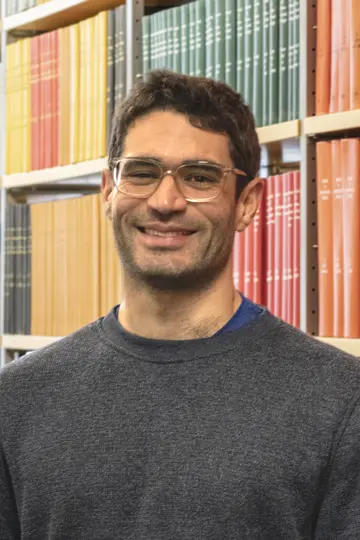
Prof. Dr. Eva Viehmann is a leading mathematician at the University of Münster within the Faculty of Mathematics and Computer Science and a key figure in the Mathematics Münster cluster. She was awarded the prestigious Gottfried Wilhelm Leibniz Prize 2024 for her groundbreaking work in arithmetic algebraic geometry and representation theory within the Langlands program . University: University of Münster Department: Mathematical Institute Her research focuses on the intersection of algebra , geometry , and analysis , particularly through the lens of Shimura varieties and moduli spaces of local G-shtukas . She has pioneered the study of affine Deligne-Lusztig varieties in equal and mixed characteristics, advancing understanding of their dimension , connectedness , and irreducible components . Recent publications highlight her work on Newton stratification , Harder-Narasimhan theory , and p-adic moduli spaces . Her scientific advisory contributions include mentoring former doctoral student Stefania Trentin and collaborating with Prof. Urs Hartl over 15 years. Awards and honors include the Leibniz Prize 2024 , reflecting her status as a trailblazer in arithmetic geometry and p-adic geometry . Her research projects span the CRC 1442 and EXC 2044 , aiming to unify Galois representations , automorphic forms , and geometric methods .
Max Planck Institute for Mathematics in the SciencesGermany
Florian Frick is an Associate Professor at Carnegie Mellon University in Pittsburgh. He received his PhD from TU Berlin and the Berlin Mathematical School, followed by postdoctoral positions at Cornell University and MSRI (Mathematical Sciences Research Institute). Research Focus : Interdisciplinary work at the intersection of combinatorics, geometry, and topology. Specific areas include chromatic numbers of hypergraphs, embeddability in geometric topology, intersection patterns of convex sets, and fair division problems. Interests : Traveling, sports, and food-related activities. Current Affiliation : Max Planck Institute for Mathematics in the Sciences (Nonlinear Algebra Research Group) as a visitor (2022).
Leibniz Institute for Science and Mathematics Education at the University of KielGermany
Susanne Prediger is a Professor at the Institute for Development and Research in Mathematics Education (IEEM) at Technische Universität Dortmund and Vice Director of the Department of Subject-Related Knowledge Transfer at the Leibniz Institute for Science and Mathematics Education (IPN). She directs the DZLM research network (German Center for Mathematics Teacher Education) and holds leadership roles in mathematics education research. Her research focuses on: Design and Research on Professional Development of Mathematics Teachers and Facilitators Topic-Specific Design Research in Mathematics Education for Secondary Schools Diversity in Classrooms (especially Language Diversity) Empirical Studies on Students' Conceptions in Arithmetic, Algebra, and Stochastics Networking of Theories in Mathematics Education Research Recent work explores AI-driven formative assessment, educational innovation implementation, and inclusive pedagogical strategies for teaching percentages. She leads projects like ALwAI, Startchancen-Kompetenzzentrum Mathematik, and DigiProMIN. Current roles include: Vice Director (half-time), Department of Subject-Related Knowledge Transfer, IPN Director of DZLM Research Network, IPN (since 2021) Full Professor at IEEM, TU Dortmund University (since 2006) Her academic background spans Mathematics and History studies at Technical University of Darmstadt and Université Bordeaux I, a PhD in Mathematical Logic and Universal Algebra (1998), and a Habilitation in Mathematics Education (2004).
Prof. Dr. Kai Cieliebak is a Professor of Mathematics at the University of Augsburg, where he holds the Chair of Analysis and Geometry within the Institute of Mathematics under the Faculty of Mathematics, Natural Sciences, and Materials Engineering. He has been at Augsburg University since 2012, following a professorship at Ludwig-Maximilians-Universität München from 2001-2012. His research group includes several researchers and postdocs working on symplectic geometry and related fields. Dr. Cieliebak earned his Diplom in mathematics summa cum laude from Ruhruniversität Bochum in 1992, with thesis on "Pseudo-holomorphe Kurven und periodische Orbits auf Cotangential Bündeln" under advisor H. Hofer. He completed his PhD in mathematics at ETH Zürich in 1996, with thesis "Symplectic boundaries: closed characteristics and action spectra," also advised by H. Hofer. His academic journey included positions at Harvard University, Stanford University, and research at IBM Zürich before his professorships in Munich and Augsburg. Prof. Cieliebak's research focuses on symplectic and contact geometry , with significant contributions to understanding symplectic manifolds, Lagrangian and Legendrian knots, Stein manifolds, and string topology. His work in Hamiltonian dynamics explores variational methods, periodic orbits, and celestial mechanics problems, particularly the restricted three-body problem. In global analysis , he investigates solution spaces of elliptic PDEs and symplectic field theory. His approach often bridges differential geometry, topology, and dynamical systems, with applications to mathematical physics. Over the past decade, Prof. Cieliebak's publications reveal a consistent focus on symplectic homology, Floer theory, and their applications to geometric problems. His work shows increasing integration of algebraic structures with geometric methods, particularly in cyclic homology and string topology. Recent research demonstrates strong collaboration with Urs Frauenfelder on celestial mechanics problems, applying symplectic techniques to the restricted three-body problem and related orbital dynamics. Prof. Cieliebak has secured significant research funding throughout his career, including multiple DFG grants under project codes CI 45/1 through CI 45/12, NSF grants, and participation in European Science Foundation networking programs. His most notable grants include "Foundations of Symplectic Field Theory" (2009-2015) and the current "Rabinowitz Floer Homology" project (since 2023), both in collaboration with U. Frauenfelder. He has mentored numerous researchers and maintains an active research group at Augsburg University, including postdocs and collaborators working on symplectic geometry problems. His team includes researchers such as Dr. Filip Broćić, Zhen Gao, Dr. Hanna Häußler, Emilia Konrad, Shuaipeng Liu, Dominik Meidert, Dr. Airi Takeuchi, Dr. Evgeny Volkov, Milan Zerbin, and PD Dr. Lei Zhao. Prof. Cieliebak has also organized numerous workshops on symplectic geometry, including the annual "Symplectic Field Theory" workshop series.
Maggie Miller is a mathematician specializing in low-dimensional topology, currently serving as an NSF Postdoctoral Fellow at the Massachusetts Institute of Technology. She previously held a position at the University of Texas, Austin, and earned her Ph.D. in 2020 from Princeton University under the supervision of David Gabai. Education: Ph.D. in Mathematics (Princeton University, 2020) Her research focuses on 3- and 4-manifolds, leveraging algebraic, combinatorial, geometric, and topological techniques to solve long-standing problems. Key contributions include developing a theory of singular fibrations in 4-manifolds and resolving a 35-year-old problem by Casson and Gordon related to fibered ribbon knots. She actively collaborates on diverse topics such as topological versus smooth isotopy, taut foliations, concordance, trisections, and knot Floer homology. Maggie's work intersects multiple subfields within topology, including Knot Theory , Manifold Theory , and Differential Topology , with a strong emphasis on geometric structures and their applications. While her recent publications aren't listed here, her research trends center on topological invariants and their implications in mathematical physics. Scientific Awards: Clay Research Fellow
Torsten Grust is a Professor of Computer Science at the University of Tübingen, leading the Database Systems research group since 2008. Previously, he held professorships at TU München and TU Clausthal. He earned his M.Sc. (Diploma) and Ph.D. in Computer Science from Universität Konstanz in 1994 and 1999, respectively. His research focuses on database languages, query and programming language technology, and scalable processing of non-relational queries. He bridges database and programming language research, emphasizing mutual benefits between the fields. **Education:** Ph.D. in Computer Science, University of Konstanz (1999) M.Sc. (Diploma), Computer Science, University of Konstanz (1994) Visiting Scientist, IBM Silicon Valley Laboratories (2000) **Research Interests:** Design and optimization of database languages Query compilation and execution engines Integration of functional programming with SQL Query provenance and debugging **Awards and Honors:** ACM SIGMOD Reproducibility Award (2021) University of Tübingen Teaching Award (2021/22) Winner of Dyalog 2019 APL Program Solving Competition Member of the VLDB Endowment Board of Trustees (2022–2027) **Advising & Grants:** Guided numerous students, including alumni such as Alexander Ulrich, Benjamin Dietrich, and Christian Duta Recipient of grants supporting research in query compilation, provenance analysis, and database language design **Labs & Teams:** Leads the Database Systems research group at University of Tübingen Collaborates with the National Institute of Informatics (Tokyo) on query and programming languages
Amol Deshpande is a Professor in the Department of Electrical Engineering and Computer Sciences at the University of California, Berkeley, College of Engineering. With over 160 publications spanning from 2000 to 2025, his research has significantly impacted the database systems community. His work bridges theoretical foundations with practical systems, evidenced by numerous publications in top-tier venues including SIGMOD, VLDB, and ICDE. Professor Deshpande's research focuses on database systems, with particular expertise in graph databases, data management, probabilistic databases, query optimization, and data provenance. His work addresses fundamental challenges in managing complex data, including efficient graph analytics, dataset versioning, streaming data processing, and privacy-preserving data management. Recent research directions include entity-relationship abstractions beyond traditional relations, standalone catalog engines for large data systems, and graph theoretical approaches to dataset versioning. His publication trends show a consistent focus on evolving database technologies, with early work on probabilistic databases and query optimization, transitioning to graph analytics and data provenance, and more recently addressing modern challenges in data cataloging, privacy-first data management, and serverless stream processing. His research spans both theoretical contributions (e.g., approximation algorithms for stochastic optimization) and practical systems building (e.g., RStore, TreeCat). Professor Deshpande has mentored numerous PhD students who have become active researchers in the database community, including Hui Miao, Souvik Bhattacherjee, and Konstantinos Xirogiannopoulos. His collaborative work spans across institutions, with frequent collaborations with researchers from MIT, University of Maryland, and other leading institutions. His research has been supported by major funding agencies and has influenced both academic research and industry practices in data management. The evolution of his work reflects the changing landscape of data management, from traditional relational systems to modern graph and streaming data challenges.
Christopher Deninger is a distinguished Professor in the Mathematical Institute at the University of Münster, Germany, where he leads research in Arithmetic Geometry and Representation Theory. His office is located in Room 413 of the Einsteinstr. 62 building, and he maintains active teaching responsibilities including courses in Representation Theory of Finite Groups, Linear Algebra, and specialized topics like Adic Spaces. Deninger's research spans multiple interconnected domains of modern mathematics, with a consistent focus on the deep connections between number theory and geometry. His work has evolved from classical arithmetic geometry to incorporate increasingly sophisticated connections with p-adic analysis, dynamical systems, and more recently proalgebraic fundamental groups. A unifying theme throughout his career has been exploring analogies between different mathematical structures, particularly those connecting analytic number theory with dynamical systems on foliated spaces. His recent publications reveal a continued expansion of his research program into new territories while maintaining connections to his foundational work. The most recent papers show increasing integration of algebraic topology concepts with arithmetic geometry, particularly through proalgebraic fundamental groups and their applications. The consistent thread throughout his decades of publications is the search for deeper structural connections between seemingly disparate areas of mathematics, particularly those bridging analysis, geometry and number theory. Professor Deninger has mentored an extensive number of doctoral students and postdoctoral researchers, as evidenced by the comprehensive list of former members in his working group. His collaborations span the international mathematical community, with numerous joint publications with leading mathematicians across Europe and beyond. While specific grant information isn't detailed in the available materials, his sustained publication record across decades suggests consistent research support for his mathematical investigations. The Mathematical Institute at Münster provides the institutional home for Deninger's research activities, where he maintains an active working group focused on arithmetic geometry and related fields. His office environment includes support staff and colleagues working in closely related mathematical domains, creating a vibrant research community centered around advanced topics in pure mathematics.
Victor Vianu is a Professor in the Department of Computer Science and Engineering at the University of California, San Diego, within the Jacobs School of Engineering. His work focuses on the intersection of database theory and verification techniques, particularly in the context of data-driven business processes and workflows. Research Interests Professor Vianu's primary research interests span database theory, verification of database-driven systems, and computational logic. His current work focuses on automatic verification of interactive data-driven web services and business processes, exploring how to provide customized workflow views for different stakeholders in organizational settings. His research addresses significant technical challenges at the intersection of data management and process modeling, requiring novel approaches that go beyond traditional relational algebra to handle both data and process aspects simultaneously. His work on data-driven business processes investigates how to specify, analyze, and synthesize views of workflows that expose only information relevant to specific user roles. This research has important applications in e-commerce, digital government, healthcare, and scientific infrastructure, where different stakeholders require varying levels of workflow abstraction and detail. Research Contributions and Trends Professor Vianu's recent publications demonstrate a consistent focus on the integration of data management and workflow processes. His work has evolved from foundational database theory to increasingly practical applications in business process management. A key trend in his research is the development of formal frameworks for workflow views that maintain consistency while providing appropriate abstractions for different user roles. His publications reveal a progression from theoretical foundations to more applied aspects of workflow verification and integration, often in collaboration with researchers from INRIA and other institutions. Advising and Research Support Professor Vianu leads the UCSD Database Laboratory, which conducts research on database systems and theory. He currently advises graduate student Marysia Tran and has likely mentored numerous other students throughout his career. His research is supported by the National Science Foundation under grant "Views of Data-Driven Business Processes: Foundations and Applications" (NSF Project III 1815247). This project brings together techniques from logic, automata theory, complexity theory, algorithms, and automatic verification to address challenges in workflow management. Research Environment Professor Vianu is an active member of the UCSD Database Laboratory, which maintains a regular research seminar series. He has collaborated extensively with researchers including Alin Deutsch (UC San Diego), Serge Abiteboul (INRIA and ENS-Paris), Pierre Bourhis (Univ. of Lille and CNRS), and Adrien Koutsos (ENS Cachan). His foundational work includes co-authoring the influential textbook "Foundations of Databases" with S. Abiteboul and R. Hull, which remains a standard reference in database theory.
Zachary Kincaid is an Associate Professor in the Department of Computer Science at Princeton University's School of Engineering and Applied Science. His research focuses on program analysis, logic, and programming languages, with an emphasis on making program analysis compositional and robust. He received his PhD from the University of Toronto under the supervision of Azadeh Farzan. His work has been implemented in the Duet program analyzer, and he has an Erdős number of 3. Dr. Kincaid's research interests include: Compositional program analysis techniques Algebraic approaches to program analysis Termination analysis and ranking function synthesis Verification of concurrent and parallel programs Automated reasoning and decision procedures Analysis of numerical programs and loops His recent publications show a strong focus on developing novel techniques for program analysis that bridge theoretical computer science with practical verification tools, particularly in nonlinear analysis, quantified reasoning, and compositional verification. Dr. Kincaid has received research support from ONR grant N00014-19-1-2318 for his work on robust program analysis. He has advised graduate students including: Current: Jake Silverman, Nicolas Koh, Nikhil Pimpalkhare Graduated: Shaowei Zhu (PhD 2024, Researcher at Amazon), Charlie Murphy (PhD 2023, Postdoc at University of Wisconsin–Madison) Dr. Kincaid teaches courses including: COS 320 – Compiling Techniques (Spring 2024, 2022, 2020, 2019) COS 516 / ELE 516 – Automated Reasoning about Software (Fall 2025, 2022, 2018) COS 217 – Introduction to Programming Systems (Fall 2024) COS IW – Practical Solutions to Intractable Problems (Fall 2023, Spring 2023, 2018, 2017) COS IW – Little Languages (Spring 2018) COS 597D – Reasoning about concurrent systems (Fall 2016)
Rhenish Friedrich Wilhelm University of BonnGermany
Professor Catharina Stroppel is a distinguished researcher and educator in the Department of Mathematics at the University of Bonn, Germany. She maintains an active research program in representation theory and related fields, with significant contributions to categorification, knot theory, and higher category theory. Her office is located at Endenicher Allee 60, Room 4.007, Bonn, and she is supported by secretary Alev Erisöz-Reinke. Stroppel's research primarily focuses on representation theory of Lie algebras, connections to topology (particularly knot and manifold invariants), categorification, and diagram algebras. Her work bridges abstract algebra with topological applications, exploring combinatorial aspects of representation theory including Schubert calculus, Kazhdan-Lusztig theory, and canonical bases. She has made substantial contributions to understanding Hecke algebras and their representation theory, as well as developing connections between categorification and topological quantum field theories. Her recent publications demonstrate a consistent research trajectory advancing semi-infinite highest weight categories, geometric categorifications, and the interplay between quantum algebra and topology. The work shows increasing sophistication in handling higher categorical structures while maintaining concrete connections to classical representation theory problems. Her research has evolved from foundational work in categorification to more complex structures involving higher categories, quantum groups, and geometric interpretations. Indagationes Mathematicae Best Paper Prize (2022) Honorary Doctorate from Uppsala University Invited Plenary Speaker at the International Congress of Mathematicians (2022) Professor Stroppel has supervised numerous doctoral students, including current PhD candidates Jonas Nehme, Liao Wang, Lukas Bonfert, and Daniel Bermudez Montana. Her former PhD students include Till Wehrhan, Anna Mkrtchyan, Tashi Walde, Tomasz Przezdziecki, Arik Wilbert, Joanna Meinel, Hanno Becker, Antonio Sartori, Hoel Queffelec, Gisa Schaefer, and Sebastian Holzmann. She actively participates in the academic community through the Oberseminar Representation Theory (Darstellungstheorieseminar DAS), which she co-organizes with Johannes Flake, held Fridays 2:15-4pm in Endenicher Allee 60 - SR 1.008. Stroppel leads the Algebra and Representation Theory working group in Bonn and maintains strong connections with the Hausdorff Center for Mathematics, which recently received seven additional years of funding. Her research program continues to expand, with upcoming teaching responsibilities including V4A3 Representation Theory II for the WS25/26 semester.
Sebastian Goette is a Professor at the Mathematical Institute of the University of Freiburg, where he serves in the Department of Pure Mathematics. His office is located in Room 339 at Ernst-Zermelo-Straße 1, D-79104 Freiburg, Germany. He teaches courses including Differential Geometry, Algebraic Topology, and Mathematics, with office hours held on Wednesdays from 13:00 to 14:00. Professor Goette's research interests center on differential geometry, with particular focus on special holonomy, G2-manifolds, scalar curvature, and topological invariants. His work bridges pure mathematics with applications in mathematical physics, particularly in areas related to string theory and gauge theory. He employs advanced techniques from algebraic topology, spectral geometry, and Riemannian geometry to investigate the structure of manifolds and their classification. Analysis of his recent publications reveals a strong emphasis on the geometry and topology of 7-manifolds with special holonomy, particularly G2-structures. His research spans both theoretical developments in invariant theory and concrete classification results for specific manifolds. The work often involves sophisticated interactions between analysis, topology, and geometry, with applications to mathematical physics. Professor Goette is actively involved in multiple research collaborations, including the Simons Collaboration on Special Holonomy in Geometry, Analysis and Physics, the Research Training Group Cohomological Methods in Geometry, and the DFG Priority Programme Geometry at infinity, where he leads project 04 on Secondary invariants of foliations. He is scheduled to take a sabbatical in summer 2025.
Dr. Farzaneh Derakhshan is an Assistant Professor in the Computer Science Department at Illinois Institute of Technology (Illinois Tech), where she explores logical foundations of concurrency and develops formal methods for program verification. She earned her Ph.D. in Pure and Applied Logic from Carnegie Mellon University in 2021 under Frank Pfenning, followed by a postdoctoral fellowship at CMU with Limin Jia and Stephanie Balzer. Current affiliation: Illinois Tech (since ~2021) Previous affiliation: Carnegie Mellon University (Ph.D. and postdoc) Research focus: Type theory, logical verification, and security for concurrent systems Teaching: Courses on programming languages, type systems, and security Her research addresses fundamental challenges in concurrent programming, including: Developing modal logic frameworks for system verification Designing type systems for intermittent computing Creating behavioral type systems for security guarantees Applying relational logic to GPU security and secure compilation Investigating logical foundations of session-typed processes Formal verification of cyclic process networks Current research trends include: Hybrid dynamic verification for parallel systems Logical approaches to side-channel security Formal methods for cyber-physical systems Crash-resilient computing models Security verification in decentralized applications Noninterference proofs in session-typed concurrency Scientific recognition: NSF SaTC CORE Collaborative Award #2350217 Organizing committee member at Dagstuhl Seminar 26071 Professional leadership: Program committee co-chair for PLACES 2025 Committee roles at LICS 2026, ESOP 2026, ICFP 2025, and ECOOP 2025 Regular reviewer for ACM Transactions journals Laboratory involvement: Co-director of behavioral types research at Illinois Tech Collaboration with Carnegie Mellon's formal verification group Key participant in the FACCT workshop
Christian Engwer is a full Professor at the University of Muenster in the Institute for Applied Mathematics, specializing in Analysis and Numerics. He leads the Engwer Group focused on Applications of Partial Differential Equations and is actively involved in the Cells in Motion initiative as a supervisor in the CiM-IMPRS Graduate Programme. His research centers on developing numerical methods for partial differential equations, particularly addressing challenges in complex geometries and multi-physics applications. He specializes in Unfitted Discontinuous Galerkin methods, which allow simulations on complex geometries without requiring domain-fitted meshes. His work spans porous media modeling, biological systems, and bioelectromagnetism applications, with significant contributions to EEG/MEG forward modeling in neuroscience. Analysis of his recent publications reveals a strong focus on model order reduction techniques, stabilized numerical schemes for cut-cell meshes, and applications in bioelectromagnetism. His work demonstrates a consistent trajectory toward developing robust, efficient numerical methods applicable to real-world problems in medical imaging and biological modeling, with increasing emphasis on high-performance computing implementations. Professor Engwer actively supervises doctoral students, with recent completions including Lukas Renelt (2025), Michael Wenske (2021), and Maria Carla Piastra (2019), among others working on topics related to numerical methods and biomedical applications. He leads several major research projects including BrainStorm: Highly Extensible Software for Advanced Electrophysiology and MEG/EEG Imaging (NIH-funded since 2019), multiple EXC 2044 Cluster of Excellence projects through 2025, and the InterKI interdisciplinary teaching program on machine learning and artificial intelligence. His group develops several important software packages including DUNE (Distributed and Unified Numerics Environment), duneuro (for bioelectromagnetism applications), and TPMC (Topology Preserving Marching Cubes). These tools support research in numerical methods and their applications to complex scientific problems.
Max Planck Institute for Intelligent SystemsGermany
James Reed Farre is a Researcher and Research Group Leader at the Max Planck Institute for Mathematics in the Sciences (MPI MiS) in Leipzig, leading the Geometry on Surfaces group since October 2023. Previously, he held roles including Juniorprofessor (W1/Assistant Professor) at Ruprecht-Karls-Universität Heidelberg (2022–2023), Gibbs Assistant Professor at Yale University (2021–2022), and an NSF Postdoctoral Fellow at Yale (2019–2020). He earned his PhD in Mathematics from the University of Utah in 2019 under Kenneth Bromberg. His research focuses on hyperbolic geometry, dynamics of earthquake flows, Teichmüller theory, and geometric group theory. Notable areas include affine laminations, hyperconvex representations of surface groups, and ergodic theory in geometric contexts. Farre has contributed to understanding minimal surfaces in hyperbolic 3-manifolds and has explored applications of bounded cohomology to discrete groups. Publications span topics like shear-shape cocycles, horocycle orbit closures, and Hamiltonian flows for pseudo-Anosov mapping classes. His work bridges pure geometry with computational methods, as seen in CAD algorithm development for rigid subsystems. Farre is actively involved in mentoring and has contributed to STEM education initiatives, including the Freshman Research Initiative.