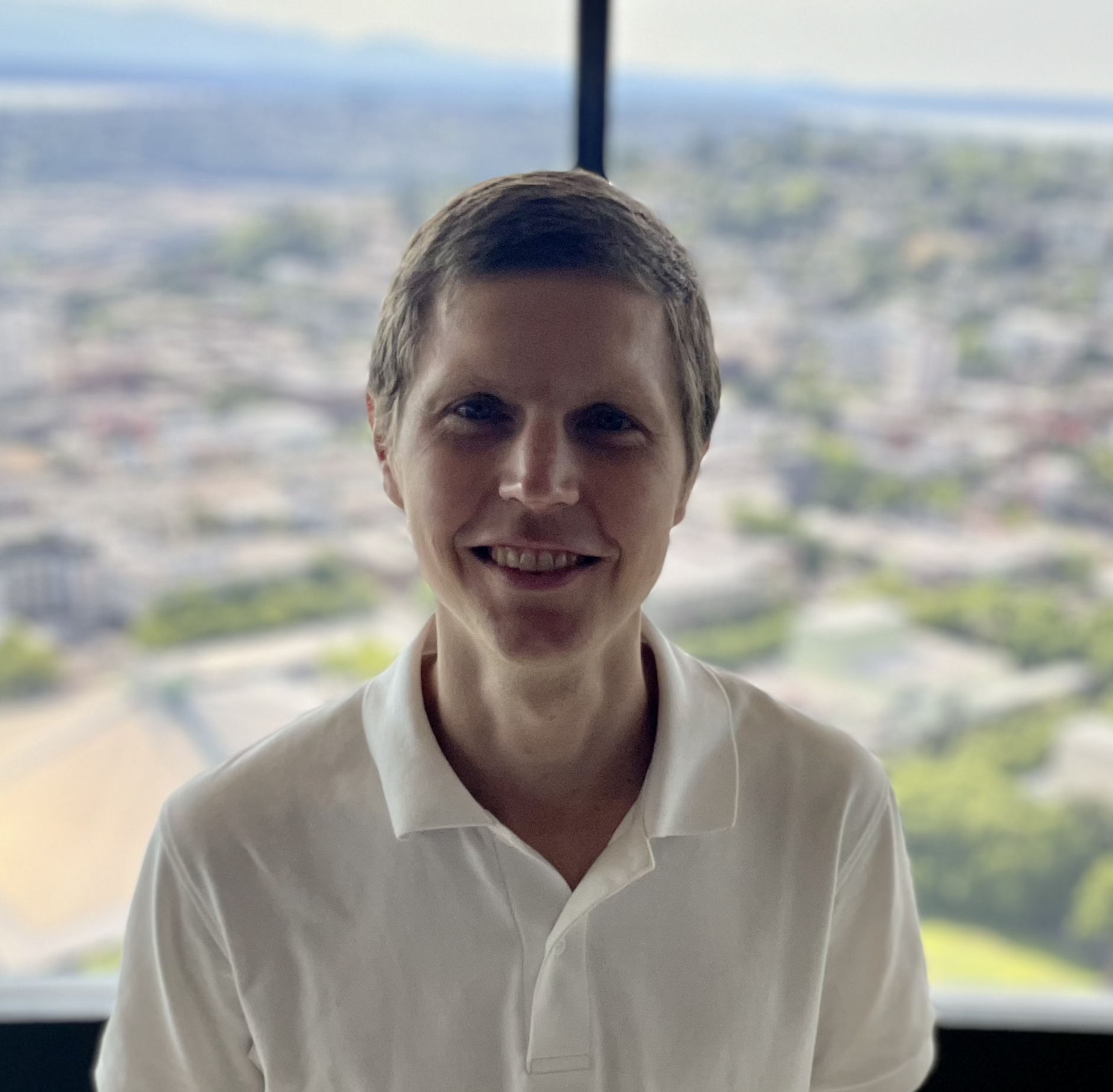
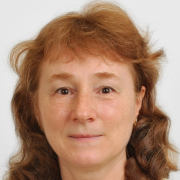
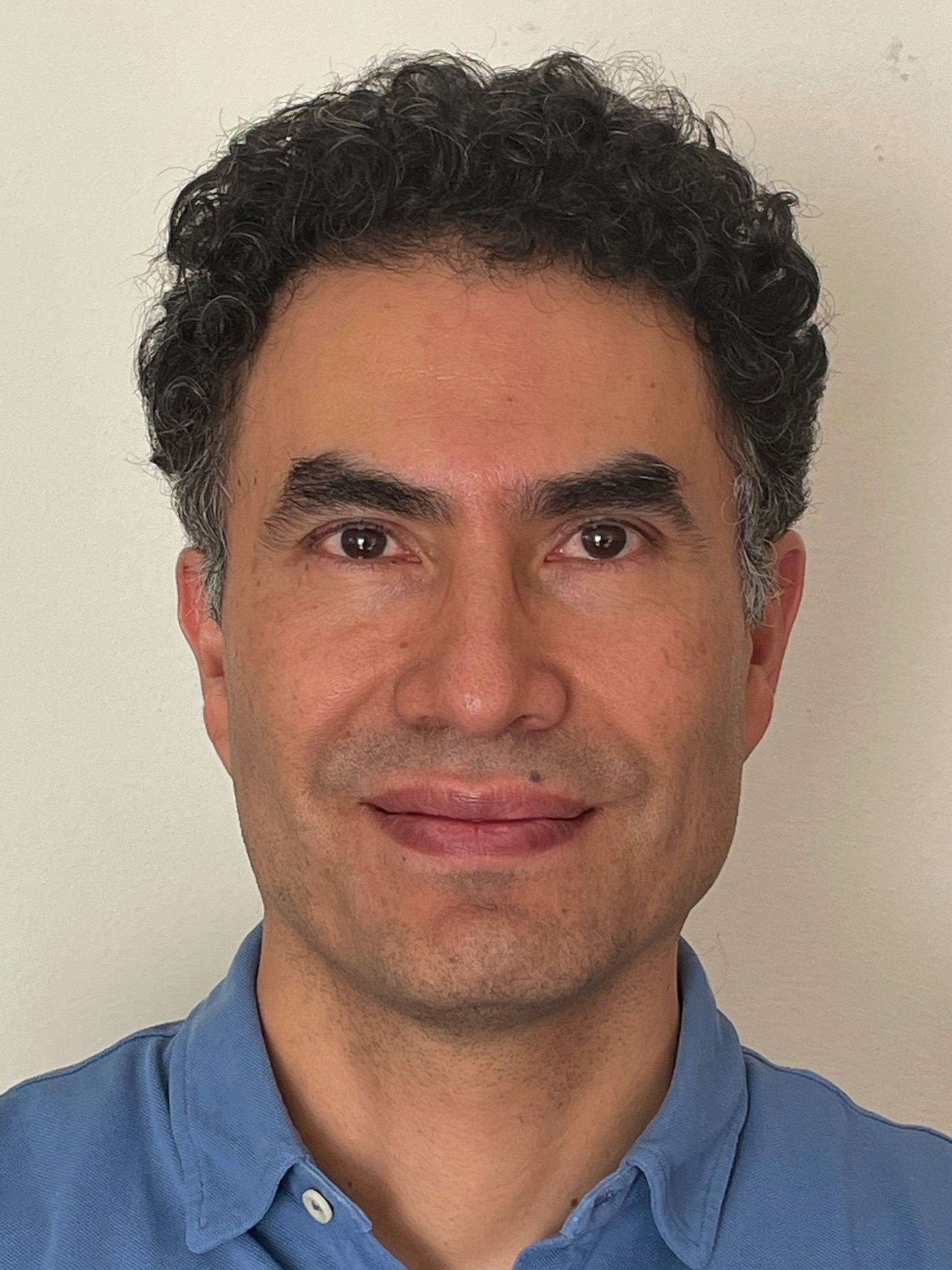
Mikael Johansson is a Professor at Kungliga Tekniska Högskolan (KTH), specializing in Control Technology . He teaches and coordinates courses such as Distributed Optimization (FEL3311) and various advanced-level degree projects in computer science, electrical engineering, and systems engineering. His research spans Control Systems , Machine Learning , and Optimization , with a focus on asynchronous algorithms, federated learning, and applications in energy systems and construction. His work includes 15 recent publications on topics like neural networks, distributed optimization, and battery technology. Notable areas of contribution are in asynchronous learning, federated learning with privacy constraints, and quasi-Newton methods for optimization. His research bridges theoretical advancements with practical applications in urban design, healthcare, and autonomous systems.
Huy T Tran is an Assistant Professor in the Department of Aerospace Engineering at the University of Illinois at Urbana-Champaign's College of Engineering, with additional appointments at the Applied Research Institute. His research focuses on the intersection of robotics, artificial intelligence, and multi-agent systems, with applications spanning autonomous navigation, critical infrastructure resilience, and intelligent transportation. Dr. Tran earned his Ph.D. in Aerospace Engineering from Georgia Institute of Technology in 2015, following advanced degrees from Georgia Tech and University of Wisconsin-Madison. His academic journey includes research assistant professor positions before achieving his current assistant professor role in 2021. He previously worked as a Senior Multi-Disciplinary Systems Engineer at The MITRE Corporation and served as a Visiting Scholar at the Air Force Institute of Technology. His research interests encompass Autonomy, Reinforcement Learning, Artificial Intelligence, Machine Learning, Robotics, Multiagent Systems, Intelligent Transportation Systems, and Critical Infrastructure Resilience. As director of the Lab for Intelligent Robots and Agents (LIRA), he leads cutting-edge research in autonomous systems that interact with humans and other robots. His work has evolved from foundational resilience modeling in aerospace systems toward increasingly sophisticated AI applications in multi-robot coordination and explainable decision-making. Dr. Tran's publication record demonstrates a clear trajectory toward explainable AI and human-AI collaboration, with recent work focusing on generating explanations for reinforcement learning policies, coordination in ad hoc teams, and neuro-symbolic approaches to robot policy interpretation. His research bridges theoretical advances with practical applications in air traffic control, field robotics, and critical infrastructure management. Best Paper Award: Theoretical (2016 Complex Adaptive Systems Conference) Selected for oral presentation at IROS 2023 Workshop 27% full paper acceptance rate at AAMAS 2022 44% acceptance rate at ICRA 2020 As an educator, Dr. Tran teaches core aerospace courses including Computational Systems Engineering, Aerospace Numerical Methods, and Reinforcement Learning. He has secured significant research funding from NASA's Transformational Tools and Technologies program, ARL A2I2 program, ONR Science of AI program, and DARPA. His current projects span ad hoc teaming in multi-robot systems, collective autonomous air mobility, hierarchical reinforcement learning, and interpretable AI agents.
Mikael Gidlund is a Full Professor of Computer Engineering at Mid Sweden University in Sundsvall and holds an adjunct professorship at Beijing Jiaotong University, China. He serves as head of the Computer Engineering subject and program manager for the international MSc program in Computer Engineering. His academic journey includes a Ph.D. in Electrical Engineering from Mid Sweden University (2005), followed by roles at ABB Corporate Research (2008-2014) where he led wireless technologies research. Dr. Gidlund's research spans Wireless Communication, Industrial IoT, 5G/6G Networks, and Network Security . His group focuses on AI/ML for beyond-5G wireless communication, time-critical industrial applications, and IoT security. Current research themes include Future Wireless Networks (5G/6G) using AI/ML, Time-and mission-critical wireless communication, Industrial IoT, and IoT Security. His work demonstrates strong interdisciplinary connections between wireless systems, industrial automation, and security. His publication portfolio includes over 200 scientific articles and 20+ patents. Recent publications show a clear trend toward AI/ML integration in wireless systems, NOMA techniques, RIS technologies, and security solutions for industrial applications. The research output demonstrates strong international collaboration across six continents. Best Paper Award at IEEE International Conference on Industrial IT (2014) Co-author of IEEE Sweden VT-COM-IT Joint Chapter Best Student Journal Paper Award (2022) Dr. Gidlund actively mentors 6 current PhD students and has supervised 16 former PhD students who now hold positions at institutions including Ericsson, Lund University, Aalborg University, and Mid Sweden University. His research is supported by multiple active projects including IRS TransTech, NIIT, ENSURE 6G, and TRUST. He collaborates with institutions worldwide including City University of Hong Kong, Iowa State University, Kyung Hee University, and KTH Royal Institute of Technology. His research group maintains strong industry connections through projects with ABB, Ericsson, and other industrial partners, focusing on practical implementations of wireless technologies for industrial automation and critical infrastructure.
Sean Welleck is an Assistant Professor at Carnegie Mellon University's School of Computer Science, specifically within the Language Technologies Institute (LTI). He leads the L3 Lab and serves as an advisor for the AI for Math Fund. His academic journey includes a PhD from New York University under Kyunghyun Cho and postdoctoral positions at the Allen Institute for Artificial Intelligence and the University of Washington with Yejin Choi. Dr. Welleck's educational background shows a strong foundation in computer science. He earned his PhD in Computer Science from New York University, where he worked under the mentorship of Kyunghyun Cho and Zheng Zhang. Prior to this, he completed his MSE and BSE in Computer Science from the University of Pennsylvania, demonstrating a long-standing commitment to the field. Dr. Welleck's research focuses on bridging informal and formal reasoning with AI, with particular emphasis on developing learning, inference, and evaluation algorithms for large language models. His work spans multiple cutting-edge areas including mathematical reasoning , code generation , inference algorithms , and AI reasoning agents . A significant portion of his recent work involves combining AI with formal methods for mathematics, where he has developed frameworks like Llemma (an open-source language model for mathematical reasoning) and meta-generation (for inference-time algorithms). His research is characterized by a strong theoretical foundation coupled with practical applications that push the boundaries of what AI systems can achieve in formal reasoning domains. Analysis of Dr. Welleck's recent publications reveals a clear research trajectory focused on enhancing language models' capabilities in formal reasoning and mathematical problem-solving. His work demonstrates an evolution from foundational research in neural text generation to increasingly sophisticated approaches that integrate formal methods with deep learning. Key trends include the development of inference-time algorithms that improve model performance without additional training, frameworks for mathematical reasoning that connect informal and formal proofs, and novel evaluation methodologies for language models. His publications consistently appear in top-tier conferences including NeurIPS, ICLR, ICML, and ACL, reflecting the high impact of his contributions to the field. Dr. Welleck's scientific achievements have been recognized with several prestigious awards: NAACL 2025 Best Paper Award ICLR 2025 Oral Presentation (Top 2%) ICLR 2025 Spotlight Presentation (Top 5%) NeurIPS 2021 Outstanding Paper Award (Top 0.1%) for MAUVE NVIDIA AI Labs Pioneering Research Award (2017 and 2018) As an educator and mentor, Dr. Welleck actively guides the next generation of AI researchers. He currently advises multiple PhD students including Pranjal Aggarwal, Weihua Du, Andre He, and Seungone Kim (some co-advised with other faculty), along with MS students Riyaz Ahuja, Jiewen Hu, Qinyue Tan, and Thomas Zhu, and undergraduate Tate Rowney. At CMU, he teaches advanced courses such as Neural Code Generation and Advanced NLP, and has previously taught at New York University and the University of Washington. His commitment to education extends to creating resources like the Thesis Review Podcast and developing tutorials on neural theorem proving that have been presented at major conferences. Dr. Welleck leads the L3 Lab at CMU, which focuses on the intersection of language, learning, and logic. The lab brings together students and researchers to tackle challenging problems in AI reasoning, with particular emphasis on mathematical reasoning and code generation. Recent initiatives include the development of Llemma, an open-source language model specialized for mathematical reasoning, and work on inference-time algorithms that enable language models to improve their performance through additional computation during inference rather than through additional training.
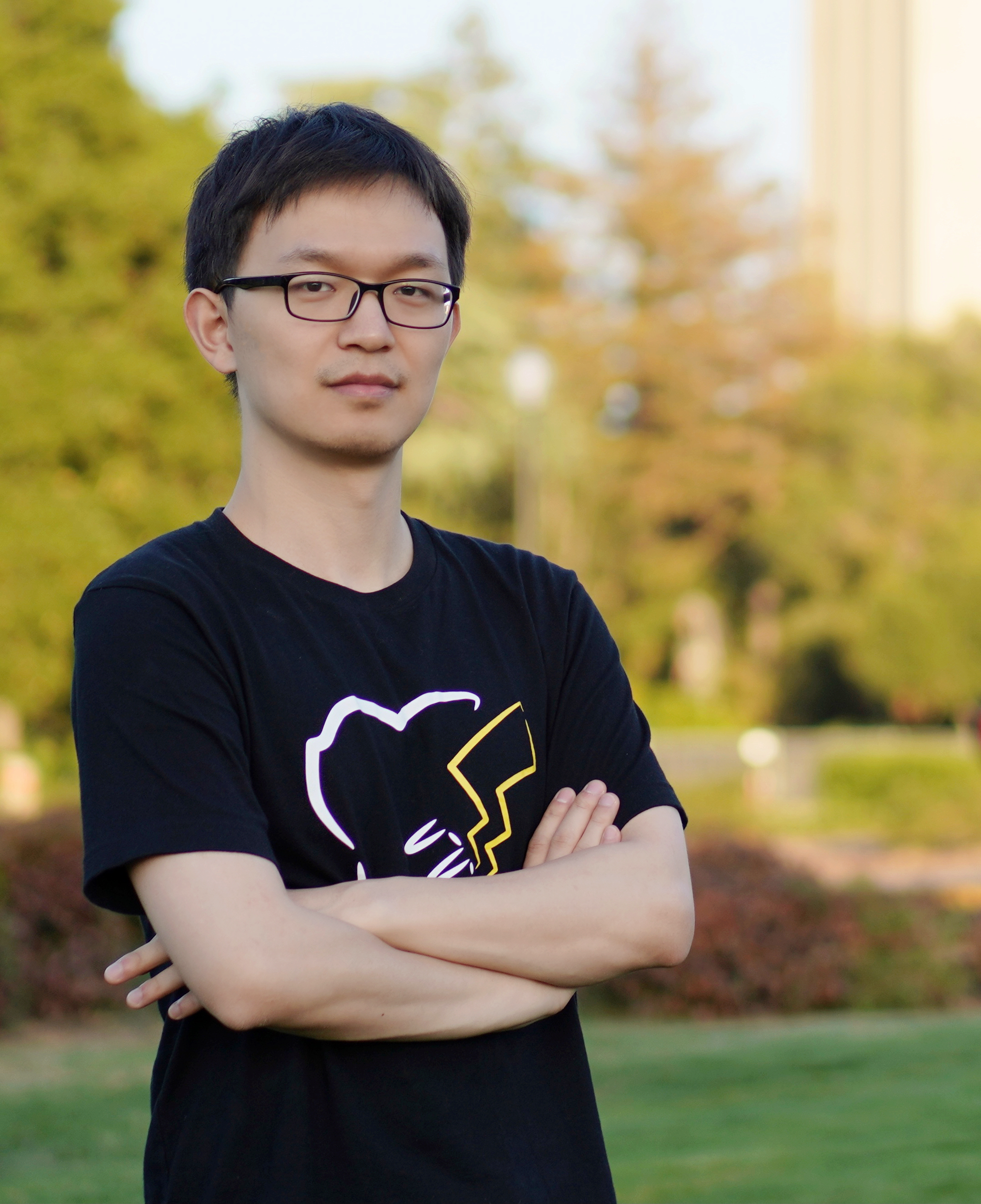
Dr. Hongwei Wang is a Senior Researcher at Tencent AI Lab Seattle , specializing in applied machine learning for Natural Language Processing and Interconnected Systems . His work bridges Knowledge Graphs , Recommender Systems , and Graph Neural Networks , with a focus on large language models and retrieval-augmented generation. Ph.D. (2018), B.E. (2014) in Computer Science from Shanghai Jiao Tong University Postdoctoral Researcher : Stanford University (2019-2021), University of Illinois Urbana-Champaign (2021-2022) Dr. Wang’s research explores integrating Knowledge Graphs with Graph Neural Networks to enhance recommendation systems, language models, and information retrieval. His work spans Retrieval-Augmented Generation , Representation Learning , and GAN-based Graph Modeling , with recent papers on State-Space Exploration for LLM agents and Semantic Watermarking . His 15 most recent publications (2022-2024) focus on Retrieval Granularity , Interactive Memory , and Agent Systems , with keywords spanning Computer Science , Machine Learning , and Knowledge Graphs . Trends highlight advancements in Token-Level Semantic Matching , Schema-Guided Event Prediction , and Multi-Document Summarization . Scientific Awards: 2020 CCF Outstanding Doctoral Dissertation Award 2018 Google Ph.D. Fellowship Dr. Wang contributes to open-source projects like DKN and RippleNet , with 11 repositories on GitHub. He actively engages in Knowledge Graph Conferences (KDD, WWW, AAAI) and studies Chinese Classical Poetry and Film Arts .
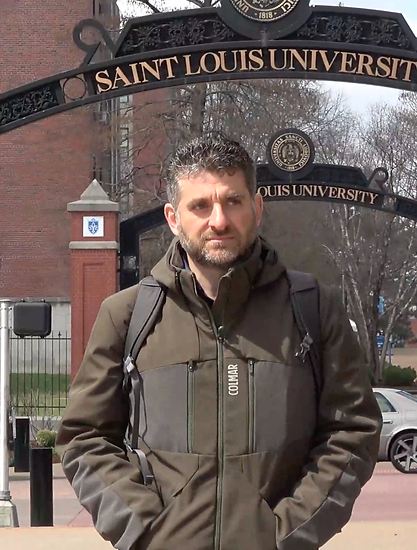
Flavio Esposito is an Associate Professor in the Computer Science Department at Saint Louis University's School of Engineering. He also serves as a Research Institute Fellow and CS Graduate Coordinator. His office is located in ISE 234D at 3450 Lindell Blvd, St. Louis, MO. Dr. Esposito's research focuses on cyber-physical systems and networked systems, including network virtualization, network management, Software-Defined Networks (SDN), network architectures, and wireless networks. He has a strong interest in interdisciplinary applications of these technologies to medicine and agriculture. His work bridges theoretical networking concepts with practical implementations. His publications span key areas in networking research, with recent work focusing on congestion control algorithms, virtual network embedding, recursive network architectures, and edge computing applications. The research trends show a progression from foundational networking protocols toward more sophisticated applications integrating machine learning, edge computing, and cyber-physical systems, with increasing emphasis on real-world applications in diverse domains. Outstanding Graduate Mentoring Faculty Award from the School of Engineering (2021) Finalist for the Undergraduate Mentoring Award in the College of Arts and Sciences Multiple NSF research awards including US Ignite, ICE-T, CNS Core, CC* Integration, CPS:TTP, and ModernCARE projects COMCAST Innovation Fund Award (January 2020) International Center for Responsible Gaming (ICRG) Award ($150K) Dr. Esposito actively mentors PhD and MS students, with numerous current and past students who have gone on to positions at major tech companies, universities, and research institutions. He has been a Principal Investigator on multiple significant research grants totaling millions of dollars. He co-founded Spaghetti Code Labs with former PhD student Alessandro Sangiorgi, whose cybersecurity educational app WeeNet has achieved 5.7M+ downloads. He leads several research labs and teams focused on cyber-physical systems, with current openings for PhD students, visiting researchers, and postdocs working on networks, learning, edge computing, and applications to medicine and agriculture. His teams have developed numerous software systems including Software Mutant, Neighborhood Method Prototype, VINEA, ProtoRINA, and BUtorrent.
Natalia Díaz Rodríguez is an Assistant Professor of Artificial Intelligence at ENSTA ParisTech, where she works in the Computer Science and Systems Engineering department within the Autonomous Systems and Robotics Lab (U2IS). She is also affiliated with the INRIA Flowers team, focusing on developmental robotics. Her research spans deep learning, reinforcement learning, continual learning, and symbolic AI, with applications in explainable AI, computer vision, and robotics for social good. Her academic background includes a double PhD in Artificial Intelligence from Abo Akademi University and the University of Granada, alongside MSc degrees in Soft Computing and Computer Engineering from the University of Granada. She contributes to interdisciplinary AI, particularly in robotics, ethics, and healthcare applications, and co-organizes workshops on continual learning. Double PhD in Artificial Intelligence (2015), Abo Akademi University and University of Granada Doctoral diploma on Innovation and Entrepreneurship (2017), EIT Digital MSc in Soft Computing and Intelligent Systems (2012), University of Granada MSc in Computer Engineering (2010), University of Granada Her recent publications focus on trustworthy AI, including bias identification, counterfactual explanations, and continual learning strategies, reflecting her commitment to ethical and robust AI systems. She also explores AI applications in structural engineering, climate visualization, and financial risk assessment, emphasizing practical deployment and interpretability.
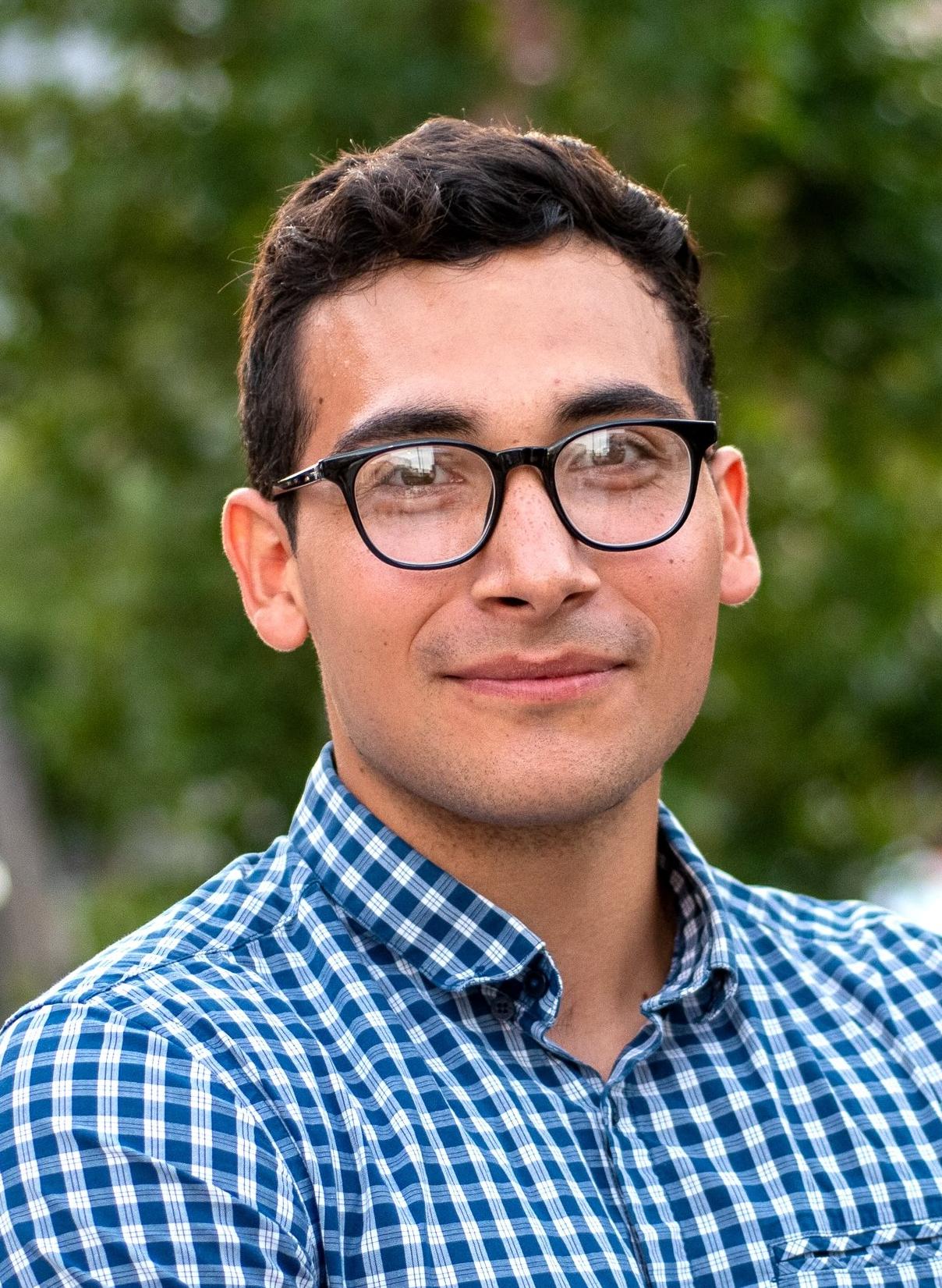
Moïse Blanchard is an Assistant Professor and Tennenbaum Early Career Professor at the H. Milton Stewart School of Industrial and Systems Engineering at Georgia Institute of Technology, having joined in August 2025. Previously, he was a Postdoctoral Fellow at Columbia University Data Science Institute. His academic journey includes a Ph.D. in Operations Research from MIT (2024), and M.Sc. and B.Sc. degrees in Applied Mathematics from École Polytechnique. Blanchard's research focuses on the intersection of machine learning theory, statistics, and optimization. His work addresses fundamental questions in universal learning, online algorithms, and convex optimization under memory constraints. His research program explores learnability under minimal assumptions, query complexity/memory tradeoffs, and decision-making in adversarial environments. This work has significant implications for theoretical computer science, operations research, and statistical learning theory. His publications reveal a strong emphasis on foundational aspects of learning theory and optimization. Recent work demonstrates expertise in universal learning frameworks, memory-constrained optimization, and probabilistic analysis of combinatorial problems. His research often bridges theoretical computer science with practical optimization challenges, particularly in contexts where traditional i.i.d. assumptions don't hold. Columbia DSI postdoctoral fellowship, 2024 INFORMS Transportation Science & Logistics (TSL) best student paper award, 2023 Air Force Office of Scientific Research Grant (AFOSR), with Prof. Patrick Jaillet, 2023 COLT 2022 Best student paper runner-up Bronze medal, Alibaba Global Mathematics Competition, 2022 Blanchard has received significant research funding including an Air Force Office of Scientific Research Grant. His work has been recognized with multiple prestigious awards, including the INFORMS TSL best student paper award for his research on the k-Traveling Salesman Problem. His extensive publication record in top venues demonstrates a strong research trajectory with impactful contributions to theoretical machine learning and optimization.
Professor Lyudmila Mihaylova is a distinguished academic at the University of Sheffield's School of Electrical and Electronic Engineering, where she holds the position of Professor of Signal Processing and Control. She has established herself as a leading researcher in the fields of signal processing, Bayesian methods, and autonomous systems, with significant contributions to particle filtering techniques for intelligent transportation systems. Her work bridges theoretical developments with practical applications across multiple domains including transportation, healthcare, and industrial automation. Prof. Mihaylova's research interests center on nonlinear filtering, sequential Monte Carlo methods, statistical signal processing, and sensor data fusion. Her work spans both theoretical advancements and practical implementations, with particular focus on high-dimensional problems including vehicular traffic flow estimation, image processing, and localization in sensor networks. She has extensive experience with various image modalities such as optical, thermal, LIDAR, SAR, and hyperspectral imaging. Her group actively develops novel methods for autonomous intelligent systems focusing on sensing, tracking, decision making, and machine learning applications. Analysis of Prof. Mihaylova's recent publications reveals a strong trend toward uncertainty quantification in machine learning models, particularly for safety-critical applications. Her work increasingly integrates traditional signal processing techniques with modern deep learning approaches, with applications spanning sewer inspection robotics, medical diagnostics (particularly sleep apnea detection), UAV swarm tracking, industrial manufacturing, and autonomous vehicle systems. A significant portion of her recent research focuses on developing robust methods that can handle incomplete or outlier-corrupted data while providing reliable uncertainty estimates. Among her notable professional achievements: President of the International Society of Information Fusion (ISIF) Senior member of the IEEE Signal Processing Society Associate Editor for IEEE Transactions on Aerospace and Electronic Systems Associate Editor for Elsevier Signal Processing Journal Prof. Mihaylova has successfully mentored numerous PhD students and postdoctoral researchers, many of whom have gone on to prominent academic and industry positions. Her research has been supported by major funding bodies including EPSRC, EU, MOD/DSTL, and industry partners, with recent projects including 'Protecting Environments with UAV Swarms' (InnovateUK, 2022-2024), 'ShiRAS: Towards Safe and Reliable Autonomy in Sensor Driven Systems' (NSF-EPSRC, 2019-2023), and 'Confident safety integration for Cobots' (Lloyd's Register Foundation, 2019-2020). Her research group follows a collaborative approach with the philosophy 'We share knowledge, we grow.' Prof. Mihaylova maintains active research collaborations with institutions worldwide and has held previous academic positions at Lancaster University (2006-2013) and University of Bristol (2004-2006), along with research visiting positions at the University of Ghent, Katholic University of Leuven, and the Bulgarian Academy of Sciences.
Marco Morales Aguirre is a Teaching Associate Professor in the Department of Computer Science at the University of Illinois Urbana-Champaign and an Associate Professor at Instituto Tecnológico Autónomo de México (ITAM). He directs research at the Parasol Laboratory and has held significant leadership roles including founding member and former president of the Mexican Federation of Robotics (FMR). His academic journey spans both US and Mexican institutions, reflecting his international impact in the robotics community. Dr. Morales received his educational foundation from prestigious institutions: a Ph.D. in Computer Science from Texas A&M University, an M.S. in Electrical Engineering, and a B.S. in Computer Engineering from Universidad Nacional Autónoma de México (UNAM). His academic path has included positions as Visiting Professor at Texas A&M University and Lecturer at UNAM and the System of Technological Universities in México. His research focuses on motion planning algorithms for robotics, with particular expertise in multi-robot systems where he's pioneered frameworks like Adaptive Robot Coordination (ARC). His work bridges theoretical algorithm development with practical applications in industrial settings, computational biology, and extended reality interfaces. He has made significant contributions to topological guidance methods that improve planning efficiency in complex environments with narrow passages. Analysis of his recent publications reveals a strong trajectory toward more complex multi-robot coordination problems, with increasing emphasis on integrating task and motion planning. His research group has developed innovative approaches that scale to larger robot teams while maintaining computational efficiency, particularly in congested environments where traditional methods struggle. Member of the National System of Researchers of Mexico (level II) Founding member and former president of the Mexican Federation of Robotics (FMR) Member of the Mexican Academy of Computing Editor of multiple Algorithmic Foundations of Robotics (WAFR) proceedings Dr. Morales actively mentors a diverse group of graduate students who frequently appear as co-authors on his publications. His Parasol Laboratory conducts research funded through various academic and industrial collaborations, including significant projects with manufacturing partners exploring collaborative assembly systems. The laboratory has developed several notable frameworks including ARC, K-ARC, and HAS-RRT that have advanced the state of the art in multi-robot motion planning.
Omar Rifki is an Associate Professor (Maître de Conférences) specializing in combinatorial optimization and artificial intelligence applications. His research bridges theoretical computer science with practical logistics challenges, focusing on routing problems, process mining, and machine learning integration for complex decision systems. His core research interests include phase transitions in NP-hard problems, vehicle routing optimization under time constraints, and healthcare process modeling. Rifki's work demonstrates a consistent pattern of integrating reinforcement learning with traditional optimization techniques to solve large-scale real-world problems in transportation and logistics, with particular emphasis on spatio-temporal data effects and collaborative systems. Analysis of his 15 publications (2019-2025) reveals three dominant research thrusts: (1) Fundamental studies of combinatorial problem hardness using phase transition frameworks, (2) Practical applications of deep reinforcement learning in vehicle routing and taxi assignment, and (3) Healthcare process optimization through advanced process mining techniques. His work consistently addresses scalability challenges in real-world implementations while maintaining theoretical rigor. No scientific awards were documented in the provided materials. His collaborative work with researchers like Christine Solnon and Thierry Garaix indicates active participation in European operations research communities, though specific grant details remain unreported. Rifki's research shows increasing integration of graph theory and machine learning in transportation applications, particularly evident in his Lyon City case studies on autonomous ride-sharing systems.
Istvan David is an Assistant Professor in the Department of Computing and Software at McMaster University , with research expertise spanning Digital Twins , Model-Driven Engineering , and Sustainability . His work bridges theoretical and applied domains, focusing on smart ecosystems , collaborative modeling , and AI-driven simulation . Key contributions include frameworks for digital twin evolution and interoperability in sustainable systems. Education : BSc, MSc, and PhD in Computer Engineering and Computer Science from Budapest University of Technology and Economics, and University of Antwerp. Research Areas : Digital Twins, Model-Driven Engineering, Reinforcement Learning, Smart Ecosystems, Sustainability, Collaborative Modeling, Cyber-Biophysical Systems, and Software Architecture. Recent Article Trends emphasize AI integration with digital twins, collaborative modeling in industrial contexts, and sustainable systems engineering . His work often combines machine learning with formal modeling to address challenges in technical sustainability and smart agriculture .
Marina Petrova is a Professor at RWTH Aachen University, holding positions in both the Teaching and Research Area of Mobile Communications and Computing and the Chair and Institute for Networked Systems. She is also a member of the Steering Committee for the Mobility & Transport Engineering (MTE) profile area at the university. Her office is located at Kackertstraße 9, 52072 Aachen, Germany. Professor Petrova's research focuses on cutting-edge wireless communication technologies, with particular emphasis on next-generation mobile networks. Her work spans multiple dimensions of wireless systems including: 5G and 6G network architectures and protocols Cell-Free Massive MIMO systems Millimeter-wave communications Resource allocation and scheduling in wireless networks Wi-Fi sensing and coexistence analysis Integration of distributed learning services in wireless networks Beamforming and beam management techniques Ultra-Reliable Low-Latency Communications (URLLC) Her recent publications demonstrate a strong trend toward the integration of artificial intelligence and machine learning techniques in wireless network design and optimization. She has been particularly active in exploring the convergence of communication and sensing functionalities (ISAC - Integrated Sensing and Communication), which is considered a key enabler for future 6G networks. Professor Petrova's research also addresses practical implementation challenges in next-generation wireless systems, with several publications focusing on ns-3 implementations and experimental validations. Professor Petrova has received recognition for her contributions to the field through numerous publications in top-tier venues, though specific awards are not mentioned in the available information. Her work shows strong industry relevance with applications in smart industries, autonomous systems, and future communication networks.
Serge Belongie is a Professor at the Department of Computer Science (DIKU) at the University of Copenhagen, where he holds dual affiliations with the Pioneer AI research section and the Image Analysis, Computational Modelling, and Geometry section. His academic position places him at the forefront of interdisciplinary research connecting computer vision with language models, geospatial analysis, and cultural understanding. Professor Belongie's research program encompasses several critical domains in modern artificial intelligence: Advanced computer vision and image analysis techniques Vision-language model integration and multimodal systems 3D point cloud processing and semantic segmentation Geospatial representation learning for environmental applications Fine-grained object recognition and detection Cultural context understanding in AI systems His recent publication record reveals a sophisticated trajectory toward developing precise control mechanisms for vision-language models, with applications spanning forensic analysis, cultural heritage preservation, and social media understanding. The research demonstrates increasing sophistication in handling cultural context and enabling fine-grained manipulation of visual content through natural language interfaces. Professor Belongie maintains an active research group producing significant scholarly output, with over 280 research publications documented in his academic profile. His work is supported by research funding that enables cutting-edge exploration in multimodal AI systems with practical societal impact. He plays a key role in the Pioneer AI center at the University of Copenhagen, which focuses on advancing artificial intelligence through interdisciplinary collaboration and innovative research approaches that bridge theoretical computer science with real-world applications.
Professor Yun-Nung Chen works at the Department of Computer Science and Information Engineering , National Taiwan University , focusing on Natural Language Processing and Dialogue Systems . With a Ph.D. from Carnegie Mellon University , their research bridges Machine Learning and Language Understanding in conversational AI. Education Ph.D. in Language Technologies, Carnegie Mellon University (2015) M.S. in Computer Science, National Taiwan University (2011) B.S. in Computer Science, National Taiwan University (2009) Research Trends Recent work emphasizes Retrieval-Augmented Generation , Knowledge Editing in LLMs , and Temporal Modeling for dialogue systems. Key themes include cross-modal understanding , semantics-driven dialogue , and robust language modeling across domains. Scientific Recognition Best Student Paper, IEEE ASRU 2013 Best Student Paper, IEEE SLT 2010 Distinguished Master Thesis, ACLCLP 2011 Best Paper Finalist, ISCA INTERSPEECH 2012 Current projects involve StreamBench for continuous agent improvement and Taiwan LLM for culturally aligned language models.