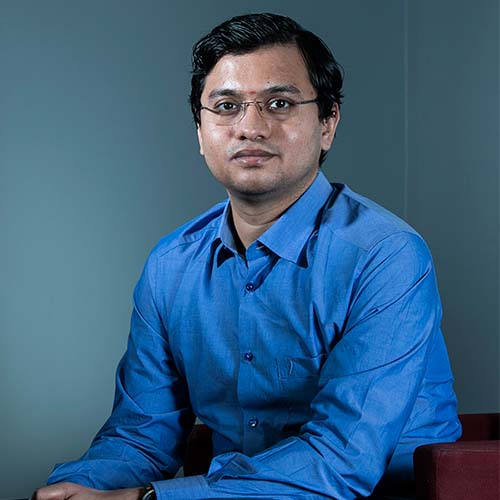
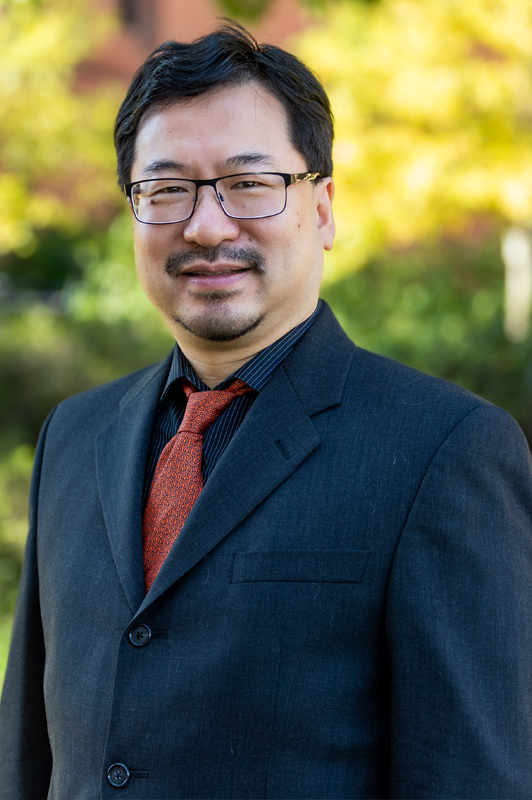
Sangtae Ha is an Associate Professor in the Computer Science Department at the University of Colorado Boulder. His research focuses on building practical computer systems spanning multiple disciplines, including machine learning/deep learning systems, networks and distributed systems, internet protocols, wireless networks, video streaming, storage systems, and security. He specializes in creating efficient and scalable solutions for real-world computing challenges. His work emphasizes interdisciplinary approaches, bridging theoretical computer science with practical system design. Key areas of exploration include optimizing neural network execution for edge computing, developing adaptive streaming protocols, and enhancing wireless network performance through novel signal processing and spectrum management techniques. Recent projects include frameworks for semantic offloading in neural networks and reinforcement learning-based cloud scheduling. No scientific awards or notable grants are explicitly mentioned in the provided materials. While no formal advisees are listed, his research team likely involves graduate students and collaborators. No dedicated labs or teams are named, though his work aligns with broader university initiatives in computer systems and networking.
Dr. Beeshanga Abewardana Jayawickrama is a Senior Lecturer and Data Science Engineering Course Director at the School of Electrical and Data Engineering, University of Technology Sydney (UTS). He holds a BEng in Telecommunications Engineering (Hons I) and a PhD in Electronic Engineering (Wireless Communications) from Macquarie University, Sydney, Australia, completed in 2011 and 2015 respectively. As a Senior Member of the Institute of Electrical and Electronics Engineers (IEEE), he maintains active research and industry collaborations. His educational background includes: BEng in Telecommunications Engineering (Hons I), Macquarie University (2011) PhD in Electronic Engineering (Wireless Communications), Macquarie University (2015) Dr. Jayawickrama's research focuses on cutting-edge wireless communication technologies with particular emphasis on 5G/6G Physical Layer signal processing algorithms, Machine Learning techniques for Physical Layer signal processing, Ultra-Reliable Low-Latency Communications, Non-Terrestrial Networks, Compressed Sensing (Sub-Nyquist Sampling), and spectrum sharing. His work bridges theoretical innovation with practical implementation, evidenced by numerous patents and industry collaborations. He has published over 40 prestigious conference and journal papers while developing algorithms that have been incorporated into commercial 5G base stations. Analysis of his recent publications reveals a strong focus on satellite communications, particularly cognitive GEO-LEO satellite networks, where he explores spectrum sharing, beam design, and interference management. His research increasingly integrates machine learning techniques with traditional signal processing approaches, especially for spectrum sensing and channel estimation in next-generation wireless systems. The trend shows growing emphasis on practical implementation and experimental validation of theoretical concepts. His scientific recognition includes: Macquarie University Medal in Engineering Vice-Chancellor's Commendation for Academic Excellence Outstanding Teacher Award (2021) Multiple competitive scholarships from Macquarie University and CSIRO In terms of teaching and supervision, Dr. Jayawickrama has taught numerous undergraduate and postgraduate subjects including Advanced Telecommunication Engineering, 4G/5G Mobile Technologies, Communication Systems, and Engineering Research Thesis. His current research is supported by significant grants including the AI-SSPCAS project (CSIRO), Smart Flood and Storm Intelligence Sensing Initiative (NSW Department), and CogSat: Cognitive Satellite Radio (SmartSat CRC). Previously, he has secured research funding from Intel Corporation and Nokia Research Centre. Dr. Jayawickrama has held leadership roles including Course Director for Data Engineering since 2021 and UTS IEEE Student Branch Counsellor from 2017-2020. His industry experience includes research positions at Ericsson in Sweden (working on 5G New Radio receiver algorithms) and Intel Labs in the USA (working on Licensed Shared Access and Citizens Broadband Radio Service).
Matthew Bolton is an Associate Professor in the Department of Systems and Information Engineering at the University of Virginia. His research focuses on human-centered systems engineering, particularly addressing how human behavior and cognition contribute to system failures. He has held prior roles as a Senior Researcher at NASA Ames Research Center and faculty positions at the University of Illinois at Chicago and the University at Buffalo. Bolton specializes in formal methods to enhance system safety in domains like aerospace, healthcare, and cybersecurity. Dr. Bolton holds B.S., M.S., and Ph.D. degrees in Computer Science and Systems Engineering from the University of Virginia (2003, 2006, 2010). His work has been funded by organizations including the European Space Agency, NSF, NASA, AHRQ, and the Department of Defense. His research interests span system safety, human performance modeling, formal methods, cybersecurity, and engineering ethics. Notable contributions include developing the SAFPH formal human reliability analysis framework and advancing medical alarm audibility standards. Recent publications emphasize trust in AI systems, tactile navigation for the visually impaired, and human-agent teaming dynamics. His work has earned prestigious awards, including the Jerome H. Ely Human Factors Article Award (2021) and the William C. Howell Young Investigator Award (2018). Bolton’s research integrates formal verification techniques with human factors engineering to prevent errors in safety-critical systems. He leads the Formal Human Systems Laboratory, exploring inclusive design principles and ethical engineering practices.
Alessandro (Alex) Orso is a Professor in the School of Computer Science and Interim Dean of the College of Computing at Georgia Institute of Technology. He holds an M.S. in Electrical Engineering (1995) and a Ph.D. in Computer Science (1999) from Politecnico di Milano, Italy. Since 2000, he has been a faculty member at Georgia Tech. Affiliations: School of Computer Science, Scientific Software Engineering Center, Center for Experimental Research in Computer Systems (CERCS), and Online Master of Science Computer Science (OMSCS). Research Focus: Software engineering with emphasis on testing, program analysis, and improving software reliability/security through formal methods and tools. His research has been funded by DARPA, NSF, IBM, and Microsoft, among others. He co-founded the Scientific Software Engineering Center to advance methodologies for high-performance scientific software. Orso is a Distinguished Member of the ACM and an IEEE Fellow. Key contributions include developing techniques for automated REST API testing, program debloating, and cross-browser web application testing. His work bridges theory and practice, emphasizing real-world system validation. Awards: Four impact awards: ISSTA (2017, 2021), ASE (2020), IBM Haifa (2013) Editorial roles: ACM TOSEM, IEEE TSE Program chairs: ISSTA 2010, FSE 2014, ICSE 2017 Advising & Grants: Supervised over 40 students (PhD, Master's, undergrad). Secured funding from government/industry partners. Tools developed include AutoRestTest, Barista, and X-PERT. Labs/Teams: Leads the Arktos Research Group, focusing on software testing, analysis, and tool development. Collaborates with industry and government on applied research projects.
Mohamed-Lamine Messai is a Professor at Université Lyon 2, France, specializing in cybersecurity, IoT security, and networking. He teaches courses such as Computer Security, Hacking Labs, and Cryptography, and is actively involved in research projects like ROMANCE (knowledge graph modeling for organizational vulnerabilities) and GLADIS (graph-based intrusion detection). His work focuses on key management systems, resource-constrained networks, and AI-driven cybersecurity solutions. He has supervised numerous PhD and master's students, including Abel Oroke, Floribert Katembo, and Sami Bettayeb. His research spans IoT security, blockchain applications, and graph neural networks for threat detection. He frequently presents at international conferences and workshops, including GRASEC, ARES, and IWCMC. Current projects include Federated Learning with Hybrid Encryption for APT detection and autonomous bio-inspired 5G deployment strategies. Key Projects: ROMANCE, GLADIS, CyberSecGraph, DATACAP Teaching: M1/M2 courses in Computer Security, IoT, Networking, and Distributed Computing Lab Affiliations: Involved in L3i lab activities and Open Days at the University of La Rochelle
Dr. Shahriar Al-Ahmed is a Lecturer and researcher at the University of the West of Scotland's School of Computing, Engineering and Physical Sciences. His work focuses on sustainable technological solutions leveraging 5G, UAVs, IoT, and AI. He teaches modules including Network Security Issues and Object-Oriented Programming, emphasizing accessible education. Research interests include UAV-based network optimization, AI-driven IoT applications in agriculture/healthcare/energy, and cybersecurity. He contributed to the 5GIR project and developed prototypes like a Pycom-based remote monitoring system. His PhD research was funded by UWS. He supervises PhD students exploring 5G, UAVs in wireless networks, and IoT-AI applications. Current projects address smart cities, precision farming, and energy efficiency. He advocates for UN SDGs through tech innovation, particularly in agriculture and environmental monitoring.
Pierre-Olivier Pineau is a Professor at HEC Montréal, holding the Chair in Energy Sector Management within the Department of Decision Sciences. His research focuses on energy policy, electricity markets, and sustainable development. He has a Ph.D. in Administration from HEC Montréal and a Master's in Philosophy from Université de Montréal. His expertise spans energy policy, electricity market dynamics, decision analysis, and decarbonization strategies. Current research includes environmental impacts of energy trade, electricity market modeling, and voluntary price mechanisms for energy conservation. Pineau has supervised over 30 master's and doctoral students, contributing to impactful studies in energy transition and policy. Recent publications emphasize reinforcement learning in energy demand response, price forecasting in Ontario, and decarbonization challenges in North America. He co-authored the book Games in Management Science: Essays in Honor of Georges Zaccour and received the 2024 Hubert-Reeves Prize for his work on energy balance. Pineau teaches courses on energy value chains and sustainable supply chains, reflecting his commitment to bridging academia and industry. His work addresses global energy challenges, advocating for integrated regional energy systems and equitable climate policies.
Sai Manoj Pudukotai Dinakarrao is an Assistant Professor in the Department of Electrical and Computer Engineering at George Mason University's College of Engineering and Computing. He leads the HArt (Hardware and AI Research) Group, focusing on cutting-edge research at the intersection of hardware security and artificial intelligence. His educational journey includes a BTech in Electronics and Communication Engineering from Jawaharlal Nehru Technological University (2010), an MTech in Information Technology from International Institute of Information Technology Bangalore (2012), and a PhD in Electrical Engineering from Nanyang Technological University, Singapore (2015). Following his doctoral studies, he completed post-doctoral research at TU Wien, Vienna (2015-2017) and George Mason University (2017-2018). Dr. Dinakarrao's research spans hardware security, adversarial machine learning, IoT networks, and deep learning in resource-constrained environments. His work integrates hardware design with AI techniques to address security challenges in computing systems, with particular focus on side-channel attack detection, malware detection in IoT networks, on-chip security, and hardware accelerator design for machine learning applications. His research has resulted in numerous publications in top-tier conferences and journals including IEEE Transactions, ACM conferences, and Design Automation Conference. Analysis of his recent publications reveals a strong trend toward hardware security solutions using machine learning techniques. His work increasingly focuses on Processing-in-Memory architectures, energy-efficient security solutions for IoT devices, and innovative approaches to hardware Trojan detection. Many publications demonstrate interdisciplinary collaboration across electrical engineering, computer science, and cybersecurity domains. Young Research Fellow Award at Design Automation Conference (DAC) 2013 Best paper award at International Conference on Data Mining (ICDM) 2019 Best paper award at International Conference on Consumer Electronics (ICCE) 2020 Best paper nomination at International Conference on Computer-Aided Design (ICCAD) 2019 Best paper nomination at Design Automation and Test in Europe (DATE) 2018 Dr. Dinakarrao has successfully mentored numerous PhD and MS students, with alumni securing positions at AMD-Xilinx, US Government agencies, and academic institutions. His research has been supported by significant grants from NSF, DARPA, and Virginia Commonwealth Cyber Initiative. Current projects include securing supply chains with UVA, developing novel architectures for machine learning acceleration, and creating energy-preserving cryptography protocols. The HArt Group maintains active collaborations with industry partners including AMD-Xilinx and government agencies. The lab focuses on practical implementations of theoretical security concepts, with particular emphasis on creating deployable security solutions for real-world hardware systems. Current research directions include intermittent computing with energy harvesting, hardware fuzzing techniques, and robust machine learning models resistant to adversarial attacks.
Ingo Weber is a Professor affiliated with Technische Universität München (TU Munich) and Fraunhofer Gesellschaft. His research focuses on blockchain technology, business process management (BPM), and artificial intelligence (AI), with a particular emphasis on integrating these fields. He has held former positions at TU Berlin, CSIRO Data61, and other institutions. Current affiliations: TU Munich and Fraunhofer Gesellschaft Former affiliations: TU Berlin, CSIRO Sydney, University of New South Wales, SAP Research, and University of Massachusetts Amherst Research interests include blockchain applications in business processes, process mining, AI-driven systems, and sustainability-oriented process analysis. His work explores topics such as blockchain scalability, data confidentiality, and cost-efficient process execution on next-generation blockchains like Algorand. He has pioneered frameworks like SOPA for sustainability analysis and FhGenie for confidentiality-preserving AI. Key contributions include over 200 publications in journals like IEEE Access, Future Generation Computer Systems, and ACM Transactions on Management Information Systems. Recent work emphasizes AI-augmented BPM systems and the application of large language models (LLMs) in scientific contexts. Notable projects include blockchain-based process execution engines (e.g., Caterpillar), platform architectures for multi-tenant blockchain systems, and frameworks for evaluating payment channel networks. He has collaborated extensively with industry partners and academic institutions globally.
Hans-Arno Jacobsen is a Professor at Technische Universität München (Faculty of Computer Science, Germany) and the University of Toronto (Department of Electrical and Computer Engineering, Canada). His research spans distributed systems, blockchain technology, and machine learning for energy systems. Research Interests : Blockchain consensus algorithms, federated learning, graph neural networks, quantum computing applications, and energy-efficient distributed systems. Publication Trends : Recent work focuses on decentralized consensus in blockchains, energy-aware language model inferencing, quantum chemistry simulations, and graph neural network scalability. Collaborations : Regularly works with Ruben Mayer, Shashank Motepalli, and Gengrui Zhang on blockchain and machine learning projects.
Shiwen Mao is a Professor and Earle C. Williams Eminent Scholar Chair at Auburn University's Department of Electrical and Computer Engineering. He serves as Director of the Wireless Engineering Research and Education Center. His education includes a Ph.D. in Electrical Engineering from Polytechnic University, M.S. in Systems Engineering, and dual B.E. degrees in Electronic Engineering and Enterprise Management from Tsinghua University. Research interests span wireless networks, multimedia communications, RF sensing for healthcare IoT, smart grid systems, and machine learning applications. Mao's work focuses on transforming edge intelligence, 6G systems, drone localization, and AI integration for next-generation networks. Recent publications demonstrate strong trends in AI-driven wireless communications, satellite-terrestrial networks, cybersecurity applications of large language models, and generative AI for wireless sensing. Awards and Honors: IEEE Communications Society's Best Paper Award (2021) IEEE Jack Neubauer Memorial Award (2020) Multiple National Science Foundation grants including a $300K award for 6G systems research Best Paper and Best Demo awards from IEEE conferences As Director of the Wireless Engineering Research and Education Center, Mao leads collaborative research involving over 20 faculty members addressing real-world communication challenges. The center develops solutions integrating drone technology, millimeter wave communications, and AI for future wireless systems.
Fuyuan Zhang is a Postdoctoral Researcher at the Max Planck Institute for Software Systems, specializing in advanced software testing methodologies and formal verification techniques. His research focuses on improving the reliability and security of AI systems, quantum computing frameworks, and concurrent systems through innovative testing criteria, adversarial attacks, and compositional reasoning. Key areas of expertise include: Large Language Model (LLM) testing and validation Quantum program analysis and security Adversarial machine learning and neural network robustness Formal verification of concurrent and cyber-physical systems Automated bug detection in complex software systems His work bridges theoretical foundations with practical applications, addressing critical challenges in AI safety, quantum software reliability, and system-wide security certification.
Alagan Anpalagan is a Full Professor in the ELCE Department at Toronto Metropolitan University, previously Ryerson University. He holds a PhD in Electrical Engineering from the University of Toronto. His research focuses on radio resource management (RRM), green communication, IoT networks, and wireless communication systems. He directs the WINCORE Lab, specializing in radio access & networking (RAN) and cross-layer design. Dr. Anpalagan has authored/co-edited multiple books and holds IEEE Fellow status (2024). He has received awards including the Ryerson Sarwan Sahota Distinguished Scholar Award (2022) and the IEEE Canada Outstanding Engineering Educator Medal (2018). He has served in editorial roles for IEEE Communications Surveys & Tutorials and led industry collaborations with companies like Bell Mobility and IBM. Education: B.A.Sc. in Electrical Engineering, University of Toronto M.A.Sc. in Electrical Engineering, University of Toronto Ph.D. in Electrical Engineering, University of Toronto Research Interests: His work spans RRM, energy-efficient networks, cognitive communication, and smart grid technologies. Recent projects include digital twin applications in IoT and 6G-based user localization for emergencies. Publications: His 15 most recent articles include studies on network routing protocols, IoT scheduling with digital twins, and AI-driven disaster response systems. These reflect his focus on integrating AI and edge computing into next-gen communication systems. Awards: Recognized for both research and teaching excellence, including IEEE Fellowships and institutional awards for graduate education and service. Labs/Teams: Lead researcher at the WINCORE Lab, collaborating with academia and industry on wireless resource management and heterogeneous networks. The lab’s alumni network includes over 100 researchers.
Franco ZAMBONELLI is a Full Professor in the Department of Engineering Sciences and Methods at the University of Modena and Reggio Emilia. He holds positions in both the Reggio Emilia and Modena campuses, offering courses such as Software Engineering and Distributed Artificial Intelligence. His research focuses on IoT, pervasive computing, multiagent systems, and self-organization in distributed systems, with applications in smart cities, healthcare, and mobility. He leads projects like FLUIDWARE (PRIN 2017) and CONNECARE (H2020), exploring adaptive IoT systems and integrated healthcare solutions. ZAMBONELLI is an IEEE Fellow, ACM Distinguished Scientist, and member of the Academia Europaea. His work bridges theory and practice, emphasizing software engineering methodologies for IoT and agent-based systems. Education: Not explicitly detailed in provided texts. Research Grants: FLUIDWARE (2019-2022), CONNECARE (2016-2019). His research interests include causal discovery in pervasive environments, reinforcement learning for cybersecurity, and digital twin technologies. He contributes to editorial boards of journals like ACM Transactions on Autonomous and Adaptive Systems and IEEE Technology and Society Magazine. His teaching spans software engineering, distributed AI, and IoT-oriented methodologies. The Agents and Pervasive Computing Lab (agentgroup.unimore.it) is a focal point for his experimental work. Professional memberships include IEEE, ACM, and the Italian Association for Artificial Intelligence. Recent achievements include successful final reviews for CONNECARE and advancements in fluidware programming paradigms.
Youcheng Sun is a researcher at The University of Manchester, affiliated with the Systems and Software Security group, Centre for Digital Trust and Society, Centre for Robotics and AI, and Autonomy and Verification Network. Previously, he held a Lecturer position at Queen's University Belfast and conducted postdoctoral research at the University of Oxford. He earned his PhD from Scuola Superiore Sant'Anna. His research focuses on AI Safety , Security , and Automated Reasoning , with contributions to trustworthy AI, formal verification, embedded systems, and robotics. His work has been funded by Google and the Ethereum Foundation. He has led projects such as SECT-AIR and AUTOSAC, and contributed to the EU H2020 SAFURE project on safety/security assurance in mixed-critical systems. His publications span top-tier venues like IEEE S&P, ICSE, NeurIPS, and IROS. Awards: Fellow of the Higher Education Academy (FHEA) Advising: Supervising PhD students in AI/Security domains (e.g., funded projects on LLMs in social recommendations) Labs/Teams: Member of interdisciplinary networks advancing robotics, AI ethics, and digital trust.