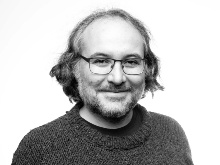
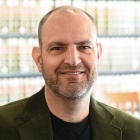
Timothy Bewes is the Owen F. Walker Professor of Humanities and Professor of English at Brown University , where he has taught since 2004. His research bridges contemporary fiction , poststructuralist theory , Marxist literary analysis , and postcolonial studies , with a focus on the politics and ethics of literary form . He has held fellowships at the Pembroke Center and Cogut Institute for the Humanities , and co-edits the Film-Thinking series. Education : DPhil and MA from University of Sussex , BA from University of North London . Bewes' scholarship interrogates the ontological status of fiction and the materiality of literary works , as seen in his National Book Critics Circle Award-winning book Free Indirect: The Novel in a Postfictional Age (2022). His recent articles explore intersections between novel theory , Black studies , and Deleuzean philosophy , emphasizing repetition , dialogicality , and anti-representational frameworks . Notable awards include the L. S. Dembo Prize (2015) and Chesler-Mallow Senior Faculty Research Fellowship (2012-13). He teaches courses such as The Terrible Century , Capitalism & its Metamorphoses , and Bakhtin and the Political Present .
Dr. hab. Piotr Łukomski is an Associate Professor at the Department of Political Theory, Institute of Political Science, University of Wrocław. His academic career focuses on the intersection of political theory, philosophy, and cultural analysis, with notable contributions to Hannah Arendt's philosophy, game theory applications in politics, and the role of imagination in political thought. Department: Political Theory Email: piotr.lukomski@uwr.edu.pl ORCID: 0000-0002-5307-616X Research Interests: His work spans conceptual metaphors in political theory, decision-making under hazardous conditions, cultural evolution of tyranny, and the aestheticization of politics. He examines how digital technologies (like VR) reshape political identity and how Arendtian frameworks apply to modern governance. Teaching: Coordinates social consulting labs and teaches decision-making processes in political contexts, with a focus on practical applications in hazardous conditions. Publications: Recent articles analyze VR-era political identity, Hannah Arendt's relevance to modern democracy, and the integration of problem-solving strategies in political thought.
Katarzyna Kaczmarska is a Senior Lecturer in Politics and International Relations at the School of Social and Political Science, University of Edinburgh. She joined the university in 2019, bringing expertise in the sociology of international relations knowledge, academic freedom, and post-Soviet politics. Her research focuses on knowledge construction among scholars and practitioners, with particular emphasis on Russia’s domestic and foreign policies. She actively contributes to academic freedom initiatives, including co-editing a 2022 special issue of the International Journal of Human Rights on academic freedom and internationalization. Education: PhD in International Studies, MSc in Development Studies (Central Asia focus), MA in International Relations. She has held fellowships at Aberystwyth University (Marie Skłodowska-Curie) and St Petersburg State University. Her teaching includes courses on Russian foreign policy and International Relations theory. Research interests encompass the sociology of IR knowledge, academic freedom challenges, and post-Soviet geopolitics. She supervises PhD projects in Global IR, academic freedom, and Russian studies. Her 2020 book, Making Global Knowledge in Local Contexts , explores how Russian scholars navigate international relations theory in policy advice. Key roles: Member of the ISA Academic Freedom Committee, University of Edinburgh Academic Freedom Working Group. Media commentary: Regular contributor to LBC News, TBS Radio South Korea, and The Conversation.
Professor Heiko Beyer holds a chair position at the Department of Sociology IV within the Faculty of Arts and Humanities and Social Sciences at Heinrich Heine University Düsseldorf. His academic work spans multiple domains of contemporary sociological inquiry with particular emphasis on prejudice studies, political sociology, and the sociology of religion. Beyer maintains an active research profile with numerous publications in leading sociological journals and serves as principal investigator for several major research projects funded by prestigious German research institutions. Professor Beyer's research interests form a cohesive body of work examining various dimensions of social prejudice and political attitudes. His scholarship demonstrates particular expertise in antisemitism studies, where he has developed innovative methodological approaches to measuring contemporary manifestations of anti-Jewish sentiment. His work also explores anti-Americanism as a comparative framework for understanding prejudice, examining the "elective affinities" between different forms of resentment. Additional research areas include the sociology of social movements, the intersection of religion and politics in Europe, and human rights implementation in diverse social contexts. Beyer's methodological approach combines quantitative survey research with qualitative analysis, often employing experimental designs to uncover the social context dependence of prejudicial attitudes. An analysis of Professor Beyer's recent publications reveals a clear trajectory toward increasingly sophisticated examinations of antisemitism in contemporary Germany. His work has evolved from theoretical examinations of antisemitism's historical development to nuanced empirical studies capturing its current manifestations across different social milieus. A distinctive feature of his recent scholarship is the examination of how global events, particularly conflicts in the Middle East, create "spaces of opportunity" for antisemitic expressions. He has also pioneered research on the relationship between political Islam and Jewish experiences in Germany, producing some of the first systematic studies on how radical Islamic ideologies impact Jewish life. His methodological contributions include developing new antisemitism scales and employing factorial survey experiments to measure latent attitudes. Professor Beyer currently leads three major research projects: "Antisemitism in the General Population of North Rhine-Westphalia" (funded by the State of North Rhine-Westphalia, 2022-2024), "Social Contexts of Equality Practices" (a Heisenberg project funded by the German Research Foundation, 2019-2024), and "The Impact of Radical Islam on Jewish Life in Germany" (funded by the Federal Ministry of Education and Research, 2020-2024). These projects collectively represent significant contributions to understanding prejudice, human rights implementation, and minority experiences in contemporary German society. His research often involves collaboration with interdisciplinary teams and has practical implications for educational programs combating antisemitism and promoting social equality.
Axel Honneth is the Jack C. Weinstein Professor for the Humanities in the Department of Philosophy at Columbia University. He also serves as Director of the Institute for Social Research at Goethe-Universität Frankfurt am Main since 2001, and holds a C4-Professor position in Social Philosophy at the same institution since 1996. Honneth has held several academic positions throughout his career: C4-Professor of Political Philosophy at Freie Universität Berlin (1992-1996) C3-Professor of Philosophy at University of Konstanz (1991-1992) Scientific assistant to Jürgen Habermas at Goethe-Universität Frankfurt/M. (1983-1989) Research Grant with Jürgen Habermas at Max-Planck-Institute for Social Sciences (1982-1983) Scientific assistant at Institute of Sociology, Freie Universität Berlin (1977-1982) Honneth's research focuses on social and political philosophy, ethics, and social theory, with particular emphasis on recognition theory and critical theory. His work bridges continental philosophy with social theory, drawing heavily on Hegelian thought while engaging with contemporary social issues. His theoretical contributions explore how recognition forms the foundation of social life and how its absence creates social pathologies across various institutional spheres. His publications reveal a consistent evolution from early engagements with Foucault and Habermas to developing his own recognition-based critical theory, culminating in influential works like 'Struggle for Recognition' and later explorations of social freedom. The thematic progression shows increasing sophistication in connecting philosophical anthropology with institutional analysis, particularly examining how freedom manifests differently across various social spheres. Honneth has received several prestigious awards for his contributions to philosophy: Ernst Bloch-Preis from the City of Ludwigshafen (Germany) in November 2015 Bruno-Kreisky Prize from the Karl-Renner Stiftung in Vienna in April 2016 Ulysses Medal, University College Dublin's highest honour, for lifetime contribution to social philosophy and critical theory in June 2016 Honneth completed his education at Rheinische Friedrich-Wilhelms-Universität Bonn and Ruhr-Universität Bochum (1969-1974), earning his M.A. in Philosophy in 1974. His postgraduate studies were at Freie Universität Berlin (1974-1976). He completed his dissertation at Freie Universität Berlin in 1982 titled 'Kritik der Macht. Foucault und die Kritische Theorie' and his Habilitation in 1990 at Johann Wolfgang Goethe-Universität Frankfurt am Main titled 'Kampf um Anerkennung.' Honneth maintains a significant international presence through his dual appointments at Columbia University and Goethe-Universität Frankfurt, continuing to influence both American and European philosophical discourse while leading one of the world's most important centers for critical theory research.
Estelle Ferrarese is a Professor of Moral and Political Philosophy at the Department of Philosophy, University of Picardy Jules Verne, and a Senior Member of the Institut Universitaire de France (class of 2022). She is the principal investigator of the International Research Network (IRN) 'The Norms of Life,' a collaborative project involving institutions such as Harvard University, Johns Hopkins University, and the University of Cape Town. Her academic affiliations reflect a strong international presence, with visiting positions at the New School, Humboldt-Universität, and Goethe-Universität. Professor of Moral and Political Philosophy, University of Picardy Jules Verne (2016–present) Senior Member, Institut Universitaire de France (2022–) Principal Investigator, IRN 'The Norms of Life' (2023–2027) Former Researcher, Marc Bloch Center, Berlin (2014–2016) Former Professor, University of Strasbourg (2012–2016) Her research lies at the intersection of critical theory, feminist philosophy, and political theory, with a focus on vulnerability, public space, forms of life, and ethical consumption. She critically engages with thinkers such as Adorno, Habermas, Nancy Fraser, and Agamben, exploring how subjectivity, recognition, and care are shaped within capitalist and democratic frameworks. Her methodological approach combines continental philosophy with social theory to interrogate normative structures in contemporary society. The trend in her recent publications reveals a deepening exploration of emotional and bodily expressions—such as sobs, gémissements (moans), and physical vulnerability—as political acts and ethical responses. Her work bridges philosophical abstraction with lived experience, particularly in contexts of care, gender, and democratic participation. Themes of reification, micrology, and the commodification of virtue recur across her writings, signaling a sustained critique of neoliberal rationality. Senior Member, Institut Universitaire de France (2022) Alexander von Humboldt-Stiftung Fellow (multiple appointments: 2003–2006, 2008, 2013, 2017, 2024) Hoover Fellow, University of Louvain-La-Neuve (2006) Writing Grant, National Book Centre (2006) Lavoisier Scholarship (2002–2003) Gastprofessur, Goethe-Universität Frankfurt (2015) Visiting Professor, New School for Social Research (2006–2007) Ferrarese has supervised and collaborated with numerous scholars, though specific advisees are not listed in the provided text. She has secured significant research funding through fellowships and institutional grants, including support from the Alexander von Humboldt Foundation and the French CNRS. Her editorial work includes directing special issues on 'The Politics of Vulnerability' and 'Forms of Life,' as well as co-editing volumes with leading philosophers like Sandra Laugier. She is actively involved in shaping contemporary debates in critical theory and feminist philosophy through publications, international collaborations, and leadership in transnational research networks. She leads the International Research Network 'The Norms of Life,' which brings together scholars from North America, Europe, and Africa to examine the normative dimensions of everyday life forms. This project reflects her commitment to interdisciplinary and globally engaged philosophy. She has also been affiliated with research centers such as CURAPP-ESS and has collaborated with institutions including the Maison Française d’Oxford and CUNY.
Prof. Dr. Rahel Jaeggi is a Professor of Practical Philosophy, Legal Philosophy, and Social Philosophy at Humboldt University of Berlin and director of the Center for Social Critique since 2018. She has held visiting professorships at Yale University, Fudan University (Shanghai), and the New School for Social Research (New York), and was a fellow at Princeton University's Institute for Advanced Study. Her research centers on critical theory and includes concepts such as Alienation , Commodification/Reification , Life Forms , and Solidarity . Her publications, including collaborations with Nancy Fraser and R. Celikates, critically examine capitalism, social institutions, and modern political-philosophical debates. Recent works like Progress and Regression (2023) and Capitalism - A Conversation in Critical Theory (2018) analyze systemic social structures and their impact on human agency. Earlier monographs, such as Critique of Forms of Life (2014) and Alienation (2016), establish her as a leading voice in contemporary Marxist and Frankfurt School traditions. Scientific Awards Fellow of the British Academy (FBA) Fellow at Princeton University's Institute for Advanced Study Jaeggi supervises doctoral students, including Philipp Jabold , whose dissertation on the world market under globalization is supported by the DFG-funded Research Training Group. Thesis supervision requires prior course engagement with her work, and she mandates participation in colloquia for master's candidates.
Matthias Lievens is an Associate Professor at the Institute of Philosophy at KU Leuven , Belgium. He is a member of the Research in Political Philosophy and Ethics Leuven (RIPPLE) and Ethics @ KU Leuven . His work focuses on political philosophy, ethics, environmental politics, and critical theory, with particular attention to the works of Sartre, Gramsci, and Schmitt. Lievens critiques modern political frameworks, exploring themes like democracy, resistance, and the interplay between time, power, and institutional inertia. Research Interests : His research spans existentialist political theory, environmental ethics, democratic legitimacy, and the philosophy of resistance. Notable contributions include analyses of Sartre’s theories on temporal pluralities, critiques of the Green Economy, and explorations of Gramsci’s and Schmitt’s political concepts. He emphasizes the re-politicization of environmental issues and the limits of representative democracy. Recent Trends : His articles highlight tensions between democracy and capitalism, the role of time in political conflicts, and the ethical dimensions of environmental governance. Recent work critiques 'green capitalism' and advocates for a return to radical democratic praxis. Labs/Teams : Active in RIPPLE, Lievens collaborates on projects addressing global governance, climate justice, and the political implications of environmental crises.
Leanna L. House is an Associate Professor in the Department of Statistics at Virginia Tech's College of Science. She specializes in Bayesian statistical modeling, with a focus on model averaging, kernel regression, and uncertainty analysis of computer models. Her research spans applications in proteomics, bioinformatics, cosmology, climatology, and hydrology. She teaches courses such as Applied Bayesian Statistics and Hierarchical Models, emphasizing data visualization and interactive analytics. Education: Ph.D. in Statistics, Duke University (2006) M.S. in Statistics, Duke University (2003) M.A.T. in Curriculum Development, Cornell University (1999) B.S. in Biometry and Statistics, Cornell University (1998) Her work integrates data mining and visualization to enhance human-data interaction, with notable contributions to environmental modeling and proteomic analysis. She collaborates on interdisciplinary projects, including climate change studies and route choice models in transportation systems.
Dr. Katherina Kinzel Dr. Katherina Kinzel is an Assistant Professor in the Department of Philosophy and Religious Studies at Utrecht University, specializing in the History of Philosophy. Her work focuses on Critical Theory, Neo-Kantianism, and the Philosophy of History, with particular emphasis on abstraction critique and reification in modern thought. She holds a BA and PhD in Philosophy. Research: Current projects include the critique of abstraction in Critical Theory (Lukács, Adorno) and reification’s role in ecological crises. Past research explored neo-Kantian responses to historicism and relativism, particularly through figures like Windelband and Rickert. Publications: Over 20 peer-reviewed articles since 2012, including works on Cassirer’s teleology, neo-Kantian conceptualism, and women philosophers in 19th-century German thought. Edited volumes include The Emergence of Relativism (2019). Affiliations: Faculty of Humanities, Utrecht University. Active in interdisciplinary debates on historical methodology and epistemology.
Prof. Dr. Trudy Dehue holds a professorship at the University of Groningen's Faculty of Behavioural and Social Sciences, specializing in the Theory and History of Psychology. Her work critically examines the intersections of medical history, research methodologies, and ethical science communication. She has contributed significantly to understanding the historical development of randomized controlled trials and their societal implications. Her research spans topics like medicalization critiques, ADHD neurobiology, and abortion terminology history. Key achievements include receiving the Academy Medal (2019) and being elected to the Royal Holland Society of Sciences (2016). She has authored over 76 publications and participated in 85 professional activities including keynote addresses at major conferences. Her media engagements emphasize public science literacy, notably through appearances in Dutch media outlets discussing reproductive rights and mental health policy. Education Background: Not explicitly listed but inferred through academic career progression Grants & Funding: Implied through extensive research output but specifics not provided in text Her research interests emphasize critical historiography of psychological and medical practices, particularly focusing on how definitions and methodologies shape both science and society. Current projects include a book series on pregnancy history with poet Willemijn van de Walle.
Marcin Trybulec is a Senior Lecturer at the Department of Ontology and Epistemology, Faculty of Philosophy and Sociology, University of Maria Curie-Skłodowska (UMCS). He holds a habilitation degree in Philosophy and has a background in sociology and cognitive science. His research focuses on the intersection of language, media, and cognition, with particular emphasis on cognitive artifacts, extended mind theory, and rationality. Academic Background: PhD in Cognitive Sciences and Social Communication; Habilitation in Philosophy International Affiliations: Visiting researcher at University of Toronto, Leiden University, Granada University, UC San Diego, and Aarhus University His research explores how language and media technologies shape cognitive processes, spanning topics like: Cognitive artifacts and problem-solving Extended mind hypothesis Media ecology and technological determinism Metalinguistic awareness Material culture's epistemic role Embodied cognition in technologically-mediated environments The 15 most recent publications reveal consistent focus on: Philosophy of cognitive technologies Epistemological implications of material representations Media's influence on rationality Interdisciplinary approaches combining philosophy and cognitive science Analysis of symbolic systems' cognitive impact Anthropology of technical communication NCN Sonata grant (2018-2021): Understanding Cognitive Artifacts MEiN grant (2021-2023): Science Communication as Art NCBiR grant (2017-2019): Logi.Kom. From Logical Thinking to Effective Communication MNiSW grant (2010-2011): Toronto School's Theory of Social Communication He has presented research at major international conferences including: International Wittgenstein Symposium Media Ecology Association Convention International Association for Cognitive Semiotics Conference Polish Philosophical Congresses
Daniel Hernández is a Postdoctoral Researcher at the Institute for Artificial Intelligence (KI) under the Cluster of Excellence IntCDC at the University of Stuttgart. He is part of the Analytic Computing group within the Institute for Parallel and Distributed Systems (IPVS). His work focuses on Semantic Web technologies , particularly SPARQL , RDF , and knowledge graph applications in interdisciplinary design workflows . Research Trends : His publications (2015–2025) emphasize semantic query processing , provenance computation , and interoperability between architectural data and knowledge graphs . Key innovations include the eSPARQL language for epistemic queries, NPCS for native provenance in SPARQL, and BHoM to bhOWL for integrating building data with ontologies. Teaching & Collaborations : He has held teaching roles at the University of Stuttgart ( Human-Computer Interaction with Knowledge Graphs ), University of Aalborg ( Group Supervisor ), and University of Chile ( Lecturer for The Web of Data ). Collaborations span institutions like Buro Happold , TU Wien , and INRIA , with publications in journals like Proceedings of the VLDB Endowment and conferences such as WWW and ISWC .
Willow Verkerk is a Lecturer in the Department of Philosophy at the University of British Columbia (UBC), within the Faculty of Arts. She specializes in continental philosophy, feminist philosophy, and the history of philosophy, with additional interests in ethics and anti-racist philosophy. Her postdoctoral research (2021–2024) was conducted at KU Leuven’s Gendered Mimesis Project, where she explored critiques of Enlightenment subjectivity through the lenses of Adriana Cavarero, Judith Butler, and Catherine Malabou. This work resulted in a monograph under contract with Cambridge University Press, titled Nietzsche and Women , alongside edited collections, book chapters, and presentations at institutions like Meiji University, Humboldt University Berlin, and the University of Iceland. Verkerk’s research often intersects with themes of friendship, gender, and mimesis, particularly in her analysis of Nietzsche’s ethical frameworks and their implications for contemporary feminist thought. She has contributed to journals such as Critical Horizons , Nietzsche-Studien , and Amity: The Journal of Friendship Studies , and her edited works include Homo Mimeticus III (Leuven University Press, 2024) and a special issue of Critical Horizons on ‘Mimetic Inclinations.’ She has held visiting roles and delivered lectures internationally, including at the School of Materialist Research in London and the University of Winchester. Her current projects emphasize rethinking philosophical legacies and the intersection of ethics with anti-racist and queer perspectives. Teaching focuses on ethics, continental philosophy, and gender theory, with courses like Introduction to Ethics , Sex, Gender and Philosophy , and Power and Oppression . She is also involved in curricular development at UBC and has engaged in public lectures on topics ranging from ‘The Body as Force in Performance Art’ to ‘Nietzsche and the Philosophical Value of Friendship.’
Matthew Dimick is a Professor of Law at the University at Buffalo School of Law and Director of the Baldy Center for Law and Social Policy. His research focuses on labor and employment law, contracts, tax policy, legal theory, law and economics, and the political economy of income inequality. He holds a JD from Cornell Law School and a PhD in Sociology from the University of Wisconsin-Madison, with prior experience at Georgetown University Law Center and the Service Employees International Union. Dimick's research examines the intersection of law and political economy, with current projects on capitalism's relationship with antidiscrimination law and co-editing a volume on Jürgen Habermas's legal theory. His work critically addresses topics including wage regulations, racial reification under capitalism, and tensions between labor rights and antitrust frameworks. His publications demonstrate sustained focus on income inequality mechanisms, with recent analyses of minimum wage impacts, neoliberal data distortions, and redistributive legal frameworks. Articles frequently engage with labor law's philosophical foundations, critiques of market power, and policy alternatives for economic justice. Dimick teaches courses in contracts, labor law, employment discrimination, tax policy, and law & society. He has contributed to public discourse through media outlets like The Atlantic and Jacobin, translating complex legal-economic concepts for broader audiences.