Mary C. Meyer is a Professor in the Department of Statistics at Colorado State University. Her research focuses on nonparametric function and density estimation, particularly under shape restrictions, with applications across ecological modeling, survey methodology, and statistical computing. Education: Ph.D. in Statistics from the University of Michigan (1996) Research Interests: Nonparametric function and density estimation Shape-restricted inference Constrained regression models Bayesian nonparametric methods Penalized isotonic regression Statistical software development Recent Publications show a focus on constrained regression splines, domain mean estimation, and applications in forest dynamics and survey methodology. She has developed several R packages including cgam and tools for cone projections. Grants: Funded by NSF grant DMS-0905656 for research on constrained optimization algorithms. Email Contacts: meyer@stat.colostate.edu and mmeyer@stat.uga.edu
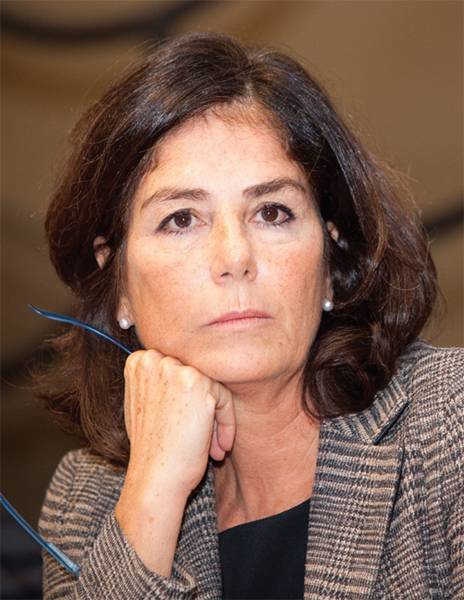
Lucrezia Reichlin is a Professor of Economics at the London Business School , where her research bridges macroeconomic policy and advanced econometric techniques. She holds key advisory roles as a non-executive director for major financial institutions like UniCredit Banking Group and Eurobank Ergasias SA, and chairs the Scientific Council at the Brussels-based think-tank Bruegel . Previously, she served as Director General of Research at the European Central Bank (2005-2008) and held academic positions at the Université Libre de Bruxelles and Columbia University. Education: Ph.D. in Economics, New York University Reichlin is a pioneer in now-casting and high-dimensional time series analysis , developing econometric models to process real-time economic data. Her work has been adopted by central banks and private investors globally, focusing on monetary policy evaluation , business cycle dynamics , and forecasting methodologies . She co-founded the firm Now-Casting Economics Ltd in 2011 to commercialize these techniques. Scientific Awards & Honors: 2016 Birgit Grodal Award of the European Economic Association 2016 Isaac Kerstenetzky Scholarly Achievement Award International Economics Award, Chamber of Commerce of Genoa (2015) Grand Ufficiale dell'Ordine della Stella d'Italia (2015) Fellow, British Academy Fellow, European Economic Association Distinguished Fellow, CEPR As a columnist for Corriere della Sera and member of the Commission Economique de la Nation (France), she influences public and policy debates. She also founded the Ortygia Foundation , promoting female education in southern Italy. Her methodological innovations in dynamic factor models , Bayesian VARs , and shrinkage techniques have reshaped modern macroeconomic analysis.
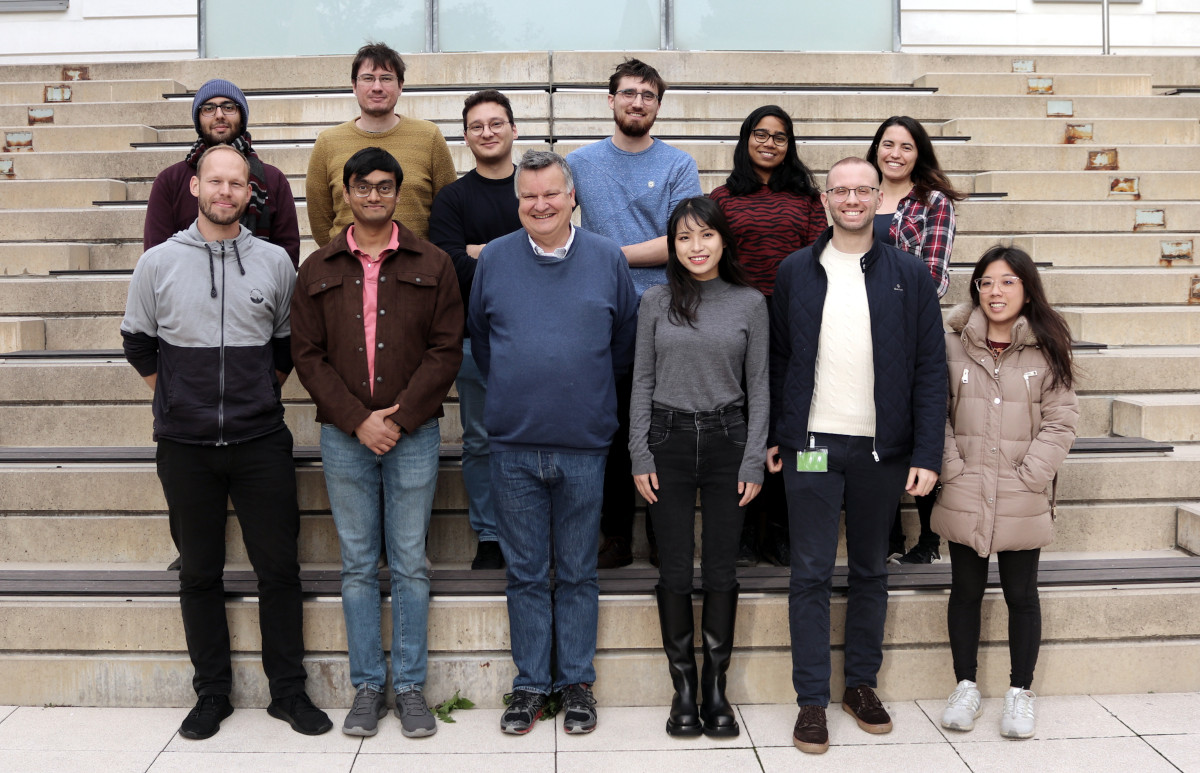
Tom Henzinger is a Professor at the Institute of Science and Technology Austria (ISTA), leading the Tom Henzinger Group. His research focuses on formal methods to enhance software quality, addressing challenges in concurrent systems, real-time and embedded systems, quantum computing, neural networks, and biochemical reaction networks. He has advised numerous PhD students and postdoctoral researchers, contributing to advancements in these fields. His work emphasizes mathematical rigor in software analysis and verification. Current projects include VAMOS (Middleware for best-effort third-party monitoring) and SPyCoDe (Semantic and Cryptographic Foundations of Security and Privacy by Compositional Design). Past projects involved model checking and runtime verification techniques. Research interests span concurrent software synthesis, quantitative modeling of reactive systems, predictability of real-time systems, and formal methods applied to quantum computation and neural networks. He is also engaged in exploring hardware-optimal solutions for quantum algorithms. Administrative Assistant Ksenja Harpprecht supports the group. Courses taught include 'Formalisms Every Computer Scientist Should Know,' focusing on logics, automata, and semantics. The group hosts regular seminars, such as the Tuesday group seminar and the Wednesday joint formal methods seminar with TU Wien's FORSYTE group.
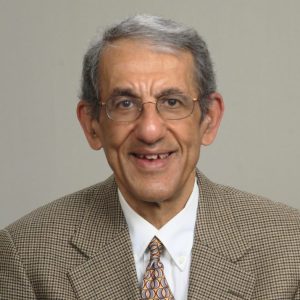
Joseph Ibrahim is an Alumni Distinguished Professor in the Department of Biostatistics at the Gillings School of Global Public Health, University of North Carolina at Chapel Hill, where he has served since 2002. He currently holds dual leadership roles as Director of Graduate Studies for the Department of Biostatistics and Director of the Biostatistics for Research in Genomics and Training Grant. His methodological innovations in Bayesian survival analysis and missing data methodologies have significantly advanced public health research, particularly in cancer genomics applications. Professor Ibrahim's research program centers on developing statistical frameworks for complex clinical and genomic data. His seminal contributions include Bayesian cure rate models, prior elicitation techniques, and diagnostic tools for high-dimensional survival analysis. Current work focuses on integrating multi-omics data with longitudinal tumor burden metrics and refining adaptive clinical trial designs for biomarker-driven populations. These methodologies directly address critical challenges in precision oncology and pharmacovigilance, enabling more robust inference from real-world evidence. His 2025 publications reveal three dominant trends: (1) Advancements in cure rate modeling for joint longitudinal-survival data with change points, (2) Computational innovations for high-dimensional penalized models using autoencoders and R packages like hdbayes, and (3) Methodological refinements for Bayesian trial design incorporating historical controls. These works consistently bridge theoretical statistics with cancer research applications, particularly in tumor phylogeny inference and signal detection for adverse events. Scientific awards include: Samuel S. Wilks Memorial Award (2024) from the American Statistical Association for distinguished contributions to biostatistics Professor Ibrahim has mentored 48 pre-doctoral students and 8 postdoctoral fellows, with exceptional thesis publication records in top statistical journals. As principal investigator of the T32 Cancer Genomics Training Grant since 2004, he has secured funding for 35 doctoral students. His curriculum leadership includes modernizing eight graduate courses and establishing new data science computing sequences since 2015. Current advising focuses on Bayesian methodology development for cancer genomics applications. He directs the department's Biostatistics for Research in Genomics initiative and leads the T32 Cancer Genomics Training Grant team, which integrates statistical methodology development with translational cancer research across UNC's Lineberger Comprehensive Cancer Center and clinical partners.
Claudia Klüppelberg is a Professor and Chair of Mathematical Statistics at the Center for Mathematical Sciences, Technische Universität München (TUM). Her academic journey includes positions at ETH Zurich, University of Mainz, and TUM since 1997. She holds a Carl von Linde Senior Fellowship at TUM-IAS, focusing on Risk Analysis and Stochastic Modeling. Her research bridges applied probability, statistics, and their applications in finance and insurance, emphasizing extreme value theory, risk processes, and stochastic networks. She has received prestigious awards such as the New Frontiers in Risk Management Award (2007) and Cross of Merit (2001). Her work addresses real-world challenges in financial risk management, including systemic risk in networks and operational risk modeling. Her recent publications explore causal analysis of extreme risks in networks, max-linear models, and Bayesian networks for extreme events. She contributes to academic leadership as an editorial board member and advisor, promoting interdisciplinary stochastic sciences.
Georgios Moschidis is a Tenure Track Assistant Professor at École Polytechnique Fédérale de Lausanne (EPFL), affiliated with the Chair of Mathematical General Relativity (CMGR) and the Mathematics Section of the School of Basic Sciences (SB-SMA). He holds dual positions within the Department of Mathematics (MATH) and the SMA-ENS unit, focusing on advanced mathematical physics and geometric analysis. His research interests center on mathematical general relativity, differential geometry, and partial differential equations, with a strong emphasis on spacetime stability problems, trapped surface formation, and geometric analysis in curved spacetimes. He teaches advanced courses such as Differential Geometry IV (General Relativity) and Analysis IV, reflecting his expertise in theoretical physics and advanced mathematics. Moschidis' work includes groundbreaking studies on the instability of anti-de Sitter (AdS) spacetime, ergosphere instabilities, and scalar wave dynamics in black hole geometries. His publications span topics from Vlasov systems to geometric inequalities in Gauss spaces, demonstrating interdisciplinary rigor. He advises doctoral student Abraham Gabriel Dorsaz and maintains active research through the CMGR lab (https://www.epfl.ch/labs/cmgr/). His research is supported by EPFL's academic framework, and he contributes to both teaching and doctoral supervision within the School of Basic Sciences.
Prof. Dr. Karoline Disser is a Professor of Analysis at the Institute of Mathematics, Universität Kassel, within Faculty 10: Mathematics and Natural Sciences. Her research focuses on applied analysis and partial differential equations, particularly in fluid dynamics, fluid-structure interaction, and complex flow systems. She holds a PhD from TU Darmstadt (2009) and habilitation from Humboldt-Universität zu Berlin (2017). Her teaching includes advanced courses in calculus of variations, function spaces, and mathematical fluid dynamics, spanning institutions like TU Darmstadt, HHU Düsseldorf, and TU Berlin. Research interests encompass reaction-diffusion systems, elliptic/parabolic regularity, and variational methods for evolution equations. Recent publications (2016–2022) address fluid-structure interaction, semiconductor equations, and multiscale chemical reaction modeling. Her work emphasizes rigorous mathematical analysis with applications in engineering and geophysical systems. No awards are listed, but her contributions reflect interdisciplinary engagement in applied mathematics and continuum mechanics.
Dr. Mahdi Jampour is a Researcher at the Centre for the Study of Manuscript Cultures (CSMC), University of Hamburg, and a member of the Cluster of Excellence ‘Understanding Written Artefacts’ (UWA). He holds a Ph.D. in Computer Science (Artificial Intelligence) from Graz University of Technology (2016), with postdoctoral research at Iran Telecommunication Research Center (ITRC) (2016–2017). He previously served as Assistant Professor at Quchan University of Technology (2017–2024) and led Project RFA05 (2022–2025) focusing on visual pattern similarity in written artefacts. Education: Ph.D. in Computer Science (Artificial Intelligence), TU Graz, Austria (2016) Postdoctoral Fellowship, ITRC, Iran (2016–2017) Assistant Professor, Quchan University of Technology (2017–2024) Research Interests: Dr. Jampour specializes in applying AI and computer vision to cultural heritage preservation, including palimpsest analysis, historical document digitization, and pattern recognition. His work integrates generative models, deep learning, and semi-supervised methods to address challenges in manuscript analysis and multispectral imaging. Publications Trends: Recent work focuses on generative AI for palimpsest deciphering, dataset creation for sports and cultural heritage analysis, and facial expression recognition surveys. His articles bridge computer science with digital humanities, emphasizing cultural artifact preservation through technological innovation. Awards: Kazemi-Ashtiani Award (2019) Chamran Award (2017) KUWI Prize (2015) Marshal Plan Fellowship (2015) Best MSc Thesis Award (2009) Advising & Grants: Led UWA’s Project RFA05 (2022–2025) and contributed to international preservation initiatives like the Timbuktu Manuscript Training Project. His research is supported by grants from the Iran National Elites Foundation and the Iranian Ministry of Science. Labs & Collaborations: Active in CSMC’s labs, including the Written Artefact Profiling Guide and Mobile Lab Container projects. Collaborates with institutions globally on digitization and cultural heritage safeguarding.
Jeffrey Heinz is a Professor at Stony Brook University , holding a joint appointment in the Department of Linguistics and the Institute for Advanced Computational Science . He has been at Stony Brook since 2017, following a decade at the University of Delaware. His research focuses on computational linguistics, formal language theory, grammatical inference, and phonology, with applications to robotics and artificial intelligence. He earned his Ph.D. in Linguistics from UCLA in 2007. Heinz’s work bridges theoretical linguistics and computational methods, emphasizing the learnability of linguistic patterns through formal models. He has contributed to understanding phonological typology, reduplication, and the mathematical foundations of language learning. His research has been published in Science , Phonology , and Machine Learning , among others. He was honored with the 2017 Early Career Award from the Linguistic Society of America for his contributions to computational learning theory in linguistics. He teaches advanced courses in computational phonology and linguistics, including a course at the LSA Summer Institute. He actively organizes academic sessions and serves on steering committees for conferences like ICGI. His interdisciplinary approach integrates linguistics with computer science, robotics, and mathematical logic. Award highlights include: 2017 Early Career Award (Linguistic Society of America) He advises students in linguistics and computational fields, though specific names are not listed here. His research labs and collaborations involve computational linguistics and robotics projects, such as stress pattern databases and grammatical inference benchmarks.
Craig van Coevering is an Associate Professor in the Department of Mathematics at Boğaziçi University. He holds a Ph.D. from Stony Brook University (2006), an M.S. from Portland State University (1998), and a B.A. from Reed College (1993). His primary research focuses on differential geometry, particularly complex and Riemannian geometries. His work explores deformation theory, stability analysis, and geometric structures including Calabi-Yau metrics, Sasakian manifolds, and extremal Kähler metrics. Research integrates techniques from partial differential equations, geometric analysis, and algebraic geometry to investigate Ricci-flat spaces, toric varieties, and hyperkähler manifolds. Publications demonstrate consistent focus on geometric flows, Einstein metrics, and non-compact manifolds, with recent emphasis on variational methods and CR geometry. No awards or student advising details are provided.
Alexandre Duret-Lutz is a Professor at École pour l'Informatique et les Techniques Avancées (EPITA) in the Laboratoire de Recherche de l'Epita (LRE). He holds a habilitation (HDR) from Université Pierre & Marie Curie (Paris 6). His research focuses on ω-automata and their application in model checking, particularly through the development of the SPOT library, a C++ tool for manipulating ω-automata and implementing model checkers. Education: HDR from Université Pierre & Marie Curie (Paris 6). Research interests include formal verification, automata theory, and LTL synthesis. He has contributed to tools like Vaucanson and Seminator, and is involved in the reactive synthesis competition SYNTCOMP. His work emphasizes optimizing automata constructions and improving verification efficiency. Key awards include the Best Paper Award at CIAA'24 and the Best Paper Award at Ada-Europe'01. He teaches courses on algorithms, complexity, and reproducible research at EPITA. Labs/Teams: Active contributor to the LRE and SPOT library development. Collaborates on projects involving formal methods and automated synthesis.
Shahin Shahrampour is an Assistant Professor in the Department of Mechanical & Industrial Engineering at Northeastern University, with a courtesy appointment in Electrical & Computer Engineering. He holds a Ph.D. in Electrical & Systems Engineering from the University of Pennsylvania, an M.A. in Statistics from The Wharton School, and a B.S. in Electrical Engineering from Sharif University of Technology. Prior to Northeastern, he was at Texas A&M University and held a postdoctoral fellowship at Harvard University. Research Interests: Machine learning, optimization and control, distributed and sequential learning, with a focus on computationally efficient methods for data analytics. Specific areas include manifold optimization, online and reinforcement learning, non-convex optimization, and statistical signal processing. His work bridges theory and applications in networked systems and dynamic environments. Awards & Grants: Received a $500,000 NSF grant (2023) for distributed optimization in non-convex environments. Best Paper Award at IEEE ICASSP 2022 for contributions to signal processing. TEES Engineering Genesis Award (2020) for multidisciplinary research at Texas A&M. Principal Investigator on NSF-funded projects in collaborative online optimization and decentralized learning. Labs & Teams: Leads research in machine learning and control systems at Northeastern University, focusing on interdisciplinary challenges in distributed optimization and real-time learning. His lab emphasizes theoretical foundations and practical implementations in networked and dynamic systems.
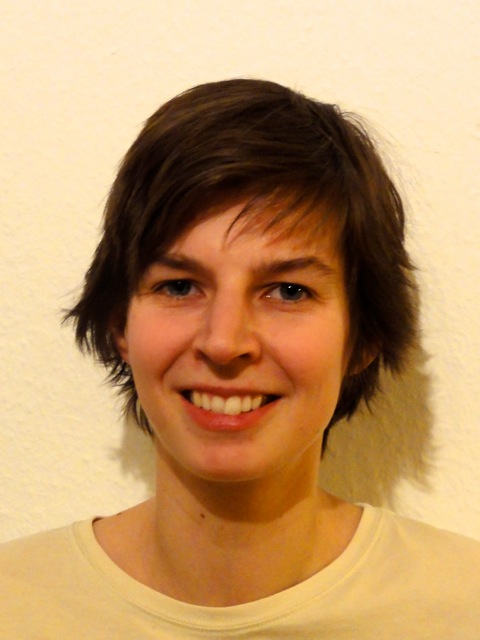
Ivana Malenica is an Assistant Professor of Biostatistics at the University of North Carolina at Chapel Hill's Gillings School of Global Public Health. Previously, she was a HDSI Fellow at Harvard Data Science Initiative and Postdoctoral Fellow in Statistics at Harvard University. She holds a Ph.D. in Biostatistics from UC Berkeley and a B.S. in Mathematics from Arizona State University. Her research focuses on causal inference, machine learning, nonparametric statistics, efficiency theory, and precision health. She specializes in longitudinal and structured dependent settings including adaptive sequential experiments, online learning, and reinforcement learning applications in personalized health. Her recent publications demonstrate strong methodological contributions to causal inference and machine learning, with applications spanning clinical trials, public health, genomics, and reinforcement learning. Her work consistently develops novel statistical approaches for complex data structures. Awards include: Harvard Data Science Initiative Fellowship (2022) Berkeley Wellness Letter Fellowship (2020) Wellness Scholarship in Honor of Chin Long Chiang (2019) Berkeley Institute for Data Science Moore-Sloan Fellowship (2018) She teaches graduate courses including Advanced Probability and Statistical Inference I (BIOS 760). Her computational work includes contributions to the tlverse ecosystem for causal inference in R.
Ying Qing Chen is a Professor of Medicine at the Stanford Prevention Research Center, part of the Department of Medicine at Stanford University. Additionally, she holds an Affiliate Professor position in Biostatistics. Her roles include serving as Director of the Palo Alto Veteran Affairs Cooperative Studies Coordinating Center since 2021. Dr. Chen earned her BS in Mathematics from Peking University (1992) and her PhD in Biostatistics from Johns Hopkins University (1999). Her research focuses on statistical methodologies for HIV/AIDS prevention , including biomarkers, clinical trial design, epidemiological methods, and survival analysis. She also contributes to studies on vaccine effectiveness, adherence to antiretroviral treatments, and the intersection of social stigma with healthcare access in high-risk populations. Her work spans multinational collaborations, such as the HPTN 052, 069/ACTG 5305, and 075 trials, and she leads projects funded by NIH and industry partners (e.g., Sinovac Biotech). Key areas of expertise include evaluating combination prevention strategies, developing statistical surrogacy measures, and analyzing longitudinal clinical data to inform public health policies. Projects: Co-PI for the Cytomegalovirus (CMV) Vaccine in Orthotopic Liver Transplant candidates (COLT) study (NIH/NIAID U01 AI163090-01, 2021-Present) PI for Research on Global Vaccine Application and Trends (Sinovac Biotech, 2021-Present) PI/MPI for Ganciclovir to Prevent Cytomegalovirus Reactivation (NIH/NHLBI U24 HL147012, 2020-Present) Dr. Chen’s scientific contributions have been recognized with the Fellowship of the American Statistical Association (2018) . She teaches courses such as Introduction to Clinical Trials: Design, Conduct, and Analysis (CHPR 211) and supervises thesis writing through Community Health and Prevention Research Master's Thesis Writing (CHPR 399). Her research emphasizes improving HIV prevention outcomes, addressing challenges in adherence and combination therapies, and leveraging statistical innovations to enhance vaccine efficacy assessments. She has also demonstrated expertise in handling complex longitudinal datasets and conducting feasibility studies for at-risk populations in sub-Saharan Africa.
Glen Berseth is an Associate Professor in the Department of Computer Science and Operations Research at the University of Montreal and a Senior Academic Fellow at Mila – Quebec Institute for Artificial Intelligence. He is also a Canada CIFAR Chair in AI and Co-Director of the Montreal Robotics and Integrative AI Laboratory (REAL). His work focuses on reinforcement learning, robotics, and deep learning applied to autonomous systems. He holds a postdoctoral background from Berkeley Artificial Intelligence Research (BAIR), working under Sergey Levine. His research emphasizes real-world applications, including human-robot collaboration, continual learning, and multi-agent systems. He teaches courses on robot learning at the University of Montreal and Mila, covering cutting-edge techniques for general-purpose robots. Key research interests include reinforcement learning for robotics, adaptive interfaces, and sim-to-real transfer. His recent work addresses challenges in autonomous learning systems, such as robust locomotion control and efficient exploration strategies. Notable awards include the Canada CIFAR AI Chair. He has supervised numerous students, including PhD candidates Ozgur Aslan and Siddarth Venkatraman, and Master’s students like Roger Creus-Castanyer and Léa Demeule, focusing on topics like reinforcement learning and robotic control. Berseth leads research projects funded by organizations like the CRSNG, FCI, and MITACS, addressing topics such as modular lifelong learning and generalization in robotics. His lab, REAL, explores embodied AI and robotics integration.