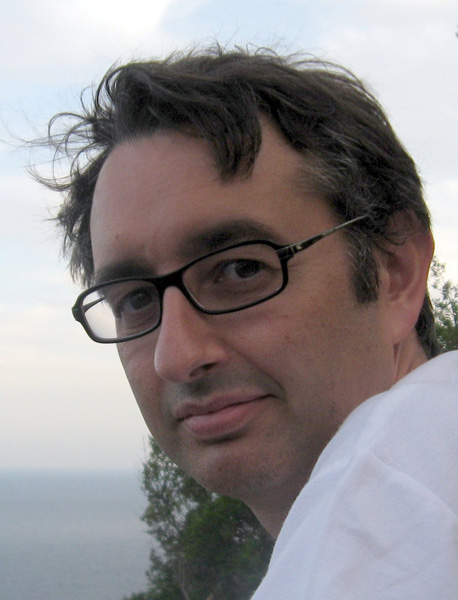
Robert F. Tichy is a Professor at the Institute of Analysis and Number Theory , Graz University of Technology, Austria. His career spans over four decades with significant contributions to Diophantine equations , uniform distribution , and quasi-Monte Carlo methods . He has held multiple editorial board positions and administrative roles , including Dean of the Faculty of Mathematics, Physics and Geodesy (2018-2019). Research Interests : Uniform distribution, Diophantine equations, algorithmic number theory, fractal structures, quasi-Monte Carlo methods, and mathematics in finance/insurance. Awards : Austrian Mathematical Society award (1985), Honorary Doctorate (University of Debrecen, 2017), Jean-Morlet Chair (2020), and memberships in prestigious societies. Publications : Over 200 papers with recent works (2024) focusing on Diophantine problems , pseudorandom sequences , and Carlitz coefficients . Teaching : Regular courses for engineering and mathematics students, including annual lectures on insurance mathematics .
Michael Kunzinger is a Professor at the Department of Mathematics, Faculty of Mathematics, University of Vienna. His research spans generalized functions, differential geometry, and mathematical physics, with a focus on Colombeau algebras, Lorentzian length spaces, and non-smooth geometric structures. His recent work includes stochastic PDEs on manifolds, synthetic curvature bounds, and causality in Lorentzian geometry. Articles highlight applications to conservation laws, sectional curvature analysis, and rigidity theorems. Notably, he explores connections between generalized functions and smooth manifold theory, advancing geometric regularization techniques. 2024: 9 publications on singular limits, Ricci curvature, and synthetic geometry. 2022: Studies on null distance and singularity theorems in low-regularity spacetimes.
Arnold Neumaier is a Full Professor (Chair for Computational Mathematics) at the Faculty of Mathematics, University of Vienna, Austria. His research focuses on global optimization, heuristic optimization, nonlinear optimization, and optimization under uncertainty. He leads a research group developing state-of-the-art software for optimization, numerical analysis, and statistics. Collaborations include work on global optimization with Immanuel Bomze and Vladimir Kolmogorov, heuristic optimization with Nysret Musliu and Günther Raidl, and optimization for data analysis with Dan Alistarh and Radu Boț. Neumaier holds a Ph.D. from the Free University of Berlin (1977) and has held academic positions at the University of Freiburg (1987–1993), AT&T Bell Laboratories (1993–1994), and visiting roles at Princeton University, the University of Nice, and RWTH Aachen. His work spans computational mathematics, quantum physics, and mathematical software development. He maintains extensive web resources on optimization and numerical analysis. Research interests include algorithmic software development, verified computing, mathematical modeling languages, uncertainty modeling, and quantum physics. His group comprises 1 full professor, 1 associate professor, 1 university assistant, 3 postdocs, and multiple PhD students. Key contributions include the 'Global Optimization' WWW site and foundational work in causal perturbation theory for quantum field theory.
Prof. Franz Baader is a Full Professor for Automata Theory and Director of the Institute of Theoretical Computer Science at TU Dresden, Germany. He has held academic leadership roles including Dean of the Faculty of Computer Science (2012–2015). His research focuses on Logic in Computer Science, Knowledge Representation, and Description Logics. He has published extensively in top venues and received prestigious awards like the Herbrand Award (2020). His contributions include foundational work on automated deduction and term rewriting. Education: Dr.-Ing. in Computer Science (1989, FAU Erlangen-Nürnberg). Professional experience includes roles at DFKI, RWTH Aachen as Associate Professor, and visiting scholarships at NICTA (Australia). He is a Fellow of EurAI (2004). Research Interests: His work bridges theoretical computer science and practical knowledge representation systems. Key areas include description logics, automated reasoning, and formal methods. He has pioneered techniques for ontology repair and explanation generation in DL systems. Recognition: Over 250+ publications, H-index 69 (Google Scholar). Member of editorial boards for 6 journals, former President of CADE Inc., and active in international conferences like IJCAR and RTA.
Radu Ioan Boț is a Professor at the Faculty of Mathematics at the University of Vienna . Since 2020, he has served as Dean of the Faculty of Mathematics and Head of the Institute of Mathematics . He is also the Speaker of the FWF DK Vienna Graduate School on Computational Optimization and a Founding Member of the Research Platform Data Science@Uni Vienna . Education Ph.D. in Mathematics (2003, Chemnitz University of Technology, Summa cum laude ) M.Sc. in Mathematics (1999, Babeş-Bolyai University, Grade: 10 ) Diploma in Mathematics (1998, Babeş-Bolyai University, Grade: 10 ) Research Interests focus on convex and nonconvex optimization , monotone operators , duality theory , and proximal algorithms . His work bridges continuous and discrete time models , emphasizing fast convergence rates and Tikhonov regularization for problems in image processing , machine learning , and inverse problems . Recent Publications highlight advancements in primal-dual splitting , inertial dynamics , and stochastic optimization , with applications to GANs , phase retrieval , and structured convex minimization . Scientific Awards include the 2003 University Prize of Chemnitz University of Technology , 1998 award for graduating with the best grade from Babeş-Bolyai University, and fellowships during his Ph.D. and pre-Ph.D. research stays. Editorial Roles include Editor-in-Chief of SIAM Journal on Optimization (2026–2029) and editorial board membership for journals like Mathematical Programming , Computational Optimization and Applications , and Journal of Optimization Theory and Applications .
Markus Faustmann is a Senior Scientist at the Institute of Analysis and Scientific Computing (E 101) at TU Wien. He holds a Dipl.-Ing. Dr.techn. degree in Technical Mathematics. His research focuses on numerical methods for partial differential equations (PDEs), finite element methods (FEM), boundary element methods (BEM), hierarchical matrices, elliptic regularity, and fractional differential operators. Faustmann has been recognized with the TU Best Teacher Award (2022) and TU Best Paper Award (2022) from TU Wien's Faculty of Mathematics and Geoinformation. Education: PhD in Mathematics from TU Wien (2015), supervised by J.M. Melenk; Diploma in Technical Mathematics (2011) and Bachelor of Science in Mathematics (2009), both from TU Wien. Research Interests: Development and analysis of numerical methods for non-local operators, including fractional Laplacian problems, hp-FEM, matrix compression techniques, and error estimation. His work emphasizes efficient discretization strategies and theoretical foundations for complex PDE systems. Teaching: Current courses include Numerical Methods for PDEs (Summer 2025), Non-local Operators (Winter 2024/25), and Scientific Programming for Interdisciplinary Mathematics . He has also supervised numerous bachelor's and master's theses in numerical analysis and computational mathematics. Awards: His research contributions have been highlighted through prestigious awards, reflecting his expertise in both teaching and applied numerical analysis.
Alexis de Colnet is a PostDoc Researcher at the Vienna University of Technology , affiliated with the Faculty of Informatics and the Algorithms and Complexity department. Their work focuses on overcoming intractability in knowledge compilation, computational complexity, and model counting. Research Interests: Knowledge Compilation Computational Complexity Artificial Intelligence Model Counting Answer Set Programming Theoretical Computer Science Recent Publications explore trends in proof systems, compilation efficiency, and translations between machine learning models for explainability. These works are deeply rooted in theoretical computer science and AI, addressing challenges in knowledge representation and computational hardness. Projects: Overcoming Intractability in the Knowledge Compilation Map (2022–2025) QBFPC (2022–2025) Funded by the Austrian Science Fund (FWF).
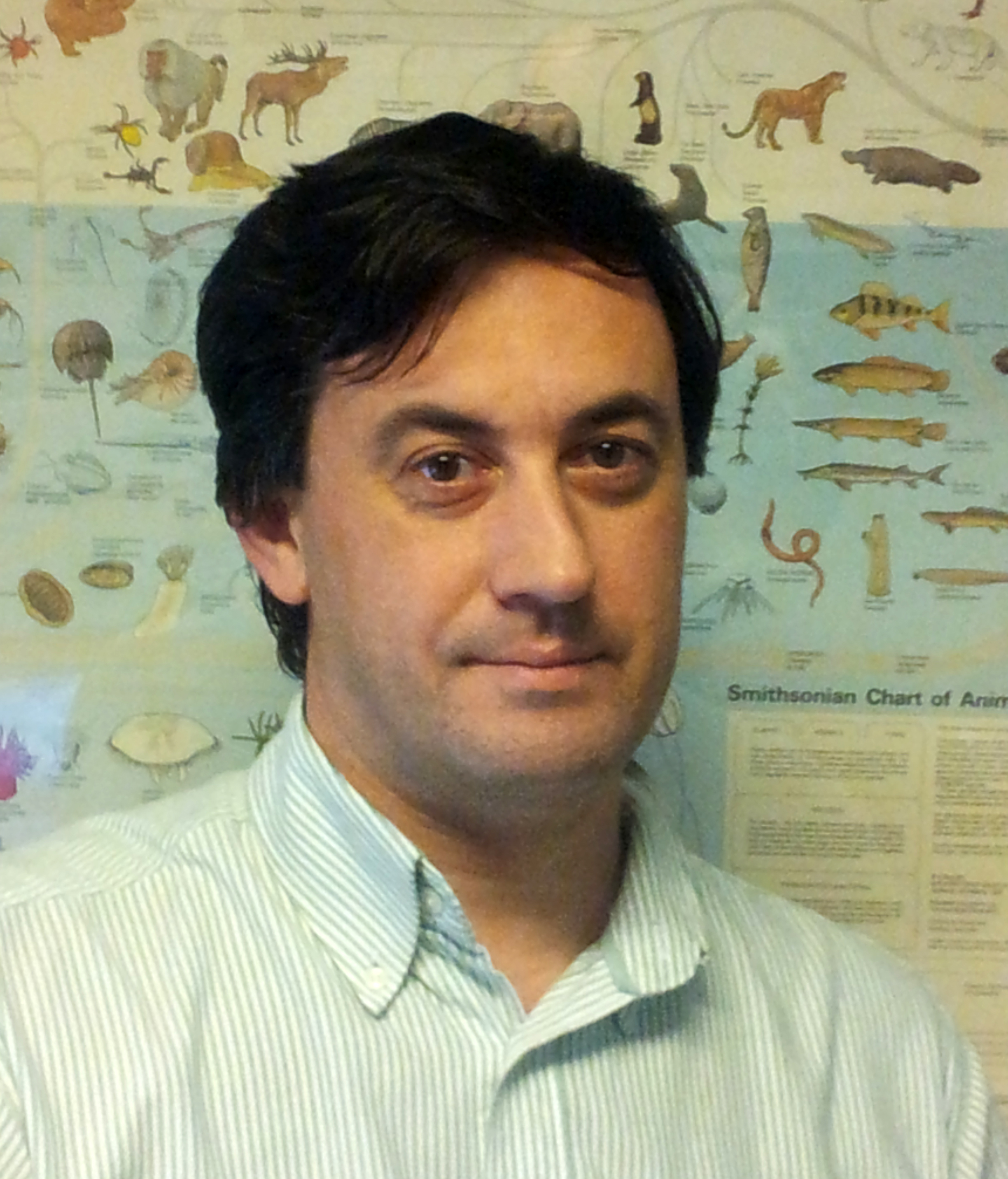
Rafael Zardoya is a Research Professor at the National Museum of Natural Sciences (MNCN, Madrid, Spain). He holds a Ph.D. in Biology from Universidad Complutense de Madrid (1994) and has held positions including Senior Researcher (2005), Research Associate (1999), and Postdoctoral Fellowships at MNCN and Stony Brook University (1995). His research focuses on evolutionary patterns, phylogenetics, and molecular evolution, with emphasis on gastropod systematics and mitochondrial genomics. He has supervised 12 Ph.D. theses, including those of Samuel Abalde (2019), Juan Esteban Uribe (2016), and David Osca (2015). Zardoya's editorial roles include Associate Editorships at Journal of Molecular Evolution , Mitochondrial DNA , and BMC Evolutionary Biology . He secured regular funding from the Spanish NSF since 2001, averaging €150,000 per project. He served on panels such as the ERC (2010–2018) and as President of the Spanish National Committee of the International Union of Biological Sciences (2004–2009). His research interests include comparative genomics, phylogeography, and molecular evolution of gene families. He leads the Zardoya Lab, advancing studies on biodiversity mechanisms and phylogenetic methodologies.
Mate Gerencser is an Associate Professor at Vienna University of Technology (TU Wien) within the Institute for Analysis and Scientific Computing (E 101). Since March 2024, he has been supported by an ERC Starting Grant. His research focuses on stochastic partial differential equations (SPDEs), regularization by noise, regularity structures, and numerical methods for stochastic equations. He leads projects such as the ERC StG Project on 'Stochastic PDEs and Renormalization' and the FWF START Project. His research interests span stochastic PDEs, including their theoretical foundations and numerical approximations. Key areas include the analysis of rough paths, KPZ-type equations, and the interplay between noise and equation regularity. Recent work emphasizes high-order approximation schemes and boundary renormalization techniques. Gerencser has received prestigious grants, including the ERC Starting Grant (2024), and has contributed to leading journals in probability and stochastic analysis. He teaches courses such as 'Stochastic PDEs' and 'Applied Mathematics Foundations' at TU Wien. His research group actively collaborates on projects addressing stochastic dynamics in continuous and discrete systems, with a focus on theoretical rigor and computational methods.
Michael Feischl is a Univ. Prof. at TU Wien's Institute for Analysis and Scientific Computing (E101). He specializes in numerical methods for partial differential equations, computational micromagnetism, and optimal adaptivity. Feischl leads the ERC Consolidator Project 'New Frontiers in Optimal Adaptivity' and has held academic positions at TU Wien, University of Bonn, and Karlsruhe Institute of Technology. His research interests span stochastic perturbations, finite element methods, and machine learning applications in computational mathematics. Feischl's work includes groundbreaking contributions to adaptive finite element methods, optimal mesh refinement strategies, and the numerical analysis of the Landau-Lifshitz-Gilbert equation in micromagnetics. His recent publications focus on advancing computational techniques for PDEs, neural operator networks, and stochastic collocation methods. He has developed algorithms with guaranteed convergence properties and optimal complexity, contributing to both theoretical and applied aspects of computational science. Education: Dipl.-Ing. Dr.techn. (PhD in Technical Mathematics) from TU Wien Awards: ERC Consolidator Grant 2022 Labs/Teams: Heads the 'Computational PDEs' research group at TU Wien's Institute for Analysis and Scientific Computing
Karl Kunisch is University Professor at the Department of Mathematics and Scientific Computing, University of Graz , and simultaneously Scientific Director of the Radon Institute (RICAM) of the Austrian Academy of Sciences in Linz. A SIAM Fellow and recipient of the 2021 W.T. and Idalia Reid Prize, he leads the ERC Advanced Grant OCLOC and heads the research group “Optimization and Optimal Control”. Education: Dipl.-Ing. (1975), Dr. techn. (1978) and Habilitation (1980), Graz University of Technology Research Interests: His work centres on optimization and optimal control of partial differential equations , nonsmooth optimisation in function spaces , inverse problems and mathematical imaging , together with advanced numerical analysis . Current emphases are life-science applications , closed-loop control and machine-learning based feedback design. Publications Profile: With over 400 papers and two monographs, his recent output is dominated by high-impact studies on infinite-horizon optimal control , feedback stabilisation of semilinear parabolic and Navier–Stokes systems, risk-averse and data-driven control , and sparse control strategies . A clear trend is the fusion of rigorous PDE analysis with cutting-edge machine-learning techniques. Scientific Awards & Distinctions: W.T. and Idalia Reid Prize (2021) SIAM Fellow (2017) ERC Advanced Grant Horizon 2020 (2015) Alwin Walther Medaille (2008) ICM Invited Lecture, Hyderabad (2010) SIAM Outstanding Paper Prize (2006) Christian Doppler Laboratory Fellowship (1992) Fellowship of the Japanese Society for the Promotion of Science (1990) Max Kade Scholarship (1982/83) Fulbright Travel Grants (1979/80, 1985) Theodor-Körner-Fonds Research Award (1979) Pro Scienta Scholarship (1974–1977) Grants & Leadership: Principal Investigator, ERC Advanced Grant “ OCLOC – From Open to Closed Loop Control ” Scientific Director, Radon Institute (RICAM), Austrian Academy of Sciences Head of Research Group “Optimization and Optimal Control”, RICAM Co-Speaker, International Research Training Group IGDK Former member/consultant: MATHEON Scientific Advisory Board, Weierstrass Institute Scientific Advisory Board, Christian Doppler Forschungsgesellschaft Senate, DFG and INRIA evaluation boards Laboratory & Team: Prof. Kunisch currently leads the “Optimization and Optimal Control” group at RICAM, comprising post-docs, doctoral researchers and international visitors, focusing on interdisciplinary projects at the interface of PDE control, numerical optimisation and life sciences.
Michael Feischl is a Professor for Computational PDEs at TU Wien (since 2022) and holds an ERC Consolidator Grant for his project "New Frontiers in Optimal Adaptivity" (2024–2029). His research focuses on partial differential equations with random coefficients, computational micromagnetism (Landau-Lifshitz-Gilbert equation), and optimal adaptive mesh refinement techniques. He leads the Computational PDEs research group within the Institute of Analysis and Scientific Computing. Education and career highlights include roles as Associate Professor at TU Wien (2019–2022), W2 Professor at University of Bonn (2017–2018), and Junior Research Group Leader at KIT (2015–2017). His work bridges numerical analysis, computational physics, and machine learning, with a strong emphasis on rigorous mathematical foundations and algorithmic efficiency. Research interests include: Adaptive finite element and boundary element methods Stochastic modeling and uncertainty quantification Computational methods for micromagnetic simulations Machine learning applications in numerical analysis His recent work explores optimal adaptivity for time-dependent PDEs, neural network-based solvers, and efficient discretization strategies for complex physical systems. Key contributions include advancements in a posteriori error estimation and hierarchical training of neural networks.
Prof. Jens Markus Melenk is a Professor of Computational Mathematics at Vienna University of Technology (TU Wien). He holds a PhD in Applied Mathematics from the University of Maryland and has held academic positions at institutions such as ETH Zurich, University of Reading, and several German universities. His research focuses on numerical methods for partial differential equations (PDEs), including finite element methods (FEM), hp-FEM, boundary element methods, and adaptive algorithms. He teaches courses on numerical analysis, PDEs, and computational mathematics, emphasizing topics like elliptic regularity theory, FEM convergence, and a posteriori error estimation. Education: PhD in Applied Mathematics, University of Maryland (1995) Habilitation, ETH Zurich (2000) Master's in Applied Mathematics, University of Maryland (1992) Research Interests: Development and analysis of numerical methods for PDEs hp-FEM and high-frequency Helmholtz problems Adaptive finite element methods and error estimation Homogenization and multiscale problems Computational aspects of continuum mechanics Awards/Grants: Member of SFB 'Taming Complexity in Partial Differential Systems' FWF individual project on H-matrix analysis Completed projects include WWTF 'Light Coupling to Light' and DFG SPP 'Multiscale Problems' Labs/Teams: Involved in research groups at TU Wien's Institute of Analysis and Scientific Computing, focusing on computational mathematics and numerical analysis.
Javier Esparza is a Professor and Chair of Foundations of Software Reliability and Theoretical Computer Science at the Technical University of Munich (TUM), Germany. He has held academic positions at several prestigious institutions including the University of Stuttgart, University of Edinburgh, and Technische Universität München since 1990. His work focuses on theoretical computer science with applications in software verification and formal methods. His educational background includes: M.S. in (Theoretical) Physics from the University of Zaragoza (Spain, 1987) Ph.D. in Computer Science from the University of Zaragoza (Spain, 1990) Habilitation in Computer Science from the University of Hildesheim (Germany, 1994) Professor Esparza's research interests span multiple areas of theoretical computer science and formal methods. He has made significant contributions to the fields of software verification, model checking, and Petri nets. His work on algorithms for the design and verification of reactive and distributed systems has been particularly influential. He has developed theoretical foundations and practical tools for analyzing systems with infinitely many states, pushing the boundaries of what can be formally verified. His research on formal models for distributed systems, particularly Petri nets and process algebras, has provided new insights into concurrency theory. Additionally, his work on the analysis of probabilistic systems and applications of linear and constraint programming to verification problems has opened new avenues for research. His recent publications demonstrate a continued focus on fundamental problems in verification and theoretical computer science, with particular emphasis on population protocols, model checking techniques, and theoretical foundations of distributed computing. His work bridges the gap between theoretical insights and practical applications in software reliability. His scientific achievements have been recognized with several prestigious awards: Doctor honoris causa in Informatics, Masaryk University (2009) Dissertation prize, University of Zaragoza (1990) TeachInf Award for best Bachelor course at TU München (2009) TeachInf Award for best Master course at TU München (2010) Diploma for excellent Teaching, TU München (2011) Member of Academia Europaea (2011) Professor Esparza has successfully advised numerous PhD students who have gone on to make their own significant contributions to computer science. His research has been consistently supported by competitive grants from major funding bodies including the German Research Council (DFG), the British Engineering and Physical Sciences Research Council, and the European Union. His research projects have often involved international collaborations, reflecting the global recognition of his work. He leads a vibrant research group at TUM focused on theoretical computer science and verification. The group has developed several influential software tools including Rabinizer, Peregrine, Owl, and Strix, which are widely used in both academia and industry for verification tasks. His group maintains strong collaborations with research institutions worldwide, particularly in Europe.
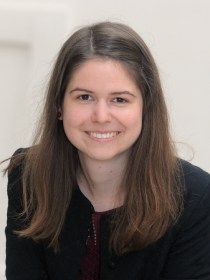
Bettina Pospisil (BA MA) is a Researcher in the Department for Security Studies at the University for Continuing Education Krems , Austria. She focuses on cybersecurity, disinformation, and technology-human interaction, with particular expertise in Cybercrime analysis , Smart Home security , and Emergency response systems . Principle investigator for Young Citizen Scientists against Disinformation (2024–2026) Collaborates on C-ITS (Cooperative Intelligent Transport Systems) for urban safety Active in fake news pattern analysis and hate speech categorization Key publications in Springer, IEEE, and DeGruyter journals Her work spans interdisciplinary collaborations with technical and social science experts. Research keywords include: Cybersecurity , Disinformation , IoT security , and Digital criminology . She contributes to policy-relevant studies on social media safety and emergency ICT systems. Co-author in 15+ scientific publications (2015–2025) Active in European research programs (FFG, KIRAS, Bundesländer funding) Regular speaker at international conferences (EuroSPI, CogSIMA, 4S)