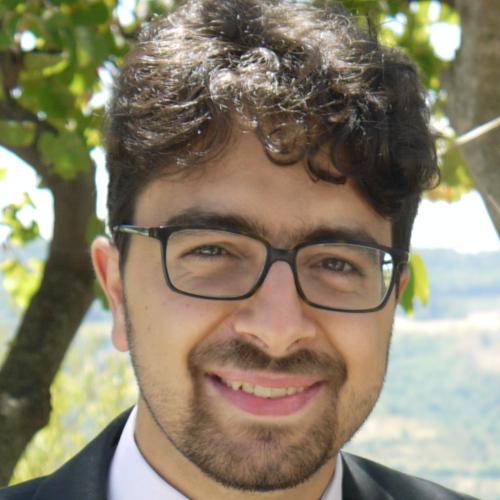
Claudio Estatico is a Full Professor at the Department of Mathematics (DIMA) at the University of Genoa, Italy. His academic activities include teaching courses such as Mathematical Analysis 1B for Electrical Engineering and Numerical Analysis for graduate programs in Mathematics. His research focuses on inverse problems, numerical analysis, and microwave imaging applications. Recent publications highlight advancements in: Microwave inversion for medical diagnostics (stroke detection) Data-driven approaches for plant diagnostics Regularization techniques in Banach spaces Subsoil electromagnetic data inversion He actively collaborates with researchers like Alessandro Fedeli, Andrea Randazzo, and Giuseppe Rodriguez, with recent outputs spanning both theoretical and applied domains of computational mathematics.
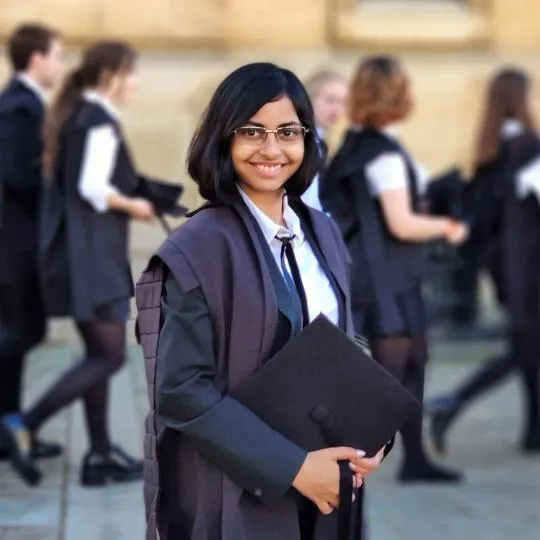
Dr. Purba Das is a Lecturer in Financial Mathematics at King's College London's Department of Mathematics, part of the Faculty of Natural, Mathematical & Engineering Sciences. She holds a DPhil from the University of Oxford (2022), specializing under Prof. Rama Cont, and prior degrees from Chennai Mathematical Institute (M.Sc. 2018, B.Sc. 2016). Her research focuses on stochastic analysis with applications to mathematical finance, particularly pathwise methods and rough volatility modeling. Education: DPhil (Oxford, 2022), M.Sc. (Chennai Mathematical Institute, 2018), B.Sc. (Chennai Mathematical Institute, 2016). Research interests include rough path theory, microstructure noise analysis, and functional Itô calculus. Recent work explores rough volatility's empirical validity, depositor behavior in digital banking systems, and Hölder continuity in function spaces. She co-organizes conferences on stochastic calculus and financial stability. Grants include £10k from KCL-IIT Madras Partnership and £5k from KCL's NMES Fund. Active in teaching financial mathematics and stochastic processes at both King’s and the University of Michigan.
Charles M. Elliott is a Professor of Mathematics at the University of Warwick. His research focuses on mathematical and numerical analysis of partial differential equations (PDEs), particularly in evolving domains, manifolds, and surfaces. Key areas include free boundary problems, geometric evolution equations, biomembranes, and phase transitions. He has contributed to finite element methods for surface PDEs and holds editorial roles at journals like the IMA Journal of Numerical Analysis and Interfaces and Free Boundaries . Notable awards include the Humboldt Prize (2010) and the Royal Society Wolfson Research Merit Award (2016). His work bridges theoretical mathematics and applications in biology, materials science, and continuum mechanics. Educations and career details: While specific educational qualifications are not explicitly stated in the text, his professional trajectory includes leadership in computational mathematics and extensive editorial contributions. His teaching responsibilities include advanced modules like Maths-in-Action and Topics in Partial Differential Equations . Research Interests: Elliott’s work emphasizes PDEs in complex environments, with applications to biomembranes, cell motility, and material phase transitions. His methods integrate evolving surface finite elements and stochastic processes. Recent trends in his publications highlight evolving domains, coupled bulk-surface systems, and geometric PDEs. He addresses challenges in numerical analysis and modeling of evolving interfaces. Awards and Recognition: In addition to the Humboldt Prize and Royal Society award, he is a Fellow of the Society for Industrial and Applied Mathematics (SIAM, 2015) and received an honorary doctorate from the University of Sussex (2022). Advising and Grants: While specific student names or grant details are not listed, his research programs involve collaborations on topics like biomembrane dynamics and phase field models. He has pioneered numerical methods for evolving surface PDEs, impacting fields from materials science to mathematical biology. Labs and Teams: His work is conducted within Warwick’s Department of Mathematics, collaborating on interdisciplinary projects involving computational PDEs and their applications. The research often involves evolving geometries and multiscale modeling approaches.
Prof. Michael Hintermüller is the Director of the Weierstrass Institute (WIAS) and holds a professorship in Applied Mathematics at Humboldt-Universität zu Berlin. He serves as Founding Coordinator of BR50, Spokesperson of the Mathematical Research Data Initiative (MaRDI), and Board Member of the MATH+ Cluster of Excellence. His research focuses on nonsmooth optimization, PDE-constrained control, mathematical image processing, and quasi-variational inequalities. Leadership Roles: Director of WIAS; Founding Coordinator of BR50; Spokesperson of MaRDI; Board Member of MATH+ Key Research Areas: Mathematical image processing, optimization under uncertainty, PDE-constrained optimization, shape/topology optimization, learning-informed constraints Recent Applications: Image deblurring/denoising/demodulation, energy network modeling, gas dynamics on pipeline networks, thermoforming simulations, strained photonic device design. His work combines analytical rigor with numerical methods for inverse problems, including adaptive regularization and physics-informed neural networks. Scientific Leadership: Active in mathematical modeling for biomedical imaging (e.g., quantitative MRI) and industrial applications (e.g., semiconductor design, gas flow optimization). Develops novel algorithms for nonsmooth PDE systems and contributes to the theoretical foundations of quasi-variational inequalities and generalized Nash equilibrium problems.
René Hosfeld is a Research Associate in the Department of Numerical Mathematics at the Institute of Mathematics, Technical University of Berlin (since December 2023). His work focuses on infinite-dimensional systems and control theory within functional analysis and operator theory frameworks. His educational background includes a Master of Science in Mathematics (2017-2019) and Bachelor of Science in Mathematics (2014-2017), both from the University of Wuppertal. He is currently completing his doctorate at the University of Wuppertal (scheduled February 2025), with prior research stays at the University of Bordeaux (2021-2022) and University of Hamburg (2020-2022). Hosfeld's research centers on stability analysis of infinite-dimensional control systems, particularly examining input-to-state stability for bilinear systems with unbounded operators, Orlicz space admissibility characterizations, and funnel control methodologies. His recent publications demonstrate strong integration of functional analytic techniques with control-theoretic problems, often addressing challenges in semilinear dynamics and evolution equations. His publication trends reveal consistent focus on stability theory for infinite-dimensional systems, with increasing sophistication in handling unbounded operators and nonlinear dynamics. Recent works bridge abstract operator theory with concrete applications in PDE control, particularly through bilinear system analysis and Orlicz space generalizations of classical Lp frameworks. SS25: Assistant for Linear Algebra I for Mathematicians (TU Berlin) WS 24/25: Assistant for Numerical Mathematics I (TU Berlin) SS24: Assistant for Functional Analysis I (TU Berlin) WS 22/23: Assistant for Analysis 1 and Linear Algebra for Engineers (TU Berlin) DFG Project JA735/18-1/SCHW 2022/2-1: "Evolution equations: input functions and stability" (2020-2023) Hosfeld works within the Numerical Mathematics department's research ecosystem at TU Berlin, collaborating closely with Professor Birgit Jacob and Felix Schwenninger. His office (MA 470) is situated in the main mathematics building at Straße des 17. Juni 136, where he maintains regular office hours on Tuesdays from 12:00-13:00.
Charles Bertucci is a CNRS researcher in Mathematics at the Applied Mathematics department of École polytechnique in Palaiseau, France. He also serves as a part-time teacher at École polytechnique since 2020. Bertucci defended his thesis on December 11, 2018, and his Habilitation à Diriger les Recherches (HDR) in June 2022, granting him accreditation to supervise research. His educational background includes being a former student of École Polytechnique (class of 2012) and Paris-Sorbonne University. His doctoral studies were conducted at Paris-Dauphine University under the supervision of Pierre-Louis Lions. Bertucci's research focuses primarily on mean-field game theory , optimization , and the analysis of partial differential equations . He is particularly interested in identifying stability principles for equations posed in infinite dimensions. His work spans theoretical mathematics with applications in economics, finance, and real-world phenomena such as oil markets, cryptocurrency markets, and telecommunications. His interdisciplinary approach bridges pure mathematics with practical applications in various economic and technological domains. Analysis of his recent publications reveals a strong focus on mean field games theory, with extensions to applications in finance (particularly cryptocurrency markets), optimal transport theory, and connections to PDEs. His work often involves collaborations with leading mathematicians including Pierre-Louis Lions, Jean-Michel Lasry, and others. The research demonstrates both theoretical depth in mathematical analysis and practical relevance to economic modeling. His notable scientific achievements include: Recipient of the prestigious Peccot Course for 2022-2023 at Collège de France Bertucci has been actively involved in academic service, including organizing the workshop "Mean Field Games and Applications" in 2022 with Yves Achdou, Jean-Michel Lasry and Pierre-Louis Lions. His teaching activities include delivering the Peccot Course on "Mean-field games and stochastic control in Wasserstein space" in 2023 at Collège de France, consisting of four lectures between March 31 and April 21, 2023. His research is conducted within the vibrant mathematical community at École polytechnique and through collaborations with researchers at CNRS and other institutions, focusing on advancing the theoretical foundations of mean field games while exploring novel applications across various domains.
Mingsong Yan is a Visiting Assistant Professor at the University of California, Santa Barbara . His research focuses on theoretical foundations of machine learning and deep learning, particularly in sparse regularization, reproducing kernel Banach spaces, and optimization algorithms. He holds a Ph.D. in Mathematics and is affiliated with the Department of Mathematics at UCSB. His recent work emphasizes advancing mathematical frameworks for deep learning, including hypothesis spaces analysis, kernel methods in Banach spaces, and optimization techniques for sparse models. He has published extensively in top-tier journals and conferences since 2023. No scientific awards or grants are explicitly listed in the provided materials. His advising record is not documented here. Research interests include interdisciplinary topics at the intersection of mathematics and artificial intelligence.
Michael Feischl is a Univ. Prof. at TU Wien's Institute for Analysis and Scientific Computing (E101). He specializes in numerical methods for partial differential equations, computational micromagnetism, and optimal adaptivity. Feischl leads the ERC Consolidator Project 'New Frontiers in Optimal Adaptivity' and has held academic positions at TU Wien, University of Bonn, and Karlsruhe Institute of Technology. His research interests span stochastic perturbations, finite element methods, and machine learning applications in computational mathematics. Feischl's work includes groundbreaking contributions to adaptive finite element methods, optimal mesh refinement strategies, and the numerical analysis of the Landau-Lifshitz-Gilbert equation in micromagnetics. His recent publications focus on advancing computational techniques for PDEs, neural operator networks, and stochastic collocation methods. He has developed algorithms with guaranteed convergence properties and optimal complexity, contributing to both theoretical and applied aspects of computational science. Education: Dipl.-Ing. Dr.techn. (PhD in Technical Mathematics) from TU Wien Awards: ERC Consolidator Grant 2022 Labs/Teams: Heads the 'Computational PDEs' research group at TU Wien's Institute for Analysis and Scientific Computing
David Rule is an Associate Professor (Docent) in the Department of Mathematics at Linköping University, affiliated with the Faculty of Science and Engineering. His research lies at the intersection of harmonic analysis and partial differential equations, with a focus on pseudodifferential, Fourier integral, and oscillatory integral operators. He also contributes significantly to mathematics education, both through teaching and pedagogical development at Didacticum. Education: PhD in Mathematics, University of Chicago, 2007 MSc in Mathematics, University of Chicago, 2003 MMath in Mathematical Physics, University of Sussex, 2001 His research interests center on the analytical properties of operators arising in PDEs, particularly their boundedness, regularity, and solvability in various function spaces. He investigates multilinear and degenerate forms of these operators, often under non-standard conditions such as Carleson measure control or non-symmetry. In mathematics education, he emphasizes reasoning, proof, and communication, challenging the notion that mathematics is inherently difficult by fostering intuitive development alongside logical rigor. The recent publications reflect a sustained focus on multilinear harmonic analysis, especially the boundedness of oscillatory and Fourier integral operators in both classical and weighted settings. His work spans pure analysis, with deep connections to operator theory and function spaces, and applied contexts such as fluid mechanics. The trend shows increasing collaboration and generalization beyond classical Calderón-Zygmund theory. Scientific Awards: No specific awards mentioned in the text. David Rule advises no listed students, but he teaches a range of courses from introductory calculus to advanced PDEs and graduate-level topics. He has received research support from institutions including the Simons Foundation. His work with Didacticum and academic unions like SULF and Saco-S highlights his commitment to improving teaching practices and defending academic autonomy. He is a member of the Division of Analysis and Mathematics Education (ANDI), where he contributes to interdisciplinary research in analysis and pedagogy. His union roles include service on the national and local SULF boards and Linköping's Saco-S council, emphasizing collegiality and democratic values in academia.
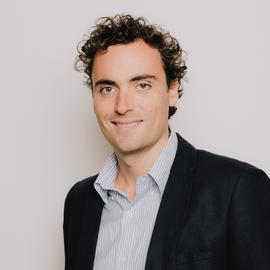
Michael Feischl is a Professor for Computational PDEs at TU Wien (since 2022) and holds an ERC Consolidator Grant for his project "New Frontiers in Optimal Adaptivity" (2024–2029). His research focuses on partial differential equations with random coefficients, computational micromagnetism (Landau-Lifshitz-Gilbert equation), and optimal adaptive mesh refinement techniques. He leads the Computational PDEs research group within the Institute of Analysis and Scientific Computing. Education and career highlights include roles as Associate Professor at TU Wien (2019–2022), W2 Professor at University of Bonn (2017–2018), and Junior Research Group Leader at KIT (2015–2017). His work bridges numerical analysis, computational physics, and machine learning, with a strong emphasis on rigorous mathematical foundations and algorithmic efficiency. Research interests include: Adaptive finite element and boundary element methods Stochastic modeling and uncertainty quantification Computational methods for micromagnetic simulations Machine learning applications in numerical analysis His recent work explores optimal adaptivity for time-dependent PDEs, neural network-based solvers, and efficient discretization strategies for complex physical systems. Key contributions include advancements in a posteriori error estimation and hierarchical training of neural networks.
Gilles Blanchard is a Professor at Paris-Saclay University , affiliated with the Institute of Mathematics in Orsay. His research focuses on statistical learning theory , multiple testing , kernel methods , and high-dimensional statistics . Key Contributions: Decontamination of mutually contaminated models Novelty detection with semi-supervised learning Non-Gaussian component analysis (NGCA) for dimension reduction Scientific Awards: PhD thesis award from University of Paris 6 (2004) Google Scholar h-index of 49 with over 8,000 citations Recent Research Trends: False Discovery Rate (FDR) control in structured hypothesis testing Conformal prediction for link analysis Adaptive sampling in restless bandits Statistical learning on measure spaces His work bridges theoretical statistics with practical machine learning applications, including genome-wide association studies , persistent homology in topological data analysis , and random feature moments for compressive learning . He is involved in open-source software development like μTOSS for multiple testing standardization and has advised on projects related to flow cytometry and Hadrontherapy applications.
Simone Di Marino is an Associate Professor in the Department of Mathematics at the University of Genoa. His research focuses on Optimal Transport, Mathematical Analysis, and their applications to Partial Differential Equations and Functional Analysis. He is a member of the research commission and teaches courses such as Mathematical Analysis, Calculus, and specialized topics in Mathematics and Engineering programs. His research interests include Optimal Transport Theory, Nonlinear Analysis, and the development of variational methods for problems in mathematical physics and differential geometry. He explores topics such as gradient flows, entropy regularization, and geometric inequalities on manifolds. Recent work highlights contributions to the theory of Grand-Canonical Optimal Transport, nonlinear mobilities in transport models, and the convexity properties of ground state energies in quantum systems. His articles often bridge pure analysis with applications in physics and numerical methods. Di Marino is available for student consultations on Wednesdays from 2pm to 4pm. Though no specific grants or awards are listed, his extensive publication record reflects active engagement in collaborative research.
Mostafa Nasri serves as an Instructor in the Department of Mathematics and Statistics at the University of Winnipeg within the Mathematics and Statistics Faculty. Holding a Ph.D. from IMPA, he completed postdoctoral fellowships at Laval University, University of Montreal, and McGill University before joining his current institution. His academic credentials include: Ph.D. in Mathematics, IMPA- Instituto Nacional de Matemática Pura e Aplicada (2008) M.Sc. in Mathematics, Amirkabir University of Technology (2004) B.Sc. in Mathematics, Sharif University of Technology (2002) Dr. Nasri's research integrates Mathematical Analysis and Operations Research with specialized expertise in Functional Analysis, Optimization, and Applied Mathematics. His theoretical work examines Schauder bases, composition operators, and Dirichlet spaces, while his Optimization research develops augmented Lagrangian methods for equilibrium problems and variational inequalities. Applied contributions include contact dynamics modeling for multibody systems and HIV infection dynamics. Analysis of his 2023-2025 publications reveals intensified focus on Functional Analysis (particularly Dirichlet spaces and operator theory) alongside persistent development of optimization algorithms, with applied mechanics and mathematical biology research continuing at reduced frequency. No scientific awards are documented in available materials. Current information indicates no graduate student advising or active research grants at the University of Winnipeg. Prior industry collaboration with CM Labs Simulations Inc. and Canadian university departments demonstrates applied research experience, though no current laboratories or dedicated research teams are specified.
Jonas Latz is a Lecturer in Applied Mathematics at The University of Manchester. His research focuses on Bayesian inference, uncertainty quantification, stochastic processes, and their applications in computational mathematics and inverse problems. He has contributed to areas such as physics-informed neural networks, stochastic gradient methods, and medical imaging modeling. Key research interests include developing robust algorithms for Bayesian inverse problems, analyzing stochastic dynamical systems, and advancing numerical methods for partial differential equations. His work bridges theoretical foundations with practical applications in fields like tumor growth modeling and medical image reconstruction. Recent Achievements : Recipient of the SIAM Activity Group Uncertainty Quantification Early Career Prize (2024) SIAM Student Paper Prize (2020) SIGEST Award (2023) Dr. Latz collaborates internationally on topics such as adversarial machine learning, deep learning methods for PDEs, and stochastic sampling techniques. His research emphasizes rigorous mathematical analysis alongside computational innovation.
Henry Towsner is a Professor of Mathematics and Undergraduate Chair in the Department of Mathematics at the University of Pennsylvania. His research focuses on mathematical logic, proof theory, combinatorics, and their applications. He holds an office at 4N51 DRL and can be contacted via email or phone. His work bridges foundational mathematics with combinatorial and analytical methods, particularly in hypergraph regularity, reverse mathematics, and epsilon substitution. Research Interests: Towsner’s research spans proof theory, reverse mathematics, combinatorics (including hypergraph regularity and Ramsey theory), and applications of logic to analysis. He explores foundational questions in logic while developing tools for extracting computational content from proofs. His work on ultraproducts and exchangeable structures connects model theory with probability theory. Recent Trends in Articles: His publications from 2023-2017 highlight advancements in hypergraph regularity, Borel combinatorics, and proof-theoretic methods. Key themes include algorithmic extraction from proofs, nonalgorithmic combinatorial proofs, and applications of logic to functional analysis. His work often intersects with computability theory and effective bounds in algebraic structures. Advising and Grants: While specific grant details are not listed, his active research program suggests involvement in NSF or institutional grants typical for a senior faculty member. He advises graduate students in logic and combinatorics, though specific names are not provided in the text. Labs/Teams: No dedicated lab is mentioned, but his collaborations span pure mathematics disciplines, including work with researchers in combinatorics, functional analysis, and set theory. His research group likely engages in interdisciplinary projects within the mathematics department.