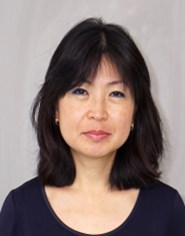
Xiaoqian Sun is a Professor in the Department of Mathematical and Statistical Sciences at Clemson University, located in Martin Hall O306. Her academic affiliation includes the College of Science, focusing on advanced statistical methodologies and their applications in healthcare and biomedical research. Her work bridges theoretical statistics with practical health outcomes analysis. Dr. Sun's research interests emphasize Bayesian statistical methods, biostatistics, and the design of clinical trials addressing health disparities. She has led studies like the CRADLE trial evaluating group prenatal care models' impact on maternal health equity. Her technical expertise spans statistical modeling, hypothesis testing, and robust parameter estimation in complex datasets. Her recent publications (2023-2013) reflect a focus on Bayesian analysis, censored data estimation, and clinical applications in pregnancy outcomes. While no scientific awards are listed, her contributions to methodological advancements in statistics and public health are evident through her extensive publication record. Advising details and lab affiliations are not explicitly documented here.
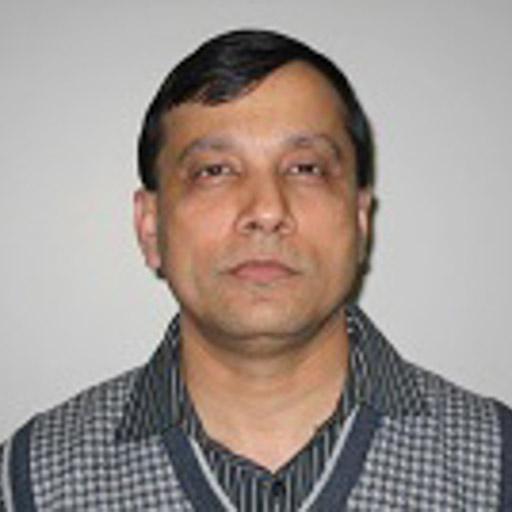
Syed Ejaz Ahmed is a Professor of Mathematics and Statistics at Brock University, holding academic leadership roles including Dean of the Faculty of Mathematics and Science. His research focuses on high-dimensional data analysis, predictive modeling, and statistical machine learning, with applications across disciplines. He has held professorships at multiple institutions, including the University of Windsor and University of Regina, and has extensive editorial roles in journals like Technometrics. Education: PhD, Carleton University MSc, University of Guelph MSc, University of Karachi BSc (Honors), University of Karachi Research Interests: Dr. Ahmed’s work spans big data analytics, statistical inference, and applied statistics. He emphasizes developing methodologies for high-dimensional datasets and has contributed to fields like health data analysis, econometrics, and environmental statistics. His research has been funded by NSERC, CIHR, and industry collaborations. Awards: Fellow, American Statistical Association Fellow, Royal Statistical Society Bualuang ASEAN Chair Professorship Grand Prize Advancement Award (2019) Advising/Grants: He has supervised numerous PhD/Master’s students and postdoctoral fellows. Notable grants include continuous NSERC funding since 1987, including an OOO-ranked Discovery Grant (2017–2022). He also leads initiatives like the International Workshop on Perspectives on High-dimensional Data Analysis. Labs/Teams: Founded the Statistical Consulting and Research Center at the University of Windsor and contributed to programs like the Master of Science in Statistics at the University of Regina. He is a key figure in establishing actuarial science and data analytics programs in Canada.
Hailin Sang is an Associate Professor in the Department of Mathematics at the University of Mississippi , affiliated with the College of Liberal Arts . He holds a Ph.D. in Mathematics from the University of Connecticut (2008) and has previously held visiting assistant professor and postdoctoral research fellow positions at institutions including the University of Cincinnati, National Institute of Statistical Sciences/Duke University, and Indiana University. Dr. Sang’s research spans theoretical and applied statistics, with emphasis on deep learning , probability theory , empirical processes , time series analysis , random fields , nonparametric and robust statistics , and self-normalized statistics . His work also extends to survey sampling design and analysis . Recent publications highlight applications in generative adversarial networks , modified ReLU networks , and entropy estimation , with methodological contributions to limit theorems and deviation bounds for complex stochastic structures. His research has received partial support from the Simons Foundation . He has not been explicitly recognized for scientific awards in the provided text. Dr. Sang teaches a range of courses from elementary statistics to advanced statistics seminars , reflecting his broad educational contributions.
Ilaria Peri is a Lecturer in Quantitative Risk and Financial Data Science at the Department of Economics, Mathematics & Statistics within Birkbeck Business School, Birkbeck, University of London. She holds a PhD in Mathematical Finance from the University of Milan-Bicocca (2012) and a BSc in Economics and Finance from the same institution (2004). Prior to academia, she worked in risk management and banking operations at Deloitte Consulting Italy (2005–2009). Her research focuses on risk measures theory, applications to financial stability, and machine learning in sustainable finance. Notable areas include lambda quantiles, backtesting frameworks, and dynamic tail risk modeling. She currently supervises two doctoral students and teaches modules on Credit Risk Management and Financial Data Science with Python. Administrative roles include Programme Director for MSc Finance and MSc Banking and Finance (since 2024) and Dual Degree Lead for the University of Milan-Bicocca. Her work bridges theoretical mathematics with practical financial applications, emphasizing real-world problem-solving.
Nicolas Ali Libre is an Associate Teaching Professor in the Department of Civil, Architectural and Environmental Engineering at Missouri University of Science and Technology. He serves as Director of the Materials Testing Lab and has contributed extensively to research and education in civil engineering, with a focus on concrete technology, 3D printing materials, and innovative teaching methods. PhD in Civil Engineering (2009) MS in Structural Engineering (2003) BS in Civil Engineering (2001) His research spans concrete rheology, sustainable construction materials, and engineering education technologies, including 3D concrete printing optimization, fiber-reinforced composites, and digital learning tools. He has pioneered novel testing methods for concrete buildability and extrudability. Award-winning educator, he received the President’s Award for Innovative Teaching (2018) and Missouri S&T Faculty Achievement Award (2018). His scholarly output includes over 20 peer-reviewed journal articles, 60 conference papers, and mentorship of 10 graduate students. He manages the Materials Testing Lab at Missouri S&T and has developed digital educational resources for engineering mechanics courses, including the SecPro App for teaching mechanics concepts.
Ruth Brooks serves as School Director for International at Huddersfield Business School, University of Huddersfield, with specific responsibility for international student experience and recruitment. She manages international partnerships including courses delivered with The Hong Kong Management Association and maintains active roles as Senior Fellow of the Higher Education Academy and member of the British Academy of Management and Chartered Management Institute. Her research centers on graduate employability with particular focus on how class, gender, and ethnicity influence transitions into the UK labour market. Key interests include workplace behaviour, cross-cultural studies, and developing student skills for global competition. Recent work examines workforce diversity impacts on productivity and mechanisms reproducing social inequality in graduate employment. Analysis of her publication record (2012-2024) reveals consistent focus on employability frameworks, with increasing attention to intersectional inequality and global professionalism. Her work bridges academic research and practical application through externally funded projects like the Personal Development Planning for Employability initiative and Chartered Manager Degree Apprenticeship facilitation. Scientific recognition includes: Senior Fellow of the Higher Education Academy Multiple student-nominated Staff Thank You awards Higher Education Academy Individual Teaching Grant Funding from British Association of Lecturers of English Guest editorship for Higher Education, Skills and Work-based Learning Brooks has secured external funding for employability initiatives including sandwich placement promotion and global professional development programs. She supervises PhD research in her specialist areas and serves as external examiner for multiple UK universities including Leeds, Anglia Ruskin, and Gloucester. Her commercial background in finance informs practical teaching approaches across UK and international student cohorts. She actively contributes to academic discourse through conference leadership including chairing the Digital South Asia Conference and presenting at major forums on workforce diversity and graduate transitions.
Sonja D. Winter is an Assistant Professor in the Statistics, Measurement, and Evaluation in Education program at the University of Missouri’s College of Education and Human Development. She holds a Ph.D. in Quantitative Methods, Measurement, and Statistics from the University of California-Merced and completed a postdoctoral fellowship at the Missouri Prevention Science Institute. Her research focuses on advancing Bayesian statistical methods, particularly structural equation modeling (SEM), with an emphasis on prior sensitivity analysis, longitudinal data analysis, and addressing challenges in educational research such as small samples and missing data. Key areas of expertise include Bayesian methods, psychometrics, and the application of advanced quantitative techniques to educational and developmental psychology data. She leads the Winter Lab, which explores Bayesian SEM, measurement invariance, and the integration of prior knowledge through frameworks like prior predictive checks. Her work emphasizes methodological rigor, including evaluating model fit indices and addressing overfitting/underfitting issues. She collaborates on projects involving LGBTQ+ community inequities, school discipline equity, and teacher stress measurement. Active in both research and education, Winter teaches graduate courses on measurement and Bayesian methods while advocating for transparent and reproducible statistical practices.
Wes Bonifay is an Associate Professor in the Educational, School & Counseling Psychology department at the University of Missouri's College of Education & Human Development. His research focuses on psychometrics, measurement theory, and statistical modeling in educational contexts. Research areas include: Item Response Theory methodologies Bayesian statistical approaches Psychometric model evaluation Measurement precision in assessments Meta-analytic techniques for educational research His recent publications examine innovative approaches to psychometric modeling, including Bayesian applications, parsimonious model development, and methodological critiques. Research spans educational measurement, clinical assessment, and methodological innovation in psychological research.
Adam Sales is an Assistant Professor in the Department of Mathematical Sciences at Worcester Polytechnic Institute (WPI), with affiliations in Learning Sciences & Technologies and Data Science. He holds a BS in Physics and Mathematics from Johns Hopkins University and a PhD in Statistics from the University of Michigan. His research focuses on causal inference using large administrative datasets, integrating machine learning with design-based analysis of randomized trials and observational studies. Key methodological interests include principal stratification, mediation analysis, and regression discontinuity designs applied to educational and social science problems. Recent work involves analyzing log data from intelligent tutoring systems, refining regression discontinuity approaches, and applying high-dimensional covariates to improve matching estimators. He emphasizes statistical rigor in empirical research and collaborates across disciplines to strengthen educational data analysis. Articles highlight applications in education technology, health-risk behaviors, and policy evaluation, reflecting interdisciplinary engagement with learning sciences, data science, and social sciences.
Mr Gary Hearne is a Senior Lecturer in Statistics & Operational Research at Middlesex University , affiliated with the Design Engineering & Mathematics school. His research focuses on advanced statistical methodologies applied to sports performance analysis, health-related genetic and lifestyle factors, and data-driven decision making in education and sports. He has contributed to peer-reviewed journals and conference proceedings, exploring topics such as effect sizes in high-performance sports, predictive modeling of childhood obesity, and performance indicators in rugby league. Education & Background : While specific educational details are not provided in the text, his academic background aligns with expertise in statistics and operational research. His current appointment is noted as 'Academic staff (past)', indicating prior active involvement. Research Interests : Gary’s work bridges statistical rigor and practical application. Key areas include: - Sports Analytics : Applying statistical models to evaluate team and individual performance metrics. - Health Outcomes : Investigating genetic and environmental determinants of childhood overweight. - Data Interpretation : Enhancing methodological approaches in data-driven decision making. Publications Trends : Over the past decade, his publications emphasize statistical methodologies (e.g., confidence intervals, principal component analysis), sports performance metrics, and interdisciplinary health studies. Recent work (2021) critiques traditional statistical testing in sports science, advocating for uncertainty-aware approaches. Awards & Grants : No specific scientific awards or grants are listed in the provided text. Collaborations & Teams : Collaborations include researchers from sports science (e.g., Andrew Turner, Neil Parmar) and public health domains (e.g., Costas Pedlar, Yannis Mavrommatis). His work often involves multidisciplinary teams addressing complex real-world problems.
Christopher Ballmann is an Associate Professor in Human Studies at the University of Alabama at Birmingham, with secondary appointments in Physical Therapy. As a Fellow of the American College of Sports Medicine, his research examines psychophysiological responses to exercise, focusing on music interventions and nutritional supplementation for performance enhancement. His work bridges exercise physiology, sport psychology, and nutritional science. Dr. Ballmann investigates how sensory interventions and ergogenic aids optimize human performance. His research explores music's impact on exercise output, sympathomimetic supplements like yohimbine and caffeine, and taste modulation during anaerobic efforts. He employs randomized controlled trials to study acute interventions across diverse populations from NCAA athletes to recreational exercisers. His publications demonstrate innovative approaches to performance enhancement through multi-sensory interventions. Recent work examines ammonia inhalants for repeated sprints and football helmet effects on visuomotor skills, while earlier research established protocols for beetroot juice supplementation and mood modulation with herbal extracts. This research continuum advances practical applications for athletes and clinical populations.
Mike Mooney is a Professor of Mechanical Engineering at the Colorado School of Mines, holding the Grewcock Chair in Underground Construction & Tunneling. He directs the Center for Underground and leads the Heavy Construction Studio, focusing on advancing smart, rapid, and cost-effective construction technologies for urban tunneling and challenging ground conditions through instrumentation integration and field experimentation. His educational background includes: PhD in Civil Engineering, Northwestern University, 1996 MS in Civil Engineering, University of California, Irvine, 1993 BS in Civil Engineering, Washington University, St. Louis, 1991 BA in Physics, Hastings College, 1991 Mooney's research integrates instrumentation into tunnel boring machines and horizontal directional drilling systems, studying robotic excavation, soil transformation using polymers/foams, and ground-mechanical interactions via physics models and machine learning. His group conducts extensive field campaigns embedded in real construction projects worldwide, emphasizing data-driven approaches to complex geotechnical challenges. Recent publications (2018-2023) demonstrate expertise in TBM performance optimization, boulder detection systems, soil conditioning, and machine learning applications for ground prediction. Key contributions include real-time vibration monitoring for Venice lagoon restoration, annular pressure management, foam stability analysis, and autonomous tunneling frameworks across major projects in Seattle, Toronto, Los Angeles, and New York City. No scientific awards or fellowships were mentioned in the provided text. Professor Mooney actively advises graduate students as evidenced by extensive student co-authorship in publications. His research is directly applied to international construction projects including the Venice lagoon restoration and urban tunneling initiatives. He is a registered Professional Engineer in Colorado (License #39682) and provides technical consultation for construction projects globally. He directs the Center for Underground at Colorado School of Mines, where his Heavy Construction Studio develops instrumentation systems and conducts field experiments integrated into active construction sites. The lab specializes in real-time monitoring technologies, ground characterization methods, and machine learning applications for tunneling operations.
Jungyoon Lee is a Professor in the Department of Economics at Royal Holloway, University of London. His research focuses on econometric methodologies, particularly in spatial econometrics, statistical inference, and nonlinear models. He has contributed to areas such as robust specification testing, threshold regression, and adaptive inference techniques. His work addresses challenges in spatial autoregression models, minimax estimation risks, and cross-sectional dependence. Lee has led projects funded by the Economic & Social Research Council (ESRC), including a study on specification testing in models with interacting agents (2017–2020). Publications span journals like Econometric Theory and Journal of Econometrics , emphasizing methodological advancements in econometrics. No academic awards or student advisement records are explicitly listed in the provided materials.
Natalya Pya Arnqvist is an Associate Professor in Mathematical Statistics at Umeå University, Sweden. She is affiliated with the Department of Mathematics and Mathematical Statistics and has active roles in research groups focused on Functional Data Analysis, Semiparametric Regression, and Statistical Learning for Spatio-Temporal Data. Her career includes prior positions at Nazarbayev University (2015-2020), University of Bath (2011-2015), and KIMEP University (2000-2005). Education : PhD in Statistics (University of Bath, UK, 2007-2010), CSc in Physical and Mathematical Sciences (Institute for Mathematics, Kazakhstan, 2000-2005). Her research centers on statistical regression modelling and functional data analysis , with significant contributions to shape constrained additive models (SCAMs) and model-based functional clustering . She has developed R packages such as scam , fdaMocca , and nilde for these methodologies. Recent publications highlight applications in applied demography , defect detection , and nonlinear state space modeling , reflecting her focus on bridging statistical theory with industrial and ecological challenges. She teaches undergraduate and graduate courses in probability, regression, and statistical learning.
Debaraj Sen is a Teaching Professor in the Department of Mathematics and Statistics at Concordia University. He holds a Ph.D. from Concordia University, awarded in 2005. Education Ph.D., Concordia University, Canada, 2005 Research Interests Dr. Sen's research spans multiple domains within statistical science, including Survival Analysis for time-to-event modeling, Survey Methodology for data collection design, Bayesian Statistics for probabilistic inference, and Statistical Inferences for hypothesis testing frameworks. His work also extends to Generalized Linear Models for flexible regression analysis and computational techniques in Statistical Computing .