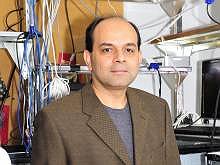
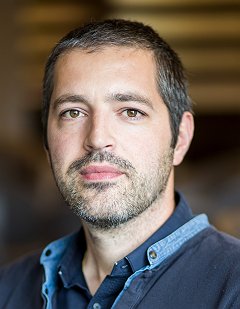
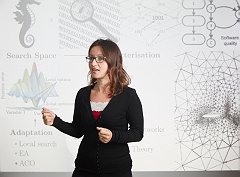
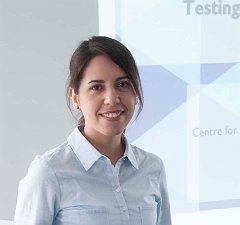
Dietmar Pfahl is a Professor affiliated with the University of Tartu, Estonia, and the University of Calgary, Canada. His work bridges academia and industry through empirical software engineering, metamorphic testing, and agile methodologies. Key Roles: Editor/Author in conferences like PROFES, ICST, MOBILESoft. Current Affiliation: University of Tartu (Estonia) and University of Calgary (Canada). Research Interests focus on metamorphic testing , automated driving system safety , dependency network analysis , and agile software development . Recent work includes: Metamorphic test pipelines for optimization software. Dependency ecosystem impacts of package managers. LLM-based feature-sentiment extraction from app reviews. Scientific Contributions span over 219 publications since 1994, with 2025 entries addressing: Safety testing frameworks for automated driving. Test data-driven metamorphic relation selection. Industry experiments on test-driven development. His awards and leadership include organizing PROFES conference proceedings and advocating for software freedom.
Atif Memon is a Professor in the Department of Computer Science at the University of Maryland, College Park (UMCP), where he has been a faculty member since 2001, progressing from Assistant Professor to Associate Professor and finally to Professor in 2015. He is also a Professor at the Institute for Advanced Computer Studies at UMCP. Dr. Memon founded and heads the Event Driven Software Lab (EDSL), where his research focuses on design, development, quality assurance, and maintenance of event-driven software applications. Dr. Memon received his Ph.D. in Computer Science from the University of Pittsburgh in 2001, with a dissertation titled "A Comprehensive Framework for Testing Graphical User Interfaces." His advisors were Martha Pollack and Mary Lou Soffa. Prior to his Ph.D., he earned an M.S. in Computer Science from King Fahd University of Petroleum and Minerals in Saudi Arabia (1995) and a B.C.S. in Computer Science from the University of Karachi (1991). Dr. Memon's research primarily focuses on software testing, particularly for event-driven systems. He is renowned for designing and developing GUITAR, a model-based GUI testing framework that operates on Android, iPhone, Java Swing, .NET, Java SWT, and web systems. His work extends to Community Event-based Testing (COMET), a community infrastructure for event-based testing researchers. His research interests include: Automated GUI and mobile application testing Model-based software testing techniques Event-driven software quality assurance Testing methodologies for emerging technologies Test automation and script maintenance Flaky tests and test reliability Dr. Memon's recent publications demonstrate a strong focus on practical applications of software testing, particularly in mobile environments. His work bridges theoretical testing concepts with real-world implementation challenges, with significant contributions to GUI test automation, mobile application testing, and test script maintenance. The trend in his recent work shows increasing emphasis on mobile platforms, security testing, and addressing the challenges of flaky tests in continuous integration environments. His research spans both academic innovation and practical industry applications, as evidenced by his collaborations with companies like Google, Apple, and others. Among his notable achievements, Dr. Memon received the Best Paper Award at SECURWARE 2014 for his work on "N-Gram Based User Behavioral Model for Continuous User Authentication" and a retrospective award for the most influential paper among the papers of 2003 Working Conference on Reverse Engineering. Dr. Memon currently advises six PhD students at Maryland on various aspects of testing event-driven software systems, and so far six students have completed their doctoral thesis work under his guidance. His research has been supported by significant funding from agencies including DARPA, NSF, NIH, and NSA for projects such as "Vetting Android Applications for Security Using Graphical User Interface Logic," "COMET - Community Event-based Testing," "Algorithms and Software for the Assembly of Metagenomic Data," and "Research in Science and Public Policy for the U.S. National Security Agency." As the founder and head of the Event Driven Software Lab (EDSL), Dr. Memon leads a team focused on advancing the state of the art in testing event-driven software applications. The lab has developed several influential tools and frameworks, most notably GUITAR, which has been widely adopted in both academic and industrial settings. Dr. Memon has also been instrumental in developing community infrastructure for testing researchers through COMET, enabling uniformity in experimentation and benchmarking in event-driven software testing.
Prof. Dr. Jacques Klein is a Chief Scientist (Full Professor) and Co-head of the TruX Research Group at the SnT Centre (Security and Trust Centre) of the University of Luxembourg. With a career spanning over 15 years at the university, he has progressed from Research Scientist (2010-2015) to Senior Research Scientist (2015-2019), Associate Professor (2019-2022), and finally to Full Professor in 2023. His research focuses on three main areas: program analysis applied to mobile security, software debugging (particularly bug localization and program repair), and NLP/AI for software engineering. He has supervised numerous PhD students and has acquired over 5 million euros in research funding through projects from the Luxembourg Research Agency, European Commission, and industrial partnerships. Prof. Klein is an active member of the software engineering research community, serving as General Co-Chair of ASE 2023 and MobileSoft 2025, and as a steering committee member for ISSTA, ASE, and MobileSoft. He is also an Editorial Board Member of the Springer Empirical Software Engineering Journal since 2021. His recent publications demonstrate a strong focus on applying AI and machine learning techniques to software security challenges, particularly in the Android ecosystem, with significant contributions to malware detection, code analysis, and privacy compliance. His work has been recognized with multiple prestigious awards including the ICSE 10-year most influential paper award and the PLDI Most Influential Paper Award. Member of the Institut Grand-Ducal - Section des Sciences (since June 2024) Principal Investigator on numerous research projects Extensive service on program committees for major software engineering conferences He teaches courses on static program analysis, software vulnerabilities, and security analysis at the Master's level, and has made significant contributions to the Android research community through the AndroZoo dataset containing over 24 million Android applications.
Aldeida Aleti serves as Associate Professor and Associate Dean of Engagement and Impact at Monash University's Faculty of Information Technology. Her academic profile combines leadership responsibilities with cutting-edge research in software engineering methodologies. Her primary research interests include: Search-Based Software Engineering (SBSE) Software Testing and Quality Assurance Program Repair and Maintenance Software Architecture and Design Optimization Techniques for Engineering Problems Dr. Aleti's research program investigates why certain software engineering problems are difficult to optimize and develops practical approaches for applying search-based techniques to new domains. Her work bridges theoretical optimization methods with real-world software engineering challenges, focusing on making SBSE more accessible and effective. Her publication record shows a consistent trajectory of impactful research, with recent work exploring intersections between large language models and software engineering tasks, autonomous vehicle testing, fairness in AI systems, and program repair. These publications demonstrate increasing sophistication in addressing complex software engineering challenges through optimization techniques. Dr. Aleti's scientific recognition includes: Australian Research Council's Discovery Early Career Researcher Award (DECRA) Over $2.5 million in competitive research funding Editorial board membership for Journal of Systems and Software and Empirical Software Engineering Active service on program committees for major conferences including ASE, ICSE, and ISSTA As Associate Dean of Engagement and Impact, she drives initiatives connecting academic research with industry applications and societal benefits. Her leadership extends to mentoring emerging researchers through the New Faculty Symposium and Doctoral Symposium committees at major conferences.
Stephan Lipp, M.Sc., is a Researcher at the Technical University of Munich (TUM) within the Department of Software and Systems Engineering. His work focuses on software testing methodologies, cybersecurity, and the integration of static analysis with fuzzing techniques. He contributes to projects such as SUPPRA (Algorand Center of Excellence), TAPFER, and CrESt, addressing challenges in secure software development and maintenance. His research interests span vulnerability detection in C/C++ software, optimization of fuzzing processes, and cross-language regression testing in continuous integration environments. Recent publications highlight empirical studies on static analyzers and novel approaches to estimating test coverage saturation. Lipp is actively involved in academic supervision and teaching, managing student projects and presentations. He is reachable at stephan.lipp@tum.de and emphasizes secure communication via PGP-encrypted emails.
Roland Würsching is a researcher at the Technische Universität München's Informatik 4 department (Lehrstuhl für Software & Systems Engineering led by Prof. Pretschner). His work focuses on applying natural language processing (NLP) techniques to software testing, particularly in optimizing regression test suites and addressing challenges in multi-language systems. He actively contributes to teaching, offering courses like Advanced Topics of Software Engineering and Software Quality seminars. His research emphasizes improving test case prioritization, leveraging AI for test automation, and enhancing maintainability of large-scale software systems. Notable work includes RustyRTS (regression testing for Rust) and Severity-Aware prioritization for automotive software. He collaborates on projects like SUPPRA (Algorand Center of Excellence) and TAPFER, addressing transparency and security in distributed systems. Publications span conferences like ICSE and IEEE STVR, focusing on practical solutions for real-world testing challenges in DevOps and CI/CD environments. While no awards are explicitly listed, his prolific publication record reflects impactful contributions to software engineering.
Dr. Mahsa Varshosaz is an Associate Professor in the Software Quality Research group at the IT University of Copenhagen , Denmark. Her work bridges theoretical and practical aspects of software quality assurance, with a focus on model-based testing , formal verification , and automatic program repair for complex systems. Her research spans software product lines , autonomous systems , and cyber-physical systems , including projects like REMARO (testing of underwater robotic systems) and Linux kernel program repair. She employs formal methods to address challenges in system safety, reliability, and variability. Selected publications reveal a trajectory in hybrid testing techniques combining symbolic execution and reinforcement learning, safety analysis of autonomous underwater vehicles, and formal verification of probabilistic systems. Her work intersects software testing formal methods AI-based verification robotics safety product line engineering concurrent system analysis . She actively contributes to academia as Co-Chair of Doctoral Symposium in SPLC conferences Editorial Board member of Science of Computer Programming Program Committee member across testing/verification workshops like A-MOST, ITEQS, and ECOOP . Her 2023 invited talk series at Trustworthy Autonomous Systems Verifiability Node and participation in Dagstuhl/Shonan seminars highlight her influence in unifying formal methods with AI-based autonomous systems . Projects include REMARO (co-coordinator) and INSIGHT.
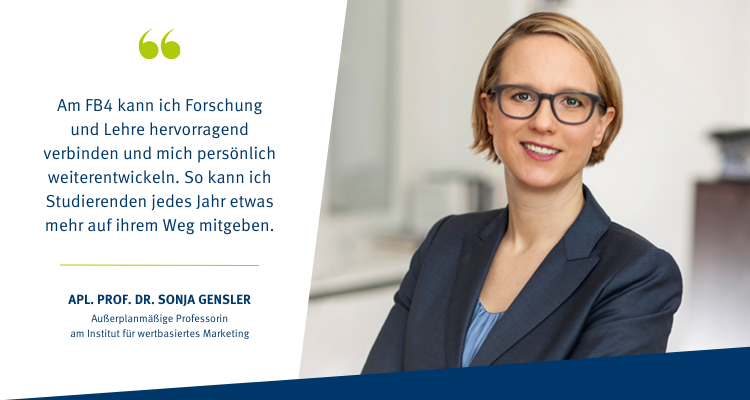
apl. Prof. Dr. Sonja Gensler is an Associate Professor at the Institute for Value-Based Marketing, affiliated with FB4. She specializes in bridging research and teaching to foster student development, emphasizing practical insights for their professional journeys. Her work focuses on digital marketing innovation, consumer behavior analysis, and multichannel strategies. She explores regulatory impacts on the sharing economy and employs advanced empirical methods like conjoint analysis and regression modeling. Key themes in her research include market trends, customer engagement, and the integration of technology in marketing practices. Her research interests span digital marketing strategies, consumer decision-making processes, and the application of statistical techniques to analyze complex datasets. Prof. Gensler’s contributions include studies on sharing economy governance, multichannel management, and the effects of social media on brand relationships. She has published extensively on methodologies such as finite mixture models, contingency analysis, and discriminant analysis, highlighting their practical relevance in marketing and economics. Prof. Gensler’s recent work reflects a trend toward addressing contemporary challenges like AI’s role in customer relationship management and the evolving dynamics of online-offline consumer interactions. Her empirical focus ensures her research remains grounded in real-world applications, benefiting both academic and industry stakeholders.
Lars Grunske is a Professor in the Department of Computer Science at Humboldt University of Berlin, Germany. His academic career spans multiple institutions across Germany, Australia, and internationally, with a strong focus on research and conference participation in software engineering. His educational background includes a PhD in computer science from the University of Potsdam (Hasso-Plattner-Institute for Software Systems Engineering) in 2004. Professor Grunske's research interests center on modeling and verification of systems and software, with particular emphasis on automated analysis techniques. His work primarily focuses on probabilistic and timed model checking and model-based dependability evaluation of complex software intensive systems. He has made significant contributions to software testing, program repair, formal methods, and the application of machine learning techniques to software engineering problems. His publication record shows consistent contributions to top software engineering conferences over the past decade, with recent work exploring the intersection of AI/ML with traditional software engineering challenges. His research demonstrates an evolution from foundational model checking techniques toward more practical applications in software testing and repair. Boeing Postdoctoral Research Fellow Professor Grunske actively mentors through conference activities including chairing mentoring circles at ICSE 2021. He serves on numerous program committees for major software engineering conferences including ASE, ICSE, ESEC/FSE, and others, demonstrating his standing in the academic community. His involvement spans multiple roles from committee member to track chair and award committee positions. He maintains an active research laboratory focused on software verification and testing, as indicated by his departmental affiliation and research website.
Jooyong Yi is an Associate Professor in the Department of Computer Science and Engineering at UNIST (Ulsan National Institute of Science and Technology). He leads the LOFT (Lab of Software), focusing on autonomous techniques for software reliability in AI-generated code environments. Research Interests: His work spans program analysis, automated repair, testing/debugging, and verification. Core themes include developing scalable methods for bug detection (via static/dynamic analysis), AI-compatible repair systems, and verification frameworks for safety-critical systems. Recent emphasis integrates fuzzing techniques with repair validation. Publication Trends: His 15 most recent works (2015-2025) show progression from foundational program repair techniques (e.g., Angelix, DirectFix) toward AI-era innovations: greybox fuzzing for efficiency, memory-leak repair for web frameworks, and deep-learning library testing. Over 50% of publications focus on optimizing repair validation and scalability. Awards: ACM Distinguished Paper Award at ASE 2023 Students & Grants: Currently advises 5 PhD, 1 MS/PhD, and 2 MSc students. Secured ₩20B+ in funding for projects including: MSIT Binary Micro-Security Patch Technology (2024-2026) Patch Validation for Automated Repair (2023-2026) AI-Powered Low-Code Platform (2023-2025) Memory-Safe Language Integration (2024-2027) Lab: LOFT lab develops verified repair tools (e.g., LeakPair, Verifix) and benchmarks (BUGSC++), prioritizing human oversight in AI-generated software.
Shane McIntosh is an Associate Professor at the David R. Cheriton School of Computer Science, University of Waterloo, where he leads the Software Repository Excavation and Build Engineering Labs (Software REBELs). His academic career focuses on empirical studies of software development processes with particular emphasis on release engineering and software quality. Dr. McIntosh's research centers on mining historical data generated during software development to derive practical insights for building more reliable systems. His work spans release engineering (assembling, verifying, and delivering software releases) and software quality (developing guidelines for reliable software). This research manifests in studies of continuous integration systems, build outcome prediction, defect prediction models, and code review practices. His publication record reveals a consistent focus on empirical software engineering with recent papers examining build system reliability, continuous integration practices, and defect prediction. The research demonstrates strong methodological rigor through replication studies, longitudinal analyses, and large-scale data mining of software repositories. His work bridges theoretical insights with practical applications for software development teams. Dr. McIntosh actively contributes to the software engineering community through substantial service roles including Proceedings Co-chair for ICSE 2022, General Chair for PROMISE 2021-2022, and committee positions across major conferences like ASE, ESEC/FSE, and MSR. His teaching portfolio includes foundational courses such as Introduction to Software Engineering, Software Analytics, and Software Delivery. He directs the Software REBELs lab, which provides a collaborative environment for investigating software development data. The lab's work focuses on extracting meaningful patterns from version control systems, issue trackers, and continuous integration pipelines to improve software engineering practices.
Lu Xiao is an Assistant Professor in the School of Systems and Enterprises at Stevens Institute of Technology, where she conducts research in software engineering with a focus on software architecture, software economics, cost estimation, and software ecosystems. Dr. Xiao completed her PhD in Computer Science at Drexel University in 2016 under the supervision of Dr. Yuanfang Cai. Her doctoral research focused on the relationship between software architecture and quality attributes. Her research spans several key areas in software engineering with emphasis on empirical methods. She investigates how software architecture influences quality attributes, studies software economics and cost estimation techniques, and examines the dynamics of software ecosystems. Her work frequently analyzes real-world software projects, particularly those in the Apache Software Foundation, providing insights into software maintenance patterns, testing practices, and performance issues. Dr. Xiao has developed practical tools like SAIN for software architecture infrastructure and eFish'nSea for performance education. Analysis of Dr. Xiao's publication record reveals consistent contributions to empirical software engineering, particularly in software architecture analysis, testing methodologies, and performance issues. Her research often centers on Apache projects, demonstrating methodological rigor in studying real-world development practices. She has made significant advances in understanding test refactoring, mocking frameworks, and the identification of performance bottlenecks through linguistic analysis of issue reports. Dr. Xiao has actively contributed to the software engineering research community through service on program committees for major conferences including ASE, ICSE, ESEC/FSE, and ICSA. Her work on program committees spans multiple tracks including Research Papers, Student Research Competition, and specialized workshops. As an academic advisor, Dr. Xiao guides graduate students in research on software architecture analysis, testing practices, and performance optimization. Her research methodology combines empirical analysis of large software repositories with tool development and validation, ensuring practical relevance of her findings. Dr. Xiao leads research efforts focused on understanding the relationship between software architecture and quality attributes. Her current work on bots in pull requests represents cutting-edge research into automation in open source development processes, continuing her tradition of investigating real-world software engineering phenomena.
Luciano Baresi is a Full Professor at the Polytechnic University of Milan (Politecnico di Milano), Italy, affiliated with the Department of Electronics, Information and Bioengineering. He earned his laurea (MSc) and PhD in Computer Science from the same institution and has held visiting positions at the University of Oregon (USA), Tongji University (China), and the University of Paderborn (Germany). His research spans software engineering, with current focuses on self-adaptive systems, edge computing, and AI/ML-based software. His work integrates formal methods with practical applications, emphasizing autonomous systems, cloud-edge continuum, and federated learning. Recent publications highlight AI-driven advancements in software testing, resource optimization, and educational tools. Key research themes include: AI/ML for autonomous driving testing and data augmentation Serverless computing at the edge Federated learning system architectures Containerization and cloud resource management Awarded for impactful contributions: RE 2020 Most Influential Paper ICSOC 2020 Best Paper SEAMS 2022 Best Paper He advises 14+ PhD students and leads projects like Ketonet (health app), WHO's Essential Items Estimator, and dynaSpark. As Editor-in-Chief of Proceedings of the ACM on Software Engineering and senior editor for multiple journals, he shapes academic discourse in adaptive systems and software engineering.