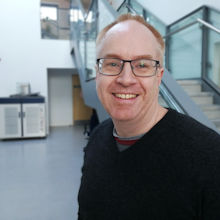
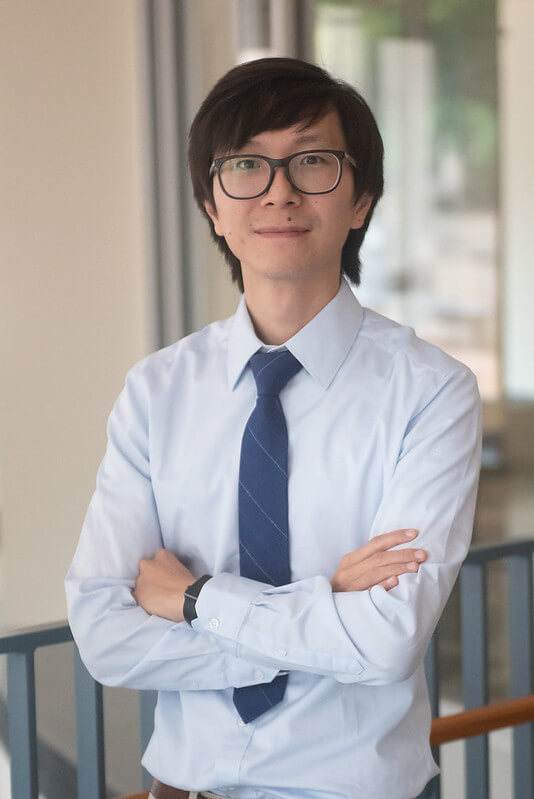
Luca Margaritella is an Associate Senior Lecturer in the Department of Economics at Lund University, part of the Lund University School of Economics and Management (LUSEM). His research focuses on econometrics and high-dimensional statistics, with applications in financial economics and time series analysis. He is actively involved in academic activities, including organizing the FEM seminar series and contributing to international collaborations. His research interests include factor models, vector autoregressive processes, and high-dimensional statistical methods, with recent work addressing topics such as bank network connectedness and climatic attribution using Granger causality. Margaritella has published in top journals like the Oxford Bulletin of Economics and Statistics and the Journal of Business & Economic Statistics . He holds a doctoral degree and has supervised research projects. His work often intersects with applied econometrics, emphasizing methodological advancements for complex economic datasets.
Professor Mathew Evans is a leading academic in atmospheric chemistry modeling at the University of York’s Department of Chemistry, affiliated with the Wolfson Atmospheric Chemistry Laboratories and the National Centre for Atmospheric Science. His work focuses on numerical modeling of atmospheric composition to understand air pollution and climate change, leveraging tools like the GEOS-Chem model and high-performance computing (HPC) at York’s Viking facility. Education & Career PhD in Atmospheric Sciences, University of Cambridge Postdoctoral Research: MIT (Earth, Atmospheric & Planetary Sciences) and Harvard University (Division of Engineering & Applied Sciences) NERC Fellowship at the University of Leeds Lecturer/Reader at Leeds before moving to York as a Professor Research Themes Halogen chemistry (Cl, Br, I) in the lower atmosphere Nitrogen oxides in remote atmospheres Atmospheric interactions with oceans and clouds Machine learning applications for chemical model acceleration Field campaign data integration (Bermuda, Cape Verde, China, Africa) Teaching & Leadership Departmental Theme Leader for Digital Chemistry Lecturer for the 3rd-year Atmospheric Chemistry module Supervises projects on spectral methods, ensemble approaches, and open-source modeling Collaborations Wolfson Atmospheric Chemistry Laboratories National Centre for Atmospheric Science (NCAS) NASA Goddard’s Global Modeling & Assimilation Office Master Chemical Mechanism development
Ying-Ying Lee is an Associate Professor of Economics at the University of California, Irvine, and an Associate Editor of the Journal of Econometrics . She holds a Ph.D. in Economics from the University of Wisconsin-Madison and completed a postdoctoral fellowship at Nuffield College, University of Oxford. Her research focuses on micro-econometrics with an emphasis on causal inference for continuous and multivalued treatments, leveraging nonparametric estimation and machine learning techniques. Her work addresses challenges such as sample selection bias, monotonicity assumptions, and high-dimensional data in causal inference frameworks. Key contributions include advancements in double debiased machine learning for continuous treatment effects, regression discontinuity designs, and quantile derivative estimation. She has applied these methods to policy evaluation, workforce programs, and structural models. Education: PhD in Economics (University of Wisconsin-Madison), Postdoc (Nuffield College, Oxford) Roles: Associate Editor of Journal of Econometrics, Principal Investigator of multiple research projects Research Themes: Continuous treatment effects, causal bounds, instrumental variables, policy analysis Her recent work emphasizes methodological innovations for handling complex treatment structures and selection mechanisms. Lee’s papers consistently bridge econometric theory with practical applications in labor economics and public policy. She actively contributes to open-source tools through GitHub repositories for her methodologies.
Prof. W. (Weining) Wang is a Professor at the Faculty of Economics and Business, University of Groningen. His research focuses on econometrics, time series analysis, and high-dimensional data modeling. He has collaborated with notable scholars such as Jeffrey Wooldridge and Wei Biao Wu, producing influential work in statistical methodologies for dynamic systems, spatial data, and financial econometrics. His recent contributions include advancements in quantile regression models, change-point detection in time series, and generalized estimating equations for nonlinear models. Publications span prestigious journals like the Journal of Time Series Analysis , Annals of Statistics , and Journal of Business and Economic Statistics . Contact: weining.wang@rug.nl . Research interests emphasize methodological innovations in econometric theory, with applications to economics, finance, and spatial systems. Ongoing work includes dynamic network quantile models and high-dimensional time series inference.
Dr. Joseph G. Ibrahim is the Alumni Distinguished Professor of Biostatistics at the University of North Carolina at Chapel Hill's Gillings School of Global Public Health. He holds leadership roles as Director of Graduate Studies in Biostatistics, Director of the Laboratory for Innovative Clinical Trials, and Biostatistics Core Director at the Lineberger Comprehensive Cancer Center. His academic tenure includes teaching courses like BIOS 762 (Linear Models) and BIOS 779 (Bayesian Statistics). Education: PhD/MSc in Statistics (University of Minnesota, 1988) and BS in Mathematics (1983). Research Interests: Bayesian methodology, clinical trial design, missing data, medical imaging, and cancer genomics. His work bridges statistical theory and application, with over 360 publications in top journals and two influential books on Bayesian survival analysis and Monte Carlo methods. Key Contributions: Developed statistical methods for joint modeling of longitudinal/survival data, power prior frameworks, and Bayesian approaches for multi-regional trials. His team's innovations include the LEAP prior for historical data integration and the glmmPen R package for high-dimensional models. Awards: Elected fellowships from ASA, IMS, RSS, and ISBA; Janssen Chair in Survival Analysis (2005); and UNC's Alumni Distinguished Professorship (2006). Service: Editor of JASA (Applications/Cases, 2013–2015), associate editor for Biometrics, Lifetime Data Analysis, and Bayesian Analysis. Served on NIH study sections (BMRD, EPIC) and ASA's Bayesian Section leadership. Labs/Teams: Leads the Center for Innovative Clinical Trials (Gillings Innovation Lab) and directs the Cancer Genomics Training Grant. Collaborates on NIH-funded breast cancer SPORE projects and epigenomic analysis tools like Epigrahmm.
Fatih Kizilaslan is a Research Fellow in the Department of Biostatistics at the University of Oslo, Norway, specializing in statistical models for high-dimensional and functional data. He holds a PhD in Mathematics from Gebze Technical University (2015) and has extensive academic experience, including roles as Associate Professor (2019-2023) and Assistant Professor (2016-2019) at Marmara University, Turkey. His research focuses on cure models, frailty modeling, and reliability analysis. He has conducted research at McMaster University (Canada) and the Gebze Institute of Technology (Turkey). His academic interests include survival analysis, statistical inference for extreme-value distributions, and applications of biostatistics in medical research. He is affiliated with the Statistical models for high-dimensional and functional data research group. His work emphasizes methodological advancements in stress-strength reliability, multicomponent systems, and record-based statistical models. Notable contributions include publications on cure models, frailty analysis, and reliability estimation in complex systems. His research bridges theoretical statistics with practical applications in biomedical and engineering contexts. He actively collaborates on projects involving high-dimensional covariates and predictive modeling for clinical outcomes.
Jonathan Stallrich is an Associate Professor and Director of PhD Programs (effective July 2025) in the Department of Statistics at North Carolina State University. He holds a Ph.D. in Statistics from Virginia Tech (2014). His research focuses on Experimental Design, Response Surface Methodology, and Statistical Collaboration, with applications in robotics, healthcare, and agricultural sciences. Recent work emphasizes optimal design frameworks for high-dimensional data analysis, A/B testing methodologies, and biomechanical prosthetics control systems. He has contributed to over 30 peer-reviewed articles since 2012, addressing topics ranging from statistical optimality criteria to interdisciplinary challenges in material science and entomology. Stallrich is actively involved in statistical consulting and maintains administrative roles supporting graduate education within the university's statistics program. Research interests include advancing experimental design theory to address modern data complexities, developing statistical methods for collaborative research environments, and applying statistical principles to biomedical engineering and agricultural pest management. His work bridges theoretical statistics with practical applications, particularly in optimizing systems for robotic prosthetics and agricultural pest monitoring. Publications highlight trends in optimal design methodologies, with a focus on supersaturated designs, Lasso sign recovery, and sequential optimization techniques. Collaborative projects span disciplines including biomechanics, polymer engineering, and veterinary medicine. No scientific awards are explicitly documented in the provided materials. His administrative responsibilities include overseeing doctoral program curricula and admissions processes beginning in 2025.
Dr. Mehmet Caner is a Professor in the Department of Agricultural and Resource Economics at North Carolina State University's College of Agriculture and Life Sciences. Previously at Ohio State University (2015-2019), he specializes in econometrics with research emphasis on empirical international finance and high-dimensional econometric testing. He serves as associate editor for multiple leading journals including Journal of Econometrics and Journal of Business and Economic Statistics. His methodological innovations focus on high-dimensional econometrics, particularly developing testing frameworks for models with large parameter spaces. Research extends to applications in financial portfolio optimization, market integration analysis, and machine learning incentive structures. Recent publications (2020-2024) demonstrate strong emphasis on LASSO-based inference, deep learning integration in factor models, and constrained portfolio analysis under high-dimensional complexity. Education: Ph.D. Economics, Brown University (1996) A.M. Economics, Brown University (1993) Bachelor of Science Business Administration, Middle East Technical University (1988) Scientific Awards: Research Award, NC State University Research Award, University of Pittsburgh
Dror Baron is an Associate Professor in the Department of Electrical and Computer Engineering at North Carolina State University. He holds a Ph.D. from the University of Illinois at Urbana-Champaign and has held positions including Postdoctoral Researcher at Rice University, Visiting Scientist at the Technion, and Quantitative Research Analyst at Menta Capital. His research focuses on the intersection of fast algorithms, signal processing, and information theory, with particular interests in quantum information science, machine learning, and communication systems. Education: Ph.D. in Electrical Engineering, University of Illinois at Urbana-Champaign (2003) M.Sc. in Electrical Engineering, Israel Institute of Technology (1999) B.Sc. in Electrical Engineering, Israel Institute of Technology (1997) Research Interests: Quantum error mitigation and algorithms Machine learning applications in signal processing Group testing and compressed sensing Generative adversarial networks (GANs) for system modeling Federated learning and privacy-preserving techniques Channel estimation and mmWave communication Awards & Honors: IEEE Senior Member (2010) M. E. Van Valkenburg Graduate Research Award (2002) Program for Outstanding Students, Technion (1994–1997) President's Roll every semester, Technion (1994–1997) Recent Contributions: His work includes developing algorithms to reduce testing quantities for pandemic management, advancing GAN-based receiver modeling, and exploring quantum advantage in finance. Collaborations span academia and industry, with notable contributions to federated learning security and compressed sensing theory.
Yuedong Wang is a Professor in the Department of Statistics and Applied Probability at the University of California, Santa Barbara (UCSB), part of the College of Letters and Science. He holds a PhD from the University of Wisconsin-Madison and has prior experience at the University of Michigan. His research focuses on statistical methodologies, including nonparametric and semiparametric models, smoothing splines, machine learning, and biostatistical applications in renal diseases and human circadian rhythms. He is a Fellow of the ASA, IMS, ISI, and RSS, and a member of IBS and ICSA. His work spans over 150 publications, with recent emphasis on modeling dialysis patient outcomes, SARS-CoV-2 transmission in healthcare settings, and statistical computing. Key collaborations include the MONDO initiative for dialysis outcomes research. He has developed R packages like ASSIST for nonlinear mixed-effects models and contributed to smoothing spline theory. His book *Smoothing Splines: Methods and Applications* is a seminal text in the field. Education: BS in Mathematics (USTC), MS in Operations Research (Chinese Academy of Sciences), PhD in Statistics (UW-Madison). Research interests: Machine learning applications, functional data analysis, longitudinal data modeling, and biostatistical methods in nephrology. His articles address topics like tensor product RKHS analysis, nonparametric mixture models for clinical data, and AI-driven predictive analytics for dialysis patients. Awards include recognition for contributions to statistical methodology and its biomedical applications.
Dimitris Lagoudas is a Professor in the Departments of Aerospace Engineering and Materials Science & Engineering at Texas A&M University, holding the Robert C. “Bud” Hagner Chair of Engineering and the title of University Distinguished Professor. His research focuses on smart materials, including shape memory alloys (SMAs), metamaterials, additive manufacturing, and structural batteries. He has pioneered work in active origami structures, functional fatigue of materials, and the design of multifunctional materials for aerospace and energy applications. Education: Postdoctoral studies in Theoretical and Applied Physics/Mechanics at Cornell University and the Max Planck Institute (1986–88); PhD in Applied Mathematics from Lehigh University (1986); Diploma in Mechanical Engineering from Aristotle University of Thessaloniki (1982). Research interests span SMA constitutive modeling, metamaterial bandgap engineering, and additive manufacturing of functional materials. His work emphasizes material behavior under extreme conditions, fatigue analysis, and integration of structural and energy functions in materials systems. Key contributions include the development of predictive models for SMA actuators, design frameworks for adaptive structures, and advancements in structural supercapacitors. His publications reflect interdisciplinary approaches combining mechanics, materials science, and data-driven methods. Scientific awards include the SPIE Smart Structures Lifetime Achievement Award (2012) and the ASME Adaptive Structures Prize (2006). His research has been supported by grants focusing on materials discovery, multifunctional systems, and aerospace applications. Advising and grants: While no student names are listed here, his work involves collaborative projects with industry and federal agencies. His labs focus on experimental and computational studies of advanced materials, with applications ranging from morphing aerospace systems to energy storage technologies.
Prasenjit Ghosh is an Instructional Assistant Professor in the Department of Statistics at Texas A&M University, affiliated with the College of Arts & Sciences. His research focuses on Bayesian Modeling, Multivariate and Functional Data Analysis, and Statistical Learning with applications in Machine Learning. He holds a primary appointment in the Department of Statistics and maintains an active research program in high-dimensional data methodologies. His research interests emphasize Bayesian inference techniques for complex data structures, including shrinkage priors, graphical models, and stochastic block modeling. He explores methodological advancements in variable selection, posterior contraction rates, and asymptotic properties of Bayesian procedures under sparsity conditions. Recent publications highlight contributions to global-local shrinkage priors, covariate-dependent graphical models, and step-down procedures for simultaneous hypothesis testing. His work bridges theoretical statistics with practical applications in machine learning and high-dimensional analysis. No scientific awards or grants are explicitly listed in the provided materials. No advising relationships or laboratory affiliations were noted in the text.
Raymond Ka Wai Wong is an Associate Professor and Director of the PhD Program in the Department of Statistics at Texas A&M University. He holds a PhD in Statistics from the University of California, Davis (2014), an MPhil from The Chinese University of Hong Kong (2010), and a BSc with minors in Mathematics and Risk Management Science (2008). His research focuses on causal inference, functional data analysis, low-rank modeling, reinforcement learning, and statistical learning with applications in astronomy, brain imaging, and genomics. Wong's professional roles include Associate Editor for Journal of Computational and Graphical Statistics , Journal of the American Statistical Association , and member of the Research Institute for Foundations of Interdisciplinary Data Science (FIDS). He has secured grants from NSF, NASA, and NIH, including leadership in projects like Virtual Assistant for Spacecraft Anomaly Treatment and phenomic selection in maize hybrids. His awards include Top Reviewer distinctions at NeurIPS (2023) and ICML (2020), and a 2016 Discussion Paper in the Annals of Applied Statistics. He has advised numerous doctoral students, with notable advisees receiving awards such as the ICSA Student Paper Award and Emanuel Parzen Fellowship. Wong’s recent work emphasizes methodological advancements in reinforcement learning (e.g., distributional off-policy evaluation) and matrix/tensor completion under informative missingness. His research bridges theoretical statistics with practical applications in interdisciplinary domains such as neuroscience, agriculture, and space exploration.
Debashis Mondal is an Associate Professor of Statistics & Data Science at Washington University in St. Louis, part of the Arts & Sciences School. He holds a PhD from the University of Washington (2007) and BSTAT/MSTAT from the Indian Statistical Institute. His research focuses on spatial statistics, computational science, machine learning applications in ecology and environmental sciences, and methodological advancements in statistical modeling. Education: PhD in Statistics, University of Washington, Seattle (2007) MSTAT in Statistics, Indian Statistical Institute BSTAT in Statistics, Indian Statistical Institute (2000) Research Interests: Spatial statistics and environmental applications Machine learning and computational methods Data-driven approaches in ecology and microbiology Methodological development for high-dimensional and spatial-temporal data Professional Recognition: Recipient of NSF Career Award (2013), Elected ISI Member (2016), and numerous service awards. His work bridges statistical theory and environmental science, with publications in top journals like Annals of Applied Statistics and Biometrika. Advising and Grants: Mentor to multiple PhD students (e.g., Si Liu, Paul Logan) and has supervised research leading to postdocs and industry roles. His grants include NSF funding for methodological research in spatial statistics. Professional Activities: Organized major conferences (e.g., Midwest Statistics Colloquium, International Indian Statistical Association Conference) and serves on editorial boards and award committees for leading statistical societies.
Haziq Jamil is an Assistant Professor in Statistics at Universiti Brunei Darussalam (UBD) within the Faculty of Science, Department of Mathematics. He concurrently serves as a Visiting Fellow at the London School of Economics and Political Science (LSE) Department of Statistics (2024-2027) and will transition to King Abdullah University of Science and Technology (KAUST) as a Research Specialist in August 2025, taking leave from UBD. His academic journey includes a PhD in Statistics (2018) and MSc in Statistics (2014) from LSE, and a BSc & Master in Mathematics, Statistics, Operational Research and Economics (2010) from Warwick University. His research spans statistical theory, methods, and computation with strong social science applications. Core interests include latent variable models, Gaussian processes, Bayesian statistics, and spatio-temporal modeling, particularly applied to Brunei's housing market and psychometric testing. He pioneered I-prior regression methodology using Fisher information kernels and developed bias-reduction techniques for Item Response Theory models. His publication record shows consistent output in high-impact journals with increasing focus on Brunei-specific applications since 2022. Haziq's 15 most recent publications (2022-2025) demonstrate methodological innovation in Bayesian computation, latent variable modeling, and spatial statistics, with growing emphasis on real-world applications in Brunei's housing market and educational assessment. Key trends include development of sparse Gaussian process models for property valuation, spatio-temporal analysis of Brunei's real estate, and bias-adjustment methods for psychometric models – reflecting his dual expertise in theoretical statistics and practical implementation. Teaching Excellence Award in Sciences (Universiti Brunei Darussalam, 2023) Arnold Zellner Thesis Award Honourable Mention (American Statistical Association, 2020) In-Service Training Scheme Scholarship (Brunei Public Service Commission, 2013-2018) Supreme Commander of Royal Brunei Armed Forces Scholarship (2006-2010) Best Student Award 2005 (Persekutuan Guru-Guru Melayu Brunei) Haziq serves as Graduate Programme Coordinator for Mathematics (2021-2025) and Faculty Liaison Committee member at UBD. His consultancy includes defense-related data analysis for Brunei's Ministry of Defence (2021-2022). He leads the Brunei R User Group (2024-2026) and maintains active research collaborations through the Bayesian Computational Statistics and Modelling (BAYESCOMP) group at KAUST. Current projects include open-source statistical tables, I-prior methodology R packages, and quantitative text analysis of Brunei's legislative council meetings. He directs multiple ongoing research initiatives including the Brunei housing market dataset covering 30,000+ transactions across three decades, Hamiltonian Monte Carlo educational tools, and quantitative analysis of Brunei's legislative proceedings. His work bridges theoretical statistics with practical applications in urban planning, defense analytics, and educational assessment within Brunei's unique socio-economic context.