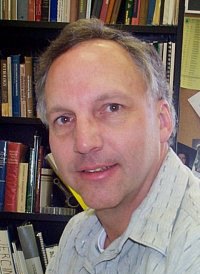
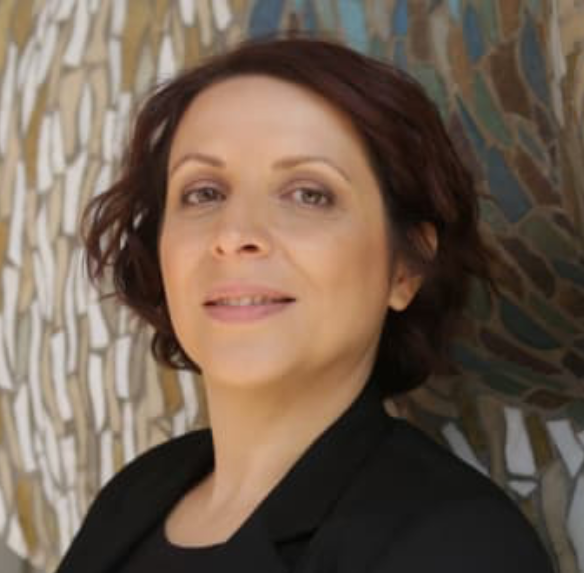
Sarah Kruse is a Professor at the University of South Florida's School of Geosciences. Her research focuses on near-surface geophysics, including the development of instrumentation for undergraduate field experiences, lunar analog studies using terrestrial lava tubes, and geophysical methods for resource exploration. She leads initiatives to integrate geophysics into STEM education with societally relevant modules and develops tools for subsurface characterization. Her work spans seismic and GPR modeling for void detection, InSAR analysis of land subsidence in Tampa Bay, and ecohydrological studies in mangrove ecosystems. She envisions convergent science centers to advance near-surface geophysics and collaborates on planetary exploration projects.
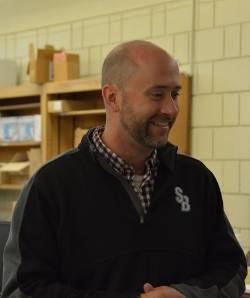
Timothy Glotch is a Professor in the Department of Geosciences at Stony Brook University, leading the RISE2 node of NASA's Solar System Exploration Research Virtual Institute. His research focuses on planetary spectroscopy, mineralogy, and remote sensing, particularly on the Moon, asteroids, and Martian moons. He is also a Co-Investigator on the Lunar Reconnaissance Orbiter Diviner Lunar Radiometer and a Participating Scientist on the OSIRIS-REx mission. Education: B.A. in 1999 from Colgate University, Ph.D. in Geological Sciences from Arizona State University (2004). Affiliated with the Center for Planetary Exploration. Research interests include laboratory spectroscopy of extraterrestrial materials, micro-Raman spectroscopy, light scattering models for planetary regoliths, and thermal infrared remote sensing of planetary surfaces. His work addresses NASA's goals in human exploration and science. Key contributions include studies of lunar silicic volcanism, asteroid Bennu mineralogy, and Martian phyllosilicate detection. Over 50 researchers/students collaborate in his team. Grants/awards: Not explicitly listed, but leadership roles in major NASA initiatives indicate significant funding. Advises numerous graduate students highlighted in publications. Labs/teams: RISE2 team, Center for Planetary Exploration, collaborations on NASA missions.
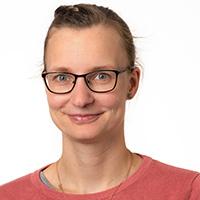
Tanja Michalik is a Research Fellow at the Museum für Naturkunde (Leibniz Institute for Evolution and Biodiversity Research) in Berlin, Germany, where she works in the Department of Solar System, Impacts & Meteorites since 2023. She holds a PhD from the German Aerospace Center (DLR) and the Free University Berlin, with her dissertation focusing on pitted impact deposits on Asteroid 4 Vesta. PhD: German Aerospace Center and Free University Berlin (2017-2022) Master of Science: Free University Berlin, Geodynamics and Geomaterials (2014-2017) Bachelor of Science: Free University Berlin, Geological Sciences (2010-2014) Academic Year Abroad: University of Hawai'i at Mānoa (2014/2015) Dr. Michalik specializes in planetary science with a focus on asteroid research, spectral analysis, and impact crater studies. Her work involves mineralogical and spectral investigations of meteoritic samples, numerical modeling of impact events on the Moon, and analysis of remote sensing data from planetary bodies including Mars, the Moon, and asteroids Vesta and Ryugu. She has conducted extensive research on pitted impact deposits on Vesta using data from NASA's Dawn mission. Her recent publications demonstrate expertise in laboratory VIS-NIR reflectance measurements, analysis of asteroid surface properties, and comparative studies between meteorite samples and in-situ asteroid observations. The research shows a consistent focus on understanding volatile-related processes on planetary bodies through spectral analysis techniques. Dr. Michalik is currently working on DFG Project 528399203: "Investigation of processes related to volatiles on planetary rocky objects," which builds on her extensive background in analyzing impact deposits and asteroid surface properties. Her research methodology combines laboratory measurements, spacecraft data analysis, and numerical modeling to investigate fundamental processes shaping planetary surfaces. She collaborates with international research teams, as evidenced by her publications with co-authors from multiple institutions worldwide.
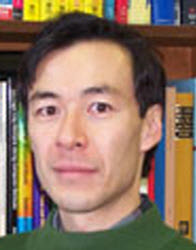
Dr. Seiichi Nagihara is a Professor in the Department of Geosciences at Texas Tech University. He holds a Ph.D. in Geophysics from the University of Texas, Austin (1992). His research focuses on planetary geophysics, lunar heat flow analysis, and sedimentary basin dynamics, with a particular emphasis on the geothermal evolution of rocky planets and moons. He has contributed to NASA's InSight Mars mission and the restoration of Apollo Lunar Surface Experiment Package (ALSEP) data, analyzing moonquakes and lunar interior structure. His work integrates geophysical principles with planetary exploration, including thermal conductivity measurements and geothermal data systems. Dr. Nagihara teaches courses in geophysics, solid-Earth geophysics, and basin analysis. Research interests include the geodynamics of the Moon and Mars, subsurface warming trends observed at Apollo landing sites, and heat flow studies in sedimentary basins like the Gulf of Mexico. He is affiliated with the American Association of Petroleum Geologists' Astrogeology committee and NASA's Solar System Exploration Virtual Research Institute. His expertise bridges terrestrial and extraterrestrial geophysics, leveraging advanced instrumentation for planetary surface analysis.
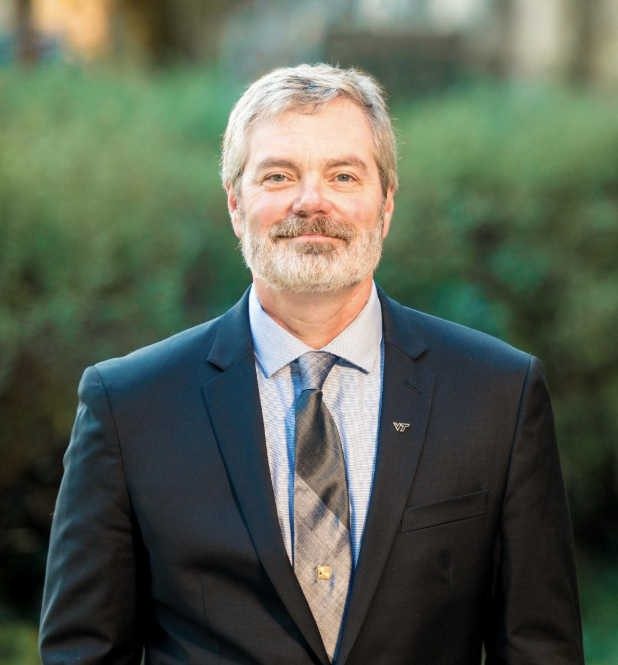
W. Steven Holbrook is a Professor and Head of the Department of Geosciences at Virginia Tech. His research focuses on critical zone geophysics, using seismic and geophysical techniques to study Earth's 'breathing skin' where water, life, and rock interact. He leads interdisciplinary projects across seven Critical Zone Observatory sites, combining seismology, geomorphology, and geochemistry to address subsurface structure and water dynamics. Education: Ph.D. (Geophysics, Stanford University, 1989), M.S. (Geophysics, Stanford, 1985), B.S. (Geoscience, Penn State, 1982). Professional experience includes roles at the Woods Hole Oceanographic Institution and University of Wyoming. Awards include the Walter Munk Award (2013), AGU Fellow (2012), and multiple teaching/research honors. He mentors ~30 students (12 Ph.D., 16 M.S., 2 undergraduates) in 'Team Holbrook,' with current advisees Kira Dickey (M.S.) and postdoc Sylvain Pasquet. Research includes airborne EM surveys in Yellowstone and inversion of surface-wave data for critical zone structure. Teaching specialties: oceanography, reflection seismology, and introductory geophysics. Active in grants and collaborations, including NSF-GeoPRISMS and CZNet (Critical Zone Collaborative Network).
Craig Pitcher is a Research Fellow at the University of Surrey's Surrey Space Centre, specializing in planetary drilling technologies and extraterrestrial surface exploration. He is a key contributor to the development of the Dual-Reciprocating Drill (DRD), a biomimetic drilling system inspired by the wood wasp ovipositor. Affiliation: Surrey Space Centre, University of Surrey Expertise: Space robotics, regolith sampling, cryogenic material analysis His research focuses on optimizing drilling efficiency for lunar and Martian environments, addressing challenges such as regolith cementation, water vapor interactions, and low-mass system design. Pitcher has led experiments on icy lunar simulants, duricrust formation, and DRD actuation mechanisms, contributing to ESA's ExoMars mission and the LUVMI lunar polar volatiles payload project. Recent publications highlight his work on multi-sample acquisition techniques, lateral motion drilling mechanics, and TRL6 instrumentation validation. Collaborations include ESA, international space agencies, and institutions like MDPI and Elsevier.
Dr. Yan Hu is an Assistant Professor in the Department of Geoscience at the University of Nevada, Las Vegas (UNLV). Her research focuses on isotope geochemistry and cosmochemistry, addressing planetary formation and Earth's volatile element cycling. She holds a Ph.D. from the University of Washington (2018), M.S. from Chinese Academy of Sciences (2012), and B.E. from China University of Geosciences (2009). Her work integrates field studies, analytical techniques like ICP-MS, and isotopic tracers to investigate subduction zone processes and early Solar System evolution. Education Ph.D. in Isotope Geochemistry, University of Washington (2018) M.S. in Geochemistry, Institute of Geology and Geophysics, Chinese Academy of Sciences (2012) B.E. in Gemology & Materials Science, China University of Geosciences, Beijing (2009) Research Interests Dr. Hu explores planetary habitability through volatile element acquisition and subduction zone dynamics. Key themes include potassium and magnesium isotope analysis of meteorites, sediments, and mantle-derived rocks to trace Earth's volatile inventory and crust-mantle interactions. Her lab employs cutting-edge analytical methods and collaborates internationally on samples like Ryugu asteroid materials. Publications Her work emphasizes isotopic tracers in planetary and terrestrial systems, with recent focus on potassium isotope signatures in meteorites, sediments, and biological tissues. Publications highlight connections between volatile depletion in planetary building blocks and subduction zone geochemistry. Commitment to DEI As a first-generation academic, Dr. Hu advocates for diversity and inclusion in geoscience, emphasizing equitable participation in fieldwork and lab environments. She mentors students and fosters collaborative, interdisciplinary research to enhance innovation and creativity in Earth science. Labs & Teams Her lab at UNLV focuses on non-traditional stable isotope analysis. She collaborates with institutions globally on projects involving NASA samples and subduction zone studies.
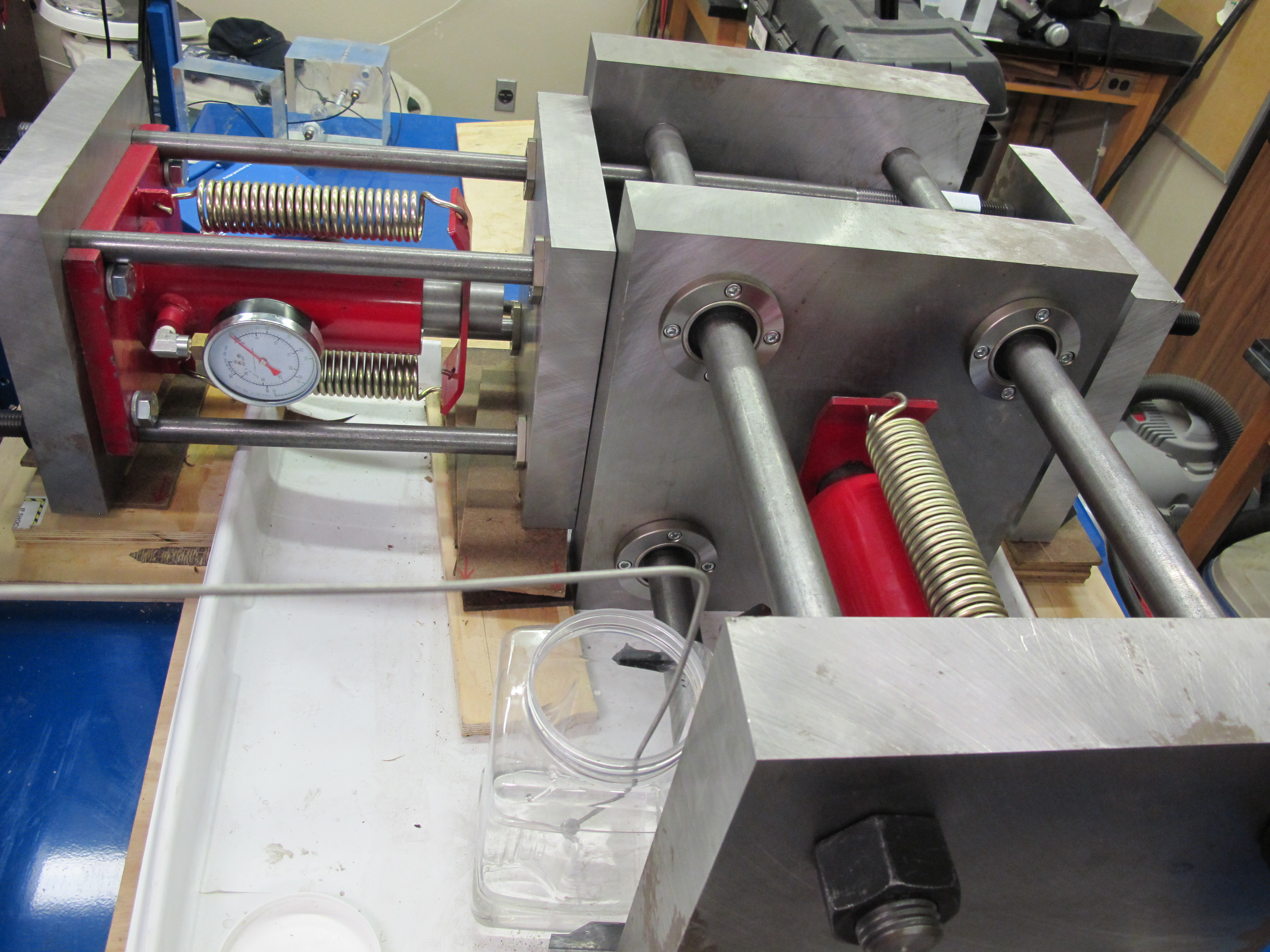
Juan M. Lorenzo is a Professor in the Department of Geology and Geophysics at Louisiana State University's College of Science, where he serves as Graduate Advisor. His research focuses on shallow-earth seismology with applications in both terrestrial and planetary environments. His primary research interests include: Studying soil properties beneath flood protection levees and adjacent floodplains Evaluating regolith properties on planetary bodies (particularly Mars and the Moon) Capturing hydraulic fracture propagation rates Developing seismic tools for engineering and environmental applications Planetary science applications of seismology Professor Lorenzo's work bridges fundamental geophysical principles with practical applications, particularly in levee monitoring for flood protection in Louisiana and planetary exploration. His research group has produced significant publications in geophysical monitoring, including a Springer-Verlag monograph titled "Levees and Dams: Advances in Geophysical Monitoring and Characterization." His recent work shows a strong trend toward planetary applications, with numerous publications on Mars and lunar seismology, water-ice detection, and regolith properties. He has also maintained active research on Mississippi River floodplains and levee systems, demonstrating the dual focus of his research program. His scientific recognition includes: NASA MSFC Fellowship (2020) LaSPACE Award (2018-2019) Professor Lorenzo advises both undergraduate and graduate students who conduct research through field or laboratory studies using a seismic sand tank. His students have worked on levee monitoring, planetary regolith properties, and hydraulic fracturing. His laboratory facilities include a biaxial press capable of 50 tons of force, seismic sensors, acquisition systems, pumps and controllers for fracturing fluids, and sample materials for experimental studies. He teaches courses including Physical Geology, Exploration and Environmental Geophysics, Reflection Seismology, and Petroleum Seismology.
Dr. Konstanze Stübner is a researcher at the Helmholtz-Zentrum Dresden-Rossendorf (HZDR) within the Accelerator Mass Spectrometry and Isotope Research department. Her work focuses on cosmogenic nuclide dating techniques, tectonic processes, and glacial history. She has contributed to studies on mountain building in the Pamir and Himalayas, Arctic Ocean sediment chronology, and human dispersal patterns using isotope geochemistry. Her research integrates field observations with advanced laboratory methods like Accelerator Mass Spectrometry (AMS). Key research areas include: Mountain Belt Evolution : Cenozoic uplift of the Tian Shan, Pamir, and Himalayan orogens Cosmogenic Nuclides : Development of methods for Be-10/Be-9 and Ca-41 analysis in sediments and lunar samples Paleoclimatology : Glacial chronologies and deglaciation processes in Arctic and Alpine regions Archaeological Dating : Application of cosmogenic isotopes to human migration routes in the Mediterranean Dr. Stübner collaborates internationally on projects such as the RIVERSAND erosion modeling tool and has pioneered purification techniques for AMS analysis of authigenic Be isotopes. Her work bridges geology, physics, and archaeology, emphasizing interdisciplinary approaches to Earth system history.
Johan O. A. Robertsson serves as Full Professor of Applied Geophysics and Head of the Exploration and Environmental Geophysics (EEG) Group within ETH Zurich's Department of Earth Sciences, where he leads research in wave propagation physics and seismic data innovation since 2012. His work bridges terrestrial exploration, environmental monitoring, and planetary science applications. Robertsson earned his MSc in Engineering Physics from Uppsala University (1991) and PhD in Geophysics from Rice University (1994), followed by postdoctoral research at ETH Zurich and 15 years of R&D leadership at Schlumberger, where his work initiated the company's largest-ever R&D project in marine seismic sampling. His research centers on wave propagation in complex media, with recent breakthroughs in distributed acoustic sensing (DAS) for environmental hazard monitoring and planetary seismology. Current projects include lunar subsurface imaging (Lunarleaper), Mars regolith analysis via InSight mission data, and immersive wave experimentation ('The Matrix'). He pioneered methods for seismic divergence estimation using coiled fiber DAS and six-component polarization analysis. Analysis of his 2020-2025 publications reveals three dominant trends: (1) planetary geophysics applications (35% of output, focusing on Mars/InSight and lunar seismic characterization), (2) advanced DAS techniques for near-surface monitoring (30%, including landslide tracking in the Alps), and (3) gravitational wave simulation for LISA mission support (15%). His work consistently integrates field data with laboratory-scale immersive wave experiments. His scientific recognition includes: EAGE Conrad Schlumberger Award (2018) for transformative contributions to exploration geophysics ERC Advanced Grant MATRIX (2017) for immersive wave experimentation Eni Award 'New Frontiers in Hydrocarbons' (2015) Multiple best paper prizes at WesternGeco conferences (2004-2009) Robertsson advises graduate students in the EEG Group while directing collaborations with space agencies on planetary missions and industry partners on marine seismic acquisition. His current ERC-funded MATRIX project develops laboratory-scale 'digital twins' for wave propagation. The EEG Group maintains active field deployments including a 1,000-node array monitoring Alpine slope instabilities and lunar analog sites. The group operates the Centre for Immersive Wave Experimentation, featuring controlled acoustic environments for validating seismic methods at laboratory scale. Recent work integrates phononic metamaterials for passive speech classification and develops coiled-fiber DAS systems for enhanced near-surface characterization in environmental applications.
Corentin LE GUILLOU is a CNRS Research Fellow at the Materials and Transformations Unit (UMET) of the University of Lille , where he conducts research in the Terrestrial and Planetary Materials team. His work focuses on cosmochemistry, meteoritics, and the early evolution of the solar system through the analysis of extraterrestrial materials such as meteorites and asteroid Ryugu samples. His research interests span cosmochemistry, meteoritics, planetary science, geochemistry, transmission electron microscopy (TEM), X-ray absorption spectroscopy (STXM), hydrothermal experiments, asteroid Ryugu, chondrites, water-silicate interactions, organic matter in meteorites, experimental petrology, nanomineralogy, and astrobiology . He investigates water-silicate-organic interactions under hydrothermal conditions to simulate early solar system processes. His expertise lies in advanced micro-analytical techniques applied to extraterrestrial samples. His recent publications (2023–2025) reveal a strong focus on the analysis of Ryugu asteroid samples , with recurring themes in space weathering, organic matter characterization, mineralogical transformations, and aqueous alteration processes . He frequently collaborates with Hugues Leroux and international teams on high-impact studies published in journals like Geochimica et Cosmochimica Acta , Nature Communications , and Meteoritics and Planetary Science . His work bridges experimental simulations with direct sample analysis to understand planetary formation and evolution. He has co-directed two PhD students: Maxime Morgano (thesis on chondrite water, defended 2023) and Pierre-Marie Zanetta (thesis on electron microscopy of early solar system solids, defended 2019). He is actively involved in major research projects related to asteroid sample analysis and has presented his work at international conferences such as the Lunar and Planetary Science Conference and the Meteoritical Society meetings. He is part of the Terrestrial and Planetary Materials research group within UMET, which utilizes advanced facilities such as the Lille Electron Microscopy Platform (PMEL) and synchrotron-based techniques for high-resolution analysis of geological and extraterrestrial materials.
Francisco DE LA PEÑA is a Lecturer in the Department of Physics at the Faculty of Science and Technology, University of Lille. He is a member of the Materials and Transformations Unit (UMET, CNRS UMR 8207) and works within the Terrestrial and Planetary Materials research team. His office is located in Building C6, Scientific City, Villeneuve d'Ascq, France. His primary research interests lie in the nanoscale characterization of astromaterials , particularly samples from the asteroid Ryugu returned by the Hayabusa2 mission. He specializes in advanced electron microscopy techniques, including 4D-STEM, electron energy loss spectroscopy (EELS), and vibrational spectroscopy in the STEM , to study space weathering, mineralogical transformations, and the interaction between organic matter and minerals at the nano-scale. His recent publications (2023–2025) reveal a strong focus on the analysis of Ryugu samples, investigating topics such as iron nitride formation, organic micro-globules, phyllosilicate matrices, pyrrhotite alteration, and shock metamorphism. These works, published in top-tier journals like Nature Astronomy and Meteoritics and Planetary Science , demonstrate a consistent trend in applying cutting-edge microscopy to unravel the geological and chemical history of primitive asteroids. Francisco DE LA PEÑA is a frequent co-author with leading scientists in the field, including Damien Jacob, Hugues Leroux, and Cécile Le Guillou . He actively contributes to the scientific community through presentations at international conferences such as Goldschmidt and the French Society of Microscopy. He has also contributed to methodological advances in electron microscopy data analysis, including work on the open-source software HyperSpy, reflecting his expertise in both experimental and computational aspects of materials characterization.
Francis M. McCubbin is a Research Assistant Professor and Senior Research Scientist III at the University of New Mexico's Institute of Meteoritics. He serves as the High Pressure Lab Manager within the Department of Earth and Planetary Sciences. His work focuses on planetary geochemistry, particularly the role of volatiles (H2O, F, Cl, S, C) in magmatic systems of terrestrial and extraterrestrial bodies like Mars, the Moon, and Mercury. He employs experimental petrology, advanced micro-beam analysis (e.g., TOF-SIMS), and crystal-chemical modeling to study volatile-bearing minerals such as apatite and amphibole. Education: Ph.D. in Geochemistry from Stony Brook University (2009). Research interests include: Hydrous magmatism on Mars and its implications for subsurface habitability Lunar volatile content and its geologic history Mercury's surface mineralogy and magmatic processes Crystallography and petrogenetic roles of phosphate minerals Recent publications emphasize detection methods for water in planetary materials and integrating laboratory experiments with remote sensing data (e.g., MESSENGER mission results for Mercury). Lab responsibilities include managing high-pressure experimental facilities critical for simulating planetary interior conditions.
Horton E. Newsom is a Research Professor and Senior Research Scientist III at the Institute of Meteoritics, University of New Mexico. He holds a Ph.D. in Geochemistry from the University of Arizona (1981). His research focuses on planetary geochemistry, with emphasis on Mars geology, impact cratering effects (hydrothermal/atmospheric), Martian soil formation mechanisms, and educational outreach in K-12 science. He serves as co-investigator for the ChemCam instrument on NASA's Mars Science Laboratory mission. Newsom's publications span 20+ years of Mars-related studies, including analyses of impact crater geochemistry, hydrothermal alteration processes, and mineralogical mapping using orbital and rover data. His work bridges field studies (e.g., Lonar Crater analog research) with planetary-scale interpretations. Key contributions include: identifying potential aqueous/hydrothermal Martian deposits via crater analysis, characterizing Martian regolith composition via Odyssey GRS data, and developing methodologies for in-situ LIBS analysis of extraterrestrial materials. His work frequently integrates multidisciplinary datasets from remote sensing, laboratory spectroscopy, and field analog studies.
Professor Katarina Miljkovic is a planetary scientist at Curtin University's School of Earth and Planetary Sciences, focusing on impact physics and planetary geophysics. Her work bridges numerical simulations with space mission data (e.g., NASA's InSight and GRAIL missions). She holds leadership roles, including deputy Head of School and membership in the Office of the Provost. Education: BSc in Astrophysics (University of Belgrade, 2006), PhD in Planetary Science (Open University, 2010). Postdoctoral roles at MIT, Institut de Physique du Globe de Paris, and Imperial College London. Research interests include impact cratering mechanics, seismic wave analysis, and resource utilization linked to impact processes. Key contributions involve Martian crustal studies using InSight seismic data and lunar basin formation models. Over 50 peer-reviewed papers and extensive conference contributions. Teaching includes units on planetary science and scientific leadership, recognized by the 2024 Learning and Teaching Team Award. Awards include OAM (2024), WA Tall Poppy (2019), and ANZ L'Oreal-UNESCO fellowship (2018). Collaborations span global institutions, with tools like numerical simulations and crater cluster analysis. Active in STEM advocacy and public outreach.