Stephen Ashwal, MD, is a Distinguished Professor in the Department of Neurology at the School of Medicine. With a career spanning over five decades, he has made significant contributions to pediatric neurology, neuroimaging, and traumatic brain injury research. Doctor of Medicine, New York University, 1970 Bachelor of Arts, New York University, 1966 His research focuses on: Pediatric neurology and neurocritical care Advanced neuroimaging techniques (MRI, MRS, DTI) Brain death determination in infants and children Stem cell therapy for hypoxic-ischemic injury Metabolomics in traumatic brain injury Neuroinflammatory mechanisms in juvenile brain trauma Analysis of his 15 most recent articles reveals trends in Neuroimaging biomarkers for pediatric brain injury Development of automated diagnostic tools (CT, MRI) Stem cell interventions in neonatal hypoxia-ischemia Consensus guidelines for disorders of consciousness Metabolic predictors of cognitive outcomes Neuroinflammatory pathways in pediatric neurotrauma Collaborations highlight partnerships with researchers at Loma Linda University (Holshouser, Tong, Obenaus) Elsevier publishers (Swaiman's Pediatric Neurology) Neurology and Pediatrics departments
Dr. Meir N. Pachter is a Distinguished Professor in the Department of Electrical Engineering at the Air Force Institute of Technology (AFIT), Wright-Patterson Air Force Base, OH. His academic career spans decades, with a focus on applying mathematics to engineering challenges in autonomous systems and control theory.
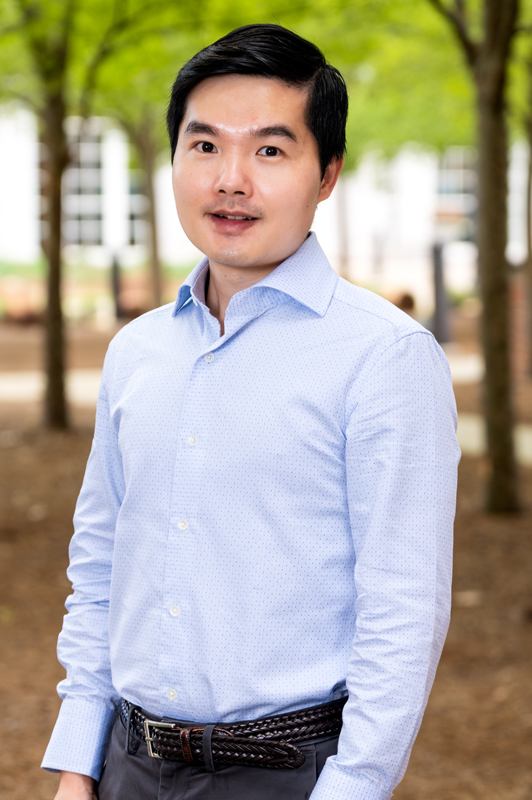
Yong Fan, PhD is an Associate Professor of Radiology at the Perelman School of Medicine, University of Pennsylvania . With expertise in medical image analysis , machine learning , and computational imaging , his research bridges methodological innovation with clinical applications in neuroscience, oncology, and nephrology. Primary Affiliations: Department of Radiology, Perelman School of Medicine, University of Pennsylvania Graduate Group: Bioengineering His research focuses on developing advanced machine learning techniques for quantifying brain and organ morphology/function from medical images. Key methodologies include functional connectomics , radiomics , image registration , and personalized neuromodulatory therapies . Clinical applications span Alzheimer’s disease , schizophrenia , depression , addiction , pediatric kidney diseases , and cancer treatment outcome prediction . Recent publications highlight his leadership in AI-driven medical diagnostics , including novel frameworks for multi-atlas segmentation , dynamic functional connectivity , and cross-site generalization in deep learning . Collaborative work spans neuroimaging genetics , thoracic lymphatic flow quantification , and automated tumor response assessment . His laboratory advances precision medicine through multimodal data integration, with a strong emphasis on translational research that connects computational methods to real-world clinical challenges.
Shuai Huang is an Assistant Professor in the Department of Electrical and Computer Engineering at Auburn University, affiliated with the Neuroimaging Center. His research focuses on machine learning and AI applications in healthcare, particularly leveraging MRI and computational imaging to address neurodegenerative disorders like Alzheimer's and autism spectrum disorder. The Computational Neuroscience and Artificial Intelligence (CNAI) Lab, led by Huang, develops advanced algorithms for neuroimaging data analysis. Research Interests: Machine learning, AI for healthcare, MRI, computational imaging, numerical optimization, and medical image reconstruction. The CNAI Lab actively seeks motivated students (PhD/MS) to join projects in these areas. Publications reflect expertise in Bayesian methods, parameter estimation, and medical imaging techniques. Current work emphasizes improving quantitative susceptibility mapping (QSM) reliability and algorithmic solutions for neuroimaging challenges. No scientific awards listed, though ongoing contributions to medical AI are notable. Advising: Open to recruiting students interested in computational neuroscience and AI applications. Grants and lab activities focus on interdisciplinary collaborations between engineering and neuroscience. No specific grant details provided in text.
Manuel Jesús González Castro is a Professor in the Department of Naval and Industrial Engineering at the University of A Coruña, School of Engineering. His research is centered on multibody system dynamics, real-time simulation, co-simulation, collision and contact mechanics, virtual assembly, and simulation of fishing gear. He leads the Laboratorio de Ingeniería Mecánica research group and is actively involved in teaching and advising students at undergraduate and graduate levels. His research interests include: Multibody System Dynamics Real-Time and Co-Simulation Collision and Contact Mechanics Virtual Assembly Hydrodynamic Modeling of Fishing Nets Marine and Mechanical Systems Simulation His recent publications (2023–2025) focus on advanced simulation techniques for marine applications, particularly in modeling fishing gear dynamics under hydrodynamic loads. These works appear in journals such as Ocean Engineering and Applied Ocean Research , demonstrating a consistent trend toward experimental validation, real-time simulation, and multibody dynamics applied to marine engineering problems. He has directed multiple final-year projects, master’s theses, and PhD dissertations, contributing significantly to student training and research development. His work is supported by national and regional research grants from the Spanish Ministry of Science and Innovation and the Xunta de Galicia. Manuel Jesús González Castro has also contributed to the development of specialized testing equipment, including 2D and 3D machines for measuring mesh resistance in fishing nets, and has secured patents and software registrations. He actively participates in international conferences such as those organized by ECCOMAS and IMSD, presenting collaborative research across Europe and beyond.
Paolo Bientinesi is a Professor at the Department of Computing Science, Umeå University, and Director of the High Performance Computing Center North (HPC2N). His research bridges theoretical and applied computer science, focusing on optimizing computational workflows through domain-specific innovations. Research Interests: Core Areas: Automatic generation of algorithms and code, numerical linear algebra, tensor operations, performance modeling, and computer music. Interdisciplinary Applications: Materials science, molecular dynamics, computational chemistry, computational biology, and computational physics. His work emphasizes leveraging architecture-specific and problem-specific knowledge to develop high-performance solutions. Publication Trends (2022-2026): Recent articles demonstrate a focus on mixed-precision computing, tensor decompositions, linear algebra algorithms (e.g., FLOPs optimization, matrix chains), and music information retrieval (e.g., automatic drum transcription, DJ cue points). Work frequently intersects with parallel computing, performance diagnostics, and machine learning. Leadership: Heads the research group High-Performance and Automatic Computing , driving projects in algorithm automation and computational efficiency.
Prof. Dr. Andreas Wieser is a Visiting Professor at ETH Zurich and a Full Professor at the Department of Civil, Environmental and Geomatic Engineering . His expertise lies in geodetic monitoring, sensor system development, and applications of laser scanning technologies in engineering and environmental contexts. Education: Habilitation in Applied Geodesy (Graz University of Technology, 2007) PhD in Geodesy (Graz University of Technology, 2001) Diploma in Geodesy (Vienna University of Technology, 1995) Andreas Wieser's research focuses on geodetic monitoring of structures and surfaces , terrestrial and hyperspectral laser scanning , and optimization of geodetic sensor systems . His recent publications emphasize applications in avalanche risk assessment, infrastructure deformation analysis, and radiometric calibration techniques. Key contributions include: Development of low-cost lidar monitoring systems for avalanche zones Advancements in automatic radiometric calibration for laser scanners Innovations in 3D displacement estimation with uncertainty quantification Scientific recognition includes: Karl-Rinner Award (Austrian Geodetic Commission, 2006) Erwin-Schrödinger Fellowship (Austrian Science Fund, 2003) Josef Krainer-Award for Young Scientists (Government of Styria, 2002) Multiple Best Presentation Awards at international conferences He has served as: Referee/Co-referee for over 30 doctoral theses Guest Professor at University of Stuttgart (2023) Leadership roles in academic commissions and editorial boards
Sarah Svenningsen is an Assistant Professor in the Department of Medicine at McMaster University , specializing in biomedical engineering and respiratory diseases. Her research focuses on advanced medical imaging techniques using hyperpolarized 129Xe MRI to study asthma, COPD, and post-acute COVID-19 syndrome (Long COVID). Key affiliations: McMaster University, St. Joseph’s Healthcare Hamilton Research interests include: Quantifying ventilation heterogeneity in severe asthma Mucus plug dynamics and airway inflammation Hyperpolarized gas MRI for pulmonary disease characterization Long-term respiratory effects of SARS-CoV-2 Computational fluid dynamics in airway drug delivery Multi-center imaging trial protocols Recent publications highlight her work on: MRI ventilation defects predicting lung cancer surgery outcomes Dupilumab’s impact on airway inflammation Age-dependent MRI norms for healthy lungs Machine learning segmentation of ventilation defects Longitudinal studies of post-COVID-19 patients Education: PhD in Medical Biophysics, Western University (2007–2011) Banting Postdoctoral Fellow, McMaster University (2016–2020)
David J Choi is an Assistant Professor in the Department of Radiology at UMass Chan Medical School and T.H. Chan School of Medicine, specializing in Neuroradiology. His clinical practice focuses on neurovascular imaging and interventions, with expertise in diagnostic imaging of the brain and head/neck regions. Dr. Choi maintains an active research program bridging computer science, radiology, and neurology to improve diagnostic accuracy and patient outcomes. His educational background includes: BS in Computer Science & Engineering from Massachusetts Institute of Technology MD and PhD in Microbiology & Immunology from State University of New York at Upstate Medical University Residency in Radiology at University of Massachusetts Medical School Residency in Neurology at Beth Israel Deaconess Hospital Fellowship in MRI at University of Massachusetts Medical School Fellowship in Neuroradiology at Brigham and Women's Hospital Dr. Choi's research interests center around diagnostic imaging, particularly in neuroradiology and neurovascular disorders. His work spans from fundamental imaging techniques to clinical applications across multiple specialties. The progression of his research shows increasing specialization in neurovascular imaging while maintaining a multidisciplinary approach that integrates his computer science background with medical imaging. His publications demonstrate expertise in traumatic injury to neurovasculature, vascular malformations, and advanced imaging techniques for various pathologies. Analysis of Dr. Choi's publication history reveals a strong focus on diagnostic imaging applications with evolution from broader radiology topics to specialized neuroradiology. His work shows consistent scholarly output from 2005 to 2023, with recent publications demonstrating increasing specialization in complex neurological conditions. The multidisciplinary nature of his research is evident in collaborations across neurology, cardiology, and urology. Dr. Choi collaborates extensively with colleagues including Dundamadappa, Torres, and King. His work demonstrates commitment to advancing imaging techniques through interdisciplinary research. Within UMass Chan Medical School, he is part of a vibrant radiology department with colleagues specializing in various subspecialties including Cardio Thoracic Radiology. His physical location at UMass Memorial places him within a network of researchers working on related neurological and imaging projects.
Robert Licho, MD is an Associate Professor in the Department of Radiology at UMass Chan Medical School, specifically within the Division of Nuclear Medicine at the T.H. Chan School of Medicine. His office is located at 55 Lake Avenue North, Worcester MA 01655, with a direct phone number of 508-856-4257. Dr. Licho's academic background includes a BA in Biochemistry/English Literature from New York University, an MD from Albany Medical College, an Internal Medicine internship and Nuclear Medicine residency at Albany Medical Center Hospital, and a Physiology research fellowship at Stanford University. His research focuses on nuclear medicine imaging techniques, with particular expertise in SPECT and PET imaging methodologies. Dr. Licho has made significant contributions to image reconstruction algorithms, motion correction techniques, and lesion detection methodologies. His work spans cardiac imaging, neurological applications, and oncological diagnostics, with publications showing consistent scholarly output from 1995 through 2023. Analysis of his publication history reveals a strong focus on improving nuclear medicine imaging quality, particularly through advanced reconstruction techniques and motion correction. His research demonstrates expertise across multiple imaging modalities with applications in cardiology, oncology, and neurology. Through his extensive collaboration network, particularly with Michael King and Petrus Pretorius, Dr. Licho has contributed to advancing nuclear medicine imaging standards and protocols. His work on attenuation correction, image denoising, and lesion detection has practical applications across multiple medical specialties.
Svetlana Kuznetsova is an Assistant Professor in the Department of Therapeutic Radiology at Yale School of Medicine. She works at Yale New Haven Hospital as a Medical Physicist, focusing on advancing radiation oncology methodologies through clinical research and standardization of tools. Ph.D. in Medical Physics, University of Calgary (2021) B.Sc. (Honors) in Physics and Astronomy, University of Calgary (2015) Medical Physics Residency, University of California, San Diego (2023) Her research spans radiation therapy optimization, including: SBRT (Stereotactic Body Radiation Therapy) for liver and abdominal cancers Deformable image registration for multi-modal treatment planning Dosimetric analysis of critical organ interactions Development of auto-delineation frameworks for post-treatment MRI scans Characterization of dosimeters for low-energy clinical applications Her recent publications focus on prostate cancer contouring variability (2024), SBRT liver treatment accuracy (2021), and abdominal compression dosimetry (2019), reflecting a consistent emphasis on precision radiation delivery across tumor sites. Scientific recognitions include: NSERC Postgraduate Doctoral Scholarship IOMP Best Oral Presentation Award (2018) Ph.D. thesis nominated for Governor General Gold Medal Kuznetsova's work bridges clinical physics challenges with innovative technical solutions, particularly in geometric accuracy verification and cross-modality imaging integration for stereotactic radiotherapy.
Johannes Hild is a Lecturer in the Department of Mathematics at Friedrich-Alexander University Erlangen-Nuremberg (FAU). His work focuses on mathematical optimization, control theory, and numerical analysis, with applications in urban drainage systems, hydrodynamic modeling, and engineering education. He teaches courses such as Optimization for Engineers , emphasizing practical implementation through programming homework using GNU Octave. Research Interests Mathematical optimization for engineering systems Real-time control of hydrodynamic processes Numerical methods for finite volume networks Integration of computational tools in education Publications Overview : His research spans real-time control of water networks (2012), optimal control of shallow water channels (2017), and educational tools like quiz services (2020). Key subfields include constrained optimization, environmental engineering, and biomedical imaging.
Mateusz Danioł, PhD, Eng., is a Research and Teaching Assistant Professor at the Department of Metrology and Electronics within the Faculty of Electrical Engineering, Automatics, Computer Science and Biomedical Engineering at AGH University of Science and Technology in Kraków, Poland. His work bridges biomedical engineering, artificial intelligence, and metrology, focusing on neurodegenerative disease diagnostics and advanced medical imaging techniques. Institution: AGH University of Science and Technology Contact: daniol@agh.edu.pl Research interests include Mixed Reality for neurological assessments, Deep Learning applications in Medical Imaging , and Metrology for Weigh-in-Motion systems. His publications highlight interdisciplinary collaboration across Biomedical Engineering , AI , and Neuroscience . Key article trends: 2025 studies focus on Parkinson's Disease diagnostics via Multimodal Mixed Reality , Skull Segmentation using Modality Translation , and Medical IoT for sterile storage. 2024 works emphasize Automatic Cranial Reconstruction with Latent Diffusion Models and Self-Supervised Learning in neuroimaging.
Mona Abdelgayed is a Lecturer in Computer Science and Applied Computing at the School of Computing and Digital Media, London Metropolitan University. She holds a PhD in Computer Science from the National University of Singapore (NUS), an MSc in Communication and Information Technology, and a BSc in Computer Science from Egypt. Her career combines teaching and research, with prior roles as a Teaching Assistant at NUS and in Egypt. Education PhD in Computer Science, National University of Singapore MSc in Communication and Information Technology, Egypt BSc in Computer Science, Egypt Research Interests Mona focuses on Computer Vision , Machine Learning , and Deep Learning , particularly in Image/Video Processing for segmentation, tracking, and classification using biometrics. Her work spans interdisciplinary applications in Medical Imaging , Cybersecurity , and Cognitive Science , exploring intersections with psychology and human perception. Scientific Awards Leading, Educating and Nurturing Talent (TALENT) Award - A*STAR, Singapore (2018) SINGAPORE INTERNATIONAL GRADUATE AWARD (SINGA) (2015) Third Prize in Microsoft Imagine Cup Software Design, Egypt (2008) Distinguished Participation in Microsoft Imagine Cup, Egypt (2009) Top-Ranked Undergraduate Student Award, Minister of State for Military Production, Egypt (2009) Advising and Grants Mona supervises undergraduate, MSc, and PhD dissertations. She has been part of the AI and Data Science Research Group and Cyber Security Research Centre at London Met. Her funded projects include the SINGA scholarship (2015) and the A*STAR TALENT award (2018), supporting interdisciplinary research in computer vision and machine learning.
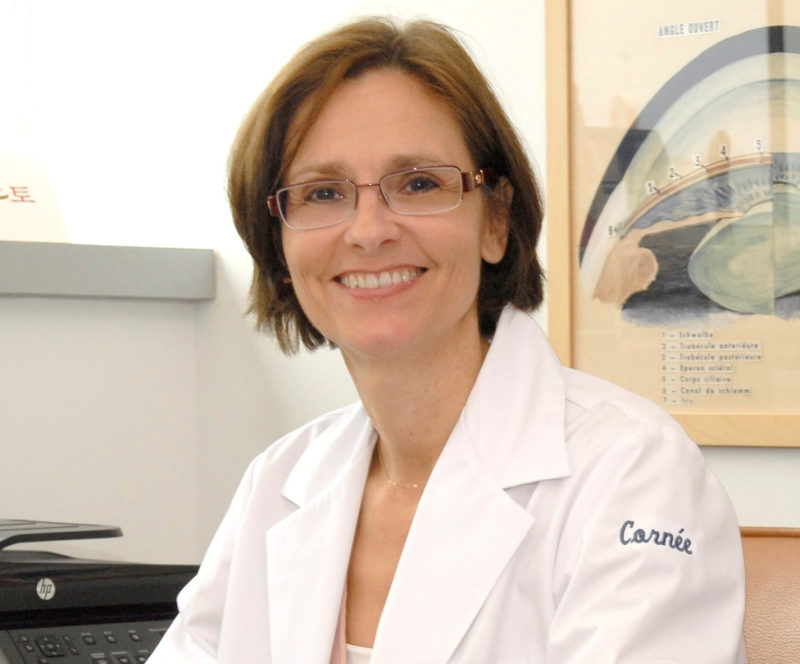
Isabelle Brunette, MD, FRCSC, is Full Professor of Ophthalmology at Université de Montréal and holds the Charles-Albert Poissant Chair in Corneal Transplantation. She directs the Corneal Transplant Research Unit at Maisonneuve-Rosemont Hospital and serves as Deputy Director of the Vision Health Research Network (RRSV). A cornea subspecialist, she is internationally recognized for advancing refractive and transplant surgery through tissue engineering and femtosecond laser technologies. Education & Training MD, Université de Montréal Specialist Diploma in Ophthalmology, Université de Montréal Fellowship – Corneal Endothelium, Mayo Clinic, Rochester MN Fellowship – Corneal Transplantation & Refractive Surgery, Emory University, Atlanta GA Research Interests Dr Brunette’s laboratory integrates clinical ophthalmology with biomedical engineering to improve visual outcomes after corneal surgery. Core themes include: 1. Developing biosynthetic and tissue-engineered corneal substitutes to alleviate donor tissue shortage. 2. Characterizing optical quality changes after excimer laser refractive surgery using Hartmann-Shack aberrometry and corneal topography. 3. Investigating endothelial cell therapy and novel drug-delivery strategies for Fuchs endothelial corneal dystrophy. 4. Utilizing femtosecond lasers for precise lamellar cuts and selective gene therapy in ocular tissues. Scientific Awards & Honours Charles-Albert Poissant Chair in Corneal Transplantation Fellow, Canadian Academy of Health Sciences (2016) Senior Clinical Research Fellow, FRQS (2003–2007) Personality of the Week, La Presse / Radio-Canada (2005) Fellowship scholarships, Mayo Clinic & Emory University (1987–1989) Grants & Leadership Dr Brunette has secured >$20 M as principal or co-investigator from CIHR, NSERC, FRQS and Stem Cell Network. She currently leads or co-leads multi-institutional projects on biomimetic corneal implants, endothelial regeneration, and vision health data platforms. Principal Investigator: “Fuchs endothelial corneal dystrophy and corneal transplantation: The traditional paradigm revisited” (CIHR, 2019-2026) Co-PI: “Pro-regeneration biomimetic corneal implants with anti-microbial and anti-inflammatory activity” (CIHR, 2018-2024) Principal Investigator: Vision Health Research Network data bank (FRQS, 2012-ongoing) Laboratory & Team The Corneal Transplant Research Unit comprises research staff (Janet Laganière, Valerie Lavastre, Leila Mejdoub, Marilyse Piché, Nadia Prud’homme), graduate students, post-doctoral fellows and clinical collaborators across ophthalmology, physics, and biomedical engineering. The group occupies state-of-the-art facilities at Maisonneuve-Rosemont Hospital and CRHMR.